Dr. Hassan Qudrat-Ullah is a Professor at the School of Administrative Studies, York University, and Coordinator of the Certificate in Logistics Management. He holds a PhD in Decision Sciences from NUS Business School and completed a post-doctoral fellowship at Carnegie Mellon University. His research focuses on dynamic decision making, system dynamics modeling, energy planning, and interactive learning environments. He teaches courses on quantitative methods, logistics, and decision analysis, informed by global industry experience across 20+ countries. Research interests include sustainability, climate change, systems thinking, and educational applications of decision sciences. He serves as Editor-in-Chief of the International Journal of Complexity in Applied Science and Technology and is a member of IEEE, DSI, and the International System Dynamics Society. His work has been published in Energy , Decision Support Systems , and others. Key projects include studies on 'structured-debriefing in dynamic decision making' and renewable energy policies in Africa. His recent articles (2023–2025) address AI integration in energy governance, system dynamics for supply chain resilience, and education for sustainability. Hassan advocates for systems thinking in K-12 education and enjoys traveling (visited 129 countries) and bird-watching.
Roger Giner-Sorolla is Professor of Social Psychology at the University of Kent's School of Psychology, where he has been a faculty member since 2001 after completing his PhD at New York University in 1996. He served as Editor-in-Chief of the Journal of Experimental Social Psychology from 2016-2022 and currently leads a Leverhulme Foundation grant examining moral heroism across professions. His academic journey includes a postdoctoral fellowship at the University of Virginia and has established him as a leading figure in social and moral psychology. Professor Giner-Sorolla's research focuses on the social role of emotions, particularly moral emotions including self-condemning emotions (guilt and shame) and other-condemning emotions (anger, contempt, and disgust). His work extends to intergroup apologies, dehumanization, emotionally driven prejudice, and collective moral roles, with a notable side interest in the ironic enjoyment of music and aesthetic experiences. He is a strong advocate for transparency in scientific reporting, having written extensively on improved reporting guidelines, pre-registration, and open science practices. Analysis of his recent publications reveals a consistent focus on moral psychology with expanding interdisciplinary reach. His work bridges traditional social psychology with emerging areas including cross-cultural emotion research, replication science, and historical memory. The trend shows increasing attention to methodological rigor while maintaining core interests in emotion and morality, with growing emphasis on practical applications in conflict resolution and intergroup relations. Fellow of the Association for Psychological Science Member of Rising Stars selection committee (2023-2024) Promising Scholars Award (University of Kent, 2006) Vacation Research Scholarship (Wellcome Trust, 2005) Multiple ESRC grants totaling over £400,000 European Science Foundation Workshop Award (2004) Professor Giner-Sorolla has supervised an impressive number of PhD students, with 17 doctoral candidates listed in the documentation including both current and past students. His grant portfolio demonstrates significant research impact with funding from major organizations including ESRC, Wellcome Trust, and Leverhulme Foundation. His supervision style appears to encourage students to pursue research that aligns with his core interests in moral emotions while allowing exploration of novel applications and contexts. While the documentation doesn't specify laboratory or research team structures, his extensive collaborative work suggests leadership of research groups focused on moral psychology and emotion research. His numerous international collaborations and invited workshops indicate an active research program with global reach, likely involving multiple research teams working on interconnected projects related to his core interests in moral psychology and scientific methodology.
Dr Kingsley Edney is an Associate Professor in International Relations of China at the University of Leeds' School of Politics and International Studies. He holds a PhD (International Relations) and MA (Political Science) from the University of Melbourne, along with a BA(Hons) in Politics and Anthropology from Victoria University of Wellington. Fluent in Chinese and with experience living in Shanghai and Beijing, his research focuses on China's non-material international security dynamics, including cultural diplomacy, propaganda, and ideological strategies to manage global information flows. His expertise includes Chinese soft power, the role of ideology in foreign policy, and the intersection of domestic political cohesion with international security objectives. He teaches undergraduate and master's courses on China's domestic and international politics. Current postgraduate researchers under his supervision are Jinru Huang, Yanyu Lu, and Hengfeng Zhao. Edney's research outputs span topics like public perceptions of China in the Anglosphere, Chinese youth nationalism, and environmental governance. His work often bridges theoretical frameworks with empirical analysis of China's evolving global engagement strategies. He maintains active academic engagement through platforms like Google Scholar and ORCID.
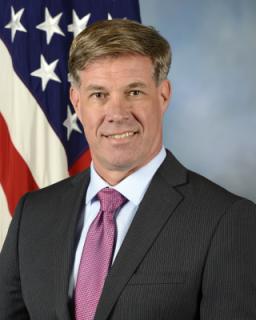
Joseph Felter is a Research Fellow at the Hoover Institution (Stanford University) and the William J. Perry Fellow at the Center for International Security and Cooperation. His career bridges academia, military service, and policy advising, with expertise in counterinsurgency, national security, and US-China relations. He coauthored the influential book Small Wars, Big Data: The Information Revolution and Modern Conflict (2018) and developed the Hacking for Defense curriculum to connect military needs with Silicon Valley innovation. Military Background: Former US Army Special Forces officer with combat deployments in Panama, Iraq, and Afghanistan. Served as commander of the COMISAF Counterinsurgency Advisory and Assistance Team. Academic Roles: Assistant Professor at West Point’s Department of Social Sciences, Adjunct Associate Professor at Columbia University’s School for International and Public Affairs, and current codirector of Stanford’s Empirical Studies of Conflict Project. Research Focus: Politically motivated violence, economic development in conflict zones, and defense innovation. His work appears in top journals like American Economic Review and Journal of Conflict Resolution . Policy Engagement: Key advisor on US defense strategy (2017–2019) and founder of BMNT, a Silicon Valley defense technology incubator. Currently serves on Spirit of America’s board. Scientific Awards: Recognized as a William J. Perry Fellow and US Army War College Fellow. His empirical conflict research informs both academic and policy debates.
Felipe Csaszar is a Professor of Strategy and Chair of the Strategy Department at the University of Michigan's Ross School of Business. His research focuses on decision structures' impact on innovation, financial performance, and social outcomes, with particular attention to cognitive frameworks, organizational processes, and AI's role in decision-making. He holds a PhD and MA from the Wharton School, University of Pennsylvania. Education: PhD in Strategy, University of Pennsylvania (2009) MA in Strategy, University of Pennsylvania (2007) Research Interests: Strategic decision-making under AI integration Cognitive and structural drivers of innovation Organizational decision processes and design Formal modeling and empirical strategy research Editorial Roles: Senior Editor, Strategy Science and Management Science Former Editor, Organization Science Co-editor, Handbook of AI and Strategy Professional Experience: Prior role: Assistant Professor at INSEAD Previous career: CEO of an internet startup and Head of Research at an asset management firm Labs/Teams: Leading the Strategy Science division at INFORMS Co-chair of the SMS Behavioral Strategy division
Melvyn R.W. Hamstra is a Full Professor at IÉSEG School of Management in France since 2023. His academic career includes roles as Associate Professor (2021–2023) and Assistant Professor (2020–2021) at IÉSEG, as well as Assistant Professor positions at the University of Maastricht (2015–2020) and the University of Amsterdam (2013–2015). He holds a Ph.D. in Behavioural and Social Sciences from the University of Groningen (2013), preceded by a Master’s (2009) and Bachelor’s (2007) in Psychology from the same institution. Research Interests : His work centers on organizational behavior, leadership, and employee motivation, with a strong emphasis on regulatory focus theory, employee voice dynamics, and knowledge management. Key themes include how leadership styles (e.g., promotion vs. prevention focus) influence team innovation, conflict resolution, and workplace morale. Publication Trends : Recent publications (2025–2024) explore topics such as gender bias in leadership evaluation, financial stress and counterproductive behavior, ethical conflict in teams, and the dual-edged role of humor in workplace negotiations. His longitudinal studies on religious engagement and life satisfaction, as well as theoretical models on knowledge withholding, highlight interdisciplinary breadth. Teaching : He contributes to bachelor and master’s programs at IÉSEG, focusing on leadership development, positive leadership, and organizational learning.
Marya Besharov is a Professor of Organisations and Impact at Saïd Business School, University of Oxford, and Academic Director of the Skoll Centre for Social Entrepreneurship. She holds a BA, MA, and PhD from Harvard University, alongside an MBA from Stanford University. Her work focuses on leadership, social impact, and hybrid organizations, advising global entities on balancing social and financial priorities. Education: PhD in Organizational Behavior, Harvard University MA in Sociology, Harvard University BA in Social Studies, Harvard University MBA, Stanford University Research Interests: Dr. Besharov’s research explores how organizations navigate competing goals, particularly in hybrid models like social enterprises. She investigates organizational identity, institutional logics, and leadership frameworks for systemic change. Her findings appear in Administrative Science Quarterly , Harvard Business Review , and Stanford Social Innovation Review . Engagement & Teaching: She leads executive education programs and workshops on leadership and systems change through the Skoll Centre. Her teaching emphasizes contingency-based frameworks for managing organizational complexity. Labs & Initiatives: Academic Director of the Skoll Centre for Social Entrepreneurship, a global hub for social impact education and research.
Associate Professor Madeline Taylor is an Australian Research Council (ARC) Early Career Industry Fellow at Macquarie Law School and Co-Lead of the Energy, Communities, and Market Regulation Stream at the Transforming Energy Markets Research Centre. She specializes in socio-legal aspects of energy transition, focusing on regulatory frameworks, energy justice, and land-use conflicts between energy developers and communities. Her work bridges property law, commercial law, and comparative law to address challenges in renewable energy integration and resource governance. Affiliations: Honorary Associate at Sydney Environment Institute, Member of Sydney Institute of Agriculture Industry Partners: NSW Department of Primary Industries and Spark Renewables (FAARM Project) Research Interests: Energy law and policy, agricultural-legal synergies, renewable energy siting, and just transition principles. She co-edits the Oil, Gas and Energy Law Journal and contributes to the LexisNexis Energy and Resources Law in Australia . Recent Articles Highlight Key Themes: Offshore wind governance, agrivoltaics regulatory systems, hydrogen licensing, and energy justice frameworks. These works emphasize interdisciplinary approaches to balancing economic, environmental, and social dimensions of energy transitions. Awards: 2023 Lawyers Weekly Women in Law Academic/Researcher of the Year, 2024 AFR Higher Education Awards Finalist, Clean Energy Council Transformational Leadership Scholarship Teaching and Engagement: Embeds climate justice in commercial law education; advises governments and NGOs on energy policy. Active in RE-Alliance Management Committee and IUCN Climate Change Law initiatives.
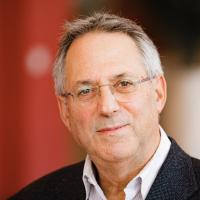
Richard Caplan is Professor of International Relations at the Department of Politics and International Relations (DPIR), University of Oxford, and an Official Fellow of Linacre College. His academic career spans several decades with significant contributions to the field of international relations, particularly in the areas of international organizations, conflict management, and peacebuilding. Professor Caplan holds an MA and PhD from the University of London. His academic journey has included visiting positions at prestigious institutions including the European University Institute (EUI), University of Konstanz, University of Pavia, Princeton University, and Sciences Po (Paris). Professor Caplan's principal research interests focus on international organizations and conflict management, with particular emphasis on peacekeeping and post-conflict peace- and state-building. His work explores critical questions about how international institutions manage conflicts, the effectiveness of peacekeeping operations, and the complex processes of rebuilding societies after conflict. His research has significantly contributed to understanding the challenges of measuring peace, the dynamics of international administration in war-torn territories, and the recognition of new states in contested contexts. Professor Caplan has received considerable recognition for his scholarly contributions through fellowships and grants from leading organizations including the British Academy, the British Council, the Carnegie Corporation of New York, the Economic and Social Research Council (ESRC), the Folke Bernadotte Academy, the John Fell OUP Research Fund, the Leverhulme Trust, the MacArthur Foundation, the Oxford Martin School, and the US Institute of Peace. As a dedicated educator and mentor, Professor Caplan has supervised numerous graduate students including Ishrat Hossain, Ebenezer Azamati, Michaela Coplen, Lucy Maycox, John Helferich, Gwendolyn Whidden, Alejandro Posada Téllez, Colm Trant, Salma Daoudi, Nadila Ali, and Katharina Engel. His current research focuses on the aftermath of UN peacekeeping operations through the ESRC-funded "After Exit" project, which investigates conditions in countries following the withdrawal of large-scale UN peacekeeping missions. Professor Caplan leads the "After Exit" research team, which includes collaborators from Oxford, Cornell University, and the University of North Carolina at Wilmington. Previously, he contributed to the Oxford Martin Programme on Transboundary Resource Management, which explored cross-border cooperation on natural resource management in the eastern Nile River Basin and the Jordan River Basin.
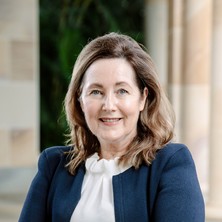
Professor Janet McColl-Kennedy is a leading figure in marketing and service science at The University of Queensland's Business School. She serves as Program Lead for Innovation Pathways (FaBA) and co-founded the Service Innovation Alliance (SIA) research hub, focusing on customer experience, AI, digital transformation, and sustainability. With Fellow status in the Academy of the Social Sciences in Australia and the Australian and New Zealand Marketing Academy, she holds international recognition including Research.com's World's Best Business Scientists ranking and the Christopher Lovelock Career Contributions to the Services Discipline Award (2025). University of Queensland Business School Honorary Visiting Professor, Cambridge Service Alliance Research Collaborator, University of Cambridge Her research spans customer experience management, service ecosystems, digital transformation, and healthcare services. She has pioneered frameworks for customer value co-creation and service recovery strategies, integrating AI and behavioral science. Her 2019 paper on customer experience insights was implemented by a major B2B organization, while her work on value co-creation improved outcomes at Lutheran Community Care. Recent publications focus on AI impacts in food and beverage services, sustainable service ecosystems, and digital health interventions. She has secured over $89 million in competitive grants, including multiple ARC Linkage and Discovery Projects, and leads cross-disciplinary teams with institutions like Cambridge University and Arizona State University. 2024 - ARC College of Experts appointment 2023 - Bo Edvardsson Industry Impact in Services Award 2022 - Elected Fellow of Academy of the Social Sciences in Australia 2021 - Clarivate Highly Cited Researcher 2018 - Ranked most influential marketing academic in Australia With over 220 publications and a Google Scholar H-index of 62, she has mentored 15 PhD students and examined theses at multiple universities. Her teaching spans 30+ years across undergraduate, postgraduate, and executive programs in Australia, USA, Italy, China, and Korea, with awards for blended learning and corporate education.
Dr. Lisa Libby is a Professor of Social Psychology at The Ohio State University, affiliated with the Department of Psychology. Her research focuses on how subjective perceptions shape cognition, emotion, and behavior, with a particular emphasis on mental imagery and visual perspective. She explores how manipulating these processes can improve decision-making, emotional well-being, and social harmony. Libby holds a PhD from Cornell University (2003), an MA from Simmons College (1997), and a BA from Williams College (1996). Education: PhD in Psychology, Cornell University, 2003 MA in Psychology, Simmons College, 1997 BA in Psychology, Williams College, 1996 Her research investigates how visual perspective in mental imagery influences self-perception, memory, and goal pursuit. Key themes include the interplay between imagery, identity, and decision-making, with applications to personal and interpersonal contexts. Libby's work highlights how shifting perspectives (e.g., first- vs. third-person imagery) can alter emotional responses, reduce bias in self-assessment, and enhance adaptive behaviors. Her advising contributions include mentoring students like Valenti G. and Shaeffer E.M., who have co-authored influential studies on imagery perspective and memory. Libby's lab at Ohio State University continues to advance understanding of how subjective experiences are constructed and manipulated through psychological mechanisms. Her research spans cognitive and social psychology, addressing topics such as autobiographical memory, regulatory fit, and the psychological effects of motion on conflict resolution. She has contributed to major academic volumes, including The Oxford Handbook of Social Cognition and Advances in Experimental Social Psychology .
Minh Hue Nguyen is a Senior Lecturer in EAL/TESOL Teacher Education at Monash University's School of Curriculum, Teaching and Inclusive Education within the Faculty of Education. She holds a PhD in Education (TESOL focused) from Monash University and has taught at Vietnam National University, Deakin University, and the University of Melbourne. Her educational background includes: PhD in Education (TESOL focused), Monash University (2015) MA in Applied Linguistics, Victoria University of Wellington (2008) BA in English Language Teaching, Vietnam National University (2003) Nguyen's research centers on teachers' professional learning, curriculum, and pedagogy in TESOL and EAL contexts, with specific focus on emotional experiences, identity development, mentoring, agency, and collaboration. She explores sociocultural contexts of teacher development through activity theory and sociocultural perspectives, examining how institutions support teachers' learning journeys from preservice to in-service stages. Recent work investigates professional learning for teacher educators and implementation of the Victorian EAL Curriculum. Her 15 most recent publications (2024-2025) reveal a strong thematic focus on language teacher agency, identity negotiation, and multilingual pedagogies. The research increasingly examines emotional dimensions of teaching, cross-cultural identity tensions, and collaborative models between EAL and content teachers, with significant contributions to understanding how teachers navigate complex educational contexts while developing professional identities. Her scientific recognition includes: Penny McKay Award Special Commendation Monash Education Research Community's Publication Award ATEA/Kay Martinez Award for Best Paper Monash Dean of Education’s ECR Project Award Advancing Women's Research Success Grant Vietnamese Government Merit-based Scholarships Nguyen actively supervises PhD research in TESOL teacher professional learning, teacher identity, and curriculum development, though is currently unavailable for new PhD students until 2027. She contributes to editorial boards for Teaching and Teacher Education, Second Language Teacher Education, and System journals, and serves on the Australian Teacher Education Association. Her work supports UN Sustainable Development Goal 4 (Quality Education) through inclusive pedagogical frameworks. She leads research projects including 'Elucidating practices to assist EAL learners to acquire specialised science vocabulary' and 'Establishing an online community-of-practice model for learner agency during work placements,' demonstrating commitment to practical educational innovations.
Amitai Shenhav is an Associate Professor at the University of California, Berkeley, specializing in Cognitive Neuroscience. His research explores the neural and computational mechanisms underlying motivation, affect, decision-making, and cognitive control, as detailed on the Shenhav Lab website . Ph.D., Harvard University Key research themes include: Explaining motivated behavior through affective gradients Modeling decision-making with mutual inclusivity and value integration Investigating cognitive control allocation under varying motivational contexts Understanding neural dynamics in target-distractor interactions Recent publications (2025–2024) highlight his work on value-based decision-making, effort allocation, and computational models of cognitive control. These studies often bridge behavioral experiments with neural recordings and theoretical frameworks. Scientific contributions include: NSF CAREER Award (2021) for research on motivation in cognition He mentors students and collaborators in his lab, focusing on psychophysiological experiments, computational modeling, and neuroeconomic paradigms. His work intersects with psychology, neuroscience, and artificial intelligence, particularly in attention training applications.
Emmanuelle Tourme-Jouannet is a Professor at Sciences Po Law School, where she leads research in critical international law theory and ecological justice. Affiliated with the Law School's Research Center, she directs the international research program "Justice and International law in a global world" and serves as co-editor-in-chief of the Journal of History of International Law. Her academic foundation includes: Master in International Law, Université Paris II (Panthéon-Assas) Master in Philosophy of Law, Université Paris II (Panthéon-Assas) Master in Political Philosophy, Université Paris IV (Sorbonne) PhD in Law, Université Paris II (1993) Professor Tourme-Jouannet's work fundamentally interrogates international law through decolonial lenses , examining colonial legacies, recognition theory, and ecological transformation. Her scholarship bridges legal history , philosophy , and human rights , with increasing focus on environmental justice since 2021. She pioneers frameworks for ecological international law while maintaining critical analysis of capitalism's relationship with global legal structures. Analysis of her 15 most recent publications reveals three dominant trajectories: (1) Decolonization through recognition theory (2019-2023), (2) Ecological reimagining of international law (2021-2024), and (3) Historical critiques of colonial international law (2011-2021). These strands converge in her argument for a reconstructed international society based on justice rather than power. Her scientific recognition includes: Université Paris II’s doctoral award Chancellerie des Universités de Paris’ Maurice Picard Prize Académie des sciences morales et politiques’ Dupin-Ainé Prize Professor Tourme-Jouannet has directed major academic programs including the Master in International Law at Paris I and the French-American double degree with Columbia/Cornell. She supervises doctoral candidates through Sciences Po's PhD program and leads the IREDIES-CERDIN research initiative. Her editorial leadership spans the European Journal of International Law and Harvard's Global Law and Policy Institute. Current research focuses on implementing ecological rights frameworks through the "Un droit sans conditions pour le vivant" project, positioning her at the forefront of international law's response to the planetary crisis.
Prof. Jose Such is a Professor of Computer Science at King's College London (KCL), affiliated with the KCL Cybersecurity Centre and the Informatics Security Hub. His research focuses on cybersecurity, AI ethics, privacy engineering, and conversational systems. He leads major projects such as REPHRAIN (Phase I & II) and SAIS, funded by EPSRC, addressing privacy, adversarial influence, and secure AI assistants. His work contributes to UN Sustainable Development Goals related to privacy and digital security. Key research areas include large language models (LLMs), smart home security, multi-user privacy conflicts, and ethical AI governance. Prof. Such has published over 80 peer-reviewed papers, with recent emphasis on mitigating privacy risks in conversational AI and developing safety benchmarks for LLMs. He oversees research projects involving multi-disciplinary teams, integrating technical solutions with legal and ethical frameworks. Notable outputs include the MalProtect malware defense system and the CASE-Bench evaluation framework for AI safety. His datasets and tools, such as SkillVet and ELVIRA, address privacy risks in voice assistants and cloud services. Prof. Such collaborates globally, with recent work exploring cross-cultural privacy practices in smart homes and the security challenges faced by marginalized groups. His research bridges technical innovation with societal impact, advocating for transparent and accountable AI systems.