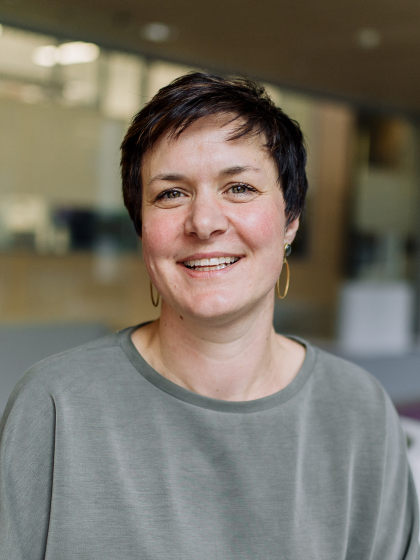
Professor Alain de Bruin (born 1968) is a distinguished academic at Utrecht University, serving as Professor in the Department of Biomolecular Health Sciences within the Faculty of Veterinary Medicine. Since January 1, 2020, he has been Head of the Department of Biomolecular Health Sciences. His academic journey began with veterinary medicine studies at the University of Hannover in Germany, followed by a PhD from the University of Bern in Switzerland in 1999. After specializing in veterinary pathology and completing a postdoctoral position at Ohio State University, he was appointed professor of pathobiology at Utrecht University in 2005. In 2010, he founded the Netherlands Molecular Pathology Center (UU/UMCG) and became an honorary professor of molecular pathology at the University of Groningen in 2014. Professor de Bruin's research primarily focuses on cancer biology, liver pathology, tumor suppression mechanisms, and aging processes. His expertise includes in vivo modeling, cell cycle analysis, generating transgenic mouse models, pathological analysis of animal disease models, and single-cell transcriptomics. His work centers on proteins that regulate cell proliferation, particularly E2F transcription factors, which he has discovered play critical roles in inhibiting cancer cell growth. His research themes span Life Sciences, Regenerative Medicine, and the Utrecht Platform for Organoid Technology. Analysis of his recent publications reveals a consistent research trajectory centered on cell cycle regulation, particularly the atypical E2F transcription factors (E2F7 and E2F8), and their roles in cancer development, polyploidization, and liver disease. His work demonstrates how these factors influence tumor suppression, angiogenesis, and cellular responses to DNA damage. The publications span multiple disciplines including cancer biology, molecular oncology, hepatology, and regenerative medicine, with applications in both human and veterinary medicine. Professor de Bruin has held significant leadership positions, including chairing the research council (2017-2019) and coordinating the 'Regenerative Medicine, Stem Cells, and Cancer' research program (2013-2019). He serves on the editorial board of 'Frontiers in Cell and Developmental Biology' and participates in review committees for NWO-Rubicon/Veni, the research alliance UTwente/UU/UMCU, and the Comprehensive Cancer Center at Ohio State University. His laboratory work has made significant contributions to understanding how E2F transcription factors regulate cell proliferation, with implications for developing novel cancer therapy strategies. His research on polyploidization mechanisms has provided insights into liver regeneration and tumor development, while his work on senescence has implications for aging-related diseases.
- Cancer
- Liver Pathology
- Tumor Suppression
- +۶ مورد دیگر