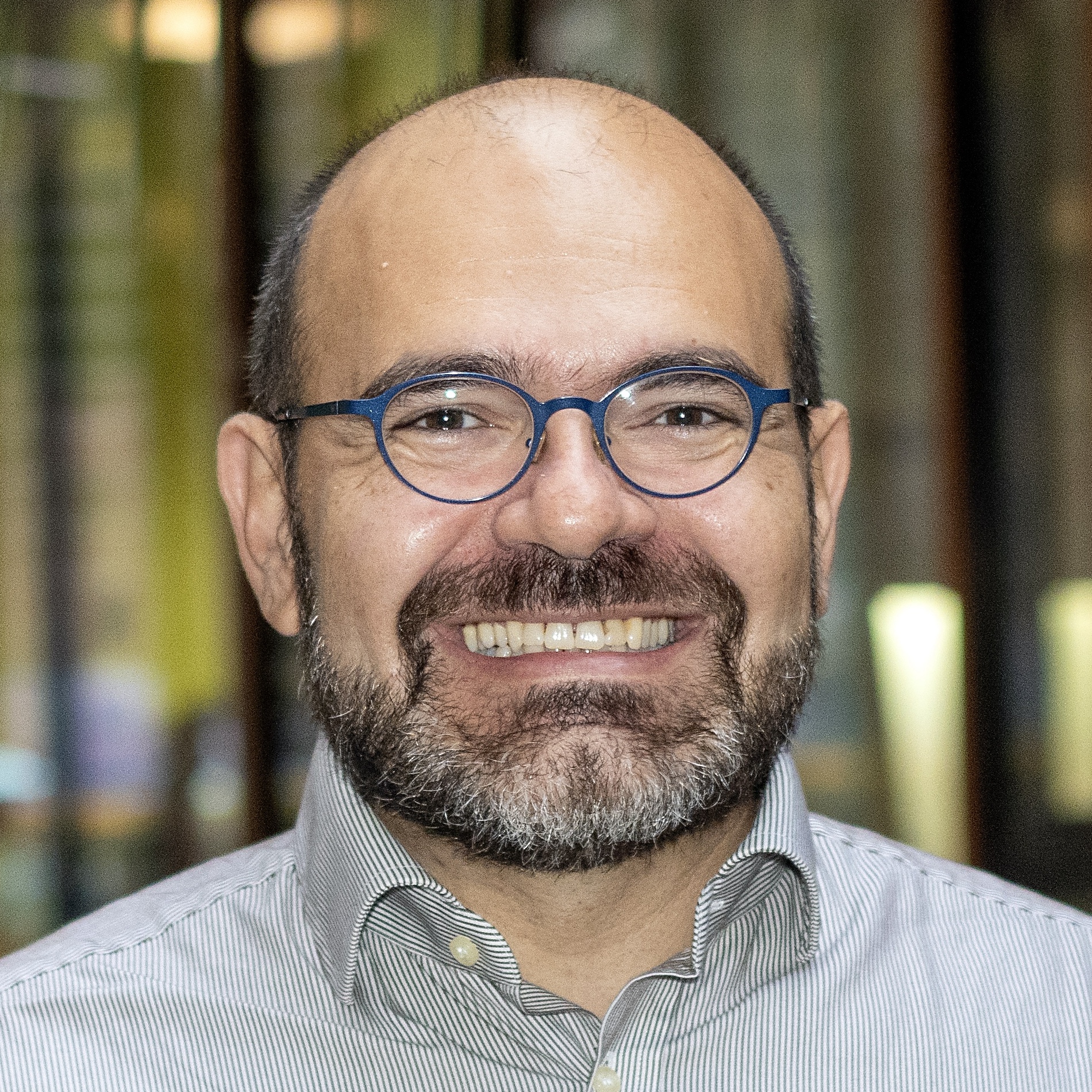
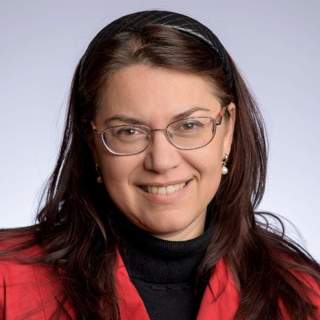
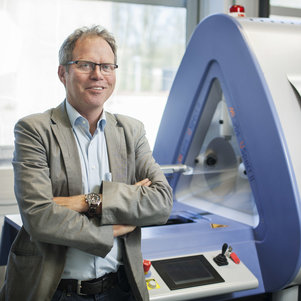
Ioannis Athanasiadis is a Full Professor and Chair of Artificial Intelligence at Wageningen University & Research (The Netherlands). He leads the Artificial Intelligence (AIN) group, focusing on advancing AI methods for global challenges in agriculture, ecology, and sustainability. Previously, he was faculty at the Dalle Molle Institute for Artificial Intelligence (IDSIA, Switzerland) and the Democritus University of Thrace (Greece). He holds a PhD (2005, cum laude) in Electrical and Computer Engineering from Aristotle University of Thessaloniki. His research integrates machine learning, knowledge engineering, and environmental modeling to address food security, climate adaptation, and ecosystem services. He leads initiatives like AgML (AgMIP's machine learning benchmarking effort) and coordinates European grants such as LTER-LIFE and CYBELE . Prof. Athanasiadis has supervised over 40 PhD/postdoc researchers and serves as Editor of Environmental Modelling and Software . He collaborates internationally on projects involving AI for crop modeling, digital twins, and sustainable agriculture. His team develops frameworks like Crop2ML and PyCrop2ML to enhance interoperability between process-based models and machine learning systems.
Prof. Dr. Arwen Deuss is a full Professor at the Faculty of Geosciences, Utrecht University , specializing in Seismology . Her research focuses on mapping Earth's deep interior using global seismology, with particular emphasis on mantle discontinuities, core structure, and whole Earth oscillations. She integrates seismological data with mineral physics, geodynamic modeling, and geochemistry to understand planetary evolution. Key research areas: Earth's Deep Interior, Global Seismology, Mantle Discontinuities, Inner Core Anisotropy Teaches courses in Theoretical Seismology, Earth Systems, and Planetary Interior Structure Developed open-source tools like FrosPy for normal mode analysis Her recent work explores 3D mantle attenuation, tilted transverse isotropy in the inner core, and seismic wave coupling. She leads projects connecting seismic tomography with geodynamic processes and maintains active collaborations in international seismological research.
Herman Bruyninckx is a Part-Time Full Professor at Eindhoven University of Technology (TU/e) in the Mechanical Engineering department, specifically within the Control Systems Technology group and EAISI High Tech Systems initiative. He also serves as a professor (Hoogleraar) at KU Leuven in Belgium. Academic focus on robotics, control systems, and multi-agent coordination Active research in model predictive control , semantic mapping , and dynamic constraint algorithms Recent publications address industrial automation , agro-food robotics , and haptic technology Research Highlights : Developed hybrid decision-making frameworks for multi-agent navigation Innovated swing-free control methods for robotic pick-and-place operations Formulated constrained dynamics algorithms with LQR-Gauss principle integration Created ExoTen-Glove for haptic feedback in virtual environments Collaborative Projects : Coordinated with researchers like René van de Molengraft , Elena Torta , and Koen de Vos Contributed to NWO/TTW FlexCRAFT project for cognitive robotics in agro-food technology
Mila N. Koeva is a Vice Dean Research and senior Associate Professor at the University of Twente's Faculty of Geo-Information Science and Earth Observation (ITC), Department of Urban and Regional Planning and Geo-Information Management. Her research focuses on 3D modeling and Digital Twins for land management and urban planning, integrating geospatial technologies, UAV data, and AI/ML methods. PhD in architectural photogrammetry MSc in Engineering (Geodesy) Research Themes: Digital Twinning for urban ecosystems AI-driven cadastral boundary extraction 3D modeling with LiDAR and satellite data Global partnerships in Rwanda, Kenya, and Ethiopia Interoperability standards for local digital twins Scientific Contributions: Geospatial World Innovation Award 2021 Copernicus Masters Competition (3rd place 2016) Editorial roles in Photogrammetric Records and MDPI journals Keynote speaker at 3D GeoInfo, GI Forum, and FIG events Her educational impact includes developing courses, lecturing, and supervising students whose work has received top awards in The Netherlands and international competitions.
Dr. Assela Pathirana is a Professor at the IHE Delft Institute for Water Education, specializing in water infrastructure asset management (WIAM), climate resilience of Small Island Developing States (SIDS), and sustainable urban water systems. His work bridges academia, policy, and practice, focusing on digitalization, data-driven decision-making, and nature-based solutions. Key roles include Chief Technical Advisor for the Maldives’ water systems and leadership of a MOOC on SIDS climate adaptation. He holds a BSc (First Class Honours) from the University of Peradeniya and advanced degrees from the University of Tokyo, specializing in hydrology and water resources engineering. Education: Bachelor of Science in Civil Engineering (First Class Honours), University of Peradeniya, Sri Lanka Master’s and Doctoral Degrees in Civil Engineering (Hydrology and Water Resources), University of Tokyo, Japan Research Interests: Dr. Pathirana’s work emphasizes climate resilience, SIDS adaptation, urban flood risk management, and sustainable infrastructure. He develops decision-support tools for flood forecasting, evaluates land-use changes in Jakarta, and promotes equity in water rationing systems. His interdisciplinary approach integrates hydrological modeling, open-source software development, and policy analysis. Advising & Capacity Building: He leads training-of-trainers programs and capacity-building initiatives, enhancing postgraduate education in technical disciplines. His efforts focus on didactics and pedagogy, ensuring graduates gain both theoretical knowledge and practical expertise. Key Projects: Developed the WIAM curriculum at IHE Delft MOOC on SIDS climate adaptation and water security Consultancy for the Maldives’ Ministry of Environment and UNDP Labs & Collaborations: Engages in cross-disciplinary teams addressing urban water challenges, including sponge cities in China and flexible adaptation planning in Melbourne and Pune. His work with UNESCO-ICHARM and UNU underscores global water security and disaster risk reduction.
Paris Avgeriou is a Professor of Software Engineering at the University of Groningen, affiliated with the Faculty of Science and Engineering and the Bernoulli Institute. He leads the Software Engineering and Architecture research group and serves as Editor-in-Chief of the Journal of Systems and Software . His expertise spans technical debt management, software architecture, self-adaptive systems, and embedded systems design. Avgeriou holds an office at Nijenborgh 9, Groningen, and actively advises academic institutions and funding bodies globally. Research Interests: Avgeriou's work focuses on advancing software architecture principles, technical debt lifecycle management, and the integration of AI in software engineering. His research emphasizes practical solutions for improving software quality, maintainability, and system dependability, particularly in embedded and self-adaptive contexts. Recent Contributions: Recent studies include frameworks for benefit-cost-risk decision-making in self-adaptive systems, automated technical debt management using ML, and tools for tracing architecture-related debt. He collaborates internationally, contributing to standards like the Copenhagen Manifesto for human-centered AI in software engineering. Grants & Awards: While no specific awards are listed, his editorial role and frequent conference contributions reflect recognition in the field. He chairs conference tracks and oversees workshops, fostering early-career researchers and artifact evaluation. Labs & Teams: His group is part of the Bernoulli Institute, working on platforms like SDK4ED for embedded systems and tools such as DebtViz for technical debt monitoring. The team explores intersections between systems engineering and software architecture in complex systems-of-systems.
Prof. Freek J. Beekman is a Full Professor and head of the Biomedical Imaging section within the Department of Radiation Science & Technology at Delft University of Technology (TU Delft), Faculty of Applied Sciences. He is a leading figure in biomedical imaging, with extensive contributions to nuclear imaging technologies, including SPECT, PET, and CT. His research spans detector development, image reconstruction algorithms, hybrid photonic imaging, and the application of artificial intelligence in medical imaging. Research Interests: His work focuses on advancing imaging modalities through innovations in hardware (e.g., multi-pinhole collimators) and software (e.g., deep learning for attenuation correction). He has pioneered ultra-high-resolution imaging systems, particularly for preclinical and clinical SPECT, and has developed integrated platforms like U-SPECT-BioFluo. His recent research explores glymphatic delivery of nanoparticles, infection imaging, and AI-driven reconstruction techniques, reflecting a strong translational focus. Publication Trends: His most recent publications (2021–2023) emphasize deep learning in SPECT, multi-isotope imaging, high-resolution ex vivo systems, and applications in neuroimaging and oncology. The articles demonstrate a consistent focus on improving image quality, resolution, and clinical utility through physics-informed and AI-enhanced methods. Scientific Awards: NWO Physics Valorization Prize Innovation of the Year Award by the World Molecular Imaging Society (2015, 2018) Edward Hoffman Memorial Award (2017) Bruce Hasegawa Memorial Award (2021) FOM Valorization Award (2013) TU Delft Entrepreneurial Award (2010) Advising and Grants: While specific student names are not listed, his leadership in large collaborative projects and supervision of numerous publications suggests active mentoring. He has secured significant funding through national and international grants, evidenced by his invention of over 20 patent families and successful technology transfer. His founding and leadership of MILabs BV (sold to Rigaku) highlights his impact on commercialization and industry-academia collaboration. Labs and Teams: He leads the Biomedical Imaging research group at TU Delft, which develops cutting-edge imaging systems such as VECTor (SPECT-PET) and EXIRAD-HE. His teams have produced technologies used globally in academic and pharmaceutical research, contributing to tracer development and therapeutic innovation.
George Vosselman is a Full Professor at the University of Twente, Faculty of Geo-Information Science and Earth Observation (ITC), specializing in Geo-Information Extraction with Sensor Systems. Educated with honours at Delft University of Technology (1986) and PhD in Photogrammetry from Rheinische Friedrich Wilhelms University of Bonn (1991), he has held academic roles at the University of Stuttgart, University of Washington, and Delft University of Technology (1993–2004). Since 2004, he has been a key figure at ITC, serving as department head (2012–2018, 2023–). Education: Delft University of Technology (BSc with honours, 1986), Rheinische Friedrich Wilhelms University of Bonn (PhD with honours, 1991) His research focuses on leveraging sensor technology advancements for large-scale geo-information production. Key expertise includes quality analysis of laser altimetry data, point cloud segmentation/classification, 3D building/road modeling, and model-driven imagery analysis. He has published over 220 papers and co-edited the textbook Airborne and Terrestrial Laser Scanning (2010). Recent work integrates deep learning with geospatial data, addressing semantic segmentation, visual question answering, and drone-based mapping. Recent publications (2025–2023) highlight trends in deep learning for remote sensing , including multimodal question answering benchmarks (HRVQA), vectorized building extraction (RoIPoly), latent diffusion for road modeling (LDPoly), and drone obstacle avoidance systems. His work bridges photogrammetry , computer vision , and robotic mapping , with applications in urban planning, disaster management, and informal settlement monitoring. Scientific Awards : Hansa Luftbild (1993), ISPRS Otto von Gruber (2000), Schwidefsky Medal (2012), Karl Kraus Medal (2012), ASPRS Fairchild Award (2015), ISPRS Fellow (2020) As an educator, Vosselman has taught photogrammetry, remote sensing, and laser scanning at Delft University of Technology and globally. He chaired the ITC Examination Board (2015–2023) and modernized geo-information education in Asia/Africa. His software for point cloud processing is commercialized in Europe, and he currently leads ISPRS working groups on point cloud methodologies. Labs/teams include the Earth Observation Science Chair Group at ITC, collaborating on UAV-based datasets (UAVid, UAVPal) and indoor laser scanning systems. Recent activities (2025) involve invited talks on pulse matching limitations in laser scanning and deep learning for point cloud classification.
Dr. Saer Samanipour is a Visiting Professor at the Van 't Hoff Institute for Molecular Sciences, part of the Faculty of Science at the University of Amsterdam. His research focuses on advanced analytical techniques for environmental and biomedical applications, with a strong emphasis on non-targeted analysis, mass spectrometry, and machine learning integration. He leads efforts in developing open-source tools like GcDUO and jHRMSToolBox to enhance data interpretation in complex chemical datasets. Key areas include environmental contaminant detection, chemical exposure assessment via wastewater-based epidemiology, and proteomic analysis of snake venoms. His work bridges computational methods with experimental chemistry to address global challenges in environmental health and toxicology. Primary affiliation: Van 't Hoff Institute for Molecular Sciences Research themes: Non-targeted LC-HRMS workflows, machine learning applications in analytical chemistry, PFAS analysis, and exposome research Software contributions: GcDUO (GC×GC-MS), jHRMSToolBox (HRMS data processing) His publications highlight innovations in data-driven approaches for compound prioritization, toxicity prediction, and method optimization. Recent work explores chemical space exploration and chemometric strategies for complex mixture analysis, with applications to environmental monitoring and forensic science.
Didier Meuwly is a Full Professor of Forensic Biometrics at the University of Twente (since 2013) and Principal Scientist at the Netherlands Forensic Institute (NFI). His work focuses on automating and validating probabilistic evaluation of forensic evidence, particularly biometric traces. He has contributed to international standards via ISO Technical Committee 272 and served as Associate Editor for Forensic Science International . PhD in Forensic Speaker Recognition (University of Lausanne, 2000) Research spans forensic biometrics, likelihood ratios, AI validation, and gait/body analysis from surveillance footage. Recent work addresses ISO standards (21043), forensic AI explainability, and multimodal evidence evaluation. His publications emphasize empirical validation and statistical rigor. Key awards include: ENFSI Distinguished Forensic Scientist Award (2022) University of Lausanne Law Faculty Prize (2002) Active in global forensic networks, he chairs the ENFSI R&D Committee and collaborates across disciplines on digital evidence, biometric security, and forensic methodology.
Dr. Ramona Roller is a Researcher in Sociology at the Faculty of Social and Behavioural Sciences, Utrecht University. She is affiliated with the Chair Buskens Social Networks, Solidarity and Inequality and contributes to the Institutions for Open Societies (IOS) initiative, specifically focusing on Behaviour and Institutions and In-Equality research areas. Her research expertise spans Analytical Sociology, Experimental Sociology, Computational Humanities, Computational Social Sciences, and Network Analysis. Dr. Roller employs a complex systems perspective to study how local human interactions give rise to global group phenomena. Her work focuses on two main areas: cooperation in modern work teams and the diffusion of ideas in historical societies. In her research on contemporary teams, Dr. Roller investigates fair, productive, and sustainable cooperation through the spontaneous emergence of roles in software development teams. She is part of the SCOOP project (Sustainable COOPeration), collaborating with Rafael Wittek from Groningen and Vincent Buskens from Utrecht. On a societal level, she studies the evolution and spread of ideas during the Reformation in 16th-century Europe using letter correspondences of scholars. This interdisciplinary work involves collaboration with researchers from historiography, theology, and linguistics to address complex challenges in historical analysis. Dr. Roller applies diverse research methodologies including field studies, behavioral experiments, social network analysis, spatio-temporal modeling, and causal inference methods. Her recent publications demonstrate expertise in computational approaches to historical data, particularly in analyzing 16th-century correspondence networks and territorial concepts.
Prof. Alexandre Bonvin is a Professor of Computational Structural Biology and Scientific Director of the Bijvoet Center for Biomolecular Research at Utrecht University. He leads the Computational Structural Biology group, focusing on developing integrative computational methods to study biomolecular interactions. His work emphasizes predicting protein complex structures using experimental data and computational models, with applications in drug discovery and structural biology. Bonvin pioneered the HADDOCK software suite, a widely used platform for modeling biomolecular complexes. Education: Studied Chemistry at the University of Lausanne, obtained a PhD from Utrecht University (1993), followed by postdocs at Yale University and ETH Zurich. Joined Utrecht University in 1998, becoming a full professor in 2009. He has held leadership roles, including Director of Chemical Education and Vice Head of the Chemistry Department. Research Themes: Biomolecular interactions, computational modeling, NMR spectroscopy, and grid computing. He coordinates EU projects like WeNMR and BioExcel, advancing e-infrastructure for structural biology. His lab’s contributions include software tools like HADDOCK, DisVis, and PowerFit, serving thousands of researchers globally. Awards: 2006 VICI grant from NWO, HPC Innovation Award (2020). Over 275 peer-reviewed publications, including high-impact work on teixobactin mechanism and antibody modeling. Active in training through EMBO courses and mentoring postdocs/students.
Natasha Dmoshinskaia is an Assistant Professor specializing in educational technology and learning processes. Her research focuses on peer feedback mechanisms, inquiry-based learning, and the impact of digital environments on education. She contributes to UN Sustainable Development Goals related to Quality Education (SDG 4) and Partnerships for the Goals (SDG 17). Her work explores trends in teacher development, digital learning policies, and collaborative learning systems. Recent studies include analyzing feedback effectiveness in online platforms, gamified learning environments, and the role of concept maps in knowledge acquisition. Key research themes include educational policy analysis, student engagement strategies, and the design of future-proof learning systems. Her publications span peer-reviewed journals and conference proceedings, emphasizing practical applications in K-12 and university settings. Notable contributions include a 2025 review on holistic student development through digital learning and a 2023 analysis of peer feedback in online inquiry environments. Her h-index is 42, reflecting significant scholarly impact.
Oleksandr Mialyk is a dedicated researcher in the field of multidisciplinary water management, contributing significantly to global assessments of water footprints, water scarcity, and agricultural sustainability. His work bridges environmental science, climate change, and food systems, with a strong alignment to UN Sustainable Development Goals. Master, Instituto Superior Técnico (2019) Master, Technische Universität Dresden (2019) Master, Groundwater and Global Change, UNESCO-IHE Institute for Water Education (2017) His research interests center on water resources management, climate change impacts, and the water-energy-food nexus. He specializes in life cycle assessment, crop modeling, and the development of global datasets to evaluate freshwater use and agricultural sustainability. His work often integrates large-scale data with modeling frameworks to assess environmental impacts across regions and time periods. The recent publications highlight a consistent focus on quantifying water footprints of global crop production, analyzing green water scarcity, and comparing agricultural systems. His research leverages gridded crop models and open datasets to provide high-resolution insights into water use, nutrient production, and climate resilience in agriculture. The integration of software tools like the ACEA model underscores his contribution to open science and reproducible research. While no formal scientific awards are listed, his work has been recognized through media coverage and presentations at academic forums. His research has been featured in outlets discussing climate change impacts on crop production and the importance of water footprint transparency. Mialyk actively collaborates with researchers across institutions and countries, contributing to interdisciplinary projects and co-authoring high-impact publications. He has also developed and shared critical datasets and software, enhancing the research community's capacity to study agricultural water use. His work supports future research in sustainable agriculture, climate adaptation, and resource governance. He is associated with research activities including oral presentations and public engagement, demonstrating a commitment to both academic discourse and societal impact. His datasets are hosted by 4TU.Centre for Research Data and Zenodo, ensuring accessibility and long-term preservation.
Andre Da Silva Mano is a Lecturer at the University of Twente, affiliated with the Department of Urban and Regional Planning and Geo-Information Management and the Digital Society Institute. His academic roles include teaching and research in geographic information systems (GIS), urban planning, and land administration. He holds a position in the Faculty of Geo-Information Science and Earth Observation, focusing on integrating open-source technologies and sustainable development frameworks. His research expertise spans land administration systems (LADM), open-source GIS applications, and spatial data infrastructure. Notable projects include developing educational datasets for teaching LADM standards (ISO 19512) and creating open courseware for GIS and remote sensing education. He has collaborated internationally on initiatives such as IDeaMapSudan, which models urban poverty through geospatial data, and the Spatial Development Framework (SDF) tools for policy implementation. Recent work includes studies on mitigating urban heat islands using 3D digital twins, geospatial modeling for humanitarian response, and paleontological collection management using open-source tools. He actively promotes open science principles, as reflected in ITC’s strategic plan and his advocacy for open-source software as an ethical practice. Key contributions also involve frameworks for responsible land reallocation in customary settings and child-centered urban planning methodologies. Activities: Delivered invited talks on open-source software philosophy and presented research at conferences like the International Federation of Surveyors (FIG). Datasets: Creator of open-access resources like 'andremano/online-core' and 'GIS-4-Land-Administration' available on Zenodo. Labs/Teams: Engaged with interdisciplinary teams in urban resilience, digital humanities, and geospatial education initiatives.