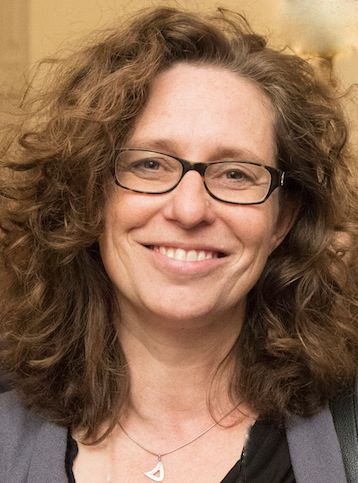
Stephanie Forrest is a Professor of Computer Science at Arizona State University and serves as Director of the Biodesign Center for Biocomputation, Security and Society . She holds affiliations with the School of Computing and Augmented Intelligence , Global Futures Laboratory , and Santa Fe Institute External Faculty . Education: B.A. from St. John's College M.S. and Ph.D. in Computer Science from the University of Michigan Research Interests: Forrest specializes in the intersection of biology and computation , with key contributions to cybersecurity (anomaly detection, instruction-set randomization), automated software repair (evolutionary methods), and biological modeling (immune systems, SARS-CoV-2 spread). Her work bridges complex adaptive systems , AI/ML , and defense applications . Scientific Contributions: 2020 IEEE S&P Test of Time Award 2019 ICSE Most Influential Paper Award 2011 ACM/AAAI Allen Newell Award NSF Presidential Young Investigator (1991) IEEE Fellow Evolutionary Computation Pioneer award Publications & Grants: Her research appears in top venues (ICSE, IEEE S&P, PNAS) and is funded by the National Science Foundation , DARPA , Air Force Research Lab , and Santa Fe Institute . Key projects include Crispy (CRISPR-inspired DoS defense), GenProg (automated bug correction), and SIMCoV-GPU (agent-based pandemic modeling).
Constantin Grigo is a PhD researcher at the Technical University of Munich (TU Munich), actively engaged in the Continuum Mechanics group. His work focuses on Uncertainty Quantification (UQ) and Machine Learning (ML), particularly for applications in maritime safety, bicycle traffic modeling, and stochastic systems. He has presented his research at major conferences like SIAM UQ and WCCM, and has been recognized with Student Travel Awards from SIAM UQ 2018 and SIAM CSE 2019. Education: Master of Science in Physics, LMU Munich (2015) Bachelor of Science in Physics, LMU Munich (2012) Year abroad at Grenoble INP (2010-2011) Research Interests: Probabilistic machine learning for coarse-graining high-dimensional systems Bayesian model and dimension reduction Stochastic differential equations in heterogeneous media Microscopic traffic simulation for bicycles and autonomous vehicles Digital twin applications for maritime and urban mobility Reduced-order modeling of random materials Selected Awards: SIAM UQ 2018: Student Travel Award Winner SIAM CSE 2019: Student Travel Award Winner His publications span topics such as data-driven scenario specification for autonomous vehicles, bicycle maneuver prediction using neural networks, and physics-constrained surrogates for UQ. He also contributes to open-source simulation tools like SUMO for traffic modeling.
Paul Franzon is the Cirrus Logic Distinguished Professor and Associate Department Head for Graduate Affairs at the Department of Electrical and Computer Engineering, North Carolina State University. He holds a PhD and Bachelor's in Electrical Engineering and a Bachelor's in Physics/Mathematics from the University of Adelaide, Australia. His research focuses on quantum information science, machine learning-driven hardware design, 3D integration, and high-speed systems. Education: PhD in Electrical Engineering, University of Adelaide (1988) Bachelor's in Electrical Engineering, University of Adelaide (1984) Bachelor's in Physics and Mathematics, University of Adelaide (1982) Research Interests: Quantum computing and algorithm optimization AI-driven design automation for 3D integrated circuits High-speed communication systems Hardware security and FPGA acceleration Awards & Honors: IEEE Fellow (2006) Alcoa Foundation Distinguished Engineering Research Award (2005) NC State Alumni Distinguished Undergraduate Professor Award (2003) NSW Australia Expatriate Scientist Award (2003) Advising & Grants: Advised PhD student Priyank Kashyap (2023 graduate) Recipient of NSF Young Investigators Award (1993) Labs & Collaborations: Center for Advanced Electronics Through Machine Learning (CAEML) IEEE EPS Society (Associate Editor)
Nicolas Zufferey is a Full Professor of Operations Management at the University of Geneva, Switzerland, where he has served since 2008. He leads research in optimization methods for complex systems, focusing on applications in supply chain management, production planning, inventory control, and transportation logistics. His affiliations include the Research Institute of Management and collaborations with CIRRELT (Transportation & Logistics) and GERAD (Decision Analysis). Education: PhD in Operations Research (EPFL, 2002), MSc/BSc in Mathematics (EPFL) Prior Experience: Postdoc at University of Calgary (2003–2004), Assistant Professor at Université Laval (2004–2007) Research Interests: His work emphasizes developing advanced metaheuristics (e.g., VNS, Tabu Search, PSO) for challenging optimization problems. Key domains include: Multi-objective scheduling with resource constraints Inventory deployment under uncertainty Network design for supply chains and transportation systems Publications: Over 150 peer-reviewed articles across journals like European Journal of Operational Research , Transportation Research , and INFORMS Journal on Computing . Recent work addresses electric vehicle routing, drone integration in delivery systems, and robust decision-making under uncertainty. Collaborations: Engaged with 35+ universities and 27 private companies globally. Active in applying operations research to industrial problems (e.g., Swiss railways, luxury watch production, pharmaceutical networks).
Pejman Lotfi-Kamran is an Associate Professor at the School of Computer Science, Institute for Research in Fundamental Sciences (IPM), Tehran, where he also serves as the head of the school and director of Turin Cloud Services. His research focuses on computer architecture, systems, approximate computing, and cloud computing, with an emphasis on performance and energy efficiency for big-data applications. His educational background includes: Ph.D. in Computer Science, EPFL (2013) M.Sc. in Electrical and Computer Engineering, University of Tehran (2005) B.Sc. in Electrical and Computer Engineering, University of Tehran (2002) Lotfi-Kamran's research spans computer architecture innovations, including data and instruction prefetching, networks-on-chip, coherence protocols, and many-core processor design. He has pioneered work on scale-out processors, neural acceleration for GPUs, and approximate computing frameworks. His publications appear in top venues such as ISCA, HPCA, MICRO, and IEEE/ACM journals. His recent articles reflect a strong trend in improving system performance through intelligent prefetching, efficient NoC designs, and energy-aware architectures. Key themes include reducing frontend bottlenecks, optimizing cache behavior, and enhancing data delivery in large-scale systems. His work often combines cross-stack insights with hardware-software co-design for real-world impact. Scientific awards and recognitions include: 2017 CADS Best Paper Award 2016 Young Faculty Award from Iran's National Elites Foundation 2012-2013 Intel Ph.D. Fellowship 2012 and 2011 HiPEAC Paper Awards 2011 HPCA Best Student Paper Finalist Multiple academic honors from University of Tehran He has advised several graduate students including Paria Darbani, Ali Ansari, Mohammad Bakhshalipour, and Farid Samandi, many of whom have co-authored significant papers. His teaching spans institutions like Sharif University of Technology, Iran University of Science and Technology, and EPFL, covering advanced computer architecture and multiprocessor systems. He has led research projects such as AxBench and CloudSuite on Simics, and contributed to national initiatives like Iran’s National Grid. He is actively involved in tool development and continues to shape research in next-generation computing systems. He leads the Turin Cloud Services initiative at IPM and is deeply engaged in both theoretical and applied aspects of computer systems research, with ongoing work in neural acceleration, approximate computing, and scalable architectures.
Prof. Dr. Kumru Didem Atalay is a distinguished academic at Başkent University, specializing in Industrial Engineering . With a PhD in Statistics from Ankara University (2007), she has made significant contributions to Operations Research , Fuzzy Logic , and Decision Support Systems . Her work bridges statistical analysis with real-world applications in healthcare logistics, pandemic response, and manufacturing optimization. Education: PhD (2007), MS (2000), BS (1998) in Statistics from Ankara University Current Role: Professor in Industrial Engineering at Başkent University Her research focuses on stochastic processes , fuzzy modeling , and healthcare operations , particularly in pandemic-era service quality and microchannel manufacturing. She has developed innovative methods for project scheduling , risk analysis , and multi-criteria decision-making . Recent publications examine Covid-19's impact on education quality and fuzzy linear programming for project scheduling . She applies intuitionistic fuzzy models to optimize manufacturing systems and hesitant fuzzy regression for pandemic death count estimation. Scientific recognition includes a Runner-up Prize at the 15th ICMSEM (2021) and a Bronze Medal at ISIF21 (1970). She supervises advanced research on topics like multi-trip home healthcare routing and fuzzy quality function deployment .
Joel Sokol is the Harold E. Smalley Professor in the H. Milton Stewart School of Industrial and Systems Engineering at Georgia Tech. He serves as Director of the interdisciplinary Master of Science in Analytics (MSA) degree, offered both on-campus and online. His academic journey began with a Ph.D. in Operations Research from MIT (1999), followed by bachelor's degrees in Mathematics, Computer Science, and Applied Sciences in Engineering from Rutgers University (1994). Education Ph.D. in Operations Research (MIT, 1999) B.S./B.A. in Mathematics, Computer Science, Applied Sciences in Engineering (Rutgers, 1994) Dr. Sokol's research focuses on Sports Analytics , Health Informatics , and Supply Chain Optimization . He pioneered the LRMC (Logistic Regression/Markov Chain) method for NCAA basketball tournament predictions, which has become an industry standard. His work extends to organ transplantation logistics, maritime shipping networks, and semiconductor manufacturing optimization, blending machine learning with traditional operations research techniques. The articles reflect his interdisciplinary expertise: 2025 introduced a Smart Stadium Testbed for real-time sports analytics, while 2024 addressed Language Model Safety . Earlier publications (2023–2018) focused on transplant survival modeling, vaccine scheduling, and maritime logistics, showcasing his ability to apply analytics to diverse domains. Scientific Awards EURO Management Science Strategic Innovation Prize (2008) Cozzarelli Prize finalist (non-sports research) Georgia Tech's highest teaching awards (multiple years) INFORMS and IISE recognitions for curriculum development As a leader in analytics education, Sokol co-founded the INFORMS Sports Operations Research section and served as INFORMS Vice President of Education. His work has practical applications in professional sports, healthcare, and industry, with methodologies adopted by teams, medical institutions, and global logistics networks.
Dr. Adel Aazami is an Assistant Professor at the Institute of Transport Economics and Logistics at Vienna University of Economics and Business (WU Vienna) since 2023. His academic journey began with a B.Sc. in Industrial Engineering from University of Tehran (2010-2014), followed by an M.Sc. (2014-2016) and Ph.D. (2016-2021) from Iran University of Science and Technology (IUST), Tehran. Prior to his current position, he worked as a Postdoctoral Researcher at Sharif University of Technology (2021-2022) and was a Visiting Researcher at the University of Toronto (2020). His educational background includes: Ph.D. in Industrial Engineering (2016-2021) - Iran University of Science and Technology (IUST), Tehran, Iran M.Sc. in Industrial Engineering (2014-2016) - Iran University of Science and Technology (IUST), Tehran, Iran B.Sc. in Industrial Engineering (2010-2014) - University of Tehran, Tehran, Iran Dr. Aazami's research spans multiple interconnected domains within operations research and supply chain management. His primary focus areas include Operations Research and Optimization, Supply Chain and Logistics, Production and Distribution/Transportation Planning, Competition and Game Theory, Stochastic Programming, and Decomposition Algorithms. His work demonstrates a strong emphasis on developing mathematical models and optimization algorithms for complex supply chain problems, particularly those involving perishable goods, competitive environments, and sustainability considerations. He has made significant contributions to integrating environmental factors into traditional logistics problems and developing robust optimization approaches for supply chain networks. Analysis of Dr. Aazami's publication record reveals a consistent trajectory of increasingly sophisticated research in supply chain optimization. His work shows a clear progression from foundational mathematical optimization techniques to increasingly complex integrated problems involving multiple stakeholders, uncertainty, and environmental considerations. A notable trend is his focus on perishable products within supply chains, developing models that account for limited product lifetimes while optimizing across multiple echelons of the supply chain. More recently, his research has expanded to incorporate green logistics considerations, developing algorithms that balance economic and environmental objectives in transportation and distribution problems. His notable scientific achievements include: Winner of the 'Best Student' award among nationwide students evaluated by the Iranian Ministry of Science (2020) Winner of the Iranian Nobel Prize (known as the Alborz National Foundation Prize) (2019) Winner of the Best Student Award at IUST (2018) Winner of the Top Researcher Award at IUST (2018) Annual Awards of the National Elites Foundation Iran (2015-2020) Dr. Aazami has extensive teaching experience across multiple Iranian universities including Tehran University, Amirkabir Technical University, Isfahan University, Yazd University, Zanjan University, Damghan University, Abrar University and Iran Technical University. His peer review activities include reviewing for prestigious journals such as Soft Computing, Expert Systems with Applications, and Annals of Operations Research. While specific grant information isn't detailed in the provided text, his research output suggests active engagement with complex optimization problems relevant to transportation and logistics industries. At WU Vienna, Dr. Aazami is part of the research team at the Institute of Transport Economics and Logistics, working alongside other faculty members including Prof. Kummer and Prof. Wakolbinger. His research integrates theoretical optimization methods with practical applications in transportation and logistics, contributing to the institute's focus on sustainable and efficient supply chain solutions.
Bettina Kemme is a Professor in the School of Computer Science at McGill University, Montreal, Canada. She leads the Distributed Information Systems Lab (DISL) and specializes in large-scale data management, distributed systems, and cloud computing. Her academic roles include teaching COMP 512 (Distributed Systems) and COMP 421 (Database Systems). Education: Diplom (M.Sc. equivalent) in Computer Science, Friedrich-Alexander University, Erlangen, Germany (1996) PhD in Computer Science, Swiss Federal Institute of Technology (ETH), Zurich, Switzerland (2000) Research Interests: Distributed systems, cloud-native data management, in-database analytics (AIDA project), monitoring-as-a-service frameworks, and scalable pub/sub systems for online games. Current projects focus on integrating machine learning with databases, cloud performance monitoring using SDN, and sustainable data systems for data science. Lab & Collaborations: Leads the Distributed Information Systems Lab (DISL) with active projects in distributed databases, cloud computing, and game systems. Collaborates on EU-Canada initiatives like the SustainSys program for sustainable data infrastructure. Advising: Supervises PhD and M.Sc. students in topics like monitoring frameworks (Mona ElSaadawy), in-database ML (Winnie He), and distributed systems (Maximilian Schiedermeier). Alumni include over 50 researchers from PhD candidates to undergraduate researchers.
Pietro Manzoni is a Professor of Computer Engineering at the Polytechnic University of Valencia (UPV), Spain. He holds a Master's from the University of Milan (1989) and a Ph.D. from Politecnico di Milano (1995). His research focuses on IoT, edge computing, and wireless networks, with emphasis on TinyML, LPWAN, and edge-cloud systems. He coordinates the Computer Networks Research Group (GRC) and is active in IEEE committees. Education includes a Master's in Computer Science (Università degli Studi di Milano, 1989) and a Ph.D. in Computer Science (Politecnico di Milano, 1995). He interned at Bellcore Labs (USA, 1992–1993) and ICSI (USA, 1994). Research interests span IoT applications, resource-constrained devices, and distributed systems. His work prioritizes empirical validation through prototypes. Teaching includes courses on Networks and Security, Intelligent IoT Systems, and IoT fundamentals in Spanish programs. Publications emphasize IoT protocols, UAV swarms, and TinyML. No scientific awards listed, but over 130 theses advised. Coordinates GRC projects and contributes to editorial boards and conferences.
Dr. Magdy Salama is a Professor in the Department of Electrical and Computer Engineering at the University of Waterloo, with dual professional engineering registrations in Ontario and Egypt. His research focuses on power systems, smart grid technologies, renewable energy integration, and medical imaging. He holds over 460 publications, including 215 journal articles, and has developed specialized labs in areas like Power Quality and Ultrasound Imaging. Recognized in the 1991 National Encyclopedia of Egyptian Scientists, he also teaches courses such as ECE 192, 390, and 462, emphasizing engineering economics and design. Education: PhD, Electrical Engineering, University of Waterloo (1977) MSc, Electrical Engineering, Cairo University (1973) BSc, Electrical Engineering, Cairo University (1971) Research Interests: Power quality and distribution system automation Smart grid and renewable energy analysis Medical image processing (e.g., sleep staging, neuromodulation) Electric energy storage and fault detection Asset management and risk analysis Labs & Innovation: He leads labs in Power Quality, Electric Vehicle Power Electronics, Ultrasound Imaging, and Sleep Staging. His patents include high-voltage power supplies for automotive and aerospace applications. Awards: Listed in the 1991 National Encyclopedia for Distinguished Egyptian Men of Science . Teaching & Grants: Recently taught courses like Distribution System Engineering (ECE 6606PD) and Electric Safety Design (ECE 6616PD). His work spans academic-industrial partnerships, though specific grants are not detailed in the text.
Eur Ing Malcolm Macdonald is a Professor of Electronic and Electrical Engineering at the University of Strathclyde. He serves as Director of the Applied Space Technology Laboratory (ApSTL) and the Centre for Signal and Image Processing (CeSIP). Additionally, he holds Visiting Professor roles at University College Dublin's Centre for Space Research and is Vice-Chair of the UK Space Agency's Space Technology Advisory Committee. His expertise spans space mission design, networked systems, and sustainable space technologies, with a focus on democratizing space data accessibility. He contributed to Scotland's first CubeSat and led initiatives like the Scottish Centre of Excellence in Satellite Applications (SoXSA). Research interests include astrodynamics, swarm engineering, and Earth observation, leveraging systems engineering to address global challenges. Notable awards include the 2020 Copernicus Masters Transport Challenge and the 2024 CompleNet Best Poster Award. He advises on over 80 research projects, focusing on satellite constellations, offshore energy monitoring, and space debris mitigation. His work integrates multidisciplinary approaches, emphasizing resilience and innovation in space systems. Labs and teams include ApSTL and CeSIP, where he leads a team of researchers and postgraduate students. Equipment resources include specialized drones and control systems for experimental validation. Collaborations span academia, industry, and government, driving advancements in space technology and policy.
Aidan O'Sullivan is an Associate Professor in Energy and Artificial Intelligence at University College London's Bartlett School of Environment, Energy & Resources, where he leads the Energy Systems and Artificial Intelligence Lab and the department's Data Analytics research theme. He is also the founding course director of the Energy Systems and Data Analytics MSc, an innovative program combining energy systems and sustainability with data science and machine learning. Current Position: Associate Professor, UCL Energy Institute Education: PhD in Mathematics, Imperial College London Prior Experience: Postdoctoral Researcher at MIT Civil Engineering Department Affiliation: Turing Fellow at the Alan Turing Institute (2018-2020) O'Sullivan's research focuses on applying artificial intelligence to energy system problems, particularly in power systems and heavy industry. He is a pioneer in using data science and machine learning with novel energy sector data sources like renewable generation and smart meter data. His specific AI interests include reinforcement learning, ensemble based methods, latent variable models and deep learning, with additional interest in complex network theory for understanding system interdependencies. His publication history shows a clear evolution from transportation and aviation applications toward direct power system applications, with reinforcement learning emerging as a consistent methodology across his work. The research demonstrates strong interdisciplinary integration of AI techniques with energy system challenges, particularly in grid management, optimization, and emissions reduction. O'Sullivan has received recognition including a Turing Fellowship from the Alan Turing Institute in 2018, the UK's leading center for AI and data science research. Turing Fellowship, Alan Turing Institute (2018-2020) As an educator, O'Sullivan serves as Deputy Director and Founding Course Director of the MSc in Energy Systems and Data Analytics. He teaches BENV0094 Statistics for Energy Analytics, focusing on the mathematical foundations of machine learning methods and their application to energy system datasets. His teaching directly addresses the industry need for professionals with integrated expertise in energy systems and data science. O'Sullivan leads the Energy Systems and Artificial Intelligence Lab at UCL, which focuses on applying advanced AI techniques to solve complex energy system challenges, particularly in grid management, renewable integration, and energy efficiency. His work aligns with UN Sustainable Development Goals 7 (Affordable and Clean Energy), 11 (Sustainable Cities and Communities), and 13 (Climate Action), reflecting the applied nature of his research in addressing global energy challenges.
Dr. Aghdas Badiee serves as a Post-Doctoral Research Associate at Heriot-Watt University's Edinburgh Business School, affiliated with both the Centre for Logistics and Sustainability and the Centre of Sustainable Road Freight. Her academic foundation spans Industrial Engineering with specialized expertise in data-driven decision systems and logistics optimization. Educational Background: B.Sc. in Industrial Engineering - System Planning and Analysis (Grade: 18.07/20), Iran University of Science and Technology M.Sc. in Socio-economic System Engineering - Location-Allocation Optimization (Grade: 19.30/20), Iran University of Science and Technology Ph.D. in Socio-economic System Engineering - Supply Chain Modeling and Sustainable Logistics (Grade: 19.35/20), Iran University of Science and Technology Her research integrates Sustainable Supply Chain Management , Resilient Cold Chain Logistics , and Operations Research methodologies to address complex transportation challenges. Current projects include the Africa Centre of Excellence for Sustainable Cooling and Cold Chain Systems (ACES) and Zero-Emission Cold-Chain initiatives, focusing on food security through sustainable logistics solutions. Her methodological approach combines descriptive, predictive, and prescriptive analytics using simulation, optimization, and data science techniques. Publication trends reveal consistent contributions to high-impact journals like Annals of Operations Research and IEEE Transactions on Fuzzy Systems , with growing emphasis on sustainable cold chain systems (2023-2025). Her work bridges theoretical operations research with practical applications in agri-food distribution, humanitarian logistics, and transportation procurement. Scientific Recognition: Ranked 1st in all academic degrees (B.Sc. 2010, M.Sc. 2012, Ph.D. 2019) Global Talent designation by UKRI (2022) Distinguished PhD Dissertation Award (2019) Reviewer for Annals of Operations Research Journal (2021-present) Member of WORMS (Women in OR/MS) since 2022 Her professional trajectory demonstrates continuous engagement across academia and industry, having served as Lecturer at University of Tehran and Senior Business Analyst at National Iranian Oil Products Distribution Company. Current activities include developing the MILES simulation platform for cold chain optimization and contributing to UN Sustainable Development Goals through sustainable logistics research. She actively participates in professional networks including Production and Operations Management Society while mentoring students in operations research methodologies.
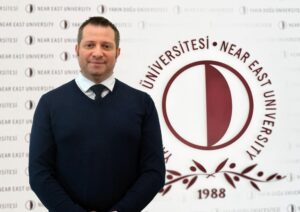
Prof. Dr. Fadi AL-TURJMAN serves as the founding Dean of the Faculty of AI and Informatics at Near East University (NEU), Cyprus. He holds multiple leadership roles including Head of the Software Engineering Department and Director of the AI and Robotics Institute and the International Research Center for AI and IoT. With a PhD in Computer Science from Queen’s University (2011), he specializes in AIoT systems, wireless networks, and blockchain integration. Affiliation: Near East University Leadership: Founding Dean for AI and Informatics, Director of AI & Robotics Institute Research Focus: His work bridges Artificial Intelligence of Things (AIoT) , Blockchain Applications , and Smart Networking . He explores cybersecurity frameworks for smart cities, quantum state optimization techniques, and novel AI-driven solutions for healthcare, agriculture, and energy systems. Key Article Trends: Recent publications emphasize Transformer models for environmental monitoring, blockchain-enabled security protocols , and evolutionary algorithms for resource optimization. His research spans interdisciplinary domains including medical diagnostics, vehicular networks, and sustainable infrastructure. Scientific Awards: Lifetime Golden Award of Dr. Suat Gunsel (2022) Multiple Best Research Awards at International Venues Labs & Teams: Directs the International Research Center for AI and IoT at NEU, leading multidisciplinary teams in developing advanced networking technologies and AI-driven solutions for global value chain applications.