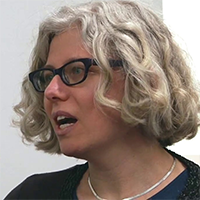
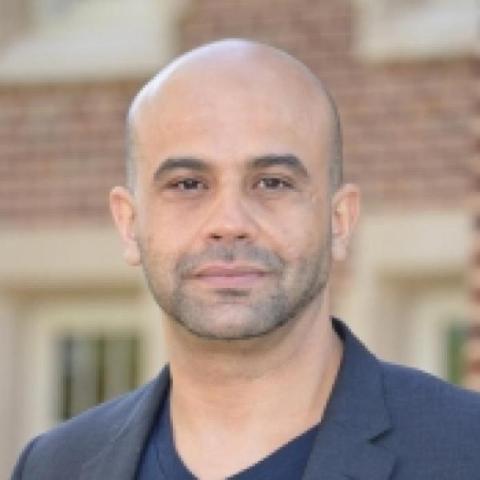
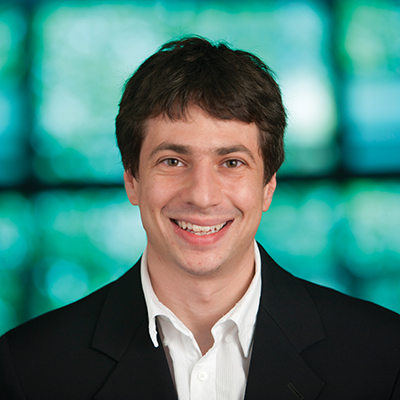
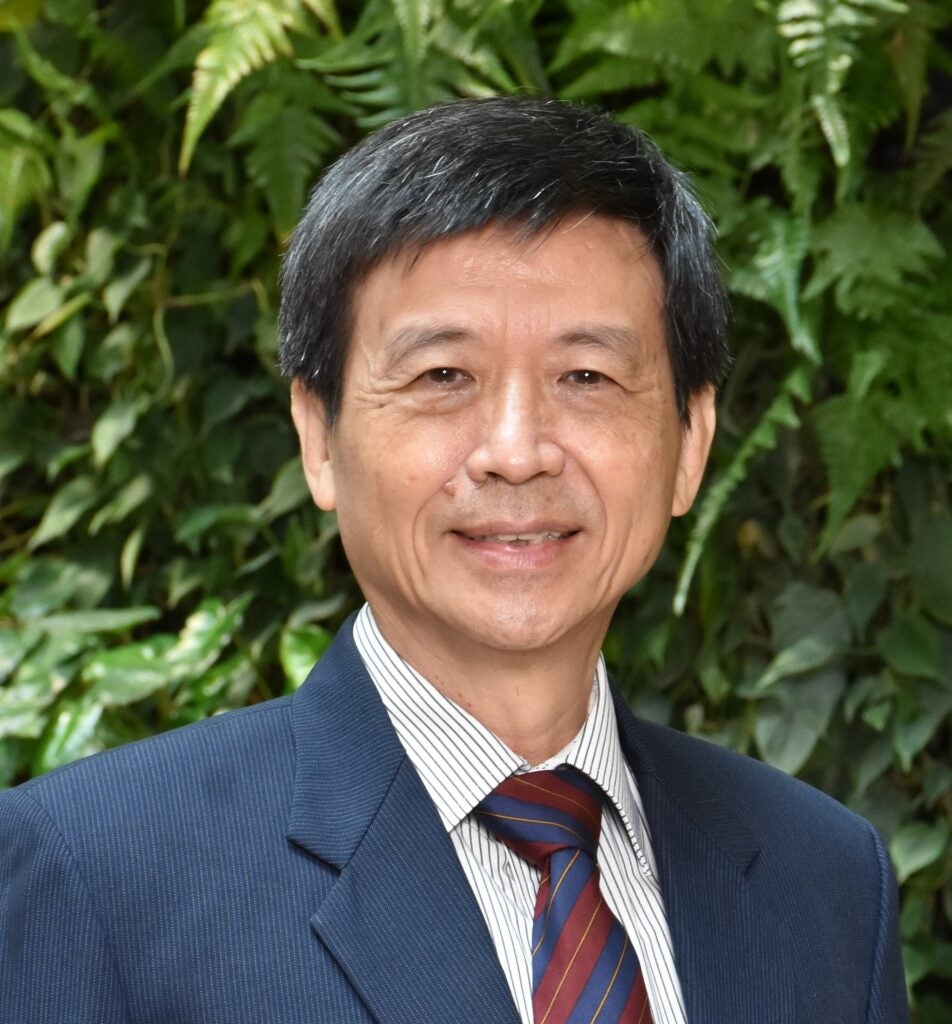
Svitlana Antonyuk-Yudina serves as a Lise Meitner senior postdoctoral researcher at the University of Graz, Austria, within the Institute of German Studies under the Austrian Science Fund (FWF) project M 3361-G "Deriving Discourse Configurationality of (East) Slavic" led by Prof. Victor Edgar Onea Gaspar. Her research centers on syntax-semantics interfaces , argument structure , and information structure in East Slavic languages (Ukrainian and Russian), with specific expertise in quantification, Instrumental syntax, Object Shift phenomena, and the realization of Givenness/Focus. Current investigations explore aspect-argument structure relations in East Slavic and cross-linguistic scope freezing, while her interests increasingly extend to generative typology and contact-induced language change. Dr. Antonyuk-Yudina holds the prestigious Lise Meitner Fellowship from the Austrian Science Fund (FWF). She is actively engaged in the FWF project M 3361-G and co-edits two Special Collection volumes for Glossa: a journal of general linguistics , with experimental work mapping East Slavic syntactic structures to prosodic realization upcoming.
Lisa Browne-Banic serves as an Adjunct Professor in Communication at Palm Beach Atlantic University, affiliated with the College of the Arts. Her academic appointment began in 2025, indicating she is a relatively new addition to the university faculty. Ms. Browne-Banic earned her Bachelor of Arts in Public Relations from Gonzaga University, which forms the foundation of her academic background. Her professional focus appears to center around communication disciplines within the digital media landscape. Her academic work is situated within the Applied Digital Media sub-department (undergraduate level), suggesting her teaching and potential research interests connect communication theory with practical digital applications. Given her position in the College of the Arts, her work likely bridges creative expression with communication strategies in digital environments. As an adjunct faculty member in Communication, Ms. Browne-Banic contributes to the university's educational mission by bringing practical industry experience to the classroom, though specific details about her teaching portfolio or professional background outside academia are not provided in the available information.
Andy Pavlo is an Associate Professor with Indefinite Tenure in the Computer Science Department at Carnegie Mellon University's School of Computer Science. He is an active member of the CMU Database Group and the Parallel Data Laboratory, where he leads research in database management systems with a focus on self-driving architectures, transaction processing, and large-scale analytics. His work bridges academic research and industry applications through projects like NoisePage, OtterTune (which he co-founded and served as CEO before it ceased operations), and Peloton. Dr. Pavlo's research interests span database management systems with particular emphasis on autonomous database architectures that can self-tune and optimize without human intervention. His work explores transaction processing systems that can handle high-throughput workloads while maintaining consistency, and large-scale data analytics techniques that efficiently process massive datasets. He has made significant contributions to query optimization, database extensibility, and automatic database tuning using machine learning techniques. His recent work on database extensibility revealed critical issues in PostgreSQL's extension ecosystem, showing that approximately 16% of extensions are incompatible with at least one other extension due to API violations and memory errors. His research output demonstrates a consistent focus on practical database systems challenges, with recent publications examining database extensibility, user-defined function optimization, and the cyclical nature of database research. The articles show a strong trend toward making database systems more autonomous, with increasing integration of machine learning techniques for automatic tuning and optimization. His work often combines deep theoretical analysis with practical implementation in open-source systems. Dijkstra Award 2024 for contributions to database systems research Dr. Pavlo actively mentors graduate students, with current advisees including Wan Shen Lim, William Zhang, and Sam Arch (co-advised with Todd Mowry). His former students have gone on to successful careers in both industry and academia. He has secured significant research funding through CMU's affiliate program with major database companies including ClickHouse, DataStax, dbt, Firebolt, MotherDuck, RelationalAI, SingleStore, Spiral, PingCAP/TiDB, Yellowbrick, and Yugabyte. His research is supported by these industry partnerships and likely includes NSF funding given his active participation in the database research community. At CMU, Dr. Pavlo leads the Database Group and organizes several seminar series including "SQL or Death," "Database Building Blocks," and "ML⇄DB Technical Talks." These seminars bring together researchers and practitioners to discuss cutting-edge developments in database systems. He also runs a summer research internship program that has attracted students for multiple consecutive years, indicating a strong research group with ongoing projects and funding.
Professor Marcin Ciszewski is a distinguished faculty member at the Stanisław Moniuszko Academy of Music in Gdańsk, where he serves at the Faculty of Vocal and Acting. A graduate of the same institution with distinction in 1999, he has established himself as one of Poland's leading countertenors and vocal pedagogues. His educational background includes studies under Professor Piotr Kusiewicz and additional training with renowned instructors including Kinga Chełmińska, Ryszard Minkiewicz, Kai Wessel, Gerhard Kahry, and Dariusz Paradowski. Graduated with distinction from the Academy of Music in Gdańsk (1999) Habilitated doctor of musical arts (2019) Professor at the Faculty of Vocal and Acting Professor Ciszewski specializes in early music performance and is recognized as one of the first Polish countertenors who made significant contributions to the development of vocal art in the authenticity movement in Poland. His research focuses on the history and physiology of countertenor voices, and he regularly conducts lectures and voice training for professional and academic groups. His artistic output spans several hundred concerts across Poland and Europe, featuring collaborations with renowned ensembles, orchestras, and conductors. He has given over a dozen world premieres of both early and contemporary works, including compositions specifically written for him by modern composers. His recordings include extensive work for Polish Radio and Television, the French music television channel Mezzo, and Radio Classique. Notable Achievements Member of the European artists' association Spedidam based in Paris Nominated for the "Fryderyk" music award in the Early Music category Honored with international titles "Outstanding Teacher" and "Excellent Vocal Teacher" Since 2006, Professor Ciszewski has maintained a successful artistic partnership with organist Ewa Bąk, performing at over one hundred national and international organ festivals. Their collaborations have resulted in numerous CD, radio, and television recordings, including world premieres of works by Polish composers such as Marian Sawa and Jacek Urbaniak.
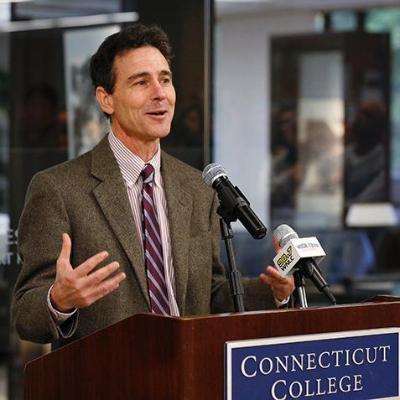
Jeff Moher is an Associate Professor of Psychology and Co-Chair of the Department of Psychology at Connecticut College, where he has been teaching since 2017. He also serves as the Data, Information, and Society Pathway Co-Coordinator, demonstrating his leadership within the institution. His educational background includes a Ph.D. and M.A. from Johns Hopkins University and a B.S. from the University of Michigan. This strong academic foundation has prepared him for his research and teaching career in cognitive psychology. Moher's research focuses on cognitive psychology and cognitive neuroscience, particularly visual attention and cognition in action. His work investigates why distractions occur, when they are likely to arise, and what mechanisms humans can harness to avoid them. He has found that humans employ various cognitive mechanisms to minimize distractions based on explicit knowledge, task goals, object properties, and recent experience, though he has also discovered surprising limitations in attentional selection. His research is particularly relevant given that over 3,000 people are killed annually in the United States from distracted driving. His recent publications show a consistent trajectory examining attentional mechanisms, distraction, and visual processing across different contexts. His work frequently employs sophisticated methodologies to measure both cognitive and motor responses to distractions, revealing how seemingly minor distractions can accumulate to induce serious performance costs. Moher's research is currently funded by grants from the National Science Foundation and the National Institutes of Health, indicating the significance and quality of his work. He likely mentors numerous students through the department's research groups, contributing to their development as researchers. He directs the CAMELab (Center for Attention, Movement, and Embodied Learning), which utilizes multiple methodologies including eye-tracking, electroencephalography, three-dimensional reach-tracking, and psychophysics to approach questions about attention and distraction. Current projects in his lab explore why salient distractors cause people to give up quickly during visual search, the brain mechanisms involved in learning to ignore distractions, how internal distractions impact physical interactions with the world, and how hand movement paths reveal information about attentional processes.
Nicola Carcano is a Lecturer at the Faculty of Economics, Università della Svizzera italiana (USI), where he teaches Structured Products. He is also a seasoned financial professional currently serving as Head of Asset Management at Phosphor Asset Management SA, indicating a strong bridge between academic instruction and industry leadership in finance. His educational background includes a degree in Economics from LUISS University in Rome, an MBA in Finance from New York University, and a PhD in Financial Markets Theory from the University of St. Gallen. The Fulbright Scholarship supported his MBA studies, highlighting early academic excellence. His research and teaching focus on fixed income finance and yield curve risk management models. Given his industry leadership roles at institutions such as UBS Investment Banking, Mercer, and Bank Vontobel, his expertise brings practical depth to academic finance. His work emphasizes quantitative and strategic aspects of asset and portfolio management for high-net-worth clients. While no publications are listed in the provided text, his research areas suggest contributions to financial modeling, risk assessment in fixed income markets, and structured investment products. Fulbright Scholarship Nicola Carcano advises through teaching rather than formal student supervision, as no advisees are listed. His career reflects a pattern of leadership in funded financial initiatives, particularly in portfolio and asset management, though specific grant details are not provided. His dual role in academia and executive management suggests a focus on applied research and industry-relevant curriculum development. He is associated with the academic environment at USI's Lugano campus, particularly the Blue Building (Office PC-006), and is available for contact every Wednesday before or after lectures, indicating active engagement with students and the academic community.
Arthur Weststeijn is an Assistant Professor in Political History at Utrecht University, specializing in the history of the Dutch Republic and its colonial empire, the history and contemporary politics of Italy, and the history of Spain and Latin America. He is affiliated with the Department of History and Art History within the Humanities faculty and is part of the Research Institute for History and Art History, focusing on International and Political History. Dr. Weststeijn's educational background includes: PhD in History, European University Institute, Florence (2010) RMA in History, European University Institute, Florence (2006) MA in Philosophy, University of Amsterdam (2005) MA in History, University of Amsterdam (2004) Erasmus Exchange, Universidad de Sevilla (2000-2001) His research focuses on the intellectual history of power, particularly examining ideas that express and contest political authority through two main themes: colonialism (how ideas have shaped European colonialism and resistance against it) and republicanism (how resistance to autocratic rule has given rise to ideas of liberty, citizenship, and democracy). His work spans early-modern Dutch colonialism, anticolonial thought, the history of democracy, and connections between ancient and modern forms of settler colonialism. He has published extensively on early modern republicanism, the political uses of classical heritage, and the making of modern Italy. Weststeijn's scholarly output demonstrates a consistent focus on the intersections between political thought, colonial history, and republican theory. His work often examines how historical ideas continue to shape contemporary political discourse, particularly regarding democracy, citizenship, and colonial legacies. He frequently engages with both European and transatlantic intellectual traditions, showing particular expertise in Dutch and Italian political thought. His notable awards and fellowships include: Fellow, Huntington Library, San Marino, California (Summer 2022) Fellow, John Carter Brown Library, Providence, Rhode Island (Spring 2019) Director of Historical Studies, Royal Netherlands Institute in Rome (2011-2017) Dr. Weststeijn has served as a visiting researcher at prestigious institutions including the Cambridge Centre for Political Thought, University of Southern California, University of Wisconsin at Madison, and University of Padua. He frequently appears as an expert commentator on Italian culture and politics in Dutch media and maintains an active public intellectual presence. He is involved in multiple research initiatives including the IOS research themes on Contesting Governance, Futures of Democracy, and Longtermism and Institutional Change. His work often involves interdisciplinary collaboration with archaeologists, classicists, and scholars from various humanities disciplines.
Professor Christiane Funk holds the position of Professor of Biochemistry in the Department of Chemistry at Umeå University (Sweden). Her affiliation with the Institute for Molecular Bioscience (IMB) is indicated by the webpage structure, though her primary academic appointment appears tied to Umeå University. Current role: Full-time Professor Institution: Umeå University Research interests focus on biochemistry and molecular biosciences, likely involving structural or mechanistic studies given her departmental affiliation. Specific research topics are not detailed in the provided text, but her title suggests expertise in biochemical processes at the molecular level. No awards, grants, or active lab teams are explicitly mentioned in the text. The email domain (uq.edu.au) hints at possible ties to The University of Queensland, though this may relate to prior roles or collaborative affiliations.
Ethan Poole is an Assistant Professor in the Department of Linguistics at the University of California, Los Angeles (UCLA). His research focuses on syntax, the syntax-semantics interface, and morphological case, particularly in Finnish. Key areas include reconstruction effects, quirky subjects, and cross-clausal dependencies, with recent work on the Williams Cycle and Hindi-Urdu binding. His research interests span syntactic movement interpretation, morphological case (especially Finnish), and quirky subjects. He explores topics like embedding, intervention effects in tough-constructions, and NPI grammaticality illusions. Collaborative work includes studies on Hindi-Urdu scrambling and tough-constructions. His articles analyze reconstruction effects, trace semantics, and syntactic phases, reflecting a focus on formal syntax and interface constraints. Notable themes include case assignment mechanisms and the theoretical implications of syntactic movement for semantic interpretation. No specific scientific awards or grants are listed in the provided information. He advises no students in the given data. His work contributes to foundational questions in syntactic theory and cross-linguistic variation.
Professor Esra Özyürek is a faculty member in the Faculty of Divinity at the University of Cambridge, holding the title of Sultan Qaboos Professor of Abrahamic Faiths and Shared Values . She also serves as the CIP Academic Director and acts as a Supervisor under the guidance of Ayesha Ulhaq, Djan Sauerborn, Imad Ahmed, Peach Hoyle, and Zain Bin Bayah. Her academic positions include roles as a University Teaching Officer and part of the Religious Studies specialists group within the academic staff. Professor Özyürek's educational background includes a PhD from the University of Michigan and undergraduate degrees in Sociology and Political Science from Boğaziçi University, Istanbul. Her research interests are expansive and interdisciplinary, focusing on secularism, Islam and Muslims in Western societies, Muslim-Jewish relations, religious conversion, empathy in interfaith contexts, Holocaust memory, civil religion, and regional studies of Turkey and Germany. These areas reflect a deep engagement with contemporary religious dynamics, cultural diversity, and historical memory. Professor Özyürek is currently accepting PhD students but is not available for consultancy. She is affiliated with the School of Arts & Humanities and contributes to its research initiatives and graduate programs. Her professional narrative highlights academic leadership and supervision. She collaborates within the CIP (Centre for Interfaith Practices?) team , fostering dialogue on shared values among Abrahamic faiths. While no specific grants are mentioned, her work likely involves collaborative projects given her supervisory roles and academic directorship.
Nizar F. Hermes serves as Associate Professor and Department Chair in the Department of Middle Eastern and South Asian Studies at the University of Virginia, concurrently holding the position of Director of Graduate Studies. His office is located in 141 New Cabell Hall, with Spring 2025 office hours held Tuesdays from 12:00-3:00 PM. He maintains dual professional email contacts through the university system. His academic foundation includes: PhD in Comparative Literature, University of Toronto Dr. Hermes' research program centers on North African and Mediterranean literary traditions, with deep specialization in premodern Arabic-Islamic cultural production. His work investigates poetic representations of urban spaces, cross-cultural encounters between the Islamic world and Europe, and the transmission of literary heritage across the Mediterranean. Particular attention is given to Maghribī poetic imagination, elegiac traditions, and the intersection of literature with food history and refugee experiences. His methodological approach combines close textual analysis with historical contextualization to reveal continuities in Arab literary consciousness. Analysis of his recent publications (2014-2025) reveals three dominant scholarly trajectories: 1) The literary reconstruction of North African cities through poetic elegies, 2) Cross-cultural encounters documented in Arabic travel literature and folk poetry, and 3) The representation of European 'others' in medieval Arabic texts. His 2024 monograph 'Of Lost Cities' synthesizes these threads while his edited volume 'The City in Arabic Literature' (2018) establishes foundational frameworks for urban studies in Arabic literary criticism. No scientific awards or fellowships were documented in the source materials. While his role as Director of Graduate Studies indicates active mentorship responsibilities, specific student advisees and grant funding details were not provided in the available documentation. His scholarly output demonstrates sustained engagement with graduate education through publications on teaching methodologies for Arabic humanistic literature. No dedicated research laboratories or formal collaborative teams were referenced, though his co-edited volumes and multi-author publications suggest active participation in scholarly communities focused on Mediterranean studies and comparative literature.
Christiana Mavroyiakoumou is a Courant Instructor/Assistant Professor at the Courant Institute of Mathematical Sciences, New York University. She specializes in fluid dynamics and fluid-structure interactions, with a focus on vortex dynamics, membrane flutter, and bio-inspired systems. Her research integrates modeling, numerical simulations, and experimental insights to study phenomena such as bird flock formations and fish swimming hydrodynamics. Mavroyiakoumou holds a Ph.D. from the University of Michigan (2022), an M.Sc. from the University of Oxford (2017), and a B.Sc. from Imperial College London (2016). Education: PhD in Applied & Interdisciplinary Mathematics, University of Michigan (2017–2022) MSc in Mathematical Modeling and Scientific Computing, University of Oxford (2016–2017) BSc in Mathematics, Imperial College London (2013–2016) Her research interests span fluid-structure interactions, vortex dynamics, and collective locomotion. She investigates how fluid flows mediate interactions between bodies, such as the aerodynamics of bird formations and the hydrodynamics of flapping foils. Her work bridges theoretical models with experimental observations, contributing to both fundamental science and bio-inspired engineering. Mavroyiakoumou has received prestigious awards including the Joseph B. Keller Fellowship (NYU), Peter Smereka Award (U-M), and ProQuest Distinguished Dissertation (U-M). She actively engages in academic service, organizing conferences and mentoring students. Her teaching experience includes courses on mathematical modeling, differential equations, and algebra at NYU and the University of Michigan. Key Research Themes: Flow-mediated collective behavior and instability mechanisms Vortex wake interactions and their role in locomotion Membrane dynamics in inviscid and viscous flows She collaborates with experimentalists like Leif Ristroph and Jun Zhang at NYU's Applied Math Lab, focusing on experimental validation of theoretical models. Her recent work explores self-amplifying waves in bird formations and the aerodynamic origins of flight coordination.
Aaron Roth is the Henry Salvatori Professor of Computer and Cognitive Science at the University of Pennsylvania, affiliated with the Department of Computer and Information Science in the School of Engineering and Applied Science. He holds a secondary appointment in the Department of Statistics and Data Science at the Wharton School and is associated with several research centers including PRiML, the Warren Center for Network and Data Sciences, and the AMCS program. He received his PhD from Carnegie Mellon University under Avrim Blum and was a postdoc at Microsoft Research New England. His research focuses on algorithms and machine learning, particularly in private data analysis, fairness in machine learning, game theory, mechanism design, and learning theory. His work bridges theoretical computer science with societal concerns, advocating for ethically aware algorithm design. He co-authored the book The Ethical Algorithm with Michael Kearns, which explores how to embed social values like privacy and fairness into algorithmic systems. His recent publications show a strong trend toward uncertainty quantification, multicalibration, conformal prediction, and fairness in reinforcement learning and high-dimensional settings. He frequently publishes in top-tier venues such as STOC, FOCS, ICML, NeurIPS, and COLT, often with a focus on rigorous theoretical foundations with practical implications. Hans Sigrist Prize Presidential Early Career Award for Scientists and Engineers (PECASE) Alfred P. Sloan Research Fellowship NSF CAREER award Google Faculty Research Award Amazon Research Award Yahoo Academic Career Enhancement award Roth has advised numerous PhD students and postdocs, many of whom now hold academic or industry research positions. He is also an Amazon Scholar at AWS and has served in advisory roles for companies like Apple, Facebook, Leapyear, and Spectrum Labs. He has been active in organizing workshops and tutorials on differential privacy, fairness, and adaptive data analysis, and has given keynotes at major conferences and institutions worldwide. He leads research groups and collaborates widely across Penn, focusing on responsible AI, privacy, and algorithmic fairness. His lab produces foundational work on calibration, unlearning, privacy-preserving learning, and equitable decision-making systems.
LU Wen Feng is an Adjunct Associate Professor in the Department of Mechanical Engineering at the National University of Singapore (NUS), affiliated with the College of Design and Engineering. His research focuses on advanced manufacturing technologies, including additive manufacturing, robotics, and AI-driven systems. He explores sustainable design methodologies, smart manufacturing innovations, and bioprinting applications. Key areas include optimizing material processes, enhancing mechanical properties of printed materials, and developing autonomous robotic solutions for industrial tasks. Contact: mpelwf@nus.edu.sg , located at E3-02-07. Research Interests : His work bridges AI and manufacturing, emphasizing Knowledge graph integration for additive manufacturing, Autonomous robotic systems in industrial settings, Bioprinting for tissue repair with smart bioinks, Topology optimization for lightweight and sustainable structures, Material characterization and process engineering for 3D-printed composites. Recent Article Trends : LU Wen Feng's 2025 articles highlight advancements in AI-augmented manufacturing systems (e.g., MaViLa, AutoMEX) and sustainable design workflows. His 2024 studies address material anisotropy, corrosion behavior, and topology optimization strategies for lattice structures. These trends reflect his interdisciplinary approach to solving challenges in additive manufacturing, robotics, and biomedical applications. Awards : No scientific awards explicitly mentioned. Advising & Grants : No current graduate students or grants listed. His research likely integrates industry-academia collaborations given the focus on applied manufacturing technologies. Labs/Teams : Not explicitly detailed, but his work suggests involvement in advanced manufacturing labs and AI-robotics teams at NUS.
Barbara Given is a University Distinguished Professor in the College of Nursing at Michigan State University. Her research focuses on the interplay between formal healthcare systems and informal caregiver networks, particularly in oncology and geriatric populations. She has secured over 34 years of NIH funding, including grants from the National Cancer Institute, NIMH, and others. Dr. Given earned her Ph.D. at MSU, following a BSN and MSN from Ohio State University. Her work centers on caregiver burden, symptom management in chronic disease, and caregiver-patient communication. She developed the Caregiver Burden Instrument, widely used in research and clinical settings across multiple languages. Key research interests include: 1) caregiver stress and support systems, 2) symptom management in cancer patients, and 3) healthcare coordination challenges in aging populations. Her NIH-funded projects address adherence to oral chemotherapy, fall prevention in cancer survivors, and psychosocial outcomes post-treatment. Recent articles emphasize innovation in symptom tracking (e.g., text messaging for adherence), caregiver mental health barriers, and longitudinal symptom analysis. Awards/fellowships are not explicitly stated, though her sustained NIH support reflects significant recognition. Dr. Given advises on grants and mentors nurse researchers. She collaborates on interdisciplinary teams focused on palliative care, gerontology, and technology-based interventions. Her work bridges clinical practice and policy, advocating for integrated care models to reduce caregiver burden.