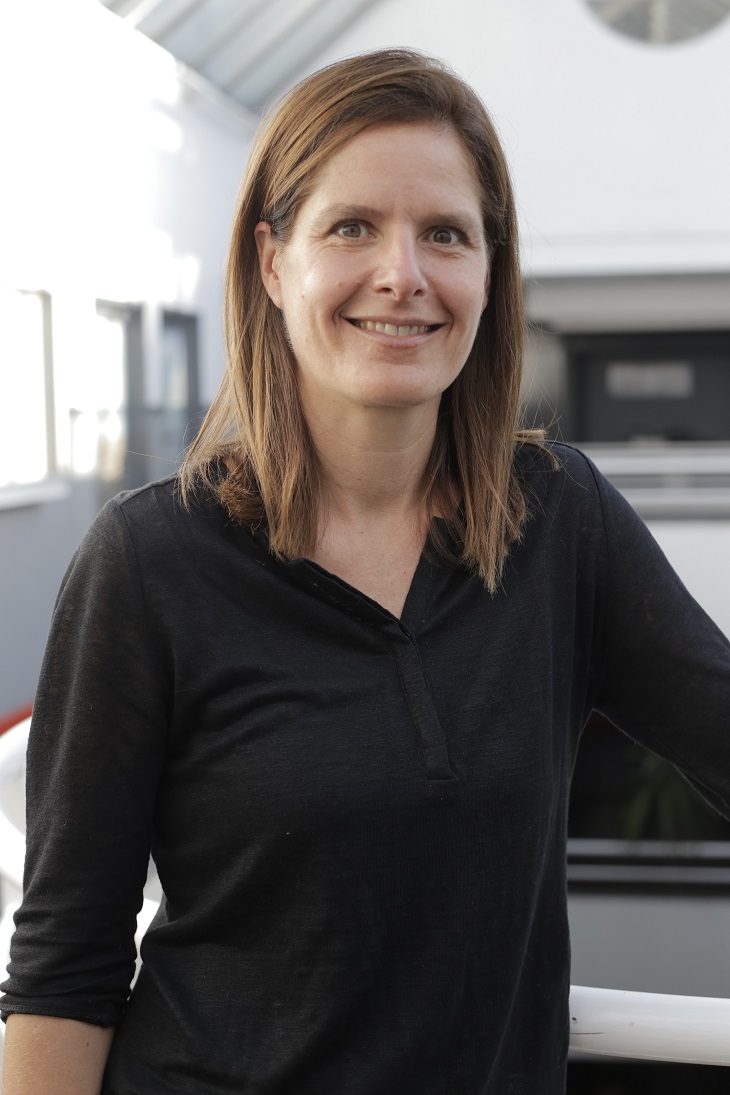
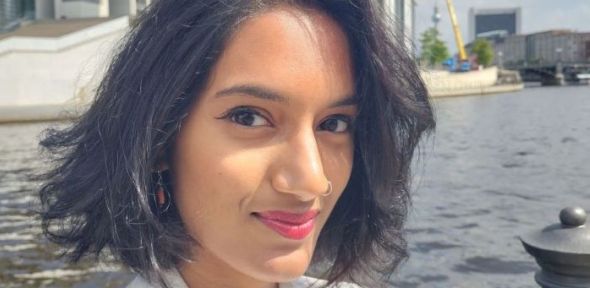
Imke Nienaber-Requillart is a Senior Lecturer at IÉSEG School of Management, France, specializing in languages and history. She teaches courses in Global History, Geopolitics, and German/French language communication at both Bachelor and Master cycles of the Grande École program. Education: Zweites Staatsexamen in History and French Literature (2002, Teachers Training College Leverkusen); Erstes Staatsexamen in History and French Literature (1999, University of Göttingen); Specialized Master in History (1996, University of Paris I Panthéon-Sorbonne). Her professional experience includes teaching German language courses since 2009 and Global History since 2024 at IÉSEG.
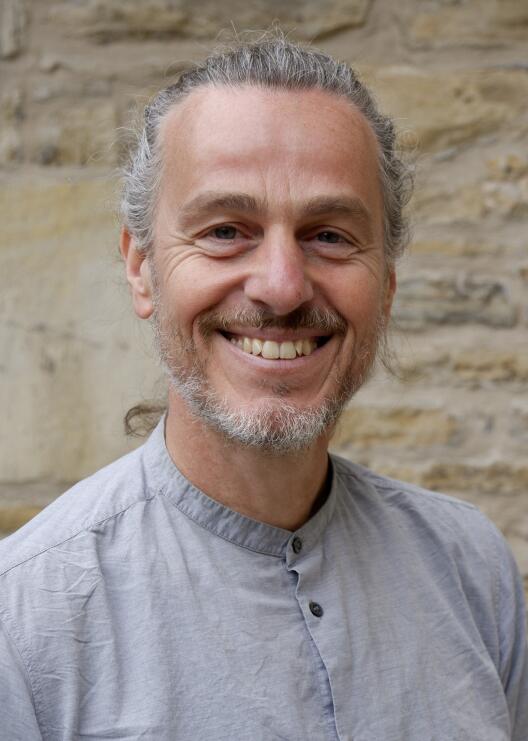
Prof. Dr. Teresa Sansour is a full Professor of Pedagogy and Didactics in Cases of Intellectual Development Impairments with Special Consideration of Inclusive Educational Processes at the Institute for Special and Rehabilitation Education, Carl von Ossietzky University of Oldenburg. She joined the university in April 2020 and has held leadership roles including Vice Director for Teaching at the Center for Teacher Education (since October 2021) and Deputy Institute Director (since April 2025). Her academic affiliations reflect a deep commitment to inclusive and special education. Her research focuses on educational interactions in the context of intellectual disabilities, inclusive subject didactics, the participation of people with complex disabilities, and the professionalization of educators and prospective teachers. Key research areas include inclusive literacy, art education, teacher motivation, and social integration. She leads significant funded projects such as Literary Texts in Simple Language (LiES) and Lighthouses for Participation , both aimed at enhancing inclusion for people with disabilities. The recent publications of Prof. Sansour span topics such as school absenteeism in autism, self-concept in intellectual disabilities, inclusive art education, and participation models. Her work demonstrates a strong interdisciplinary and applied focus, combining qualitative methods with pedagogical innovation. She frequently publishes in peer-reviewed journals and edited volumes on special education, inclusive didactics, and disability studies. Member, German Society for Educational Research (DGFE), Section Special Education Member, Network for Complex Disabilities e.V. Chair, Advisory Board of the Georg-Leffers-Stiftung Chair, Association for the Promotion of Pedagogical Rehabilitation and Social Integration of People in Risk Situations Board Member, German Interdisciplinary Society for Research Promotion for People with Intellectual Disabilities (DIFGB) Prof. Sansour actively contributes to academic leadership and teacher training. She serves as program coordinator for the Bachelor’s in Special Education and accreditation officer for the Special Education/Social Studies cluster. Her work includes advising on inclusive curricula, fostering research collaborations, and securing external funding for inclusive initiatives. She has not received explicitly mentioned scientific awards in the provided text. She is involved in multiple collaborative research teams and projects focused on inclusion, literacy, and disability rights.
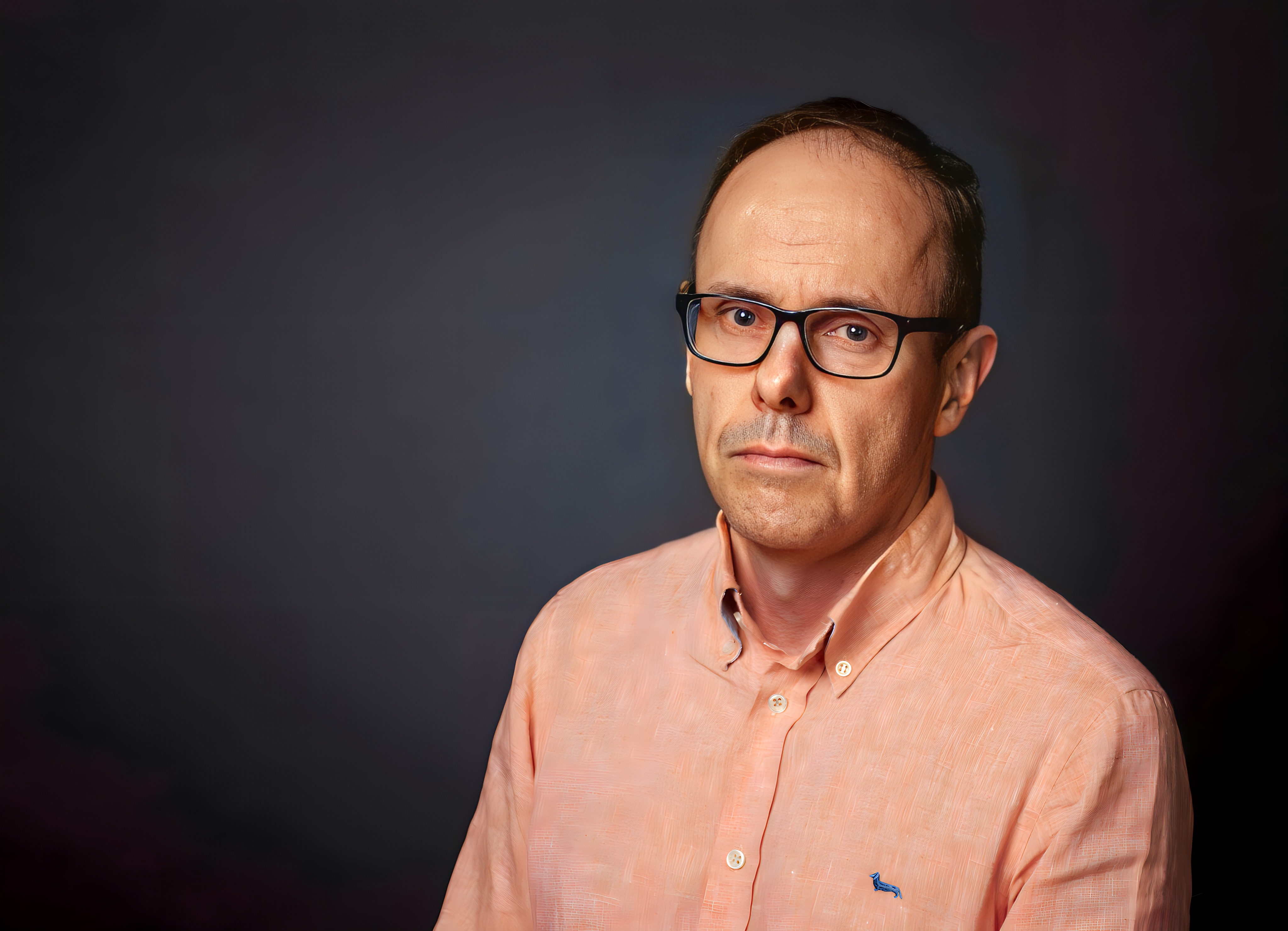
Hakan Özkan is a Privatdozent and Research Associate at the Institute of Arabic and Islamic Studies, Department of Middle Eastern Studies, University of Münster, where he has been working since 2007 in various capacities. He was awarded his Venia Legendi (Habilitation) in November 2019 for Arabic and Islamic Studies with his thesis 'History of Eastern Zajal – Dialectal Arabic Verse Poetry from the East of the Arab World.' His academic background includes a Franco-German doctorate completed in 2006 from Université de Provence and University of Cologne, supervised by Claude Audebert and Monika Gronke, with external reviewers including Wolfhart P. Heinrichs from Harvard University. His educational background includes: 2019: Venia Legendi for Arabic and Islamic Studies, University of Münster 2002-2006: Franco-German Doctorate in Arabic Studies and Narratology (Université de Provence and University of Cologne) 1995-2000: Master of Arts in Islamic Studies, Oriental Languages and Literatures (University of Cologne) 2000-2001: Course program in Modern Standard Arabic and Syrian-Lebanese dialect at Institut Français d'Etudes Arabes de Damas Özkan's research focuses on premodern Arabic dialect poetry, particularly zajal and muwashshaḥ forms, narratology, prosimeter literature, socio-literary history, and diachronic dialectology. His interdisciplinary approach bridges linguistic analysis with literary criticism, examining how dialectal forms evolved within Arabic literary traditions across different historical periods and geographical regions. He has conducted extensive field research in Arab countries including Syria, Egypt, Lebanon, Tunisia, and Morocco, with particular emphasis on the historical development of poetic forms from the Mamluk through Ottoman periods. His publication history demonstrates consistent scholarly contributions to Arabic literary studies, with his 2020 monograph 'History of Eastern Zajal' representing a landmark study in the field. His recent work has expanded to include analyses of religious poetry praising the Prophet Muhammad in zajal form, wine poetry in Arabic literary traditions, and the integration of dialects into Arabic language teaching methodologies. His scholarly output spans monographs, critical editions, encyclopedia entries, journal articles, and book chapters across multiple languages including German, English, French, and Turkish. Among his academic recognitions: 2018: Second place on shortlist for W2 Professorship for Arabic Language and Translation Science, University of Leipzig 2008: Offered Junior Professorship at American University in Cairo (declined) 2007: Second place on shortlist for maître de conférence position at University of Nancy 2007: Official Qualification from National University Council (CNU) for positions as maître de conférence at French universities Özkan has served on numerous academic committees, including appointment committees for professorships in Sinology and Arabic and Islamic Studies at the University of Münster. He has been a juror for the Sheikh Hamad Award for Translation and International Understanding in Doha and has served on the steering committee for the 'Translation for Dialogue' program of the Anna Lindh Foundation. His editorial work includes reviewing for Mamluk Studies Review, Die Welt des Islams, and Middle Eastern Literatures since 2012. His scholarly activities extend to linguistic fieldwork on Pontic Greek dialects in Turkey and organizing significant academic conferences including 'The Race Course of Literature – An-Nawāǧī and His Contemporaries' in 2018 at the University of Münster. His multilingual capabilities (Arabic, Turkish, German, French, English, Persian, Ottoman Turkish, and knowledge of Modern Greek) enable his comparative work across multiple linguistic and cultural traditions in the Mediterranean region.
Associate Professor James Andrew Phillips is a faculty member in the Department of Philosophy within the School of Humanities and Languages at the University of New South Wales (UNSW). He has been at UNSW since 2006, initially serving as a Vice-Chancellor's postdoctoral fellow, followed by an ARC Australian Research Fellow from 2007-2011, before assuming his current combined research-teaching position. His educational background includes undergraduate studies at the University of Queensland, an MA in Comparative Literature and Critical Theory from Monash University, and a PhD in Philosophy from the University of Tasmania (2002). During his doctoral studies, he spent time as an OeAD scholar in Innsbruck and a DAAD scholar in Potsdam. He has also been a visiting research fellow at the Institute for Advanced Studies in the Humanities at the University of Edinburgh and a resident associate at the National Humanities Center in North Carolina. Phillips' research focuses on aesthetics, phenomenology, film and philosophy, political theory, literary criticism, and British and Irish literature. His current book project explores the philosophy of fiction, drawing on concepts of 'world' in Kant and Heidegger. He has translated two significant philosophical works: Christoph Menke's Tragic Play: Irony and Theater from Sophocles to Beckett (2009) and Alexander García Düttmann's Philosophy of Exaggeration (2007). His recent publications demonstrate a strong focus on the intersection of philosophy, aesthetics, and cinema, with particular attention to phenomenological approaches to film studies and the political dimensions of aesthetic experience. His work bridges continental philosophy with contemporary cultural analysis, creating connections between historical philosophical traditions and modern artistic practices. Philosophy Group Convenor Research Committee Member - School of Humanities and Languages Phillips currently supervises PhD candidate Finnegan Hassey (on Arendt's concept of nationalism, jointly with Jess Whyte) and MA student Sofia Kartavtseva (on Sade and aesthetics). He teaches political philosophy, aesthetics, and the history of German philosophy, with planned courses for 2025 including ARTS3368 'Modern European Philosophy' and ARTS2384 'Political Philosophy'.
Anne-Lise François is an Associate Professor in the Departments of English and Comparative Literature at the University of California, Berkeley. She earned her PhD in Comparative Literature from Princeton University. Her work bridges 18th- and 19th-century British literature with contemporary environmental humanities, focusing on themes of ecological ethics, literary minimalism, and non-productive temporalities. Current research explores pastoral worldliness and commons-based economies in Romantic and modernist texts. Key scholarly contributions include her prize-winning book *Open Secrets: The Literature of Uncounted Experience* (2007), which examines 'affirmative reticence' in works by Jane Austen, Mme de Lafayette, and Emily Dickinson. Her recent projects address climate crisis narratives, food politics, and the intersection of aesthetic theory with ecological urgency. Teaching emphasizes transhistorical literary studies and environmental criticism Active in interdisciplinary collaborations across literature, philosophy, and environmental science Current book project: *Provident Improvisers: Parables of Subsistence from Wordsworth to Benjamin* Her writing synthesizes close textual analysis with broader socio-ecological frameworks, challenging Enlightenment models of productivity and advocating for 'recessive fulfillment' in both art and life.
Claudia Schwabe is a Professor in the Department of World Languages and Cultures at Utah State University, within the College of Humanities and Social Sciences. She holds a Ph.D. in German Studies from the University of Florida and has been teaching at USU since 2012. Her academic work bridges German language, literature, and cultural studies with a strong focus on fairy tales and folklore in both historical and contemporary contexts. Education: Ph.D., German Studies, University of Florida, 2012 M.A., Teaching Business Education, Georgia College & State University, 2005 B.A., International Business Administration, Northumbria University, UK, 2003 B.A., International Administrative Management, Accadis, Germany, 2003 Her research centers on 18th- and 19th-century Romantic literature, literary and folk fairy tales (Kunstmärchen), East German cinema, German Orientalism, and the adaptation of fairy tales in new media and popular culture. She explores how traditional narratives are transformed across media and cultures, especially in American television and film. Her teaching reflects this interdisciplinary approach, covering German language, literature, film, business German, and translation. Her recent scholarly publications reveal a strong trend in analyzing the cultural and political significance of fairy tales, particularly in DEFA films and modern adaptations like Grimm and Once Upon a Time . She has published monographs, edited volumes, and peer-reviewed articles with leading presses and journals in folklore and German studies, demonstrating sustained scholarly impact. Scientific Awards and Honors: Faculty Undergraduate Advisor of the Year Award, LPCS, USU (2015) Ed Glatfelter Service Award, LPCS, USU (2016-2017) Nominations for Dean’s Giraffe Award (2016, 2018) Nominations for Researcher of the Year (2016, 2017) Travel Awards from College of Humanities and Social Sciences and Center for Women and Gender Studies (2014) Graduate Student Teaching Award, University of Florida (2010) Grinter Fellowship, University of Florida (2008–2010) Claudia Schwabe has been actively involved in academic service, grant writing (participant in grant proposal seminar), and mentoring. She has served as a faculty advisor and contributed to curriculum development, particularly in interdisciplinary folklore and fairy-tale pedagogy. Her editorial work on volumes like New Approaches to Teaching Folk and Fairy Tales highlights her leadership in shaping scholarly discourse. She has also reviewed books for major journals, contributing to peer evaluation in her field. While no formal lab or research team is mentioned, her work is deeply collaborative, involving co-edited volumes, co-authored entries, and invitations to contribute to high-impact academic projects. Her ongoing research suggests continued exploration of fairy tales in global media, pedagogy, and cultural politics.
Professor Helen Finch (University of Leeds) is a leading scholar in German Literature , with a focus on Holocaust Studies , Queer Memory , and German-Jewish Cultural Production . Affiliated with the School of Languages, Cultures and Societies and the Centre for Jewish Studies , she co-leads the LCS Queer Area Studies Network and contributes to equality initiatives through the LGBT+ staff network . Research: Holocaust representation in German works, queer identity in postwar literature, transnational memory studies, curriculum design in German studies Awards: Fellow of the Higher Education Academy (2014) Academic Output : Her 15 most recent publications span Holocaust poetics , queer life writing , translation ethics , and Sebaldian intertextuality , with a particular focus on intersections between trauma , identity , and intergenerational testimony . Supervision : Currently guides PhD research on topics including transnational transphobia , queer art practices , and LGBTQ+ cross-cultural representation . Her students explore areas from German exile photography to postcolonial queer narratives .
Dr Syamala Roberts serves as an Affiliated Lecturer in the German Section of the Faculty of Modern and Medieval Languages and Linguistics at the University of Cambridge and holds a Fellowship with Director of Studies responsibilities at Emmanuel College. Her academic profile spans teaching German and Comparative Literatures from the 18th century to contemporary periods, alongside specialized supervision in undergraduate papers Ge1, Ge5, Ge6, and Ge12. Her educational foundation encompasses German, French, and Comparative Literatures studied across the University of Cambridge, University of Paris, and Humboldt University of Berlin. This multilingual background informs her interdisciplinary scholarship. Roberts' research investigates Modernism through intersecting lenses of Sound Studies, Media Theory, and Art History, with particular emphasis on auditory representation in early 20th-century German texts. Her doctoral work identified emerging 'aural imaginaries' in Rilke, Kafka, and Thomas Mann, while current postdoctoral research examines Indo-German cultural cross-fertilization during the interwar period. This includes analyzing reciprocal intellectual exchanges between German-speaking intellectuals and pre-independence Indian thinkers through literary and artistic production. Recent publications demonstrate consistent thematic focus across German literary studies and cross-cultural analysis, particularly in journals like the Publications of the English Goethe Society and Austrian Studies. Key contributions address Kafka's auditory poetics, comparative studies of Mann's Death in Venice with Rilke's elegies, and critical assessments of German-Indian cultural intersections. No major scientific awards are documented in available sources. As Director of Studies, Roberts provides undergraduate supervision and encourages Year Abroad Project proposals aligned with her research interests. Her postdoctoral work receives institutional support through an Emmanuel College research fellowship.
Sophie Salvo serves as an Assistant Professor in the Department of Germanic Studies at the University of Chicago, where she has taught since 2018. Holding a Ph.D. from Columbia University (2017), her scholarship bridges German literary studies, gender theory, and the history of linguistic thought, with primary focus on the nineteenth century and extending to contemporary political literature. Her acclaimed monograph Articulating Difference: Sex and Language in the German Nineteenth Century (University of Chicago Press, 2024) examines how gendered conceptions of language shaped intellectual discourse and literary production. Education Ph.D. in Germanic Studies, Columbia University, 2017 Salvo's research investigates the historical interplay between sex, gender, and language in German intellectual history, tracing how gendered tropes influenced linguistic analysis from Grimm's grammatical gender theories to modernist literary experiments. Her work reveals how patriarchal frameworks became embedded in linguistic science while highlighting women's contributions to language studies despite systemic exclusion. Current projects include an edited volume on the 'Reinvention of Patriarchy' around 1800 and a book analyzing twenty-first century political novels across the ideological spectrum. Her 2019-2024 publications demonstrate consistent interdisciplinary rigor, connecting historical linguistics with feminist theory and political analysis. Articles like 'Father is Always Uncertain' (2024) on Bachofen's patriarchal epistemology and 'The Sex of Language' (2021) on Jacob Grimm collectively chart how gendered assumptions permeated linguistic discourse, influencing both nineteenth-century scholarship and contemporary debates about inclusive language. Salvo actively mentors graduate research on topics including sexuality in Realism, women's writing, Holocaust representations in East German textbooks, and the rise of right-wing politics in post-reunification Germany. As co-organizer of the German Studies Scholarly Seminar at the Newberry Library, she facilitates interdisciplinary dialogue through regular events featuring scholars from institutions nationwide. Her teaching encompasses courses on Robert Musil, gender and sexuality studies, and contemporary political literature, reflecting her commitment to connecting historical analysis with urgent contemporary issues.
Chantal Pellegrini is a Lecturer and PhD student at the Chair of Computer Aided Medical Procedures (Prof. Navab) at Technical University of Munich (TUM). Her research focuses on Deep Learning applications in medical imaging, including explainable AI for radiology report generation and Vision-Language Models for clinical decision support. She actively contributes to the DHM, NARVIS Lab, and RobUSt research groups. Teaching responsibilities include courses such as 'Computer Aided Medical Procedures', 'Medical Augmented Reality', and 'Surgical Robotics'. She supervises student projects in medical AI and healthcare innovation, with recent projects involving multimodal report generation and graph pretraining for medical applications. Education: BSc/MSc Computer Science (TUM), current PhD student since 2022 Labs: DHM (German Heart Center), NARVIS Lab, RobUSt Robotics & Ultrasound Research Keywords: Medical Image Understanding, Radiology Reports, LLMs in Healthcare Her publications span surgical OR dataset development, reinforcement learning for clinical decisions, and explainable X-ray diagnosis systems. She mentors MA/BA students in medical AI and project management for healthcare applications.
Shannon Barrios is an Associate Professor in the Department of Linguistics at the University of Utah, where she has served since 2022. She co-directs the Speech Acquisition Lab and specializes in second language acquisition, phonetics/phonology, and psycholinguistics. Her research explores how adult learners develop perceptual and lexical representations of novel phonological contrasts, with a focus on cross-language speech perception, orthographic effects, and social factors in input processing. BA, Spanish (SUNY Geneseo, 2004) MA, Linguistics (Syracuse University, 2007) PhD, Linguistics (University of Maryland, 2013) Her research interests span adult second language acquisition , phonolexical development , and accent bias . She investigates how learners process phonological contrasts, the role of orthography in speech perception, and the influence of social roles (e.g., teachers vs. peers) on language learning. Her work combines behavioral experiments, ERP/MEG neuroimaging, and computational modeling. Barrios’ recent publications (2024–2020) focus on representational fuzziness , talker variability , and lexical contrast mechanisms . Her 2024 Languages paper proposes a factorial typology for evaluating auditory word recognition scenarios, while her 2024 JASA Express study highlights individual listener variation in cross-language speech perception. Earlier works examine allophone acquisition, orthographic input effects, and neural correlates of phonological mapping. She has received two teaching awards from the University of Maryland (2013). Her teaching portfolio includes undergraduate and graduate courses in phonetics , psycholinguistics , and second language acquisition theory . She also leads workshops on research ethics, mentee development, and academic literacies.
Minh Hue Nguyen is a Senior Lecturer in EAL/TESOL Teacher Education at Monash University's School of Curriculum, Teaching and Inclusive Education within the Faculty of Education. She holds a PhD in Education (TESOL focused) from Monash University and has taught at Vietnam National University, Deakin University, and the University of Melbourne. Her educational background includes: PhD in Education (TESOL focused), Monash University (2015) MA in Applied Linguistics, Victoria University of Wellington (2008) BA in English Language Teaching, Vietnam National University (2003) Nguyen's research centers on teachers' professional learning, curriculum, and pedagogy in TESOL and EAL contexts, with specific focus on emotional experiences, identity development, mentoring, agency, and collaboration. She explores sociocultural contexts of teacher development through activity theory and sociocultural perspectives, examining how institutions support teachers' learning journeys from preservice to in-service stages. Recent work investigates professional learning for teacher educators and implementation of the Victorian EAL Curriculum. Her 15 most recent publications (2024-2025) reveal a strong thematic focus on language teacher agency, identity negotiation, and multilingual pedagogies. The research increasingly examines emotional dimensions of teaching, cross-cultural identity tensions, and collaborative models between EAL and content teachers, with significant contributions to understanding how teachers navigate complex educational contexts while developing professional identities. Her scientific recognition includes: Penny McKay Award Special Commendation Monash Education Research Community's Publication Award ATEA/Kay Martinez Award for Best Paper Monash Dean of Education’s ECR Project Award Advancing Women's Research Success Grant Vietnamese Government Merit-based Scholarships Nguyen actively supervises PhD research in TESOL teacher professional learning, teacher identity, and curriculum development, though is currently unavailable for new PhD students until 2027. She contributes to editorial boards for Teaching and Teacher Education, Second Language Teacher Education, and System journals, and serves on the Australian Teacher Education Association. Her work supports UN Sustainable Development Goal 4 (Quality Education) through inclusive pedagogical frameworks. She leads research projects including 'Elucidating practices to assist EAL learners to acquire specialised science vocabulary' and 'Establishing an online community-of-practice model for learner agency during work placements,' demonstrating commitment to practical educational innovations.
Janice McGregor is an Associate Professor of German Studies at the University of Arizona, affiliated with the College of Humanities and the Interdisciplinary PhD program in Second Language Acquisition and Teaching (SLAT). She holds a PhD in German Applied Linguistics from Penn State and previously served as Assistant Professor of German at Kansas State University (2012–2018). Her research focuses on three core areas: ideologies in language learning/teaching, discourses around intercultural learning in study abroad, and reflexive qualitative research methods in applied linguistics. She emphasizes the importance of examining social interactions and authentic language use patterns across communities. Her work critiques traditional methodologies in study abroad research, advocating for more reflexive and decolonized approaches. Notable contributions include analyzing interactions in study abroad contexts, the role of authenticity in language learning, and the ethical dimensions of global mobility programs. Current courses include GER 244 (Real Talk: Why Language Matters) and GER 508 (Approaches to German Studies). Her research methodologies often integrate autoethnography and critical discourse analysis. McGregor’s articles consistently address themes of agency, authenticity, and methodological innovation. Recent work explores ungrading practices and the use of technology in L2 learning. She actively participates in academic discourse through her contributions to conferences like the Tucson Humanities Festival and her involvement in curricular decolonization initiatives.
Aleksandra Pomiecko is a Lecturer in Modern History at King's College London, specializing in Eastern European and Soviet history. She has held teaching positions at the University of St Andrews, the University of Manitoba, and the University of Toronto, and was a postdoctoral fellow at the Mandel Center for Advanced Holocaust Studies. PhD, University of Toronto MA, Uniwersytet Jagielloński Her research focuses on war and violence in twentieth-century Eastern Europe, particularly paramilitary activity, partisan movements, and local experiences of conflict. She explores topics such as Belarusian nationalism, post-war insurgency, and the role of religious institutions during the Holocaust. Recent publications examine paramilitarism in Polish borderlands, Soviet nation-building policies, and religious resistance in wartime Poland. Her work contributes to understanding the longue durée of paramilitary dynamics and their global implications. Scientific awards: Postdoctoral Fellowship at the Mandel Center for Advanced Holocaust Studies
Murat FİDAN serves as an Associate Professor in the Department of Economics at Kastamonu University's Faculty of Economics and Administrative Sciences, where he has been a full-time faculty member since 2020. Previously, he held academic positions at Gaziantep University and Kilis 7 Aralık University, specializing in Ottoman economic history and price dynamics. His career spans over two decades of teaching and research in Turkish higher education. His academic credentials include a PhD in Islamic History and Arts from Ondokuz Mayıs University (2003), a Master's in Islamic Law from İnönü University (1996), and a BA in Theology from Ankara University (1993). His foreign language proficiency includes English (YÖKDİL score 60, 2017). FİDAN's research centers on Ottoman economic structures, with particular expertise in price history, trade relations, and institutional analysis. His work bridges Ottoman history with economic methodology, examining narh (price control) records, guild systems, and international trade dynamics. He has published extensively on Kastamonu's regional economy, Ottoman-Russian commercial relations, and the evolution of monetary systems, contributing significantly to understanding pre-modern economic mechanisms through primary source analysis. His publication portfolio shows consistent output with 43 total works including 19 journal articles, 14 conference papers, 2 books, and 8 book chapters. The research demonstrates chronological depth from 2004 to 2024, with recent focus on waqf (endowment) institutions, comparative economic thought, and Eastern Mediterranean maritime history. Methodologically, he combines archival research with economic analysis, primarily using Ottoman-era price records and customs tariff documents. FİDAN has successfully supervised 13 master's theses focusing on Ottoman economic history, Turkish women's labor participation, and regional price dynamics. His sole research project (2016-2018) examined price movements in Kastamonu between 1673-1806 using narh records. He maintains active collaborations with scholars like Serkan Dilek and Tolga Ulusoy, co-authoring multiple publications on economic history topics.