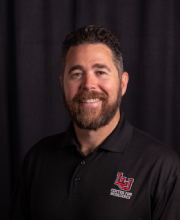
Dr. Nicholas Brake is an Associate Professor at Lamar University's Department of Civil and Environmental Engineering, focusing on reclaimed materials, wireless power transfer applications in concrete, and fatigue fracture modeling for pavements. His research spans recycled concrete aggregate, coal ash utilization, and electromagnetic cementitious composites. Education: Ph.D., M.S., B.S. in Civil Engineering from Michigan State University Awards: Anita Riddle Fellowship (2018), Lamar Merit Award (2018), Presidential Faculty Fellowship (2015), and multiple scholarships during his studies. His research emphasizes three key areas: 1) Material reclamation using recycled concrete aggregate, coal combustion residuals, and EAF slag. 2) Electromagnetic transport properties for wireless vehicle charging applications. 3) Fatigue damage modeling in concrete pavements. Through 3D printing integration and design-build-test pedagogy, he enhances student learning outcomes. Recent publications focus on international engineering education (2020), magnetic concrete composites (2019), and advanced testing methodologies for civil infrastructure (2018). His teaching innovation includes developing nine Lamar University courses with active learning strategies that improved student design confidence (p Scientific Awards: Anita Riddle Excellence in Teaching Fellowship (2018) Presidential Faculty Fellowship for Teaching Innovation (2015) Outstanding Teaching Assistant Award at Michigan State (2011) Dr. Brake mentors undergraduate and graduate researchers, including doctoral candidates Mahdi Feizbahr and Hossein Hariri Asli (2023-2024). His lab (LUMS) houses advanced testing systems like Instron 5965/8803, MTS Insight 100SL, and thermal analyzers for material characterization.
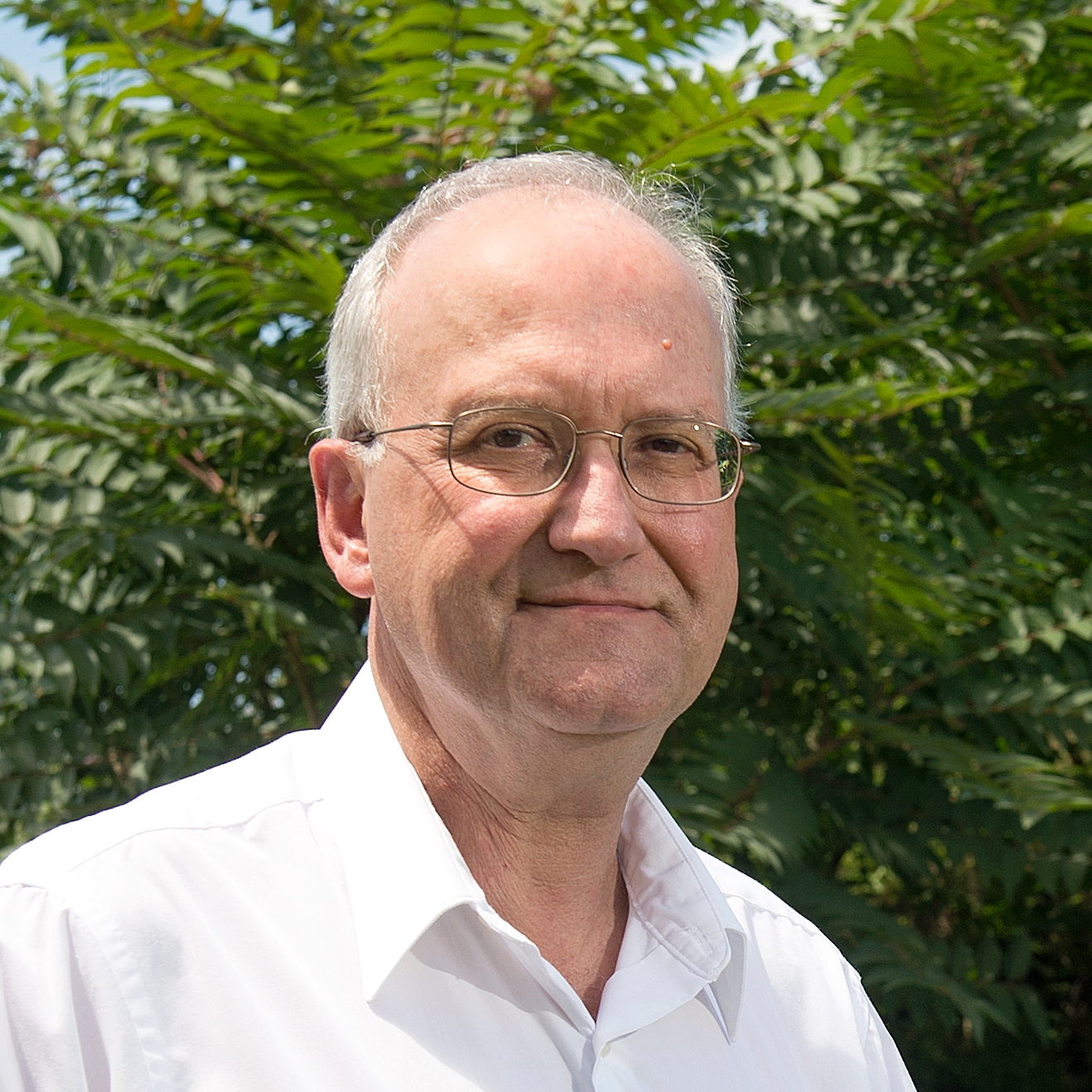
apl. Prof. Dr. habil. Thomas Seifert is an extraordinary professor in the Professorship for Mineral Deposits and Petrology at the Faculty of Geosciences, Geotechnics and Mining of Technische Universität Bergakademie Freiberg. His academic career spans over three decades with significant contributions to economic geology and mineral deposit research. Since 2011, he has served as an apl. Professor for Geology and Metallogeny of mineral resource deposits, and since 2012 has been in charge of the Professorship for Lagerstättenlehre (mineral deposit science) and Petrology at TUBAF. Seifert's research focuses on metallogeny of Sn-W-Mo-Li-In polymetallic deposits, hydrothermal Au and Ag polymetallic mineralization, Archaean Lithium-Cesium-Tantalum pegmatites, petrology of lamprophyres and related rocks, and Large Igneous Provinces. His work bridges theoretical understanding with practical mineral exploration, particularly for critical raw materials essential for modern technology. His extensive field experience includes research in Germany, Australia, Zimbabwe, Russia, China, Canada, and the United States. His recent publications demonstrate a strong emphasis on critical metal exploration, particularly tin, lithium, indium, and other strategic elements. His research combines detailed mineralogical, geochemical, and geochronological studies to understand the formation processes of economically important deposits. The articles reveal his expertise in both European Variscan deposits and Archaean cratonic settings, with particular attention to the Erzgebirge region of Germany and comparable deposits worldwide. Seifert has received the Julius-Weisbach-Preis in 2009, recognizing his contributions to geoscience. He maintains active memberships in key professional societies including the Society of Economic Geologists (since 1996), International Association for the Genesis of Ore Deposits (since 1993), and Deutsche Gesellschaft für Geowissenschaften (since 2002). His collaborative research extends across international boundaries, working with institutions in Australia, Zimbabwe, Czech Republic, Sweden, and other countries. His work on iron oxide-apatite deposits, critical metal enrichment in skarn systems, and Ni-Cu-PGE sulfide mineralization demonstrates the breadth of his research interests and their relevance to modern mineral exploration challenges.
Dr. Srinivas Prabakar is a Professor of Instruction in the Department of Civil Engineering at The University of Texas at Arlington (UTA). He specializes in water quality, wastewater treatment, and environmental engineering, with a focus on chloramine stability, disinfection by-products, and sustainable water management. Dr. Prabakar holds a PhD in Civil Engineering from UTA (2012), an ME in Chemical Engineering from Annamalai University (2004), and a B.Tech in Chemical Engineering from the University of Madras (2000). Education: PhD, Civil Engineering, UTA (2012) ME, Chemical Engineering, Annamalai University (2004) B.Tech, Chemical Engineering, University of Madras (2000) His research interests center on improving water distribution systems and addressing challenges in wastewater management. Notable projects include investigations into factors affecting chloramine stability in UTA’s water systems and studies on biosorption of heavy metals. Dr. Prabakar has authored or co-authored over 30 publications, including peer-reviewed articles on topics like chlorine decay dynamics and microbial fuel cell applications. His teaching portfolio includes courses such as Principles of Environmental Engineering and Biological Processes, reflecting his commitment to educating future environmental engineers. Dr. Prabakar has advised numerous graduate students and served on dissertation committees, mentoring research in areas like concrete durability and landfill biocovers. Dr. Prabakar’s service roles include Faculty Advisor for Civil Engineering undergraduates, membership in the Texas Water Science & Research Division, and reviewer positions for journals like ASCE Journal of Environmental Engineering . He has received awards including the 2024 Outstanding Faculty Advisor Award and the 2019 Tau Beta Pi-Eminent Engineer distinction. His current grants focus on advancing nanocomposite materials for sewer pipe longevity and identifying critical source areas for non-point pollutants in North Texas watersheds. Dr. Prabakar’s interdisciplinary work bridges environmental engineering challenges with practical solutions for sustainable infrastructure.
Dieu Tien Bui is a Full Professor in the Department of Business and IT at the University of South-Eastern Norway (USN) School of Business. His research focuses on Geospatial Artificial Intelligence Machine Learning GIS and Remote Sensing Natural Hazard Modeling Environmental Problems (landslides, floods, soil salinity, biomass) . He has contributed to over 15 recent publications in journals like Science of the Total Environment , Remote Sensing , and Geomorphology , emphasizing hybrid AI models for landslide and flood susceptibility. His work spans Vietnam, India, China, and Iran with applications in climate change adaptation and disaster management. Scientific Awards: Global Highly Cited Researcher PhD Supervision: He has supervised 8 PhD students at institutions including USN, NTNU, and Vietnamese universities.
Professor B M Azizur Rahman is a distinguished academic in the field of photonics at City University London, where he has served as Professor of Photonics in the Department of Electrical and Electronic Engineering since 2000. Previously, he was Reader in Photonics (1996-2000) and Lecturer (1988-1996) at the same institution. His academic journey began with a BEng (1971-1976) and MSc (1976-1979) from Bangladesh University of Engineering and Technology, followed by a PhD from University College London (1979-1982). His educational background laid the foundation for his extensive research career focusing on photonics, integrated waveguides, and optical sensors. Professor Rahman has made significant contributions to fields including plasmonic biosensors, fiber optic sensing technologies, supercontinuum generation, and metamaterial-based sensing systems. His research bridges theoretical modeling with practical applications in environmental monitoring, healthcare diagnostics, and engineering solutions. An analysis of his most recent publications (2022-2025) reveals a strong focus on advanced sensing technologies with applications across multiple domains. His work demonstrates expertise in combining photonics principles with nanotechnology, artificial intelligence, and novel materials to develop highly sensitive detection systems. Key research trends include the integration of deep learning with optical sensing, development of plasmonic-enhanced biosensors, and innovative waveguide designs for improved optical performance. Professor Rahman has maintained a highly productive research career with over 443 publications documented in his ORCID profile. His work shows extensive international collaboration with researchers from institutions in the UK, Bangladesh, Thailand, and other countries. While specific grant information is not provided in the available data, his sustained publication record across high-impact journals indicates successful research funding and supervision of numerous research projects over his career. His research group appears to focus on experimental photonics, computational modeling of optical systems, and development of novel sensing platforms.
Mohd Ahmad Syed is a Senior Lecturer in Geotechnical Engineering at the University of Manchester's Department of Civil Engineering and Management. His research focuses on climate change impacts on geotechnical infrastructure, resilient and sustainable infrastructure design, and earthquake engineering. He holds a PhD from the Indian Institute of Technology Bombay and has industry experience with firms like Consulting Engineering Services (I) Pvt. Ltd and Dar Al-Handasah Consultants. Education: BTech (Hons) in Civil Engineering, Indian Institute of Technology Kanpur (2001) MTech in Geotechnical Engineering, Indian Institute of Technology Kanpur (2003) PhD in Seismic Analyses of Waterfront Structures, Indian Institute of Technology Bombay (2009) Research Interests: Climate change modelling for geotechnical infrastructure resilience Development of sustainable construction materials (e.g., bagasse ash) Seismic risk analysis for dams and tunnels in West Africa Artificial soil weathering techniques for laboratory testing Coupled numerical methods for embankment stability under climate scenarios Editorial Activities: Assistant Editor, International Journal of Geomechanics (ASCE) Assistant Editor, Indian Geotechnical Journal (Springer) Key Achievements: Developed first-of-its-kind displacement-based S-curve for seismic earth pressure analysis Co-developed methodologies for post-liquefaction pile behavior and blast-loaded tunnels Guided 10 PhD/MSc students in geotechnical resilience and sustainability topics
Ioannis Antoniadis is a Professor at the School of Mechanical Engineering , National Technical University of Athens (NTUA), and serves as the Dean and Director of the Dynamics and Acoustics Laboratory (DAL) . He has held academic positions since 1982, rising through the ranks from Scientific Research Assistant to full Professor since 2012. Education: Diploma in Mechanical Engineering (NTUA, 1981), Ph.D. (NTUA, 1987) Research Focus: Vibration isolation, negative stiffness systems, smart materials, seismic protection, and energy conversion Key Projects: 25+ funded research initiatives including KDamper for seismic mitigation, TRANVIC for vehicle vibration control, and 3BUILD for 3D-printing construction systems His work has resulted in 15+ peer-reviewed publications on seismic protection devices and vibration control systems, with applications in bridges, wind turbines, and industrial equipment. He has taught courses in Dynamics and Vibrations , Noise Vibration , and Signal Processing at NTUA, while leading the Mechanical Design and Automatic Control Section .
Thomas Lippmann is a Professor and Director of the Center of Ocean Engineering within the Department of Earth Sciences at the University of New Hampshire (UNH), part of the College of Engineering and Physical Sciences. He holds dual affiliations with the Ocean Engineering program and retains a research associate position at Scripps Institution of Oceanography’s Integrated Oceanography Division. His career includes roles as a Research Oceanographer at Scripps (1995–1999), Research Scientist at Ohio State University (1999–2008), and a Postdoctoral scholar at the Naval Postgraduate School (1992–1995). Dr. Lippmann earned a BA in Mathematics and Biology from Linfield College (1985), followed by an MS (1989) and PhD (1992) in Bio Oceanography from Oregon State University. His research focuses on shallow water oceanography, hydrography, and bathymetric evolution in coastal waters, combining experimental fieldwork, theoretical analysis, and numerical modeling. Key areas include nearshore processes, inlet dynamics, sediment transport pathways, and effects of sea level rise on estuaries. He has conducted 14 field experiments and accumulated over 18 months of fieldwork experience. His teaching portfolio includes advanced courses such as Beaches and Coasts , Ocean Measurements Lab , and Spectral Analysis of Geophysical Data , reflecting his expertise in nearshore hydrodynamics and coastal engineering. He also advises doctoral research and oversees special programs like Advanced Research Experience . Advising and grants: While no specific grant details are provided, his extensive fieldwork and collaborative projects suggest significant grant-funded research. His academic leadership includes directing UNH’s Ocean Engineering Center and organizing interdisciplinary programs like CLOSES-GAP. No scientific awards are explicitly mentioned in the texts. Labs and teams: Active in the Integrated Oceanography Division (SIO) and the Byrd Polar Research Center. Collaborates with institutions like Ohio State University, Naval Postgraduate School, and the University of New Hampshire’s Center for Coastal and Ocean Mapping. His work integrates with the Great Bay Estuary’s tidal energy test site and remote sensing projects.
Pengfei Wang is an Assistant Professor in the Department of Civil & Environmental Engineering at Old Dominion University (ODU). He holds a Ph.D. in Geotechnical Engineering and an M.S. in Statistics from UCLA, alongside a B.S. in Transportation Engineering from Tongji University. Prior to ODU, he conducted postdoctoral research at UCLA. His expertise focuses on Geotechnical Engineering , Engineering Seismology , and Applied Statistics , with emphasis on regional geo-hazard modeling, multi-hazards risk assessment, and statistical learning applications. Key research interests include seismic site response analysis, liquefaction susceptibility, and probabilistic risk frameworks for infrastructure resilience. Dr. Wang’s work integrates geospatial analysis and statistical methodologies to address challenges in earthquake engineering. He has developed frameworks for regional landslide and liquefaction risk assessments, particularly in vulnerable regions like California’s Sacramento-San Joaquin Delta. His contributions include advancing HVSR (Horizontal-to-Vertical Spectral Ratio) methodologies and ergodic site response modeling. He maintains active collaborations with institutions globally and contributes to open-source databases for seismic data, promoting transparency and reproducibility in geotechnical research. His educational background in transportation engineering enriches interdisciplinary approaches to civil infrastructure resilience.
Martin C. Chapman serves as Research Professor of Geophysics in Virginia Tech's College of Science, Department of Geosciences. He directs the Virginia Tech Seismological Observatory (VTSO), operating from a Cold War-era fallout shelter near the Virginia Tech Executive Airport. His research integrates observational seismology with earthquake hazard mitigation in plate-interior regions, particularly eastern North America. His educational background includes: Ph.D. in Geophysics, Virginia Tech (1998) M.S. in Geophysics, Virginia Tech (1979) B.S. in Geophysics, Virginia Tech (1977) Chapman's primary research focuses on plate-interior seismicity/tectonics and strong-motion seismology. He combines field observations from the VTSO network with global strong-motion data to investigate earthquake causes and wave propagation characteristics. Recent work emphasizes induced seismicity from aquifer recharge and wastewater injection, site amplification effects in sedimentary basins, and development of seismic monitoring networks for risk reduction in eastern North America. Analysis of his 2022-2025 publications reveals concentrated research on injection-induced seismicity in Virginia's Hampton Roads region, sediment thickness mapping of Atlantic/Gulf Coastal Plains for ground motion prediction, and advanced characterization of historical earthquakes (1886 Charleston) and recent sequences (2024 New Jersey, 2020 Sparta). His methodology integrates dense seismic arrays, machine learning detection algorithms, and geospatial analysis to refine hazard models. His scientific recognition includes: Jesuit Seismological Association Award for Contributions to Observational Seismology (2016) As VTSO director, Chapman oversees seismic monitoring across Virginia and leads the Hampton Roads Seismic Network initiative. His work involves significant collaboration with the US Geological Survey on coastal plain amplification studies and regional seismic hazard workshops. Current projects focus on optimizing earthquake detection during aquifer recharge operations and developing site-specific amplification models for eastern US infrastructure. Chapman's laboratory operations center on the VTSO's network of seismic stations, utilizing advanced techniques including reverse vertical seismic profiling and dense array backprojection imaging. His team's recent field deployments target induced seismicity monitoring in Southeast Virginia and detailed characterization of the Central Virginia Seismic Zone.
Dr. J. David Frost is the Elizabeth and Bill Higginbotham Professor of Civil Engineering at Georgia Institute of Technology and a Regents' Entrepreneur. He has held academic positions at Purdue University and Georgia Tech, with a focus on geotechnical engineering and disaster response. As founding director of Georgia Tech's Savannah campus and head of the Geosystems Engineering Group, Frost has shaped academic programs and research initiatives. Education: B.A.I and B.A. in Civil Engineering and Mathematics, Trinity College, Dublin (1980) M.S. and Ph.D. in Civil Engineering, Purdue University (1986, 1989) Research Interests span geotechnical engineering, bio-inspired design, and disaster resilience. His work emphasizes digital data collection systems for subsurface hazard assessment, soil-polymeric material interactions, and geotechnical responses to earthquakes, hurricanes, and anthropogenic disasters. Recent projects integrate ant nest geometry, plant root mechanics, and geosynthetic innovations into infrastructure solutions. Scientific Contributions include two U.S. patents for subsurface data systems, leadership in NSF-funded post-disaster reconnaissance missions (e.g., 9/11, Türkiye earthquakes), and co-founding the Geotechnical Extreme Events Reconnaissance (GEER) Association. His articles reflect expertise in bio-inspired geotechnics, machine learning for disaster modeling, and advanced computational simulations. Awards & Recognition: ASCE Huber Civil Engineering Research Prize NSF National Young Investigator Award Georgia Society of Professional Engineers Engineer of the Year in Education Coastal Business & Education Technology Alliance Leadership Innovation Award Professional Engagement includes chairing the Savannah Area GIS board, advising on ASCE Geo-Legislative Committees, and founding a software company serving 350+ global clients. His work bridges academia, policy, and industry innovation.
Dr. Mohammed Z E B Elshafie serves as a University Lecturer in Construction Engineering at the University of Cambridge's Department of Engineering and holds the position of Director of Studies in Engineering at Hughes Hall College. His academic career bridges theoretical research and practical construction applications, with emphasis on innovation in construction methodologies and geotechnical analysis. His educational background includes: BSc in Civil Engineering from the University of Khartoum, Sudan MPhil in Engineering from the University of Cambridge PhD in Engineering from the University of Cambridge Dr. Elshafie's research focuses on three interconnected domains: Construction Engineering (advancing construction methods for complex projects), Geotechnical Engineering (modeling soil-structure interactions and subsurface processes), and Instrumentation and Monitoring (developing real-time sensing systems for infrastructure safety). His work integrates computational modeling with field instrumentation to address challenges in sustainable infrastructure development. His distinguished awards portfolio features: Philip Turner Prize for Geotechnical Centrifuge Modelling (2007) Academy of Achievement recognition as a top global scholar (2005) Gates Cambridge Scholarship (2004) UK Government Overseas Research Studentship Award (2004) Hughes Hall College Major Scholarship (2004) University of Khartoum Academic Excellence Award (2002) As an educator, Dr. Elshafie supervises all undergraduate years in Structural Mechanics while mentoring students through his Director of Studies role at Hughes Hall. His teaching integrates practical construction challenges with theoretical principles. He maintains active affiliation with the Laing O’Rourke Centre for Construction Engineering and Technology, which drives innovation in construction processes and digital engineering solutions through industry-academia collaboration.
Prof. Flavio Anselmetti is a Full Professor of Quaternary Geology and Paleoclimatology at the University of Bern , where he has been employed since 2012. He also serves as the Managing Director of the Institute of Geological Sciences . Prior to this, he held significant roles at ETH Zurich, including SNSF Assistant Professor, and at EAWAG Dübendorf as Head of the Sedimentology Group, while remaining a Titular Professor at ETH Zurich until 2012. His academic training includes a Diploma in Geology (1990) from the University of Basel , followed by a PhD (1994) from ETH Zurich and University of Miami (USA) . He spent three years as a Postdoctoral Fellow and Research Associate at the University of Miami between 1994 and 1997. Paleoseismology : Using lacustrine and marine sediments to reconstruct earthquake and tsunami records Climate Change Studies : Investigating Holocene and Pleistocene climate shifts through sediment cores Sediment Dynamics : Analyzing source-to-sink systems and glacial sediment properties His recent publications focus on sedimentary archives in Science Advances , Quaternary Research , and Environmental Modelling and Software , with an emphasis on deep learning applications in sediment analysis , multi-proxy paleoenvironmental reconstructions , and human impact assessments over millennia. He has contributed to major projects in the Alpine foreland and Caribbean regions . Prof. Anselmetti leads the Quaternary Geology and Paleoclimatology Research Group and collaborates with international teams on ICDP-DOVE drilling campaigns and multibeam bathymetry mapping in Swiss lakes. His work extends to geohazard assessment , carbonate-siliciclastic shelf dynamics , and subaqueous fault analysis in active tectonic zones.
Paola Passalacqua is a Professor of Environmental and Water Resources Engineering and Earth and Planetary Sciences at the University of Texas at Austin, holding the L.B. (Preach) Meaders Professorship in Engineering. She leads research at the intersection of water resources engineering, geomorphology, and hydrology, focusing on river networks, coastal restoration, and remote sensing applications. Her work addresses delta dynamics, floodplain connectivity, and community resilience to compound hazards. Dr. Passalacqua earned a PhD in Civil Engineering (2009) and MS in Water Resources from the University of Minnesota, and dual MS/BS in Environmental Engineering from the University of Genoa (2002). Her technical expertise includes hydrological connectivity, network theory, and morphodynamic modeling using LiDAR and satellite data. Research interests emphasize river delta structure/dynamics, floodplain sedimentation, and translating science into community adaptation strategies. She co-developed tools like GeoFlood for large-scale flood mapping and the pyDeltaRCM numerical delta model. Her interdisciplinary approach integrates socio-technical vulnerability analysis with environmental systems. Awards include the endowed Meaders Professorship. Current projects involve coastal Alaska infrastructure resilience, SWOT satellite data applications, and delta sustainability in the Anthropocene. She leads the Passalacqua Research Group, engaging in citizen science through initiatives like UTBiome.
Catherine Mulligan is a Distinguished Research Professor in the Department of Building, Civil, and Environmental Engineering at Concordia University, where she also serves as Director of the Concordia Institute for Water, Energy and Sustainable Systems. She was previously the Concordia Research Chair in Geoenvironmental Sustainability (Tier I) until 2021, having held this prestigious research chair since 2002 (initially as Tier II). Dr. Mulligan earned her B.Eng. and M.Eng. degrees in chemical engineering from McGill University, followed by a Ph.D. specializing in geoenvironmental engineering, also from McGill University. After 16 years working at McGill University and in industry (including positions at the Biotechnology Research Institute of the National Research Council and SNC Research Corp.), she joined Concordia University in 1999 as an Assistant Professor, was promoted to Associate Professor in 2002, and to full Professor in 2008. Her research spans multiple critical areas of environmental engineering with a focus on contamination remediation. She specializes in surfactant-enhanced washing and flushing of contaminated soils and sediments, treatment of metal-contaminated media, bioremediation techniques, and various wastewater treatment methods. Her work includes biosurfactant applications, in-situ sediment remediation, anaerobic treatment processes, membrane technologies for water treatment, and energy generation through pressure-reduced osmosis. She has developed sustainability indicators and focuses on practical applications of environmental engineering solutions. Analysis of her recent publications (2023-2025) reveals a continued leadership in environmental engineering with particular emphasis on nanotechnology applications for oil spill cleanup in sensitive coastal regions, advanced membrane technologies for water treatment and energy generation, microbially induced calcite precipitation for mining waste remediation, sustainable resource recovery approaches from waste batteries, and innovative techniques for eutrophic lake restoration. Her research demonstrates a consistent focus on practical, sustainable solutions to environmental contamination problems across diverse settings. Dr. Mulligan's scientific contributions have been recognized with numerous prestigious awards including Fellowship in the Royal Society of Canada, Canadian Academy of Engineering, Engineering Institute of Canada, and the Canadian Society for Civil Engineering. She has received the RSC Miroslaw Romanowski Medal, the Geoenvironmental Award, the A.G. Stermac Award of the CGS, and the John B. Sterling Medal of the EIC. Her Concordia-specific honors include the Provost Circle of Distinction, Concordia Sustainability Champion, and the Petro Canada Young Innovator Award (awarded twice). With over 40 years of research experience across government, industrial, and academic environments, Dr. Mulligan has supervised to completion more than 75 graduate students in Civil Engineering (MASc and PhD programs). Her research has attracted significant funding, including a $1,643,700 NSERC CREATE grant for the Institute in Water, Energy and Sustainability, which represents the first Concordia project to receive funding through this program. She has authored more than 140 refereed papers, holds three patents, and has made substantial editorial contributions as Section Editor for the Journal of Environmental Engineering, Chief Editor for Waste (MDPI), and serves on multiple other editorial boards. As Director of the Concordia Institute for Water, Energy and Sustainable Systems, Dr. Mulligan leads an interdisciplinary team focused on training students in sustainable development practices and advancing research into innovative solutions for water, energy, and resource conservation challenges. The institute represents a significant hub for environmental research and education at Concordia University.