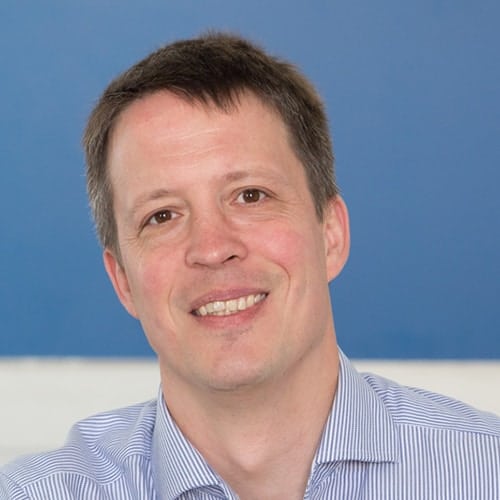
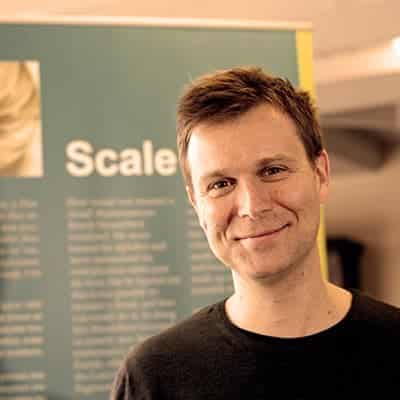
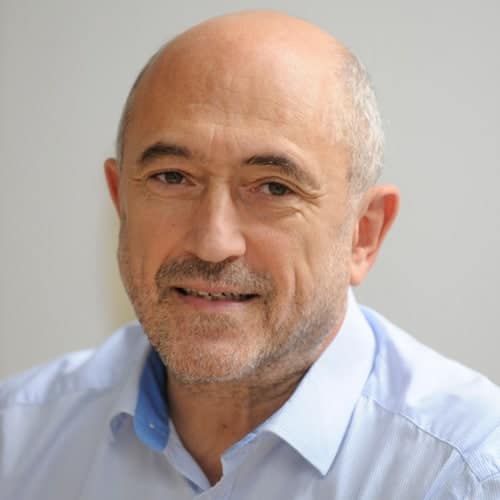
Henning Tangen Søgaard is an Associate Professor at the Department of Mechanical and Production Engineering, part of AU Engineering at Aarhus University. He teaches mathematics, numerical methods, and mathematical statistics to BEng students. His research focuses on robotics in agriculture , dynamic modeling , and precision agriculture . Primary Affiliation: Department of Mechanical and Production Engineering, AU Engineering, Aarhus University Research Expertise: Computer vision, control systems for agricultural robotics, environmental modeling (ammonia emissions, spray drift), and wireless sensor networks. His work includes developing autonomous systems for weed control, GPS-based geo-referencing of crops, and mathematical models for fertilizer-related emissions. Publications span peer-reviewed journals and reports in agricultural engineering , robotics , and environmental science . Scientific awards are not mentioned in the provided text. He has no listed PhD students but has collaborated on multiple projects. For direct contact, his email is hts@mpe.au.dk .
Amila Abeynayaka is a Postdoctoral Fellow at DTU SUSTAIN, Technical University of Denmark, affiliated with the Department of Environmental and Resource Technology. Their research focuses on microplastics pollution, plastic waste management, water quality assessment, and science-policy integration for global environmental governance. Recent work highlights include Investigations into microplastic distribution along Sri Lankan coastlines Development of science-based recommendations for global plastic treaties Material flow analysis of plastic waste in ASEAN countries Amila’s expertise spans life cycle assessment of water technologies, disaster response systems, and environmental data accessibility. They collaborate on regional and international projects addressing plastic pollution and sustainable resource management.
Julian Antony Quick is a Researcher at the Department of Wind and Energy Systems within the Technical University of Denmark . His work focuses on wind farm optimization, energy management, and market-driven renewable energy systems. Active research in wind farm control and market integration Specializes in hybrid power plant design and uncertainty quantification Contributes to UN Sustainable Development Goals through wind energy research His research explores advanced optimization techniques for wind resource assessment, turbine design, and revenue maximization in electricity markets. Key areas include: Compressed air energy storage integration Wind farm layout optimization Surrogate-based system modeling Dynamic energy management strategies While not explicitly listed, his collaborative projects suggest active involvement in PhD supervision and industry partnerships across Europe. His recent publications demonstrate a strong focus on translating technical advances into economic benefits through: Market-aware wind farm design Data-driven flow control Hybrid system efficiency improvements SDG-aligned sustainable energy solutions
Axel Polleres is a full professor in the area of 'Data and Knowledge Engineering' at the Vienna University of Economics and Business (WU Wien) and a faculty member at the Complexity Science Hub (CSH) in Vienna, a position he has held since January 2017. His work bridges academic research and real-world applications in semantic technologies, knowledge graphs, and data governance. His research interests lie at the intersection of semantic web technologies, knowledge engineering, and data management. Focused on querying and reasoning over ontologies, logic programming, and rule-based systems, he explores how structured data can be effectively managed, validated, and integrated—especially through standards like SPARQL and SHACL. His work extends to applications in open data, legal data, biomedical informatics, and socio-environmental challenges such as climate and public health. The most recent publications highlight a growing trend toward practical and societal applications of knowledge graphs, including climate risk assessment, crisis response, healthcare accessibility, and open data governance. These works combine technical rigor in semantic modeling with impactful real-world use cases, particularly in European and Austrian contexts. Axel Polleres has been actively involved in international standardization, notably as co-chair of the W3C SPARQL Working Group, and serves on the editorial boards of the Semantic Web Journal and Journal of Web Semantics . He has contributed to numerous European and national research projects and has published over 100 articles in top-tier journals and conferences. He advises and collaborates with researchers across disciplines and institutions, contributing to interdisciplinary teams working on complex societal challenges. His work is supported by significant research grants, though specific funding sources are not detailed in the provided text. He leads and participates in research groups focused on semantic technologies, knowledge graphs, and data-driven policy.
Professor Torben Bach Pedersen at Aalborg University's Department of Computer Science within The Technical Faculty of IT and Design is a leading expert in Data Engineering, Artificial Intelligence, and Energy Systems. With over 394 publications and 19 completed projects, he directs research at the Daisy – Center for Data-intensive Systems and leads innovations in energy flexibility and smart grid technologies. Key research areas: Data Warehousing, AI/ML, Energy Systems, Smart Grids Major projects: domOS (Smart Building OS), FEVER (Virtual Power Plants), DiCyPS (Cyber-Physical Systems) His research spans data-intensive systems, AI applications in energy management, and smart infrastructure development. Recent work focuses on transformer-based network AI and energy flexibility metrics. Scientific recognition includes: Æresdoktor (Honorary Doctor) at TU Dresden (2021) Best Paper Award Runner-Up (2019) WWW 2017 Best Demo Award Best Poster Award World Smart Grid Forum (2013) Member of Danish Academy of Technical Sciences (2013) As principal investigator and supervisor in 17 PhD projects, he advances AI-driven solutions for 6G wireless systems, smart buildings, and energy market optimization.
René Forsberg is a Professor in the Department of Space Research and Technology at the Technical University of Denmark (DTU), affiliated with the Geodesy and Earth Observation section and the Center for Quantum Technologies. His work integrates satellite and airborne remote sensing with geodetic modeling to study Earth's polar regions and gravitational field. His research spans geodesy, Earth observation, gravimetry, and quantum sensing, with a strong focus on polar ice sheets, satellite altimetry (CryoSat, ICESat-2), geoid modeling, and climate change impacts. He actively contributes to understanding mass balance in Greenland and Antarctica, Arctic sea ice dynamics, and the application of quantum technologies in airborne gravimetry. The recent publications highlight a strong trend in quantum-enabled gravity measurements, high-resolution ice sheet mapping, and multi-sensor integration for Arctic and Antarctic observations. His work leverages data from ESA and NASA missions and contributes to global datasets used in climate modeling and geophysical studies. René Forsberg has not been explicitly mentioned with any scientific awards in the provided text. He is actively advising multiple PhD students, including B. Dale, B. Jenny, R. M. F. Hansen, H. Teitsson, and A. R. Stokholm, on projects involving quantum gravimetry, Arctic sea ice, and geoid determination. He has secured and led several funded research projects, such as 'Gravimetry from aircraft and drones' and 'Earth Observation and Artificial Intelligence for Automatic Arctic Sea Ice Charting', indicating sustained grant support. He is involved in research teams and labs focused on geodesy and Earth observation at DTU Space, particularly those working on quantum gravity sensors, satellite altimetry data analysis, and Arctic/Antarctic field campaigns. His collaborations extend to international agencies like the European Space Agency and NASA, as well as pan-Arctic research networks.
Andreas Møgelmose is an Associate Professor at Aalborg University's Department of Architecture, Design and Media Technology under the Technical Faculty of IT and Design. His research focuses on computer vision, artificial intelligence, and their applications in autonomous systems, driver assistance, and industrial vision. He leads projects like AI Color Fashion and Real-world adaption of generative AI for architecture. Møgelmose teaches introductory programming, computer vision, and advanced master's courses, emphasizing practical project-based learning. His work includes developing datasets such as the Multi-view Traffic Intersection Dataset (MTID) and exploring vision-language models for autonomous vehicle safety. He actively engages in media discussions on AI ethics and societal impacts. Research interests span dynamic gesture interpretation for cooperative autonomous vehicles, surgical skill assessment via automated metrics, and multimodal classification of environmental data. He has contributed to over 50 publications, including work on 3D object detection frameworks and generative AI education. Møgelmose collaborates on projects funded by industry partners like COWI and Danish government initiatives. His teaching philosophy centers on blended learning and practical application, fostering innovation in AI and computer vision education. Notable projects include AI:Xpertise Lab (2025–present), which explores AI-driven expertise systems, and collaborations on forest biodiversity analysis using LiDAR and orthophotos. His recent media engagements highlight societal AI challenges, emphasizing responsible implementation in public sectors.
Birger Larsen is a Professor at Aalborg University's Department of Communication and Psychology, affiliated with The Faculty of Social Sciences and Humanities. He leads the Humanomics Research Group and Purposeful Technology Lab, focusing on Information Retrieval (IR), Bibliometrics, and Open Data initiatives. His work bridges academic research with practical applications in education and societal impact. Research interests include optimizing user interactions with information systems, domain-specific search strategies, and quantitative research evaluation. Key projects include the ODECO EU initiative on Open Data ecosystems and the Community Drive project integrating sensors and open data in education. He has contributed over 197 publications, with significant citations in Web of Science, Scopus, and Google Scholar. Larsen actively participates in program committees, conferences, and consultancy for research evaluations. His teaching spans BSc, MSc, and PhD levels, emphasizing hands-on experience with information systems and user experimentation. He chairs committees for research indicators and institutional development at Aalborg University. Notable contributions include frameworks for assessing researchers, developing open data literacy in schools, and analyzing citation contexts in biomedical retrieval. His work aligns with UN Sustainable Development Goals, particularly in fostering innovation and equitable access to information.
Luís M. A. Bettencourt is Professor of Ecology and Evolution at the University of Chicago and serves as the Pritzker Director of the Mansueto Institute for Urban Innovation. He is also an External Professor at the Santa Fe Institute and a member of the External Faculty at the Hub, reflecting his interdisciplinary leadership in complex systems science. His work bridges theoretical physics, urban studies, and data science to understand cities as engines of innovation and human development. His research interests include the science of cities, urban scaling, synthetic cognition, real-time epidemiology, and the evolution of science and technology. Bettencourt applies principles from statistical mechanics and non-equilibrium field theory to model urban systems, emphasizing how infrastructure, human interactions, and socioeconomic dynamics scale with city size. He investigates how time, rather than money, is the key resource for the urban poor and how improved services can unlock creative potential. The recent publications highlight a strong focus on urban inequality, racial bias, and sustainability. Articles analyze how segregation, diversity, and population size affect implicit bias and economic productivity in U.S. cities. Others explore universal scaling laws across ancient and modern settlements, the role of technology in knowledge networks, and integrated theories of urban living. Collectively, his work demonstrates a shift toward data-driven, human-centered urban science that informs equitable policy. Pritzker Director of the Mansueto Institute for Urban Innovation External Professor, Santa Fe Institute Member, External Faculty at the Hub Bettencourt has advised numerous initiatives globally, including with the World Bank, UN-Habitat, and the National Academies, on urban data collection, slum upgrading, and smart city planning. He has led major speaking engagements at Harvard, MIT, the Aspen Ideas Festival, and international conferences on urban science and complexity. Though specific advisees are not listed, his leadership of research centers implies significant mentorship and grant acquisition, particularly in interdisciplinary urban innovation and data science for development. He is actively involved in research labs and teams focused on urban science, including the Mansueto Institute and collaborations with CUSP (Center for Urban Science and Progress). His work integrates computational modeling, field data from developing neighborhoods, and theoretical frameworks to build a science of cities that is both rigorous and socially impactful.
János Kertész is a Professor and Head of the Department of Network and Data Science at the Central European University (CEU), currently based in Vienna. He is also an elected member of the Hungarian Academy of Sciences. Previously, he held professorial and research positions at the Budapest University of Technology and Economics and the Hungarian Academy of Sciences, where he served as Director of the Institute of Physics. His research lies at the intersection of statistical physics and social sciences, with major contributions to network science, econophysics, computational social science, and algorithmic fairness. He investigates systemic risks in economic networks, opinion dynamics in algorithmically biased environments, poverty mapping using big data, and the role of automation in online extremism. The most recent articles highlight a strong trend in applying complex systems methodologies to real-world socioeconomic problems—particularly through large-scale network analysis, multimodal data integration, and policy-relevant modeling in inequality, supply chains, and digital fairness. His collaborative work spans institutions like the Complexity Science Hub (CSH) in Vienna. Elected member of the Hungarian Academy of Sciences He has advised numerous researchers and contributed to major interdisciplinary grants, particularly in complexity science and data-driven social science. His leadership in organizing NetSci 2023, the largest network science conference, underscores his role in fostering global scientific collaboration. He is central to projects involving high-resolution poverty mapping, economic systemic risk, and ethical AI applications. He is actively involved with the Complexity Science Hub (CSH), where CEU is a partner institution, and contributes to interdisciplinary teams working on economic modeling, social network analysis, and crisis preparedness using granular supply chain and VAT data.
Marcell Richard Fekete is a Research Fellow at Aalborg University Copenhagen's Department of Computer Science within The Technical Faculty of IT and Design. Funded by the Carlsberg Foundation, his work focuses on multilingual modeling for resource-poor languages under Professor Johannes Bjerva's supervision. Education MA in Human Language Technology from Vrije Universiteit Amsterdam (2022) BA in Linguistics from University of Cambridge (2018) His research explores multilinguality, language typology, parameter-efficient fine-tuning methods, and computational linguistics interpretability. He investigates how language models represent linguistic knowledge and compares human-AI language understanding paradigms. Recent publications focus on adapter modules for cross-lingual transfer, phonetic similarity in toponym matching, and creole language benchmarks. His work demonstrates strong connections to machine translation, language modeling, and computational linguistics subfields. Active in academic dissemination, he has presented at major conferences like ACL and NAACL, participated in workshops, and engaged in international collaborations including a guest researcher position at Hungary's Research Centre for Linguistics.
Rune Hylsberg Jacobsen is a Professor at the Department of Electrical and Computer Engineering, Aarhus University. His work bridges energy systems, drone technology, and blockchain applications, with a focus on smart grids, autonomous systems, and decentralized infrastructure. Research interests include: Security frameworks for prosumer-driven energy systems using blockchain mmWave and LEO satellite communication protocols Homomorphic encryption for smart meter privacy Cooperative drone swarm navigation and infrastructure inspection Earth observation via CubeSats for climate research His recent publications highlight advancements in: Zero trust security models for renewable energy certificates Transport protocol optimization in satellite networks AI-driven charging window scheduling for drone fleets Decentralized identity management in Web3 infrastructure Key projects include: DISCO-2: Student CubeSat for Arctic climate monitoring Drones4Safety: Safety-critical inspection systems VPP4SGR: Virtual Power Plant networks
Srinivasa Raghavendra Bhuvan Gummidi is an Assistant Professor at the Department of Green Technology (IGT) within the University of Southern Denmark . His research focuses on Circular Economy , Building Stock Modeling , and Environmental Impact Assessment through advanced Geographical Information Systems (GIS) and Deep Learning techniques. Recent work includes high-precision building material identification and spatiotemporal tracking of urban material stocks. Research Keywords : Algorithms for Geographical Information Systems, Optimization Algorithms, Building Stock Modeling, Circular Economy, Deep Learning, Environmental Impact Assessment His peer-reviewed publications (2025–2015) span topics from urban material sustainability to spatial crowdsourcing systems . He teaches Geographic Information Systems for Engineering Sustainability (2024) and collaborates internationally on urban development and resource management projects.
Tomer Sagi is an Associate Professor in the Department of Computer Science at Aalborg University (AAU), Denmark. He is affiliated with The Technical Faculty of IT and Design and leads projects in the AI for the People and BLUE – Marine & Maritime Research groups. His research focuses on data integration, ontology engineering, artificial intelligence applications in healthcare and environmental science, and knowledge graph development. PhD in Information Systems from Technion-Israel Institute of Technology (2015) Former Lecturer at University of Haifa (2017–2022) Principal Investigator/Co-PI in projects like ODINI (AI-based Data Integration), MEHDIE (Middle Eastern Heritage Knowledge Graph), and DarkScience (Microbial Data Science) Research Interests: Data Integration, AI for Ocean Science, Medical Informatics, Ontology Evaluation, Multilingual Knowledge Systems, and Explainable AI. His work contributes to UN Sustainable Development Goals related to innovation and infrastructure. Key Projects (2022–2025): DarkScience: Metagenomic data analysis funded by Villum Foundation ODINI: AI-driven ocean data fusion and 3D reconstruction MEHDIE: Multilingual historical knowledge graphs for Middle Eastern heritage Awards: Received NLP4KGC Best Paper Award (2023) and AIME 2020 Best Paper Nomination. His contributions span 46+ publications, 8 datasets, and media coverage on AI applications in healthcare and environmental science. Labs/Teams: Active in AI for the People (applied AI solutions) and BLUE (marine data science). Collaborations include work on virtual twin technology for stroke management and medical data analytics.
Lars Bolet is affiliated with the Department of the Built Environment at the Faculty of Engineering and Science, Aalborg University (AAU), Denmark. His work focuses on traffic engineering, road safety, and municipal infrastructure management. He has contributed extensively to research and public discourse on transportation systems. His research interests include: Traffic safety and accident prediction modeling Integration of hospital data in traffic risk assessment Energy-efficient transportation technologies Winter road maintenance and de-icing policies Economic impacts of traffic accidents on municipalities Sustainable urban mobility and infrastructure planning The analysis of his 15 most recent publications reveals a consistent focus on practical applications in civil and traffic engineering, emphasizing data-driven decision-making, public safety, and cost-efficiency in municipal road management. His work often bridges technical engineering solutions with socioeconomic implications, particularly in how local governments manage traffic risks and infrastructure investments. Scientific contributions and media engagement: Active contributor to traffic safety research since the 1990s Frequent media commentator on road conditions, traffic policies, and accident prevention Presenter at public and private sector events on municipal transport costs and safety investments Co-author of influential reports using real-world injury data to improve accident hotspot identification Lars Bolet has also engaged in advisory and outreach activities, including contributions to national infrastructure reporting and expert commentary in policy debates. While formal PhD supervision appears limited, he has played a significant role in applied research and knowledge dissemination. His work is closely tied to public institutions such as the Danish Road Directorate and various Danish municipalities, reflecting a career deeply integrated with practical civil engineering challenges.