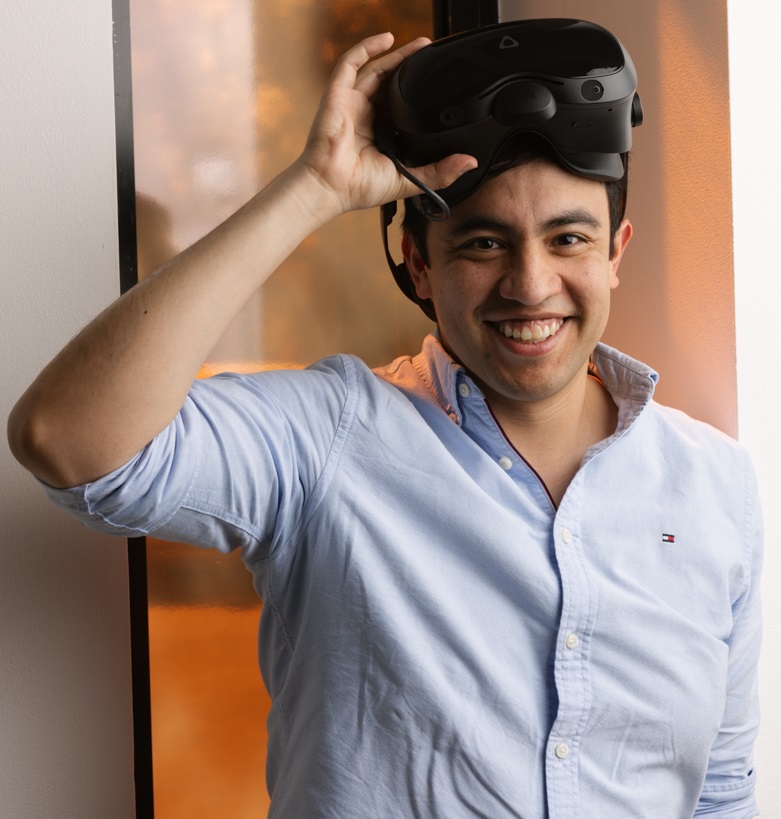
Carlos Tirado Cortes is a Lecturer in Interaction Design at the Discipline of Design Lab , Faculty of Architecture, Design and Planning, University of Sydney. As a virtual environments researcher, he focuses on Human-Computer Interaction and data visualization in immersive systems. Ph.D in Human-Computer Interaction (University of Technology Sydney, 2021) M.S. in Computer Game Engineering (Newcastle University, UK, 2015) B.S. in Engineering and Information Technology (Monterrey Institute of Technology, Mexico, 2012) His research explores immersive visualization for wildfire training (iFire project), VR sickness analysis, and brain-body dynamics during virtual navigation. Recent publications examine: AI-powered wildfire visualization systems Metaverse safety for children Postural instability in VR environments Fire-atmosphere interaction modeling Balance recovery techniques in immersive spaces
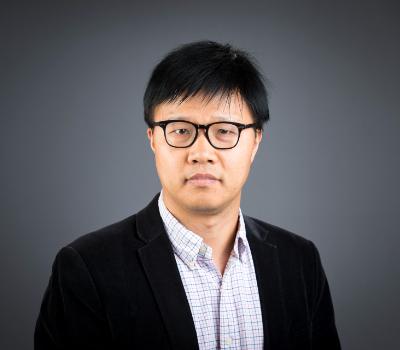
Haizhong Wang is a Professor in the Department of Civil and Construction Engineering at Oregon State University, affiliated with the College of Engineering. He holds a Ph.D. in Civil Engineering from the University of Massachusetts Amherst (2010), an M.S. in Applied Mathematics from the same institution (2010), and earlier degrees from Beijing University of Technology and Hebei University of Technology in China. His research focuses on transportation systems, disaster resilience, and intelligent infrastructure solutions. Education: Ph.D., Civil Engineering, UMass Amherst, 2010 M.S., Applied Mathematics, UMass Amherst, 2010 M.S., Civil Engineering, Beijing University of Technology, 2006 B.S., Civil Engineering, Hebei University of Technology, 2003 Dr. Wang's research integrates traffic flow modeling, agent-based systems, and interdisciplinary approaches to address challenges in emergency evacuation logistics, autonomous vehicle impacts, and climate-resilient infrastructure. He explores topics such as tsunami preparedness, wildfire evacuation behavior, and optimization of electric vehicle networks. His work emphasizes data-driven methodologies for enhancing transportation safety, efficiency, and disaster response capabilities. Recent studies highlight his contributions to understanding evacuation decision-making under time-critical scenarios, optimizing multi-modal transportation networks, and assessing infrastructure vulnerability to cascading disasters. Collaborative projects include developing frameworks for cooperative logistics systems and interdisciplinary models linking natural, built, and social systems for community resilience. His grants and collaborations focus on disaster preparedness, smart work zones, and connected vehicle technologies. He advises on transportation safety and serves on research initiatives addressing climate adaptation and emergency management. Current efforts include refining agent-based models for vertical evacuation strategies and evaluating the societal impacts of automated vehicles on urban mobility.
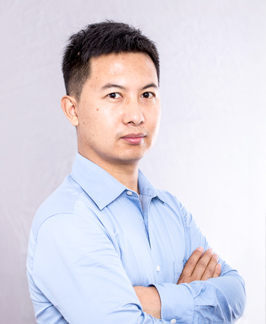
Professor Shenghua Gao is an Associate Professor at the School of Computing and Data Science of the University of Hong Kong (HKU), concurrently serving as Assistant Director for Shanghai Initiatives. He holds a PhD from Nanyang Technological University. His research focuses on integrating machine learning, spatio-temporal data analysis, and database systems to address challenges in mobility prediction, traffic management, and geospatial representation learning. He has contributed significantly to trajectory modeling, indexing frameworks for multi-dimensional data, and the application of large language models (LLMs) in spatio-temporal contexts. Key research interests include: Spatio-Temporal Data Science: Developing frameworks for efficient processing and analysis of point cloud, trajectory, and traffic data. Machine Learning for Databases: Innovating indexing algorithms (e.g., BMTree, MAST) and query optimization techniques leveraging ML. Trajectory and Mobility Prediction: Creating personalized models for next-location prediction and transfer learning across regions. Geographic AI (GeoAI): Enhancing road network representation and urban function inference using physics-guided and foundation models. Recent work highlights include the ST-LLM+ framework for traffic prediction, the MAST system for point cloud analytics, and the exploration of City Foundation Models for urban challenges. His publications span top venues in databases (SIGMOD, VLDB) and AI/data science (ICML, NeurIPS). While no awards are explicitly mentioned, his prolific output and leadership roles indicate significant academic contributions. He is actively involved in teaching and supervising research in the School’s undergraduate and postgraduate programs, including MSc(AI) and MPhil/PhD tracks.
René Forsberg is a Professor in the Department of Space Research and Technology at the Technical University of Denmark (DTU), affiliated with the Geodesy and Earth Observation section and the Center for Quantum Technologies. His work integrates satellite and airborne remote sensing with geodetic modeling to study Earth's polar regions and gravitational field. His research spans geodesy, Earth observation, gravimetry, and quantum sensing, with a strong focus on polar ice sheets, satellite altimetry (CryoSat, ICESat-2), geoid modeling, and climate change impacts. He actively contributes to understanding mass balance in Greenland and Antarctica, Arctic sea ice dynamics, and the application of quantum technologies in airborne gravimetry. The recent publications highlight a strong trend in quantum-enabled gravity measurements, high-resolution ice sheet mapping, and multi-sensor integration for Arctic and Antarctic observations. His work leverages data from ESA and NASA missions and contributes to global datasets used in climate modeling and geophysical studies. René Forsberg has not been explicitly mentioned with any scientific awards in the provided text. He is actively advising multiple PhD students, including B. Dale, B. Jenny, R. M. F. Hansen, H. Teitsson, and A. R. Stokholm, on projects involving quantum gravimetry, Arctic sea ice, and geoid determination. He has secured and led several funded research projects, such as 'Gravimetry from aircraft and drones' and 'Earth Observation and Artificial Intelligence for Automatic Arctic Sea Ice Charting', indicating sustained grant support. He is involved in research teams and labs focused on geodesy and Earth observation at DTU Space, particularly those working on quantum gravity sensors, satellite altimetry data analysis, and Arctic/Antarctic field campaigns. His collaborations extend to international agencies like the European Space Agency and NASA, as well as pan-Arctic research networks.
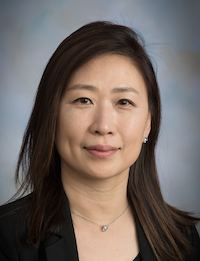
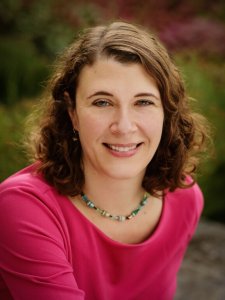
Sangmi Lee Pallickara is a Professor of Computer Science and the Clare Booth Luce Professor at Colorado State University. She is affiliated with the Department of Computer Science in the College of Natural Sciences. Her research is supported by major agencies including the National Science Foundation, Department of Homeland Security, ARPA-E, and NIFA, with ongoing projects in AI Institutes, Cyberinfrastructure, and CyberPhysical Systems. Research Interests: Her work focuses on Big Data systems for scientific applications, including scalable storage, retrieval, metadata management, predictive analytics, and interactive visualization. She applies these to domains such as agriculture, atmospheric science, environmental monitoring, and epidemiology. Her research integrates data science, distributed systems, and deep learning to enable scalable knowledge extraction from high-velocity, voluminous datasets. Publication Trends: Her recent publications emphasize scalable solutions for geospatial and spatiotemporal data, including efficient storage (e.g., ATLAS), visualization (e.g., Glance, Iris), and deep learning (e.g., Argus, CloudNet). There is a strong focus on real-world applications such as wildfire prediction, satellite data imputation, and precision agriculture, leveraging generative models, embeddings, and ensemble methods. Scientific Awards: NSF CAREER Award IEEE TCSC Award for Excellence in Scalable Computing Best Paper Award at IEEE/ACM UCC 2019 Best Paper Award at IEEE CLUSTER 2019 Best Paper Award at IEEE/ACM UCC 2014 Finalist for Best Paper Award at IEEE BDCloud 2018 Advising and Grants: She advises numerous Ph.D. and Master’s students, many of whom have gone on to careers in industry and academia. Her research is funded by the NSF (AI Institutes, CPS), DHS, ARPA-E, NIFA, and the Environmental Defense Fund. She also leads the SWiFT outreach program for K–12 STEM education. Labs and Teams: She leads a vibrant research group focused on Big Data systems, with students working on distributed storage, deep learning for satellite imagery, spatiotemporal analytics, and interactive visualization. The team collaborates with domain scientists in agriculture, climate, and public health.
Gianluca Aloi serves as an Associate Professor in Telecommunications (IINF-03/A) at the Department of Computer Engineering, Modeling, Electronics and Systems (DIMES) of the University of Calabria, Italy. He holds the position of scientific director for the Telecommunications and Information Theory for Advanced Networking Laboratory (TITAN Lab.). Dr. Aloi earned his PhD in Systems Engineering and Computer Science from the University of Calabria in 2003 and became a University Researcher in Telecommunications (ING-INF/03) in 2004 before advancing to his current academic rank. His research expertise spans wireless networks, cellular networks, sensor networks, Internet of Things systems and their interoperability, management of resources and services in the Cloud/Edge and IoT (CEI) Continuum, and management and orchestration of network resources using Artificial Intelligence. His work particularly focuses on UAV-assisted IoT systems for industrial applications, geological hazard monitoring, and maritime environments. Analysis of Dr. Aloi's recent publications (2023-2025) reveals a strong emphasis on applying reinforcement learning and deep learning techniques to solve complex networking challenges. His research shows a clear trajectory toward developing intelligent network architectures that optimize data collection, improve system resilience, and enhance resource management across the edge-to-cloud continuum. Key application areas include smart factories, disaster monitoring, and urban vehicular systems. Dr. Aloi teaches courses including Fundamentals of Telecommunications Networks and Telecommunications Networks for both Electronic Engineering and Computer Engineering programs. He maintains regular reception hours every Tuesday from 9am to 11am or by appointment via email. As scientific director of TITAN Lab, Dr. Aloi leads research initiatives focused on advanced networking technologies, with particular emphasis on developing solutions for next-generation communication systems that integrate artificial intelligence with traditional networking paradigms to address real-world challenges in telecommunications and IoT applications.
Markus Kuhn is a researcher at the University of Cambridge with a diverse academic career spanning over two decades, evidenced by publications from 2003 to 2023. His work bridges educational technology, computer science, and autonomous systems, demonstrating significant interdisciplinary reach across multiple domains. Dr. Kuhn's research has evolved through distinct phases. Initially focused on educational technology (2003-2007), he published extensively on classroom scenarios, collaborative learning, and media integration. His work then broadened to include physics computation (2008) and process support for inquiry learning (2010). More recently (2016-2023), his research has shifted toward autonomous systems, with publications on self-localization technologies and map generation for autonomous vehicles. This publication trajectory reveals a researcher who has successfully adapted his expertise from educational applications to more technical domains while maintaining connections to his foundational work in learning systems. His research demonstrates consistent innovation in applying computational approaches to solve practical problems across different contexts. Dr. Kuhn has maintained long-term collaborations with researchers including Heinz Ulrich Hoppe, Andreas Harrer, and Andreas Lingnau, indicating strong interdisciplinary networks. His work has been published in diverse venues ranging from IEEE Access and Microelectronics Reliability to Research and Practice in Technology Enhanced Learning and International Conferences on Computer-Supported Collaborative Learning.
Cassia Trojahn is a permanent Lecturer at the University of Toulouse 2 Jean Jaurès , affiliated with IRIT - UMR 5505, Department of Mathematics and Computer Science. Her career spans institutions in France, Portugal, Brazil, and the Netherlands, with roles including Expert Engineer at Joseph Fourier University and Post-Doc at INRIA Rhône-Alpes. Education Semantic Web, Ontology Alignment, Business Intelligence (University of Toulouse) Functional Programming (Haskell, Scala), Information Extraction (Pierre Mendès University) Graph Theory and Complexity (University of Évora) Research Interests : Knowledge representation and semantic web technologies Ontology alignment methodologies (argumentation, complex alignments, holistic approaches) Earth observation data integration with contextual information Open science and FAIR data principles Argumentation frameworks for mapping reconciliation Query rewriting with complex correspondences Advising : Co-supervised 5 PhD theses across France and Brazil, including: Jordane Dorne (2018-2021) - Earth observation semantic change detection Élodie Thiéblin (2016-2019) - Complex ontology alignment Roger Granada (2011-2015) - Hierarchical relations extraction Projects : Participated in international (CAMELEON, MULTIFARM) and European (EFFECTOR, CANDELA, SEALS) projects focused on multilingual ontology alignment, maritime situational awareness, and semantic earth observation data analysis.
Jason J. Jung is a Professor in the Department of Computer Engineering at Chung-Ang University, Seoul, Korea. His academic work focuses on knowledge engineering , social media analytics , and data mining within the Knowledge Engineering Laboratory. Research Interests : Computer Science, Social Knowledge, Data Modeling, Sentiment Analysis Projects : IoT-based cultural systems, real-time social event detection, transmedia storytelling models The 15 most recent publications (2014-2018) demonstrate expertise in social network analysis , multimodal data processing , and context-aware systems applied to urban services, cultural tourism, and digital storytelling. Key trends include real-time analytics , trust modeling , and collaborative frameworks for O2O services. Professional activities include editorial contributions, invited talks, and patent developments. Students at all levels (PhD/MSc/BSc) conduct research under his supervision at the Knowledge Engineering Laboratory. Personal interests include travel, film, painting, literature, and music.
Prof. Dr. rer. nat. habil. Stephan Kopf is a faculty member at the Faculty of Spatial Information, where he holds the Professorship in Informatics and Geoinformatics. He actively contributes to research in geographic information systems (GIS), computer graphics, computer vision, and multimedia technologies. His academic leadership roles include serving as Dean and as a member of the Faculty Council, with advisory roles in the Senate. His research spans crowd simulation , image/video retargeting , augmented reality platforms , and interactive learning systems . He focuses on algorithm development for GIS, temporal effects in re-captured video, and scalable solutions for classroom interactivity. His work frequently integrates machine learning, mobile computing, and geospatial data. For teaching, he oversees courses such as Internet Technologies, Informatics, and Programming in degree programs like Geoinformatics/Management and Surveying. He supervises theses involving programming-centric topics like mobile app development , VR applications , and astronomical analysis of geospatial data .
Ron Wehrens is a researcher at Biometris , part of Wageningen University & Research. His work spans interdisciplinary applications of machine learning, metabolomics, and computer vision in agricultural and biological sciences. Developing statistical tools in R (e.g., aaresponse , Kohonen packages) Applying AI/ML to problems in floriculture, animal behavior, and nutritional science Collaborating on projects involving remote sensing, plant phenotyping, and metabolic health studies Research Interests include metabolomics, deep learning for agricultural robotics, and behavioral analysis in livestock. His recent work focuses on self-organizing maps for data clustering and trait estimation in plants. Scientific Awards : No explicit awards mentioned in the text.
Dr. Yifei Dong is a Research Fellow at the Data Science Institute , University of Technology Sydney, with expertise in LLM-assisted agent systems , explainable AI , and multimodal artificial intelligence . Holding a PhD in Computer Science from UNSW Sydney and over a decade of fintech industry experience including CTO roles, he has secured $2.4 million in competitive funding for AI solutions bridging academia and real-world applications in healthcare, education, and finance. Education : PhD in Computer Science from UNSW Sydney Current Role : Research Fellow at UTS Data Science Institute (2023–present) Past Academic Appointments : Lecturer at Southern Cross University and Western Sydney University Dr. Dong’s research focuses on making AI systems transparent and socially beneficial , with contributions to adversarial AI, trustworthy digital societies, and wireless sensor networks. His recent work includes: Developing AICAttack (2025) for adversarial image captioning attacks Creating the QMAD fairness metric (2025) for dynamic environments Advancing explainable ECG diagnosis systems (2025) via multimodal LLMs As a scientific awardee (2025 RegTech Social Impact of the Year), he has pioneered AI solutions for vulnerable populations, such as NDSI participants through the "My Complaint Assistant" tool. His supervision of PhD and Honours students emphasizes technical rigor and ethical responsibility.
Olivier Verscheure serves as the Executive Director of the Swiss Data Science Center (SDSC), a national R&D center organizationally hosted by both École Polytechnique Fédérale de Lausanne (EPFL) and ETH Zurich. He also holds multiple Adjunct Professor appointments at EPFL, specifically within the School of Computer and Communication Sciences (SIN and SSC) and the School of Engineering (SEL). His educational background includes: Ph.D. in Computer Science from École Polytechnique Fédérale de Lausanne (EPFL), June 1999 Verscheure's research focuses on the intersection of data science and real-world applications. His work centers on stream and big data mining, geospatial analysis, and large-scale data management. These technical capabilities are applied across diverse domains including personalized health and medicine, Intelligent Transportation Systems, telecommunications, smart building technologies, Smart Grid infrastructure, healthcare analytics, and waste water management systems. His approach emphasizes creating practical data science solutions that address complex challenges in these sectors while considering the constraints of real-world deployment. An analysis of his recent publication record reveals a strong focus on real-time data processing and analytics, particularly for transportation and urban systems. His work frequently addresses challenges in handling massive time series data, developing efficient architectures for low-latency analytics, and creating practical applications for smart city infrastructure. There's a clear progression from theoretical data science contributions to production-ready systems that can process billions of data points daily, demonstrating his ability to bridge research and practical implementation. His notable achievements include: Two IBM Outstanding Technical Achievement Awards Best Paper Award for his research Student Best Paper Award Verscheure has substantial experience in research leadership and mentoring. During his tenure at IBM, he managed the Exploratory Stream Analytics research group and led a technical and management team of approximately 40 people at the IBM Research lab in Ireland. He has served on PhD committees at major universities and published nearly 100 research papers that have garnered over 2,400 citations. His work has resulted in more than 40 US and international patents, demonstrating both academic and practical impact. As Executive Director of the Swiss Data Science Center, Verscheure oversees a distributed multi-disciplinary team working across domains including personalized health, transportation, earth and environmental science, social science and digital humanities, and economics. The center aims to federate data providers, data and computer scientists, and subject-matter experts around a cutting-edge analytics platform while addressing security and privacy issues. Under his leadership, the SDSC develops embedded data science support, offers end-to-end data science services, and fosters a community to share tools and knowledge in data science.
Christina Grozinger is a Professor in the Department of Entomology at Pennsylvania State University and serves as the Director of the Huck Institutes of the Life Sciences. Her research integrates genomics, molecular biology, and ecology to understand social behavior, chemical communication, and health in honey bees and other pollinators. She leads a highly collaborative and interdisciplinary research program focused on improving pollinator conservation and management. Her research interests include: Genomic and molecular basis of social behavior in insects Chemical communication and pheromone signaling in honey bees Host-parasite interactions and immune responses in pollinators Landscape genomics and environmental stress responses Pollinator conservation and sustainable beekeeping practices The recent articles (2024–2025) reflect a strong focus on applying cutting-edge molecular tools—such as transcriptomics, DNA metabarcoding, and machine learning—to address urgent conservation challenges. Themes include climate change impacts on bee fertility, viral infections in insect hosts, landscape-level pathogen dynamics, and the use of citizen science for monitoring firefly populations. Her work bridges fundamental biology with applied solutions for pollinator decline. Scientific awards and recognitions include: Distinguished Professor at Pennsylvania State University Publius Vergilius Maro Professor of Entomology Appointment to the National Academies Committee on Insect Declines Dr. Grozinger leads major research initiatives, including Scialog grants on environmental impacts on animal behavior, and advises numerous graduate students and postdoctoral researchers. She has secured significant funding for interdisciplinary projects, such as those combining ecological modeling with decision support systems for land managers. Her leadership extends to directing the Huck Institutes, where she fosters innovation across life sciences. She is actively involved in science communication and education, including courses on pollinator conservation that assess cognitive impacts on students. She leads research teams focusing on: The Grozinger Lab at Penn State, which studies molecular mechanisms of social behavior Interdisciplinary collaborations in landscape ecology, genomics, and conservation Citizen science and machine learning applications in pollinator monitoring Development of spatial decision support tools for ecological management
Dr. Jim O'Hehir is a Researcher affiliated with the University of South Australia under the UniSA STEM school and the Sustainable Infrastructure and Resource Management (SIRM) department. He also serves as the General Manager of the Forestry Centre of Excellence at the university. His work spans interdisciplinary applications in remote sensing, geospatial analysis, and virtual reality for forestry. He collaborates with institutions like the University of Tasmania, OneFortyOne Plantations, and the National Institute for Forest Products Innovation (NIFPI), with recent grants from the Australian Government Research Training Program Scholarship , Gottstein Trust , and industry partners. Dr. O'Hehir’s research focuses on overcoming technical limitations in forest inventory systems through LiDAR data fusion , UAV-based hyperspectral imaging , and VR visualization techniques . His 2024 publications highlight innovations in 3D point cloud generation, multispectral residue assessment, and AI-driven fire suppression frameworks. He contributes to policy discussions on carbon storage optimization in timber plantations under Australia’s Emissions Reduction Fund (ERF). 2024: 3D Point Cloud Fusion Using Aerial and Terrestrial Laser Scanning 2024: Multispectral Assessment of Clean-Row Treatments 2024: Immersive VR for Forest Point Clouds 2024: AI in Fire Smoke Detection 2023: Sub-Metre Geospatial Feasibility His grants and collaborations emphasize operational efficiency in forestry, with teams like the Forestry Centre of Excellence and partnerships with Geoscience Australia and Swinburne University of Technology . Future work includes scaling onboard AI for satellite missions and refining standards for data fusion in sub-canopy environments.