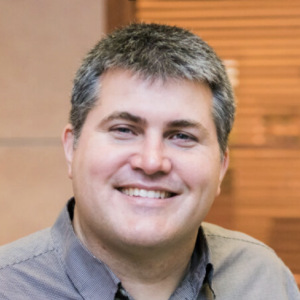
Robert Collins is an Associate Professor in Computer Science and Engineering, with a focus on computer vision and human motion analysis. His research spans topics such as human pose estimation, crowd dynamics, stability quantification, and 3D scene understanding. He has contributed extensively to tracking algorithms, motion modeling, and applications in biomechanics and surveillance. Notable projects include NSF-funded work on crowd analysis, partial body model fitting, and sensor network overlays. His recent publications address stability from video, alignment of pose sequences, and vanishing point detection. Research interests emphasize vision-based human motion analysis , tracking in complex scenarios , and 3D reconstruction . Trends in his work include leveraging mean-shift belief propagation , spatiotemporal models , and deep learning for applications in biomechanics, urban scenes, and rehabilitation engineering.
Mara Pasquamaria Squicciarini is an Associate Professor of Economics at Bocconi University and holds affiliations with leading research institutions including the Centre for Economic Policy Research (CEPR), Innocenzo Gasparini Institute for Economic Research (IGIER), and Center for Economic Studies and Ifo Institute for Economic Research (CESifo). Her academic work bridges economic history, growth studies, and cultural economics. Ph.D. from University of Leuven Postdoctoral Researcher at Northwestern University Visiting Scholar at Harvard, Stanford, and UCLA Her research investigates how religion, culture, and human capital shape industrialization and economic progress. Key themes include: Historical impacts of religious institutions on development Cultural determinants of technological adoption Migration patterns of scientists and innovators Economic consequences of fake news and discrimination Recent publications examine: Religious leadership's influence on political outcomes Productivity growth during French industrialization Geospatial analysis of misinformation in India Historical ties between religiosity and scientific mobility She contributes to major journals including the American Economic Review and Science, and co-edited Oxford University Press's Economics of Chocolate .
Dr. Paul Brindley is a Senior Lecturer at the School of Architecture and Landscape , University of Sheffield, specializing in geospatial analysis of human-landscape interactions. His work combines GIS, statistics, and digital data to address urban greenspace equity, rural-urban classification, and health-environment linkages. Senior Lecturer in GIS and Spatial Analysis Key researcher in the NERC-funded Improving Wellbeing through Urban Nature (IWUN) project Co-author of official Rural-Urban Classification for England and Wales Research focuses on: Urban Greenspace Accessibility using GPS and social media data Health Inequality Mapping through epidemiological GIS studies Vague Geographic Objects modeling of subjective spatial boundaries Computational Neighborhood Mapping via web data mining Project leadership includes: 2016-2019: IWUN Work Package 1 (Sheffield health-green space analysis) 2013-2014: Rural-Urban Classification updates for 2011 Census 2015: Real-Time Bus Data Mapping system development Teaching modules: LSC119: The Changing Landscape LSC336: Landscape Planning Toolkits LSC5020: Rural Landscape Planning GIS Workshops Professional contributions: Co-developer of Crime Map Analyst toolkit for non-GIS experts Joint Director of Learning and Teaching Links Member of Creative Spatial Practices initiative
Mihaela Girtan is an Associate Professor in the Faculty of Sciences at the University of Angers, heading the Thin Films for Photovoltaic Applications research group. Her work spans thin-film technologies, solar cells, and optoelectronic devices, with expertise in physical/chemical deposition methods and nanomaterials. Education: PhD in Physics, University of Stuttgart (1995) Her research investigates charge transport in oxides, organic/perovskite solar cells, transparent conducting films, plasmonics, and fluid dynamics in CVD reactors. She develops innovative materials for energy conversion, including oxide/metal/oxide electrodes and polymer-based photovoltaics. Recent publications focus on climate-agriculture interactions, including drought risk modeling, irrigation dynamics, and crop yield sustainability. Her work integrates remote sensing, machine learning, and climate modeling to address food security challenges. Scientific Awards: Consistently ranked in top 2% of researchers worldwide since 2020 She leads international collaborations and advises PhD students in materials science. Her group maintains advanced thin-film deposition and characterization facilities at Angers Photonics Laboratory.
Shouro Dasgupta is a Lecturer at Università Ca’ Foscari Venezia and a Researcher at Fondazione CMCC . His work focuses on climate change impacts on labour, food security, health, and inequality, with a strong emphasis on socioeconomic vulnerability and climate adaptation policies. PhD in Science and Management of Climate Change from Università Ca’ Foscari Venezia MA in Economics from University of New Hampshire His research combines climate data with socioeconomic indicators to address: Heat stress impacts on UK labour productivity and health Socioeconomic vulnerabilities in Small Island Developing States (SIDS) Climate change effects on child health in Burkina Faso and Egypt Adaptation strategies for Bangladesh’s workforce and agriculture Recent publications include multi-model assessments of climate-equality dynamics, Lancet Countdown reports on health-climate linkages, and frameworks for climate-resilient vaccine allocation and infectious disease monitoring. Co-author of Lancet Countdown reports (2022–2024) Leads ISIMIP Labour Impacts sector Coordinates PROCLIAS COST Action adaptation taskgroup He collaborates with institutions like the Grantham Research Institute and participates in EU and global climate policy dialogues.
Alper Yilmaz is Professor with appointments in Civil Environmental and Geodetic Engineering and Computer Science and Engineering (courtesy) Departments at The Ohio State University. He serves as Director of PCVLab and is currently interim president for the ISPRS Technical Commission II. Dr. Yilmaz has been inducted to the U.S. National Academy of Inventors in 2020 and is a Fellow of the American Society for Photogrammetry and Remote Sensing (ASPRS) and senior member of IEEE. Dr. Yilmaz's research focuses on biomimetic navigation systems for unmanned systems, mining anomalies in multi-physics and multi-dimensional data for surveillance, and learning geospatial information for scene understanding. His expertise spans Deep Learning, Reinforcement Learning, Computer Vision, Photogrammetry, Data-centric Surveillance, Collaborative Swarm Navigation, and Indoor Positioning Systems. His recent work on biomimetic navigation systems has resulted in UbiHere Inc., an Ohio State University spin-off founded in 2018. Dr. Yilmaz has served as Editor-In-Chief for the Photogrammetric Engineering and Remote Sensing Journal (PE&RS) between 2016-2024, during which the journal's impact factor increased to its highest since 1934. He previously served as Associate Editor for Computer Vision and Image Understanding Journal (2014-2016) and Machine Vision and Applications Journal (2006-2011). Outstanding Service Award (2022, ASPRS) Innovator of Year (2020, OSU) Presidential citation (2019, ASPRS) Masao Horiba Award honorable mention (2016, Japan) Lumley Interdisciplinary Research Award (2015, OSU) Lumley Research Award (2012, OSU) Top 1% most cited researcher in Artificial Intelligence & Image Processing and Geological & Geomatics Engineering (2024) Dr. Yilmaz has advised 29 Ph.D. and 15 M.Sc. students to completion on topics ranging from photogrammetry, machine learning, and computer vision. His research has received over $13M in extramural funding from NASA, NSF, DOD, DOE, NIH, and industry partners including Ford Motor Company, Trimble Inc., and UbiHere Inc. PCVLab, located in Bolz Hall Suite 233, features a sensor calibration room, state-of-the-art workstations with GPUs for deep learning studies, and small robotic systems including ground and aerial units.
Dr. Grzegorz Kiarszys serves as Assistant Professor in the Department of Archaeology within the Institute of History at the University of Szczecin, a position he has held since October 2011. His academic journey began with archaeology studies at Adam Mickiewicz University in Poznań (1999-2004), where he earned his Master's degree under Prof. Danuta Minta-Tworzowska, followed by doctoral research completed in 2010 under Prof. Włodzimierz Rączkowski. His educational background includes: Master of Archaeology, Adam Mickiewicz University (2004) PhD in History, Adam Mickiewicz University (2010) Kiarszys specializes in archaeological methodology with emphasis on conflict archaeology, landscape archaeology, and advanced geospatial technologies. His research integrates social theories with non-invasive methods including GIS, airborne laser scanning (LiDAR), aerial photography, and photogrammetry to analyze spatial organization and landscape transformation. His work particularly focuses on medieval and post-conflict landscapes in Poland, examining how cultural and political forces shape spatial perception and material heritage. This interdisciplinary approach bridges traditional archaeology with digital humanities and heritage conservation. Analysis of his 15 most recent publications reveals consistent focus on landscape palimpsests, aerial perspective limitations, and conflict-related heritage. Key trends include methodological innovation in point cloud analysis, critical examination of cartographic representations, and theoretical exploration of time-space relationships in archaeological contexts. His work increasingly addresses Cold War heritage and post-WWII landscape transformations. Scientific recognition includes: Individual award from the Minister of Science and Higher Education (2016) for monograph on Górowski County defensive settlements His grant leadership demonstrates significant research impact: the 2014-2015 Ministry of Culture-funded project on defensive settlements in Górowski County established new methodological frameworks, while the 2018-2019 project on Soviet nuclear warhead storage sites pioneers archaeological perspectives on Cold War heritage. These projects involve international collaborations with researchers from Serbia, UK, and Ireland, often incorporating student fieldwork components. Kiarszys actively participates in rescue excavations across Poland and has contributed to major infrastructure projects including Copenhagen Metro archaeological surveys. Though not explicitly mentioning dedicated labs, his work integrates with student research groups including the Student Archaeological Club and Media and Civilization Research Club at the University of Szczecin, where he supervises field methodology and spatial analysis components.
Amin Mesmoudi serves as Associate Professor in Data Engineering at the University of Poitiers' IUT (Institut Universitaire de Technologie), with dual laboratory affiliations at LIAS-ENSIP (Poitiers campus) and LIAS-ISAE-ENSMA (Chasseneuil campus). His research bridges theoretical database systems with practical large-scale data engineering challenges, particularly in semantic web technologies and machine learning applications. The laboratory maintains physical presences at both ENSIP's Bâtiment B25 in Poitiers and ISAE-ENSMA's Téléport 2 facility in Chasseneuil, facilitating cross-institutional collaboration. Mesmoudi's research program centers on scalable data management systems, with three interconnected pillars: (1) RDF and graph-based query optimization techniques for billion-triple datasets, (2) machine learning integration for spatial query performance and anomaly detection, and (3) explainability frameworks for complex black-box models. His work demonstrates consistent evolution from foundational database systems (2011-2016) toward contemporary AI-driven data engineering, particularly evident in his 2023-2025 publications on temporal dependency preservation and co-selection explainability. The Data Engineering team within LIAS laboratory provides the primary research context for these investigations. Publication analysis reveals strong methodological continuity in addressing scalability bottlenecks across database paradigms. Early work focused on SQL-on-MapReduce benchmarking for astronomy databases (2015-2016), transitioning to specialized RDF processing frameworks (2019-2021), and culminating in current hybrid approaches combining temporal modeling with machine learning (2023-2025). Key technical themes include fragmentation strategies for distributed data, optimizer feedback mechanisms, and graph-based query acceleration - all targeting real-world performance constraints in big data environments. As a core member of LIAS laboratory's Data Engineering team, Mesmoudi contributes to France's national research infrastructure in computer science and automation systems. The laboratory's dual-university structure enables unique cross-pollination between University of Poitiers' academic programs and ISAE-ENSMA's engineering specialization, with Mesmoudi's work exemplifying this synergy through applications spanning astronomy databases to wireless sensor networks.
Pascal Hitzler is a University Distinguished Professor and holds the endowed Lloyd T. Smith Creativity in Engineering Chair at Kansas State University's Department of Computer Science, Carl R. Ice College of Engineering. He directs the Center for Artificial Intelligence and Data Science (CAIDS) and the Institute for Digital Agriculture and Advanced Analytics (ID3A). Previously, he held roles at Wright State University, Karlsruhe Institute of Technology, and TU Dresden. His research focuses on neuro-symbolic AI, semantic web technologies, knowledge graphs, and ontology engineering. Education: PhD in Mathematics (2001, University College Cork), Diplom in Mathematics (1998, University of Tübingen). Academic achievements include over 400 publications, founding editor roles for journals like Neurosymbolic Artificial Intelligence , and leadership in organizations like the Neural-Symbolic Learning and Reasoning Association. Research interests include AI explainability, knowledge representation, and interdisciplinary applications of semantic technologies. He leads the DaSe Lab for Data Semantics, advancing projects like the KnowWhereGraph and Enslaved.org Hub Knowledge Graph. His work bridges symbolic AI with neural networks, emphasizing practical applications in agriculture, environmental science, and historical data preservation. Grants and collaborations span academic, industrial, and international partners. He has advised numerous students and researchers, contributing to both theoretical advancements and real-world semantic systems deployments.
Dr. Kenneth Kent is a Professor in the Department of Computer Science at the University of New Brunswick (UNB), where he has served for 14 years. He is the Director of the Information Technology Centre (ITC) and heads the Reconfigurable Computing Group. He also serves as Director of the IBM Centre for Advanced Studies - Atlantic and holds an Honorary Professorship at Hochschule Bonn-Rhein-Sieg. His research focuses on hardware/software co-design, reconfigurable computing, virtual machines, and embedded systems. Dr. Kent earned his PhD and Master of Science in Computer Science from the University of Victoria. His work has led to over 100 refereed publications and the supervision of 70+ graduate students. He co-founded WEnTech Solutions Inc., a software firm addressing waste-to-energy optimization. His awards include the IBM Faculty Fellow of the Year and Project of the Year (as Principal Investigator) for contributions to the J9 Java Virtual Machine. His articles span FPGA acceleration, compiler optimization, cloud storage security, and IoT intrusion detection. Recent work emphasizes energy-efficient Node.js systems and advancements in CAD tools like VTR 9 for FPGA architecture. Dr. Kent’s advising and grants include leading the IBM CAS Atlantic and directing industry-academia collaborations. He has pioneered technologies such as the Eclipse OpenJ9 JVM and the CephArmor storage interface, balancing academic research with commercial innovation. He leads the Reconfigurable Computing Group at UNB and collaborates with the Institute for Visual Computing in Germany. His research bridges theoretical computing and practical applications, with a focus on scalable systems and embedded technologies.
Elias Willberg is a Postdoctoral Researcher at the Department of Geosciences and Geography, University of Helsinki. He is affiliated with the Helsinki Institute of Urban and Regional Studies (Urbaria), the Helsinki Institute of Sustainability Science (HELSUS), and the Digital Geography Lab. His work focuses on urban sustainability, transportation planning, and environmental exposure during active mobility.
Noémie Jeannin is a doctoral assistant and PhD student at École polytechnique fédérale de Lausanne (EPFL), affiliated with the Laboratory of Photovoltaics and Thin Films (PV-LAB) within the School of Engineering and the Institute of Microengineering. She is a member of the Energy Doctoral Program (EDOC-EDEY) and serves as the doctoral student representative, contributing to academic governance. Her work is centered on sustainable energy systems, particularly the integration of renewable energy and transportation electrification. Her research focuses on the coupling of photovoltaic (PV) energy production with electric vehicle (EV) charging, using advanced geospatial modeling to quantify energy demand and mobility habits across Europe. She develops methodologies to assess charging flexibility and infrastructure needs, contributing to the European OPENGIS4ET project and the development of the Citiwatts open-source platform for energy transition planning. Her work spans disciplines including energy systems, smart grids, GIS, and sustainable urban mobility. The trends in her publications reveal a strong emphasis on spatial and temporal modeling of energy demand, policy-relevant analysis of electricity tariffs, and innovative solutions for grid integration of distributed energy resources. Her recent articles highlight practical applications in urban energy planning, EV charging behavior, and cost-effective alternatives to grid upgrades. Noémie is actively involved in teaching as an assistant for the course 'Energy Supply Economics and Transition (ENG-410)' and participates in academic service through her representative role. She collaborates with researchers such as A. Pena-Bello, C. Ballif, and N. Wyrsch, and her work is supported by European and institutional research initiatives. She maintains professional profiles on ORCID, Google Scholar, and LinkedIn, and her primary contact is via email at noemie.jeannin@epfl.ch. Her office is located at MC A2 208, EPFL.
Antonella Basso serves as a Full Professor in the Department of Economics at Ca' Foscari University of Venice, specializing in mathematical methods of economics and actuarial and financial sciences (STAT-04/A). She is affiliated with the Research Institute for Complexity and maintains her office in the San Giobbe building where she holds regular office hours on Tuesdays from 2:00 pm to 5:00 pm CET. Professor Basso's research expertise spans multiple domains of quantitative finance and economics, with particular emphasis on Financial Mathematics , Quantitative and Computational Finance , and Ethical Finance including ESG investments and green finance. She has pioneered the application of Data Envelopment Analysis (DEA) across diverse contexts from mutual funds and pension funds to museum evaluation. Her work increasingly explores the integration of Artificial Intelligence and Machine Learning techniques for economic applications, alongside traditional risk assessment methodologies. She also maintains significant research interests in art as a financial asset and alternative investment class. Her recent publications (2019-2025) reveal a consistent research trajectory with growing emphasis on sustainable finance, alternative investments including art, and performance measurement in cultural institutions. Her work demonstrates sophisticated methodological approaches to portfolio optimization with volume-based liquidity constraints, ethical fund evaluation using metafrontier approaches, and innovative integration of DEA with Balanced Scorecard and AHP methodologies for comprehensive performance assessment. As an educator, Professor Basso actively supervises undergraduate and master's theses on topics spanning financial mathematics, computational finance, insurance, and ethical finance applications. She requires preliminary discussions with students to ensure appropriate thesis topic alignment with research objectives and methodological capabilities. Through her affiliation with the Research Institute for Complexity, she contributes to interdisciplinary research examining complex economic and financial systems through quantitative lenses, bridging theoretical mathematical approaches with practical financial applications across multiple sectors.
Matthew Fagan is an Associate Professor in the Department of Geography & Environmental Systems at the University of Maryland, Baltimore County (UMBC), holding a Ph.D. from Columbia University (2014). His research integrates remote sensing, landscape ecology, and conservation biology to study forest dynamics across tropical and temperate ecosystems. His primary research interests focus on: Landscape-scale habitat degradation and restoration Remote sensing applications for forest monitoring Policy effectiveness in tropical conservation corridors Socio-ecological drivers of agricultural expansion Connectivity and reforestation processes Recent publication trends reveal increasing emphasis on machine learning integration with high-resolution satellite imagery for tropical forest monitoring, particularly in assessing degradation patterns, carbon sequestration potential, and the distinction between natural regeneration versus plantation forestry. His work increasingly addresses the intersection of climate change mitigation, biodiversity conservation, and poverty reduction through land use studies in Africa and Latin America. Dr. Fagan leads the "Earth from Above" research laboratory, which conducts field and remote sensing work in Costa Rica, Maryland, and the Caribbean, with specific projects examining timber plantation impacts, riparian forest connectivity using LiDAR, and conservation of endangered species like the Bahama Oriole.
Irena Mladenova, PhD, is an Assistant Professor at the Department of Business Administration, Faculty of Economics and Business Administration (FEBA), Sofia University St. Kliment Ohridski. Her academic role combines research, teaching, and consulting expertise in organizational change, management, and entrepreneurship. She holds a PhD in Organizational Change and Adaptability, an MBA from FEBA, and a Master in Banking and Entrepreneurship from a joint European program. Her professional experience spans over 20 years across private and public sectors, including roles at international consultancies (Kearney, PwC) and the Bulgarian Ministry of Economy. She served as Deputy Minister of Economy in caretaker governments (2013, 2014, 2021) and as Head of Corporate Development in a regional energy firm. Her consulting work focuses on organizational restructuring, strategic planning, and market entry strategies. Research interests include organizational adaptability, digital transformation in SMEs, sustainable development, and entrepreneurship ecosystems. She has advised on mergers, acquisitions, and public-sector reforms, emphasizing practical applications of management theories. Publications highlight themes like digital transformation in SMEs, leadership’s role in organizational adaptability, and governance frameworks for collaborative networks. She actively contributes to academic platforms (ORCID, ResearchGate) and engages with industry through FEBA’s initiatives.