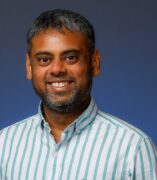
Welf Löwe is a资深 researcher and faculty member at Linnaeus University's Faculty of Technology, Department of Computer Science and Media Technology, and also teaches at Linköping University's Department of Computer and Information Science. His research focuses on data-intensive technologies, software metrics, design pattern detection, and context-aware systems. He leads the Data Intensive Software Technologies and Applications (DISTA) group and contributes to the Linnaeus University Centre for Data Intensive Sciences and Applications (DISA). He actively collaborates on projects like the Data Intensive Applications (DIA) graduate school and the High-Performance Computing Center (HPCC). His work spans machine learning applications in healthcare, forestry, and industrial automation. Recent research includes feature engineering in medical data, skeleton avatar technology for aging studies, and AI-driven diagnostics. He has authored over 150 peer-reviewed publications and participates in interdisciplinary initiatives such as the iSchool project.
Peter Wetz is a researcher affiliated with the Institute of Software Technology and Interactive Systems at TU Wien. His work focuses on semantic data processing, environmental data systems, and interactive data exploration. He has contributed to frameworks like YABench for RDF stream processing and StatSpace for statistical data integration. His research integrates Linked Data, real-time environmental monitoring, and user-friendly data visualization tools. Notable projects include Linked Widgets and Open Mashup Platform, aiming to lower barriers for data exploration. He has authored over 20 publications between 2013–2017, emphasizing interdisciplinary approaches to data management and semantic technologies. Key Areas: Semantic Web, Environmental Data, Stream Processing Tools Developed: YABench, StatSpace, Linked Widgets Platform
apl. Prof. Dr.-Ing. Claus Brenner is an Adjunct Professor at the Institute of Cartography and Geoinformatics within the Faculty of Civil Engineering and Geodetic Science at Leibniz University Hannover. His research focuses on LiDAR mapping, point cloud processing, and robust estimation, with applications in autonomous systems, urban mapping, and disaster risk assessment. He leads the Graduiertenkolleg 2159 research group on integrity and collaboration in dynamic sensor networks. Key research areas include 3D reconstruction, SLAM (Simultaneous Localization and Mapping), semantic segmentation of mobile mapping data, and cooperative perception systems. His work integrates advanced machine learning techniques with geospatial data analysis, addressing challenges in sensor fusion, uncertainty modeling, and real-time localization. Recent publications span topics like voxel-based point cloud localization for smart spaces, flood risk mapping using LiDAR, and adversarial shape completion. Brenner has contributed to benchmark datasets such as LuCoop and LUMPI, advancing research in cooperative perception and urban navigation. His methods emphasize robustness and scalability, often leveraging generative models and statistical frameworks for urban environment analysis. Notable projects include the development of high-definition mapping using LiDAR, trajectory-based road network reconstruction, and semantic annotation from user trajectories. His work bridges theoretical advancements in computer vision with practical applications in autonomous systems and smart infrastructure.
Norbert Haala is an Adjunct Professor and Deputy Director at the University of Stuttgart's Department of Photogrammetric Computer Vision. He leads the Research Group in Photogrammetric Computer Vision and is involved in ISPRS Working Group II/2 (Point Cloud Generation) and EuroSDR Commission 2 (Modelling and Processing). His work focuses on 3D data collection, SLAM algorithms, LiDAR integration, and UAV-based geospatial technologies. Research interests include image-based data collection, photogrammetric computer vision, and semantic segmentation of 3D point clouds. He has contributed to benchmarks like Hessigheim 3D and TIME, and developed tools like SURE for dense image matching. Teaching includes courses on digital image processing, terrain modeling, and computer vision. His publications emphasize real-time mapping, hybrid georeferencing, and neural surface reconstruction from airborne imagery. Projects involve UAV monitoring, indoor SLAM for robotics, and multi-modal data fusion for urban modeling. He collaborates on EuroSDR initiatives and publishes regularly in remote sensing and robotics domains.
Dr. Sarah Goodwin is a Senior Lecturer at Monash University's Department of Human Centred Computing, specializing in geospatial analysis and information visualization. She leads the Embodied Visualisation research group and holds roles as Director of Engagement for Human-Centred Computing and co-Director of the Monash Grid Innovation Hub. Her work focuses on creating visual solutions for complex data, including energy grid analysis, cancer prevalence visualization, and urban data exploration. Dr. Goodwin has over 20 years of experience in academic and professional roles, collaborating globally with institutions like the giCentre (City University London) and RMIT University. Education: She holds a PhD in Geographical Information Science (City University London, 2015), MSc in Geographical Information Systems (City University London, 2007), and BSc (Honours) in Geography (University of Manchester, 2003). Research Interests: Geovisualization, energy data analytics, urban data visualization, HCI, and geostatistical modeling. She has developed tools like Gazealytics and led projects such as the Australian Cancer Atlas and the Australia's Discourse Explorer. Teaching: She teaches Data Exploration and Visualisation (FIT5147) and Research Methods at Monash, impacting over 1000 students annually. She has also taught at RMIT University. Grants & Awards: Recipient of the IEEE InfoVis Best Paper Honorable Mention (2016). Active in conferences like IEEE VIS (General Chair, 2023) and organizes workshops on EnergyVis and CityVis. Labs & Teams: Involved with the Immersive Analytics Lab and collaborates with Monash Energy Institute and Data Futures Institute. Her work aligns with UN SDGs on sustainable cities and energy systems.
Gabriele Lobaccaro is a Professor at the Department of Civil and Environmental Engineering, NTNU, within the Faculty of Engineering. His primary focus is on sustainable urban development, renewable energy integration, and climate-resilient architectural design. He leads research in solar energy planning through initiatives like the IEA SHC Task 51 and COST Action PEARL PV. Education: MSc from Politecnico di Milano (2008), PhD in Structural Engineering (Politecnico di Milano/UNSW Sydney, 2013) Research interests include Smart Cities, urban solar potential analysis, and building-integrated photovoltaics (BIPV). Key projects involve the HELIOS-NFR FRIPRO program and collaborations with French institutions via the Åsgård Program. Publications emphasize solar irradiance modeling, urban energy systems, and legislative frameworks for solar neighborhoods. He co-leads Subtask C of the IEA SHC Task 51, focusing on case studies and action research. Awards: ISSNAF/CNI Scholarship for MIT collaboration, Åsgård Research+ Program (2019-2020)
Laura Pollacci is a postdoctoral researcher at the Knowledge Discovery and Data Mining Laboratory (KDDLab), a joint research group of the Information Science and Technology Institute of the National Research Council (CNR) in Pisa and the University of Pisa, where she holds a position as Research Fellow in the Department of Computer Science. Her educational background includes: Bachelor's Degree in Digital Humanities (2014) from University of Pisa with 110/110 cum laude Master's Degree in Digital Humanities (2015) from University of Pisa with 110/110 cum laude PhD in Computer Science (2019) from University of Pisa with thesis on 'conjunct usage of Big Data and Sentiment Analysis for the study of Human Migration' Pollacci's research focuses on Social Network Analysis and Visual Analytics for Social Mining, Human Migration, and Sentiment Analysis. Her work bridges computational methods with social science questions, particularly examining how digital traces can reveal patterns in human behavior, migration, and emotional expression across social platforms. She has developed expertise in analyzing complex social networks, music diversity, and political polarization through data-driven approaches. Her publication record shows a clear trajectory from computational linguistics and sentiment analysis toward broader applications in social network analysis, migration studies, and musicology. Early work focused on emotive lexicon development and sentiment polarity classification for Italian language, while more recent publications examine political polarization on Reddit, human migration patterns through big data, and the fractal dimensions of music diversity. Pollacci is actively involved with the HumMingBird project, which focuses on 'Enhanced migration measures from a multidimensional perspective.' Her work at KDDLab places her at the intersection of data science and social research, contributing to the laboratory's mission of developing theory, techniques and systems for extracting knowledge from large data sets.
Sean P. MacDonald is a Professor of Economics in the Department of Social Science at the School of Arts & Sciences, City University of New York, City Tech. She holds a Ph.D. and M.A. in Economics from The New School for Social Research, a Certificate in Labor Studies from Cornell University, and a B.A. in Sociology from the University of Maryland. She has served as the Economics discipline coordinator since 2010 and is actively involved in institutional governance through committees on interdisciplinary studies, general education, and faculty appointments. Ph.D. in Economics, The New School for Social Research M.A. in Economics, The New School for Social Research Certificate in Labor Studies, Cornell University B.A. in Sociology, University of Maryland Her research spans environmental economics, housing and mortgage markets, income inequality, and public policy, with a strong emphasis on interdisciplinary pedagogy. She explores innovative teaching methods such as place-based and virtual learning, aiming to connect urban education with real-world economic and environmental challenges. Her work integrates data visualization and collaborative teaching models to enhance student engagement and critical thinking. The 15 most recent publications reflect a sustained focus on economic crises, housing policy, and educational innovation. They span journal articles, book chapters, and conference proceedings, highlighting her dual commitment to economic research and pedagogical advancement. Key themes include the foreclosure crisis, mortgage modification effectiveness, intertemporal poverty, and the integration of interdisciplinary methods in STEM and urban education. She has been recognized through competitive fellowships, including: NEH Grant Program Fellow, Making Connections: Engaging the Humanities at a College of Technology Fourth-Year Fellow, Title V Grant Program, A Living Laboratory: Revitalizing General Education for a 21st Century College of Technology Dr. MacDonald has advised and collaborated on grant-funded initiatives that aim to revitalize general education and promote interdisciplinary learning. She has served on key institutional committees and professional organizations, including the New York State Economic Association, where she has served on the Board of Directors since 2012. Her teaching includes Microeconomics, Macroeconomics, Environmental Economics, and Visualizing Economic Data, reflecting both her research and educational priorities. She has co-edited two books on interdisciplinary place-based learning and has contributed extensively to academic discourse through publications and conference leadership. She is actively involved in academic communities, including the Association for the Study of Higher Education and the New York State Economic Association. Her work bridges economic analysis with educational innovation, particularly in urban technical colleges, aiming to make economics more accessible, relevant, and impactful for diverse student populations.
Eric English is a Lecturer in the Department of Communication and Media Studies at Dyson College of Arts and Sciences, Pace University, New York City. He holds a PhD in Communication from the University of Pittsburgh and an MPAP in Public Affairs and Politics from Rutgers University. PhD in Communication, University of Pittsburgh, 2013 MPAP in Public Affairs and Politics, Rutgers University, 2020 MA in Communication, University of Pittsburgh, 2003 BA in Communication, Philosophy, and Political Science, University of Pittsburgh, 2001 His research centers on political and rhetorical communication, particularly the rhetoric of presidential campaigns, digital media use in social movements, and geospatial data as visual communication. He explores how persuasive discourse functions in legal, political, and cultural contexts, with a focus on libertarian and conservative ideologies, media criticism, and democratic theory. The publications reflect a consistent engagement with political rhetoric, legal discourse, and ideological critique. Themes include the intersection of law and rhetoric, conservative and libertarian political narratives, media’s role in democracy, and collaborative academic practices. His work spans forensic scholarship, media criticism, and rhetorical analysis of political figures like Ron Paul and Barry Goldwater. Dr. English has presented his research at major academic conferences including the Eastern Communication Association, Rhetoric Society of America, and New Jersey Communication Association. While no formal advising or grant activities are documented, his teaching portfolio includes core courses such as Introduction to Communication, Media Criticism, Ethics in Media, and Persuasion, indicating a strong commitment to undergraduate education in communication studies. He is actively contributing to scholarly discourse through conference presentations and peer-reviewed publications, though no labs, research teams, or awards are mentioned in the available materials.
Clementina Moldovan is an Associate Professor in the Department of Environmental Engineering and Geology at the Faculty of Mining, Politehnica University of Timişoara. Her research focuses on environmental safety, industrial emissions, and explosion protection systems in hazardous environments. She has contributed extensively to understanding coal combustion byproducts' environmental impacts, air quality monitoring, and electrical equipment safety standards in explosive atmospheres. Her work integrates computational modeling (e.g., CFD simulations for indoor air pollution) with geospatial analysis (e.g., hot spot mapping of pollutants in Craiova). Key research areas include: 1) Development of GHG intensity metrics for industrial processes, 2) Thermal safety of equipment in explosive environments, and 3) Heavy metal contamination in atmospheric particulates. Dr. Moldovan also investigates radiation dosimetry in soils and the application of natural materials like zeolites for pollution control. Recent studies address hydrogen safety protocols and the adaptation of safety standards to emerging energy technologies. Her publications emphasize practical applications of research to industrial safety compliance, environmental policy formulation, and sustainable development strategies for mining regions. Current projects explore synergies between computational fluid dynamics and regulatory frameworks for hazardous environment equipment certification.
Kay Römer is Professor and Director of the Institute for Technical Informatics at Graz University of Technology, Austria. He previously held a professorship at the University of Lübeck, Germany, and was a senior researcher at ETH Zurich, where he obtained his doctorate in computer science in 2005. His research focuses on networked embedded systems, particularly in the domains of Wireless Sensor Networks, Internet of Things (IoT), and Cyber-Physical Systems. Key areas include wireless networking, operating systems, programming models, dependability, and deployment methodologies for large-scale embedded networks. The most recent publications reflect a consistent trend in dependable and scalable IoT systems, with emphasis on wireless protocols, fault tolerance, real-time operation, and system robustness. His work bridges theoretical innovation with practical deployment, often involving cross-layer design and energy efficiency. Associate Editor, IEEE Transactions on Mobile Computing Associate Editor, IEEE Transactions on Computers Program Co-Chair, ACM SenSys 2011 Program Co-Chair, ACM/IEEE IPSN 2013 Coordinator, EU FP7 FIRE Project RELYonIT Coordinator, TU Graz Excellence Project "Dependable Internet of Things" Kay Römer has advised multiple research teams and coordinated major international projects funded by the Swiss National Science Foundation, European Commission, German Science Foundation, German Federal Ministry of Education and Research, and the Austrian Federal Ministry of Science, Research, and Economy. He has delivered invited keynote talks and co-directed five international summer schools, demonstrating strong leadership in research dissemination and mentoring. He leads research activities within the Institute for Technical Informatics at TU Graz, focusing on dependable and secure IoT systems, with active collaborations across Europe and industry partners.
Nan Sun is a Lecturer at the School of Systems & Computing , University of New South Wales, Canberra , conducting interdisciplinary research at the intersection of cybersecurity and artificial intelligence. Her work focuses on data-driven cybersecurity incident prediction, cybersecurity awareness education systems, and AI applications for threat intelligence. PhD in Information Technology (Deakin University) Former Research Fellow at Deakin University's Centre for Cyber Security Research and Innovation Her research spans cybersecurity (60%), machine learning (25%), and software engineering (15%). Recent publications analyze adversarial machine learning, tropical cyclone forecasting with deep learning, and ethical AI frameworks for cyberbullying mitigation. She leads grants including the UNSW Recruitment Research Proposal Grant and CSIRO Data61 funding. Current teaching includes Big Data and Decision Analytics for Security and Digital Forensics . She offers PhD scholarships to students with high academic achievement.
Professor Tughrul Arslan holds the Chair of Integrated Electronic Systems at the School of Engineering, University of Edinburgh . He leads the Embedded Wireless and Wearable Sensor Systems (EWireless) Group and co-founded sensewhere Ltd. and Sofant Technologies . His research spans reconfigurable architectures, low-power wireless systems, and biomedical RF sensing. Academic Background: BEng and PhD in Electronics Professional Affiliations: Senior Member IEEE, Fellow IET, Chartered Engineer His work focuses on smart wearable devices , indoor positioning systems , and AI-driven healthcare monitoring . Recent publications emphasize microwave imaging for dementia detection , edge AI accelerators , and non-invasive tremor monitoring . Key contributions include patented technologies like the Reconfigurable Instruction Cell Architecture (RICA) . Award-winning academic, he has supervised over 40 PhD students and authored 400+ peer-reviewed papers. His external roles include Chief Technology Officer at sensewhere , driving commercialization of indoor navigation solutions.
Sidharth Kumar is an Associate Professor in the Department of Computer Science at the University of Illinois at Chicago (UIC), where he leads research in high-performance computing and data visualization. He joined UIC in August 2023 after previously working at the University of Alabama at Birmingham. His research focuses on developing scalable algorithms and data structures for data-intensive applications, intersecting HPC, visualization, databases, and machine learning. Education: Ph.D. in Computing (2016) from the University of Utah's Scientific Computing and Imaging Institute, advised by Valerio Pascucci. Bachelor of Technology in Information and Communication Technology (2009) from DAIICT, Gandhinagar, India. Research Interests: Dr. Kumar's work centers on parallel I/O, GPU acceleration, big data processing, and scientific visualization. His projects include: 1) Exascale data management systems, 2) GPU-accelerated web visualization, 3) Declarative analytics frameworks, and 4) Topology-driven analysis for neuroscience and virology. He develops solutions for memory-constrained environments and heterogeneous systems. Publication Trends: Recent works (2023-2025) demonstrate strong focus on GPU-accelerated databases (Datalog optimizations), parallel communication algorithms (all-to-all collectives), memory-efficient visualization techniques (speculative raycasting), and applied topological analysis (brain networks, virus taxonomy). His publications consistently appear in top-tier HPC and visualization venues. Awards & Honors: Best Paper Awards: IEEE HiPC (2019), ISC Hans Meuer (2020), LDAV (2023) Honorable Mention: PacificVis (2025) Poster Awards: SC23 Finalist, HiPC SRS (2021) NSF EPSCoR Research Fellow (2022) Grants & Advising: NSF PPoSS Large: Declarative Analytics ($960K PI) NSF SHF: Scalable I/O Runtime ($300K PI) NSF EPSCoR: Relational Algebra ($265K PI) Advises 6 PhD students in HPC and visualization research Lab & Service: Leads a research team working on exascale computing challenges. Serves on technical committees for SC, ISC, IPDPS, and HiPC conferences. Teaches courses in Database Systems, Algorithms, and Data Visualization.
João Pedro Matos-Carvalho is an Assistant Professor at Lusófona University in Lisbon, affiliated with the School of Engineering and the Department of Electrical and Computer Engineering. He is also an Integrated Member of the Center of Technology and Systems (CTS) at UNINOVA and COPELABS, Lusófona University, contributing to interdisciplinary research in robotics and intelligent systems. Ph.D. in Electrical and Computer Engineering, FCT NOVA (2021) M.Sc. (Hons.) in Electrical and Computer Engineering, FCT NOVA (2017) His research focuses on aerial robotics, machine learning, remote sensing, and sensor networks, with applications in UAV navigation, precision agriculture, environmental monitoring, and embedded AI. He has made significant contributions to GPS-denied navigation, multispectral imaging, and AI-driven signal processing. The recent publications reflect a strong trend in integrating deep learning with real-world engineering systems, particularly in UAV autonomy, IoT, and human-centric applications like fall detection and online learning analysis. His work spans algorithm design, software development, and practical deployment in complex environments. Best Paper Award at IEEE Conference (2018) Distinguished Paper Award by LASIGE at FCUL (2021) Best Poster Presentation Award at International Complex Systems and Their Applications Conference (2023) He has secured the competitive Scientific Employment Stimulus (CEEC) grant from FCT and has advised or collaborated on multiple research projects. He has guest-edited special issues in journals such as Drones and Frotiers in Computer Science , and serves as a reviewer for leading scientific journals. He leads the development of open-source tools like AutoNAV and Raster Forge, supporting simulation and geospatial analysis. He is actively involved in research teams at CTS-UNINOVA and COPELABS, focusing on intelligent systems, aerial robotics, and data fusion. His lab work emphasizes practical UAV platforms, sensor integration, and AI deployment in real-time systems.