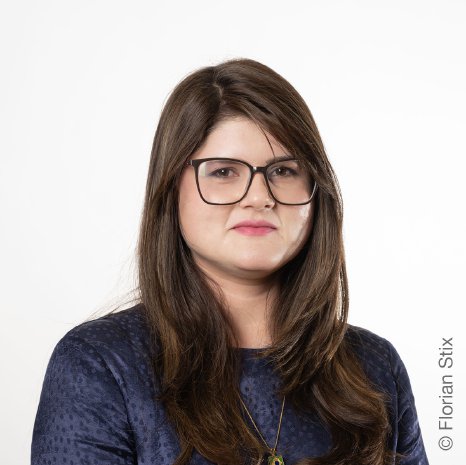
David Philip Kreil is an Associate Professor at the Institute of Molecular Biotechnology within the Department of Biotechnology and Food Science at the University of Natural Resources and Life Sciences, Vienna (BOKU) . He holds a joint appointment as Chair of Bioinformatics at the University of Warwick (2012-2014) and has held research positions at the European Bioinformatics Institute (EBI) and the University of Cambridge . His work bridges computational biology, transcriptomics, and plant-nematode interactions. 2012-2014: Chair of Bioinformatics, University of Warwick 2005: WWTF Vienna Science Chair at BOKU 2001-2004: MRC Research Fellow, University of Cambridge 1997-2001: EMBL PhD Programme, EBI Kreil's research focuses on transcriptomic analysis of plant-pathogen interactions (e.g., Fusarium resistance in wheat, nematode-induced syncytia) and computational methods for microarray calibration, data normalization, and statistical modeling. He has applied machine learning to weather forecasting and biomedical data. Scientific Awards : Research Fellow, Darwin College, University of Cambridge (2002-2005) His 15 most recent articles emphasize bioinformatics tools, plant immunity, and interdisciplinary applications of machine learning in biology and climate science. He has supervised theses on wheat transcriptomics and nematode-induced gene expression.
Klaus Dürrschmid is an Assistant Professor at the Institute of Food Science , Department of Biotechnology and Food Science, University of Natural Resources and Life Sciences, Vienna (BOKU). His work bridges sensory science and consumer behavior, focusing on implicit and explicit measurement techniques such as eye tracking and face reading. Education: Diploma (1992) and Doctoral Degree (1997) in Food Technology from BOKU. Research Interests : Dürrschmid’s research explores sensory perception, implicit emotional responses, and consumer decision-making. He investigates how factors like color, odor, and portion size influence food acceptance and develops methodologies for sensory quality assurance. Recent Trends in Publications : His 15 most recent works (2025–2022) emphasize sensory evaluation of meat alternatives, cross-cultural odor associations, implicit measurement in eye tracking, and psychological drivers of food choice. These align with his expertise in sensory science and nutritional psychology. Scientific Contributions : Dürrschmid has presented extensively on sensory science at international conferences, including Eurosense and Pangborn Symposia, covering topics like taste modulation, sensory quality management, and consumer behavior under emotional or cultural influences. Advisory & Collaborative Work : He supervises theses and collaborates on sensory projects, though specific student names and grants are not listed in the provided data. Labs & Networks : His research is conducted at BOKU’s Institute of Food Science, with involvement in the Austrian Sensory Network (SNÖ) and European sensory research initiatives.
Markus Steinberger is an Associate Professor at Graz University of Technology (Austria), leading the GPU Computing and Visualization Group at the Institute for Computer Graphics and Vision. He holds an MSc and PhD in Computer Science from TU Graz, with a postdoc and multiple leadership roles in academic and industry labs, including NVIDIA and the Max Planck Institute. His research focuses on GPU scheduling, parallel computing, and high-performance visualization techniques. He has led teams at TU Graz, Huawei Technologies (Cloud Rendering Lab), and the Max-Planck-Center for Visual Computing. Education 11/2020: Habilitation in Practical Computer Science at TU Graz 10/2013: PhD in Computer Science (Dynamic Resource Scheduling on Graphics Processors) 10/2010: MSc in Telematics 10/2005: BSc in Telematics Research Interests Steinberger’s work centers on optimizing GPU computing for real-time rendering and parallel processing. He explores efficient resource scheduling, dynamic graph management, and high-performance visualization techniques, with applications in cloud rendering, scientific visualization, and interactive graphics. His methods emphasize scalability and real-world applicability in both academic and industrial settings. Awards Heinz Zemanek Prize (2016) – First Austrian recipient GI Dissertation Prize (2014) – Best dissertation in German-speaking computer science Multiple Eurographics Best Paper Awards (2021, 2020, 2014) HPEC Best Student Paper (2017) ACM CHI Honorable Mention (2014) Advising & Grants Steinberger has advised numerous students and led projects funded by EU initiatives and industry partnerships. His research has been recognized through grants supporting GPU scheduling, cloud rendering, and parallel computing. Labs & Teams Leads the GPU Computing and Visualization Group at TU Graz and directed the Cloud Rendering Lab at Huawei, focusing on scalable rendering solutions for distributed systems.
Jan-Christoph Otto is an Associate Professor in the Department of Geography and Geology at the Paris Lodron University of Salzburg, where he conducts research and teaches in the fields of geomorphology, natural hazards, and climate change impacts on high mountain landscapes. His work combines field-based quantitative and qualitative methods with shallow geophysics, GIS, and remote sensing to understand landform dynamics, sediment transport, and societal implications of environmental change. Academic Rank: Associate Professor Institution: Paris Lodron University of Salzburg School: Faculty of Natural Sciences Department: Department of Geography and Geology Email: Jan-Christoph.Otto@plus.ac.at ORCID: https://orcid.org/0000-0002-4552-3011 Research Interests: His scientific focus lies in the evolution of high mountain landscapes, particularly those influenced by glaciers, permafrost, and climate change. He investigates natural hazards and risks, sediment dynamics in mountain river basins, and the interplay between geomorphological processes and biodiversity. His research spans both the European Alps and the Andes, integrating geoscientific and archaeological perspectives on human-environment interactions. Recent Research Trends: Analysis of his recent publications reveals a strong emphasis on climate change impacts in alpine regions, including glacier retreat, permafrost degradation, and the formation of hazardous glacial lakes. He also explores wetland and peatland ecosystems using innovative techniques like sedaDNA, and investigates early human occupation in high-altitude environments. His work increasingly adopts transdisciplinary approaches, combining geosciences with ecology and social sciences. Scientific Activities and Recognition: While no formal awards are listed, Otto is highly active in the scientific community with 88 publications, 17 research projects (many ongoing), and 97 recorded activities including peer review, conference presentations, and public outreach. He frequently contributes to media discussions on climate change and natural hazards. Teaching and Advising: Otto teaches field and laboratory courses on geomorphological and geological techniques, GIS applications, and lectures on geomorphology, natural hazards, and risks. He supervises student field trips and contributes to academic service through examination committees and editorial activities. Although specific advisees are not listed, his leadership in multiple research projects suggests he mentors junior researchers. Labs and Research Teams: Otto leads and participates in several collaborative research initiatives such as CLIMB, AlpLake-Change, and AlpsChange. He is involved in maintaining the scientific website www.geomorphology.at, indicating leadership in digital knowledge dissemination. His research integrates interdisciplinary teams across geosciences, biology, and archaeology, particularly in transdisciplinary projects addressing climate change in alpine environments.
Daniel Cornel is a researcher affiliated with TU Wien's Department of Engineering Hydrology, part of the E222-02 research group. He holds a Dipl.-Ing. (engineering diploma) and a Dr.techn. (technical doctorate). His work focuses on integrating computational methods with environmental hydrology, emphasizing flood modeling, high-performance computing, and geospatial visualization. Cornel collaborates extensively with experts like Prof. Günter Blöschl and Prof. Jürgen Waser on projects such as the HORA 3.0 flood risk zoning initiative. His research interests span GPU-accelerated flood simulations, hydrodynamic modeling at regional scales, and decision-support systems for disaster management. Notable contributions include developing interactive visualization tools for real-time flood data and VR-based training modules for emergency response. Cornel also explores algorithm optimization for terrain modeling and subsurface network visualization. Key projects include the 'Integrated Simulation and Visualization for Flood Management' framework and the 'Master of Disaster' VR training system. His work bridges computational science with environmental engineering, addressing both technical challenges and practical applications in flood risk mitigation.
Andreas Buttinger-Kreuzhuber is affiliated with the Department of Engineering Hydrology at TU Wien. His research focuses on advanced hydrodynamic modeling, GPU-accelerated flood simulations, and integrating geospatial data for flood risk assessment. He contributed to projects like HORA 3.0, a national flood risk mapping initiative, and developed frameworks for high-resolution simulations of urban and rural flash floods. His work bridges computational science and environmental engineering, emphasizing real-world applications in disaster management and urban planning. Education: Dipl.-Ing. (FH) in Civil Engineering, Dr.techn. (PhD) in Technical Sciences, and BSc in a related field. Notable research themes include shallow-water schemes optimization, interactive visualization tools for flood management, and nanopore fluid dynamics. His interdisciplinary approach combines hydraulic modeling with geomatics and computational fluid dynamics. Collaborations include work with Prof. Günter Blöschl and the Network Lab at TU Wien. Recent efforts focus on accelerating hydrodynamic simulations using GPU technology and improving regional-scale flood modeling accuracy.
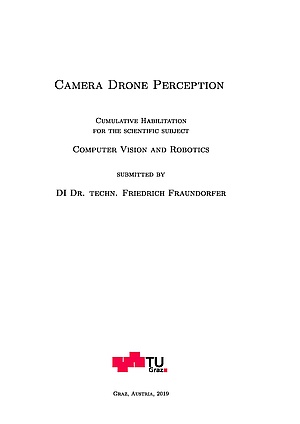
Friedrich Fraundorfer is a Professor at Graz University of Technology, specializing in 3D Computer Vision and Autonomous Systems at the Institute of Computer Graphics and Vision (ICG). He has held academic positions at institutions including ETH Zurich, University of North Carolina at Chapel Hill, and Technische Universität München, where he served as Deputy Director of the Chair of Remote Sensing Technology. Research : Focuses on Micro Aerial Vehicle (MAV) autonomy, Visual-Inertial Fusion, and Multi-View Geometry. Projects : Led EU-funded SFly (autonomous MAVs for search-and-rescue), SNF MAV (camera-only 3D mapping), and VCharge (vision-based self-driving cars). Teaching : Offers courses like 'Camera Drones' and 'Mathematical Principles in Vision.' His Pixhawk project created open-source MAV platforms adopted globally. Key Collaborations : With NVIDIA, Volkswagen AG, University of Zurich, and German Space and Aerospace Center (DLR). His students (e.g., Dominik Hirner, Rafael Weilharter) have published on lightweight CNNs for stereo vision and self-supervised 3D reconstruction.
Franz Suppan is a researcher at the Institute of Geomatics within the Department of Ecosystem Management, Climate and Biodiversity at the University of Natural Resources and Life Sciences, Vienna (BOKU). With over two decades of research experience, he specializes in applying geospatial technologies to environmental and ecological challenges. His work spans multiple research projects funded by European Commission, Austrian Research Promotion Agency, Federal Ministries, and international organizations. Suppan's research focuses on the application of geomatics, remote sensing, and GIS technologies to wildlife conservation, habitat modeling, and environmental monitoring. His work demonstrates expertise in wildlife corridor extraction, habitat connectivity analysis, biodiversity monitoring, and spatial planning for sustainable land use. He has made significant contributions to transboundary conservation initiatives like the Alpine Carpathian Corridor and has pioneered citizen science approaches for ecological monitoring through projects like Roadkill. His publication record shows a strong trend toward integrating advanced spatial technologies with ecological research questions, with recent work emphasizing automated detection of ecological features, erosion processes in forest ecosystems, and renewable energy planning. Suppan's research demonstrates consistent evolution from foundational work in remote sensing validation to applied projects addressing contemporary environmental challenges including climate change adaptation and biodiversity conservation. Suppan has successfully supervised multiple Master's theses on wildlife habitat modeling and connectivity, mentoring students on topics including golden jackal habitats, European hare roadkill patterns, and bird species habitat requirements. His grant portfolio includes numerous competitive projects with funding from diverse sources including EU programs, national research agencies, and international organizations, demonstrating his ability to secure research funding across disciplinary boundaries. His work with the DivMoST project represents cutting-edge research in automated biodiversity monitoring, while his contributions to the DECIDE project showcase practical applications of geospatial technologies for climate-adapted forest management. Suppan's research bridges theoretical spatial analysis with practical conservation applications, making significant contributions to both academic knowledge and real-world environmental management.
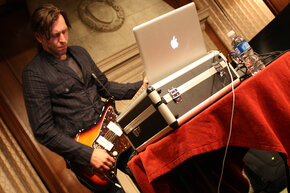
Christian Fennesz is a renowned Austrian guitarist, composer, and electronic musician who joined the Faculty of Performing Arts at the Music and Arts Private University of the City of Vienna as a lecturer in September 2019. Widely recognized as a key figure in electronic music, his innovative work combines traditional guitar techniques with advanced digital signal processing to create unique symphonic soundscapes. He is particularly known for his critically acclaimed albums that have redefined the perception of electronic music. As a lecturer, Fennesz contributes to the university’s mission of exploring new musical expressions and integrating technology with artistic performance. His teaching likely bridges his practical expertise in electronic music with academic frameworks. Research & Artistic Contributions : Fennesz’s work focuses on the intersection of guitar-based composition and electronic music production. His albums demonstrate pioneering approaches to: Transforming analog instruments through digital manipulation Creating immersive ambient environments Developing glitch and microsound aesthetics Integrating mathematical sound patterns Exploring non-linear audio editing Advancing real-time sound processing techniques Scientific Awards : Prix Ars Electronica (for Hotel Paral.lel , 1997) Collaborations & Projects : Fennesz has collaborated extensively with diverse artists including Ryuichi Sakamoto, David Sylvian, Keith Rowe, and Mike Patton. He was a member of the improvisational trio Fenn O'Berg with Peter Rehberg and Jim O'Rourke. His recent works continue to push the boundaries of electronic music through innovative studio releases and live performances.
Simon Kranzer is a Senior Lecturer and Head of Research Group at the Department of Information Technologies and Digitalisation, FH Salzburg. His work bridges academic research and practical application in digital transformation. Location: Campus Urstein, Room 425 Contact: simon.kranzer@fh-salzburg.ac.at | +43-50-2211-1316 Research Focus: Digital Twins for industrial systems Collaborative Robotics (Co-Bots) in retail Knowledge Transfer between academia and industry Operational Technology (OT) Security Data Acquisition and Visualization Programming Language Applications in industrial contexts Research Trends: Recent publications show expertise in retail automation (service robots, customer behavior analysis), industrial digital twins, and OT security. Earlier work spans GIS-SCADA integration, medical software implementation, and 3D microstructure analysis. Collaborative Projects: Active in interdisciplinary living labs, smart factory bootcamps, and 5G-based robotics exploration.
Sakeena Muntaha serves as a Junior Researcher at the University of Applied Sciences St. Pölten, affiliated with the Institute of Creative\Media/Technologies and the Department of Media and Digital Technologies since 2017. Currently on leave, she contributes to the institution's research mission through interdisciplinary projects spanning computer vision and applied machine learning. Her academic foundation includes a Master's degree in Computer Engineering from the National University of Sciences and Technology (NUST), Pakistan (2016) and a Bachelor's degree in Computer System Engineering from the NFC Institute of Engineering and Technology (NFCIET), Pakistan (2012). These qualifications underpin her technical expertise in visual computing systems. Dr. Muntaha's research program centers on machine learning and computer vision with dual application tracks: medical diagnostics (skin lesion segmentation, dermoscopy analysis) and environmental/urban systems (building footprint extraction, flood monitoring, real estate analysis). Her methodological approach integrates deep learning architectures with classical image processing techniques like level sets and Gabor filters, demonstrating versatility across domains from cultural heritage preservation to cybersecurity. Recent work shows increasing focus on robustness evaluation and real-world deployment challenges in vision systems. Analysis of her 15 most recent publications reveals strong thematic continuity in computer vision applications, with growing sophistication in handling real-world data constraints. Early work focused on medical imaging and malware detection, while recent publications emphasize urban infrastructure analysis and environmental monitoring, reflecting strategic alignment with societal challenges. The consistent use of deep learning frameworks across diverse domains highlights her technical agility. As an active member of the Media Computing Research Group, she contributes to projects including IMREA (Intelligent Multimodal Real Estate Assessment), Scribe ID AI (cultural heritage analysis), and ImmBild (location assessment via computer vision). Her collaborative research involves partnerships with institutions across Austria and Pakistan, though specific grant details and advising activities are not documented in available sources.