Axel Polleres is a full professor at the Institute for Data, Process and Knowledge Management in Vienna University of Economics and Business (WU Wien). He leads the department of Information Systems and Operations Management while maintaining active research in knowledge graphs, semantic web technologies, and ontology engineering. PhD and Habilitation from Vienna University of Technology Former positions at University of Innsbruck, Universidad Rey Juan Carlos, DERI Ireland, and Siemens AG Co-chair of W3C SPARQL working group Editorial board member for Semantic Web Journal and IJSWIS His research focuses on: Querying and reasoning over ontologies Graph schema languages (SHACL, SPARQL) Wikidata constraint formalization Ontology reuse in collaborative platforms Crisis management knowledge graphs FAIR data principles implementation Recent publications analyze knowledge graph evolution, constraint validation methodologies, and semantic web standardization efforts. Key topics include: OWL/RDF interoperability solutions Unit conversion systems for Wikidata Partition-based query processing frameworks Network resilience analysis for urban planning Open data platform discovery tools Temporal analysis of collaborative knowledge graphs He has co-organized major conferences like ISWC2023 and ESWC workshops while maintaining active roles in European research projects. Current work involves spatiotemporal knowledge graphs for city resilience and semantic web infrastructure development.
Igor Wojnicki is a Professor at AGH University of Science and Technology's Faculty of Electrical Engineering, Automatics, Computer Science and Biomedical Engineering, where he serves as Vice-Dean of the Faculty of Cooperation and Education. His primary affiliation is with the Department of Applied Informatics, where he maintains an active research laboratory focused on knowledge engineering and smart systems. His research spans multiple domains with evolving focus: Early career: Deductive databases and rule-based inference engines (PhD thesis on "A Rule-based Inference Engine Extending Knowledge Processing Capabilities of Relational Database Management Systems") Mid-career: Graph-based knowledge representation and Tabular Trees (XTT predecessor) Current focus: Smart city applications, particularly energy-efficient lighting control systems and graph-based urban data integration His recent publications demonstrate a clear trajectory toward applied urban computing, with over 15 significant papers in the last five years addressing smart city infrastructure optimization. Key themes include dynamic street lighting control, graph-based computational methods for urban environments, and energy conservation in public infrastructure. Wojnicki actively contributes to academic-practical collaboration through initiatives like the Green AGH Campus Project and IBM academic partnerships. His technical leadership includes development of the ReDaReS system for relational database knowledge processing and the Jelly View technology for advanced database queries. His laboratory maintains strong industry connections, particularly with IBM through student internship programs and technology transfer initiatives. The team produces both theoretical frameworks and practical implementations, with notable outputs including the Osiris GUI system and Magellan GPS software for Poland.
Nikitas Karanikolas serves as Professor in the Department of Informatics and Computer Engineering at the University of West Attica since March 2018, following a distinguished career progression from Assistant Professor (2004) to Associate Professor (2010) and Professor (2014) at the Technological Educational Institute of Athens. His professional trajectory includes significant roles as Systems Head of TEI Athens Library (1996-1997) and Chief of Informatics at Aretaieio University Hospital (1997-2004), alongside leadership positions in the Greek Computer Society as Board Member (2004-2006) and Secretary General (2006-2008). His academic foundation includes: Bachelor's in Statistics and Informatics from Athens University of Economics and Business (1988) PhD in Applied Informatics from Athens University of Economics and Business (1994) with thesis "Technological and Linguistic approaches in Natural Language Understanding" Dr. Karanikolas maintains an exceptionally broad research portfolio spanning Natural Language Processing , Computational Linguistics , Medical Informatics , and Green Energy systems. His work consistently bridges theoretical computational frameworks with practical healthcare applications, particularly evident in recent dementia care technologies and Greek language processing systems. The interdisciplinary nature of his research connects computational phonology with medical diagnostics and e-government applications. Analysis of his 15 most recent publications reveals a pronounced shift toward AI-driven healthcare solutions (particularly dementia patient monitoring), multilingual NLP systems (Greek and Polish), and urban safety applications . His work demonstrates consistent methodology development in ontological representations and multimodal fusion techniques, with increasing emphasis on real-world clinical and governmental implementations since 2023. No scientific awards were documented in the source materials. With 16 journal papers, 68 conference publications, and six authoritative Greek university textbooks, Dr. Karanikolas maintains an active research trajectory. His advising capacity is evidenced through extensive publication mentorship, particularly in medical informatics and NLP projects. While specific grant details are unavailable, his hospital information system implementations and textbook authorship suggest successful research funding acquisition. Current research activities focus on multimodal aggression prediction systems for dementia care, Greek language ontological frameworks, and urban navigation safety applications, primarily conducted through the University of West Attica's informatics infrastructure.
Kamari Maxine Clarke is a Distinguished Professor at the University of Toronto , cross-appointed to the Centre for Criminology & Sociolegal Studies , Centre for Diaspora & Transnational Studies , and the Department for the Study of Religion . Her work bridges legal institutions, human rights, religious nationalism, and the politics of race and globalization, with a focus on ethnographic analyses of globalizing legal and religious knowledge regimes. Ph.D. in Anthropology (1997, UC Santa Cruz) M.S.L. (2003, Yale Law School) Clarke’s research examines how transnational legal and religious systems intersect in contexts like the International Criminal Court (ICC) and the African Union (AU) . She has authored monographs such as Affective Justice (2019), Fictions of Justice (2009), and Mapping Yorùbá Networks (2004), alongside six edited volumes. Her recent articles analyze affective dimensions of international justice, legal materiality, and the geopolitics of racial inequality. She has advised the African Union and contributed to debates on structural biases in the ICC’s engagement with Africa. 2021 Guggenheim Prize for career excellence 2019 Royal Anthropological Institute’s Amaury Talbot Book Prize Clarke’s administrative roles include directorships at Yale University’s Council on African Studies and the MacMillan Center for Transnational Analysis. She is a 2024 inductee of the Royal Society of Canada .
Luís Moreira de Sousa is an Assistant Professor at the Department of Computer Engineering, Higher Technical Institute (Instituto Superior Técnico), University of Lisbon. His academic work bridges computer science and geography, with a focus on Geoinformatics rather than traditional GIS. He is affiliated with the Information and Decision Support Systems research unit and teaches Data Administration and Information Systems. His research spans several interconnected domains: spatial simulation, semantic web technologies for geospatial data, hexagonal grid systems, and resource depletion studies. Dr. de Sousa has developed innovative approaches to spatial simulation through his DSL3S (Domain Specific Language for Spatial Simulation Scenarios) and has contributed significantly to the Semantic Web through the GloSIS web ontology for soil data. His current major project is the book Spatial Linked Data Infrastructures , which bridges geospatial science and semantic web technologies. His publication record shows consistent contributions to spatial simulation tools, semantic web applications in geospatial domains, and resource depletion analysis. His work demonstrates a clear trajectory from practical spatial simulation tools toward more sophisticated semantic web applications for geospatial data. The recent focus on spatial linked data infrastructures represents the culmination of his interdisciplinary approach, combining computer science rigor with geospatial domain knowledge. Dr. de Sousa is a strong advocate for open source tools and maintains an active presence in the FOSS4G (Free and Open Source Software for Geospatial) community. His professional digital footprint includes Codeberg, Mastodon, ORCID, Google Scholar, LinkedIn, ResearchGate, and StackExchange. Outside his academic work, he maintains interests in resource depletion (having created the Portuguese Peak Oil website PicoDoPetroleo.net in 2005 and contributed to TheOilDrum), cycling (covering thousands of kilometers annually), music, and literature. His Goodreads profile shows an active engagement with science fiction, history, and science literature.
Syrielle Montariol is a Researcher and Course Lecturer at the École Polytechnique Fédérale de Lausanne (EPFL), affiliated with the Natural Language Processing Lab (NLP) under the School of Computer and Communication Sciences (IC). She holds a postdoctoral position and teaches courses related to computational linguistics and AI applications. Her research focuses on advancing NLP, medical language models, multimodal learning, and AI ethics. She works in the INR 240 office and maintains collaborations across EPFL's academic divisions. Research Interests: Her work spans interpretability of AI systems, cross-modal reasoning, medical domain adaptation, sustainability text analysis, and the societal impact of AI. Recent projects include developing explainable models (e.g., global mixture-of-experts frameworks) and benchmarking tools like Vinabench for visual narratives. Publications: Her recent work addresses critical challenges in AI, including vulnerability of higher education to LLMs, medical language model adaptation (Meditron), and robust geo-localization systems. Key themes include ethical AI, multimodal learning, and domain-specific NLP applications. Labs & Teams: She contributes to the NLP lab's initiatives on visual-language models and collaborates with interdisciplinary teams on projects like PAN-RSVQA for remote sensing and PICLe for low-resource NER systems.
Manolis Koubarakis is a Professor and Director of Graduate Studies at the Department of Informatics and Telecommunications, National and Kapodistrian University of Athens. He is affiliated with the Archimedes Unit at Athena Research Center and is a member of ELLIS. His research focuses on Artificial Intelligence and Data Science, particularly in Linked Geospatial Data, Earth Observation, and Knowledge Graphs. Education: PhD in Computer Science (National Technical University of Athens), M.Sc. in Computer Science (University of Toronto), and B.Sc. in Mathematics (University of Crete). Research Interests: His work spans AI applications in geospatial data, entity resolution, ontology-based data access (OBDA), and semantic web technologies. He leads projects like ExtremeEarth (AI for Copernicus data) and LEO (linked Earth Observation data). Awards: 2015: Fellow of the European Association of Artificial Intelligence (EurAI) 2022: Best Demo Award at CIKM for Copernicus App Lab Advising & Grants: Supervises students in AI and data science. Collaborates on EU-funded projects like BigDataEurope and participates in initiatives like the Standing Scientific Committee for AI in Greece's justice system. Labs & Teams: Heads the AI Lab (ai.di.uoa.gr) and contributes to the MaDgIK group, focusing on data and knowledge management systems.
Dr Jonatan Lassa is a researcher and lecturer specializing in disaster governance and climate resilience at the University of Sydney. His work focuses on political will for disaster risk reduction (DRR), climate change adaptation, and systemic risk management in Southeast Asia and the Pacific. He developed the concept of 'utopiability' to explore societal visions of resilience and has conducted global assessments of DRR policy reforms. Dr Lassa emphasizes interdisciplinary approaches, including object-oriented ontology in critical disaster studies. Research interests include crisis leadership, environmental migration, and community-based disaster management. He has pioneered studies on multi-hazard interactions in volcanic island communities and evaluates policy frameworks for food security and agrarian reform. His recent work addresses the impact of cascading crises (e.g., pandemics, climate disasters) on vulnerable populations. Publications analyze DRR integration in education curricula, emergency animal management in Indigenous communities, and pandemic responses in Indonesia. He advocates for child-centric disaster education and participatory approaches to resilience measurement. Dr Lassa supervises students interested in topics like humanitarian ecosystems, fire governance in Indonesia, and long-term climate adaptation practices. His research bridges academic inquiry with practical policy recommendations for governments and NGOs.
Dr. Theresa Züger is an interdisciplinary researcher leading the AI & Society Lab at the Alexander von Humboldt Institute for Internet and Society (HIIG). She investigates how AI systems can be designed to serve the common good, focusing on initiatives that promote sustainability, strengthen social inclusion, and enable technology reuse through open systems. Her work addresses societal challenges associated with artificial intelligence at political, social, and cultural levels, contributing to accurate assessment of AI's societal implications. Züger received her Ph.D. in Media Studies from Humboldt University in Berlin in 2017 with her dissertation 'Reload Disobedience,' focusing on digital forms of civil disobedience. Previously, she earned an M.A. in Theatre, Film and Television Studies as well as German and Philosophy from the University of Cologne. She also headed the office responsible for the German government's Third Engagement Report on behalf of the Federal Ministry for Family Affairs, Senior Citizens, Women and Youth (BMFSFJ). Her research centers on Public Interest AI, examining how AI development and deployment can benefit society rather than primarily maximizing profit. Current projects include 'Impact AI' (funded by Volkswagen Foundation), which develops auditing methods to assess AI projects' impact on public interest and sustainability, and 'Human in the Loop,' investigating how automated decision-making processes should be designed for successful human-machine interaction. She previously led the 'Public Interest AI' project, developing a theoretically grounded understanding of public interest AI and creating prototypes like a web accessibility tool and fact-checking application. Analysis of her recent publications reveals a consistent focus on bridging AI technology with societal values. Her work spans technical aspects of AI implementation, ethical considerations, and practical applications that serve public interests. Key trends include human-AI collaboration frameworks, accessibility enhancements, critical examination of AI hype, and theoretical foundations for public interest-oriented AI development. Züger serves as Vice-Chair of the UNESCO Commission on Communication and Information and participates in several juries including the Deep Tech Award, Digital Places – Land of Ideas, and the Civic Innovation Fund. She is also a regular event moderator for organizations like the Berlin-Brandenburg Media Authority, re:publica, and transmediale. As project leader of Impact AI and head of the AI & Society Lab, Züger directs significant research initiatives with funding from organizations like the Volkswagen Foundation. Her work involves extensive collaboration with academic and practical partners across Europe and globally, particularly through projects addressing women in tech and international AI governance. The AI & Society Lab functions as an interdisciplinary interface for new research approaches and knowledge transfer in AI, promoting inclusive, human rights-friendly, and sustainable AI strategies in Europe.
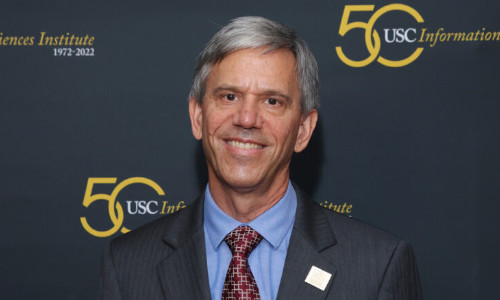
Craig Knoblock serves as the Keston Executive Director of the Information Sciences Institute (ISI) at the University of Southern California, Vice Dean of Engineering for the Viterbi School of Engineering, and Research Professor of both Computer Science and Spatial Sciences. He also directs USC's Data Science Program and leads the Center on Knowledge Graphs as Research Director. Dr. Knoblock's research focuses on techniques for describing, acquiring, and exploiting the semantics of data. His extensive work spans source modeling, schema and ontology alignment, entity and record linkage, data cleaning and normalization, extracting data from the Web, and building comprehensive knowledge graphs. With over 300 published works in these areas, his research has significantly advanced the field of semantic data integration. His work demonstrates strong trends toward practical applications of knowledge graphs across diverse domains including cultural heritage, geospatial information systems, human trafficking detection, and sensor networks. The evolution of his publications shows a progression from foundational ontology alignment techniques to sophisticated knowledge graph applications addressing real-world challenges. Fellow of the Association for the Advancement of Artificial Intelligence (AAAI) Fellow of the Association of Computing Machinery (ACM) Past President and Trustee of the International Joint Conference on Artificial Intelligence (IJCAI) Recipient of the 2014 Robert S. Engelmore Award Seven best paper awards for his research contributions As Executive Director of USC's Information Sciences Institute, Dr. Knoblock leads one of the world's premier research centers in computer science and information technology. His leadership extends to directing the Center on Knowledge Graphs and serving as Associate Director of the Informatics Program at USC. His educational background includes a Bachelor of Science from Syracuse University and Master's and Ph.D. degrees in Computer Science from Carnegie Mellon University.
Christopher G. Chute, MD, DrPH, MPH, serves as Bloomberg Distinguished Professor at Johns Hopkins University with joint appointments in the School of Medicine (Divisions of General Internal Medicine and Health Sciences Informatics), Bloomberg School of Public Health (Department of Health Policy and Management), and School of Nursing (Division of Health Informatics). He concurrently holds the position of Chief Health Research Information Officer for Johns Hopkins Medicine. Dr. Chute obtained his medical degree from Brown University, completed internal medicine residency at Dartmouth, and earned a doctorate in Epidemiology from Harvard University. He is board-certified in Internal Medicine and Clinical Informatics. His research focuses on biomedical terminologies, health information technology standards, big data analytics in healthcare, and electronic medical record systems. He leads major initiatives including the World Health Organization's ICD-11 revision as Chair of the Revision Steering Group. His work bridges clinical informatics, public health surveillance, and computational approaches to healthcare data. Analysis of recent publications reveals concentrated research in pandemic informatics, particularly leveraging large-scale EHR data from the National COVID Cohort Collaborative (N3C). Key themes include: long COVID characterization, health disparities in rural populations, AI/ML applications for clinical prediction, antiviral treatment outcomes, and data standardization methodologies. Scientific Awards and Honors Elected to National Academy of Medicine (2024) Bloomberg Distinguished Professor (2015) President, American College of Medical Informatics (2015-2020) Inaugural Fellow, International Academy of Health Sciences Informatics (2017) HL7 Fellow (2017) AMIA President's Award (2002) IBM Faculty Award (2005) Homer Warner Award for Most Outstanding Contribution (1998) Dr. Chute directs substantial research programs including NIH-funded projects on EHR data reuse, Beacon Community initiatives, LexGrid terminology infrastructure, and clinical-translational informatics. As Chief Research Information Officer, he oversees enterprise data governance and research computing infrastructure at Johns Hopkins Medicine.
Alessandra Ponte is a full professor at the École d’architecture of Université de Montréal. She has held teaching positions at Princeton University, Cornell University, Pratt Institute, ETH Zurich, and Istituto Universitario di Architettura di Venezia. Her research focuses on architecture's relationship with environment, mapping, and information systems, particularly in extreme landscapes and post-industrial contexts. Collaborated on CCA exhibitions: Environnement Total: Montréal 1965-1975 (2009) and God & Co: François Dallegret, Beyond the Bubble (2011-2014) Authored The House of Light and Entropy (2014) and Architecture et Information 2.0 series (2017-2020) Led research projects: Mining infrastructures in Québec (2014-2016), Architecture and Information 2.0 (2017-present), and Claiming the Planet: Post-Industrial Design Experiences (2020-2022) Her current work examines machine-generated spatial representations through drones, autonomous vehicles, and AI mapping systems. This research challenges traditional horizon-based aesthetics and explores non-human territorialization processes. Publications analyze how digital technologies reshape architectural practice and environmental understanding. She has contributed to journals like Landscript , Annals of Architectural Research , and New Geographies . Her students' research includes topics like Tunisian urban modernization, architectural branding, and digital mapping systems. She co-edited the book God & Co: François Dallegret, Beyond the Bubble (2011-2014).
Dr. Rob Brennan is an Assistant Professor in the School of Computer Science at University College Dublin. With 25 years of academic and industry experience, he specializes in data governance, AI ethics, and cybersecurity. His research integrates socio-technical systems analysis, data protection frameworks, and healthcare risk management. He leads the Value and Risk research challenge within the ADAPT Centre's Transparent Digital Governance initiative and coordinates projects like the ARK platform for risk governance. Education: BSc in Physics, Dublin City University MSc, Queen's University Belfast PhD in Governance, Dublin City University Professional Diploma in University Teaching and Learning, University College Dublin Research Interests: Data Governance & AI Accountability GDPR Compliance & Privacy Engineering Healthcare Risk Management Knowledge Graphs & Linked Data Cybersecurity & Incident Response Key Contributions: Co-PI of Science Foundation Ireland's Empower Data Governance project Coordinator of the €4M H2020 ALIGNED project on software/data engineering Developed the ARK platform for risk governance in healthcare and cybersecurity Grants & Awards: Best Paper Award at Extended Semantic Web Conference 2023 Principal Investigator for grants including the ARK-Virus platform (SFI-funded) Teaching & Mentorship: Coordinates courses on Cyber Risk Assessment, Incident Response, and Data Protection Supervises PhD students focusing on data governance and AI ethics Co-developed the MA in Data Protection and Privacy Law with Computing Professional Activities: Member of FAccT 2023 Program Committee Co-chair of the Irish Conference on Artificial Intelligence and Cognitive Science Contributor to international standards (OMG, IETF, 3GPP)
Paolo Buono is Associate Professor at the Department of Computer Science, University of Bari Aldo Moro, Italy. He holds a PhD in Computer Science with specialization in Visual Data Analysis. His research focuses on Information Visualization, Visual Analytics, Human-Computer Interaction, and Mobile Applications. Co-founder and CEO of LARE (2010), a university spinoff providing real-time surgical support through audio-video telestration Member (since 2002) and computer science coordinator at METEA Research Center for environmental protection Visiting scientist at AVIZ (France), University of Maryland (USA), and Fraunhofer IPSI (Germany) His work spans multiple application domains including: Cultural Heritage through interactive exploration systems Healthcare with smart therapeutic devices Environmental Monitoring via CET system IoT-based Smart Interactive Experiences He has contributed to: Dynamic hypergraph visualization techniques End-User Development frameworks (EUDroid) Usability evaluation methodologies Mobile health applications As project leader, he has coordinated: EU-funded VisMaster Coordination Action (2008-2010) Italian Ministry-funded LOGIN project (2014-2015) Apulia Region environmental projects His professional engagements include: Co-chair roles at INTERACT, AVI, IS-EUD conferences Program committee participation in VIS series and HCI conferences Member of ACM, IEEE, and SIGCHI Italy
Professor Manolis Koubarakis is a faculty member at the Department of Informatics and Telecommunications, National and Kapodistrian University of Athens. His research focuses on geospatial data science, knowledge graphs, entity resolution, and AI applications in Earth observation. He leads projects like ExtremeEarth and Plato, advancing semantic data cube systems and geospatial question answering engines. His work bridges AI and geospatial technologies, with contributions to frameworks like pyJedAI and Strabo 2 for managing big geospatial data. Research Interests include: Geospatial Question Answering Systems Entity Resolution and Entity Linking Ontology-Based Data Access (OBDA) Knowledge Graph Construction and Applications Earth Observation Data Analytics AI for Geoinformatics Notable Projects: ExtremeEarth: Combines Copernicus satellite data with machine learning for environmental analytics. Plato: Semantic data cube system enabling advanced querying of multidimensional datasets. GeoQA2: A geospatial question answering engine evaluated on large benchmarks. JedAI Family: Tools for scalable entity resolution in structured/semi-structured data. His publications span 20+ years, with recent emphasis on: AI-driven Earth observation systems Geospatial RDF benchmarking 3D geospatial interlinking Large language models for legal and health content delivery