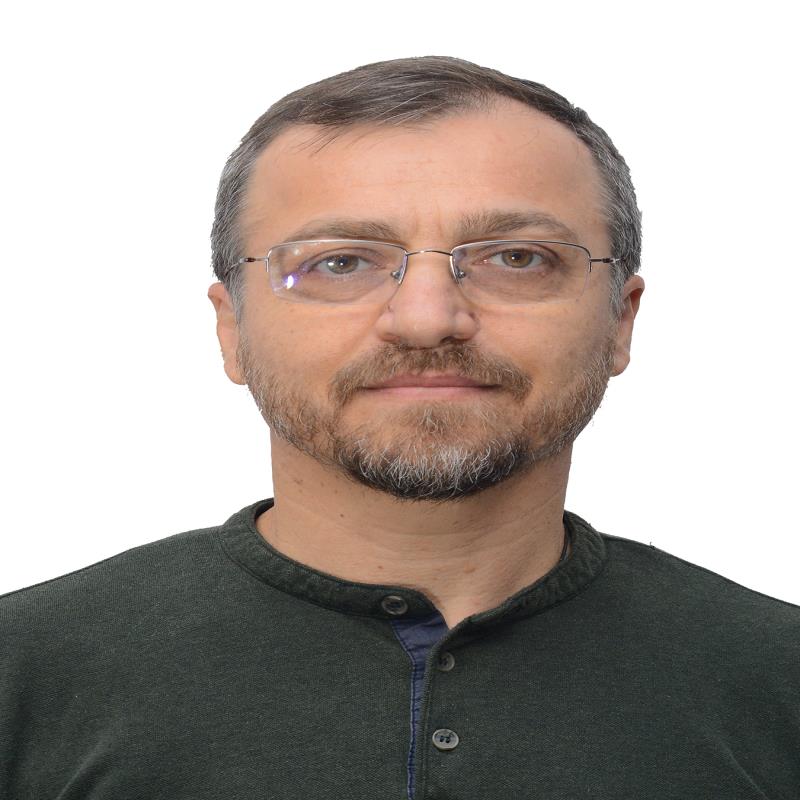
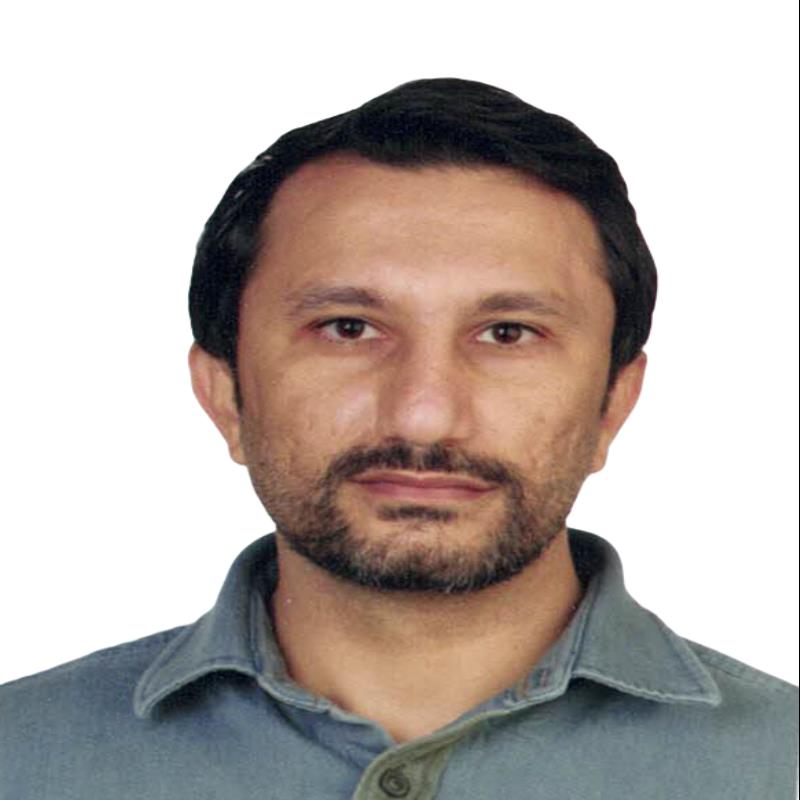
Prof. Dr. Burak Aricak is a faculty member at Bursa Technical University , where he serves in the Faculty of Forestry under the Department of Forest Engineering . His work integrates geospatial technologies and environmental science to address critical forestry challenges. Research Focus : Forest Road Planning, Harvesting Techniques, GIS & Remote Sensing Applications, and Ergonomics. Key Publications (2023-2025) explore climate change effects on forest species distribution, heavy metal accumulation in trees, soil respiration dynamics post-harvesting, and UAV/LiDAR advancements for biomass estimation. Contact : burak.aricak@btu.edu.tr | +90 (224)-8081101
Musa Nehir SÖZEN serves as a full-time Lecturer in the Department of Architecture and Urban Planning at Ihsangazi Vocational School, Kastamonu University, Turkey, a position held continuously since 2013. She previously served as Department Head from 2016 to 2025. Her academic credentials include: PhD in Geomatics Engineering, Konya Technical University (2020) MSc in Geomatics Engineering, Aksaray University (2016) BSc in Geomatics Engineering, Afyon Kocatepe University (2011) Her research centers on Land Management, GIS applications in planning, and Surveying Technique, with specialized expertise in land consolidation methodologies, cadastral systems, and spatial analysis for sustainable land administration. She integrates geospatial technologies to address agricultural land fragmentation and urban planning challenges. Her publication record (2015-2023) reveals consistent focus on Turkish land consolidation practices, examining valuation techniques, agricultural policy frameworks, and 3D cadastral complexities. These works demonstrate applied geomatics solutions for land management reform across agricultural and urban contexts. She has no recorded thesis advisements but contributed as consultant to a TÜBİTAK project (2023-2024) developing 3D models of urban heat islands for climate-resilient city planning.
Ceyhun Yildiz is a Doctor Lecturer at the Circuits and Systems Department within the Faculty of Engineering and Natural Sciences at Bandırma Onyedi Eylül Üniversitesi. Previously, he held academic positions at Kahramanmaraş İstiklal University and Kahramanmaraş Sütçü Imam University, serving as Department Head at Kahramanmaraş İstiklal University's Elbistan Vocational School. His academic career spans over a decade with roles including research assistant (2005-2008) and lecturer positions in Electrical Engineering. His research focuses on renewable energy systems, power electronics, and artificial intelligence applications in energy sectors. Key interests include wind energy optimization, machine learning-driven forecasting (e.g., wind power, solar output, electricity prices), and hybrid energy system integration. He has led projects on optimal turbine placement, energy storage solutions, and grid stability analysis. Yildiz has authored/co-authored over 40 publications, with recent works emphasizing deep learning models for electricity load forecasting and wind farm layout optimization. He teaches graduate courses on machine learning applications in engineering and has supervised master's theses on solar power estimation and hybrid energy systems. His work integrates theoretical and applied research, addressing challenges in renewable energy scalability and grid compatibility.
Mehmet Dikici serves as Associate Professor in the Department of Civil Engineering at Alanya Alaaddin Keykubat University's Faculty of Engineering, specializing in hydrological systems and water resource management with 15+ years of academic experience. His academic credentials include: Doctorate in Civil Engineering from Istanbul University (2011-2016) focusing on Hydrodynamic modeling of Alibeyköy Basin and flood risk mapping Master's in Hydraulic and Water Resources Engineering from Istanbul Technical University (2006-2009) with thesis on Dry period analysis of Istanbul rainfall Non-thesis Master's in Urban Studies and Management from Istanbul Sabahattin Zaim University (2014-2015) Bachelor's in Civil Engineering from Istanbul Technical University (1986-1990) Research centers on flood/drought dynamics using remote sensing and hydromechanical modeling , with significant focus on Turkish basins including Alibeyköy, Seyhan, and Ceyhan. His work integrates geospatial technologies for risk assessment and numerical simulation for urban water management challenges, particularly in Mediterranean coastal regions. Recent publications demonstrate methodological evolution from traditional hydrological modeling (2018-2020) toward integrated remote sensing approaches (2021-2024), with increasing emphasis on climate change impacts and post-disaster flood analysis. Key trends include multi-index drought assessment, fire-flood interactions, and basin-specific flood probability frameworks. As Department Head (2018-2020), he led research projects including Impacts of Low Impact Developments on Surface Flow in Alibeyköy Watershed (2016) and Calibrated Hydrological Model for Alibeykoy Watershed (2018-2019), plus national initiatives like the IPCC Turkey report (2024) and 1st Water Council (2021). His applied work connects academia with disaster response through Turkish Red Crescent leadership (Alanya Branch Head since 2019) and board memberships in CEKUD and BAMDER (since 2012), focusing on coastal erosion studies and ancient city infrastructure evaluation.
Prof. Ercan Kahya is a Professor of Civil Engineering at Istanbul Technical University (ITU), holding roles as Rector of Taskent Architecture and Construction Institute (2021–2024) and ITU-TRNC Rector (2012–2020). He earned his Ph.D. in Hydrology from UCLA and has held academic positions at Selcuk University and visiting roles at American Universities in Dubai. His research focuses on hydrology, water resources, coastal sciences, and hydroclimatology, addressing drought analysis, climate impacts, and modeling. Over 20 students have completed theses under his supervision, covering topics like flood risk, precipitation modeling, and climatic variability. His work integrates advanced statistical methods, machine learning, and environmental data analysis. Recently, he has explored gridded precipitation products, drought indices, and climate change effects on rainfall patterns. Education: Ph.D. in Hydrology, University of California, Los Angeles (1989–1993) M.Sc. in Civil Engineering, Polytechnic University, New York (1986–1988) B.Sc. in Civil Engineering, Istanbul Technical University (1980–1984) Research Interests: Drought dynamics, hydroclimatic modeling, climate teleconnections, and environmental data analytics. His articles highlight advancements in streamflow prediction, drought forecasting via machine learning, and spatial analysis of climate indices. He has contributed to policy-related studies on flood risk and erosion assessment. Currently, he oversees ongoing research on energy efficiency in Uzbekistan’s residential buildings and the Black Sea region’s hydrological challenges. His memberships include the International Association of Hydrological Sciences and the Nutrigenetics Epigenetics Association (Vice President, 2020–2024).
Prof. Hande Demirel is a Professor at the Department of Geomatics Engineering, Istanbul Technical University. She holds a PhD in Geoinformatics from Technical University of Berlin (2002). Her academic career includes roles as Associate Professor (2008–2019) and Assistant Professor (2004–2008) at ITU, alongside research at the European Commission Joint Research Center (2011–2014). She specializes in GIS applications, remote sensing, photogrammetry, and spatial data analysis. Education: B.Sc. (1996) and M.Sc. (1998) in Geodesy & Photogrammetry from ITU, followed by a PhD in Geoinformatics (2002) from TU Berlin. Awards include Best PhD Award (2003), DAAD Scholarship (2007), and Best Poster Award (2016). Research focuses on transportation accessibility, climate change impacts, 3D spatial modeling, and BIM-GIS integration. She leads projects like 'Building Information Model Based Fire Evacuation Simulation' (TUBITAK-funded) and 'Spatio-Temporal Accessibility Analysis in Istanbul'. Key contributions include over 30 peer-reviewed publications, including works on land use prediction, ship detection via AI, and indoor navigation systems. She advises numerous graduate students, with 15+ theses supervised since 2009. Active in professional societies including the German and American Associations for Remote Sensing.
Çağlar Akkaya is an Associate Professor at the Disaster Management Institute of Istanbul Technical University , focusing on seismic risk assessment, disaster management, and earthquake resilience. Their work bridges structural engineering with urban planning, addressing housing affordability post-disasters and impact chain analysis. Research Themes : Seismic risk modeling in megacities, remote sensing for damage assessment, post-earthquake housing affordability, and systemic effect analysis. Recent Projects : Leading a 2024-2027 TUBITAK-funded project on multi-scale recycling techniques for concrete waste after earthquakes. Collaborations : Frequently collaborates with institutions like Springer Science and researchers such as Kundak, Arslanlı, and Asıcı on disaster preparedness and urban resilience. Key publications highlight Istanbul's seismic vulnerabilities, the 2023 Türkiye earthquakes' economic impacts, and advancements in earthquake-resistant construction. Current research emphasizes integrating field and remote sensing data for rapid post-disaster assessments.
İbrahim Rıza Hallaç is an Assistant Professor at RAFET KAYIŞ FACULTY OF ENGINEERING, Department of Computer Engineering. He holds a PhD (2021), Master's (2014), and Bachelor's (2011) in Computer Engineering from Firat University, with doctoral research on social media analysis using deep learning methods under advisor Galip Aydın. His research focuses on: Artificial Intelligence and language models Machine learning for distributed systems Big data analytics and cloud computing Natural language processing applications Social media sentiment analysis Radar-based object detection systems His publications (2015-2024) demonstrate consistent focus on machine learning applications across diverse domains including social network analysis, distributed computing, Turkish NLP, and sensor data processing. Recent works emphasize radar-based multi-target detection (2024), credit scoring models (2023), and wind speed estimation (2023), reflecting expertise in scaling AI solutions for real-world problems. He has led four national R&D projects: Deep Learning-Based Face Recognition Authorization System (2017-2019) DEĞİRMEN Big Data Analysis Platform for Turkish Armed Forces (2017-2021) KOSGEB Innovation Program for Face Recognition Systems (2017-2019) Cloud-Based Social Media Reputation Analysis System (2015-2017) No students, awards, or contact emails are documented in available records.
Prof. Dr. Mehmet SALTAN is a faculty member at the Department of Civil Engineering within the College of Engineering and Natural Sciences at Suleyman Demirel University . With an H-index of 24 and over 1907 citations , his research focuses on pavement engineering , railway transportation , and innovative applications of fuzzy logic , artificial neural networks , and genetic algorithms in road infrastructure. Research Interests : Pavement Engineering, Railway Transportation, Fuzzy Logic, Artificial Neural Networks, Genetic Algorithms, Concrete Pavements Education : PhD in Civil Engineering (Suleyman Demirel University, 1999), MS in Civil Engineering (1994), BS in Civil Engineering (Akdeniz University, 1992) His recent publications highlight advancements in sustainable asphalt mixtures using waste materials (e.g., fluorescent lamp glass, waste tea), nano-silica modification for enhanced pavement performance, and innovative road visibility solutions . He has contributed to journal editorial roles and participated in TÜBİTAK 1005 projects focused on national railway sleeper geometry optimization.
Dr. Gülsüm Çiğdem Çavdaroğlu Akkoç is a full-time Assistant Professor in the Information Technologies Department at Işık University's Faculty of Economics, Administrative and Social Sciences. She holds a multidisciplinary background with degrees in Mathematics Engineering, Geomatics Engineering, and Turkish Language & Literature. Education Ph.D. in Photogrammetry Engineering – Yıldız Technical University (2006–2013) M.S. in Photogrammetry Engineering – Yıldız Technical University (2003–2006) B.S. in Mathematics Engineering – Yıldız Technical University (1998–2003) B.A. in Turkish Language & Literature – Anadolu University (2016–2020) Research Interests Dr. Akkoç's research spans remote sensing , GIS , and machine learning , with applications in environmental monitoring, urban mobility, and health informatics. Her work leverages satellite imagery, mobile data, and AI to address challenges such as wildfire detection, air pollution tracking, and disease diagnosis. She actively integrates spatial data with AI to support smart city development and sustainable resource management. Scientific Awards First Prize – Mobilya Ar-Ge Proje Pazarı (2013), Entrepreneurship Category Supervision & Projects She has supervised four master's theses and led several EU and national projects including: BEE-OPTECH4Honey : Optimizing beekeeping routes using ICT TOP4HoneyChain : A sustainable smart honey value chain platform Open Data Platform for Precision Agriculture Labs & Teams Dr. Akkoç collaborates with interdisciplinary research teams in the fields of AI, geospatial technologies, and agricultural informatics. Her lab activities include developing machine learning models for real-world applications in health, environment, and urban systems.
Prof. Dr. Sıdıka Melek Başak is a faculty member at Yeditepe University , affiliated with the Faculty of Engineering and Department of Industrial and Systems Engineering . Her primary research areas include Industrial Engineering , Fuzzy Logic , and Stochastic Processes . Education: PhD in Econometrics (1987-1990), Marmara University MS in Mathematics (1978-1980), Hacettepe University BSc in Mathematics (1972-1978), Middle East Technical University Her research integrates Fuzzy Logic with optimization techniques for environmental site characterization, human mortality modeling, and migration analysis. She has developed geometric partitioning metaheuristics and fuzzy areal assessment frameworks to address complex optimization problems. Notable trends in her publications include fuzzy-based modeling for environmental systems, stochastic optimization methods, and hybrid Bayesian-fuzzy approaches for forecasting international migration patterns. Her work spans interdisciplinary applications in engineering , demographics , and public policy . Grants & Projects: Economic Costs of Violence against Young Children in Turkey (Principal Investigator, completed 2012) PURE Protection Groundwater Resources (Principal Investigator, EU-funded, completed 1999)
Hayriye Eşbah Tunçay is Professor and former Head (2011–2019) of the Department of Landscape Architecture at Istanbul Technical University (ITU), Faculty of Architecture , where she also serves as Vice-Dean for Research & Development. A Fulbright Visiting Scholar at Harvard Graduate School of Design and founding director of HET Landscape & Urban Design Ltd. , she is a leading voice in ecological landscape planning, climate-resilient urbanism and digital design technologies. Education PhD, Environmental Design & Planning – University of Arizona, USA (2001) Master of Landscape Architecture – University of Arizona, USA (1996) Bachelor of Landscape Architecture – Çukurova University, Turkey (1990) Research focus Her work integrates landscape ecology, sustainability science and advanced geospatial modelling to create nature-based solutions for cities facing climate change. Key themes include: Sponge cities & water-sensitive urban design: storm-water mitigation, blue-green infrastructure, urban river restoration. Climate adaptation & resilience: scenario-driven urban growth modelling (SLEUTH), risk mapping, ecological networks. Digital landscape architecture: AI-driven generative design (GANs, diffusion models), remote sensing & GIS-based decision support. Heritage landscapes & inclusive design: historic urban parks, sensory accessibility, urban agriculture in cultural settings. Publications & impact With 150+ refereed articles and an h-index of 9 (Scopus), her 2021-2024 outputs reveal a methodological shift toward AI-assisted design and post-pandemic healthy city paradigms, while earlier works laid the foundation for large-scale ecological planning in protected areas of Turkey. Scientific awards XV. National Landscape Architecture Awards 2024 – 1st Prize (Urban Design) Ribas-Pierra Honour Award, Barcelona Landscape Biennale 2023 National Landscape Architecture Awards 2016–2021 – multiple 1st & 2nd prizes Over 25 national & international design competition accolades since 2010 Research leadership & funding Principal investigator of 7 active/completed projects funded by TÜBİTAK, EU-COST, ITU-BAP (>€2 million), supervising 22 graduate theses. Recent projects include: Green infrastructure for climate-resilient cities (2022) SLEUTH-based urban growth & landscape change analysis, Istanbul (2015-2021) Ecological restoration of Istanbul rivers and historic water systems (2016-ongoing) Laboratories & teams She directs the TETA Lab at ITU for landscape research infrastructure and leads interdisciplinary teams within the Environmental and Urban Research Centre , collaborating with Harvard, Seoul National University, University of Arizona and multiple EU institutions.
Prof. Dr. Yasin Çağatay Seçkin is a Professor at Istanbul Technical University Faculty of Architecture , Department of Landscape Architecture since 2017. He previously served as Associate Professor (2012-2017) and Assistant Professor (2007-2012) at the same institution. Currently holds public office as Deputy Mayor of Üsküdar Municipality since 2024, following roles as Advisor to Istanbul Metropolitan Mayor (2023-2024) and Director of Parks and Green Spaces (2019-2023). PhD in Urban Design from Istanbul Technical University (2004) MSc in Architectural History from Istanbul Technical University (2000) BArch from Mimar Sinan Fine Arts University (1998) Research focuses on Sustainable Landscape Construction , Barrier-Free Design , and Ecological Urbanism . His work integrates digital landscape analysis , cultural heritage conservation , and climate adaptation strategies . Scientific output shows strong emphasis on cultural landscapes (100% related publications), Istanbul (100% geographical focus), and landscape architecture (52% keyword occurrence). Notable scientific awards include: 2024 National Landscape Architecture Contribution Award 2023 World Parks Foundation Silver Award 2021 Design Turkey Industrial Design Award Professional activities include project leadership in 8 funded research projects (2015-2024), 18 research outputs, and editorial board membership in international journals including JoDLA and A|Z ITU Journal . Current projects focus on urban resilience , cultural landscape documentation , and digital landscape architecture .
Bertan Badur is a Professor at Boğaziçi University, where he teaches courses such as MIS 132 - Object Oriented Programming , MIS 331 - Data Mining , and CSE 551 - Computational Methods . His research focuses on Data Mining, Agent-Based Modeling, and Machine Learning. Undergraduate: Boğaziçi University, Chemical Engineering M.A.: Boğaziçi University, Economics Ph.D.: Boğaziçi University, Economics His work spans interdisciplinary applications, including predictive analytics in e-commerce , game theory for market share dynamics , and agent-based simulations for migration and social behavior . He has contributed to fields like IT risk modeling , social media analysis for education , and IoT research trends . Recent publications highlight trends in deep learning for customer lifetime value prediction , Nash equilibrium in economic competition , and spatiotemporal crime risk modeling . His academic career bridges computational methods with socio-economic challenges.
Samet DOĞAN is a Lecturer at Kastamonu University's Ihsangazi Vocational School, Department of Architecture and Urban Planning. He has been serving in this position since 2021 and also holds administrative roles including Deputy Department Head since 2023 and Quality Commission Member since 2024. His academic career at Kastamonu University spans multiple departments and schools, including the Graduate Education Institute and Küre Vocational School. His educational background includes: PhD in Land Management and Use from Istanbul Okan University (2024) Master's Degree in Forest Engineering from Çankırı Karatekin University (2014-2018) BSc in Geomatics Engineering from Zonguldak Bulent Ecevit University (2007-2013) Dr. DOĞAN's research primarily focuses on Remote Sensing, Geographic Information Systems (GIS), and Photogrammetry with applications in land management, urban planning, and disaster management. His work bridges technological advancements in geospatial sciences with practical applications in urban development and environmental management. He has developed expertise in machine learning applications for geospatial analysis, particularly in landslide susceptibility mapping and land cover change detection. His publication record shows a consistent research trajectory with recent emphasis on integrating drone technology, high-resolution DEMs, and machine learning techniques into traditional geospatial applications. His work spans from theoretical aspects of spatial analysis to practical implementations in urban planning and disaster response scenarios. Dr. DOĞAN has successfully led multiple research projects, including TÜBİTAK 2209-A projects on historical building 3D modeling and drone-supported mapping. His scientific impact is reflected in a Google Scholar h-index of 3 with 23 citations, indicating growing recognition in his field. He actively contributes to his professional community through memberships in the Chamber of Surveying and Cadastre Engineers and its specialized commissions on Photogrammetry, Remote Sensing, and GIS. He has served as a session chair and invited speaker at relevant conferences, demonstrating his engagement with both academic and professional communities.