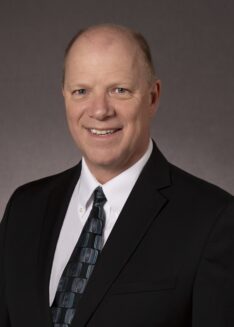
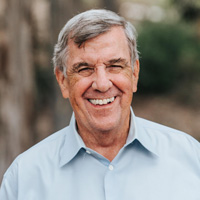
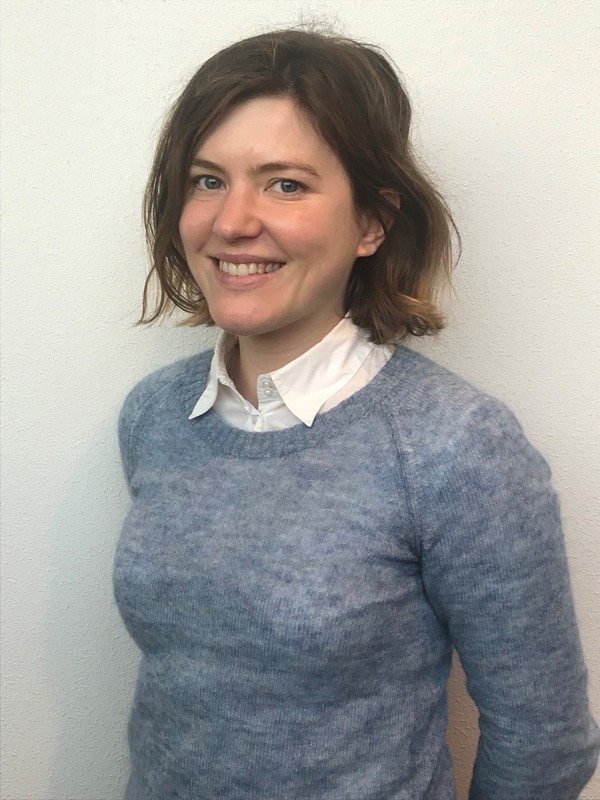
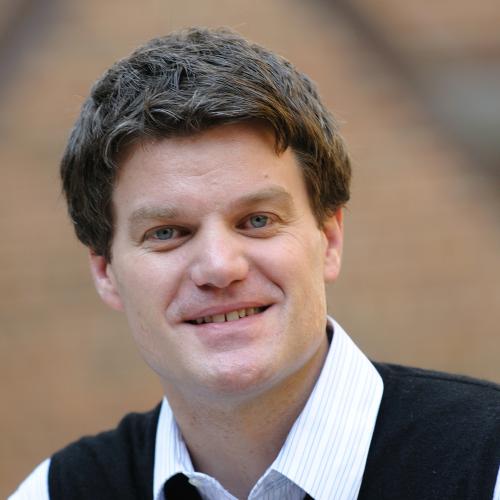
Ardiansyah Fauzi is affiliated with the Faculty of Engineering and Environment at Northumbria University, Newcastle. His research focuses on disaster risk reduction, coastal engineering, and environmental sustainability. He specializes in tsunami forecasting, flood management, and the application of machine learning in geohazard analysis. His work integrates computational models, hydrological studies, and community-based approaches to address challenges in disaster mitigation and infrastructure resilience. Key research areas include eco-friendly construction materials for coastal protection, urban flood risk modeling, and hydropower potential assessment in Indonesian regions. Recent contributions involve developing predictive systems for tsunamis and floods using deep learning, as well as participatory research to enhance community disaster literacy. His interdisciplinary approach bridges engineering, environmental science, and social science to create actionable solutions for vulnerable regions.
Dr. Mario Schootman is a Professor and Vice-Chair for Mentoring and Innovation in the Department of Internal Medicine at the University of Arkansas for Medical Sciences (UAMS). He also serves as Director of the K12 Program, Associate Director of the SMART Program, and Co-Director of the Workforce Development Core at the Translational Research Institute (TRI). His research focuses on epidemiological methods, including geographic information systems (GIS) and multilevel models, to investigate the impact of neighborhood conditions on health outcomes such as cancer, cardiovascular disease, and disparities in healthcare access. Dr. Schootman has led multiple NIH-funded grants and mentored numerous early-career faculty. His work emphasizes social determinants of health, including neighborhood disinvestment, income variability, and access to care. Recent studies explore disparities in venous thromboembolism prophylaxis outcomes, dietary impacts on cancer survivors, and the role of environmental factors like anthropogenic heat in childhood ADHD. Key research themes include health disparities in cancer survival, the epidemiology of chronic diseases in vulnerable populations, and leveraging claims databases to improve healthcare equity. His contributions span clinical outcomes research, community engagement, and methodological advancements in spatial epidemiology.
Wasem Alsabbagh is an Associate Professor at the University of Waterloo’s School of Pharmacy. His research focuses on pharmacoepidemiology, health services research, and pharmacy practice, with an emphasis on opioid crisis management, vaccination accessibility, diabetes treatment outcomes, and healthcare disparities. He holds a position in the Faculty of Pharmacy, contributing to both academic and clinical advancements in pharmaceutical policy and public health. Research Interests: Pharmacoepidemiology : Investigating drug utilization patterns, adverse event correlations, and population-level drug safety. Health Inequity : Analyzing socioeconomic determinants of healthcare access, particularly regarding opioid prescriptions and vaccination programs. Vaccination Strategies : Optimizing pharmacy-based vaccination services and electronic health record integration for preventive care. Diabetes Management : Evaluating drug efficacy (e.g., SGLT2 inhibitors) and patient adherence to antidiabetic therapies. Article Trends: His recent work addresses Canada’s opioid crisis through socioeconomic analysis, explores SGLT2 inhibitors’ risks/benefits for diabetes patients, and examines vaccination accessibility in rural/underserved populations. His studies often combine longitudinal data and cross-sectional surveys across provinces. Scientific Awards: No awards explicitly mentioned in the provided text. Advising & Grants: No formal advisees or grant details listed. His research appears to be grant-funded but specifics are omitted. Labs/Teams: Not explicitly mentioned, but collaborations with public health agencies and pharmacy networks are implied through his studies on population health surveillance and healthcare policy.
Mamoun T. Mardini is an Assistant Professor at the Institute on Aging , University of Florida. His research focuses on leveraging data science, wearable technologies, and machine learning to address challenges in gerontology and healthcare. Education : Ph.D. Computer Science (2018), University of North Carolina M.S. Computer Engineering (2013), American University of Sharjah B.S. Computer Engineering (2009), Jordan University of Science and Technology Research Interests : Dr. Mardini’s work emphasizes: Development of AI-driven frailty assessment tools for surgical patients Applications of smart wearables for monitoring mobility and pain in older adults Machine learning models for predicting cardiovascular outcomes and disparities Analysis of social determinants of health using real-world data Key Contributions : His studies include: Pioneering work on reducing unnecessary TEE procedures using AI Development of the ROAMM smartwatch platform for ecological momentary assessment Investigations into racial disparities in healthcare outcomes using ML Awards : No awards explicitly mentioned in the provided data. Labs/Teams : Active in the Division of Epidemiology and Data Science in Gerontology (EDGE) .
Jens de Bruijn is an Assistant Professor at the Institute for Environmental Studies (IVM) within the Faculty of Science at Vrije Universiteit Amsterdam. He is also a Guest Research Scholar at the International Institute for Applied Systems Analysis (IIASA) in Laxenburg since February 2020. His work focuses on developing computational models to understand human responses to environmental changes, particularly related to climate change impacts. Dr. de Bruijn's research interests center around hydrological modeling, human behavior in response to natural hazards, integrated modeling approaches, geostatistics, and social media analysis for disaster response. His work spans multiple disciplines including environmental science, computer science, and social sciences, with a strong emphasis on developing computational tools for large-scale simulations. He has made significant contributions to agent-based modeling through his development of the honeybees framework, which enables efficient simulation of millions of agents in environmental contexts. His recent publications demonstrate a consistent focus on climate change adaptation, particularly regarding sea level rise impacts on coastal populations, farmer behavior under drought conditions, and the use of social media data for flood monitoring and disaster response. The research shows a progression from foundational work on social media analysis for flood detection toward increasingly sophisticated large-scale modeling of human decision-making under environmental stress. Dr. de Bruijn is actively involved in multiple research projects including COASTMOVE (developing the DYNAMO global agent-based model) and fairSTREAM (modeling farmer behavior). He also teaches courses including Advanced Spatial Analyses and Water Risks. His work contributes to multiple United Nations Sustainable Development Goals, particularly those related to climate action and sustainable communities. He leads development of several significant modeling tools, including the Global Flood Monitor, the DYNAMO model for coastal adaptation, the GEB agent-based model coupled with hydrological systems, and the honeybees computational framework. His research has been cited across multiple platforms including news outlets, academic blogs, and social media, demonstrating the interdisciplinary impact of his work.
Katarzyna (Kate) Negacz is an Assistant Professor at the Institute for Environmental Studies (IVM) at Vrije Universiteit Amsterdam, specializing in governance for food systems and biodiversity. Her work emphasizes non-state and sub-national actors in global biodiversity governance and sustainable food production on saline-degraded lands. PhD in Economics (2019) from Warsaw School of Economics MSc in Environment and Resource Management (2018) from VU Amsterdam MSc in Law (2015) from University of Warsaw MSc in International Economics (2012) from Warsaw School of Economics BSc in International Economics (2009) from Warsaw School of Economics Her research intersects climate change adaptation and sustainable development , focusing on saline agriculture and transnational governance initiatives . She explores how halophyte cultivation can address food security in salt-affected regions while analyzing policy frameworks for biodiversity conservation. Current projects include: BioSTAR : Monitoring biodiversity initiatives SALAD : Upscaling saline agriculture across Europe and Africa SUSTAIN : COST Action for salt-affected lands SaltyBEATS : Water governance under climate change Her work aligns with UN Sustainable Development Goals, particularly those related to climate action , life on land , and zero hunger .
Elinor S. Meredith is a Researcher and Postdoctoral Fellow in the Department of Applied Earth Sciences at Nanyang Technological University. Her work focuses on volcanic hazards, particularly lava flow dynamics, urban exposure to volcanic risks, and risk assessment methodologies. She has contributed to global datasets analyzing the impacts of lava flows on infrastructure and populations, emphasizing the integration of geospatial data and critical infrastructure resilience. Her research spans volcanology, hazard modeling, and risk mitigation strategies. Key projects include evaluating city exposure to volcanic hazards, refining population exposure estimation techniques, and analyzing lava flow behaviors through field investigations and remote sensing. Meredith collaborates internationally, contributing to both peer-reviewed articles and open-access datasets, such as the 'Lava flow impacts on the built environment' dataset published in 2024. Meredith's work addresses global trends in volcanic risk, with a focus on vulnerable regions like Southeast Asia and urban centers near volcanoes. Her research bridges empirical field studies with theoretical frameworks, aiming to enhance disaster preparedness and resilience planning. While not explicitly listed, her contributions suggest active participation in interdisciplinary teams focused on environmental hazards and civil infrastructure protection.
John Orcutt is a Distinguished Professor of Geophysics at the Scripps Institution of Oceanography, UC San Diego, and a Distinguished Researcher at the San Diego Supercomputer Center. He holds an academic rank of Professor and is affiliated with the Institute of Geophysics and Planetary Physics. His research focuses on ocean instrumentation, seismic studies, cyberinfrastructure, and tsunami early warning systems. Education: B.S. from the U.S. Naval Academy, M.S. from Liverpool University (England), and Ph.D. from UC San Diego/Scripps Institution of Oceanography. Orcutt has pioneered advancements in ocean-bottom seismometry, real-time data telemetry, and global seismic network development. His work integrates geophysical theory with cutting-edge technology, emphasizing cyberinfrastructure for sensor networks and environmental monitoring. Research interests include the internal structure of ocean spreading centers, mantle dynamics, and the application of supercomputing to geophysical problems. He has led projects such as the Hawaiian PLUME experiment, the Ocean Observatories Initiative (OOI), and HiSeasNet, which expanded ship-to-shore data transmission capabilities. Orcutt advocates for open data sharing and citizen science initiatives to enhance oceanographic research accessibility. His publications span tsunami monitoring, seismic network design, and cyberinfrastructure innovations. Notable contributions include developing autonomous ocean observatories and advancing methods for near-real-time environmental data access. Orcutt collaborates internationally on initiatives like the Integrated Arctic Ocean Observing System and tsunami early warning systems in the Caribbean and Japan.
Xinyu Li is a Research Fellow at the Department of Human Centred Computing, Monash University. Their work focuses on multimodal learning analytics, AI in education, and collaborative learning dynamics, contributing to UN Sustainable Development Goals through educational technology advancements. Key research areas include generative AI's impact on learning processes, self-regulated learning strategies, and spatial data analysis for educational systems. Over 27 peer-reviewed publications since 2021 demonstrate expertise in learning analytics, educational psychology, and computer science intersections. Recent studies examine metacognitive effects of AI tools, comparative analysis between ChatGPT and human experts in learning support, and temporal dynamics of collaborative learning through sensor data. Work also extends to spatial computing with road network query optimization and ethical challenges of large language models in education. Collaborations span global institutions, reflecting interdisciplinary reach in education technology. Publications have been widely disseminated via news outlets, social platforms, and academic networks, achieving significant readership on Mendeley. Research bridges technical innovations (e.g., FLoRA Engine, VizChat systems) with educational outcomes, emphasizing practical deployments and real-world impact through field trials and randomized controlled trials.
Dr Fanny Franchini is a Senior Research Fellow and Senior Data Scientist at the Cancer Health Services Research Unit, Melbourne School of Population and Global Health, University of Melbourne. She holds a PhD in Clinical Medicine from the University of Oxford, specializing in tumour micro-environment and immune regulatory networks in colorectal cancer. Her work bridges clinical medicine and data science to improve cancer care equity, precision medicine development, and policy-informing research. She utilizes clinical registries and population-based datasets to enhance treatment outcomes and reduce disease burden. Her research focuses on immune-related adverse events from immunotherapy, cost-effectiveness of genomic medicine, and deintensification strategies in oncology. She has pioneered the PRIMCAT models for predicting population health economic impacts of cancer treatments and led projects like AUSTRALI-AVE evaluating real-world treatment patterns. Fanny actively engages in public outreach to promote cancer awareness and teaches R/data science methods to foster research collaboration. Her work emphasizes actionable insights for healthcare policies, including analyses of travel distance impacts on palliative radiotherapy access and socioeconomic factors influencing Medicare costs. She collaborates with patient groups to advance consumer-led research and advocates for interdisciplinary approaches in healthcare delivery.
Vetle Torvik serves as Associate Professor and PhD Program Director at the University of Illinois Urbana-Champaign's School of Information Sciences. Holding a PhD in Engineering Science from Louisiana State University with prior degrees in mathematics and operations research, he previously held a research assistant professorship in Psychiatry at the University of Illinois at Chicago. His office is located in Room 314 at 501 E. Daniel St., reachable via vtorvik@illinois.edu. His academic credentials include: PhD in Engineering Science, Louisiana State University Degrees in Mathematics and Operations Research Dr. Torvik's research integrates mathematical optimization and computational statistics to advance text/data mining, literature-based discovery, and bioinformatics. He develops complex models for analyzing scientific collaboration through large-scale bibliographic databases, with significant contributions to informetrics and scientometrics. His work examines social information networks, gender dynamics in academic publishing, and geographic patterns in research output, often employing bibliometric tools to uncover hidden structures in scientific literature. His publication record (2013-2016) reveals consistent focus on bibliometric methodology development, particularly for author disambiguation, co-authorship network analysis, and geographic mapping of research affiliations. These works demonstrate interdisciplinary applications spanning biomedical informatics, patent analytics, and scientometrics, characterized by innovative approaches to processing large-scale academic databases and revealing novel insights about scientific collaboration structures. Scientific recognition includes: Centennial Scholar (2016-2017) As PhD Program Director, Dr. Torvik mentors doctoral students while teaching courses including Data, Stat, Info (IS507CC) and Independent Study (IS589VIT). His research has been funded through completed projects such as: Collaborative Research: DAT: From grant to commercialization Workforce Training: A Quasi-Experimental Approach Using Research Funding Effects Analysis of Academic Activity Patterns in Academic Literature Innovation in an Aging Society He leads the ABEL initiative (http://abel.ischool.illinois.edu), which provides open bibliographic data mining tools including MapAffil for geocoding affiliations and systems for author disambiguation. This infrastructure supports global research in scientometrics by enabling large-scale analysis of publication patterns, collaboration networks, and research impact metrics across scientific domains.
Prof. Dr. Agnès Voisard is Professor of Computer Science at Freie Universität Berlin, where she leads the Databases and Information Systems research group. She serves as Vice Dean for Research in the Department of Mathematics and Computer Science. Her research develops database technologies for mobile and geospatial applications, with particular focus on public safety systems. She collaborates with Fraunhofer FOKUS on the ESPRI innovation center for public safety technologies. Professor Voisard coordinates Erasmus exchanges for the department and has organized workshops on spatial databases and mobile information systems at international venues including ESI Vienna.
Peiyu Cao is a Postdoctoral Associate at Cornell University 's College of Agriculture and Life Sciences , specifically within the Department of Global Development and its Food Systems & Global Change program. His work bridges agricultural practices with environmental sustainability. PhD in Environmental Science (2022), Iowa State University MS in Ecology , Chinese Academy of Sciences BS in Resources and Environmental Science , China Agricultural University Dr. Cao's research focuses on global agricultural sustainability , examining interactions between livestock systems , nutrient cycling , and climate change mitigation . He develops integrated platforms combining data science , environmental models , and remote sensing to address challenges like food security , land degradation , and biodiversity loss . Key research trends include historical nutrient budget analysis (1850–present), high-resolution crop mapping , and livestock sector sustainability . He has published extensively on nitrogen/phosphorus cycles , GHG emissions , and agricultural data synthesis . Current projects involve analyzing cross-country dietary diversity and biochar-soil interactions . Located at 102 Bruckner Hall, Ithaca, NY , Dr. Cao collaborates with Food Systems & Global Change researchers and contributes to Cornell's Global Development initiatives. His work leverages interdisciplinary methods to connect agricultural policies with environmental outcomes.
Robert Baxter is a Professor in the Department of Biosciences at the University of Durham, with an affiliation as an Associate Fellow in the Institute of Advanced Study. He holds a PhD from the University of Manchester (Botany, 1988) and has held academic positions since 1994, progressing from Lecturer to Senior Lecturer (2002), Reader (2015), and Full Professor (2021). His research focuses on Arctic and alpine plant ecology, climate change impacts, carbon sequestration, and fire ecology. Notable contributions include studies on post-fire ecosystem shifts, permafrost carbon dynamics, and Arctic vegetation responses to warming. He has supervised multiple PhD students, including Andrew Clelland, Jack Marchant, and Millicent Harding. Dr. Baxter has received prestigious awards such as Fellowship of the Royal Society of Biology (2020) and Senior Fellowship of the Higher Education Academy (2020). He has been an invited speaker and panelist at global venues like the Royal Institution and Dartmouth College, and contributed to high-impact publications in journals like Science of the Total Environment and Global Change Biology. His work bridges field ecology, remote sensing, and climate modeling. Current projects include modeling reindeer forage availability in Arctic regions and analyzing climate impacts on boreal forest recovery. He collaborates internationally, with fieldwork in Siberia, Canada, and Sweden.
Georgia Marina Andreou is a Postdoctoral Associate in Classics at Cornell University, specializing in Eastern Mediterranean prehistoric archaeology with PhD from University of Edinburgh. Her research focuses on coastal erosion impacts, Late Bronze Age settlement patterns, and digital heritage preservation. Current projects include: Publication of Maroni Valley Archaeological Survey (Cyprus); Coastal erosion effects on Cypriot archaeology; Gaza Maritime Archaeology Project monitoring conflict-affected sites. Her fieldwork documents vulnerable coastal sites using GIS, geophysics, and 3D scanning. As co-investigator for the Maritime Endangered Archaeology project, she develops regional databases for MENA maritime heritage. Research has been supported by Cornell digitization grants and addresses heritage legislation challenges in conflict zones.