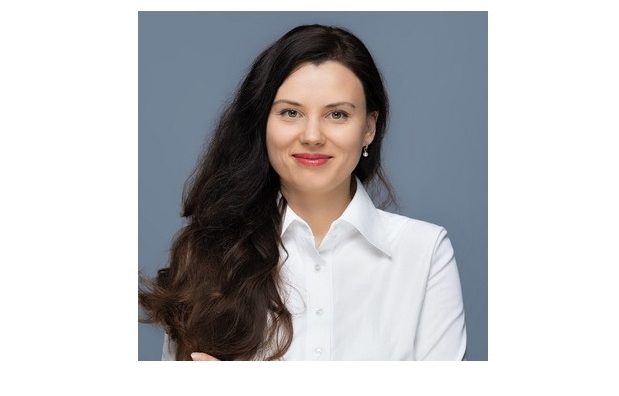
Katažyna Bogdzevič is a Professor at Mykolas Romeris University (MRU) Law School, specializing in Private International Law , European Law , Human Rights , and Environmental Law . She leads the MRU Human Rights LAB and contributes to the Environmental Management Research LAB, focusing on legal frameworks for ecosystem services, climate change mitigation, and stakeholder engagement. Key Research Themes: Integration of Private International Law with Environmental Law , analysis of legal conflicts in nature-based solutions, and name rights under international human rights conventions. Policy Engagement: Serves as advisor to Lithuania's Minister of Justice Ewelina Dobrowolska , emphasizing knowledge transfer to legislative and judicial practices. Email: roffice@mruni.eu
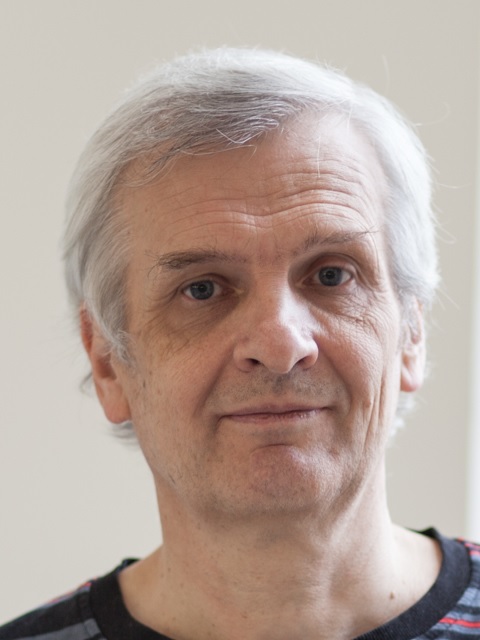
Professor Hone-Jay Chu is a faculty member at the Department of Geomatics, National Cheng Kung University, where he has been employed since 2011. He earned his PhD from National Chiao Tung University in 2008, focusing on artificial intelligence and optimization for water resource management, followed by postdoctoral work (2008–2011) with Professor YP Lin on spatial environmental monitoring and land use change models. Education : PhD in Environmental Engineering (2008) from National Chiao Tung University His research integrates geospatial technologies with machine learning to address complex environmental challenges. Key domains include groundwater dynamics , land use/cover change , landslide detection , and air pollution analysis , leveraging big data , remote sensing , and environmental resilience frameworks. Recent publications highlight applications of deep learning (e.g., LSTM networks) and random forest models in predicting meteorological droughts, groundwater changes, and climate impacts. The work spans interdisciplinary collaboration, with co-authors from institutions in Bangladesh, Austria, and Turkey.
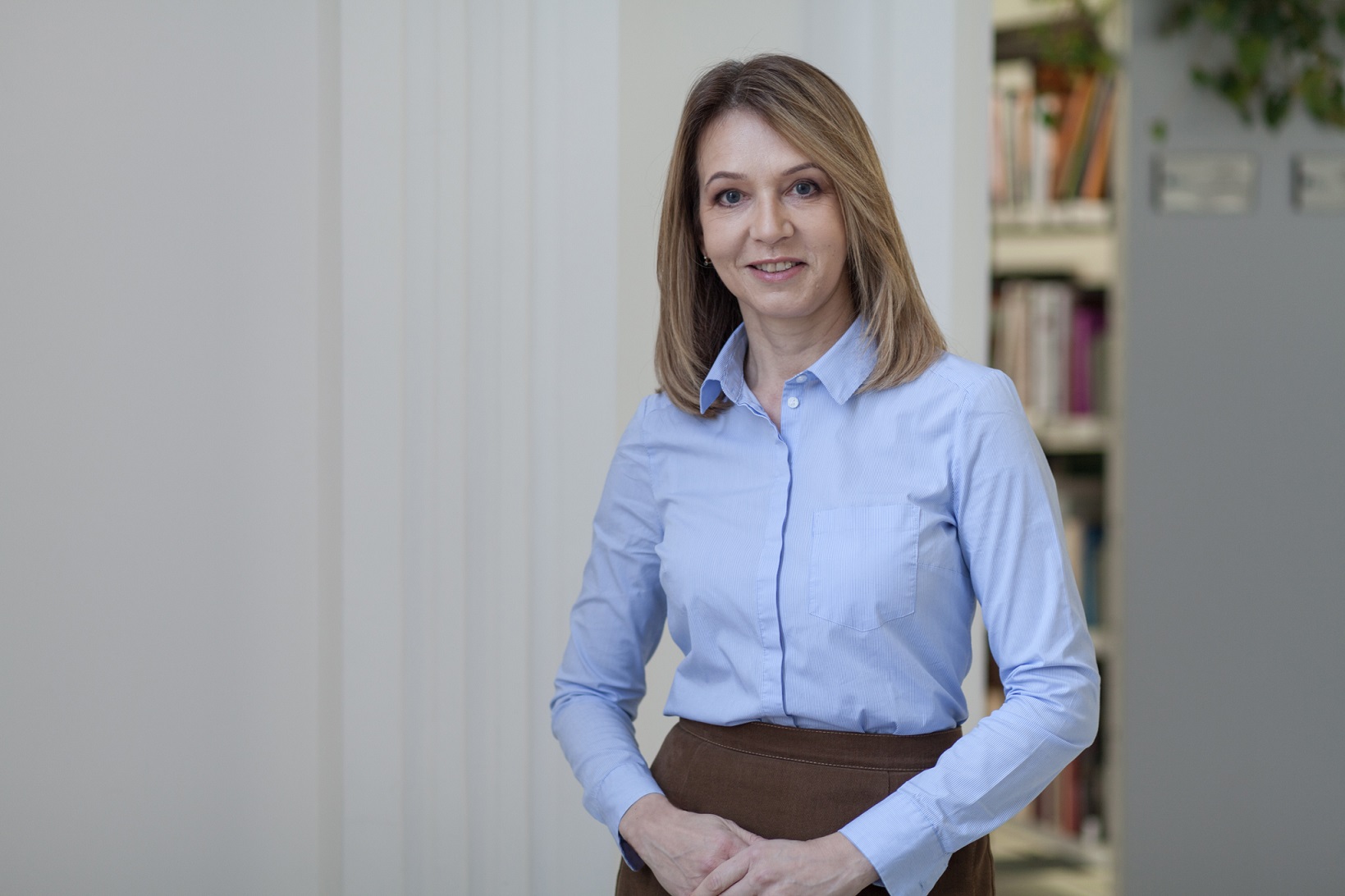
Virginija Gurskienė is an Associate Professor at Vytautas Magnus University (VMU), specifically affiliated with the Department of Land Use Planning and Geomatics within the Agriculture Academy. She is actively involved in research and academic supervision, particularly in the areas of land use planning, urban planning, and management of protected areas. Her research interests include: Real property cadastre Management of protected areas Urban planning Land use planning Spatial analysis Environmental sustainability Dr. Gurskienė's scholarly work spans multiple aspects of spatial planning and land management, with a strong focus on sustainable development and the integration of planning solutions in both urban and rural contexts. She employs advanced spatial analysis techniques and examines the interplay between environmental protection, urbanization processes, and agricultural land use. She has supervised 73 master's theses according to the available data, demonstrating expertise across a wide range of topics related to land use planning, protected areas management, and urban development. Her students' research reflects current challenges in spatial planning, including assessment of urbanization in regional parks, development of protected areas, state land use control, and smart city integration. Since 2021, she has been affiliated with the Department of Land Use Planning and Geomatics, and since 2024, she has also been associated with the Bioeconomy Research Institute, indicating expanding research interests into bioeconomic aspects of land use.
Vida Malienė is a Visiting Professor at the Department of Land Use Planning and Geomatics, Faculty of Water and Land Management, Vytautas Magnus University Agriculture Academy. She contributes to the Bioeconomy Research Institute since 2023 and participated in international collaborations with Liverpool John Moores University. European Academy of Land Use and Development (Executive Board Member) International Council for Research and Innovation in Building and Construction (CIB) European Group of Operational Research Chartered Property Valuer Her research spans real estate markets , urban regeneration , land management economics , and application of multi-criteria evaluation methods . She specializes in sustainable housing , land consolidation , and affordable housing policies , with focus on Baltic and European contexts. Key publication trends include land use planning (63% of work), environmental engineering (58%), civil engineering (47%), and management sciences (13%). Recent articles explore bio-economy applications , agricultural land transformation , and value capture mechanisms across Europe. She holds a PhD in Technological Sciences (2000) and has authored over 100 publications, including 50+ peer-reviewed journal articles, 3 monographs, 20+ book chapters, and editorials. Her work is cited 2949 times (2023 metrics), with h-index-23 and i10-index-36. Languages: Lithuanian (native) English (fluent) German (fluent) Russian (fluent)
Roles & Affiliation: Professor at the Regional Development Institute of Šiauliai Academy (Vilnius University). Previously served as Professor and Head of the Department of Electronics at Šiauliai University. Specializes in Computer Science, Environmental Science, and Biometrics, with a focus on airborne pollen recognition, deep neural networks, and bioaerosol monitoring. Doctorate in Electrical and Electronic Engineering from Kaunas University of Technology (1999). Research Interests: Combines computer vision and machine learning to advance automated pollen classification, allergen forecasting, and health impact analysis. Explores applications of AI in environmental monitoring, biometrics, and medical diagnostics. Publications: Over 50 peer-reviewed articles, with recent work emphasizing real-time pollen detection systems, health correlations of airborne allergens, and automated bioaerosol monitoring. Key projects include EU-funded initiatives on synergistic effects of pollen and air quality, and real-time pollen forecasting. Grants & Projects: Led EU FP6 projects (COGAIN, MICOLE) on eye-tracking technology for disabled users. Active in Lithuania’s Research Council and EU Structural Funds projects focusing on pollen and environmental health. Labs & Teams: Collaborates with interdisciplinary teams in Šiauliai Academy’s Department of Electronics and bioaerosol research groups. Part of international networks like ISCA and IEEE, contributing to standards in eye-tracking and environmental monitoring.
Professor Šaulienė Ingrida serves as a Professor and Chief Researcher at Vilnius University Šiauliai Academy, specializing in aerobiology and environmental science. Her work focuses on pollen properties, allergen mitigation, and public health impacts. She has held leadership roles, including Vice-Rector for Science and Art, and directs the University Research Institute. Education: Doctor of Biomedical Sciences (Botany). Research Interests: Aerobiology, pollen dispersion dynamics, allergenic potential of urban flora, and development of monitoring technologies. Her projects include automated pollen detection systems and EU-funded initiatives like EO4EU and REALTIME. Key Projects: Leading initiatives such as AI-augmented Earth Observation (EO4EU), allergen forecasting (PASYFO), and standardized bioaerosol monitoring guidelines. She also chairs COST Action ADOPT and serves in international aerobiology organizations. Awards: Doctor Honoris Causa from Daugavpils University (2016), multiple ministerial commendations, and researcher accolades. Active in editorial roles for journals like Frontiers in Allergy and Zemdirbyste-Agriculture . Grants & Labs: Over 20 funded projects since 2005, focusing on ragweed management, pollen forecasting, and urban green space policies. Collaborates with institutions across Europe on environmental and health initiatives.
Jolanta Valčiukienė is an Associate Professor and Head of the Department of Land Use Planning and Geomatics at the Agricultural Academy of Vytautas Magnus University. She holds a Doctor of Technology degree (2012) and has been serving as Associate Professor since 2016. Her academic leadership extends to heading her department since 2018 and contributing to the Bioeconomy Research Institute since September 2024. Her primary research interests span Land Administration , Spatial Planning , and Sustainable Land Use , with additional expertise in geomatics and land management. Dr. Valčiukienė's work bridges theoretical frameworks with practical applications in agricultural landscapes and rural development contexts. Analysis of her recent publications reveals a strong focus on integrating geospatial technologies with sustainable land management practices, particularly examining climate change adaptation strategies, bioeconomy implementation, and digital transformation in land administration systems. Her research increasingly addresses European Green Deal challenges and emphasizes the interconnections between human safety and environmental protection. Dr. Valčiukienė has been actively involved in organizing and contributing to numerous international conferences, particularly the annual Human and Nature Safety series (2021-2025) and Rural Development conferences focused on sustainable bioeconomy. Her work has been published in the scientific articles collection Human and Nature Safety , referenced in the Central & Eastern European Academic Source (EBSCO) database. As Head of Department, she mentors students and researchers while actively participating in interdisciplinary research projects addressing contemporary challenges in land management, spatial planning, and sustainable resource use. Her international collaborations span multiple European countries, demonstrating her commitment to advancing knowledge in her field through global academic exchange.
Linas Petkevičius serves as an Associate Professor at Vilnius University's Faculty of Mathematics and Informatics, actively teaching courses including Introduction to Quantum Computing across 10 consecutive academic years from 2016/2017 through 2025/2026 as evidenced by institutional schedules. His research demonstrates remarkable interdisciplinary breadth spanning quantum computing algorithm optimization, medical diagnostics through digital pathology analysis, and satellite-based environmental monitoring. He develops machine learning solutions for breast cancer prognosis using Ki67 heterogeneity metrics, creates quantum circuit schemes adapted to hardware constraints, and implements deep learning models for algal bloom detection in Baltic waters using Sentinel-2 data. His work consistently bridges theoretical computer science with practical healthcare and environmental applications. Analysis of his 15 most recent publications (2023-2025) reveals three dominant research thrusts: 1) Quantum computing optimization for NISQ devices, 2) Medical image analysis focusing on spatial tumor microenvironment characterization in breast cancer, and 3) Remote sensing applications using transformer models and few-shot learning for satellite change detection. His publications show increasing specialization in combining deep learning architectures with domain-specific constraints across these fields. Scientific Awards: No scientific awards were mentioned in the provided materials. Advising and Grants: The provided texts contain no information regarding student advisement, research grants, or funded projects.
Alminas Čivilis is an Assistant Professor at the Faculty of Mathematics and Informatics, Vilnius University. He has been actively involved in teaching courses related to Spatial Databases since at least the 2016/2017 academic year, continuing through the 2025/2026 semester. His work spans both lecture and exercise formats, delivered remotely in recent schedules. Research Focus: Dr. Čivilis specializes in geospatial data management and database systems, with ongoing contributions to teaching and curriculum development in these areas.
Dr. Saulius Maskeliūnas serves as a Researcher and Deputy Director at the Cybersocial Systems Engineering Group within Vilnius University's Institute of Data Science and Digital Technologies (formerly Institute of Mathematics and Informatics). His career at the institute spans from 1984 to present, progressing through positions from junior research associate to his current leadership role. Dr. Maskeliūnas earned his Doctor of Science degree in Informatics in 1996 with a dissertation on 'Knowledge base structuring method for heuristic and qualitative reasoning systems,' building upon his engineering education in automated control systems from Kaunas Polytechnic Institute (now Kaunas University of Technology) in 1984. His research expertise centers on information and knowledge-based systems, with significant contributions in Semantic Web technologies, ontology engineering, knowledge management, and workflow automation. Over his extensive career, his work has evolved from foundational research in knowledge representation to practical applications in environmental monitoring systems, water resource management, and national research data infrastructure. Dr. Maskeliūnas' scholarly output demonstrates a consistent trajectory of innovation across multiple domains, particularly in developing semantic technologies for environmental informatics and research data management systems. His recent publications focus on AI standardization, water resource monitoring systems, and research evaluation frameworks. He holds prominent leadership positions including President of the Lithuanian Computer Society (since 2010), Chair of the Technical Committee LST TK4 'Information Technologies' (since 2021), and member of the State Commission of the Lithuanian Language's Committee on Language Technologies (since 2012). Throughout his career, Dr. Maskeliūnas has successfully balanced theoretical research with practical implementation, contributing significantly to Lithuania's information technology infrastructure, research evaluation systems, and standardization efforts in computer science terminology.
Dr. Andrius Čiginas is a Senior Researcher at the Interdisciplinary Statistical Research Group , part of the Institute of Data Science and Digital Technologies (VU DMSTI) at Vilnius University . His work focuses on advancing survey statistics, small area estimation, and the integration of non-probability samples into official statistics. Research Focus Dr. Čiginas specializes in developing statistical methodologies for improving the accuracy and efficiency of population estimates, especially in small domains. His research includes: Composite estimation techniques Non-probability sample integration Real-time prediction using social media and administrative data Bootstrap and Edgeworth approximations for finite populations Doctoral Supervision He currently supervises two doctoral students: Akvilė Vitkauskaitė – Informatics (2024–2028): Parameter estimation and forecasting in population domains using non-probability samples. Ieva Burakauskaitė – Mathematics (2022–2026): Use of additional information in estimating parameters in population domains. Scientific Contributions Dr. Čiginas has published extensively in top-tier journals such as Journal of Official Statistics , Statistics , and Nonlinear Analysis: Modelling and Control . His recent work explores the integration of non-probability data sources into official statistics, consumer confidence estimation, and small area estimation techniques.