
Christof Kneisel is a Professor in Physical Geography at the University of Würzburg's Institute of Geography and Geology. As a leading researcher in permafrost and alpine geomorphology, he focuses on frozen ground dynamics, glacial-permafrost interactions, and geophysical methods for subsurface characterization across the Swiss Alps, Austria, Northern Sweden, and Iceland. His research integrates field data, GIS analysis, and 3D resistivity imaging to model environmental system responses to climate change. Key research areas include: Permafrost mapping and monitoring Application of geophysical techniques Soil science in cold climates Natural hazard assessment in alpine zones Climate-landform interactions His recent publications emphasize 3D electrical resistivity applications, permafrost dynamics in talus slopes, and carbon pool formation in alpine soils. Current projects funded by the German Research Foundation (DFG, KN 542/21-1) and federal ministries explore climate resilience in Bavarian agriculture through geospatial big data integration. Notable scientific contributions include: Advancing 3D geophysical monitoring for frozen ground Conceptual models of periglacial systems Key textbook co-authorship in physical geography International collaborations with Canada's Geological Survey
جستوجوی استاد و پژوهشگر
استاد راهنما، استاد دانشگاه یا پژوهشگر مناسب برای مسیر پژوهشیتان را پیدا کنید و با او ارتباط بگیرید.
نمایش ۳۰۱-۳۰۹ از ۳۰۹ استاد راهنما
اطلاعات این پروفایلها از صفحات عمومی دانشگاهها جمعآوری شده و ممکن است بهروز نباشد.
- Digital Geography Education
- Virtual Reality in Education
- Education for Sustainable Development
- +۳ مورد دیگر
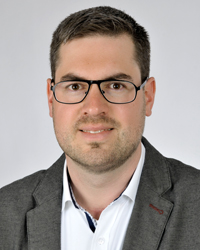
Daniel Wirth serves as an Academic Councillor and Lecturer for Special Tasks at the Institute of Geography and Geology within the Faculty of Philosophy at the University of Würzburg. His primary affiliation is with the Didactics of Geography department, where he has been employed since January 2020, focusing on the digital transformation of geography education with particular emphasis on virtual reality applications and sustainable development education. Wirth earned his First State Examination in Geography and German Studies for Realschule (secondary school) teaching at the University of Würzburg, followed by his Second State Examination with distinction. His educational journey included a four-month international teaching practicum in Kosovo through the Robert Bosch Foundation's "Völkerverständigung macht Schule" program. His research centers on innovative digital approaches to geography education, particularly exploring how virtual reality technologies can enhance teaching and learning experiences in sustainable development education. Wirth has developed specialized expertise in creating virtual field trips and 360-degree learning environments that make geographical concepts more accessible and engaging for students. His work bridges traditional geography teaching methods with cutting-edge digital tools to create more immersive and effective learning experiences. Analysis of his publication record reveals a clear trajectory from general digital tools in education toward increasingly sophisticated virtual reality applications specifically tailored for sustainable development education. His research demonstrates both theoretical depth and practical classroom applicability, with a strong emphasis on empowering teachers to create their own digital learning materials. Professional Recognition Junior Fellow in the Kolleg Didaktik:digital program sponsored by the Joachim Herz Foundation in Hamburg (2020-2022) Tenured civil servant (Beamter auf Lebenszeit) since March 2016 Robert Bosch Foundation scholarship recipient for international teaching experience in Kosovo (2009-2011) As an educator, Wirth has supervised numerous written theses for pre-service geography teachers and developed innovative teaching approaches that integrate digital tools into geography education. He serves as the webmaster for the Geography Didactics working group and as editor for the "Digital" section of the Schulmagazin 5-10 journal. His professional activities extend beyond the university to include significant contributions to teacher training across Bavaria, where he regularly conducts workshops on virtual reality applications and digital teaching methods for practicing educators. Wirth leads initiatives focused on creating digital learning environments, particularly through his work with virtual reality field trips. His current projects involve training pre-service geography teachers to develop their own VR excursions focused on sustainable development topics, creating a sustainable pipeline of digitally competent geography educators who can implement these innovative approaches in their future classrooms.
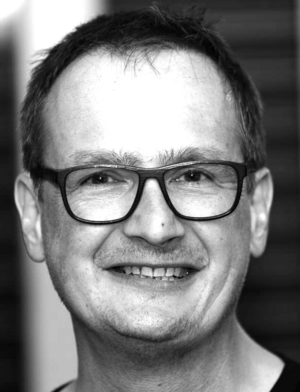
Prof. Dr. Gerrit Höfker has been Professor of Building Physics at Bochum University of Applied Sciences since 2003, within the Department of Civil and Environmental Engineering. He teaches Building Physics, Fire Protection, Building Climatology, and Room Acoustics at Bachelor and Master levels, focusing on practical applications for residential and commercial buildings. His academic journey began with vocational training as a central heating and ventilation engineer (1987-1990) and paramedic (1990-1991). He then earned a Diploma in Building Physics from Stuttgart University of Applied Sciences (1991-1996) and a doctorate from De Montfort University Leicester (2001) on sorption-assisted building cooling with solar energy. Prof. Höfker's research priorities include thermal building simulation, urban climate adaptation, and thermal/auditory comfort. His work in room acoustics focuses on planning spaces with demanding acoustic requirements, while his thermal research addresses energy-efficient building design across diverse climate zones. He employs advanced simulation tools like EnergyPlus and IDAIce for thermal analysis and ray tracing for complex room acoustics. His publications from 2009-2017 show a consistent focus on building acoustics (nearly half) and thermal comfort. Notable trends include 3D visualization for energy systems, non-auditory noise effects in offices, and bottom-up models for urban energy demand. His research increasingly connects building physics with urban climate challenges. Prof. Höfker is actively involved in the Building Physics Laboratory at Bochum University of Applied Sciences, where he oversees teaching laboratories for heat transport, water vapor diffusion, and acoustics calculations. The lab supports both educational activities and applied research in building physics.
- Epidemiology
- Biometrics
- Public Health
- +۳ مورد دیگر
Rafael T Mikolajczyk serves as Full Professor of Epidemiology and Biometrics and Director of the Institute for Medical Epidemiology, Biometrics and Informatics at Martin-Luther-University Halle-Wittenberg's Medical School. With over 307 publications spanning decades, he leads major epidemiological initiatives including the German National Cohort and DigiHero studies. His research interests focus on vaccination science (COVID-19, influenza, hepatitis B), chronic disease epidemiology (cancer, diabetes), and health services research . Recent work examines regional healthcare disparities, biomarker validation, and innovative risk communication methods, consistently applying rigorous cohort and mixed-methods approaches. Analysis of his 2022-2024 publications reveals strengthening focus on global vaccine implementation (Indonesia collaborations), real-world emergency care data , and patient-centered risk communication . His work bridges biostatistical methodology with actionable public health interventions across German and international contexts. Scientific contributions include: Leadership in Germany's largest population cohorts Methodological advances in vaccination uptake research Development of evidence-based risk communication tools Identification of early-life diabetes risk factors His institute drives epidemiological training and medical informatics innovation at Halle Medical School, with active grants supporting vaccination studies, cohort analyses, and health services research. Current projects involve international teams across Germany, Indonesia, and European networks, maintaining high publication output in top public health journals. The Institute for Medical Epidemiology, Biometrics and Informatics operates as an interdisciplinary hub connecting clinical departments, public health agencies, and international research consortia under his directorship, focusing on translating epidemiological findings into health policy improvements.
- Data Science
- Internet of Things (IoT)
- Visual Analytics
- +۱۰ مورد دیگر
Professor Dirk J. Lehmann is a Professor of Data Science in IoT at Ostfalia University of Applied Sciences, Faculty of Computer Science, where he has been employed since May 2022. He holds significant leadership roles including Deputy Head of the Institute for Information Engineering (since 2024), Research Officer of the Faculty of Computer Science (since 2023), and membership in multiple committees including the Admissions Committee for Digital Technologies and the Digital Technologies Examination Board. Professor Lehmann's extensive academic journey includes: Part-time professorship in Data Science in IoT at Ostfalia University (2020-2022) Senior Specialist for Digitalization, AI, and Visual Analysis at IAV GmbH (2018-2023) Assistant Professor of Visual Data Analysis at Nazarbayev University, Kazakhstan (2017) Visiting professorships at TU Graz, Austria and Universidad Rey Juan Carlos, Spain (2016-2017) Researcher at Otto-von-Guericke University Magdeburg (2009-2017) His research expertise centers on Visual Analytics and Data Science, with particular emphasis on high-dimensional data visualization, categorical data analysis, and IoT applications. Professor Lehmann leads the Data Science in IoT working group, conducting research across three main areas: visual data analysis, distributed data analysis using AI methods, and applied data analysis in geology, climate data, medicine, and industrial processes. His methodological contributions include innovative visualization techniques for complex datasets across multiple domains. Analysis of Professor Lehmann's 15 most recent publications (2017-2025) reveals a consistent focus on advancing visualization techniques for complex data analysis. His work spans categorical data visualization (CatNetVis), biological data analysis (D. Melanogaster research), optimization of star coordinate systems, and interactive exploration methods for large datasets. These publications appear in top venues including IEEE Transactions on Visualization and Computer Graphics and EuroVis, demonstrating both theoretical rigor and practical application across diverse domains from healthcare to environmental science. As an educator, Professor Lehmann teaches a comprehensive range of courses from foundational mathematics to advanced machine learning and visualization techniques. He actively supervises student projects and theses, emphasizing clear project definitions with measurable acceptance criteria. His international collaborations span institutions in Israel, Saudi Arabia, China, Austria, and Spain, reflecting a global research perspective that bridges academic theory with industry applications, particularly through his previous role at IAV GmbH, a Volkswagen subsidiary.

Klaus Böhm serves as a Professor at Mainz University of Applied Sciences within the School of Engineering, affiliated with the i3mainz institute (Institute for Spatial Information and Surveying Technology). His research bridges geospatial technologies with artificial intelligence, focusing on practical applications in urban planning, healthcare, and educational environments through projects like BAM (Big Data Analytics) and TOPML (Machine Learning). His primary research domains include geospatial explainable AI (GeoXAI), mixed reality decision support systems, and health informatics applications. He pioneers methods for visualizing uncertainty in AI models, developing geoparsing techniques using LLMs, and creating spatial navigation frameworks for VR environments. His work consistently addresses real-world challenges in elderly mobility, smart city infrastructure, and medical education through spatial analytics. Analysis of his 2022-2025 publications reveals three dominant trends: (1) Integration of XAI with geospatial data for transparent decision-making in urban planning, (2) Development of mixed reality tools for STEM education and dermatology training, and (3) Spatio-temporal correlation analysis for smart city applications like parking optimization and public transport accessibility. His methodology emphasizes interactive visualization of complex spatial relationships and uncertainty quantification. Dr. Böhm leads multiple funded research initiatives including AIMR (AI-based decision support in mixed reality), RAFVINIERT (spatial intelligence for senior care), and FlexGeo (geo-service integration). These projects demonstrate sustained grant acquisition capability across EU and national funding programs, typically involving interdisciplinary teams from computer science, urban planning, and healthcare sectors. As a core member of the i3mainz research institute, he contributes to Germany's geospatial technology ecosystem through collaborative projects with municipal authorities and healthcare providers. The institute's work focuses on translating academic research into operational tools for spatial data infrastructure, particularly in environmental monitoring and public service optimization contexts.
Dr. Markus Nielbock serves as Head of Science Media Service at the Center for Astronomical Education and Public Relations, part of the House of Astronomy (HdA) affiliated with the Max Planck Institute for Astronomy (MPIA) in Heidelberg. With a background in physics and astronomy research, he transitioned to focus on science communication and education after serving as project scientist for the Herschel Space Telescope. His research interests center on astronomy education, particularly the development of didactic materials for secondary schools, public relations for astronomical institutions, and the ESO Science Outreach Network. He actively supervises students teaching physics and organizes numerous public lectures and events to engage the community with astronomy. Dr. Nielbock's publication record shows a strong focus on educational materials, with recent work emphasizing exoplanet science, celestial navigation techniques, and space exploration education. His 15 most recent publications (2018-2024) demonstrate consistent output in reputable educational journals like Science in Schools and astroEDU, covering diverse topics from exoplanet atmospheres to historical navigation methods. As an educator, he has taught the block course 'Introduction to Astronomy for Secondary School Teachers' annually since 2016, developed numerous instructional videos on astronomical concepts, and created extensive teaching materials through the 'Space for Education' project. His outreach extends to radio interviews discussing recent astronomical discoveries and maintaining an active social media presence focused on astronomy communication.
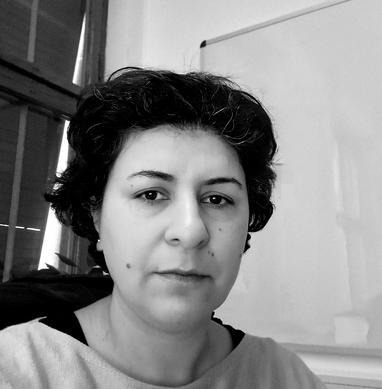
Dr. Salam Traboulsi is a Researcher at Stuttgart University of Applied Sciences (HFT Stuttgart), affiliated with the Competence Center for Digitalization in Research, Teaching & Economics since 2019. She holds a PhD in Computer Science from the University of Toulouse, France (2008). Her work bridges technology and urban innovation, with a focus on developing scalable solutions for modern cities. Research Focus: Dr. Traboulsi specializes in: Smart City ecosystems integrating IoT and 5G Precision technologies for urban positioning and navigation Data management frameworks for large-scale sensor networks Open-source IoT platforms for building efficiency and environmental monitoring Cloud and grid computing infrastructures Key Projects: She leads/contributes to: iCity 2: UDigiT4iCity – Developing urban digital twins using IoT building data and 5G sensor networks iCity 1 – Foundational research on intelligent urban infrastructure systems Publication Trends: Her recent work (2020-2024) emphasizes 5G-enabled urban solutions, including fleet management optimization, indoor positioning systems, and IoT analytics for smart buildings. Earlier research (2005-2013) focused on distributed computing, storage virtualization, and information retrieval systems, demonstrating consistent expertise in large-scale data infrastructure. Academic Engagement: She serves as a scientific reviewer for journals and conferences and teaches in the surveying study area at HFT Stuttgart.
Professor Kristina Schädler is a faculty member at the West Coast University of Applied Sciences (FH Westküste), where she serves as Professor of Data Processing within the School of Technology. She has been with the university since 2005 and also served as Dean of the Department of Technology. Her academic background includes a PhD in machine learning from TU Berlin, where she was awarded the Chorafas Research Prize for young scientists. West Coast University of Applied Sciences (since 2005) TU Berlin, Institute of Computer Science (1994-1999) Martin Luther University Halle/Wittenberg (1990-1994) Professor Schädler's research focuses on artificial intelligence and machine learning applications, particularly in image processing and data analysis. Her work spans multiple domains including industrial automation, agricultural technology, renewable energy, and animal husbandry. She has led numerous research projects that bridge academic theory with practical industrial applications, with particular emphasis on developing robust image processing systems that can be deployed in real-world settings. Her research portfolio demonstrates a consistent pattern of applying advanced machine learning techniques to solve practical problems across diverse industries. The ANIMET project, which developed facial recognition for horses, and the MaviSeg system for multichannel image segmentation represent her innovative approach to adapting computer vision technologies for specialized applications. Her work often involves close collaboration with industry partners to ensure practical relevance and implementation. Chorafas Research Prize for young scientists Innovationspreis at Equitana (2013) for the ANIMET project Professor Schädler has supervised numerous student theses that have resulted in practical applications across various domains. Her research group has secured funding from multiple sources including the European Commission, BMBF, and regional development agencies. She has established the CICAD project as a sustainable competence center for industrial image processing, which has trained multiple doctoral students through cooperative programs with the University of Lübeck. Her work demonstrates strong industry connections with companies like HIT Hinrichs Innovation + Technik, MBJ Solutions, and Fischer und Tausche Kondensatoren. Her research laboratory focuses on industrial image processing applications, with specialized equipment for 2D/3D imaging, spectral analysis, and machine learning implementation. The CICAD project established a dedicated competence center that continues to develop new applications of image processing technology across multiple industries.