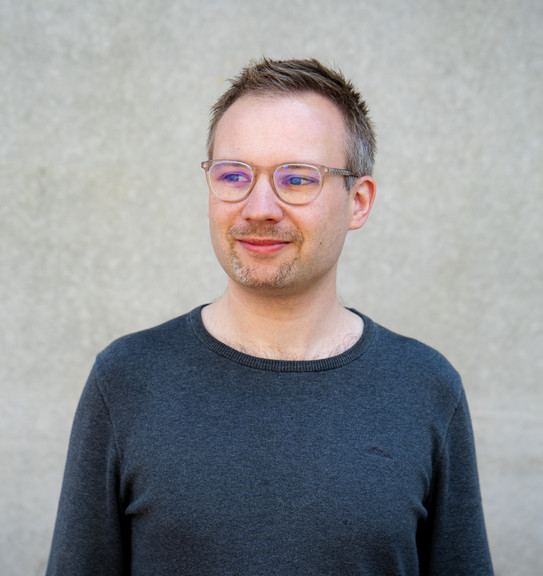
Maxim Romanov heads 'The Evolution of Islamic Societies' project at University of Hamburg's Asia-Africa-Institut, funded by DFG's Emmy Noether Program. Former positions include senior research fellow at KITAB Project and University of Vienna. Research reconstructs social history of Islamic world (c.600-1600 CE) through computational analysis of Arabic chronicles and biographical collections. Research Focus: Digital humanities approaches to premodern Islamic history including OCR development for Arabic manuscripts, corpus linguistics, and geospatial modeling of historical data. Technical Contributions: Developed OpenITI corpus infrastructure, al-Ṯurayyā gazetteer system, and computational methods for large-scale historical text analysis. Recent work enhances NLP for classical Arabic with OCR accuracy exceeding 90%.
Miguel Mahecha is Professor of Environmental Data Science and Remote Sensing at the University of Leipzig, where he serves as Institute Head of the Institute for Earth System Science and Remote Sensing. He is also affiliated with the Remote Sensing Centre for Earth System Research, a collaboration between Leipzig University and the Helmholtz Centre for Environmental Research (UFZ). Mahecha is a member of the German Centre for Integrative Biodiversity Research (iDiv) and serves as Principal Investigator in the Centre for Scalable Data Analytics and Artificial Intelligence. Additionally, he is a Fellow of the European Laboratory for Learning and Intelligent Systems and co-spokesperson for the National Research Data Infrastructure for Earth System Sciences (NFDI4Earth). Full Professor for Modelling Approaches in Remote Sensing, University of Leipzig (since 03/2020) Research Group Leader: Empirical Inference in the Earth System, Max Planck Institute for Biogeochemistry, Jena (12/2012 - 03/2020) PostDoc, Max Planck Institute for Biogeochemistry, Jena (10/2009 - 11/2012) PhD in Environmental Sciences, ETH Zürich (06/2006 - 09/2009) Diploma in Geoecology, Bayreuth University (10/2000 - 04/2006) Mahecha's research focuses on understanding ecosystem responses to climate extremes and human-environment relationships during these events. He investigates macro-ecological dynamics and ecosystem functioning using data-driven methods and high-dimensional Earth observations. A key contribution is his co-development of the Earth System Data Cube concept, which integrates empirical methods with theoretical understanding to analyze complex Earth system interactions. His work spans biogeography, ecosystem functioning, and advanced data science methodologies for environmental monitoring. His recent publications demonstrate a strong emphasis on analyzing compound climate extremes, particularly heatwaves and droughts, and their impacts on ecosystems. Mahecha has pioneered methods using Earth System Data Cubes to integrate diverse environmental datasets, enabling novel insights into biosphere-atmosphere interactions. His research increasingly incorporates artificial intelligence and machine learning approaches to understand spatiotemporal patterns in ecological systems, with applications in real-time forest monitoring and biodiversity assessment. Fellow of the European Laboratory for Learning and Intelligent Systems Co-spokesperson for NFDI4Earth (National Research Data Infrastructure for Earth System Sciences) Mahecha leads multiple significant research projects including Digital Forest (real-time forest monitoring), NFDI4BioDiversity, and XAIDA (extreme events: AI for Detection and Attribution). His work receives funding from diverse sources including EU, DFG, and Stiftungen Inland. He collaborates extensively with the German Centre for Integrative Biodiversity Research (iDiv) and the Centre for Scalable Data Analytics and Artificial Intelligence. His research group, Earth System Data Science (ESDS), focuses on developing methods to extract valuable information from long-term environmental observations to understand coupled Earth system dynamics. At the Remote Sensing Centre for Earth System Research, Mahecha's ESDS group investigates how ecosystem functions respond to climate extremes, societal vulnerability to environmental hazards, and nonlinear interactions in coupled Earth systems. The group leverages citizen science data, remote sensing observations, and advanced computational methods to address pressing environmental questions.
Steven Vertovec is a leading scholar in migration studies, currently serving as Director of the Max Planck Institute for the Study of Religious and Ethnic Diversity and Honorary Joint Professor of Sociology and Ethnology at the University of Göttingen. Previously, he was Professor of Transnational Anthropology at the University of Oxford and Director of COMPAS (Centre on Migration, Policy and Society). Research Focus: Superdiversity, transnationalism, multiculturalism, and social complexity Key Roles: Editor of Global Networks , series editor of Routledge Transnationalism , consultant to global agencies (World Bank, UNESCO, European Commission) His work spans theoretical and empirical studies of diasporic communities, integration policies, and urban diversity. Recent publications emphasize superdiversity as a framework for understanding contemporary migration patterns and social transformations. Selected Contributions: Pioneering analysis of Hindu diaspora patterns, co-editor of major works on multiculturalism, and developer of data visualization tools for urban migration studies.
Prof. Dr. med. Andreas Stahl is a faculty member at the University of Greifswald , serving as the Director of the University Eye Clinic . His work integrates clinical practice and research in ophthalmology, with a focus on retinal diseases. University: University of Greifswald Role: Director of the Clinic Contact: clinic-management-eyes@med.uni-greifswald.de Research Interests: Stahl’s research centers on retinopathy of prematurity (ROP) , anti-VEGF therapies , angiogenesis , and diabetic retinopathy . He explores pathophysiological mechanisms and innovative treatments for retinal vascular disorders, collaborating across disciplines to improve neonatal and adult ophthalmological outcomes. Recent Publications: His 2021–2022 work includes clinical decision support tools for ROP screening, comparative studies of ranibizumab and laser therapy, and analyses of retinal vascular occlusion post-COVID vaccination. These reflect his commitment to advancing treatment protocols and understanding disease mechanisms. Teaching: Involved in student education and e-learning development for ophthalmology. Projects: Participates in the INTERREG European Region Pomerania (INT118) initiative.
Prof. Dr. Julia Rieck is a Full Professor of Business Administration at the University of Hildesheim , leading the Department of Business Administration and Operations Research within the Faculty of Mathematics, Natural Sciences, Economics and Computer Science. As Dean of the Faculty , she oversees academic programs, quality management, and research initiatives. Her roles include academic advising for the Business Information Systems (B.Sc./M.Sc.) programs and active participation in examination boards and quality committees. Education: PhD in Political Science (Dr. rer. pol.) with summa cum laude (2008), Habilitation at Clausthal University of Technology (2014), and studies in Business Mathematics (Diploma, University of Hamburg, 2003) and Mathematics (Georg-August-University Göttingen, 2000). Research: Focuses on Operations Research , Supply Chain Management , Project Planning , and Logistics . Her work integrates mathematical modeling , machine learning , and real-world applications , particularly in disaster response , dynamic transportation , and sustainable e-commerce . Projects: Leads third-party funded initiatives like "IT für die sorgende Gesellschaft" (AI in healthcare/social sectors) and contributes to the HULLS real-lab (AI in aging societies). Collaborates with regional companies (e.g., Youco, ADITUS) and institutions (HAWK, University of Hannover). Teaching: Emphasizes practical application through case studies, industry partnerships, and the IT-Speed Dating event for student-company connections. Her courses cover project resource planning , logistics , and digital transformation . Labs & Teams: Active in the Institute of Business Administration & Business Information Systems , contributing to the KET Kompetenzwerkstatt (entrepreneurship support) and interdisciplinary teams in AI and sustainability research.
Professor Angelika Krehl serves as Professor for Economics, regional and sectoral structural policy and Director of the NIERS Institute (Lower Rhine Institute for Regional and Structural Research) at Niederrhein University of Applied Sciences since 2020. Her academic leadership spans regional economics, urban spatial structure analysis, and sustainability research within the Department of Economics. Her research focuses on theoretical foundations and empirical analysis methods of urban spatial structures, regional economics, economic geography, and GIS-based regional research with emphasis on sustainability aspects. Key methodologies include polycentricity measurement, density pattern analysis, and integrated spatial modeling using remote sensing data. Her work bridges urban morphology with economic development processes. Recent publications reveal strong trends in polycentric urban systems analysis, corporate regional responsibility frameworks, and sustainable land use economics. Over 70% of her recent work examines German metropolitan regions through morphological polycentricity lenses, with increasing focus on sustainability transitions and social innovation mechanisms since 2020. Methodological innovation in GIS integration and spatial metrics development characterizes her publication trajectory. Professor Krehl leads multiple major research initiatives including RediStar (diversity-sensitive startup funding), AUFBRUCH (sustainable bioeconomy transformation), R(h)einTex (textile recycling innovation), and R³ (corporate regional responsibility). Her institutional leadership extends to directing NIERS Institute and serving on the university's Advisory Board for Research and Transfer. As Director of NIERS Institute, she oversees collaborative research teams focused on regional structural policy, with particular emphasis on lignite phase-out governance, sustainable learning projects, and regional innovation ecosystems. Her work integrates academic research with practical policy implementation through close partnerships with regional stakeholders.
Michael Nothnagel is a Professor at the University of Cologne, where he leads the Department of Statistical Genetics and Bioinformatics within the Cologne Center for Genomics (CCG). His work spans statistical genetics, genetic epidemiology, and forensic genetics, focusing on methodological development and large-scale genomic data analysis. His research interests encompass theoretical and applied statistical genetics, with emphasis on human genetic diversity, disease etiology, and forensic applications. Key areas include Y-chromosomal phylogeography, genome-wide association studies for complex diseases, development of statistical methods for variant interpretation, and forensic marker optimization. His group leverages next-generation sequencing data and specialized forensic markers to address questions in population history, disease mechanisms, and identification systems. Recent publications reveal a strong focus on computational approaches to genetic analysis, including spatial frequency interpolation for haplogroup mapping, polygenic risk score applications for behavioral traits, and advanced methods for variant classification. His work demonstrates consistent integration of statistical theory with practical applications in medical and forensic genetics, often through international collaborations like the VISAGE Consortium. Nothnagel maintains active involvement in the Cologne Center for Genomics, contributing to seminars and collaborative projects including the upcoming 34th International Genetic Epidemiology Society meeting. His research group operates at the intersection of computational biology and medicine, with particular strengths in handling complex genomic datasets and developing novel analytical frameworks for genetic epidemiology.
Andreas Niekler is a research associate and lecturer in Computational Humanities at the Institute of Computer Science, Leipzig University, Faculty of Mathematics and Computer Science. He develops computational methods for semantic language analysis and applies them to computational social science and humanities research, with focus on machine learning and data management methodologies. His research interests span Natural Language Processing , Computational Social Science , Digital Humanities , Text Mining , Machine Learning , and Conversational AI . Niekler specializes in developing algorithms including Bayesian Models, Topic Models, Deep Learning, and Support Vector Machines for text analysis applications. He is actively involved in the development of the interactive Leipzig Corpus Miner platform and researches how semantic representations can be applied to literary studies and scientometrics. Niekler's recent publications demonstrate expertise across computational linguistics, social science methodology, and practical applications of text mining. His work shows strong interdisciplinary connections between computer science, linguistics, and social sciences, with particular emphasis on developing robust methodologies for automated content analysis. As an educator, Niekler has extensive teaching experience in computational methods for humanities and social sciences, offering courses on text mining, computational linguistics, and programming in R and Python. He serves as a scientific staff member in the Computational Humanities research group led by Prof. Dr. Manuel Burghardt and represents scientific staff in the Faculty Council of Mathematics and Computer Science at Leipzig University.
Mohamed Sarwat is an Associate Professor at Arizona State University specializing in databases , spatial data management , and recommender systems . His research focuses on GeoSpark —a cluster computing framework for spatial data—and its extensions like GeoSparkViz for visualization and GeoSparkSim for traffic simulation. Key Contributions: LARS* (Location-Aware Recommender System), Horton* (Graph Reachability), Sindbad (GeoSocial Platform), and Riso-Tree (Graph Database Indexing) Research Themes: Integration of spatial/temporal data with machine learning, efficient indexing for big geospatial datasets, and scalable frameworks for mobility data science His work spans collaborations with 23+ co-authors across institutions like University of Minnesota, University of Melbourne, and University of Salzburg. Current projects emphasize GeoTorchAI —a spatiotemporal deep learning system—and mobility data science infrastructure.
Laura Becker is an Assistant Professor at the Department of General Linguistics, University of Freiburg. Her research focuses on linguistic typology, quantitative methodology, and the role of coding efficiency in grammatical structures. She holds a PhD exploring article systems across languages and has contributed to cross-linguistic studies on syntax, morphology, and sociolinguistics. Her work emphasizes statistical rigor and computational tools, such as the glottospace R package for geospatial linguistic analysis. Recent projects include investigating phoneme inventories in Polynesian languages and socio-linguistic influences on conditional constructions. Publications highlight her expertise in morphosyntax, language contact, and corpus-based approaches. No scientific awards are explicitly mentioned in the provided materials. Dr. Becker has advised no recorded students in the available data and has not listed specific grants or labs. Her current research trends prioritize quantitative frameworks to address typological and evolutionary questions in linguistics.
Prof. Dr.-Ing. Philipp Lensing serves as a Professor in the Faculty of Engineering and Computer Science at Osnabrück University of Applied Sciences. His academic work focuses on cutting-edge developments in virtual and augmented reality systems, computer graphics, and game programming. His research interests span Virtual Reality , Augmented Reality , Mixed Reality , Game Programming , Computer Graphics , and Natural User Interfaces . Prof. Lensing has pioneered work in real-time global illumination techniques, avatar calibration systems, and the integration of virtual content with real environments. His research has been applied across diverse domains including landscape planning, physics education, medical rehabilitation, and industrial engineering. Prof. Lensing's recent publications reveal a strong trend toward practical applications of VR/AR technologies in scientific, educational, and industrial contexts. His work increasingly focuses on multimodal interaction, haptic feedback systems, and the integration of VR with complex scientific instrumentation like scanning probe microscopy. He has supervised numerous student projects focused on VR/AR applications, game development, and 3D modeling. His teaching includes courses on Computer Graphics, 3D Game Programming, Virtual and Augmented Realities, and 3D Modeling and Animation. Prof. Lensing leads several research projects including GROWTH (funded by BMBF), VRnano (BMBF), VRFlow Suite, VR-Physio-BOX, and MoDal-MR, all exploring innovative applications of immersive technologies in various practical contexts.
Christian Tominski serves as an apl. Professor (non-tenured) at the University of Rostock, holding the außerplanmäßige Professur for Human-Data Interaction within the Institute for Visual and Analytic Computing. His academic work spans teaching in Visual Computing and Computer Science programs, with active research contributions in data visualization and visual analytics. His research focuses on multi-variate data visualization, time-series and geo-visualization, graph visualization, and coordinated multiple views. He investigates interaction techniques including interactive lenses, visual comparison, navigation, and guidance mechanisms, alongside computational aspects such as efficient algorithms and asynchronous processing for visualization systems. Recent work emphasizes task-driven approaches and analytic support for interactive exploration. Analysis of his publication trends reveals strong emphasis on visual analytics for complex data structures, particularly in process mining and multivariate graphs. His work consistently explores guidance frameworks, progressive computation models, and novel interaction paradigms for large high-resolution displays, bridging theoretical foundations with practical applications in visual data analysis. Tominski holds professional roles as a member of the Faculty Council of IEF and the System Technical Group of Computer Science Institutes at the University of Rostock. He actively participates in the Informatik-Forum Rostock (INFO.RO), contributing to the regional computer science community through collaborative initiatives and knowledge sharing.
René Westerholt is a Juniorprofessor (Assistant Professor) at the Department of Spatial Planning of TU Dortmund University, Germany. His research focuses on statistical methods for spatiotemporal and place-based analysis, including spatial autocorrelation, hotspot detection, and spatial regression. He also specializes in formalizing place-based information and its integration with urban analytics. Education : Ph.D. in Geography (2013-2018), Heidelberg University M.Sc. Geoinformatics (2010-2012), Osnabrück University B.Sc. Geoinformatics (2007-2010), Osnabrück University Research Themes : Spatial analysis (user-generated data, spatial weights, autocorrelation) Place-based formalization (perception, geometric footprints) Empirical geographical studies (urban heat exposure, mobility services) Teaching : Digital Geographies, Spatial Statistics, Computer Science for Planners, and Urban Analytics at TU Dortmund University. He has also taught nationally and internationally in German and English. Awards : Dissertation Award Geoinformatics (2019) CDRC Data Challenge First Prize (2018) Young Researchers Award (2014) Contact : Office at TU Dortmund University, Room GBIII/318. Email: rene.westerholt@tu-dortmund.de
Karl Schmid is a W3 Professor of Crop Plant Biodiversity and Breeding Informatics at the University of Hohenheim's Institute of Plant Breeding, Seed Science and Population Genetics within the College of Agricultural Sciences. His research integrates evolutionary genetics, population genomics, and machine learning to address agricultural challenges. Ph.D. in Biology, University of Munich (1996) Postdoctoral Research, Cornell University (1997-1999) Emmy-Noether Research Group, Max Planck Institute of Chemical Ecology (2000-2006) Group Leader, Leibniz Institute of Plant Genetics (2006-2008) Professor of Genetics, Swedish Agricultural University (2008) His research focuses on crop biodiversity conservation, evolutionary genetics of plant pathogens, and breeding informatics applications. Current work leverages deep learning for phenotyping (quinoa panicles, barley genomics) and analyzes pathogen evolution (Exserohilum turcicum in maize). His team actively develops computational tools like GGoutlieR for geo-genetic pattern detection. Recent publications demonstrate strong trends in applying AI to agricultural genomics, particularly in quinoa improvement and pathogen surveillance. His group leads the EU H2020 INVITE project on molecular markers in plant variety protection and organizes international symposia like the 2024 Quinoa Symposium at Hohenheim. Head of Crop Biodiversity and Breeding Informatics Group Principal Investigator, EU H2020 INVITE project Organizer, International Quinoa Symposium 2024
Dr. Yelda Turkan is an Associate Professor in the School of Civil and Construction Engineering at Oregon State University and a Hans Fischer Fellow at the Technical University of Munich (TUM-IAS). Her research focuses on leveraging computer vision, machine learning, and digital twins to enhance sustainability and resilience in the built environment. She holds a Ph.D. in Civil Engineering from the University of Waterloo, Canada, and dual B.Sc. degrees in Civil Engineering and Geomatics Engineering from Istanbul Technical University, alongside an M.Sc. in Remote Sensing. Her work integrates advanced technologies like LiDAR and BIM to improve construction monitoring, structural safety, and fire protection. She has authored over 80 peer-reviewed publications and secured $4.5M in grants from agencies like the NSF. Dr. Turkan serves as Vice President of the International Association for Automation and Robotics in Construction and chairs the ASCE Computing Division Executive Committee. Her research spans digital twins for infrastructure performance, fire safety simulations, and automated progress tracking. Key contributions include frameworks for bridge construction monitoring, fire safety management in timber structures, and BIM-based energy fault detection. Awards include the Robert C. Wilson Faculty Scholar (2023–2025) and ASCE ExCEEd Teaching Fellow (2015).