Kyungmi Joanne Lee is a Senior Lecturer at James Cook University (JCU), Australia, specializing in Computer Science and Artificial Intelligence. She holds a PhD in Computer Science from Griffith University (2007) and previously served as a Lecturer at Charles Sturt University (2007–2008). Her research focuses on machine learning, algorithm optimization, neural networks, data mining, and applied AI. Key projects include developing real-world scheduling systems for mining operations, ultrasonic signal classification, and spatio-temporal trajectory analysis. Teaching responsibilities include modules like Database Modelling, where she coordinates and lectures. She currently supervises 5 PhD students, with 3 nearing completion. Her work spans diverse applications, such as emergency management through geospatial data analysis and curriculum development via text mining. With 58 publications across journals and conferences, her contributions highlight interdisciplinary approaches to data-driven solutions.
Dr Alina Bialkowski is a Senior Lecturer at the School of Electrical Engineering and Computer Science , part of the Faculty of Engineering, Architecture and Information Technology at The University of Queensland. Her research focuses on interpretable machine learning and computer vision to enhance AI transparency and solve real-world challenges. Prior to joining UQ in late 2017, she held postdoctoral positions at University College London (2015–2017), where she studied human perception in driving, and Disney Research Pittsburgh (2014), analyzing team sports using spatiotemporal data. Dr Bialkowski earned her PhD and Bachelor of Engineering (Electrical Engineering) from Queensland University of Technology, Australia. Her doctoral research centered on group behavior analysis from visual and spatiotemporal data, with applications in sports analytics and intelligent surveillance systems. Her research interests span medical imaging (especially electromagnetic imaging of strokes), human attention modeling in driving, intelligent transport systems , surveillance systems , and sports analytics . She emphasizes explainable AI to bridge the gap between technical systems and human understanding, employing methods like feature visualization and attribution. Her work also explores sensors for non-invasive imaging and machine learning frameworks to ensure ethical AI. Dr Bialkowski has received significant recognition, including the Best Paper Prize at the 2017 IEEE Winter Conference on Applications of Computer Vision (WACV) . Her research has led to 6 international patents with collaborators such as Disney Research, Toyota Motor Europe, and The University of Queensland, focusing on electromagnetic imaging and AI-driven solutions. She actively contributes to interdisciplinary projects like The Lanyard Project (traffic sensor fusion) and co-authored a SmartSat CRC-funded research report on machine learning for satellites. Dr Bialkowski is available for supervision and advocates for AI systems that integrate human-centric principles into their design and evaluation.
Carlos Tirado Cortes is a Lecturer in Interaction Design at the Discipline of Design Lab , Faculty of Architecture, Design and Planning, University of Sydney. As a virtual environments researcher, he focuses on Human-Computer Interaction and data visualization in immersive systems. Ph.D in Human-Computer Interaction (University of Technology Sydney, 2021) M.S. in Computer Game Engineering (Newcastle University, UK, 2015) B.S. in Engineering and Information Technology (Monterrey Institute of Technology, Mexico, 2012) His research explores immersive visualization for wildfire training (iFire project), VR sickness analysis, and brain-body dynamics during virtual navigation. Recent publications examine: AI-powered wildfire visualization systems Metaverse safety for children Postural instability in VR environments Fire-atmosphere interaction modeling Balance recovery techniques in immersive spaces
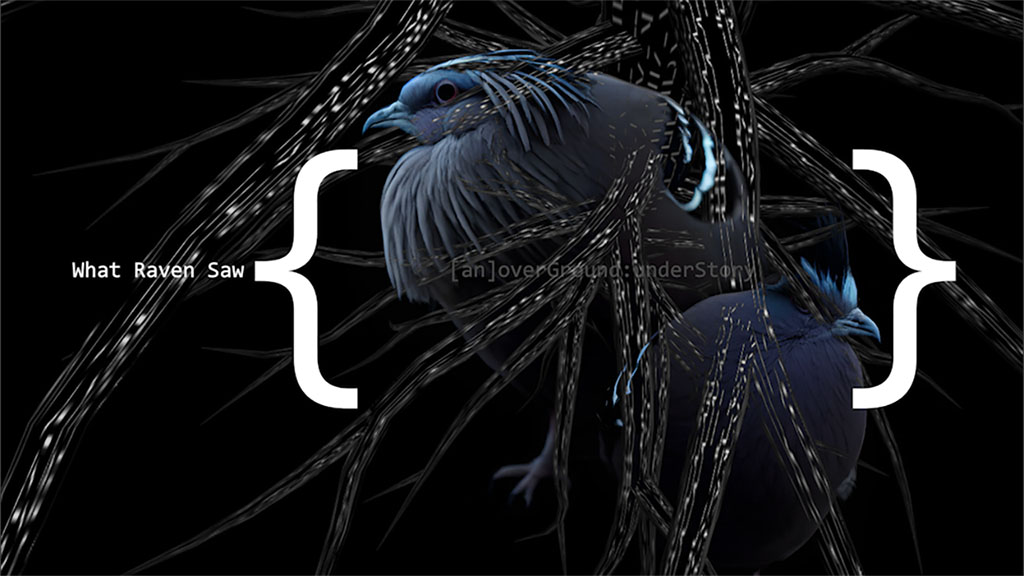
Dr. Andrew Burrell is a Senior Lecturer in Visual Communication at the University of Technology Sydney's Faculty of Design and Society. He is a practice-based researcher and educator exploring virtual and digitally mediated environments as sites for the construction, experience, and exploration of memory as narrative. His work sits at the intersection of digital media, virtual reality, and environmental humanities, with a particular focus on more-than-human ecologies and queer approaches to virtual environments. Andrew's research investigates the relationship between imagined and remembered narrative and how the multi-layered biological and technological encoding of human subjectivity may be portrayed within, and inform the design of, virtual environments. His networked projects in virtual and augmented environments have received international recognition, with recent works including "Twice, again" and "overGround:underStory," which explore the role of memory and forgetting in machine-mediated spaces and more-than-human encounters between physical and virtual ecologies. His creative practice informs his traditional research outcomes, which include publications in journals such as the Leonardo Electronic Almanac and Virtual Creativity. Andrew is particularly interested in how emerging and speculative technologies are implicated in more-than-human ecologies, and he uses creative practice to research and understand the complexities of these technologies. Andrew is a member of the UTS Visualisation Institute, a multidisciplinary research group focused on the creation of data visualizations, stories, and immersive experiences, and the School of Design's Critical Visualisation research group. He has received funding from various sources including the Australian Research Council (ARC) Discovery Projects and Create NSW. Research Interests Virtual and Augmented Reality as narrative spaces Memory construction in digital environments More-than-human ecologies and digital storytelling Queer approaches to virtual embodiment Creative applications of machine learning and AI Data visualization and environmental storytelling Accessibility and ethics in digital humanities Notable Projects Twice, again : Examines the role of memory and forgetting in machine-mediated spaces overGround:underStory : Explores entangled networks between physical and virtual ecologies Waves of Words : ARC Linkage initiative investigating language movement in pre-colonial times can't buy me love : A virtual environment collaboration with Amala Groom Layered Horizons : A geospatial humanities research platform Scientific Recognition MMUVE IT - Inter-Arts Office Australia Council Grant (2008) International presentations at conferences including ISEA (International Symposium on Electronic Art) Teaching and Supervision Andrew is an advocate for studio-based learning in which students design solutions to real-world questions through iteration and experimentation. He considers design as an anchor for interdisciplinary practice and regularly brings cross-disciplinary perspectives into his teaching. He currently supervises five PhD and master's students, with an interest in working with students at the intersection of traditional and practice-based research approaches. Research Themes in Recent Publications Andrew's recent publications demonstrate a consistent focus on the intersection of virtual environments, narrative construction, and ecological thinking. His work explores how digital technologies can be used to create new forms of storytelling that acknowledge our entanglement with non-human entities. There's a strong emphasis on ethical considerations in digital design, particularly regarding accessibility and representation. His research also investigates the application of machine learning technologies in creative practice, examining both their potential and limitations for representing human experience.
Dr. Jim O'Hehir is a Researcher affiliated with the University of South Australia under the UniSA STEM school and the Sustainable Infrastructure and Resource Management (SIRM) department. He also serves as the General Manager of the Forestry Centre of Excellence at the university. His work spans interdisciplinary applications in remote sensing, geospatial analysis, and virtual reality for forestry. He collaborates with institutions like the University of Tasmania, OneFortyOne Plantations, and the National Institute for Forest Products Innovation (NIFPI), with recent grants from the Australian Government Research Training Program Scholarship , Gottstein Trust , and industry partners. Dr. O'Hehir’s research focuses on overcoming technical limitations in forest inventory systems through LiDAR data fusion , UAV-based hyperspectral imaging , and VR visualization techniques . His 2024 publications highlight innovations in 3D point cloud generation, multispectral residue assessment, and AI-driven fire suppression frameworks. He contributes to policy discussions on carbon storage optimization in timber plantations under Australia’s Emissions Reduction Fund (ERF). 2024: 3D Point Cloud Fusion Using Aerial and Terrestrial Laser Scanning 2024: Multispectral Assessment of Clean-Row Treatments 2024: Immersive VR for Forest Point Clouds 2024: AI in Fire Smoke Detection 2023: Sub-Metre Geospatial Feasibility His grants and collaborations emphasize operational efficiency in forestry, with teams like the Forestry Centre of Excellence and partnerships with Geoscience Australia and Swinburne University of Technology . Future work includes scaling onboard AI for satellite missions and refining standards for data fusion in sub-canopy environments.
Erik Malcolm Champion serves as an Enterprise Fellow in Architecture, Creative at the University of South Australia, maintaining active honorary research affiliations with the Australian National University, University of Western Australia, Bunda Mulia University, and Curtin University. Previously honored as a UNESCO Chair, his academic profile reflects deep engagement with digital cultural heritage and immersive technologies. His research centers on Digital Humanities, Interaction Design, Serious Games, Virtual heritage, and digital archaeology, examining how game mechanics and virtual environments transform cultural preservation and public engagement. Champion investigates spatial cognition in digital heritage, non-photorealistic rendering for mobile platforms, and metadata frameworks for sustainable digital projects, consistently bridging theoretical frameworks with practical applications in heritage contexts. Recent publications reveal a trajectory toward post-pandemic heritage experiences, mobile-first immersive solutions, and interdisciplinary approaches combining geography, architecture, and game design. His work demonstrates growing emphasis on accessible technologies and adaptive heritage frameworks for contemporary societal challenges. Scientific recognition includes: UNESCO Chair Champion maintains extensive international collaborations across five continents, evidenced by co-authorship networks spanning institutions like Tampere University. His research program integrates digital archaeology with game design principles to create innovative heritage interpretation tools, though specific grant details remain undisclosed in available materials.
Professor Victoria Haskins is a distinguished historian at the University of Newcastle, where she holds a professorship in the School of Humanities, Creative Industries, and Social Sciences. She is a member and former founding director of the Purai Global Indigenous History Centre, dedicated to collaborative research with Indigenous communities. Her academic career spans prestigious appointments including an ARC Future Fellowship (2009-13), the NSW Centenary of Anzac Commemoration History Fellowship (2014-18), and a Distinguished Scholar fellowship at CUNY (2023). Haskins' research focuses on the complex interplay of gender, race, and labor relations in colonial domestic settings. She is particularly renowned for her work on Indigenous domestic service policies across Australia and the United States, and her current ARC Discovery project on 'Ayahs and Amahs: Transcolonial Servants in Asia and Britain 1780-1945.' Her scholarship reveals how domestic labor was central to colonial economies and social structures, with legacies that continue to shape contemporary society. She argues that 'labours of love and care in the home were essential not only to colonial economies but also to the social and cultural structures of colonization.' Haskins' recent publications demonstrate a consistent focus on transcolonial perspectives, examining domestic service across imperial networks. Her work spans Australian Indigenous history, North American Native American history, and Asian transnational connections, revealing patterns of regulation and cultural fixation that emerged in colonial histories. She has produced significant interdisciplinary collaborations, including the digital exhibition 'Transcolonial Journeys' with colleagues from multiple institutions. Fellow of the Australian Academy of the Humanities (2022) Member of the Council of the Australian Academy of the Humanities (2023) Fellow of the Royal Society of New South Wales (2024) ARC Future Fellowship recipient (2009-13) NSW Centenary of Anzac Commemoration History Fellowship (2014-18) Birkbeck Institute for the Humanities Fellowship (2017) As a supervisor, Haskins has guided numerous PhD candidates through research on Indigenous history, cross-cultural relationships, and colonial studies. Her grant history shows substantial funding success, including multiple ARC Discovery Projects and an ARC LIEF grant for the Time-layered Cultural Map of Australia. She has held significant leadership roles, including President of the University's Academic Senate (2020-2022) and membership on the ARC College of Experts (2020-22). Haskins co-directs the Purai Global Indigenous History Centre, which emphasizes collaborative research frameworks that prioritize respect, reciprocity, and partnership with Indigenous communities. Her approach to historical research is deeply informed by her belief that 'part of my role as a historian is to be a memory custodian,' highlighting the importance of understanding marginalized histories for building a positive future.
Hassan Al Razi is a Bangladeshi zoologist and biodiversity conservationist currently pursuing his Doctor of Philosophy at the School of Human Sciences, University of Western Australia. His research focuses on primate behavioral ecology, with particular emphasis on endangered species in Bangladesh including Bengal slow lorises, hoolock gibbons, and Phayre's langurs. Affiliated with the university's research programs, he contributes to multiple international conservation initiatives addressing primate conservation challenges. His educational background includes a Master of Science in Wildlife and Biodiversity Conservation (2017) and a Bachelor of Science in Zoology (2016), both from Jagannath University in Bangladesh. His thesis work examined Population Status, Habitat Preference and Threats of Phayre's Leaf Monkey in Satchari National Park. Al Razi's research interests span primate behavioral ecology, primate morphology and evolution, conservation biology, and biodiversity management. His work particularly emphasizes loris and chimpanzee conservation, with field studies conducted in Bangladesh's tropical forests. His fingerprint analysis reveals significant contributions to National Parks management, Lorisidae conservation, Anura studies, New Species discovery, Hylobatidae research, Nycticebus conservation, Sciuridae studies, and Tropical Forest ecology. Analysis of his 15 most recent publications (2021-2025) reveals a strong focus on primate conservation challenges in Bangladesh, with particular attention to road infrastructure impacts, wildlife trafficking, habitat fragmentation, and community-based conservation strategies. His work spans multiple primate species including hoolock gibbons, slow lorises, and langurs, with increasing emphasis on digital monitoring of wildlife trade and climate change adaptation strategies. His scientific recognition includes the award for Population Status, Threats, and Conservation of Bengal Slow Loris (Nycticebus bengalensis) in Northeast Bangladesh (2017), which received significant media attention with coverage from 9 news outlets, mentions by 3 X users, and 5 readers on Mendeley. Al Razi actively collaborates with international researchers across multiple countries, contributing to global conservation initiatives including the Global Primate Roadkill Database. His work aligns with UN Sustainable Development Goals related to biodiversity conservation and environmental protection. While specific lab affiliations aren't detailed in the provided text, his research involves extensive fieldwork in Bangladesh's forest ecosystems and collaboration with international conservation networks.
Dr Borrego Acevedo Rodney is a Research Fellow at the School of the Environment , University of Queensland , within the Faculty of Science. His expertise lies in marine and environmental sciences, with a focus on coral reef ecosystems and remote sensing applications. He holds a PhD in Environmental Science from the University of Queensland (2014), specializing in microphytobenthos dynamics using remote sensing technologies. His research integrates field data collection, spectral analysis, and spatial modeling to understand benthic habitats and coral reef health. Research Interests : Coral reef ecology, microphytobenthos distribution, remote sensing techniques, environmental monitoring, and geospatial data analysis. His work emphasizes global-scale coral reef habitat mapping and ecosystem conservation strategies. Publications : His work includes high-impact studies on global coral reef mapping, benthic habitat classification, and microphytobenthos abundance modeling. Key contributions involve developing methodologies for expert-derived training data in remote sensing and applying multiscale earth observation frameworks for coral reef assessment. Grants & Supervision : Available for postgraduate supervision in marine remote sensing and coral reef science. Active in collaborative projects with international research teams. Additional Contributions : Data collection on microphytobenthos composition at Heron Reef (Australia) using HPLC analysis, published via Pangaea datasets. Presented research at the IGARSS 2013 conference on coral reef spatial modeling.
Dr Abdullah Nazib is a Research Fellow at Queensland University of Technology (QUT) in the Faculty of Engineering, School of Electrical Engineering & Robotics. His research focuses on applying advanced computational techniques to medical imaging challenges, particularly in cancer detection and treatment planning. His research interests include: Medical image registration and segmentation Deep learning architectures for healthcare applications 3D medical image analysis Prostate cancer detection and grading Organ segmentation for radiation therapy Radiomics-based diagnostic systems Analysis of Dr Nazib's publication history reveals a clear evolution from general computer vision research toward specialized medical applications. His recent work demonstrates significant contributions to uncertainty quantification in medical image segmentation and multimodal learning approaches for diagnostic imaging. The 2024 publications particularly highlight his focus on clinically relevant applications with immediate potential impact on cancer diagnosis and treatment planning. His collaborative research network includes strong partnerships with Dr Fookes, Dr Perrin, and other members of QUT's biomedical imaging group, reflecting an interdisciplinary approach that bridges computer science, engineering, and clinical medicine to develop practical AI solutions for healthcare challenges.
Associate Professor Scott Hawken is a faculty member at the University of Adelaide, affiliated with the School of Architecture and Civil Engineering within the Faculty of Sciences, Engineering and Technology. He serves as the Program Director for the Master of Landscape Architecture and Urban Design and is actively involved in teaching, research, and supervision at the postgraduate level. Position: Associate Professor, Landscape Architecture Role: Program Director, Master of Landscape Architecture and Urban Design Faculty: Sciences, Engineering and Technology School: School of Architecture and Civil Engineering Email: scott.hawken@adelaide.edu.au Dr. Hawken holds a PhD awarded in 2012 for his work mapping archaeological landscapes of Angkor using remote sensing. His research bridges landscape architecture, urban design, and landscape archaeology, emphasizing biodiversity-positive design, green infrastructure, and the use of advanced geospatial technologies. He is a national leader in promoting biodiversity in urban landscapes and chairs AILA's National Biodiversity Positive Working Group. His research interests span critical urban scholarship, radical political ecology, and the application of GIS, remote sensing, and geodesign in urban contexts. He has led international workshops across Asia, Europe, and North America and has consulted for the United Nations on urban development and human rights. His recent work includes editing a special issue for Urban Studies that integrates archaeology with contemporary urban planning and exploring biocultural digital twins and patch urbanism. The 15 most recent publications reflect a strong interdisciplinary trend, combining archaeology, urban studies, smart cities, and sustainability. His work consistently applies geospatial methods to historical and contemporary urban challenges, focusing on resilience, equity, and ecological integration in cities. Dr. Hawken has received recognition through editorial board appointments for Environment and Urbanisation ASIA and the Journal for Knowledge Based Development , and he regularly reviews for top journals. He was invited to deliver a keynote address to the Japanese Society of Landscape Architects in 2023. He is passionate about mentoring and is currently supervising or seeking PhD students in areas such as cultural landscapes, landscape archaeology, smart cities, green and blue infrastructure, and urban megaprojects. He has secured research grants related to urban resilience and digital transformation and has led the Smart Cities Research Cluster at UNSW in the past. Dr. Hawken leads research initiatives that integrate archaeological insights with modern urban design, particularly through his work on Angkor and rapid urban greening. He collaborates with government agencies, professional bodies, and international institutions to advance sustainable and equitable urban futures.
Dr. Sarah Goodwin is a Senior Lecturer at Monash University's Department of Human Centred Computing, specializing in geospatial analysis and information visualization. She leads the Embodied Visualisation research group and holds roles as Director of Engagement for Human-Centred Computing and co-Director of the Monash Grid Innovation Hub. Her work focuses on creating visual solutions for complex data, including energy grid analysis, cancer prevalence visualization, and urban data exploration. Dr. Goodwin has over 20 years of experience in academic and professional roles, collaborating globally with institutions like the giCentre (City University London) and RMIT University. Education: She holds a PhD in Geographical Information Science (City University London, 2015), MSc in Geographical Information Systems (City University London, 2007), and BSc (Honours) in Geography (University of Manchester, 2003). Research Interests: Geovisualization, energy data analytics, urban data visualization, HCI, and geostatistical modeling. She has developed tools like Gazealytics and led projects such as the Australian Cancer Atlas and the Australia's Discourse Explorer. Teaching: She teaches Data Exploration and Visualisation (FIT5147) and Research Methods at Monash, impacting over 1000 students annually. She has also taught at RMIT University. Grants & Awards: Recipient of the IEEE InfoVis Best Paper Honorable Mention (2016). Active in conferences like IEEE VIS (General Chair, 2023) and organizes workshops on EnergyVis and CityVis. Labs & Teams: Involved with the Immersive Analytics Lab and collaborates with Monash Energy Institute and Data Futures Institute. Her work aligns with UN SDGs on sustainable cities and energy systems.
Dr Samuel C Boone is a Lecturer in Geology at the School of Geosciences, University of Sydney, and Honorary Fellow at the University of Melbourne. His research focuses on continental tectonics, thermochronology, and the integration of geochemical Big Data with numerical geodynamic models. He holds a PhD in Geology from the University of Melbourne (2019) and has held postdoctoral roles at Joannes Gutenberg University, University of Adelaide, and University of Melbourne. Education: BSc in Physics (University of Massachusetts, 2009), MSc in Geology (University of Melbourne, 2013), PhD in Geology (University of Melbourne, 2019). Research interests include the thermal and tectonic evolution of continental crust, with a focus on rift systems (East Africa, New Zealand), supercontinent breakup, and the interplay between tectonics, climate, and resource preservation. He leads the Melbourne Thermochronology Research Group and co-developed the AusGeochem platform for global geochemical data synthesis. Recent articles emphasize the application of thermochronology to rift dynamics, continental breakup mechanisms, and the development of geospatial data platforms. Awards include the 2021 University of Melbourne Early Career Research Grant and DAAD fellowships. Advising: Supervises PhD and MSc students across multiple institutions, including projects on Australian tectonic evolution, monazite fission-track techniques, and Cobar Basin mineral exhumation. Grants include leadership in AuScope infrastructure projects and IODP collaborations. Labs/Teams: EarthByte Group (Sydney), Melbourne Thermochronology Research Group, University of Adelaide Tectonics and Earth Systems Group, and the AuScope Geochemistry Network.
Nigel Phair is a Professor in the Department of Software Systems & Cybersecurity at Monash University, specializing in cybersecurity, cybercrime analysis, and digital forensics. His research focuses on global cybersecurity trends, corporate cybersecurity practices, and the intersections of law enforcement with digital platforms. Phair’s work frequently addresses critical issues such as cybercrime indices, boardroom cybersecurity competency, and the societal impact of digital technologies. He has contributed to national cybersecurity strategy discussions in Australia and explored challenges in law enforcement’s adaptation to digital crime landscapes. His publications highlight innovative methods like Automated Social Media Intelligence Analysis (ASMIA) for detecting illicit activities online and emphasize the disconnect between corporate cybersecurity claims and actual practices. He has also analyzed encryption’s role in balancing national security and privacy rights. While no awards or grants are explicitly listed, his extensive output reflects a commitment to advancing cybersecurity policy, education, and technical solutions. His research extends to global cybersecurity comparisons, digital financial service vulnerabilities, and the evolving threat landscapes in cyberspace.
Heather Horst is Professor of Design Anthropology at the Sydney School of Architecture, Design and Planning , University of Sydney. She holds additional affiliations as an Honorary Research Fellow at the Centre for Digital Anthropology, University College London, and as Adjunct Professor at the Institute for Culture and Society, Western Sydney University. PhD (University of London), MA (California), BA (Minnesota) Her research explores material culture , mobility studies , and the mediation of social relations through technology, homes, and clothing. Current projects include the ARC Discovery Project Fashioning Fiji (2020-2025) and a $2.9M ACIAR initiative on mobile financial services in Laos and Cambodia (2022-2026). In recognition of her contributions, Heather was elected Fellow of the Academy of the Humanities, Australia (2023) . She has supervised 11 PhD students to completion and co-developed the HOMAGO framework for informal learning environments, now widely adopted in afterschool programs globally.