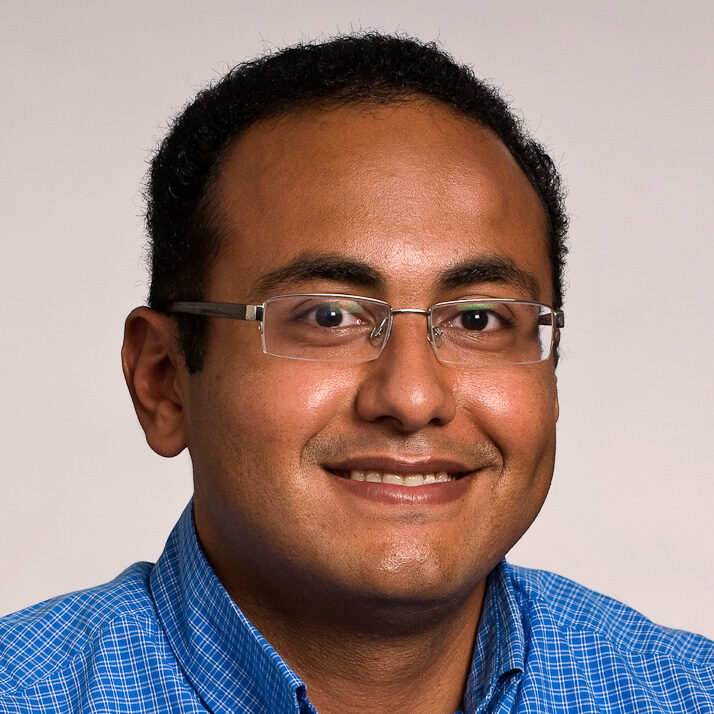
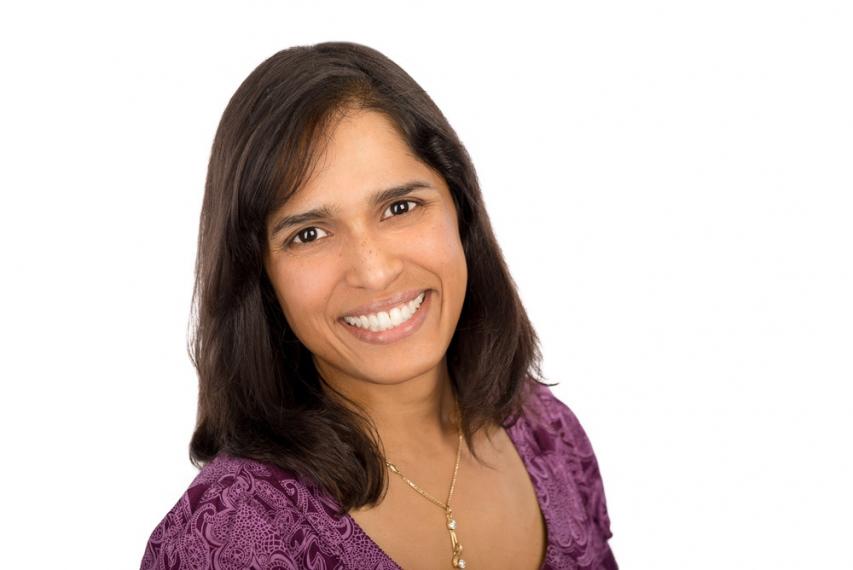
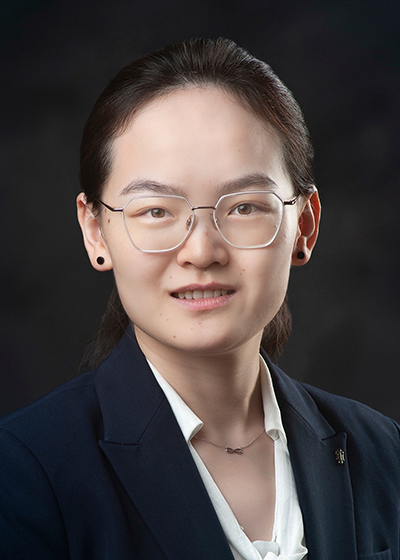
Dr. Marita Zimmermann is a Senior Research Economist at the Institute for Disease Modeling (IDM) under the Bill & Melinda Gates Foundation and an Affiliate Assistant Professor at the University of Washington's CHOICE Institute. As a health economist, epidemiologist, and global health researcher, she focuses on using rigorous methods to maximize healthcare value, particularly in resource-limited settings. PhD in Comparative Health Outcomes, Policy, and Economics (CHOICE) from University of Washington MPH in Epidemiology from Brown University BS in Chemical and Biomedical Engineering from Carnegie Mellon University Her research spans HIV, polio, family planning, and public health policy, with a strong emphasis on cost-effectiveness , economic modeling , and policy-relevant analysis . She has developed agent-based models like FPSim and HPVsim for reproductive health policy, and contributed to critical analyses of pharmaceutical manufacturing in low-income contexts. Recent publications highlight her work on COVID-19 dynamics in Washington State, pharmacist-led PrEP implementation , and polio eradication economics . Her modeling expertise bridges finance, public health, and healthcare delivery with practical applications. ARCS Scholar, Thomas Francis Jr. Fellowship, and other prestigious awards Recognized for excellence in global health education and research Dr. Zimmermann mentors graduate students in health economic methodology and has extensive experience in stakeholder communication, including interactive tools and peer-reviewed publications. She leads projects on women's health, family planning, and HIV treatment optimization.
Dr. Saidi Siuhi serves as an Associate Professor of Civil Engineering at South Carolina State University, where he teaches undergraduate and graduate courses while conducting research and providing institutional service across departmental and university levels. His academic credentials include: Ph.D. in Civil Engineering from the University of Nevada, Las Vegas (2009) M.Sc. in Civil Engineering from Florida State University (2006) B.Sc. in Civil Engineering from the University of Dar-es-Salaam (2003) Specializing in transportation engineering, Dr. Siuhi's research focuses on traffic safety, transportation planning, and microscopic traffic simulation. His work addresses critical transportation challenges including distracted driving/walking behaviors, traffic management during special events (notably the 2017 solar eclipse), and the application of advanced computational methods to transportation networks. He integrates emerging technologies like virtual reality, machine learning, and deep learning to develop innovative safety solutions for complex transportation systems. Analysis of his recent publications (2021-2025) reveals a strong trajectory toward computational transportation safety, with increasing emphasis on AI-driven solutions for pedestrian safety, driver behavior analysis, and infrastructure monitoring. His work consistently bridges theoretical transportation models with practical safety applications, particularly in distracted behavior analysis and event-based traffic management. Dr. Siuhi actively mentors students through senior design projects (CE 459/460) and graduate coursework, though specific advisee names aren't documented. His service contributions span departmental, college, and university committees, supporting academic operations and strategic initiatives within the engineering program.
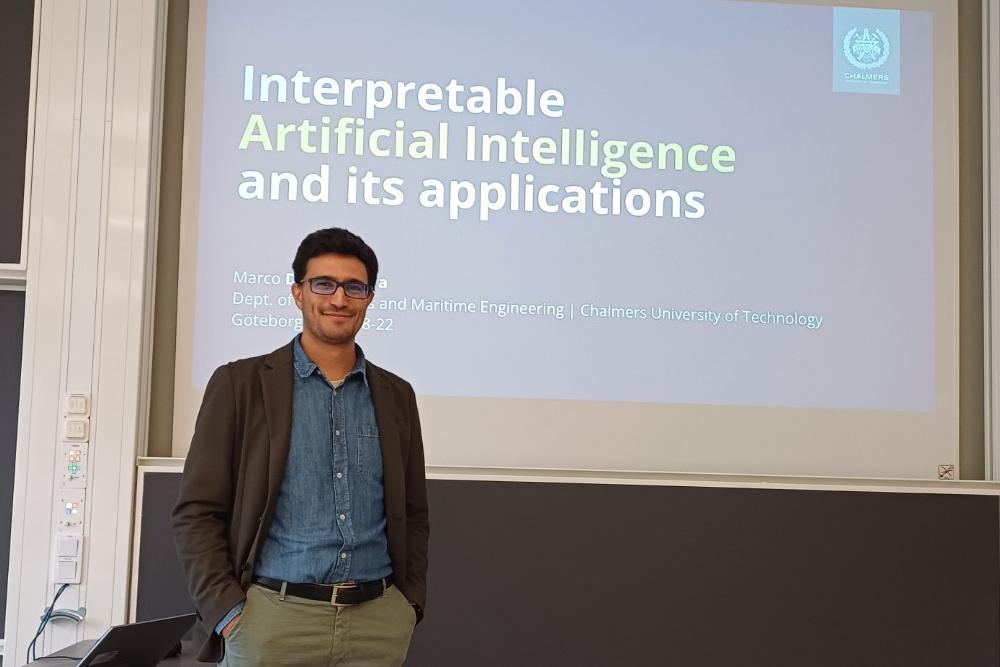
Marco L. Della Vedova is a Senior Lecturer in Applied Artificial Intelligence at Chalmers University of Technology, Sweden. He works in the Vehicle Engineering and Autonomous Systems division within the Department of Mechanics and Maritime Sciences, as part of Prof. Mattias Wahde's research group. Since 2025, he has served as Director of the Data Science and AI master's programme (MPDSC) at Chalmers, where he teaches courses including Introduction to Artificial Intelligence and Digitalization in Sports. Dr. Della Vedova earned his academic foundation at the University of Pavia, Italy, where he completed his BSc (2006), MSc (2009), and PhD (2013) in Computer Engineering. His doctoral research focused on "Real-Time Physical Systems and Electric Load Scheduling" under Prof. Tullio Facchinetti. During his PhD studies, he spent a year at U.C. Berkeley hosted by Prof. Francesco Borrelli at the Model Based Predictive and Distributed Control Lab. His research spans multiple AI domains with a strong emphasis on interpretability. Dr. Della Vedova develops interpretable methods for conversational AI, naturalness evaluation of forests using canopy height models, and geospatial applications. His work bridges theoretical AI with practical societal benefits, particularly in environmental monitoring, transportation systems, and orienteering. He has previously contributed to cloud computing, hate speech detection, and cyber-physical energy systems, demonstrating his interdisciplinary approach to AI research. Dr. Della Vedova's publication record reveals a consistent trajectory of impactful research across multiple domains of artificial intelligence. His recent work shows a strong focus on interpretability in AI systems, with significant contributions to natural language processing, geospatial analysis, and causal inference. The research demonstrates both theoretical depth and practical applications, particularly in environmental monitoring and social media analysis. His methodology often combines traditional machine learning approaches with novel interpretability techniques, creating bridges between complex AI systems and human understanding. Dr. Della Vedova has received several prestigious recognitions for his work: Best PhD thesis award from the Order of the Engineers of Bergamo (2013) Italian champion of Il Cervellone (2012) Top Italian performer in IEEEXtreme 6.0 programming competition (148th overall globally, 2012) Premio Arturo Schena award from Fondazione Credito Valtellinese (2010) With over 50 students supervised through bachelor's and master's theses, Dr. Della Vedova has established himself as a dedicated mentor in the AI community. His current PhD students include Minerva Suvanto working on interpretable NLP and Vivien Lacorre developing AI for railway infrastructure inspection. His supervision spans diverse topics from forest naturalness evaluation to hate speech detection and transportation optimization. Beyond formal supervision, he actively contributes to educational initiatives including serving as Director of Chalmers' Data Science and AI master's program and developing innovative teaching methods that connect theoretical concepts with real-world applications. Dr. Della Vedova is deeply embedded in both academic and professional communities. He leads the Applied Artificial Intelligence research group at Chalmers while maintaining strong connections with European research networks through projects like the ERASMUS+ EUrienteering initiative. His interdisciplinary approach is reflected in collaborations across computer science, environmental science, and social sciences. Notably, he applies his AI expertise to orienteering both as a researcher developing localization methods and as a licensed Event Advisor for the International Orienteering Federation, demonstrating how his professional and personal interests converge in innovative ways.
Karim Ismail is a Professor at the Department of Civil and Environmental Engineering, Carleton University. His research focuses on sustainable transportation modeling, road safety analysis, intelligent transportation systems, and computer vision applications for traffic data collection. Specializes in non-motorized transportation , including pedestrian and cyclist behavior. Develops probabilistic highway design standards using reliability and risk analysis. Pioneers vision-based safety evaluation techniques and traffic conflict modeling. His recent publications explore automated analysis tools for roundabout traffic, deep learning applications for proximity detection, and wireless sensor frameworks for collision avoidance. Notable accolades include the Michel Van Aerde Award (2025) and multiple Transportation Research Board honors. Supervised graduate students: Al-Haideri, Rulla (Ph.D. 2025) Mohammadi, Shahriar (Ph.D. 2022) Kassim, Ali (Ph.D. 2014)
Greg J. Evans is a full Professor in the Faculty of Applied Science and Engineering at the University of Toronto , where he also serves as Director of the Southern Ontario Centre for Atmospheric Aerosol Research (SOCAAR) and the Institute for Studies in Transdisciplinary Engineering Education and Practice (ISTEP) . In addition, he is Principal Investigator of the Evans Research Group . Education: B.A.Sc. – Bachelor of Applied Science M.A.Sc. – Master of Applied Science Ph.D. – Doctor of Philosophy P.Eng. – Professional Engineer FCAE – Fellow of the Canadian Academy of Engineering FAAAS – Fellow of the American Association for the Advancement of Science Research Interests: Professor Evans leads interdisciplinary research that bridges atmospheric aerosol science, environmental health, and engineering education. His work in urban air pollution focuses on understanding traffic-related emissions, developing low-cost sensor networks, and elucidating the oxidative toxicity of particulate matter under climate change scenarios. Within engineering education, he investigates transdisciplinary competencies, metacognitive development, and evidence-based pedagogies that prepare students for lifelong learning and societal impact. Research Trends in Recent Publications: Across his 2021-2023 publications, a dominant theme is the health impact of fine particulate matter (PM2.5) and its oxidative potential. Studies integrate large-scale epidemiological datasets with detailed chemical analyses to reveal how specific PM constituents—such as transition metals and sulfur—mediate cardiovascular and respiratory outcomes. Methodological innovations include mobile “lab-on-wheels” platforms and harmonized acellular assays for oxidative potential, enabling high-resolution spatiotemporal exposure assessment and cross-study comparability. Scientific Awards & Honors: CIC Environment Division Research and Development Dima Award (2022) NSERC Brockhouse Canada Prize for Interdisciplinary Research (2021) Fellow of the Canadian Engineering Education Association (2020) 3M National Teaching Fellowship (2017) Faculty of Applied Science & Engineering Research Leadership Award (2017) President’s Teaching Academy, University of Toronto (2015) Fellow of the Canadian Academy of Engineering (2015) Ontario Colleges and Universities Faculty Association Teaching Award (2015) Fellow of the American Association for the Advancement of Science (2015) Allan Blizzard Award (STLHE) (2014) Northrop Frye Award (2013) ASEE St. Lawrence Section Outstanding Teaching Award (2010) Engineers Canada Medal for Distinction in Engineering Education (2010) Ontario Professional Engineers Award – R&D Medal (2009) Joan E. Foley Student Quality of Student Experience Award (2008) Graduate Advising & Funding: Professor Evans is currently potentially accepting both PhD and MASc students. His research grants support interdisciplinary projects ranging from mobile air-quality monitoring campaigns to large-scale educational data-mining initiatives. Labs & Teams: He directs the Evans Research Group , housed within SOCAAR, which operates the MAPLE “lab-on-wheels” for real-time aerosol characterization. Through ISTEP, he oversees a cohort of 11 faculty members advancing engineering education scholarship.
Sara Barsotti is a researcher at the National Institute of Geophysics and Volcanology (INGV) specializing in volcanology and volcanic hazard assessment. Her key roles include: Associate Editor for Volcanology at Frontiers in Earth Science Review Editor for Geohazards and Georisks at Frontiers in Earth Science Contributor to the EU Center of Excellence for Exascale in Solid Earth (ChEESE) Member of the EUROVOLC citizen-science initiative Collaborator with European volcano observatories Her research focuses on computational geophysics, volcanic hazard modeling, and operational monitoring systems. She investigates tephra dispersion dynamics, lava flow behavior, and probabilistic hazard assessment using high-performance computing. Her work emphasizes European volcanic systems—particularly Icelandic eruptions—and integrates multidisciplinary approaches to improve crisis management protocols and public safety during volcanic events. Analysis of her recent publications reveals a strong trend toward operationalizing advanced computational methods for real-time hazard assessment. Key developments include exascale computing applications for solid earth simulations, refinement of the Aviation Colour Code system for aviation safety, and citizen-science data integration for eruption monitoring. These efforts consistently target practical risk mitigation strategies during active volcanic crises like the 2021 Fagradalsfjall eruption. Scientific awards: None mentioned in the provided text. While specific advised students or individual grants aren't documented, her leadership in major European projects (ChEESE, EUROVOLC) demonstrates substantial involvement in funded research initiatives. These projects coordinate transnational collaborations involving observatories, research centers, and emergency management agencies across Europe. Barsotti actively participates in integrated European volcano infrastructure teams, contributing to standardized monitoring protocols, hazard communication frameworks, and crisis response systems. Her work bridges institutional observatories (e.g., Icelandic Meteorological Office, INGV sections) with community-based monitoring tools, enhancing data collection and public engagement during volcanic unrest.
Dr. Jonathan Frame is an Assistant Professor of Artificial Intelligence/Machine Learning in Geological Sciences at the University of Alabama (2024–present) and a Faculty Fellow at the Alabama Water Institute (2024–2027). He holds a PhD in Geological Sciences from the University of Alabama (2022), an MS in Civil Engineering from the University of California, Irvine (2011), and a BS in Earth Systems Science, Technology, and Policy from California State University, Monterey Bay (2010). His research focuses on advancing hydrologic modeling through machine learning, including deep learning for streamflow forecasting, geospatial modeling, and flood prediction systems. Notable projects include improving the National Water Model with LSTM networks and developing rapid inundation mapping techniques using satellite data. He has contributed to over 30 peer-reviewed publications and actively participates in conferences like AGU and NeurIPS. His engineering experience spans flood risk mitigation, groundwater analysis, and pipeline transient modeling across California, Texas, and Washington. Research Interests Machine learning integration in hydrological systems Operational flood forecasting and inundation mapping Data-driven approaches for ungauged basins Climate nonstationarity and model adaptability Hydraulic transient analysis in water infrastructure Recent Contributions Frame’s recent work emphasizes NextGen water modeling frameworks, combining physics-based models with AI to enhance predictive accuracy. His 2025 paper on heterogeneous water modeling frameworks and 2024 studies on rapid inundation mapping highlight innovations in integrating satellite observations with hydrologic models. He also explores topics like mass conservation constraints in rainfall-runoff models and evapotranspiration prediction using deep learning. Grants & Projects FEMA partnership for near-real-time flood damage prediction systems NOAA-funded research on AI in environmental sciences NASA snowpack analysis for water resources forecasting Development of the Tarsier environmental modeling framework Labs & Collaborations Frame collaborates with the Alabama Water Institute and contributes to interdisciplinary teams advancing hydrologic AI. His work intersects with climate science, environmental engineering, and computational hydrology to address global water challenges.
Prof. Alfred Stein is a Full Professor in Spatial Statistics and Image Analysis at the Department of Earth Observation Science, Faculty ITC, University of Twente. He earned his MSc in Mathematics and Information Science from Eindhoven University of Technology and a PhD in Spatial Statistics from Wageningen University. His career spans roles at Wageningen University (1988–2002), ITC (2002–present), including leadership positions as department head, vice-rector research, and portfolio holder for education. Education: MSc (Eindhoven University of Technology), PhD (Wageningen University) Leadership: Department Head (Earth Observation Science), Vice-Rector Research (2008–2012), Portfolio Holder Education (2012–) His research focuses on Spatial and Spatio-Temporal Statistics , emphasizing Bayesian inference , data quality , image analysis , and fuzzy techniques . Key application domains include agriculture, health, urban land use, coastal systems, hazards, and wildlife. He has mentored over 30 PhD students since 1998, with 11 currently under supervision. Recent research trends highlight AI-driven remote sensing for glacier mapping, urban livability, and disease modeling. Publications span Deep Learning for SAR tomography, Bayesian hierarchical models for health data, and multitemporal SAR analysis for environmental monitoring. Awards include the Best Paper Award (2019) and ISARA Founder's Award (2020) . Scientific Awards Best Paper Award (2019) ISARA Founder's Award (2020) As Editor-in-Chief of Spatial Statistics and associate editor for multiple journals, he leads academic discourse. Collaborations include the University of Cape Town and University of Pretoria as Honorary Professor. His work contributes to UN Sustainable Development Goals, particularly in climate action and sustainable cities.
Ayesha Ali is a Professor of Statistics and Director of the Master of Data Science program at the University of Guelph. She holds a PhD in Statistics from the University of Washington (2002) and has expertise in statistical methods for complex high-dimensional systems, including ecological networks, causal inference, and bioinformatics. Her research integrates graphical Markov models, machine learning, and statistical computing to address challenges in plant-pollinator networks, livestock genetics, and disease risk modeling. Education: B.Sc. Honours in Statistics and Actuarial Science, University of Western Ontario (1996) M.Sc. in Statistics, University of Toronto (1998) Ph.D. in Statistics, University of Washington (2002) Research Interests: Graphical Markov models and ecological networks Causal inference and longitudinal data analysis Machine learning and high-dimensional predictive modeling Statistical methods for livestock genetics and animal health Computational statistics and bioinformatics Articles Trends: Her recent work spans interdisciplinary applications, including veterinary oncology biomarker discovery, remote sensing for agricultural suitability, and pipeline development for cross-species transcriptomics. She emphasizes graphical structure exploitation in regression and predictive modeling, with contributions to both theoretical and applied statistical methodologies. Awards: Canadian Journal of Statistics Award (2020) for groundbreaking work on doubly sparse regression NSERC Discovery Grant (2018) NSERC Collaborative Research and Development Grant (2015) Advising & Grants: She has supervised numerous graduate and undergraduate students on projects ranging from plant-pollinator network analysis to bioinformatics. Her grants include NSERC-funded research on milk fatty acid genetics and statistical methods for clustered data. Labs/Teams: Involved in the Bioinformatics program at the University of Guelph, contributing to interdisciplinary research collaborations in ecology and animal science.
Laura Becker is an Assistant Professor at the Department of General Linguistics, University of Freiburg. Her research focuses on linguistic typology, quantitative methodology, and the role of coding efficiency in grammatical structures. She holds a PhD exploring article systems across languages and has contributed to cross-linguistic studies on syntax, morphology, and sociolinguistics. Her work emphasizes statistical rigor and computational tools, such as the glottospace R package for geospatial linguistic analysis. Recent projects include investigating phoneme inventories in Polynesian languages and socio-linguistic influences on conditional constructions. Publications highlight her expertise in morphosyntax, language contact, and corpus-based approaches. No scientific awards are explicitly mentioned in the provided materials. Dr. Becker has advised no recorded students in the available data and has not listed specific grants or labs. Her current research trends prioritize quantitative frameworks to address typological and evolutionary questions in linguistics.
Syrielle Montariol is a Researcher and Course Lecturer at the École Polytechnique Fédérale de Lausanne (EPFL), affiliated with the Natural Language Processing Lab (NLP) under the School of Computer and Communication Sciences (IC). She holds a postdoctoral position and teaches courses related to computational linguistics and AI applications. Her research focuses on advancing NLP, medical language models, multimodal learning, and AI ethics. She works in the INR 240 office and maintains collaborations across EPFL's academic divisions. Research Interests: Her work spans interpretability of AI systems, cross-modal reasoning, medical domain adaptation, sustainability text analysis, and the societal impact of AI. Recent projects include developing explainable models (e.g., global mixture-of-experts frameworks) and benchmarking tools like Vinabench for visual narratives. Publications: Her recent work addresses critical challenges in AI, including vulnerability of higher education to LLMs, medical language model adaptation (Meditron), and robust geo-localization systems. Key themes include ethical AI, multimodal learning, and domain-specific NLP applications. Labs & Teams: She contributes to the NLP lab's initiatives on visual-language models and collaborates with interdisciplinary teams on projects like PAN-RSVQA for remote sensing and PICLe for low-resource NER systems.
Prof. Dr.-Ing. Jochen Linßen is a Professor at the Institute of Climate and Energy Systems (ICE) , specifically within the Jülich Systems Analysis (ICE-2) group at the Research Center Jülich GmbH. His work focuses on advancing energy systems modeling, renewable energy integration, and hydrogen technology. Key research areas include the techno-economic analysis of energy transition pathways, hydrogen cost-potentials, and the interplay between energy systems and transportation networks. His expertise spans climate policy, infrastructure planning, and the development of frameworks for long-term mobility demand modeling. He has contributed to high-resolution assessments of renewable energy resources and the evaluation of green hydrogen’s role in decarbonizing industries. Recent work emphasizes AI-driven risk mitigation in energy systems and the impact of natural hazards on energy infrastructure resilience. Research Interests: Modeling of energy systems and hydrogen networks Renewables integration and curtailment challenges Transportation electrification and hydrogen fueling infrastructure Climate policy and decarbonization strategies Key Projects: ETHOS. MODE. regional framework for mobility demand analysis Global assessments of wind and solar power potentials Hydrogen supply chain optimization for Germany and Europe His collaborative approach bridges engineering, economics, and environmental science to address systemic challenges in energy transitions. Ongoing efforts include participatory mapping of green hydrogen potentials in sub-Saharan Africa and analysis of automated driving’s impact on road networks.
Dr. Xin Zhang is an Assistant Professor in the Department of Agricultural and Biological Engineering at Mississippi State University. His research focuses on smart agriculture, AI applications, agricultural robotics, and unmanned aerial systems. He leads the Sensing & Automation in Agrisystems (SAAS) Lab, which develops technologies for crop monitoring, robotic harvesting, and machine vision systems. Dr. Zhang holds a Ph.D. from Washington State University and has held postdoctoral positions at UC Davis. He is a FAA-certified UAS pilot and actively collaborates on projects involving machine learning, computer vision, and precision agriculture. Research interests include digital agriculture frameworks, crop prediction models, and the integration of AI into farming systems. Key achievements include pioneering work in robotic cotton-picking simulations and UAV-based yield estimation. His lab emphasizes interdisciplinary approaches combining robotics, data science, and environmental engineering. Awards include the 2020 Giuseppe Pellizzi Prize for agricultural engineering research and multiple ASABE accolades. Current projects involve scalable field extraction frameworks using satellite imagery and deep learning models for plant phenotyping. He has published over 50 peer-reviewed articles, with a focus on advancing automation in crop handling and environmental sensing technologies. Education: Ph.D., Biological & Agricultural Engineering (WSU), M.S., Agriculture (Northwest A&F University), B.S., Agronomy (Gansu Agriculture University).
Stephen J. Leisz is a Professor in the Department of Anthropology and Geography at Colorado State University (CSU). As a leading scholar in land change science and remote sensing, he directs the Land Change Science and Remote Sensing Laboratory and co-directs the Center for Archaeology and Remote Sensing. His research integrates remote sensing, GIS, and participatory methods to study human-environment interactions in Southeast Asia, Melanesia, and West Africa. Key areas include land-use transitions, peri-urbanization, agricultural systems, and climate change impacts. Leisz holds a Ph.D. in Geography from the University of Copenhagen (2007), an M.Sc. in Environmental Monitoring from the University of Wisconsin-Madison, and a B.A. in American Studies from Georgetown University. Leisz’s recent work focuses on agrarian transitions in Vietnam’s Mekong and Red River Deltas, impacts of transportation corridors on rural transformations, and applications of LiDAR in archaeology. He has led projects funded by NASA’s Land Cover/Land Use Change program and co-founded the Earth Archive Initiative to digitally preserve global landscapes. His fieldwork spans over 30 years in Southeast Asia and Melanesia, emphasizing interdisciplinary collaboration and policy-relevant outcomes. Leisz advises graduate students in CSU’s International Development Studies program and the Graduate Degree Program in Ecology (GDPE). He teaches courses on remote sensing, spatial analysis, and land change science. His career includes Peace Corps service in Senegal (1980s) and recognition as a First-Generation College Graduate.
Prof. Dr.-Ing. Philipp Lensing serves as a Professor in the Faculty of Engineering and Computer Science at Osnabrück University of Applied Sciences. His academic work focuses on cutting-edge developments in virtual and augmented reality systems, computer graphics, and game programming. His research interests span Virtual Reality , Augmented Reality , Mixed Reality , Game Programming , Computer Graphics , and Natural User Interfaces . Prof. Lensing has pioneered work in real-time global illumination techniques, avatar calibration systems, and the integration of virtual content with real environments. His research has been applied across diverse domains including landscape planning, physics education, medical rehabilitation, and industrial engineering. Prof. Lensing's recent publications reveal a strong trend toward practical applications of VR/AR technologies in scientific, educational, and industrial contexts. His work increasingly focuses on multimodal interaction, haptic feedback systems, and the integration of VR with complex scientific instrumentation like scanning probe microscopy. He has supervised numerous student projects focused on VR/AR applications, game development, and 3D modeling. His teaching includes courses on Computer Graphics, 3D Game Programming, Virtual and Augmented Realities, and 3D Modeling and Animation. Prof. Lensing leads several research projects including GROWTH (funded by BMBF), VRnano (BMBF), VRFlow Suite, VR-Physio-BOX, and MoDal-MR, all exploring innovative applications of immersive technologies in various practical contexts.