Charalampos Spanos serves as a GIS Data Scientist at the Science and Technology in Archaeology and Culture Research Center (STARC) of The Cyprus Institute, a leading research institution in Cyprus focused on interdisciplinary science and technology applications for cultural heritage. His academic background includes: Integrated Master’s degree in Architecture from the National Technical University of Athens (NTUA) Master of Science degree in Urbanism from the Technical University of Delft (TU Delft) Spanos specializes in computational methods for urban environment analysis and design, integrating traditional urbanism with technological solutions for evidence-based planning. His expertise extends to recording and analyzing masonry structures with timber roofing systems using advanced technological approaches. As a GIS Data Scientist, he applies geospatial technologies to archaeological research and cultural heritage preservation, bridging architectural history with digital methodologies for user-oriented spatial planning solutions.
Assoc. Prof. Dr. Mehmet Bodur is a faculty member in the Computer Engineering Department at Eastern Mediterranean University . His research focuses on Data Mining, Robotics, Computational Intelligence, and Control Systems. He holds a Ph.D. in Electrical and Electronics Engineering from Middle East Technical University (1991) and has been affiliated with IEEE and ACM as a Senior Member since 2010 and 2020, respectively. His teaching interests include Embedded Systems, Robotics, and Artificial Intelligence. Recent research highlights include satellite image-based obstacle recognition for agricultural vehicles (2015–2016), fuzzy logic modeling (2006–2009), and autonomous vehicle control systems (2010–2012). He has contributed to over 20 publications spanning robotics, control systems, and data analysis. Prof. Bodur has supervised numerous theses at the graduate level and actively participates in academic committees and editorial roles. His work bridges theory and practice, with applications in smart home systems, precision agriculture, and mobile robotics.
Apostle Sarris is a Professor at the Department of History and Archaeology , University of Cyprus, specializing in the integration of Geoinformatics , Geophysical Prospection , and Digital Humanities into archaeological research. His work bridges remote sensing , GIS applications , and cultural heritage management to reconstruct ancient landscapes and analyze archaeological data. Education : Ph.D. in Physics (Geophysics) from University of Nebraska-Lincoln (1992), M.Sc. in Physics (Geophysics) from University of Nebraska-Lincoln (1990), and advanced degrees in Physics and Astronomy from Boston University (1988, 1985). His research focuses on non-invasive methods like Ground Penetrating Radar (GPR) , satellite imagery , and machine learning to map buried structures, assess environmental threats to heritage sites, and model cultural landscapes. Key projects include the STORM project for disaster risk management of cultural heritage and ARISTEIA-IGEAN-STORM for geophysical prospection in Thessaly. Recent publications highlight his work on European Neolithic settlements , Byzantine landscapes , and AI-driven GPR analysis . He supervises interdisciplinary Ph.D. and postdoctoral researchers across institutions in Cyprus, Greece, Italy, and Turkey, with projects spanning digital heritage , soil geochemistry , and sacred landscape studies . Selected grants include H2020-MSCA-IF-2016 for European frontiers research and ARISTEIA II-ANCIENT CITY for Neolithic landscape analysis.
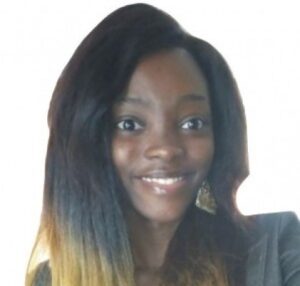
Oluwaseun Priscilla Olawale is a Lecturer in Software Engineering at Near East University (Nicosia, Cyprus), where she is concurrently pursuing her master's degree in Software Engineering. She previously served as a teaching assistant at the same institution. Her academic background includes a Bachelor's degree in Computer Science from Bowen University, Nigeria, complemented by professional experience as an IT Specialist at the Standards Organisation of Nigeria and Software Developer at Royal Niger Company. Research Focus: Her work centers on developing reliable software solutions with emphasis on artificial intelligence applications. Primary domains include healthcare technology (medical imaging, remote healthcare, IoHT security), industrial systems (Industry 4.0 automation), cybersecurity (blockchain integration, anomaly detection), and educational technology (post-pandemic learning environments). She demonstrates consistent interest in interdisciplinary AI implementations bridging theoretical models and practical challenges. Publication Trends: Recent articles (2020-2025) reflect a progression from foundational surveys in data mining and blockchain verification toward applied AI solutions. Emerging themes include disaster prediction systems, audio-visual signal processing, and security-enhanced healthcare networks. Her technical approach frequently employs deep learning architectures (CNNs, VGG-16), blockchain frameworks, and signal processing techniques to address real-world problems across diverse sectors.
Peter Schwendner serves as Professor and Head of Institute of Wealth & Asset Management at ZHAW Zurich University of Applied Sciences, Department Banking, Finance, Insurance in Winterthur, Switzerland. With a PhD from Max Planck Institut für Strömungsforschung Göttingen and additional education in Foreign Affairs & Applied Diplomacy and University Didactics from ZHAW, he brings both academic rigor and practical industry experience to his role, having previously served as Head of Department at Sal. Oppenheim jr. & Cie and COO/Partner at Fortinbras Asset Management GmbH. Professor Schwendner's research focuses on the intersection of quantitative finance, machine learning, and sustainable investment. His work spans portfolio management techniques including risk parity approaches, correlation analysis in financial markets, ESG integration, and digital asset applications. Recent publications demonstrate particular emphasis on tokenization frameworks, AI-driven investment strategies, and biodiversity risk assessment in portfolio construction. His research often addresses European bond markets, correlation regimes, and the impact of ESG news on financial markets, combining theoretical models with empirical market data. With 76 publications and over 38,000 reads on ResearchGate, Professor Schwendner has established himself as a significant contributor to the field of quantitative finance. His recent work shows increasing focus on sustainable finance applications, with numerous publications on ESG integration, biodiversity risk assessment, and climate-related financial analysis. The trend in his publication record indicates growing attention to the practical implementation challenges of AI in investment processes and the evolving regulatory landscape for digital assets. As Head of Institute of Wealth & Asset Management, Professor Schwendner oversees research that bridges academic theory with practical financial applications. His work on correlation networks, adaptive risk parity approaches, and tokenization frameworks demonstrates his commitment to addressing current challenges in portfolio management and financial technology. His research group appears particularly focused on developing robust investment strategies that can navigate changing market conditions while incorporating sustainability considerations.