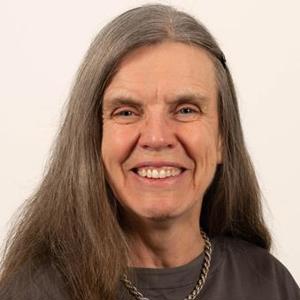
Karin Tonderski is an Associate Professor at Linköping University's Department of Management and Engineering, specializing in Environmental Technology and Management. She leads research on biogas solutions, nutrient recycling, and wetland systems for water purification. Her work bridges environmental science with societal impact, particularly in South Africa and Baltic Sea region initiatives. Research Interests: Tonderski focuses on circular fertilizers, biogas innovation, and sustainable urban agriculture. She investigates how wetlands can mitigate eutrophication and provide clean water in informal settlements. Her projects emphasize cross-sector collaboration and policy integration for effective environmental management. Awards & Grants: Recipient of a SEK 3 million Formas grant (2019–2022) for South African wetlands research. Active in EU-funded projects like BONUS MIRACLE and the Biogas Solutions Research Center (BRC), advancing biogas as a sustainable energy source. Teaching & Mentoring: Teaches environmental engineering and sustainability courses, supervising bachelor and master theses. Contributes to LiU's PhD program in biogas solutions, emphasizing digestate management and systems thinking. Key Collaborations: Partners with Wits University (South Africa), Helmholtz UFZ (Germany), and Baltic Sea Region institutions. Her work integrates technical innovation with community-driven solutions to address global environmental challenges.
Anders Brandt is an Associate Professor (Docent) in Geospatial Information Science and Senior Lecturer in Geomatics at the University of Gävle, Sweden, within the Department of Computer and Geospatial Sciences under the Faculty of Engineering and Sustainable Development. His research focuses on flood risk mapping uncertainties, agent-based modeling of pedestrian movement, and spatial decision-support systems for sustainable urban planning. He holds a PhD in Physical Geography from the University of Copenhagen and has extensive international collaboration experience. Education: PhD in Physical Geography (University of Copenhagen, Denmark), focusing on fluvial geomorphology of Costa Rica’s Reventazón River Master’s Degree in Physical Geography (Uppsala University, Sweden) Research Interests: Brandt’s work addresses uncertainties in flood modeling, spatial decision analysis, and geospatial data applications for urban resilience. His projects include the 'Big Data Methodology for Experiential and Cognitively Sustainable Urban Growth' initiative, emphasizing ecosystem service mapping and spatial MCDA methods. His agent-based modeling research explores emergent urban path systems to optimize pedestrian infrastructure. Publications Trends: Recent work spans flood risk visualization, blue-green infrastructure roles in climate resilience, and urban form complexity metrics. His 2025 papers highlight innovative applications of agent-based modeling and systematic reviews of climate hazard mitigation strategies. Advising & Grants: While no formal advisee list is provided, his collaborative publications suggest involvement in student projects. His grants include international initiatives like Mongolia’s land administration capacity-building programs. Labs/Teams: Co-founded GeoVega , a consulting firm specializing in flood risk mapping and geospatial solutions. Active in educational initiatives like harmonizing GIS curricula in Swedish universities.
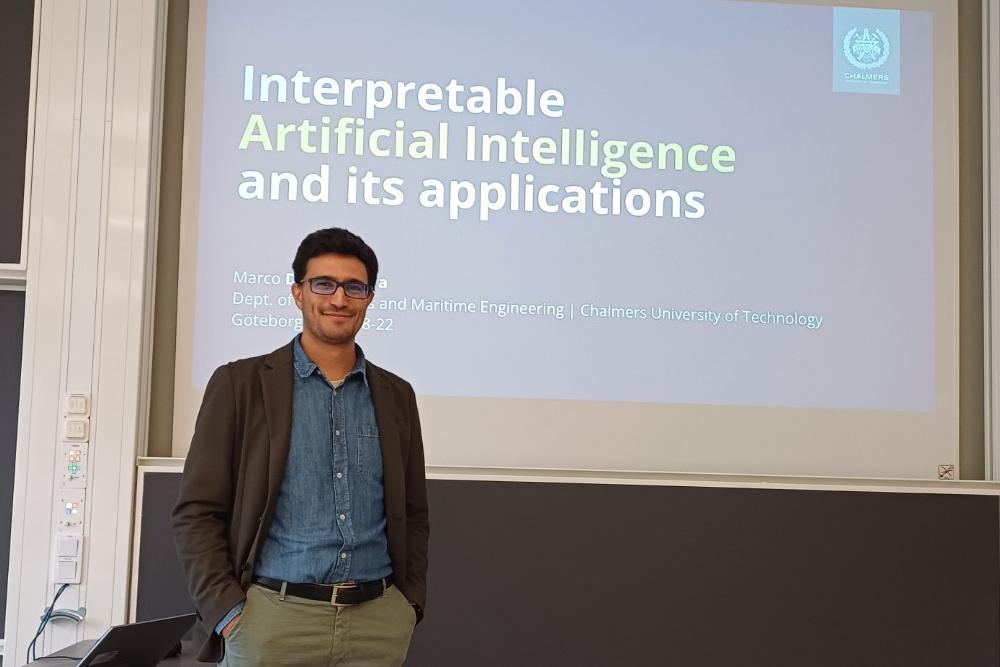
Marco L. Della Vedova is a Senior Lecturer in Applied Artificial Intelligence at Chalmers University of Technology, Sweden. He works in the Vehicle Engineering and Autonomous Systems division within the Department of Mechanics and Maritime Sciences, as part of Prof. Mattias Wahde's research group. Since 2025, he has served as Director of the Data Science and AI master's programme (MPDSC) at Chalmers, where he teaches courses including Introduction to Artificial Intelligence and Digitalization in Sports. Dr. Della Vedova earned his academic foundation at the University of Pavia, Italy, where he completed his BSc (2006), MSc (2009), and PhD (2013) in Computer Engineering. His doctoral research focused on "Real-Time Physical Systems and Electric Load Scheduling" under Prof. Tullio Facchinetti. During his PhD studies, he spent a year at U.C. Berkeley hosted by Prof. Francesco Borrelli at the Model Based Predictive and Distributed Control Lab. His research spans multiple AI domains with a strong emphasis on interpretability. Dr. Della Vedova develops interpretable methods for conversational AI, naturalness evaluation of forests using canopy height models, and geospatial applications. His work bridges theoretical AI with practical societal benefits, particularly in environmental monitoring, transportation systems, and orienteering. He has previously contributed to cloud computing, hate speech detection, and cyber-physical energy systems, demonstrating his interdisciplinary approach to AI research. Dr. Della Vedova's publication record reveals a consistent trajectory of impactful research across multiple domains of artificial intelligence. His recent work shows a strong focus on interpretability in AI systems, with significant contributions to natural language processing, geospatial analysis, and causal inference. The research demonstrates both theoretical depth and practical applications, particularly in environmental monitoring and social media analysis. His methodology often combines traditional machine learning approaches with novel interpretability techniques, creating bridges between complex AI systems and human understanding. Dr. Della Vedova has received several prestigious recognitions for his work: Best PhD thesis award from the Order of the Engineers of Bergamo (2013) Italian champion of Il Cervellone (2012) Top Italian performer in IEEEXtreme 6.0 programming competition (148th overall globally, 2012) Premio Arturo Schena award from Fondazione Credito Valtellinese (2010) With over 50 students supervised through bachelor's and master's theses, Dr. Della Vedova has established himself as a dedicated mentor in the AI community. His current PhD students include Minerva Suvanto working on interpretable NLP and Vivien Lacorre developing AI for railway infrastructure inspection. His supervision spans diverse topics from forest naturalness evaluation to hate speech detection and transportation optimization. Beyond formal supervision, he actively contributes to educational initiatives including serving as Director of Chalmers' Data Science and AI master's program and developing innovative teaching methods that connect theoretical concepts with real-world applications. Dr. Della Vedova is deeply embedded in both academic and professional communities. He leads the Applied Artificial Intelligence research group at Chalmers while maintaining strong connections with European research networks through projects like the ERASMUS+ EUrienteering initiative. His interdisciplinary approach is reflected in collaborations across computer science, environmental science, and social sciences. Notably, he applies his AI expertise to orienteering both as a researcher developing localization methods and as a licensed Event Advisor for the International Orienteering Federation, demonstrating how his professional and personal interests converge in innovative ways.
Daniel Edler is a Researcher and Postdoctoral Fellow at the Department of Physics, Umeå University. His work focuses on network science, biodiversity analysis, and ecological modeling, with a particular emphasis on developing computational tools for community detection and biogeographical mapping. He contributes to interdisciplinary research, integrating methods from computer science, ecology, and information theory. Edler leads the development of Infomap Bioregions, a tool for mapping biogeographical regions using species distribution data, and CoordinateCleaner, which standardizes biological occurrence records. His research also explores threats to Madagascar’s biodiversity and the interplay between socio-political factors and biodiversity data availability through tools like Bio-Dem. He has co-developed raxmlGUI 2.0, a phylogenetic analysis interface, and contributes to the Infomap software package for network analysis. Edler’s publications highlight themes in higher-order network flows, multilayer community detection, and ecological network modules. His work appears in journals such as Science , American Journal of Botany , and Methods in Ecology and Evolution . He is an active member of the Complex Systems research group at Umeå University.
Nikolaos Kourentzes is a Professor of Informatics at the University of Skövde , specializing in forecasting and operations research. His work bridges theoretical advancements in time series analysis with practical applications in supply chain management, tourism demand, and renewable energy forecasting. Academic Rank: Professor Department: Department of Information Technology Research Interests: His research focuses on hierarchical and temporal forecasting methodologies, integrating macroeconomic indicators into demand planning, inventory optimization, and machine learning applications. He explores forecast reconciliation, shrinkage estimators, and the role of expert judgment in predictive analytics. Recent Publications: Highlights include advances in hierarchical forecasting with leading indicators, probabilistic forecasts during crises like the pandemic, and complex smoothing techniques. His work spans journals such as Omega , International Journal of Forecasting , and European Journal of Operational Research . Collaborations: Kourentzes collaborates with researchers globally, including George Athanasopoulos, Rob Hyndman, and Robert Fildes, across domains like tourism analytics, tire industry forecasting, and public health modeling.
Yonghao Xu is an Assistant Professor at the Department of Electrical Engineering , Linköping University , and affiliated with the Computer Vision Laboratory (CVL) and the Wallenberg Autonomous Systems Program (WASP) . His research bridges remote sensing , machine learning , and AI security . Research Trends Xu's recent publications focus on adversarial attacks and defenses in remote sensing, domain adaptation for semantic segmentation, and benchmark dataset creation (e.g., Sen2Fire). His work addresses challenges in urban sustainability , geospatial data analysis , and deep learning robustness . Labs & Programs He is associated with the Computer Vision Laboratory (CVL) , contributing to autonomous systems through the Wallenberg Autonomous Systems Program (WASP) , a major Swedish initiative in AI and robotics.
Nikos Kavallaris is an Associate Professor at Karlstad University, specializing in Applied Mathematical Analysis. His research focuses on deterministic and stochastic modeling of biological, ecological, and industrial systems, including chemotaxis, tumor growth, MEMS technology, and uncertainty quantification. He collaborates with institutions like Osaka University and Brown University. He teaches modules such as Optimization and Applied Mathematics for Engineers. Kavallaris holds a PhD from the National Technical University of Athens (2000) and has held academic positions at Aegean University and the University of Chester. He co-organizes the 2024 Equadiff conference’s minisymposium on Nonlocal PDEs. His work bridges theoretical mathematics with applications in biology, engineering, and environmental science. Education: PhD in Applied Mathematics, National Technical University of Athens (2000) Postdoctoral Research: University of Wrocław (EU HYKE project), Osaka University (COE program) Collaborations: Osaka University, Heriot-Watt University, Sorbonne Paris Nord, Brown University Research Interests: Nonlinear PDEs, stochastic modeling in biology/ecology, MEMS device dynamics, and topological data analysis. His work addresses phenomena like tumor growth, DNA methylation, and industrial processes such as ohmic heating and metal welding. He explores quenching dynamics, blow-up solutions, and bifurcation theory in nonlocal models. Publications: Over 50 articles on topics ranging from stochastic MEMS models to cancer immunology, emphasizing nonlinear dynamics and uncertainty quantification. Recent work examines flood exposure in Sweden and immune infiltration patterns in breast cancer. Grants/Awards: Involved in EU Marie-Curie projects and collaborative research initiatives. His contributions span theoretical analysis and application-driven research in interdisciplinary fields. Labs/Teams: Active in international research networks, leading projects on nonlocal PDE applications and mathematical biology.
Cajsa Bartusch Kätting is a Senior Lecturer at Uppsala University's Department of Civil Engineering and Industrial Engineering within the Faculty of Science and Technology, and a Researcher at the Institute for Research on Conflicts of Goals in Sustainable Social Transition. As leader of the Uppsala Smart Energy Research Group (USER), she investigates electricity consumer and prosumer roles in smart grid development, focusing on demand response, decentralized generation, and sustainable energy transitions through industry-academic collaborations with partners including Ellevio and STUNS Energi. Her research centers on demand flexibility and consumer behavior in energy systems, examining how dynamic pricing, feedback mechanisms, and IT services influence residential and commercial electricity consumption. She integrates social psychology with engineering to design interventions for sustainable energy use, particularly studying gender differences in tariff understanding, prosumer integration challenges, and the impact of occupancy patterns on consumption. Analysis of her 15 most recent publications reveals increasing focus on behavioral aspects of smart grids, with empirical studies on dual-price signal confusion, microgrid optimization, and pandemic-driven consumption shifts. Her work consistently addresses the human dimension of energy transitions, moving beyond technical solutions to examine cognitive processes and social barriers in demand response adoption. Bartusch has secured significant funding from the Swedish Energy Agency and Familjen Kamprads stiftelse for projects like Användarnas roll i implementeringen av smarta elnät (2019-2024) and Holistiska affärsmodeller för prosumenter (2015-2018), often collaborating with municipalities and energy companies to translate research into practical solutions for grid congestion and renewable integration. She leads the USER research group which conducts applied interdisciplinary work combining engineering, psychology, and social sciences. The group's projects with partners like Uppsala Municipality and KTH focus on real-world implementation of demand response programs, prosumer business models, and microgrid optimization in multi-dwelling buildings, directly addressing Sweden's energy transition challenges.
Fredrik Johansson is an Associate Professor in the Department of Data Science and AI at Chalmers University of Technology. His research focuses on developing machine learning methods for healthcare applications, causal inference, and handling imperfect data. He leads multiple funded projects including WASP AI/MLX and research on causal machine learning for healthcare applications. Johansson's core research interests include: Machine learning for clinical decision support and healthcare analytics Causal inference methods for observational data Handling missing values and data quality issues Interpretable and robust ML models Domain adaptation and transfer learning Reinforcement learning for treatment policies His recent publications demonstrate strong focus on clinical ML applications (dermatology, rheumatology, Alzheimer's) and methodological work on causal inference. Frequent themes include handling missing data, model interpretability, and healthcare policy optimization. Collaborative work spans multiple medical domains using registry data, proteomics, and medical imaging. He leads significant research projects including: Kausalitet och sidoinformation för effektiv maskininlärning (VR-funded) Maskininlärning för kausal inferens från observationsdata (Wallenberg) Förutsättningar för inlärning av överförbara koncept (Wallenberg) Fattigdomsfällor i Afrika (Formas-funded)
Philippas Tsigas is a Professor at the Department of Computer Science and Engineering at Chalmers University of Technology. He leads the Distributed Computing and Systems Research Group and has held roles as co-leader of research initiatives such as the PEPPHER project. His research spans distributed/parallel computing, information visualization, and fault-tolerant communication mechanisms. He has supervised numerous PhD students, including Yi Zhang, Håkan Sundell, and Farnaz Moradi. Research interests include lock-free data structures, multicore algorithms, secure network services, and visualization tools like Lydian and DataMeadow. Notable awards include Best Paper Awards at IPDPS 2003 and SNS 2012. His work has been published in top venues like IEEE Transactions on Parallel and Distributed Systems and ACM Journal of Experimental Algorithmics. Awards highlight contributions to lock-free algorithms and network modeling. Students have contributed to projects like NBmalloc (memory reclamation) and GPU Quicksort. Collaborations with institutions like SSF and VR have supported his research. Tsigas is also involved in teaching distributed systems and mentoring early-career researchers.
Lisa Hultman serves as a Professor at Uppsala University's Department of Peace and Conflict Research, where she leads groundbreaking research on peacekeeping operations, civilian protection, and conflict dynamics. Her work bridges academic rigor with practical policy implications for international peace and security institutions. Professor Hultman's research focuses on the empirical analysis of UN peacekeeping effectiveness, particularly examining how different mandate configurations impact violence against civilians and local conflict trajectories. Her work demonstrates sophisticated methodological approaches, frequently utilizing geocoded data and large-N quantitative analyses to assess peacekeeping outcomes at subnational levels. Key contributions include developing innovative datasets like the Geocoded Peacekeeping Operations (Geo-PKO) and examining the economic dimensions of peacekeeping deployments on local development. Her publication record reveals consistent engagement with critical questions in peace and conflict studies, with recent work exploring mandate complexity in UN operations, the relationship between peacekeeping and civilian protection norms, and forecasting models for political violence. Her research often involves extensive collaboration with leading scholars in the field, resulting in publications in top political science journals including the American Political Science Review , American Journal of Political Science , and Journal of Peace Research . Professor Hultman's influential 2019 book "Peacekeeping in the Midst of War" (co-authored with Jacob Kathman and Megan Shannon) synthesized years of research on peacekeeping effectiveness. Her work has been widely cited and referenced in both academic literature and policy discussions, demonstrating significant real-world impact on understanding how international interventions can effectively protect civilians and reduce violence in conflict zones.
Leif Haglund is an Adjunct Professor in the Department of Electrical Engineering at Linköping University, affiliated with the Computer Vision Laboratory (CVL). His work focuses on advanced computer vision techniques applied to satellite imagery and environmental monitoring. His research interests include: Computer Vision and Neural Radiance Fields (NeRF) Remote sensing and satellite image analysis 3D reconstruction from geospatial data Machine learning for environmental disaster detection Seasonal variability modeling Wildfire detection systems The recent publications indicate a strong trend in applying cutting-edge AI methods like NeRF and deep learning models to Earth observation data, particularly using Sentinel satellites. His work bridges computer vision and environmental remote sensing, aiming to improve 3D modeling and disaster response systems. There are no scientific awards listed in the provided information. Leif Haglund collaborates with researchers such as Liv Kåreborn, Erica Ingerstad, Amanda Berg, and Yonghao Xu. No details about advising students or grant funding are available. He contributes to research in computer vision applications for sustainability and environmental safety. He is a member of the Computer Vision Laboratory (CVL) within the Department of Electrical Engineering at Linköping University, a research group focused on image analysis, machine learning, and vision-based systems.
Giacomo Landeschi is an Associate Professor at Lund University's Department of Archaeology and Ancient History, affiliated with the Joint Faculties of Humanities and Theology. He serves as deputy director of the Digital Archaeology Laboratory (DARK Lab) and works as a research engineer in the LU Humanities Lab. His expertise lies in digital archaeology, 3D GIS, and digitally informed sensory archaeologies. Lund University, Department of Archaeology and Ancient History Deputy Director, DARK Lab Research Engineer, Humanities Lab Landeschi's research focuses on spatial analysis of ancient environments using advanced digital tools. He leads or co-leads projects studying: Space and movement in Pompeian houses via 3D GIS (since 2016) AI-based methods for Scandinavian forest land analysis Ancient urbanism in southern Etruria His recent publications include co-authored books on sensory archaeology and 3D GIS methods. Landeschi also contributes to academic evaluation as an ERC Consolidator Grant committee member (SH6 - The Study of Human Past). Grant for publication (2018) Travel grant (2018) Conference grant (2017) Research Initiation grant (2017)
Alejandro Kuratomi is an Assistant Professor in Data Science at the Department of Computer and Systems Sciences (DSV), Faculty of Social Sciences, Stockholm University. His academic journey includes a Ph.D. in Machine Learning (2024), M.Sc. in Engineering Design: Mechatronics (2019), and dual B.Sc. degrees in Industrial and Mechanical Engineering (2014). Ph.D., Machine Learning – DSV, Stockholm University M.Sc., Mechatronics – KTH Royal Institute of Technology B.Sc., Industrial Engineering – Universidad de Los Andes B.Sc., Mechanical Engineering – Universidad de Los Andes Kuratomi’s research focuses on Machine Learning Interpretability , Algorithmic Fairness , and Multivariate Time Series Classification , with applications in GNSS error estimation and healthcare decision-making. He develops interpretable models like CRITS and ORANGE to address technical and ethical challenges in AI. His recent work explores Transformer/LLM interpretability , mechanistic explanations , and integer-justified counterfactuals . While no awards or students are mentioned, his publications highlight interdisciplinary efforts combining computer science, ethics, and engineering.
Erik Ahlgren is Professor of Energy Technology at Chalmers University of Technology, Sweden. His research centres on energy-system transitions across scales, integrating techno-economic and systems-dynamics modelling to address urban and rural energy challenges in both Nordic and East African contexts. Research focus Energy-system transitions connecting technology, economy and environment Urban energy systems and sector coupling Rural electrification and mini-grid planning in East Africa District heating and cooling futures Clean cooking with biogas He leads or co-leads 25 projects funded by the Swedish Energy Agency, Swedish Research Council (VR), SIDA, the EU and other bodies, and collaborates closely with Addis Ababa University, University of Rwanda and Eduardo Mondlane University. Teaching & outreach Responsible for the public digital evening course Climate – the science, measures and policy . Grants & projects Buildings in the integrated energy system (2024–2028, Swedish Energy Agency) A multiperspective analysis of cost-efficient batteries in rural mini-grids (2023–2026, VR) PhD Programme in Electrical Power and Control Engineering with Addis Ababa University (2018–2025, SIDA) BREEMRES – research training partnership programme (2018–2025, SIDA) Flexibility for Smart Urban Energy Systems (FlexSUS, 2019–2024) Collaborations & networks Active in international consortia including the Strategic Research Centre for 4th Generation District Heating (4DH), FutureGas, and numerous East African capacity-building initiatives.