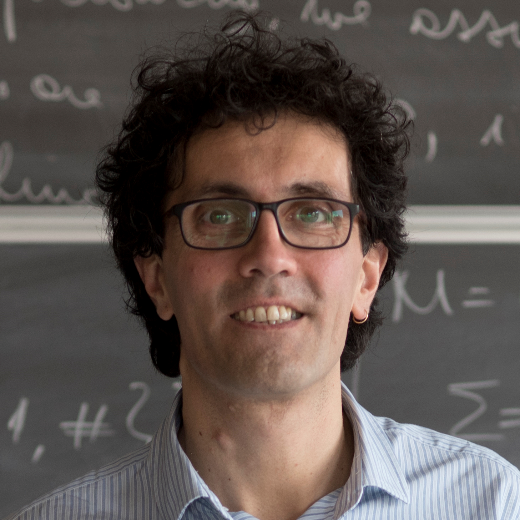
Barbara Caputo is a Full Professor at Politecnico di Torino, leading the VANDAL Laboratory and directing the AI@PoliTo Interdepartmental Lab. She holds a double affiliation with the Italian Institute of Technology (IIT) and has held roles at Idiap-EPFL and Sapienza University. Her research focuses on AI, computer vision, domain adaptation, and federated learning. She contributes to national AI policy, including the Italian Strategy on AI and the National PhD on AI for Industry 4.0. She is an ERC Laureate and ELLIS Fellow, co-founding ELLIS society. Her work spans visual place recognition, action recognition, and cross-domain learning. Education: PhD in Computer Science from KTH Royal Institute of Technology (2005). Major roles include Rector’s Advisor on AI at PoliTo, Board Member of ELLIS, and coordinator of the AI & Industry 4.0 vertical in the National PhD program. Awards include ERC Laureate (2017), ELLIS Fellow (2019), and Inspiring Fifty Italy (2018). Her research emphasizes federated learning, domain adaptation, and AI ethics. Recent articles explore domain generalization, resource-efficient federated models, and AI-environment interactions. She collaborates with institutions like MUR, CNR, and the European Commission on AI policy and tech initiatives.
Begüm Demir is a Professor and Head of the Remote Sensing Image Analysis (RSiM) Group at the Faculty of Electrical Engineering and Computer Science, Technische Universität Berlin. Her research focuses on scalable machine learning methods for remote sensing and Earth observation data analysis. Previously, she held positions at the University of Trento, where she was promoted to Associate Professor in 2017 and received an ERC Starting Grant for her BigEarth project. Key research interests include: Deep learning for satellite image analysis Big data processing in geosciences Earth observation data democratization Noise-robust machine learning models Recent projects highlight collaboration with Huawei in wireless communication-EO integration and leadership in initiatives like Agora-EO and TreeSatAI . Awards include the 2018 IEEE GRSS Early Career Award. Grants include funding from the German Research Foundation (DFG) and Federal Ministry of Education and Research (BMBF). Active in editorial roles for IEEE Geoscience and Remote Sensing Letters, and guest editorships in leading journals. Publicly accessible datasets like BigEarthNet and code repositories enhance her contributions to open science.
Marco Letta is a Tenure-Track Assistant Professor at the Department of Social and Economic Sciences , Sapienza University of Rome. His research focuses on economic development , regional economics , policy evaluation , and applied econometrics , with a strong emphasis on climate change impacts, food security, and machine learning applications in economic policy. University: Sapienza University of Rome Department: Department of Social and Economic Sciences Email: marco.letta@uniroma1.it His recent work explores the climate migration nexus , household resilience , and policy targeting , often leveraging machine learning and empirical econometric methods . Publications span topics such as local inequalities during the COVID-19 crisis , temperature shocks in rural Tanzania , and machine learning applications in state aid regulation . Notable trends in his research include: Integration of machine learning with traditional econometric techniques Focus on climate resilience and migration patterns Analysis of policy impacts in developing economies Investigation of local mortality estimates during global crises Development of cross-country empirical frameworks Current projects include assessing agrifood system vulnerabilities and refining counterfactual policy evaluation methodologies.
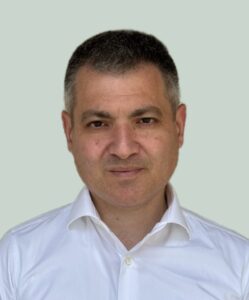
Diego Calvanese is a Full Professor in Computer Engineering at the Faculty of Engineering of the Free University of Bozen-Bolzano, Italy. He serves as Spokesperson of the Institute of Computer Science and Artificial Intelligence and Director of the Smart Data Factory technology transfer lab at NOI Techpark. As Coordinator of the Intelligent Integration and Access to Data (In2Data) research group, part of the Research Centre for Knowledge and Data (KRDB), he leads significant research initiatives in knowledge representation and data management. Calvanese's research focuses on virtual knowledge graphs for data access and integration, ontology-based data access, description logics, semantic web technologies, graph data management, and verification of data-aware processes. His work bridges theoretical foundations with practical applications through the Ontop framework, which enables SPARQL query answering over OWL 2 QL ontologies connected to external data sources. His research has substantial practical impact, powering the South Tyrol Open Data Hub Knowledge Graph and supporting numerous European and national research projects. With more than 400 refereed publications and over 39,000 citations (h-index 80), Calvanese's recent work demonstrates continued leadership in virtual knowledge graphs, ontology-based data federation, explainable AI through knowledge representation, and integration of complex data types including 3D city models and raster data. His publications show a clear trajectory from theoretical foundations toward increasingly practical and applied research addressing real-world data integration challenges across multiple domains. ACM Fellow (2019) EurAI Fellow (2015) AAIA Fellow Program Chair of PODS 2015 and KR 2020 General Chair of ESSLLI 2016 Calvanese has secured significant research funding through numerous competitive projects including EU H2020 INFRAEOS Project (INODE), Italian PRIN Project (HOPE), FESR Project (IDEE), and EU FP7 IP Project (Optique), totaling close to 6.4M Euro. As an originator and co-founder of Ontopic, the first spin-off of the Free University of Bozen-Bolzano, he has successfully translated research into commercial applications. He serves as Associate Editor of Artificial Intelligence (AIJ) and has participated in over 200 program committee roles for international conferences. As Director of the Smart Data Factory technology transfer lab and coordinator of the In2Data research group, Calvanese bridges academic research with industry applications, focusing on practical implementations of knowledge graph technologies. His work with the KRDB Research Center has established Bozen-Bolzano as a significant hub for knowledge representation and data management research in Europe.
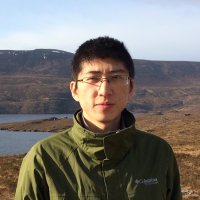
Dr Ting Sun is an Associate Professor in Climate & Meteorological Hazard Risks at University College London , Department of Risk and Disaster Reduction. He earned his BEng (2009) and PhD in Hydrology (2013) from Tsinghua University , followed by a visiting period at Princeton University (2011–2012). After postdoctoral appointments at Tsinghua and the University of Reading , he held a NERC Independent Research Fellowship at Reading (2017–2022) before joining UCL in May 2022. Education PhD in Hydrology, Tsinghua University, 2013 BEng in Hydraulic Engineering, Tsinghua University, 2009 Visiting PhD Student, Princeton University, 2011–2012 Research Interests Dr Sun’s work converges on urban climate modelling across scales —from neighbourhood blocks to global grids—focusing on the impacts of weather and climate extremes such as heat waves and extreme rainfall in cities. He is the lead developer of the Surface Urban Energy and Water balance Scheme (SUEWS) and its Python wrapper SuPy , developed in collaboration with Prof Sue Grimmond’s micromet group. He also contributes as a core member of the Urban Multi-scale Environmental Predictor (UMEP) development team. His multidisciplinary expertise integrates hydro-climate dynamics, computational modelling, machine learning, built-environment processes, and public-health linkages . Research Trends from Recent Publications Across the 15 most recent articles, a clear trajectory emerges from high-resolution urban-process modelling toward integrated socio-environmental assessments . Studies published in 2024–2025 couple atmospheric models (WRF-SUEWS) with global building-morphology datasets (GLAMOUR) to quantify how cities alter rainfall patterns, temperature sensitivity, and heat-related mortality. Earlier works progressively refined SUEWS’s physical parameterisations and Python accessibility, while recent outputs leverage deep-learning remote-sensing tools (SHAFTS) and hybrid hydrological-neural architectures to deliver actionable insights for urban planning and climate adaptation. Scientific Awards & Fellowships NERC Independent Research Fellowship , University of Reading, 2017–2022 HEA Fellowship , University College London, 2023 Professional Service & Editorial Roles Topic Editor , Geoscientific Model Development (from 2025) Editorial Board Member , Scientific Data (from 2024) Peer review and consultancy for journals, conferences, and policy bodies Supervision of taught-course projects and research degrees External examining and mentoring Labs, Teams & Collaborations Dr Sun leads and collaborates within the UCL Department of Risk and Disaster Reduction , working closely with the micromet group at the University of Reading (Prof Sue Grimmond) on SUEWS/SuPy development. He is an active member of the UMEP consortium and maintains extensive international collaborations spanning Tsinghua University, Princeton, and numerous European research centres, underpinning a vibrant, interdisciplinary research network focused on urban climate resilience.
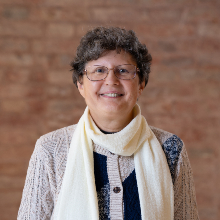
Federica Burini is a Full Professor of Geography at the Department of Foreign Languages, Literatures and Cultures of the University of Bergamo . She serves as Scientific Coordinator of the Imago Mundi Lab, member of the Center for Territorial Studies, and Scientific Director of OrobieLab. Her academic career spans participatory processes, collaborative mapping, and sustainable territorial regeneration. Full Professor of Geography Imago Mundi Lab Coordinator Center for Territorial Studies member OrobieLab Scientific Director Research Focus : Federica specializes in participatory geography through collaborative mapping techniques for environmental governance in both rural and urban contexts. Her work emphasizes sustainable development in Sub-Saharan Africa and European mountainous regions, with particular attention to landscape valorization via participatory processes and responsible tourism. Key projects include digital co-mapping initiatives for community engagement and territorial regeneration. Participatory mapping tools Sustainable tourism frameworks Mountainous area development Rural community empowerment Digital geospatial applications Landscape perception studies Publications : Recent works explore digital collaborative mapping tools (2024), industrial heritage interpretation for slow tourism (2024), and water resource-driven community regeneration (2024). Earlier contributions examine pandemic impacts on tourism (2020) and participatory cartography methodologies (2016). Her research consistently bridges geographical theory with practical territorial governance solutions.
Andrea Garzelli is a Full Professor at the University of Siena's Department of Information Engineering and Mathematical Sciences. His research focuses on remote sensing image processing, particularly in optical and SAR sensor technologies, image fusion, and spatial resolution enhancement. He holds teaching roles in 'Fundamentals of Signal Processing and Telecommunications' and 'Statistical Signal Processing.' He earned his Ph.D. in Computer Science and Telecommunication Engineering from the University of Florence. Notably, he was recognized as a World's Top 2% Scientist by Stanford University for 2019–2023 and his career-long contributions. He served as President of the University of Siena's Quality Assurance Committee (2016–2021) and currently coordinates the graduate program in Computer and Information Engineering. Research interests include satellite data analysis (e.g., Sentinel-2, PRISMA), hypersharpening techniques, and environmental monitoring. His work bridges theoretical advancements (e.g., pansharpening algorithms) and practical applications like urban land classification and vegetation index enhancement. Recent articles emphasize reproducibility, meta-analysis, and synthetic data generation through GANs. Awards: World's Top 2% Scientists (2019–2023 & career). Grants/Advising: Supervises remote sensing theses; no specific grants mentioned. Labs/Teams: Leading research in the department's remote sensing and signal processing groups.
Antonella Basso serves as a Full Professor in the Department of Economics at Ca' Foscari University of Venice, specializing in mathematical methods of economics and actuarial and financial sciences (STAT-04/A). She is affiliated with the Research Institute for Complexity and maintains her office in the San Giobbe building where she holds regular office hours on Tuesdays from 2:00 pm to 5:00 pm CET. Professor Basso's research expertise spans multiple domains of quantitative finance and economics, with particular emphasis on Financial Mathematics , Quantitative and Computational Finance , and Ethical Finance including ESG investments and green finance. She has pioneered the application of Data Envelopment Analysis (DEA) across diverse contexts from mutual funds and pension funds to museum evaluation. Her work increasingly explores the integration of Artificial Intelligence and Machine Learning techniques for economic applications, alongside traditional risk assessment methodologies. She also maintains significant research interests in art as a financial asset and alternative investment class. Her recent publications (2019-2025) reveal a consistent research trajectory with growing emphasis on sustainable finance, alternative investments including art, and performance measurement in cultural institutions. Her work demonstrates sophisticated methodological approaches to portfolio optimization with volume-based liquidity constraints, ethical fund evaluation using metafrontier approaches, and innovative integration of DEA with Balanced Scorecard and AHP methodologies for comprehensive performance assessment. As an educator, Professor Basso actively supervises undergraduate and master's theses on topics spanning financial mathematics, computational finance, insurance, and ethical finance applications. She requires preliminary discussions with students to ensure appropriate thesis topic alignment with research objectives and methodological capabilities. Through her affiliation with the Research Institute for Complexity, she contributes to interdisciplinary research examining complex economic and financial systems through quantitative lenses, bridging theoretical mathematical approaches with practical financial applications across multiple sectors.
Paolo Trunfio is a Professor of Computer Engineering at the University of Calabria, Italy, and co-founder of DtoK Lab S.r.l., an academic spin-off focused on data analysis and distributed systems. He holds a Ph.D. and is affiliated with the DIMES Department, specializing in big data, cloud computing, and high-performance computing (HPC). His research emphasizes scalable data analysis frameworks, edge-cloud continuum solutions, and machine learning applications for social media and disaster monitoring. Trunfio serves as an Associate Editor for ACM Computing Surveys and Journal of Big Data , and is on the editorial boards of several journals including Future Generation Computer Systems . He has authored four influential books, including Programming Big Data Applications (2024) and Data Analysis in the Cloud (2015). His work spans distributed systems, IoT-based smart objects, and exascale computing. Notable projects include the EU-funded eFlows4HPC and ASPIDE initiatives, which focus on HPC workflows and exascale programming models. Trunfio’s publications (over 200 papers) address topics like social media analytics, energy-efficient P2P networks, and parallel data mining. He leads research in urgent computing for disaster response, edge-cloud integration for urban mobility, and AI-driven data analysis. His contributions to cloud frameworks (e.g., JS4Cloud, ParSoDA) and HPC libraries (e.g., DCEx) highlight his expertise in bridging theory and practice in distributed computing ecosystems.
Marina Unger is a scientific collaborator at the Photographic Collection of the Bibliotheca Hertziana – Max Planck Institute for Art History since February 2025. She studied Classical Archaeology and Art History at Philipps University of Marburg, University of Naples ‘L'Orientale’, and Humboldt University of Berlin, earning a Magister Artium in 2010. In 2020–2021, she completed a Master’s degree in Literary Translation for Italian at Ludwig Maximilian University in Munich. Her current doctoral thesis focuses on Greek vase drawings within the archaeological apparatus of the Instituto di Corrispondenza Archeologica in Rome. Education: Magister Artium (Humboldt University, 2010), Master’s in Literary Translation (LMU Munich, 2021) Her research bridges archaeology , media history , and archival studies , emphasizing nineteenth-century documentation practices like vase drawings and early photography. She contributes to provenance research and digital humanities projects. Recent work includes the DFG-funded Gelehrte, Ausgräber und Kunsthändler project, analyzing the networks of the German Archaeological Institute through correspondence and linked data infrastructure. Collaborations span institutions like the German Archaeological Institute (DAI) and Scuola Normale Superiore in Pisa, with publications on Etruscan tomb paintings, Greek vases, and antiquities trade dynamics. Prior roles include: student assistant at Bildarchiv Foto Marburg, IT department member at Kunsthistorisches Institut in Florence, and research assistant at DAI Archives in Berlin. She has also worked as a freelance translator/editor and project manager.
Enrico Macii is a Full Professor at the Politecnico di Torino, affiliated with the Interuniversity Department of Regional and Urban Studies and Planning (DIST) and the Department of Control and Computer Engineering (DAUIN). He leads the Electronic Design Automation (EDA) research group and holds key roles as Scientific Advisor for the Politecnico-STMicroelectronics partnership and Scientific Contact for the European Chips Joint Undertaking. Research Interests: His work spans digital circuits and systems, energy efficiency, smart cities, Industry 4.0, and smart manufacturing. He focuses on embedded and cyber-physical systems, low-power design, neuromorphic computing, AIoT, and sustainable urban development. Recent Publications: His recent research demonstrates strong trends in edge AI, neuromorphic computing, and smart energy systems. Articles highlight innovations in low-power hardware acceleration, federated learning, physics-informed AI, and digital twin applications for urban and industrial systems. There is a clear emphasis on deploying AI efficiently on constrained devices and integrating physical models with machine learning. J. William Fullbright Fellowship (1993) Best paper award IEEE European Design Automation Conference (1996) Best paper award ACM/IEEE Great Lakes Symposium on VLSI (2008) DAC Service Award (2014) IEEE Fellow (2006) DATE Fellow (2014) Advising and Grants: He has supervised over 25 PhD students in computer engineering, AI, and urban systems. His research is funded by major EU programs (Horizon 2020, PNRR, KDT JU), national (PRIN, FAR), and regional grants, as well as industrial contracts with STMicroelectronics, Michelin, and Cefriel. He leads numerous high-impact projects in smart manufacturing, energy efficiency, and digital twins. Labs and Teams: He is a core member of the EDA Group, an interdepartmental research team at Politecnico di Torino focusing on VLSI-CAD, bioinformatics, smart cities, and Industry 4.0. He also contributes to IAM@PoliTo (Integrated Additive Manufacturing) and leads multiple EU and national research consortia.
Andrea Gasparella is a Tenured Full Professor and Dean of the Faculty of Engineering at the Free University of Bozen-Bolzano, located at NOI Techpark in Bozen-Bolzano, Italy. His research focuses on building physics, energy systems, and inclusive design, with a particular emphasis on indoor environmental quality for neurodivergent individuals and sustainable urban development. He leads projects like the Flexibots initiative (biodegradable medical microrobots) and BeSENSHome (autonomy support for neurodivergent people). His work integrates advanced modeling (e.g., CFD, machine learning) with real-world applications in energy efficiency, climate adaptation, and human-centered design. Key research areas include thermal and acoustic comfort, renewable energy integration, and smart building technologies. He collaborates with industry partners like Galileo High School and regional institutions to advance automation and robotics. Notable contributions include studies on urban heat islands, energy retrofit strategies for historic buildings, and the impact of ventilation on contagion risks in educational settings. As Dean, he promotes innovation through interdisciplinary initiatives at NOI Techpark, including new engineering programs and infrastructure like the university canteen. His publications span over 50 peer-reviewed articles in journals and conferences like Building Simulation Applications (BSA), addressing topics ranging from solar irradiance prediction in mountain regions to the psychophysical needs of neurodivergent populations. He actively contributes to policy discussions on decarbonization and energy equity in Alpine contexts. Professional activities include organizing events such as the 'nextFSE' fire safety conference and engaging with local organizations like Rotary Clubs to foster community ties. His work bridges academic research with practical solutions for climate resilience, accessibility, and technological advancement.
Provvidenza Rita D'Urso is a Fixed-term Assistant Professor at the University of Catania's Department of Agriculture Food and Environment (Di3A), specializing in Rural Buildings and Agro-forest Land Planning within the School of Agriculture. Her current position runs from March 1, 2023 to February 28, 2026, as part of the SAMOTHRACE project funded by the European Union through NextGenerationUE. She maintains an office in the Engineering Area at Via Santa Sofia, 100, and conducts research focused on environmental monitoring in agricultural settings. Dr. D'Urso earned her PhD in Agricultural, Food and Environmental Science from the University of Catania in 2022 with a thesis on measuring ammonia and GHG concentrations in dairy housing systems. She holds dual qualifications as both a Civil and Environmental Engineer (2017) and an Agronomist and Forestry Doctor (2020), demonstrating her interdisciplinary expertise. Her educational background includes two Master's degrees earned cum laude : one in Agricultural Sciences and Technologies (2018) and another in Building Engineering and Architecture (2016). Her research interests center on environmental monitoring in agricultural contexts, particularly focusing on ammonia and greenhouse gas emissions from livestock housing systems. She investigates innovative measurement techniques using infrared photo-acoustic multi-gas analyzers and low-cost devices, while also exploring mitigation strategies including green wall systems and bio-acidification treatments. Her work bridges agricultural engineering with environmental protection, addressing critical challenges in sustainable farming practices. Analysis of her recent publications reveals a strong focus on precision environmental monitoring in agricultural settings, with particular emphasis on spatial and temporal distribution of gaseous emissions in dairy barns. Her research demonstrates methodological rigor in measurement techniques while maintaining practical applications for emission reduction in livestock farming. She frequently employs geospatial analysis and contributes to systematic literature reviews that advance understanding of environmental impacts across agricultural sectors. National Scientific Qualification as Associate Professor (2023) PhD awarded with honors (unanimous decision by Committee, 2022) Multiple Master's degrees earned 110/110 cum laude Active member of the Italian Society of Agricultural Engineering (AIIA) Dr. D'Urso serves as an academic advisor and collaborator on multiple research projects, frequently working with Professor Claudia Arcidiacono as primary supervisor. Her research group focuses on developing practical solutions for environmental challenges in Mediterranean agricultural systems, with particular attention to measurement methodologies and mitigation strategies that can be implemented in real-world farming operations. She maintains active collaborations with European research institutions through COST Training School programs.
Filiberto Chiabrando is an Associate Professor at the Department of Architecture and Design (DAD) of Politecnico di Torino, with a secondary appointment as Adjunct Associate Professor at Michigan Technological University (USA). He serves as Deputy Coordinator of the Doctoral College for Architectural and Landscape Heritage and is Secretary of the ISPRS Working Group on UAS & Small Multi-sensor Platforms. His work bridges geomatics, photogrammetry, and cultural heritage preservation. Academic Affiliations Politecnico di Torino (Main Institution) Michigan Technological University (Adjunct Appointment) Research Leadership Coordinator of PIC4SeR Interdepartmental Center Principal Investigator for HERITALISE, Common Grounds, POSEIDON, ARCHIM3DES, and ResCult projects Chiabrando's research focuses on 3D modeling , UAV photogrammetry , underwater cultural heritage documentation , and HBIM-GIS integration . He specializes in SLAM systems , laser scanning , and rapid mapping for architectural conservation. His work aligns with SDGs 9 (Innovation), 11 (Sustainability), and 17 (Partnerships). His recent projects emphasize multitemporal marine vegetation mapping (POSEIDON), cloud-based heritage digitization (HERITALISE), and advanced 3D metric surveying in marine environments (ARCHIM3DES). He has developed open-source education platforms like POSER for underwater photogrammetry training. Scientific Awards Licinio Ferretti Award (ASITA, 2009 & 2010) Best Paper Awards: Sensors (2013), CIPA (2013) Editorial Roles Editorial Board: Geomatics Journal (2021-), ISPRS International Journal (2019-) As a PhD advisor, he has mentored 7 doctoral students in architectural heritage, including Alessio Calantropio (2019-2023) on underwater heritage and Alessandra Spreafico (2019-2023) on the Turin 1911 Exposition. He leads commercial contracts with organizations like DJI GmbH, World Food Programme, and UNICEF for UAV and geospatial applications.
Marco Tubino is a Full Professor in the Department of Civil, Environmental and Mechanical Engineering at the University of Trento, where he serves as Department Director since 2012. Previously, he was Dean of the Faculty of Engineering (2005-2012) and has held academic positions since 1990, including Associate Professor at the University of Genoa before joining Trento in 1994. Education: 1977: Diploma di Maturità Classica, Liceo Statale "Andrea D'Oria", Genoa 1982: Laurea in Chemical Engineering (with honors), University of Genoa 1986: PhD in Hydrodynamics, University of Padua Research Focus: Tubino's work centers on fluid mechanics and fluvial morphodynamics , with expertise in sediment transport, tidal hydrodynamics, ecohydraulics, and environmental fluid mechanics. His research integrates field observations, mathematical modeling, and experimental studies to address river bifurcations, meandering dynamics, debris flows, and climate change impacts on alpine systems. Recent work emphasizes AI applications for river prediction and waste management sustainability. Publication Trends: His 2023-2025 publications reveal intensified focus on river bifurcation mechanics, permafrost-affected Arctic streams, and machine learning for meander migration prediction. Key themes include sediment partitioning in deltas, climate change impacts on fluvial systems, and life-cycle assessment of waste-to-energy technologies, reflecting growing interdisciplinary integration with environmental engineering. Scientific Recognition: Wiley-Blackwell Award for best paper in Earth Surface Processes and Landforms (2010) Academic Leadership: Tubino coordinates the Environmental Fluid Mechanics and Morphodynamics Research Group (GIAMT) and has directed Trento's PhD program in Environmental Engineering (2000-2007). He has secured numerous research grants for environmental impact studies, fluvial modeling projects, and international collaborations including dual-degree programs with Karlsruhe University. Research Infrastructure: Leads the GIAMT group specializing in experimental flume studies, numerical modeling of river systems, and field investigations of braided and meandering rivers, with recent expansions into AI-driven morphodynamic prediction and climate change impact assessment.