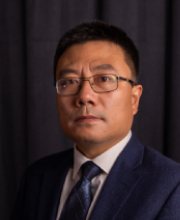
Almabrok Essa is an Assistant Professor in the Department of Mathematics, Computer Science, and Data Science at John Carroll University. His research focuses on advanced machine learning techniques applied to medical imaging, computer vision, and signal processing. He holds a faculty position at Dolan Science Center E207 and can be reached via email at aessa@jcu.edu. His work bridges theoretical computer science with practical applications in healthcare, environmental monitoring, and security systems. Research interests include deep learning architectures for medical diagnostics (e.g., chest X-ray analysis and skin lesion segmentation), steganography for secure image transmission, and remote sensing technologies for geospatial analysis. He has pioneered methods like Multibit LSB matching for data hiding and developed frameworks like COVID-CLNet for pandemic response. His contributions span over 20 peer-reviewed articles from 2015 to 2025, showcasing innovations in face recognition algorithms, brain signal analysis, and environmental pattern recognition. Notable applied projects include real-time heart/respiration monitoring systems and automated machinery threat detection for infrastructure protection. His research demonstrates strong interdisciplinary potential, combining computational methods with domains like biomedical engineering, environmental science, and cybersecurity.
Xing Wu, Ph.D., P.E., is an Associate Professor in the Department of Civil and Environmental Engineering at Lamar University. His expertise spans transportation systems, maritime logistics, and infrastructure resilience. He has received notable awards, including the 2017 SWEET SIXTEEN from AASHTO and ASCE ExCEED Fellowship, and served as Principal Investigator (PI) for a TxDOT-funded project addressing traffic signal timing. His research integrates advanced data analysis techniques like AIS data and machine learning to address challenges in transportation efficiency, safety, and environmental impact. **Education**: B.S. in Civil Engineering, Tsinghua University (2002) M.S. in Management Science and Engineering, Tsinghua University (2005) M.S. in Civil Engineering/Construction Management, Carnegie Mellon University (2006) Ph.D. in Transportation System Analysis and Engineering, Northwestern University (2011) **Research Interests**: Focus on optimizing transportation networks, maritime channel operations, traffic signal control systems, and environmental resilience in infrastructure. His work leverages empirical data and computational models to improve safety and efficiency in both urban and coastal settings. **Key Contributions**: Over 50 publications since 2005, including studies on vessel behavior in narrow waterways, traffic crash severity analysis, and electric vehicle feasibility. His recent work emphasizes data-driven solutions for congestion mitigation and infrastructure resilience. **Awards**: Extensive recognition from academic and professional bodies, including multiple fellowships and university merit awards. **Grants & Advising**: PI on TxDOT projects and recipient of grants like the Larry Lawson Faculty Fellowship. Advises students in civil engineering disciplines, though specific advisee names are not listed.
François Grey is an Associate Professor at the University of Geneva, holding roles at the Geneva School of Economics and Management and the Research Institute for Statistics and Information Science. He previously served as Vice Dean for Studies and Director of Digital Strategy at the University of Geneva (2016–2018). His research focuses on citizen science, innovation management, and sustainable development goals, with a 15-year background in nanotechnology and 20+ years in citizen science. Grey coordinates the Citizen Cyberlab initiative, a partnership with CERN and UNITAR, and directs the Geneva Tsinghua Initiative for UN SDG education. He teaches courses on open science, crowdsourcing, and AI at both undergraduate and graduate levels. Education: Ph.D., University of Copenhagen Research Interests: Grey’s work bridges technology and societal impact, emphasizing participatory science through platforms like Citizen Cyberlab. His research explores public engagement in science, innovation programs in universities and labs, and leveraging citizen science for environmental and health challenges. He advocates for open science practices and has pioneered initiatives like hackathons to foster public participation. Labs/Teams: Coordinates the Citizen Cyberlab, driving participatory research technologies and exploring societal impacts of citizen science. Active in global education programs such as the Geneva Tsinghua Initiative.
John L. Renne, PhD, AICP is the Henry Shane Professor in Real Estate and Program Director of the Real Estate Development Program at Tulane University's School of Architecture, commencing January 2025. Previously, he served as a Professor in Urban and Regional Planning and Director of the Center for Urban and Environmental Solutions at Florida Atlantic University (FAU), where he was honored as Scholar of the Year in 2023. With a deep connection to New Orleans stemming from post-Katrina recovery efforts, Renne brings extensive global experience from Australia, Florida, and Oxford University to his new role. Renne's research interests span urban planning, climate resilience, artificial intelligence applications in urban development, transit-oriented development (TOD), and evacuation planning for vulnerable populations. His work particularly focuses on using virtual reality to engage communities in urban planning and resilience efforts. He has co-founded The TOD Group (specializing in transit-oriented development in Denver) and Priority Funds (investing in walkable communities), and created the Renne-Greschner TOD Index. His scholarly output reveals consistent focus on sustainable urban development, transportation planning, and climate adaptation strategies. The publications show progression from traditional transit-oriented development studies toward more innovative approaches integrating virtual reality, AI, and climate resilience frameworks. His work increasingly addresses social equity dimensions within urban planning contexts, particularly regarding vulnerable populations during disasters. Scholar of the Year at FAU (2023) Outstanding Student for Master's program at University of Colorado Renne has advised numerous research projects and publications with colleagues and students across multiple institutions. His professional experience bridges academic research with practical real estate development through private sector ventures. He is currently pursuing a Master's degree in Artificial Intelligence in Computer Science at Florida Atlantic University to further integrate AI into his research and teaching.
Shafique Chaudhry is an Assistant Professor of Information Systems and Operations at the Reh School of Business, Clarkson University. He holds a Master's in Computer Science from the University of Punjab, Pakistan, and a PhD from Ajou University, Korea. His postdoctoral research at University College Cork, Ireland, preceded his faculty roles in Saudi Arabia and Oman. His research focuses on Data Analytics, IoT, and Machine Learning, with applications in cybersecurity, smart grids, and healthcare. He has authored over 30 peer-reviewed articles and holds two international patents. Notable awards include IITA Korea's research award and Dhofar University's Best Researcher award (2015). Dr. Chaudhry teaches courses such as Applied Data Analytics, Machine Learning, and Database Design. His work spans IoT security frameworks, sensor network optimization, and policy compliance systems. Recent trends in his publications emphasize hybrid ML techniques for IoT security, environmental sensor calibration, and pediatric neurosurgery outcome analysis. Education : MSc Computer Science (Punjab University), PhD (Ajou University) Patents : Two international patents (details not specified) Lab/Teams : Active in IoT, cybersecurity, and smart systems research groups
Anna-Maija Tolppanen is a tenured Professor at the University of Eastern Finland (UEF), affiliated with the School of Pharmacy within the Faculty of Health Sciences. Her research focuses on pharmacoepidemiology, clinical epidemiology, and real-world evidence generation for healthcare effectiveness. She holds a MSc in bioinformatics and PhD in genetic epidemiology, with over 15 years of experience in epidemiological research. Education: - MSc in Bioinformatics - PhD in Genetic Epidemiology Research Interests: Her work emphasizes evaluating treatment effectiveness and safety using real-world data (e.g., national registers, electronic health records). Key areas include drug safety, neurodegenerative disorders (Alzheimer’s, Parkinson’s), and health inequalities. She leads projects like the MEDALZ Real-world Evidence Team and the EU-funded Real4Reg initiative, which integrate AI-driven approaches to enhance regulatory science and healthcare outcomes. Publications: Over 150 peer-reviewed articles focus on topics such as drug exposure risks, disease comorbidities, and environmental factors. Recent studies highlight associations between sensory impairments and Alzheimer’s risk, opioid use patterns in neurodegenerative patients, and PM2.5 pollution’s role in Parkinson’s diagnosis. Awards/Grants: - Academy of Finland Research Fellowship - Michael J. Fox Foundation Grants (3×) - EU Horizon Project Real4Reg (Work Package Leader) Grants/Advising: Funded by national and international bodies, her work bridges epidemiology and clinical practice. She advises on drug safety, public health policy, and interdisciplinary data collaboration. Labs/Teams: Leads the MEDALZ and House of Effectiveness teams, collaborating globally on projects like the Neurological and Mental Health Global Epidemiology Network (NeuroGEN).
Kenny Joseph is an Associate Professor in the Department of Computer Science and Engineering at the University at Buffalo's School of Engineering and Applied Sciences. He serves as Associate Director of the AI and Society Institute for Artificial Intelligence and Data Science. PhD in Societal Computing from Carnegie Mellon University (2016) MS in Societal Computing from Carnegie Mellon University (2012) BS in Computer Science from Carnegie Mellon University (2010) His research focuses on computational social science , examining stereotypes and prejudice dynamics , social inequality through computational tools , and gender disparities in organizations . He develops machine learning frameworks for neighborhood change prediction and predictive models for child welfare systems , with work featured in the New York Times . Scientific contributions include: UB Exceptional Scholar—Young Investigator Award (2021) He advises students Yuhao Du (Meta data scientist), Jason Yan (Michigan Ph.D. student), Arjunil Pathak (Amazon researcher), and Navid Madani (former Ph.D. student). His Computation and Equity Lab (cubelab) produces interdisciplinary work spanning social media analysis, urban equity, and computational methods for marginalized communities.
Prof. Amila Akagic is an Associate Professor at the Department of Computer Science and Informatics, Faculty of Electrical Engineering, University of Sarajevo. Her expertise spans Computer Architecture , Artificial Intelligence , Computer Vision , and High-Performance Computing . She holds a Ph.D. from Keio University (Amano Lab) and has conducted research at UC Riverside and the University of Ljubljana under prestigious scholarships including the Fulbright and MEXT awards. Her work focuses on FPGA-accelerated algorithms, reconfigurable architectures, and deep learning applications in medical imaging and environmental monitoring. Education: Bachelor's/Master's (Electrical Engineering) – University of Sarajevo (2006/2009) Ph.D. (Computer Science) – Keio University, Japan (2013) Research Interests: Combines image segmentation , embedded systems , and energy-efficient computing . Recent work includes semantic tumor segmentation (MRI), blockchain-based UXO tracking, and FPGA-based CRC acceleration. She explores interdisciplinary topics like AI-driven plant phenotyping and wildfire detection using computer vision. Recent Trends in Publications: Over 40% of her 2023-2025 articles address medical imaging and fire detection , with growing emphasis on explainable AI and humanitarian technology . Her work frequently uses frameworks like OpenVINO and TensorFlow to optimize computational efficiency. Awards: Fulbright Visiting Student Award (2007/2008) MEXT Scholarship (Japan, 2010) Grants & Labs: Active in the HiPEAC project (EU Horizon Europe), focusing on edge computing and smart grid resilience. Collaborates with the Embedded Systems and Architectures Lab (UC Riverside) and Amano Lab (Keio University). Labs/Teams: Leads research groups in FPGA-accelerated architectures and AI-driven environmental sensing. Engages in humanitarian demining initiatives via data observatories and blockchain systems.
Pengfei Li is a prolific researcher affiliated with multiple academic institutions, including Harbin Medical University, Yale University, Beihang University, Zhejiang University, and others. His work spans interdisciplinary domains such as machine learning, robotics, remote sensing, and biomedical engineering. Research interests focus on Machine learning and deep learning for industrial and medical applications Signal processing and sensor technologies Remote sensing and geospatial data analysis Robotic control systems and exoskeleton design Code search and software engineering optimization His recent publications highlight trends in FPGA-based real-time systems, multimodal machine learning, and AI-driven diagnostics. While awards and student advising details are absent in the provided data, his contributions to IEEE journals and conferences underscore his expertise in algorithm design and applied informatics.
Pedro Henriques is Professor of Computer Science at University of Minho, where he coordinates the Language Processing group at Algoritmi Research Center. With a PhD in Formal Languages and Attribute Grammars, he teaches compiler design and programming language engineering. His research develops: Formal methods for software analysis Educational tools for programming pedagogy Ontology-driven computational thinking frameworks AI applications in agriculture and healthcare Recent work includes neuroeducation-informed frameworks (OntoCnE) and Programming Cocktails methodology for optimizing cognitive load in code instruction. He has supervised 14 PhD dissertations and authored the foundational text "XML & XSL: da teoria a prática". Current EU projects explore VR cognitive rehabilitation and olive cultivar identification using deep learning.
Dr. Susanne Wenzel is a Research Fellow at the Structural and Functional Organisation of the Brain (INM-1) within the Forschungszentrum Jülich GmbH. She serves as the Scientific Coordinator for the Helmholtz AI Local Unit at INM-1 and the Jülich Supercomputing Centre (JSC), fostering collaboration with the Helmholtz-wide AI platform. Additionally, she leads the Helmholtz International BigBrain Analytics and Learning Laboratory (HIBALL), a partnership with McGill University’s Montreal Neurological Institute and the Mila Quebec AI Institute. Her work focuses on advancing AI and high-performance computing for neuroimaging, particularly in developing 3D brain models through interdisciplinary research with CIFAR and MILA. Her research expertise spans artificial intelligence, remote sensing, and image analysis, with a strong emphasis on machine learning applications in environmental science, neuroscience, and urban scene understanding. She coordinates projects that integrate cutting-edge technologies to address complex challenges in climate modeling, neuroimaging, and spatial data analysis. Dr. Wenzel’s contributions include pioneering work in neural networks for ocean eddy tracking, sea level anomaly prediction, and facade image interpretation. Her projects emphasize interdisciplinary collaboration, combining computational methods with domain-specific knowledge across multiple institutions globally. Her current initiatives reinforce the utilization of AI and supercomputing resources to enhance scientific discovery, particularly in neuroscience through HIBALL. This collaboration aims to leverage advanced analytics for detailed brain model development, reflecting her commitment to bridging computational innovation with real-world applications.
Yang Yang is an Assistant Professor at the Mendoza College of Business, University of Notre Dame. He holds a PhD in Computer Science from the same institution and previously served as Assistant Professor at Syracuse University and Research Assistant Professor at Northwestern Institute on Complex Systems (NICO) and Kellogg School of Management. His research focuses on data mining, machine learning, computational social science, and science of science, particularly exploring how social networks influence leadership attainment and innovation dynamics in scientific contexts. Yang's work bridges computer science and social sciences, examining topics like team composition effects on innovation, media's role in science communication, and gender disparities in leadership. His research has been published in top-tier venues such as PNAS, KDD, ICDM, and featured in media outlets like Forbes, The Washington Post, and WIRED. His recent technical contributions include advancements in multimodal AI, remote sensing interpretation, and video synthesis techniques. Notable projects include geo-localization systems using satellite imagery, transformative video generation models, and human-centric animation technologies leveraging diffusion models and transformers.
João Paulo Papa is a Professor at the Department of Computing within the Institute of Biosciences, Humanities and Exact Sciences at São Paulo State University (UNESP), Brazil. His research spans machine learning, computer vision, and quantum computing with significant applications in medical diagnostics and environmental monitoring. Over the past three years, he has published extensively in top-tier journals including IEEE Access, ACM Computing Surveys, and Neural Computing and Applications. His research interests focus on developing innovative machine learning approaches for healthcare applications, particularly in Parkinson's disease detection through speech and facial analysis, medical image processing for cancer detection, and quantum-classical hybrid models. His work demonstrates strong integration of theoretical machine learning advancements with practical medical and environmental applications. Papa has established a productive research group that has produced numerous publications in computer vision conferences and medical informatics venues. Analysis of his recent publications reveals a strong emphasis on medical applications of AI, with approximately 60% of his work focused on healthcare diagnostics, 25% on fundamental machine learning advancements, and 15% on environmental and remote sensing applications. His research shows increasing collaboration with international partners while maintaining strong roots in Brazilian academic networks. Among his notable contributions is the development of specialized machine learning architectures for medical image analysis, including TransConv for esophageal cancer detection and quantum-classical hybrid models for breast cancer diagnosis. He has also made significant contributions to the Portuguese language processing community through adaptations of large language models for Brazilian Portuguese medical applications. Prof. Papa actively supervises graduate students and collaborates with medical professionals across Brazil, translating AI research into practical clinical tools. His research group maintains strong connections with hospitals and medical research centers to ensure clinical relevance of their technical developments.
Ioana Popescu is a prominent hydroinformatics researcher affiliated with the IHE Delft Institute for Water Education , where she has worked since 2001. Previously, she served as an Associate Professor at the Faculty of Hydrotechnics, Timisoara, Romania (1990-1999), and a postdoc researcher at the National Research Council of Canada (2000).
Yike Ma is an active Associate Professor in the Department of Computer Science at the University of Science and Technology of China (USTC), School of Computer Science and Technology. With a prolific publication record spanning from 2011 to 2025, Ma has established expertise in computer vision with specializations in panoramic/spherical image processing, light field imaging, and applications in agricultural robotics and autonomous driving systems. Ma maintains a strong collaborative network, primarily with Feng Dai, Qiang Zhao, Yongdong Zhang, and Yucheng Zhang, producing numerous high-impact publications in top venues including CVPR, IJCAI, IEEE Transactions, and NeurIPS. University: University of Science and Technology of China (USTC) School: School of Computer Science and Technology Department: Department of Computer Science Research Focus: Computer Vision, Panoramic Imaging, Agricultural Robotics Ma's research interests center on advanced computer vision techniques, particularly for spherical and panoramic imagery, with significant contributions to oriented object detection, semantic segmentation, and light field processing. Recent work demonstrates increasing focus on agricultural robotics applications and autonomous driving systems, showing interdisciplinary expansion of core computer vision expertise. The research employs sophisticated deep learning approaches while addressing practical challenges in real-world applications. Analysis of Ma's 15 most recent publications reveals a clear progression toward practical applications of computer vision research, with growing emphasis on agricultural robotics (4 publications) and autonomous driving systems (3 publications), while maintaining strong foundational work in spherical/panoramic image processing (5 publications). The research demonstrates technical sophistication in handling boundary discontinuity problems, topology reasoning, and space-time perceptive clues, with increasing integration of large language models and generative AI techniques in recent work. While no specific awards are documented in the available publication records, Ma's consistent presence in top-tier conferences and journals including CVPR, IJCAI, and IEEE Transactions indicates recognition within the computer vision and AI research communities. The publication record shows steady output with increasing impact, particularly in the last five years. Ma's collaborative network is extensive, with primary collaborations through the University of Science and Technology of China. The research appears well-supported through projects in agricultural robotics and autonomous systems, though specific grant details aren't visible in the publication metadata. Ma has advised numerous graduate students as evidenced by authorship patterns where Ma appears as senior author on papers with junior researchers as first authors.