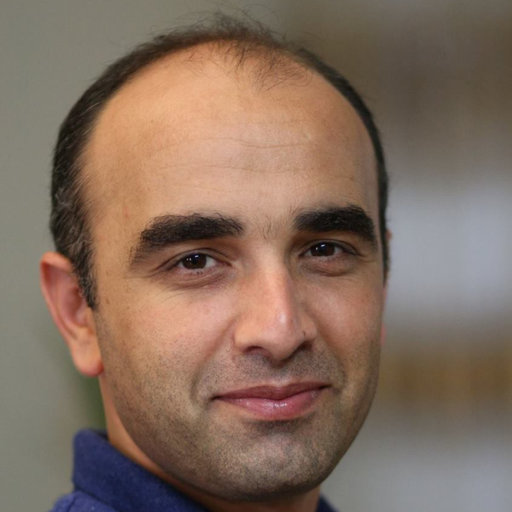
Jim Dowling is a distributed systems researcher at KTH Royal Institute of Technology, focusing on large-scale distributed systems, machine learning, and big data. His work emphasizes improving system dependability, performance, security, and scalability through middleware, peer-to-peer systems, and cloud-native solutions. He leads courses such as Advanced Course in Large Scale Machine Learning and Deep Learning and Scalable Machine Learning and Deep Learning , demonstrating his commitment to education in AI and distributed computing. His research spans topics like feature stores, Kubernetes integration, and AI-driven environmental analytics (e.g., ANIARA project for edge infrastructure automation and ExtremeEarth for Copernicus data analysis). He has contributed to scalable ML pipelines, cloud storage systems (HopsFS-S3), and hyperparameter optimization tools like Maggy. Key projects include the Hopsworks platform for machine learning operations and the development of cloud-native tools for big data analytics. His work bridges theoretical distributed systems research with practical applications in AI, healthcare, and environmental science. He has advised on numerous collaborative initiatives but no formal students are listed. His grants and lab activities are centered around Hopsworks and the ANIARA project, reflecting his focus on scalable, self-managing systems.
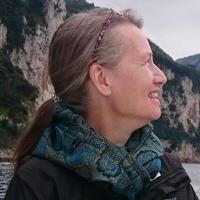
Ulla Mörtberg is a Professor and Docent at KTH Royal Institute of Technology's Digital Futures Faculty, specializing in Sustainable Development, Environmental Science and Engineering. She holds academic roles in the Department of Sustainable Development, Environmental Science and Engineering and is actively involved in interdisciplinary projects such as the EO-AI4GlobalChange initiative and the Embedding AI in geospatial policy tools for clean cooking adoption. Her work bridges geospatial technologies, environmental policy, and sustainable urban planning. Key research focuses include renewable energy planning (wind farms, bioenergy), urban ecosystem services, biodiversity conservation, and geodesign applications. She leads projects addressing climate solutions in Stockholm, such as integrating nature-based solutions into urban compaction strategies and evaluating green infrastructure impacts on urban heat. Her methods emphasize GIS-based decision support systems and multi-criteria analysis for balancing environmental, social, and economic objectives. Recent publications highlight advancements in ecosystem services assessment frameworks, wind energy sustainability, and urban biodiversity dynamics. Notable contributions include spatial optimization models for forest management and policy assessments of Brazil's Forest Code. Her work often involves global case studies but emphasizes regional applications in Sweden and the Stockholm region. Mörtberg collaborates extensively with municipal planners and policymakers, contributing to sustainable development goals through actionable research. Her projects often involve international partnerships and address global challenges such as deforestation in the Amazon and energy transition pathways in Europe.
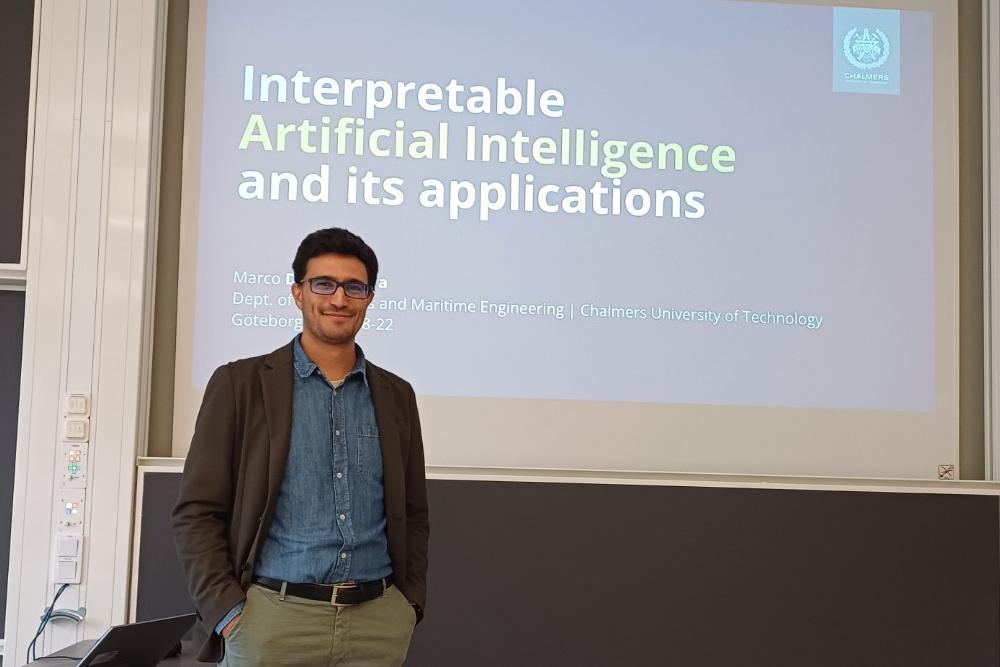
Marco L. Della Vedova is a Senior Lecturer in Applied Artificial Intelligence at Chalmers University of Technology, Sweden. He works in the Vehicle Engineering and Autonomous Systems division within the Department of Mechanics and Maritime Sciences, as part of Prof. Mattias Wahde's research group. Since 2025, he has served as Director of the Data Science and AI master's programme (MPDSC) at Chalmers, where he teaches courses including Introduction to Artificial Intelligence and Digitalization in Sports. Dr. Della Vedova earned his academic foundation at the University of Pavia, Italy, where he completed his BSc (2006), MSc (2009), and PhD (2013) in Computer Engineering. His doctoral research focused on "Real-Time Physical Systems and Electric Load Scheduling" under Prof. Tullio Facchinetti. During his PhD studies, he spent a year at U.C. Berkeley hosted by Prof. Francesco Borrelli at the Model Based Predictive and Distributed Control Lab. His research spans multiple AI domains with a strong emphasis on interpretability. Dr. Della Vedova develops interpretable methods for conversational AI, naturalness evaluation of forests using canopy height models, and geospatial applications. His work bridges theoretical AI with practical societal benefits, particularly in environmental monitoring, transportation systems, and orienteering. He has previously contributed to cloud computing, hate speech detection, and cyber-physical energy systems, demonstrating his interdisciplinary approach to AI research. Dr. Della Vedova's publication record reveals a consistent trajectory of impactful research across multiple domains of artificial intelligence. His recent work shows a strong focus on interpretability in AI systems, with significant contributions to natural language processing, geospatial analysis, and causal inference. The research demonstrates both theoretical depth and practical applications, particularly in environmental monitoring and social media analysis. His methodology often combines traditional machine learning approaches with novel interpretability techniques, creating bridges between complex AI systems and human understanding. Dr. Della Vedova has received several prestigious recognitions for his work: Best PhD thesis award from the Order of the Engineers of Bergamo (2013) Italian champion of Il Cervellone (2012) Top Italian performer in IEEEXtreme 6.0 programming competition (148th overall globally, 2012) Premio Arturo Schena award from Fondazione Credito Valtellinese (2010) With over 50 students supervised through bachelor's and master's theses, Dr. Della Vedova has established himself as a dedicated mentor in the AI community. His current PhD students include Minerva Suvanto working on interpretable NLP and Vivien Lacorre developing AI for railway infrastructure inspection. His supervision spans diverse topics from forest naturalness evaluation to hate speech detection and transportation optimization. Beyond formal supervision, he actively contributes to educational initiatives including serving as Director of Chalmers' Data Science and AI master's program and developing innovative teaching methods that connect theoretical concepts with real-world applications. Dr. Della Vedova is deeply embedded in both academic and professional communities. He leads the Applied Artificial Intelligence research group at Chalmers while maintaining strong connections with European research networks through projects like the ERASMUS+ EUrienteering initiative. His interdisciplinary approach is reflected in collaborations across computer science, environmental science, and social sciences. Notably, he applies his AI expertise to orienteering both as a researcher developing localization methods and as a licensed Event Advisor for the International Orienteering Federation, demonstrating how his professional and personal interests converge in innovative ways.
Yonghao Xu is an Assistant Professor at the Department of Electrical Engineering , Linköping University , and affiliated with the Computer Vision Laboratory (CVL) and the Wallenberg Autonomous Systems Program (WASP) . His research bridges remote sensing , machine learning , and AI security . Research Trends Xu's recent publications focus on adversarial attacks and defenses in remote sensing, domain adaptation for semantic segmentation, and benchmark dataset creation (e.g., Sen2Fire). His work addresses challenges in urban sustainability , geospatial data analysis , and deep learning robustness . Labs & Programs He is associated with the Computer Vision Laboratory (CVL) , contributing to autonomous systems through the Wallenberg Autonomous Systems Program (WASP) , a major Swedish initiative in AI and robotics.
Fredrik Johansson is an Associate Professor in the Department of Data Science and AI at Chalmers University of Technology. His research focuses on developing machine learning methods for healthcare applications, causal inference, and handling imperfect data. He leads multiple funded projects including WASP AI/MLX and research on causal machine learning for healthcare applications. Johansson's core research interests include: Machine learning for clinical decision support and healthcare analytics Causal inference methods for observational data Handling missing values and data quality issues Interpretable and robust ML models Domain adaptation and transfer learning Reinforcement learning for treatment policies His recent publications demonstrate strong focus on clinical ML applications (dermatology, rheumatology, Alzheimer's) and methodological work on causal inference. Frequent themes include handling missing data, model interpretability, and healthcare policy optimization. Collaborative work spans multiple medical domains using registry data, proteomics, and medical imaging. He leads significant research projects including: Kausalitet och sidoinformation för effektiv maskininlärning (VR-funded) Maskininlärning för kausal inferens från observationsdata (Wallenberg) Förutsättningar för inlärning av överförbara koncept (Wallenberg) Fattigdomsfällor i Afrika (Formas-funded)
Leif Haglund is an Adjunct Professor in the Department of Electrical Engineering at Linköping University, affiliated with the Computer Vision Laboratory (CVL). His work focuses on advanced computer vision techniques applied to satellite imagery and environmental monitoring. His research interests include: Computer Vision and Neural Radiance Fields (NeRF) Remote sensing and satellite image analysis 3D reconstruction from geospatial data Machine learning for environmental disaster detection Seasonal variability modeling Wildfire detection systems The recent publications indicate a strong trend in applying cutting-edge AI methods like NeRF and deep learning models to Earth observation data, particularly using Sentinel satellites. His work bridges computer vision and environmental remote sensing, aiming to improve 3D modeling and disaster response systems. There are no scientific awards listed in the provided information. Leif Haglund collaborates with researchers such as Liv Kåreborn, Erica Ingerstad, Amanda Berg, and Yonghao Xu. No details about advising students or grant funding are available. He contributes to research in computer vision applications for sustainability and environmental safety. He is a member of the Computer Vision Laboratory (CVL) within the Department of Electrical Engineering at Linköping University, a research group focused on image analysis, machine learning, and vision-based systems.
Giacomo Landeschi is an Associate Professor at Lund University's Department of Archaeology and Ancient History, affiliated with the Joint Faculties of Humanities and Theology. He serves as deputy director of the Digital Archaeology Laboratory (DARK Lab) and works as a research engineer in the LU Humanities Lab. His expertise lies in digital archaeology, 3D GIS, and digitally informed sensory archaeologies. Lund University, Department of Archaeology and Ancient History Deputy Director, DARK Lab Research Engineer, Humanities Lab Landeschi's research focuses on spatial analysis of ancient environments using advanced digital tools. He leads or co-leads projects studying: Space and movement in Pompeian houses via 3D GIS (since 2016) AI-based methods for Scandinavian forest land analysis Ancient urbanism in southern Etruria His recent publications include co-authored books on sensory archaeology and 3D GIS methods. Landeschi also contributes to academic evaluation as an ERC Consolidator Grant committee member (SH6 - The Study of Human Past). Grant for publication (2018) Travel grant (2018) Conference grant (2017) Research Initiation grant (2017)
Alejandro Kuratomi is an Assistant Professor in Data Science at the Department of Computer and Systems Sciences (DSV), Faculty of Social Sciences, Stockholm University. His academic journey includes a Ph.D. in Machine Learning (2024), M.Sc. in Engineering Design: Mechatronics (2019), and dual B.Sc. degrees in Industrial and Mechanical Engineering (2014). Ph.D., Machine Learning – DSV, Stockholm University M.Sc., Mechatronics – KTH Royal Institute of Technology B.Sc., Industrial Engineering – Universidad de Los Andes B.Sc., Mechanical Engineering – Universidad de Los Andes Kuratomi’s research focuses on Machine Learning Interpretability , Algorithmic Fairness , and Multivariate Time Series Classification , with applications in GNSS error estimation and healthcare decision-making. He develops interpretable models like CRITS and ORANGE to address technical and ethical challenges in AI. His recent work explores Transformer/LLM interpretability , mechanistic explanations , and integer-justified counterfactuals . While no awards or students are mentioned, his publications highlight interdisciplinary efforts combining computer science, ethics, and engineering.
Ali Mansourian is a Professor of Geomatics at Lund University's Department of Physical Geography and Ecosystem Science, where he serves as Director of the Lund University GIS Centre and Coordinator of the GIS & RS Master Programme. He is actively involved with the United Nations Global Geospatial Information Management (UN-GGIM) Academic Network and previously served on the European Association of Geographic Information Laboratories in Europe (AGILE) council. His academic leadership spans large-scale international research initiatives and capacity-building projects funded by Erasmus+ and SIDA. Mansourian's research focuses on Geospatial Artificial Intelligence (GeoAI), Spatial Data Infrastructures (SDI), and Multi-Criteria Decision Analysis (MCDA) using multi-objective optimization techniques. His work extends to applying GIS in epidemiology and public health, disaster risk management, land-use planning, climate change, environmental management, and sustainability. His research portfolio demonstrates a strong interdisciplinary approach, bridging geospatial technology with critical societal challenges. His recent publications reveal a clear trend toward integrating advanced machine learning techniques with geospatial analysis, particularly in health applications, environmental monitoring, and climate change impacts. The research shows increasing emphasis on spatial ensemble learning, remote sensing applications, and the development of GeoAI tools that make geospatial analysis more accessible through natural language interfaces. His work spans multiple continents, with significant contributions in Africa, Europe, and Asia. Mansourian has extensive experience supervising PhD students and postdoctoral researchers, though specific student names aren't listed in the provided materials. He has coordinated numerous large-scale international projects including Geo-Academy, INTEGRAL, CADEO, and SWEMENA, demonstrating significant grant acquisition and management expertise. His leadership extends to evaluating proposals for major European research grant programs and serving as an invited evaluator for PhD theses. As Director of the Lund University GIS Centre and active member of multiple international networks, Mansourian leads a dynamic research environment focused on advancing geospatial technologies and their applications. His teams work at the intersection of traditional GIScience and emerging artificial intelligence approaches, creating innovative solutions for complex spatial problems across multiple domains including public health, environmental management, and sustainable development.
Senior Lecturer Göran Samuelsson at Mid Sweden University's Archival and Information Science Section specializes in information preservation and architecture. With a doctorate in history from Stockholm University, he bridges traditional archival practices with modern digital challenges. Doctorate in history (Stockholm University) 30+ years in information flows Former archive strategist at Lantmäteriet Current information specialist at Swedish Transport Administration His research focuses on long-term information preservation strategies, information architecture, and spatial data management. Current projects include: Swedish Transport Administration collaboration on information management Physical infrastructure information integration (sensors, AI) Information reuse in infrastructure projects InterPARES Trust international research Forum for Digitalization (FODI) research group Recent research trends examine: Spatial data preservation frameworks Metadata standards for geospatial information Virtual archival education environments Cross-organizational information continuity Digital information reuse in infrastructure projects AI integration with archival systems Professional roles include: Teaching Archival and Information Science at all academic levels Active in information management for Sweden's Ostlänken infrastructure project Board member of the Cartographic Society Certified business architect
Kun Gao is an Assistant Professor at the Department of Architecture and Civil Engineering at Chalmers University, leading the Urban Mobility Systems research group. His work bridges transportation engineering and data science to develop sustainable mobility solutions through electrification, shared systems, and connected infrastructure. Research Focus: Electric vehicle integration, charging infrastructure optimization, multimodal mobility systems Funding: Supported by JPI Urban Europe, FORMAS, Swedish Innovation Agency, Swedish Energy Agency, and Chalmers AoA Transport/Energy Methods: Machine learning, big data analytics, system optimization His recent publications emphasize autonomous vehicle safety , renewable energy integration , and equity in mobility systems . Current work explores AI-driven infrastructure planning and coupled transportation-energy systems.
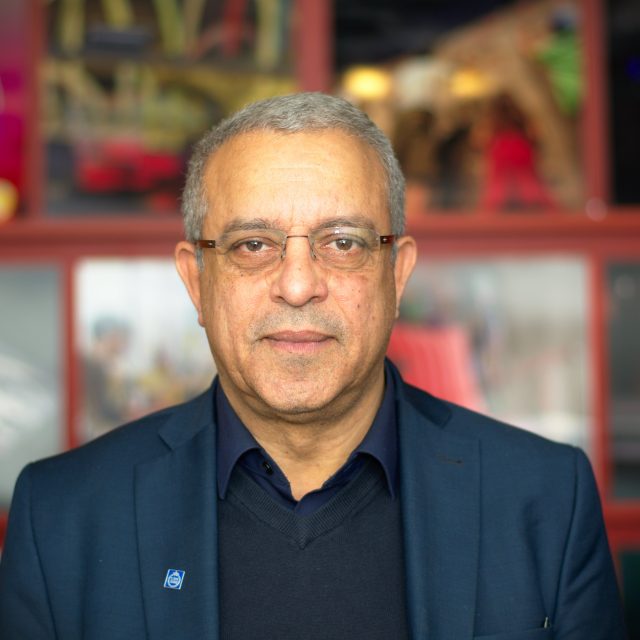
Seif Haridi is a Professor at KTH Royal Institute of Technology in Stockholm, Sweden, specializing in parallel and distributed computing systems. He holds dual roles as Chair-Professor of Computer Systems and Chief Scientific Advisor at RISE SICS. His research integrates systems engineering with theoretical foundations, focusing on programming systems, distributed computing, and big data technologies. Key contributions include co-designing SICStus Prolog, the Mozart Programming System, and Apache Flink, as well as leading the development of HOPS, a European big data platform awarded the IEEE Scale Prize 2017. He has led major EU projects like EIT-Digital’s cloud computing initiative and co-founded startups such as LogicalClocks and HiveStreaming. His teaching includes courses on distributed algorithms and peer-to-peer computing at KTH. Notable awards include the European Data Science Technology Innovation 2019. His work spans systems like HOPS, Flink, and Kompics, emphasizing scalability and robustness in distributed environments. Current projects include CDA (Continuous Deep Analytics) and ExtremeEarth for geospatial data analysis. Research interests include distributed algorithms, consensus protocols, and cloud-native systems. His lab’s contributions to scalable storage (e.g., HopsFS) and stream processing (Apache Flink) highlight his impact on both academia and industry.
Claudio Linhares is a Senior Lecturer at Linnaeus University within the Department of Computer Science and Media Technology , Faculty of Technology in Växjö, Sweden. His work bridges theoretical research with practical applications in visualization and human-computer interaction. Teaching: Masters courses in Computational Network Analysis, Information Visualization, and Data Analysis Projects; Bachelor thesis supervision; Industry-focused Visual Analytics training Research: Focuses on information/network visualization, visual analytics, and human-in-the-loop AI with cross-sector applications in forestry and healthcare Projects: Leads the Smart Dat initiative for industrial digitalization and collaborates with the Information and Software Visualization (ISOVIS) research group His recent publications demonstrate interdisciplinary applications of visualization techniques, including fairness-aware urban planning tools and temporal network analysis frameworks. Current work explores topological persistence methods and augmented reality training systems for manufacturing SMEs. Linhares contributes to academic collaboration through active involvement in research groups and industry partnerships, while maintaining a teaching-focused role in both undergraduate and graduate programs.
Dr. Enayat Rajabi is an Associate Professor of Data Analytics at the Shannon School of Business , Cape Breton University , Canada. He also serves as an Adjunct Professor at Dalhousie University and is affiliated with Nova Scotia Health as a scientist. His academic journey included a Ph.D. in Information and Knowledge Engineering from the University of Alcalá, Spain, and he has contributed extensively to machine learning and semantic web domains. Education: Ph.D. in Information and Knowledge Engineering, University of Alcalá, Spain (2015) Master of Software Engineering, Ferdowsi University of Mashhad, Iran (2004) Bachelor of Software Engineering, Razi University, Iran (2001) Dr. Rajabi's research focuses on machine learning , knowledge engineering , and semantic web applications in healthcare and smart cities. His work explores explainable AI frameworks, knowledge graph construction, and data-driven solutions for sustainable transportation and clinical decision support systems. His recent publications highlight trends in knowledge graph integration with large language models for healthcare, graph neural networks , and predictive analytics in urban environments. He has secured significant grants, including the NSERC Discovery Grant and Mitacs Research Training Award , to advance these domains. Scientific Contributions: NSERC Discovery Grant (2020-2025) - Semantic Web Analysis over Nova Scotia Open Data ($156,000) New Health Investigator Grant (2022-2024) - Machine Learning for ALC Patients ($97,418) Mitacs Globalink ($4,250) - Graph Neural Networks CBU RISE grants for Explainable Clinical Decision Support Systems and Multi-Label Text Classification Dr. Rajabi has mentored numerous research assistants across projects and maintains active collaborations with institutions in Canada, Spain, and Iran. His technical expertise spans Python, Tableau, Databricks, and PySpark, with teaching responsibilities in Predictive Analytics , Data Visualization , and Quantitative Methods .
Tove Helldin is a Senior Lecturer at the School of Informatics, University of Skövde, Sweden. Her research focuses on anomaly detection , topic modeling , and human-computer interaction , particularly in telecommunications networks and decision support systems . She has led projects in AI for climate adaptation and future sepsis diagnostics , emphasizing team effectiveness and trust calibration in automated systems. PhD in Computer Science (2014), University of Skövde Licentiate in Computer Science (2012) MSc in Computer Science (2009) Her scientific work spans interactive machine learning , visualization of causal relationships , and transparency in military threat evaluation . She has contributed to automotive UI design and fighter aircraft automation , with publications in venues like ACM Computing Surveys and IEEE conferences. Notably, her work explores topic modeling applications in network monitoring and interpretable AI frameworks.