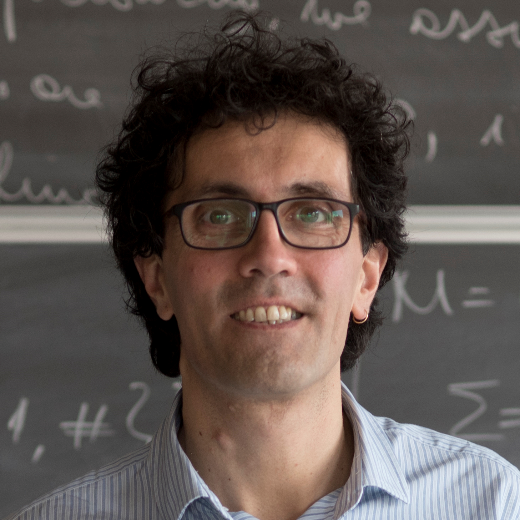
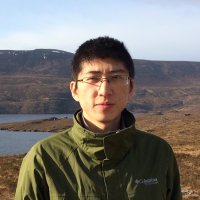
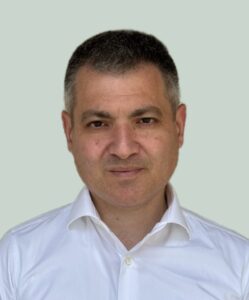
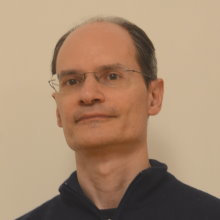
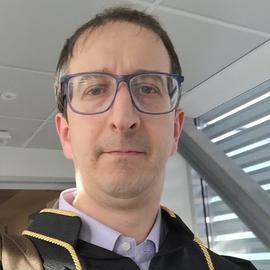
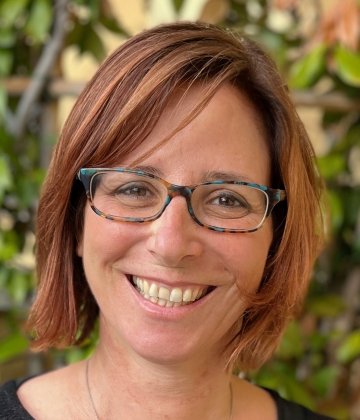
Barbara Caputo is a Full Professor at Politecnico di Torino, leading the VANDAL Laboratory and directing the AI@PoliTo Interdepartmental Lab. She holds a double affiliation with the Italian Institute of Technology (IIT) and has held roles at Idiap-EPFL and Sapienza University. Her research focuses on AI, computer vision, domain adaptation, and federated learning. She contributes to national AI policy, including the Italian Strategy on AI and the National PhD on AI for Industry 4.0. She is an ERC Laureate and ELLIS Fellow, co-founding ELLIS society. Her work spans visual place recognition, action recognition, and cross-domain learning. Education: PhD in Computer Science from KTH Royal Institute of Technology (2005). Major roles include Rector’s Advisor on AI at PoliTo, Board Member of ELLIS, and coordinator of the AI & Industry 4.0 vertical in the National PhD program. Awards include ERC Laureate (2017), ELLIS Fellow (2019), and Inspiring Fifty Italy (2018). Her research emphasizes federated learning, domain adaptation, and AI ethics. Recent articles explore domain generalization, resource-efficient federated models, and AI-environment interactions. She collaborates with institutions like MUR, CNR, and the European Commission on AI policy and tech initiatives.
Begüm Demir is a Professor and Head of the Remote Sensing Image Analysis (RSiM) Group at the Faculty of Electrical Engineering and Computer Science, Technische Universität Berlin. Her research focuses on scalable machine learning methods for remote sensing and Earth observation data analysis. Previously, she held positions at the University of Trento, where she was promoted to Associate Professor in 2017 and received an ERC Starting Grant for her BigEarth project. Key research interests include: Deep learning for satellite image analysis Big data processing in geosciences Earth observation data democratization Noise-robust machine learning models Recent projects highlight collaboration with Huawei in wireless communication-EO integration and leadership in initiatives like Agora-EO and TreeSatAI . Awards include the 2018 IEEE GRSS Early Career Award. Grants include funding from the German Research Foundation (DFG) and Federal Ministry of Education and Research (BMBF). Active in editorial roles for IEEE Geoscience and Remote Sensing Letters, and guest editorships in leading journals. Publicly accessible datasets like BigEarthNet and code repositories enhance her contributions to open science.
Marco Letta is a Tenure-Track Assistant Professor at the Department of Social and Economic Sciences , Sapienza University of Rome. His research focuses on economic development , regional economics , policy evaluation , and applied econometrics , with a strong emphasis on climate change impacts, food security, and machine learning applications in economic policy. University: Sapienza University of Rome Department: Department of Social and Economic Sciences Email: marco.letta@uniroma1.it His recent work explores the climate migration nexus , household resilience , and policy targeting , often leveraging machine learning and empirical econometric methods . Publications span topics such as local inequalities during the COVID-19 crisis , temperature shocks in rural Tanzania , and machine learning applications in state aid regulation . Notable trends in his research include: Integration of machine learning with traditional econometric techniques Focus on climate resilience and migration patterns Analysis of policy impacts in developing economies Investigation of local mortality estimates during global crises Development of cross-country empirical frameworks Current projects include assessing agrifood system vulnerabilities and refining counterfactual policy evaluation methodologies.
Diego Calvanese is a Full Professor in Computer Engineering at the Faculty of Engineering of the Free University of Bozen-Bolzano, Italy. He serves as Spokesperson of the Institute of Computer Science and Artificial Intelligence and Director of the Smart Data Factory technology transfer lab at NOI Techpark. As Coordinator of the Intelligent Integration and Access to Data (In2Data) research group, part of the Research Centre for Knowledge and Data (KRDB), he leads significant research initiatives in knowledge representation and data management. Calvanese's research focuses on virtual knowledge graphs for data access and integration, ontology-based data access, description logics, semantic web technologies, graph data management, and verification of data-aware processes. His work bridges theoretical foundations with practical applications through the Ontop framework, which enables SPARQL query answering over OWL 2 QL ontologies connected to external data sources. His research has substantial practical impact, powering the South Tyrol Open Data Hub Knowledge Graph and supporting numerous European and national research projects. With more than 400 refereed publications and over 39,000 citations (h-index 80), Calvanese's recent work demonstrates continued leadership in virtual knowledge graphs, ontology-based data federation, explainable AI through knowledge representation, and integration of complex data types including 3D city models and raster data. His publications show a clear trajectory from theoretical foundations toward increasingly practical and applied research addressing real-world data integration challenges across multiple domains. ACM Fellow (2019) EurAI Fellow (2015) AAIA Fellow Program Chair of PODS 2015 and KR 2020 General Chair of ESSLLI 2016 Calvanese has secured significant research funding through numerous competitive projects including EU H2020 INFRAEOS Project (INODE), Italian PRIN Project (HOPE), FESR Project (IDEE), and EU FP7 IP Project (Optique), totaling close to 6.4M Euro. As an originator and co-founder of Ontopic, the first spin-off of the Free University of Bozen-Bolzano, he has successfully translated research into commercial applications. He serves as Associate Editor of Artificial Intelligence (AIJ) and has participated in over 200 program committee roles for international conferences. As Director of the Smart Data Factory technology transfer lab and coordinator of the In2Data research group, Calvanese bridges academic research with industry applications, focusing on practical implementations of knowledge graph technologies. His work with the KRDB Research Center has established Bozen-Bolzano as a significant hub for knowledge representation and data management research in Europe.
Benedetta Giovanola is a Full Professor at the University of Macerata (UniMC) in the Department of Political Sciences, Communication and International Relations. She holds the Jean Monnet Chair 'Ethics for Inclusive Digital Europe' (funded by the EU) and is a Visiting Professor at Tufts University, USA. She also serves as Adjunct Professor of 'Economic Philosophy and Business Ethics' at the Catholic University of Milan. Her roles include Director of the postgraduate course on 'Digital Ethics, Law, Technologies' and member of the executive board of the 'Cybersecurity, Cyber Risk and Data Protection' program, both jointly run with the Polytechnic University of Marche. Current roles: Jean Monnet Chair, Full Professor, Visiting Professor at Tufts, Adjunct Professor at Catholic University Milan. Leadership: Founder of GAIA (AI Ethics and Governance spin-off), Principal Investigator (PI) in EU-funded projects like EthicAI4CARE and REINITIALISE. Professional memberships: Member of the executive board of SIFM (Italian Association for Moral Philosophy), past Deputy Rector at UniMC (2016-2022). Research focuses on digital ethics, AI ethics, media ethics, public ethics, social and global justice. She leads projects such as ENDE (European Network on Digitalization and E-Governance) and publishes extensively on AI ethics in healthcare, cultural heritage, and business contexts. Her work emphasizes ethical frameworks for trustworthy AI and fairness in algorithmic systems. Awards and recognition include the Jean Monnet Chair, and her research has been featured in journals like AI & Society, Computer Vision and Image Understanding, and IEEE Transactions on Technology and Society. She also contributes to policy initiatives and ethical guidelines for emerging technologies.
Dr Ting Sun is an Associate Professor in Climate & Meteorological Hazard Risks at University College London , Department of Risk and Disaster Reduction. He earned his BEng (2009) and PhD in Hydrology (2013) from Tsinghua University , followed by a visiting period at Princeton University (2011–2012). After postdoctoral appointments at Tsinghua and the University of Reading , he held a NERC Independent Research Fellowship at Reading (2017–2022) before joining UCL in May 2022. Education PhD in Hydrology, Tsinghua University, 2013 BEng in Hydraulic Engineering, Tsinghua University, 2009 Visiting PhD Student, Princeton University, 2011–2012 Research Interests Dr Sun’s work converges on urban climate modelling across scales —from neighbourhood blocks to global grids—focusing on the impacts of weather and climate extremes such as heat waves and extreme rainfall in cities. He is the lead developer of the Surface Urban Energy and Water balance Scheme (SUEWS) and its Python wrapper SuPy , developed in collaboration with Prof Sue Grimmond’s micromet group. He also contributes as a core member of the Urban Multi-scale Environmental Predictor (UMEP) development team. His multidisciplinary expertise integrates hydro-climate dynamics, computational modelling, machine learning, built-environment processes, and public-health linkages . Research Trends from Recent Publications Across the 15 most recent articles, a clear trajectory emerges from high-resolution urban-process modelling toward integrated socio-environmental assessments . Studies published in 2024–2025 couple atmospheric models (WRF-SUEWS) with global building-morphology datasets (GLAMOUR) to quantify how cities alter rainfall patterns, temperature sensitivity, and heat-related mortality. Earlier works progressively refined SUEWS’s physical parameterisations and Python accessibility, while recent outputs leverage deep-learning remote-sensing tools (SHAFTS) and hybrid hydrological-neural architectures to deliver actionable insights for urban planning and climate adaptation. Scientific Awards & Fellowships NERC Independent Research Fellowship , University of Reading, 2017–2022 HEA Fellowship , University College London, 2023 Professional Service & Editorial Roles Topic Editor , Geoscientific Model Development (from 2025) Editorial Board Member , Scientific Data (from 2024) Peer review and consultancy for journals, conferences, and policy bodies Supervision of taught-course projects and research degrees External examining and mentoring Labs, Teams & Collaborations Dr Sun leads and collaborates within the UCL Department of Risk and Disaster Reduction , working closely with the micromet group at the University of Reading (Prof Sue Grimmond) on SUEWS/SuPy development. He is an active member of the UMEP consortium and maintains extensive international collaborations spanning Tsinghua University, Princeton, and numerous European research centres, underpinning a vibrant, interdisciplinary research network focused on urban climate resilience.
Paolo Trunfio is a Professor of Computer Engineering at the University of Calabria, Italy, and co-founder of DtoK Lab S.r.l., an academic spin-off focused on data analysis and distributed systems. He holds a Ph.D. and is affiliated with the DIMES Department, specializing in big data, cloud computing, and high-performance computing (HPC). His research emphasizes scalable data analysis frameworks, edge-cloud continuum solutions, and machine learning applications for social media and disaster monitoring. Trunfio serves as an Associate Editor for ACM Computing Surveys and Journal of Big Data , and is on the editorial boards of several journals including Future Generation Computer Systems . He has authored four influential books, including Programming Big Data Applications (2024) and Data Analysis in the Cloud (2015). His work spans distributed systems, IoT-based smart objects, and exascale computing. Notable projects include the EU-funded eFlows4HPC and ASPIDE initiatives, which focus on HPC workflows and exascale programming models. Trunfio’s publications (over 200 papers) address topics like social media analytics, energy-efficient P2P networks, and parallel data mining. He leads research in urgent computing for disaster response, edge-cloud integration for urban mobility, and AI-driven data analysis. His contributions to cloud frameworks (e.g., JS4Cloud, ParSoDA) and HPC libraries (e.g., DCEx) highlight his expertise in bridging theory and practice in distributed computing ecosystems.
Enrico Macii is a Full Professor at the Politecnico di Torino, affiliated with the Interuniversity Department of Regional and Urban Studies and Planning (DIST) and the Department of Control and Computer Engineering (DAUIN). He leads the Electronic Design Automation (EDA) research group and holds key roles as Scientific Advisor for the Politecnico-STMicroelectronics partnership and Scientific Contact for the European Chips Joint Undertaking. Research Interests: His work spans digital circuits and systems, energy efficiency, smart cities, Industry 4.0, and smart manufacturing. He focuses on embedded and cyber-physical systems, low-power design, neuromorphic computing, AIoT, and sustainable urban development. Recent Publications: His recent research demonstrates strong trends in edge AI, neuromorphic computing, and smart energy systems. Articles highlight innovations in low-power hardware acceleration, federated learning, physics-informed AI, and digital twin applications for urban and industrial systems. There is a clear emphasis on deploying AI efficiently on constrained devices and integrating physical models with machine learning. J. William Fullbright Fellowship (1993) Best paper award IEEE European Design Automation Conference (1996) Best paper award ACM/IEEE Great Lakes Symposium on VLSI (2008) DAC Service Award (2014) IEEE Fellow (2006) DATE Fellow (2014) Advising and Grants: He has supervised over 25 PhD students in computer engineering, AI, and urban systems. His research is funded by major EU programs (Horizon 2020, PNRR, KDT JU), national (PRIN, FAR), and regional grants, as well as industrial contracts with STMicroelectronics, Michelin, and Cefriel. He leads numerous high-impact projects in smart manufacturing, energy efficiency, and digital twins. Labs and Teams: He is a core member of the EDA Group, an interdepartmental research team at Politecnico di Torino focusing on VLSI-CAD, bioinformatics, smart cities, and Industry 4.0. He also contributes to IAM@PoliTo (Integrated Additive Manufacturing) and leads multiple EU and national research consortia.
Marco Tubino is a Full Professor in the Department of Civil, Environmental and Mechanical Engineering at the University of Trento, where he serves as Department Director since 2012. Previously, he was Dean of the Faculty of Engineering (2005-2012) and has held academic positions since 1990, including Associate Professor at the University of Genoa before joining Trento in 1994. Education: 1977: Diploma di Maturità Classica, Liceo Statale "Andrea D'Oria", Genoa 1982: Laurea in Chemical Engineering (with honors), University of Genoa 1986: PhD in Hydrodynamics, University of Padua Research Focus: Tubino's work centers on fluid mechanics and fluvial morphodynamics , with expertise in sediment transport, tidal hydrodynamics, ecohydraulics, and environmental fluid mechanics. His research integrates field observations, mathematical modeling, and experimental studies to address river bifurcations, meandering dynamics, debris flows, and climate change impacts on alpine systems. Recent work emphasizes AI applications for river prediction and waste management sustainability. Publication Trends: His 2023-2025 publications reveal intensified focus on river bifurcation mechanics, permafrost-affected Arctic streams, and machine learning for meander migration prediction. Key themes include sediment partitioning in deltas, climate change impacts on fluvial systems, and life-cycle assessment of waste-to-energy technologies, reflecting growing interdisciplinary integration with environmental engineering. Scientific Recognition: Wiley-Blackwell Award for best paper in Earth Surface Processes and Landforms (2010) Academic Leadership: Tubino coordinates the Environmental Fluid Mechanics and Morphodynamics Research Group (GIAMT) and has directed Trento's PhD program in Environmental Engineering (2000-2007). He has secured numerous research grants for environmental impact studies, fluvial modeling projects, and international collaborations including dual-degree programs with Karlsruhe University. Research Infrastructure: Leads the GIAMT group specializing in experimental flume studies, numerical modeling of river systems, and field investigations of braided and meandering rivers, with recent expansions into AI-driven morphodynamic prediction and climate change impact assessment.
Massimo Poncino is a Full Professor at the Department of Control and Computer Science (DAUIN) within the Faculty of Engineering at Politecnico di Torino. He serves as Scientific Advisor for the STMicroelectronics partnership and coordinates basic engineering subjects. A Senior Member of IEEE since 2012 and Fellow since 2012, he has served on editorial boards for IEEE Transactions on Computer-Aided Design, IEEE Design & Test of Computers, and ACM Transactions on Design Automation. Education: Laurea in Electronic Engineering (1989) and PhD in Computer and Systems Engineering (1993) from Politecnico di Torino Academic Career: Visiting Scientist University of Colorado (1993-1994), Researcher at Politecnico di Torino (1995-2001), Associate Professor at University of Verona (2001-2004), Full Professor at Politecnico di Torino (2006-present) His research focuses on energy-efficient digital systems , including design automation of SoCs, hardware-aware AI, battery management, cyber-physical systems, and embedded systems. Recent publications highlight advancements in digital twins for batteries , low-power neural network deployment , and IoT privacy . Scientific Awards: Recognition of Service Award - ACM (2013) Certificate of Appreciation - IEEE Circuits and Systems Society (2006, 2008, 2009) IEEE Fellow (2012-) Research Involvement: EU H2020, VI/VII Framework Programs evaluator Scientific Director for projects: Approxim@ction, EMBAI, DISLO-MAN, DAMASCO Member of EDA research group Teaching: Course director for Energy Management for IoT (2019-2025) Lecturer for Computer Science courses (2003-2025)
Daniele Fusi is a Lecturer at the Department of Humanities, Ca' Foscari University of Venice, with a focus on Digital Humanities and Computational Philology. He teaches courses on XML databases and digital/public humanities, bridging classical studies with modern technology. University: Ca' Foscari University of Venice Department: Department of Humanities His research spans digital edition frameworks, metrical analysis, and XML markup for classical texts. Recent works explore AI applications in textual dynamics and forensic linguistic tools for legal corpora, demonstrating interdisciplinary approaches between humanities and computer science. Notable projects include: EpiSearch for ancient inscriptions Chiron framework for metrical analysis AttiChiari digital corpus He actively publishes in journals like Journal of Data Mining and Digital Humanities and Rivista di Cultura Classica e Medioevale , with over 20 years of contributions to digital philology, epigraphic databases, and computational linguistics.
Luca Di Gaspero is an Associate Professor of Information Technology at the University of Udine, specializing in metaheuristic optimization techniques. His research enhances combinatorial optimization through hybridization of algorithms for scheduling, routing, and industrial applications. Research spans artificial intelligence in optimization, scheduling algorithms for manufacturing/healthcare, and metaheuristic framework development. Recent publications focus on LLMs in optimization, parallel batch scheduling, and energy-efficient manufacturing. Key Contributions: Developed EasyLocal++ framework for local search algorithms Advanced multi-neighborhood simulated annealing techniques Applied metaheuristics to healthcare logistics and emergency services
Marco Aldinucci is a Full Professor and Head of the Parallel Computing group at the University of Torino's Computer Science Department. He leads the HPC Key Technologies and Tools (HPC-KTT) national lab under CINI, involving 38 Italian universities. His expertise spans parallel programming models, HPC systems, federated learning, and energy-efficient computing. Aldinucci has secured over €10M in EU research funding, contributed to frameworks like Fastflow and Streamflow, and pioneered initiatives like the HPC4AI lab and the CINI HPC-KTT lab. His research focuses on advancing exascale computing, cloud-HPC integration, and AI-driven medical solutions. Notable projects include the Gaia AVU-GSR solver for exascale systems and the DeepHealth Toolkit for medical AI. He has held governance roles in EuroHPC and chairs the Observatory on Trends and Applications of Supercomputing in Italy. Aldinucci’s publications (150+) address parallel algorithms, distributed learning, and sustainable HPC infrastructure. His work has been recognized with awards from HPC Advisory Council, NVIDIA, IBM, and Autodesk. Current initiatives include the Software & Integration lab at the Italian National HPC Centre (ICSC) and leadership in the OpenScience working group at Torino. His advising includes Iacopo Colonelli, whose thesis won CINI’s 2023 best award. He actively engages in EU projects, workflow systems, and standards for hybrid computing environments. Aldinucci’s labs and collaborations drive innovations in HPC portability, energy efficiency, and AI scalability.
Paolo Buono is Associate Professor at the Department of Computer Science, University of Bari Aldo Moro, Italy. He holds a PhD in Computer Science with specialization in Visual Data Analysis. His research focuses on Information Visualization, Visual Analytics, Human-Computer Interaction, and Mobile Applications. Co-founder and CEO of LARE (2010), a university spinoff providing real-time surgical support through audio-video telestration Member (since 2002) and computer science coordinator at METEA Research Center for environmental protection Visiting scientist at AVIZ (France), University of Maryland (USA), and Fraunhofer IPSI (Germany) His work spans multiple application domains including: Cultural Heritage through interactive exploration systems Healthcare with smart therapeutic devices Environmental Monitoring via CET system IoT-based Smart Interactive Experiences He has contributed to: Dynamic hypergraph visualization techniques End-User Development frameworks (EUDroid) Usability evaluation methodologies Mobile health applications As project leader, he has coordinated: EU-funded VisMaster Coordination Action (2008-2010) Italian Ministry-funded LOGIN project (2014-2015) Apulia Region environmental projects His professional engagements include: Co-chair roles at INTERACT, AVI, IS-EUD conferences Program committee participation in VIS series and HCI conferences Member of ACM, IEEE, and SIGCHI Italy
Alessia Melegaro is a Full Professor of Demography and Social Statistics at Bocconi University's Department of Social and Political Sciences, and a Research Associate at the Dondena Centre for Research on Social Dynamics and Public Policy. She holds a Ph.D. in Quantitative Epidemiology from the University of Warwick, UK. Her work bridges demography, epidemiology, and public health, focusing on policy modeling, vaccine strategies, and healthcare economics. She directs Bocconi's Master in Data Science and Business Analytics and leads the Bocconi Covid Crisis Lab, a multidisciplinary initiative analyzing the pandemic's societal impact. As Principal Investigator of an ERC Consolidator Grant, she studies human behavior's role in infection spread. Her research explores optimal vaccination programs, demographic-behavioral interactions, and AI-driven health resource allocation. Notable contributions include analyzing social contact patterns during the pandemic, vaccine acceptance dynamics, and global health equity in vaccine distribution. Her work emphasizes interdisciplinary collaboration, combining mathematical models with real-world data to inform public health policies. Recent studies highlight behavioral interventions for mask-wearing and influenza vaccination uptake among corporate workers.