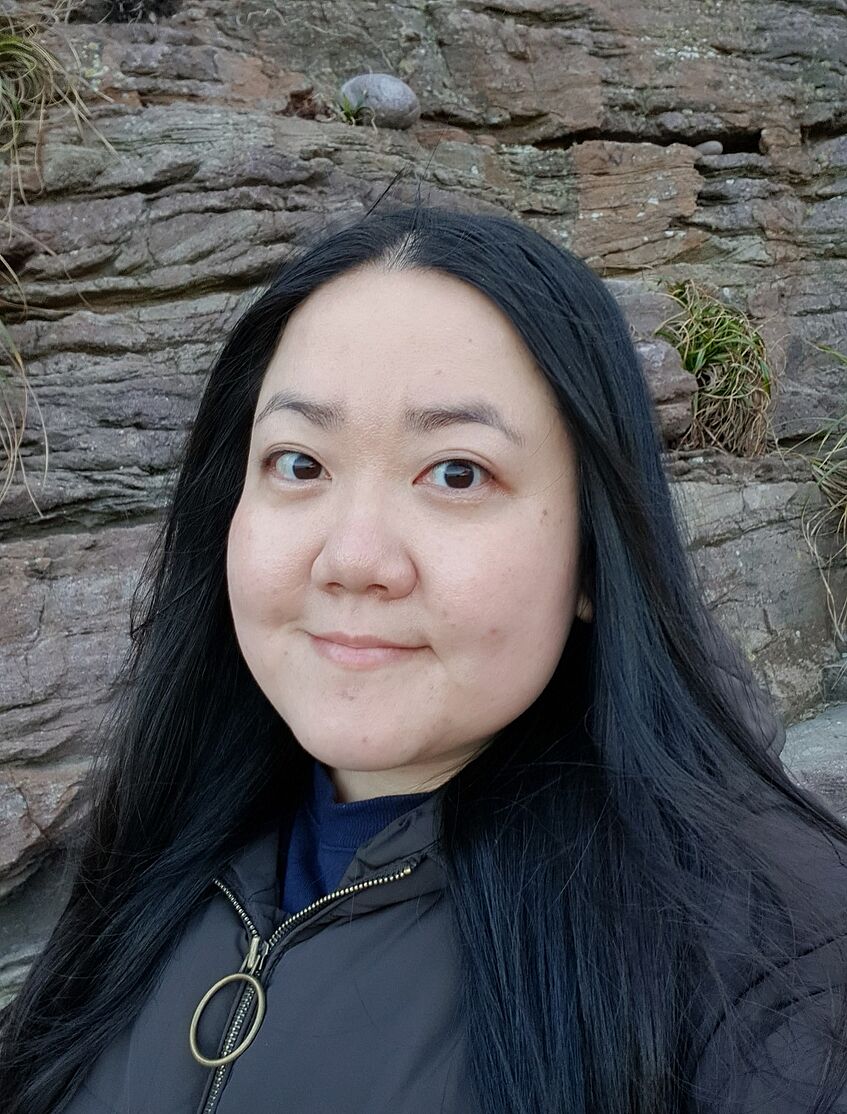
Deepak Kumar Chinnaswamy is a Researcher at the Institute for Geosystems and Bioindication, Faculty of Architecture, Civil Engineering and Environmental Sciences, Technische Universität Braunschweig. His work focuses on analyzing climate systems through geological and biological indicators to understand historical and contemporary climate patterns. Research Focus: Dr. Chinnaswamy specializes in reconstructing past climate conditions and modeling future scenarios. His interdisciplinary approach integrates geoscientific data with climate science to study: Long-term climate variability and dynamics Paleoenvironmental reconstruction techniques Computational climate modeling frameworks Anthropogenic impacts on climate systems
Magnus Bruaset is a Professor and Director of the Software & AI Department at Simula Research Laboratory , with expertise in computational geosciences, numerical methods, and quantum computing. His work spans geological modeling, PDE solvers, and software development frameworks like Diffpack. Education : PhD in preconditioned iterative methods for elliptic problems (1992), Master's in preconditioning symmetric systems (1988). Research Interests : Focus on numerical analysis, GPU acceleration of geological simulations, stochastic modeling for uncertainty quantification, and quantum computing strategy. Key projects include Hamilton-Jacobi solvers, particle-based flow models, and contributions to digital contact tracing systems. Advising & Collaboration : Co-developed PhD training workshops for scientific communication and contributed to industrial-academic partnerships. Collaborated with institutions including ChevronTexaco, Wolfram Research, and University of Oslo.
Eun Young Lee, Dr.rer.nat., is a Senior Research Fellow at the Institute of Geology, Faculty of Geosciences, Geography and Astronomy, University of Vienna. She has maintained a productive research career since completing her doctoral studies at the University of Vienna (2010-2015) in Sedimentary Basin Analysis. Her research focuses on Earth system evolution with interactions of geological/geodynamic processes and climate changes. Her primary research interests include multidisciplinary investigation into Earth history and geosystem evolution, sedimentary basin analysis and modeling in an Earth system framework, and the interplay of tectonics, sedimentation, and paleo-environment/climate. She has developed numerical techniques and software for geoscientific data analyses and specializes in interpretation and correlation of geologic, petrophysical, geophysical, and geochemical data. Her recent work increasingly addresses anthropogenic impacts on Earth and environmental systems. Analysis of her publication record shows consistent research output across multiple geological settings including the Gulf of Suez, Vienna Basin, South China Sea, and Australian continental margins. Her work integrates field observations with numerical modeling approaches, particularly in sedimentary basin analysis. She has made significant contributions to understanding Cretaceous climate and tectonics through her participation in IODP expeditions. Young Geologist Award of Korea (2020) ECORD MagellanPlus Award (2017) EKC Best Poster Award (2014) Brain Pool Fellowship (2017-2021) Multiple IODP Expedition Post-cruise Research Grants Dr. Lee has secured substantial research funding including the Scientific & Technological Cooperation of Austria and South Korea (2022-2024), CNU Research Grant (2020-2021), and WISET Research Grant (2020-2021). She has served as Guest Professor at the University of Vienna teaching Sedimentary Basin Analysis (2022) and Basin Analysis (2021). She actively collaborates with Michael Wagreich's Lab at the University of Vienna and has participated in multiple International Ocean Discovery Program (IODP) expeditions as a shipboard scientist.
Alexander Brenning is a Full Professor in the Department of Geography at Friedrich Schiller University Jena, where he leads research in spatial statistics and geocomputation. He previously served as Dean of the Faculty of Chemistry and Earth Sciences (2017-2020) and remains active in academic governance. His research focuses on: Developing spatial statistical methods for environmental modeling Machine learning applications in geomorphology and hydrology Mountain permafrost dynamics, particularly in the Andes Landslide susceptibility assessment and risk modeling Precision agriculture through geospatial analysis Recent publications demonstrate strong emphasis on: Hybrid machine learning approaches to hydrological systems Climate change impacts on geomorphological processes Reproducibility in geoscientific data analysis Remote sensing applications in cryosphere studies He teaches courses in geographical information systems and environmental statistics across undergraduate and graduate levels.
Tao Zheng is a Professor in the Department of Geography & Environmental Studies within the College of Science and Engineering, specializing in atmospheric and environmental research with a focus on climate-relevant modeling systems. His academic credentials include: Ph.D., University of Maryland, 2007 M.A., East Carolina University, 2003 B.S., Dalian University of Technology, 1996 Professor Zheng's research integrates Atmospheric Modeling, Data Assimilation, and Remote Sensing to address critical climate questions. He develops advanced chemical transport models (MPAS-CO2, WRF-CO2) and creates innovative methods for satellite data integration, particularly in CO2 emissions monitoring and photosynthetically active radiation estimation. His work bridges theoretical modeling with practical environmental applications. Analysis of his 2008-2024 publications reveals a sustained research trajectory in atmospheric CO2 systems, with increasing focus on high-resolution modeling and emissions verification. His work spans atmospheric science, climate modeling, and remote sensing subfields including chemical transport, data assimilation, satellite validation, and radiation physics, consistently targeting improved understanding of greenhouse gas dynamics. He teaches core geospatial courses including Introduction to Cartography and Remote Sensing of the Environment. His active publication record in high-impact journals (Geoscientific Model Development, Environmental Research Letters) demonstrates ongoing research productivity and likely active grant funding. Graduate students in his department have opportunities to engage in cutting-edge atmospheric modeling projects with real-world climate applications.
Adam Izdebski is Professor of Human Ecology at the Max Planck Institute of Geoanthropology in Jena, where he leads the PS&H Research Group as a Max Planck Independent Research Group Leader (W2 position) since 2018. He maintains an Associate Professor position at Jagiellonian University's Institute of History in Krakow (on leave since 2012). His academic journey includes prestigious appointments at the Institute for Advanced Study in Princeton (2017), Princeton University (2016), and Freie Universität Berlin as a Humboldt Fellow (2011-2012). His research centers on interdisciplinary environmental history, integrating palaeoclimatology, palaeoecology, and historical analysis to examine societal responses to environmental change across Greek/Roman Antiquity, the Middle Ages, and Early Modern Europe. Key methodologies include aDNA analysis, isotope studies, and complex systems theory applied to historical crises like the Black Death and Justinianic Plague. His work bridges humanities and natural sciences through consilience frameworks that synthesize archaeological, historical, and geoscientific data. His publication trends reveal a consistent focus on interdisciplinary climate-society interactions, with recent work emphasizing quantitative methods in historical ecology and pandemic impacts. Major contributions include reconstructions of land-use changes during the Black Death (Nature Ecology & Evolution 2022), methodological frameworks for interdisciplinary environmental history (Annales HSS 2022), and analyses of Byzantine socio-ecological systems. Izdebski's scholarly recognition includes multiple edited volumes with Springer and Cambridge University Press, though formal awards aren't explicitly documented. His monograph Ein Vormoderner Staat als Sozioökologisches System received notable reviews in The Journal of Interdisciplinary History and Byzantinische Zeitschrift . As leader of the PS&H Research Group, he directs collaborative projects integrating historical and scientific approaches to environmental crises. His work informs contemporary climate action through historical analogues, particularly regarding SDG 13 (Climate Action) implementation. Current initiatives focus on Mediterranean Holocene climate-human interactions and pandemic resilience frameworks.
Anette Eltner is a Junior Professor for Geosensor Systems at the Technical University of Dresden since 2021. Her work focuses on developing innovative methods for environmental monitoring using AI and remote sensing technologies. She leads research projects that aim to improve flood forecasting systems and monitor geomorphological changes through advanced imaging techniques. Her educational background includes: PhD in Geography from TU Dresden (2016), awarded by the German working group for geomorphology Diploma in Geography from TU Dresden (2010) with minors in Photogrammetry/Remote Sensing, Soil Science and Hydrology Professor Eltner's research spans multiple cutting-edge areas in geospatial technology and environmental science. She specializes in UAV photogrammetry and remote sensing, developing methods for precise geomorphological and hydrological monitoring. Her work integrates artificial intelligence with environmental sciences to create more accurate predictive models for natural processes. She focuses particularly on erosion processes in fragile landscapes and has pioneered techniques for spatio-temporal high resolution topography using laserscanning, structure-from-motion, and time-lapse imaging. Her innovative approach to image processing enables automatic feature detection and tracking in geographic applications, while her development of low-cost geosensor systems makes advanced monitoring accessible in resource-limited settings. Her publication record demonstrates consistent advancement from foundational photogrammetric techniques to sophisticated AI integration for real-time environmental assessment. The research shows increasing emphasis on practical flood warning applications and dynamic landscape monitoring, particularly for small waterways where traditional monitoring systems are lacking. Her notable scientific achievements include: PhD thesis award from the German working group for geomorphology (AK Geomorphologie) TUD Young Investigator status (recognizing excellent, independent junior research group leaders) Editorial board membership for Geoscientific Instrumentation, Methods and Data Systems and Photogrammetric Record Professor Eltner leads the "Artificial Intelligence for Flood Warning (KIWA)" project, evaluating camera-based water level monitoring systems along small tributaries of the Elbe River in Saxony. Her research group develops AI-supported methods to analyze water surface imagery and predict flood events in small waterways. She has secured funding for projects in Germany and internationally, including current work in Oman combining cameras and seismic sensors to monitor rare flood events in wadis. Her team is developing systems that allow sensors to communicate with each other for dynamic environmental monitoring. Her laboratory work focuses on developing cost-effective monitoring solutions using accessible technology like Raspberry Pi computers and standard cameras. She has demonstrated that these low-cost systems can effectively monitor significant landscape changes, making advanced environmental monitoring more widely available. Current projects involve creating 3D point cloud analysis methods that incorporate temporal components to better predict dynamic processes like soil erosion, rockfalls, and landslides.