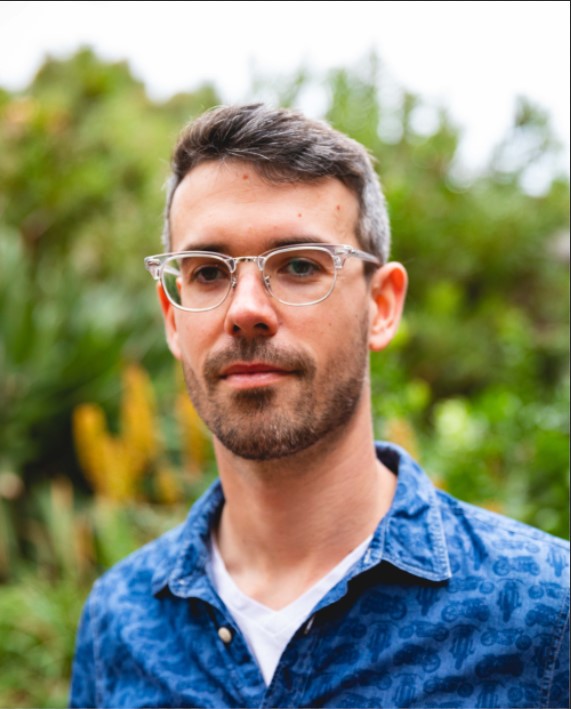
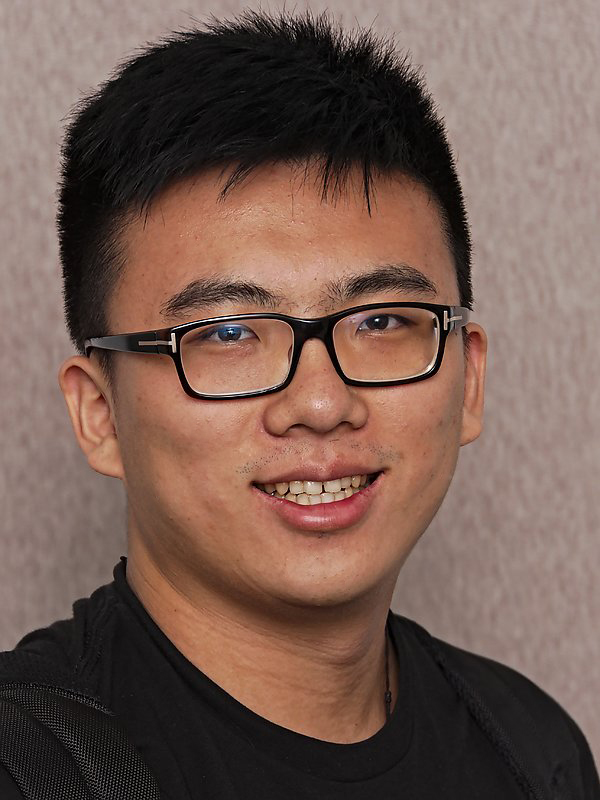
Martijn Kuller is Assistant Professor of Nature-Based Solutions and Water at Utrecht University's Copernicus Institute of Sustainable Development. He holds a PhD in Urban Water Management from Monash University, an MSc in Urban Environmental Management from Wageningen University, and a BSc in Economics and Policy. Research expertise includes: Nature-based solutions for urban water management Spatial planning support systems (SSANTO tool developer) Climate adaptation strategies for cities Publications demonstrate strong focus on blue-green infrastructure planning, flood vulnerability assessment, and decision-making frameworks for sustainable urban development, with recent work in Colombian cities. Awarded the prestigious Marie Sklodowska-Curie Fellowship for transnational research. International experience includes positions at Eawag (Switzerland), Université Laval (Canada), and University of New South Wales (Australia), working on projects ranging from flood early warning systems to stormwater quality modeling.
Denis Fougerouse is a Senior Lecturer at Curtin University’s School of Earth and Planetary Sciences (EPS), specializing in structural and economic geology with a focus on nanogeoscience and advanced characterization techniques. He leads research using atom probe tomography (APT) to study mineral interfaces, fluid dynamics, and critical metal distribution. His work spans asteroid mineralogy (e.g., Ryugu samples), ore genesis, and nuclear geology (e.g., Chernobyl zircon re-equilibration). Fougerouse is a key member of Curtin’s Geoscience Atom Probe Facility, advancing applications of APT in geosciences. Research interests include gold remobilization mechanisms, sulfide chemistry, and shock metamorphism. He has contributed to landmark studies on pyrite microtextures, xenotime geochronology, and nanoparticle transport in gold deposits. Fougerouse’s awards include the 2024 Mineralogical Society of America Award for pioneering nanoscale mineral analysis. His interdisciplinary collaborations span planetary science, environmental geochemistry, and materials science, reflecting his role at the forefront of geoscience innovation.
Amir AghaKouchak is a Chancellor’s Professor in the Department of Civil and Environmental Engineering at the Samueli School of Engineering, University of California, Irvine (UCI). He directs the Center for Hydrometeorology and Remote Sensing (CHRS) and focuses on interdisciplinary research at the intersection of hydrology, climatology, statistics, and remote sensing. B.Sc. and M.Sc. in Civil Engineering (Water Resources), K.N. Toosi University of Technology, Tehran, Iran (2001, 2005) Ph.D. in Civil and Environmental Engineering, University of Stuttgart, Germany (2010) His research aims to leverage satellite data and ground observations to advance modeling of hydrologic extremes (droughts, floods, landslides) and develop decision-support systems for water resources management. Key areas include climate change impacts , stochastic modeling , and the water-energy nexus . Recent publications highlight his work on multi-hazard analysis, groundwater decline, wildfire resilience, and climate projections. Tools like MhAST and MvCAT demonstrate his methodological contributions to copula-based and multi-hazard modeling.
Charles F. Harvey is a Professor in the Department of Civil and Environmental Engineering at the Massachusetts Institute of Technology (MIT), where he investigates hydrology, carbon cycling, and groundwater contamination. His work spans tropical peatlands, arsenic pollution in South Asia, and coastal groundwater dynamics, with field sites in Borneo, Bangladesh, and Vietnam. Education: B.A. in Mathematics (Oberlin College, 1986), M.S. in Applied Earth Science (Stanford University, 1992), Ph.D. in Geological and Environmental Sciences (Stanford University, 1996). Harvey’s research focuses on hydrogeology , carbon sequestration , and contaminant transport . He explores how groundwater flow and biogeochemical processes interact in tropical peatlands and coastal systems, with significant implications for climate change and water security. His recent publications emphasize tropical peatland hydrology , arsenic mobilization , and coastal groundwater exchange , integrating field experiments, remote sensing, and computational models. Scientific Awards AGU Fellow GSA Fellow Meinzer Award (GSA) Prince Sultan bin Abdulaziz International Prize for Water M. King Hubbert Award for Hydrology NSF Young Investigator Award Harvey leads the Harvey Lab , mentoring students and researchers in projects ranging from groundwater arsenic mitigation to coastal marsh biogeochemistry . His work bridges terrestrial and marine systems , addressing critical planetary challenges.
Mohamed Amara is a full-time Professor at the University of Pau and the Pays de l'Adour (UPPA) since 1996, affiliated with the Laboratory of Mathematics and their Applications (CNRS-UMR 5142). He served as its director (1999-2007), Director of the Doctoral School of Exact Sciences (ED211, 2007-2008), and UPPA's Scientific Council Vice-President (2008-2012). He has been UPPA's President since 2012 (re-elected until 2020). Education: Mathematics from University of Algiers (1973), Pierre and Marie Curie University (DEA 1974, Doctorate 1978, State Doctorate 1983) Academic Roles: Research Associate at Ecole Polytechnique (1978-1982), Algerian Electricity and Gas Company (1983-1992), Professor in Algiers (1988-1994), Tunis (1994-1995), and Associate Professor at Paris 6 (1995-1996) His research focuses on numerical simulation of partial differential equations for environmental/energy applications, including mechanics in porous media (petroleum engineering, geoscience), fluid mechanics (aerodynamics, estuarine hydrodynamics), non-Newtonian flows, and wave propagation. Articles highlight expertise in discontinuous Galerkin methods, Helmholtz problems, finite element discretization, and multiphysics systems. He managed 20 doctoral theses and led national mathematics programs at ANR (2007-2011). He chairs the Cocktail association for higher education IT systems and collaborates with INRIA's Magique 3D team (since 2006).
Annie S. Adamian serves as an Associate Professor in the School of Education at California State University, Chico since 2016, with her office located in THMA 437. Her contact details include phone (530-898-4154) and email (aadamian@csuchico.edu). Her academic credentials feature: Ed.D. in International & Multicultural Education (Human Rights Education emphasis), University of San Francisco, 2016 M.A. in Curriculum & Instruction, California State University, Chico, 2010 Single Subject Teaching Credential, California State University, Chico, 2001 B.S. in Geosciences (Science Education concentration), California State University, Chico, 2000 A.A. & A.S. in General Education, Pasadena City College, 1997 Dr. Adamian's research interrogates race evasiveness through the lens of educational equity, examining how teacher/student agency and healing-centered practices can transform relationships and outcomes for oppressed communities. Her work integrates critical race theory with human rights frameworks to challenge systemic inequities across educational settings. Recent publications (2021-2024) reveal consistent focus on dismantling racial hierarchies in diverse contexts—from science classrooms to cafeteria dynamics—with recurring themes of community building, whiteness deconstruction, and participatory action research methodologies. Her scholarship bridges theoretical rigor with practical classroom applications for racial justice.
Dr. Jiaqi Gong serves as Associate Professor in Computer Science and Adjunct Associate Professor in Mechanical Engineering at The University of Alabama's College of Engineering, while directing the Alabama Center for the Advancement of Artificial Intelligence. His academic foundation includes: B.S. in Engineering, China University of Geoscience (2004) Ph.D. in Engineering, Huazhong University of Science and Technology (2010) Dr. Gong's research pioneers human-AI convergence through cyber-physical systems and smart health technologies, developing mobile/wearable platforms to enhance human perceptual, cognitive, and physical capabilities. His work spans artificial intelligence, machine learning, computer vision, and IoT with applications in healthcare, environmental monitoring, and education. The Sensor-Accelerated Intelligent Learning (SAIL) laboratory he founded drives innovation in behavior change interventions, human movement modeling, and educational data mining. Recent publications reveal strong interdisciplinary trends: healthcare AI dominates with medication adherence prediction and surgical classification systems, while environmental applications feature flood-risk communication and drought analysis. His work increasingly integrates generative AI and LLMs across domains, demonstrating methodological innovation in federated learning, knowledge graphs, and explainable storytelling frameworks. Notable recognitions include: Best Student Paper Award, IEEE/ACM Connected Health Conference (2022) Best Student Paper Award, Body Sensor Networks Conference (2019) Data Challenge Win, IEEE Biomedical Health Informatics (2018) Best Paper Award, Body Area Networks Conference (2014) Best Demonstration Award, IEEE Wireless Health Conference (2014) Dr. Gong leads significant funded projects including a $2M CDC/NIOSH grant for first responder safety and $3M NSF funding for hydrologic research. As SAIL laboratory director, he mentors students in developing clinically deployed technologies for multiple sclerosis, dementia, and mental health. Future work focuses on scaling AI applications in chronic disease management and climate resilience through the Alabama AI Center. The SAIL laboratory (founded 2017) operates as a multidisciplinary hub developing wearable/mobile systems for health applications, with active collaborations across medical clinics and engineering departments for real-world deployment of behavior change interventions and movement analysis tools.
Rahul Sarkar is a Postdoctoral Fellow at the University of California, Berkeley, affiliated with the Department of Mathematics . He was previously a Ph.D. student in the Institute for Computational and Mathematical Engineering (ICME) at Stanford University, graduating in 2022 under the advisement of Biondo Biondi and András Vasy. Research Interests : Quantum information theory, inverse problems, machine learning, microlocal analysis, and numerical methods for PDEs. Scientific Contributions : Developed novel quantum computing algorithms and numerical schemes for geophysical imaging, with applications in seismic tomography and quantum signal processing. Teaching : Taught courses at Stanford including Introduction to Quantum Computing and 3D Seismic Imaging , with roles as instructor and course assistant. Awards : Schlumberger Innovation Fellowship (2019-2020). His work bridges mathematical analysis and quantum computation , with a focus on solving real-world problems through interdisciplinary approaches. He has collaborated with institutions like IBM and Schlumberger to apply quantum algorithms to geoscience and financial optimization.
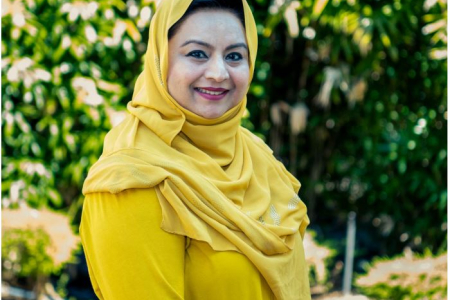
Dr. Farha Sattar is a Lecturer in Education (Mathematics) at the Faculty of Arts and Society, Charles Darwin University. With over thirty years of teaching experience in Mathematics, Science education, GIS, Remote Sensing, and e-Learning technologies at undergraduate and postgraduate levels, Dr. Sattar brings extensive expertise to her academic role. She holds a PhD in Geospatial Science from Charles Darwin University, focusing on Spatial Mathematical Modelling for 3D Gully Mapping and Erosion Quantification. Her educational background includes: PhD in Geospatial Science (Three Dimensional Gully Mapping and Erosion Quantification within a Geoinformatics Framework), Charles Darwin University (2012) Prior academic experience at several Asian and European universities Dr. Sattar's research spans multiple interdisciplinary fields with a strong focus on the intersection of education and technology. Her primary research interests include Mathematics Education, STEM Education, Geoscience Education, Spatial Mathematical Modelling, Drone Technology, Remote Sensing, Geographic Information Systems, and Innovative Pedagogies such as experiential learning and inquiry-based approaches. She has developed expertise in cognitive development, particularly in fostering critical and creative thinking skills through iSTEM approaches. An analysis of Dr. Sattar's recent publications reveals a consistent trajectory toward integrating emerging technologies like drones, augmented reality, and geospatial artificial intelligence into educational contexts. Her work demonstrates a progression from foundational geospatial research on erosion mapping to innovative applications in STEM education. Recent publications increasingly focus on drone technology for educational purposes, spatial data infrastructure for policy development, and computational thinking development through technology-enhanced learning. Dr. Sattar has received numerous accolades for her contributions to education and research: NT Science Week Awards – Inspired NT STEM Hero of the Year award (2021) Long Service Recognition Award (2023) Finalist, CDU Alumni Award (2023) Multiple Best Presentation Awards (2008, 2010, 2017) Australian College of Educators - 2021 College Medal Nominee As a supervisor, Dr. Sattar mentors postgraduate research students including Ayesha Farhan, who is working on "A Framework for Cognitive Development: Fostering Critical and Creative Thinking Skills, Using iSTEM Approach." She actively secures research funding through various projects such as "DBELaSTEM: Drone-Based Experiential Learning and STEM Education," "STEM_D & VR: Youth STEM Learning and Empowerment with Drones and VR," and "CodProg Drone Lab." Her research is supported by grants from NT Government projects and other external funding sources. Dr. Sattar leads the CodProg Drone Lab, an innovative research space exploring drone technology applications in education. She is a certified drone pilot and aeronautical radio operator, which enables her to bridge theoretical knowledge with practical applications. Her work with the "Flying Forward: Drones, STEM Equity, and Indigenous Empowerment" initiative demonstrates her commitment to community engagement and addressing educational disparities through technology.
Jeroen Tromp serves as the Blair Professor of Geology and Professor of Geosciences and Applied and Computational Mathematics at Princeton University, where he also directs the Princeton Institute for Computational Science and Engineering (PICSciE). His work centers on theoretical and computational seismology with applications across Earth and planetary sciences. His research interests focus on imaging Earth's interior through advanced computational techniques. Key areas include surface waves, free oscillations, body waves, seismic tomography, numerical simulations of 3-D wave propagation, and seismic hazard assessment. His group develops open-source software for acoustic, elastic and poroelastic wave propagation, addressing problems in exploration geophysics, regional and global seismology, and helioseismology. Current research trends show strong emphasis on Mars seismology (InSight mission), iron spin crossover in the lower mantle, tilted transverse isotropy in Earth's inner core, and crosstalk-free waveform inversion techniques across multiple scales. Tromp actively mentors graduate students and leads collaborative projects involving seismic wavefield imaging across planetary bodies. His group maintains strong connections with NASA's InSight mission and develops computational frameworks for global centroid moment tensor inversions. The research team operates within the Department of Geosciences, leveraging high-performance computing resources through PICSciE to tackle large-scale inverse problems in seismology.
Maarten de Hoop is the Simons Chair and Professor of Computational and Applied Mathematics at Rice University, part of the George R. Brown School of Engineering. He holds visiting roles at MIT and the Chinese Academy of Sciences. His research spans seismic wave analysis, inverse problems, deep learning, and planetary seismology. He earned his Ph.D. in Technical Sciences from Delft University of Technology (1992), and earlier degrees from Utrecht University. Notable awards include the 1996 J. Clarence Karcher Award and 2001 Fellowship from the Institute of Physics. His work integrates computational mathematics with geophysics, focusing on extracting signal information from large datasets, developing novel inverse scattering methods, and applying deep learning to geoscience challenges. Recent studies include transformer models for in-context learning, semialgebraic neural networks, and seismic waveform foundation models like SeisLM. He leads the Geo-Mathematical Imaging Group, fostering interdisciplinary projects in planetary missions and data-driven discovery.
Dr. Lee Nordt is a Professor and Dean of the College of Arts & Sciences at Baylor University. He holds a Ph.D. from Texas A&M University. His research focuses on Biogeosciences, Paleoclimatology, and Geoarcheology, with expertise in Paleoclimate, Pedology/Paleopedology, Quantitative Geomorphology/Quaternary environments, and Hydrologic/Surface Processes. Education: Ph.D., Texas A&M University Research Interests: - Biogeosciences and Paleoclimatology - Geoarcheological analysis of Quaternary environments - Pedological studies linking ancient and modern soils - Quantitative geomorphology and hydrologic processes Office: Baylor Sciences Building, Room E.421 Contact: (254) 710-3362
Ronaldo I. Borja is a Professor in the Department of Civil and Environmental Engineering at Stanford University's School of Engineering. His academic career spans decades of research and teaching in theoretical and computational solid mechanics, geomechanics, and geosciences. He teaches undergraduate, graduate, and doctoral level courses including Geotechnical Engineering (CEE 101C), Mechanics and Finite Elements (CEE 281), Computational Poromechanics (CEE 314), and Plasticity Modeling and Computation (CEE 315). Professor Borja's research focuses on theoretical and computational solid mechanics, with particular emphasis on geomechanics and geosciences. His work includes the development of multi-scale discontinuity frameworks for crack and fracture propagation utilizing strong discontinuity and extended finite element methods; solution techniques for multi-physical processes such as coupled solid deformation-fluid diffusion in saturated and unsaturated porous media; stabilized finite element methods for solid/fluid interaction and nonlinear contact mechanics; and nanometer-scale characterization of the inelastic deformation and fracture properties of shales. His research spans multiple projects including shale characterization, poromechanics, and large deformation inelasticity. His recent publications demonstrate expertise across computational mechanics, geomechanics, and materials science, with a focus on finite element methods, constitutive modeling, and multi-scale analysis. His work bridges theoretical developments with practical applications in geotechnical engineering and earth sciences. 2016 ASCE Maurice A. Biot Medal for work in computational poromechanics Professor Borja serves as editor of two leading journals in his field: the International Journal for Numerical and Analytical Methods in Geomechanics and Acta Geotechnica. He has also authored the textbook 'Plasticity Modeling and Computation' published by Springer. His research is supported by multiple projects examining shale mechanics, poromechanics in unsaturated porous media, and large deformation inelasticity in crystalline materials.
Padhraic Smyth is a Distinguished Professor and Hasso Plattner Endowed Chair in Artificial Intelligence at the University of California, Irvine (UCI), holding joint appointments in the Department of Computer Science and Department of Statistics. He leads the DataLab research group, focusing on machine learning, AI, and their applications in climate science, healthcare, and education. His research spans probabilistic modeling, deep learning, and human-AI collaboration. Education: PhD in Electrical Engineering from the California Institute of Technology (1988), MSEE (1985), and BEng (1984). Prior to UCI, he worked at NASA's Jet Propulsion Laboratory (1988–1996). Research Interests: Machine learning, AI, pattern recognition, Bayesian methods, climate science applications, algorithmic fairness, and human-AI interaction. He has published over 200 papers and co-authored textbooks like Modeling the Internet and the Web . Awards: ACM Fellow, IEEE Fellow, AAAI Fellow, AAAS Fellow, and ACM SIGKDD Innovation Award recipient. He has held leadership roles in UCI's Center for Machine Learning and Data Science. Key Projects: Human-AI collaboration frameworks, robustness in deep learning, climate modeling using spatio-temporal data, and AI fairness with missing attributes. Collaborates with institutions like NASA and industry partners (e.g., Google, eBay). Labs/Teams: Director of UCI’s Data Science Initiative and HPI Research Center in Machine Learning. Supervises a vibrant PhD program with over 30 alumni in academia and industry.
Tiancheng Zhao is a principal researcher at the Binjiang Institute of Zhejiang University and founder of the Om Artificial Intelligence Laboratory (Om AI Lab), dedicated to frontier open multimodal AGI research for building next-generation agents that transform work and life through advanced human-machine interaction. His academic credentials include: Ph.D. in Computer Science from Carnegie Mellon University (2016-2019) under Prof. Maxine Eskenazi, Prof. Louis-Philippe Morency, Prof. William W. Cohen, and Dr. Dilek Hakkani-Tur, with pioneering dissertation “Learning to Converse With Latent Actions” in end-to-end generative conversational models M.S. in Computer Science from Carnegie Mellon University (2014-2016) B.S. in Electrical Engineering from UCLA (2010-2014) with Summa Cum Laude, focusing on speech signal processing under Prof. Abeer Alwan Dr. Zhao’s research centers on multimodal foundation models and agents, tackling three core challenges: Multimodal Models for cross-modal representation learning in high-dimensional data, Learning to Learn for effective skill acquisition from diverse signals (supervised labels, rewards, meta-learning), and AI Agents for open-world understanding and complex decision-making. His work bridges computer vision, natural language processing, and real-world applications including healthcare analytics and remote sensing. Analysis of his 50+ publications reveals accelerating innovation in multimodal large language models (2024-2025), with emphasis on stable vision-language architectures (VLM-R1), agent orchestration frameworks, and domain-specific applications in geospatial analysis and healthcare. Key trends include solving long-tail distribution challenges in satellite imagery, developing human-like zooming capabilities for multimodal LLMs, and creating unified benchmarks for autonomous GUI testing. His scientific recognition includes: National Breakthrough Technology Award by Ministry of Science and Technology (2021) Microsoft Research Best & Brightest PhD (2018) BEST PAPER AWARD at SIGDIAL 2018 Best Paper Nomination at SIGDIAL 2016 Top 1 Outstanding Bachelor of Science Award at UCLA (2014) As Om AI Lab founder, Dr. Zhao leads research teams developing computational building blocks for human-AI collaboration. While specific student mentorship details aren’t public, his extensive publication record with junior co-authors indicates active research supervision. Current projects focus on practical system implementations for real-world multimodal agent deployment across diverse domains.