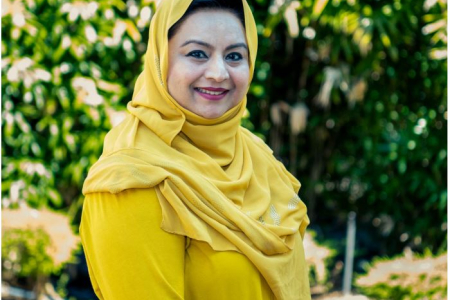
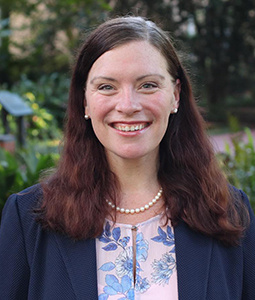
Annie S. Adamian serves as an Associate Professor in the School of Education at California State University, Chico since 2016, with her office located in THMA 437. Her contact details include phone (530-898-4154) and email (aadamian@csuchico.edu). Her academic credentials feature: Ed.D. in International & Multicultural Education (Human Rights Education emphasis), University of San Francisco, 2016 M.A. in Curriculum & Instruction, California State University, Chico, 2010 Single Subject Teaching Credential, California State University, Chico, 2001 B.S. in Geosciences (Science Education concentration), California State University, Chico, 2000 A.A. & A.S. in General Education, Pasadena City College, 1997 Dr. Adamian's research interrogates race evasiveness through the lens of educational equity, examining how teacher/student agency and healing-centered practices can transform relationships and outcomes for oppressed communities. Her work integrates critical race theory with human rights frameworks to challenge systemic inequities across educational settings. Recent publications (2021-2024) reveal consistent focus on dismantling racial hierarchies in diverse contexts—from science classrooms to cafeteria dynamics—with recurring themes of community building, whiteness deconstruction, and participatory action research methodologies. Her scholarship bridges theoretical rigor with practical classroom applications for racial justice.
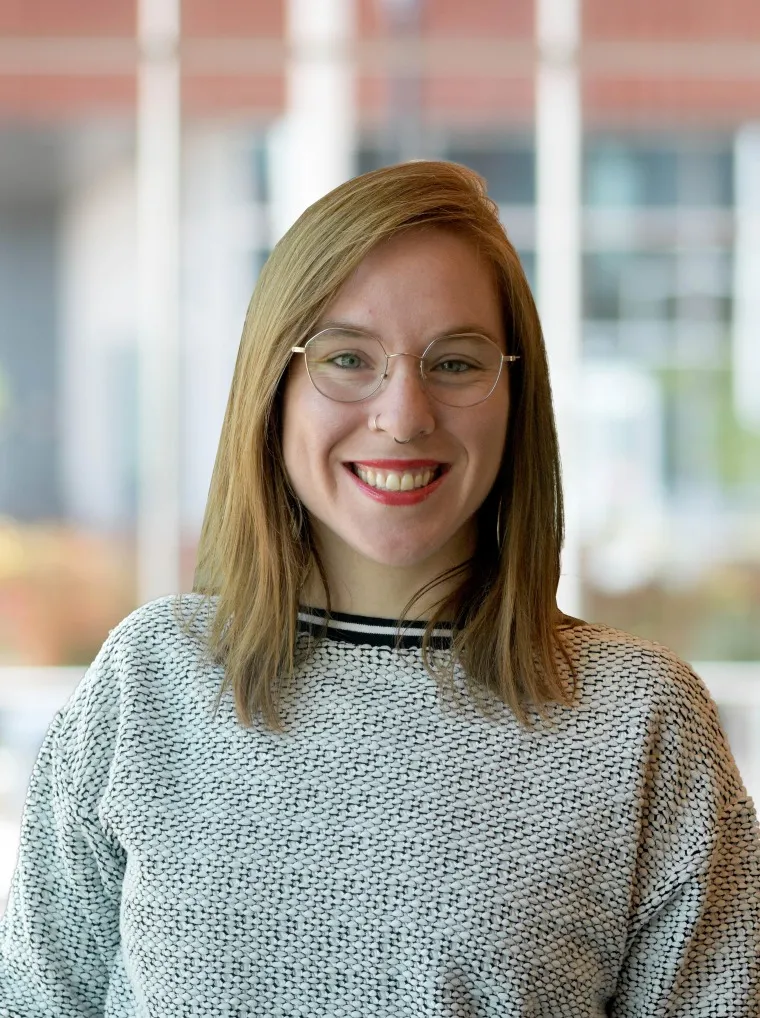
Dr. Farha Sattar is a Lecturer in Education (Mathematics) at the Faculty of Arts and Society, Charles Darwin University. With over thirty years of teaching experience in Mathematics, Science education, GIS, Remote Sensing, and e-Learning technologies at undergraduate and postgraduate levels, Dr. Sattar brings extensive expertise to her academic role. She holds a PhD in Geospatial Science from Charles Darwin University, focusing on Spatial Mathematical Modelling for 3D Gully Mapping and Erosion Quantification. Her educational background includes: PhD in Geospatial Science (Three Dimensional Gully Mapping and Erosion Quantification within a Geoinformatics Framework), Charles Darwin University (2012) Prior academic experience at several Asian and European universities Dr. Sattar's research spans multiple interdisciplinary fields with a strong focus on the intersection of education and technology. Her primary research interests include Mathematics Education, STEM Education, Geoscience Education, Spatial Mathematical Modelling, Drone Technology, Remote Sensing, Geographic Information Systems, and Innovative Pedagogies such as experiential learning and inquiry-based approaches. She has developed expertise in cognitive development, particularly in fostering critical and creative thinking skills through iSTEM approaches. An analysis of Dr. Sattar's recent publications reveals a consistent trajectory toward integrating emerging technologies like drones, augmented reality, and geospatial artificial intelligence into educational contexts. Her work demonstrates a progression from foundational geospatial research on erosion mapping to innovative applications in STEM education. Recent publications increasingly focus on drone technology for educational purposes, spatial data infrastructure for policy development, and computational thinking development through technology-enhanced learning. Dr. Sattar has received numerous accolades for her contributions to education and research: NT Science Week Awards – Inspired NT STEM Hero of the Year award (2021) Long Service Recognition Award (2023) Finalist, CDU Alumni Award (2023) Multiple Best Presentation Awards (2008, 2010, 2017) Australian College of Educators - 2021 College Medal Nominee As a supervisor, Dr. Sattar mentors postgraduate research students including Ayesha Farhan, who is working on "A Framework for Cognitive Development: Fostering Critical and Creative Thinking Skills, Using iSTEM Approach." She actively secures research funding through various projects such as "DBELaSTEM: Drone-Based Experiential Learning and STEM Education," "STEM_D & VR: Youth STEM Learning and Empowerment with Drones and VR," and "CodProg Drone Lab." Her research is supported by grants from NT Government projects and other external funding sources. Dr. Sattar leads the CodProg Drone Lab, an innovative research space exploring drone technology applications in education. She is a certified drone pilot and aeronautical radio operator, which enables her to bridge theoretical knowledge with practical applications. Her work with the "Flying Forward: Drones, STEM Equity, and Indigenous Empowerment" initiative demonstrates her commitment to community engagement and addressing educational disparities through technology.
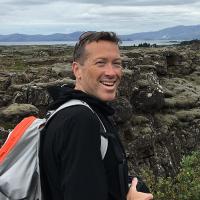
Brett Gilley is an Associate Professor of Teaching in the Department of Earth, Ocean and Atmospheric Sciences at The University of British Columbia (UBC), Vancouver Campus. His primary affiliation is within the Faculty of Science. He specializes in geoscience education with a focus on inclusive fieldwork practices, collaborative learning strategies, and accessibility in STEM education. He is currently not accepting students for advising. His research interests span geology and geoscience education, with a strong emphasis on making field experiences accessible for students with disabilities, developing innovative teaching methodologies, and fostering inclusive learning environments. Gilley has contributed to projects like the Earth Science Experiential and Indigenous Learning (EASEIL) initiative, which integrates Indigenous knowledge and community partnerships into curriculum design. Notable trends in his publications include advancing universal design in geoscience field courses, evaluating collaborative testing strategies, and exploring the impact of technology (e.g., ChatGPT) on student research practices. His work often bridges pedagogical innovation with practical implementation in large undergraduate science programs. While no formal awards are listed, his contributions to inclusive education and curriculum development reflect a commitment to equitable STEM education. His professional activities include mentoring faculty through UBC’s evidence-based pedagogy graduate course and participating in interdisciplinary curriculum development teams.
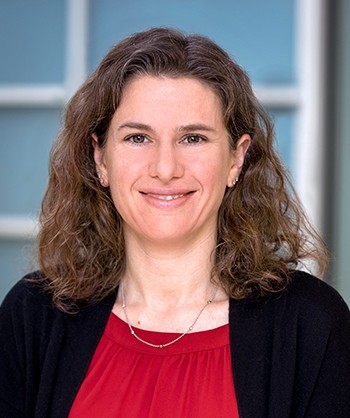
James Scoates is a Professor in the Department of Earth, Ocean & Atmospheric Sciences at the University of British Columbia (UBC), affiliated with the Faculty of Science. His research focuses on magmatic processes, including the origin and evolution of silicate magmas, geochemical and isotopic studies of layered intrusions and anorthosite suites, and the formation of magmatic ore deposits. He has held positions at UBC since 2002, following roles at Université Libre de Bruxelles (1995-2001). Education: B.Sc. (Honours), 1987, Queen's University at Kingston, Canada Ph.D., 1994, University of Wyoming, USA Research Interests: His work spans igneous petrology, geochronology, and mineral deposit geology. Key areas include physical volcanology of Large Igneous Provinces (LIPs), the geochemical evolution of magma plumbing systems in layered intrusions like the Skaergaard and Bushveld Complexes, and the application of isotopic techniques to trace mantle sources. He also investigates convergent margin Ni-Cu-PGE deposits and their tectonic contexts. Awards: Faculty Teaching Award, 2021 (EOAS-UBC) Killam Teaching Award, 2018 (UBC) Young Scientist Award, 2001 (Mineralogical Association of Canada) Teaching & Leadership: Dr. Scoates teaches courses in mineralogy, geochemistry, mineral deposits, and field geology. He has led initiatives to innovate geoscience education through virtual field experiences and peer-learning strategies. He chairs the MAGNET NSERC CREATE program and serves on the Pacific Centre for Isotopic and Geochemical Research (PCIGR) steering committee. Key Projects: Investigating the geochemical evolution of Hawaiian plumes and mantle heterogeneity. Studying magma storage and differentiation in the Muskox intrusion (Mackenzie LIP). Developing geochronological frameworks for layered intrusions like the Stillwater Complex.
T.C. Nicholas Graham is a Professor of Computer Science at Queen's University's School of Computing, specializing in Human-Computer Interaction (HCI) and gaming technology. With a Dr.-Ing. from TU Berlin (1995), M.Sc. (1988) and B.Sc. (1985) from Queen's University and the University of Toronto respectively, he has held academic roles at York University and industry positions at Namzak Labs since 2000. Research Focus : Next-generation digital games, exergames combining physical activity with entertainment, and educational games using augmented reality. His EQUIS Lab explores heart rate power-ups, nudging mechanisms, and AI-assisted accessibility solutions for motor-impaired users. Teaching : Courses in Game Architecture (CISC 326) and Advanced Game Development (CISC 877), emphasizing game engine fundamentals, physics, networking, and AI algorithms. Labs & Collaborations : Director of the EQUIS Lab , co-founder of the Software Technology Laboratory , and former Chair of IFIP Working Group 2.7 on User Interface Engineering. Notable Projects : Liberi exergame for children with cerebral palsy, GAIM Exergaming Toolkit, and Partial Automation techniques for accessible gaming. His lab actively involves PhD, MSc, and undergraduate students in both technical and applied research.
Geoffrey Cook is a Senior Lecturer at the Scripps Institution of Oceanography, UC San Diego, within the VC Marine Sciences school and Geosciences Research Division. He holds a PhD in Geology from Washington State University (2009), an M.S. from Boise State University (2002), and a B.A. from Franklin and Marshall College (2000). His research focuses on physical volcanology, including the volcanic evolution of large calderas, petrogenesis of magmas, and geoscience education. Notable projects include studies on the Otowi Member of the Bandelier Tuff and crustal assimilation processes in Iceland’s Fagradalsfjall Fires (2021). He emphasizes innovative teaching methods, such as active learning and experiential education, to address student misconceptions in geoscience. Dr. Cook has received multiple teaching awards, including the 2023 Scripps Outstanding Undergraduate Teaching Award and the 2018 UCSD Panhellenic Chapters Outstanding Faculty Award. His publications span volcanology, geochemistry, and educational pedagogy, with recent work in Nature (2024) and active learning strategies in STEM education. His academic profile reflects a commitment to both advancing geoscience research and improving undergraduate education through evidence-based practices.
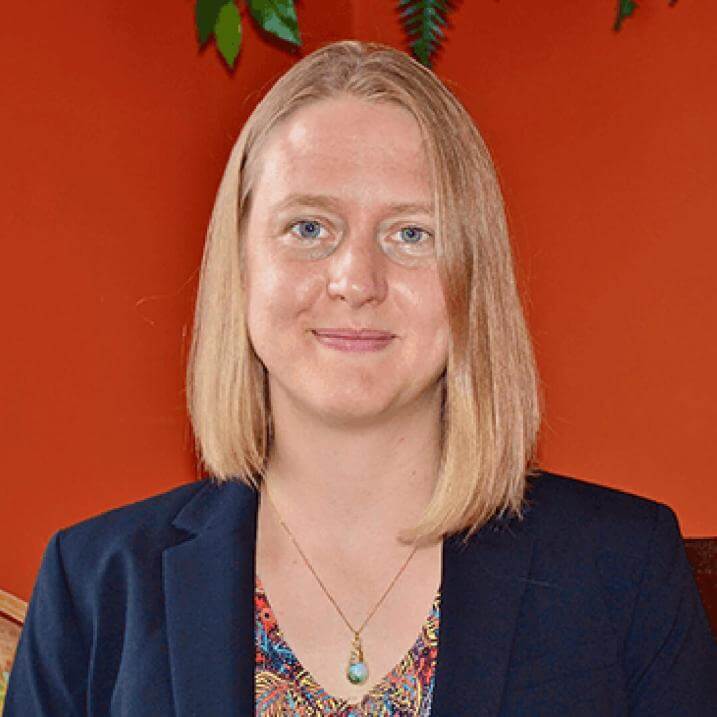
Ingrid L. Nelson is an Associate Professor at the University of Vermont in the Department of Geography and Geosciences . She specializes in feminist political ecology , digital geographies , and critical development studies , focusing on how digital technologies mediate environmental expertise and sustainability projects. Current research group: Feminist Digital Natures Past projects: Campus Green and Gold (Vermont campus sustainability, 2014-2020) Key fieldwork: Miombo woodlands (Mozambique) Her teaching explores environmental justice , gender-space relations , and critical digital analysis through courses like Gender, Space and Environment and Natures, Places and the Politics of Truth . She emphasizes collaborative learning, autoethnography, and digital methods. Research interests include more-than-human politics , embodied environmental subjectivity , and critical decolonial theory applied across diverse sites: Vietnamese hostess bars, Newfoundland science labs, and Vermont campuses.
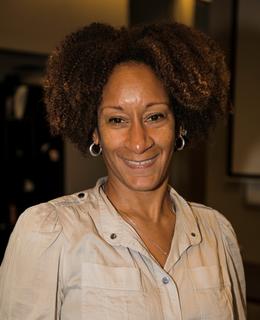
Dr. Jennifer Adams is a Professor at the University of Calgary with dual appointments in the Werklund School of Education and the Faculty of Science’s Department of Chemistry. She holds a Tier II Canada Research Chair in Creativity, Equity, and STEMM. Her work focuses on equity in STEM education, postsecondary faculty education, and transdisciplinary approaches. Dr. Adams earned her PhD in Urban Education from The Graduate Center, CUNY, and has prior roles including Associate Professor at Brooklyn College and leadership in informal science institutions like the American Museum of Natural History. Education: PhD Urban Education (2006), MS Nutrition (1996), MA Education (1995), BA (not specified) Her research emphasizes anti-deficit and justice-oriented pedagogies, with a focus on marginalized communities. Key areas include racial equity in STEM, sociocultural theory, and critical transdisciplinary methods. Dr. Adams leads the Creativity, Equity, and STEM Lab, advancing equity through community-based and arts-infused approaches. She edits academic journals such as the International Journal of Informal Science and Environmental Learning and has collaborated on projects like the Resilient Schools Consortium (RiSC). Recent publications explore belonging in STEM, anti-racist education frameworks, and transdisciplinary methodologies. Her work bridges formal and informal learning environments to address systemic inequities. Dr. Adams actively engages in policy advocacy and community partnerships to foster inclusive STEM ecosystems globally.
Rimjhim Aggarwal is a Professor at the School of Sustainability, Arizona State University (ASU). Her research focuses on sustainability governance, climate risks, and the food-energy-water nexus, with emphasis on urban systems, social-ecological dynamics, and policy design. She explores how institutions and governance structures adapt to environmental challenges, particularly in rapidly urbanizing regions. Her work integrates interdisciplinary approaches, combining policy analysis, systems modeling, and participatory methods. Notable contributions include frameworks for nexus governance in Phoenix and Cape Town, studies on circular economy solutions for waste management, and analyses of climate adaptation strategies in agriculture. She also emphasizes education innovation through virtual field experiences to democratize geoscience learning. Key research themes include institutional fit in governance systems, climate risk integration in development goals, and equitable resource management in urbanizing contexts. Her publications span over three decades, reflecting deep engagement with global sustainability challenges such as biodiversity loss, water scarcity, and socio-environmental justice.
Jessica Roberts is an Assistant Professor in the School of Interactive Computing at Georgia Tech. She holds a PhD in the Learning Sciences and directs the Technology-Integrated Learning Environments (TILEs) Lab. Her work focuses on technology-mediated learning in informal environments like museums and citizen science projects, emphasizing geospatial analysis, data visualization, and accessibility. Prior to academia, she was a middle school teacher. Education: PhD in Learning Sciences (specific institution not listed) Postdoctoral research at Carnegie Mellon University's Human-Computer Interaction Institute Postdoctoral work at Northwestern University's Tidal Lab Research Interests: Dr. Roberts explores how interactive technologies can foster inclusive, socially meaningful learning experiences. Her projects include: Data sonification systems for visually impaired audiences AI literacy frameworks for K-12 classrooms Citizen science platforms that democratize environmental data exploration Embodied interaction designs to enhance public engagement with scientific data Article Trends: Recent work highlights innovations in AI education, climate data visualization, and accessibility technologies. Over half of her 2023-2025 publications address data sonification systems for marginalized audiences or AI literacy challenges in K-12 contexts. Awards: Brook Byers Institute for Sustainable Systems Faculty Fellow Advising & Grants: Leads the TILEs Lab, which collaborates with institutions like the Field Museum of Natural History. Projects have been exhibited at major science museums, indicating significant external partnerships. Labs/Teams: Director of the TILEs Lab, affiliated with GVU Center at Georgia Tech. Collaborates with interdisciplinary teams across education, computer science, and environmental science domains.
Katherine Ryker is an Associate Professor at the University of South Carolina, affiliated with the School of the Earth, Ocean & Environment within the McCausland College of Arts and Sciences. She leads the Ryker Research Lab, which focuses on geoscience education research, emphasizing inquiry-based learning, student-centered teaching practices, and the integration of augmented/virtual reality in education. Her work explores how teaching methods impact student engagement, spatial skill development, and academic persistence in geoscience disciplines. Her research interests include: Geoscience education reform Teacher professional development Role of technology in STEM education Student learning strategies in large introductory courses Outreach strategies to correct public misconceptions about geoscience Ryker’s lab maintains a structured environment with documented protocols for onboarding, data management, diversity initiatives, and collaborative authorship. She advises graduate and undergraduate students, supporting their academic and career development through grants such as NSF GRFP and SEOE Travel Awards. Her lab also emphasizes work-life balance, professional mentorship, and ethical standards in academia. Her students have pursued roles in academia (e.g., Senior Lecturer at Vanderbilt University) and applied geoscience fields (e.g., National Park Ranger). Ryker’s contributions to geoscience education include advancing pedagogical frameworks, publishing influential research, and advocating for inclusive teaching practices across institutions.
Caitlyn Hall is a Joint Assistant Professor of Practice in Hydrology and Atmospheric Sciences, Assistant Professor of Practice in Biosystems Engineering, and Director of the Future Earth Resilience minor program at the W.A. Franke Honors College. She founded the Arizona Science Policy Network and advises decision-makers on equitable legislation. Her roles span multiple departments at the University of Arizona, integrating environmental science with policy and community engagement. Educations: PhD in Environmental Engineering, Arizona State University BS and MS in unspecified fields from the University of Arizona Research Interests: Hall focuses on environmental justice, natural hazard resilience, and science policy, particularly in water governance, sustainability, and soil/water remediation. Her work emphasizes community-driven solutions and equitable policy development, leveraging transdisciplinary approaches to address climate adaptation and disaster recovery. She has pioneered efforts in open science and inclusive geoscience education. Articles Trends: Her recent publications emphasize integrating earth observation technologies with policy, advancing microbial-based ground stabilization techniques, and promoting equity in post-disaster recovery. Key themes include climate action frameworks, cross-cultural sustainability solutions, and open hydrology practices. Awards: No specific awards listed. Advising & Grants: Leads the Future Earth Resilience minor program and advises policymakers on legislative frameworks. Active in curriculum development for interdisciplinary environmental studies and community-driven research initiatives. Labs/Teams: Founder of the Arizona Science Policy Network, collaborates with global hydrology platforms like eWaterCycle, and engages in initiatives addressing US-Mexico border sustainability challenges.
Kevin Pugh is a Professor in the School of Psychological Sciences at the University of Northern Colorado, affiliated with the College of Education and Behavioral Sciences. Specializing in transformative experience theory, motivation, and cognition, his work bridges educational psychology with real-world learning applications. Ph.D. in Educational Psychology (Learning & Cognition), Michigan State University (2002) B.S. in Psychology, Brigham Young University (1994) Assistant Professor, University of Toledo (post-Ph.D.) Joining UNC in 2006 Dr. Pugh's research investigates how learning transforms students' worldviews through Deweyan aesthetics and motivational frameworks. His transformative experience theory emphasizes real-world application of knowledge, studied across science education, problem-based learning, and culturally relevant pedagogy. Recent publications analyze mineral misconceptions, instructor-student connections, and gender dynamics in geology education. He teaches learning theory, cognition, and motivation courses using transformative, authentic pedagogies. The Calvin Project, which uses comic characters to explore motivation theory, exemplifies his innovative approach. Dr. Pugh has secured National Science Foundation grants and serves on the editorial board of the Journal of Experimental Education. Principal investigator for NSF-funded projects Editorial board member, Journal of Experimental Education School of Psychological Sciences faculty Contact: kevin.pugh@unco.edu | Office: McKee Hall 63 | Phone: 970-351-2989
Nathan Hopkins is an Assistant Teaching Professor and Director of Undergraduate Studies in the Department of Geological Sciences at the University of Missouri. He serves as Director of the Geology Field Camp and specializes in geological field methods, geomorphology, glacial geology, and geographic information systems. His research emphasizes practical field techniques and earth surface processes. Professor Hopkins teaches foundational courses including Introduction to the Earth, The Clean Energy Transition, and the capstone Geology Field Camp course. His research focus includes till fabric analysis, glacial sedimentology, and applications of remote sensing technologies like UAVs and InSAR in geological mapping. Recent publications reflect Hopkins' expertise in glacial processes, particularly investigations of ice rheology using magnetic anisotropy techniques and studies of drumlin formation mechanisms. His work integrates field observations with laboratory analyses to understand subglacial processes and landform development. Field-based research spans locations from Alaska to Sweden, examining glacial deposits and landforms. Hopkins maintains active engagement in geological education through field instruction and curriculum development. As Field Camp Director, he oversees essential field training for geology students. His pedagogical research examines effective approaches to field education and geological mapping instruction.
Katherine McNeill is a Professor in the Department of Teaching, Curriculum, and Society at Boston College's Lynch School of Education and Human Development. She holds the Bryk Faculty Fellowship and specializes in science education, particularly focusing on scientific argumentation, explanation practices, and equitable STEM instruction. Her work emphasizes designing curriculum materials and professional development to support teachers in fostering student-driven inquiry. McNeill earned a PhD and two MS degrees from the University of Michigan (2006), and dual BA degrees in Biology and English from Brown University (1998). She previously taught middle school science and has been at Boston College since 2006. Her research centers on improving science education through: Developing the Claim-Evidence-Reasoning (CER) framework Supporting multilingual learners' participation in argumentation Designing educative curriculum materials (e.g., OpenSciEd) Professional learning programs for educators and instructional leaders Key contributions include authoring influential books like Supporting Grade 5-8 Students in Constructing Explanations in Science and articles on curriculum customization, teacher beliefs, and leadership roles in science reform. Her work bridges research and practice to ensure all students engage in meaningful scientific sensemaking.