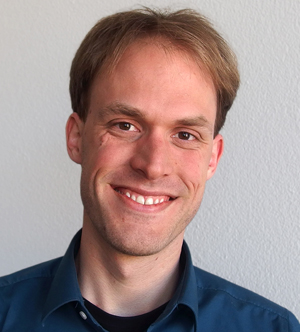
Denis Fougerouse is a Senior Lecturer at Curtin University’s School of Earth and Planetary Sciences (EPS), specializing in structural and economic geology with a focus on nanogeoscience and advanced characterization techniques. He leads research using atom probe tomography (APT) to study mineral interfaces, fluid dynamics, and critical metal distribution. His work spans asteroid mineralogy (e.g., Ryugu samples), ore genesis, and nuclear geology (e.g., Chernobyl zircon re-equilibration). Fougerouse is a key member of Curtin’s Geoscience Atom Probe Facility, advancing applications of APT in geosciences. Research interests include gold remobilization mechanisms, sulfide chemistry, and shock metamorphism. He has contributed to landmark studies on pyrite microtextures, xenotime geochronology, and nanoparticle transport in gold deposits. Fougerouse’s awards include the 2024 Mineralogical Society of America Award for pioneering nanoscale mineral analysis. His interdisciplinary collaborations span planetary science, environmental geochemistry, and materials science, reflecting his role at the forefront of geoscience innovation.
Charles F. Harvey is a Professor in the Department of Civil and Environmental Engineering at the Massachusetts Institute of Technology (MIT), where he investigates hydrology, carbon cycling, and groundwater contamination. His work spans tropical peatlands, arsenic pollution in South Asia, and coastal groundwater dynamics, with field sites in Borneo, Bangladesh, and Vietnam. Education: B.A. in Mathematics (Oberlin College, 1986), M.S. in Applied Earth Science (Stanford University, 1992), Ph.D. in Geological and Environmental Sciences (Stanford University, 1996). Harvey’s research focuses on hydrogeology , carbon sequestration , and contaminant transport . He explores how groundwater flow and biogeochemical processes interact in tropical peatlands and coastal systems, with significant implications for climate change and water security. His recent publications emphasize tropical peatland hydrology , arsenic mobilization , and coastal groundwater exchange , integrating field experiments, remote sensing, and computational models. Scientific Awards AGU Fellow GSA Fellow Meinzer Award (GSA) Prince Sultan bin Abdulaziz International Prize for Water M. King Hubbert Award for Hydrology NSF Young Investigator Award Harvey leads the Harvey Lab , mentoring students and researchers in projects ranging from groundwater arsenic mitigation to coastal marsh biogeochemistry . His work bridges terrestrial and marine systems , addressing critical planetary challenges.
Mike Willis is an Associate Professor of Cryospheric Science, Geodesy & Remote Sensing at the Department of Geosciences, Virginia Tech's College of Science. His research focuses on advancing remote sensing techniques to study Earth's cryosphere, coastal environments, and natural hazards. He leads projects on glacial dynamics, sea level rise impacts, landslide monitoring, and the application of GNSS and InSAR technologies. His work combines field instrumentation (e.g., OrangePi-GNSS systems) with satellite data analysis to address climate and geohazard challenges in polar regions and coastal communities. Education background: Not explicitly stated in provided text. Research interests include cryospheric science, geodetic monitoring, and environmental remote sensing applications. His lab group maintains a dedicated website at https://sites.google.com/view/4datvt/ . Key research themes include: Glacier and ice shelf mass balance Coastal vulnerability to sea level rise Disaster monitoring using GNSS-IR and InSAR High-resolution digital terrain modeling Recent projects highlight work in Greenland (landslide monitoring, sea level measurements), the Pacific Northwest (subduction zone hazards), and the Dominican Republic (coastal inundation modeling). His interdisciplinary approach bridges geophysical observations with computational geospatial analysis.
Dr. Alain Bonneville is a Lab Fellow and Geophysicist at Pacific Northwest National Laboratory (PNNL) and holds a Courtesy Professor appointment at Oregon State University's College of Earth, Ocean, and Atmospheric Sciences. With extensive experience in geological storage of CO2, geothermal energy, and geophysical monitoring techniques, Dr. Bonneville leads diverse research projects that bridge fundamental science and practical applications for energy and environmental challenges. Dr. Bonneville's educational background includes: PhD in Geophysics from the University of Montpellier, France MS in Petroleum Geophysics from IFP-School, Paris, France BS in Geology from the University of Lyon, France Dr. Bonneville's research spans several critical areas in Earth sciences and energy systems. His work on geothermal energy focuses on super-hot enhanced geothermal systems (EGS), site characterization, monitoring, and stimulation fluids. In geological CO2 storage, he investigates project management, site characterization, numerical modeling, and monitoring methods using potential fields and remote sensing. His expertise in geophysical methods includes heat flow measurements, gravity surveys, muon tomography development for borehole deployment, and remote sensing applications. Additional research areas encompass marine heat flow instrumentation development, thermal monitoring of active volcanoes, and intraplate volcanism studies in the Indian and Pacific Oceans. Dr. Bonneville has received significant recognition for his contributions to science, including: Membership in the Washington State Academy of Sciences Lab Fellow position at Pacific Northwest National Laboratory Executive Committee membership on the U.S. National Risk Assessment Partnership Scientific Committee membership at IFP-Energies Nouvelles, France He also holds two U.S. patents related to electrophilic acid gas-reactive fluids for enhanced fracturing and recovery of energy producing materials. Throughout his career, Dr. Bonneville has led significant research initiatives, including the PNNL Carbon Sequestration Initiative (2009-2013) and the European Marie Curie Research Training Network on Greenhouse Gas Removal (GRASP), which involved 14 academic and industrial institutions across 7 countries and supported 35 PhD students and post-docs. His work on the FutureGen 2.0 project demonstrates his leadership in large-scale carbon storage site characterization and monitoring program design. Dr. Bonneville maintains active collaborations with research teams at PNNL's Environmental Molecular Sciences Laboratory and works closely with Oregon State University's geoscience researchers. His laboratory work focuses on developing novel instrumentation for geophysical monitoring, particularly in the areas of muon tomography for subsurface characterization and thermal monitoring systems for geothermal and carbon storage applications.
Professor John Parnell is the Chair in Geology & Petroleum Geology at the University of Aberdeen , affiliated with the School of Geosciences and Department of Geology and Petroleum Geology . His research focuses on geochemistry, paleoenvironmental reconstruction, trace element cycling, and sedimentary systems , with significant contributions to studies of the Rhynie Chert, Bowland Shale, and Lewisian Complex. Research Interests Professor Parnell's work spans: Geochemical analysis of Paleoproterozoic and Neoproterozoic systems Trace metal mobility in sedimentary and metamorphic environments Organic carbon burial and its tectonic implications Planetary analog studies for Mars exploration Shale resource characterization and environmental impact assessment Recent Publications His recent articles highlight investigations into: Graphitization processes in Scottish Highlands marbles Sulphur isotope records in Precambrian successions Trace element dynamics in the Bowland Shale Biogeochemical cycling at the Precambrian-Cambrian boundary Labs & Collaborations He leads research in the Geofluids Group and collaborates with the Planetary Sciences Department on Mars analog studies.
Professor Balz Kamber is a renowned academic in the Faculty of Science at Queensland University of Technology (QUT), leading research in elemental and isotopic geochemistry paired with petrology. He holds the position of Professor in Petrology within the School of Earth & Atmospheric Sciences . His work focuses on Earth's differentiation into chemical spheres, with applications in climate science, planetary evolution, and resource exploration. Kamber has held prestigious roles, including Chair in Geology and Mineralogy at Trinity College Dublin and a Tier 1 Canada Research Chair at Laurentian University. Education: PhD (University of Bern, Switzerland), MSc (University of Bern) Professional Memberships: Royal Irish Academy (since 2018), European Association of Geochemistry Research interests include thermodynamic modeling of igneous processes, automated mineralogy, and the interplay between climate and geological history. His current projects address mantle dynamics, crustal evolution, and planetary weathering. Teaching focuses on Earth Materials, Petrology, and Climate Science at QUT. Notable achievements include editorship of Chemical Geology (since 2018) and contributions to understanding the Great Oxidation Event and Deccan Traps volcanism. His work bridges fundamental geochemistry with real-world challenges, such as climate change mitigation through enhanced rock weathering. Grants/Funding: Led the 23M Euro Irish Centre for Research in Applied Geosciences (2011–2018) Labs/Teams: Heads a dynamic research group advancing LA-ICP-MS methodologies and geochemical imaging
Dr. Li Hailong is a Chair Professor at the School of Environmental Science and Engineering, Southern University of Science and Technology (SUSTech), Shenzhen. He holds a PhD in Hydrogeology from the University of Hong Kong (2003), an MSc (1991) and BSc (1988) in Applied Mathematics from Fudan University. His academic journey includes professorships at China University of Geosciences-Beijing (2009-2020) and Anshan Normal University (1999-2009). Recipient of 2010 NSFC Outstanding Young Scientist Grant 2022 Dayu Water Conservancy Science and Technology Award 2008 Chutian Professorship (Hubei Province's highest academic honor) Dr. Li's research focuses on multi-component, multi-phase subsurface flows in coastal zones and their ecological/environmental effects. His work spans aquifer parameter estimation, ecohydrology, marine groundwater discharge, and computational fluid dynamics. Recent projects involve submarine groundwater discharge (SGD) quantification in Bohai Sea and Jiaozhou Bay using radium/radon isotopes. His publications in top journals like Nature Geoscience , Geochimica et Cosmochimica Acta , and Water Resources Research have been cited 7,072 times (H-index 49). He has led 19 research projects, including 6 NSFC grants and 973 Program subprojects. Dr. Li serves on editorial boards of Advances in Water Resources and Water Science and Engineering , and was Associate Editor for Hydrogeology Journal (2012-2015).
Guy G. Drijkoningen is an Associate Professor in Applied Geophysics at Delft University of Technology (TU Delft), Faculty of Civil Engineering and Geosciences. He is actively involved in teaching and research within the Department of Applied Geophysics & Petrophysics. Education: MSc, Delft University of Technology, The Netherlands PhD, Cambridge University, UK Research Focus: His work centers on Seismic Experiments & Modelling , particularly in exploration and shallow-subsurface contexts. Key areas include: Seismic data acquisition on land Continuous seismic monitoring Shallow shear-wave imaging (land and marine) Seismic wave propagation in porous media Current projects leverage advanced sensor networks (e.g., LOFAR), full-waveform inversion for tunnel-boring machines, and novel vibrator technologies. Publications Trend: Recent works (2011–2016) emphasize seismic modeling, inversion techniques, and experimental validation across marine and terrestrial environments. Topics span poroelastic wave theory, ambient-noise interferometry, and innovative seismic source design, reflecting a blend of theoretical and applied geophysics. Scientific Awards: Best-paper award Geophysics 2015 for "A seismic vertical vibrator driven by linear synchronous motors" Professional Memberships & Editorial Roles: Member: Society of Exploration Geophysicists (SEG) Member: European Association of Geoscientists and Engineers (EAGE) Associate Editor: Geophysics Teaching: He teaches undergraduate and graduate courses including Introduction to Geophysics, Reflection Seismology, and specialized PhD-level modules on seismic data analysis.
Prof. Dr. Nadine Göppert is a University Professor (W3) of Hydrogeology at the Institute of Geological Sciences , Freie Universität Berlin , Germany. She previously served as an Akademische Rätin and Senior Scientist at the Karlsruhe Institute of Technology (KIT) from 2011–2024, and held research positions at the Weizmann Institute of Science (2009–2011) and University of Karlsruhe (2008–2009). Her academic background includes a Dr. rer. nat. (2008) and Diploma in Geology (2002) from the University of Karlsruhe. Education Doctorate in Hydrogeology (2008), University of Karlsruhe Diploma in Geology (2002), University of Karlsruhe Her research focuses on karst hydrology , groundwater tracing , particle transport dynamics , and water quality monitoring in alpine and subtropical karst systems. Recent publications analyze tracer experiments , microplastic transport , and hydrochemical variability across diverse karst environments. Her teaching portfolio includes Applied Hydrogeology , Field Methods , and Laboratory Techniques for students in Geosciences and Water Engineering. She has supervised numerous theses on topics like karst groundwater dynamics and fluorescence-based water quality analysis .
Prof. Dr. Christoph Oberlack is an affiliated Professor of Sustainability Governance at the University of Bern's Institute of Geography and the Centre for Development and Environment (CDE). His work focuses on institutional barriers to climate adaptation, land-use governance, and sustainable development. He holds a PhD in Institutional Economics of Climate Adaptation from the University of Freiburg (2015). Research Interests: - Sustainability governance frameworks - Deforestation-free supply chains - Climate adaptation policies - Telecoupling in socio-ecological systems - Environmental justice in global value chains - Archetype analysis methodologies Recent work explores implementation challenges of EU deforestation regulations in Peru's cocoa/coffee sectors and gender equity in cacao cooperatives. He frequently collaborates with international organizations and policymakers to translate research findings into actionable strategies. Key contributions include developing diagnostic frameworks for institutional analysis in climate adaptation contexts. Publications span 20+ peer-reviewed journals including Nature Climate Change and Global Environmental Change. He actively participates in international conferences such as POLLEN and Swiss Geoscience Meetings. Current research emphasizes participatory approaches to landscape governance and private sector roles in sustainability transitions.
Professor Ana Ferreira is a leading seismologist at University College London, focusing on deep Earth structure and earthquake source processes. Her research integrates seismic and geodetic data to understand planetary dynamics from the surface to the lowermost mantle. Her work includes pioneering seismic tomography, such as the SGLOBE-rani 3D anisotropy model, and earthquake source analysis using InSAR and normal mode data. She leads the Seismological Laboratory and teaches Seismology II and Field Geophysics. Recent projects include the UPFLOW experiment, which deployed 49 ocean bottom seismometers in the Atlantic, and studies on Greenland ice sheet evolution and Tonga volcanic eruptions. Her EU-funded research emphasizes multidisciplinary data integration and numerical modeling. Key article trends cover mantle anisotropy, global tomography, earthquake source inversion, cosmology-inspired machine learning, and ocean bottom seismology applications in geodynamics and cryospheric processes.
Eileen Martin is an Associate Professor in the Department of Geophysics and Applied Math and Statistics at the Colorado School of Mines. Her research focuses on near-surface geophysics, environmental monitoring, and the application of distributed acoustic sensing (DAS) technology. She leads projects involving fiber-optic sensing for permafrost degradation, urban seismic monitoring, and mining safety. Martin has developed open-source tools like DASCore and contributes to scalable computational methods for geophysical data analysis. Education: PhD (2018) in Computational and Mathematical Engineering from Stanford University; MS (2017) in Geophysics from Stanford; BS (2012) in Mathematics and Physics from UT Austin. Research interests include fiber-optic sensing systems, seismic imaging, data-intensive computing, and applications in environmental science. Her work bridges geophysics with computational methods, emphasizing real-world deployment in challenging environments like arctic permafrost sites and underground mines. Her recent work explores DAS for glacier monitoring, mine seismicity detection, and urban infrastructure assessment. Collaborative projects include Arctic permafrost monitoring and developing public datasets for geoscience research (PubDAS repository). Grants and lab activities include NSF CAREER funding for scalable computational seismology and partnerships with industry on fiber-optic monitoring solutions.
Frederik J. Simons is a Professor of Geosciences and Associate Chair of the Department of Geosciences at Princeton University. He holds affiliations with the Program in Applied & Computational Mathematics, High Meadows Environmental Institute, and Andlinger Center for Energy and the Environment. His research focuses on global geophysics, seismology, and geodesy, emphasizing the lithosphere's physical properties through seismic tomography and spectral analysis. Simons developed methods for oceanic instrumentation, including the EarthScope-Oceans consortium, and pioneered wavelet-based signal processing for seismology. His work integrates computational inverse methods and statistical techniques, with a commitment to reproducible research. Education: PhD in Geophysics (MIT), M.Sc. in Geology (KU Leuven, Belgium). Previous roles include Lecturer at University College London and Hess Postdoctoral Fellow at Princeton. Research interests span seismic tomography, lithospheric mechanics, and planetary science, with notable contributions to mantle structure imaging and earthquake early warning systems. Awards include the Vladimir Keilis-Borok Medal (2022). Simons advises graduate students and mentors researchers in computational geoscience. His teaching emphasizes clarity and engagement, blending theoretical foundations with hands-on applications.
Aaron Diefendorf is a Professor of Geosciences at the University of Cincinnati within the College of Arts and Sciences. His research focuses on the application of organic geochemical techniques to address questions in paleoclimatology, biogeochemistry, and environmental science. He directs the University of Cincinnati Stable Isotope Laboratory, where his team analyzes biomarkers from sedimentary archives to reconstruct past climate and environmental conditions. Dr. Diefendorf's research interests center on isotope geochemistry, biogeochemistry, organic geochemistry, biomarkers, and stable isotope geochemistry. His work particularly emphasizes plant-derived biomarkers such as leaf waxes (n-alkanes) and diatom-derived highly branched isoprenoids (HBIs) as proxies for reconstructing past hydrological conditions. He investigates how these biomarkers form in modern ecosystems, their preservation in sediments, and their application to paleoclimate reconstruction across various timescales from the Holocene to deep time. His research spans diverse environments including midcontinental North America, the Sierra Nevada, Falkland Islands, and Arctic regions. The analysis of his recent publications reveals a strong focus on methodological development for biomarker analysis, seasonal and spatial variability studies of biomarker production, and their application to specific paleoclimate questions. His work increasingly integrates multi-proxy approaches, combining plant wax and diatom biomarkers with other geochemical indicators to provide more robust paleoenvironmental reconstructions. Recent research shows growing interest in applying these techniques to understand hydrological changes during significant climate transitions including the Little Ice Age and Holocene. Extensive research on plant wax n-alkanes as paleohydrological proxies Pioneering work on diatom-derived HBIs for paleoclimate reconstruction Studies on biomarker production in modern ecosystems to improve paleo-interpretations Applications to major climate events including the Paleocene-Eocene Thermal Maximum Development of analytical methods for biomarker extraction and analysis Dr. Diefendorf has established productive collaborations across multiple institutions and disciplines, working with researchers in geology, biology, environmental science, and climate science. His research has been supported by multiple NSF grants, including collaborative projects focused on biomarker development and paleoclimate applications. He actively engages in public science communication, including outreach at local farmer's markets in the Cincinnati community. His laboratory work focuses on the Stable Isotope Laboratory at the University of Cincinnati, where his team processes sediment samples, extracts organic compounds, and analyzes isotopic compositions using state-of-the-art instrumentation. The lab serves as a hub for interdisciplinary research, training graduate and undergraduate students in geochemical techniques while advancing methodological approaches in biomarker paleoclimatology.
Dr. Max Torbenson serves as an Assistant Professor at Texas A&M University, specializing in paleoclimatology and dendrochronology. His research focuses on hydroclimatic variability over the past millennium using tree-ring proxies . With fieldwork spanning multiple continents, he combines climate reconstruction with modern environmental challenges in water resources and risk management. Education: PhD in Geoscience, University of Arkansas (2019) MA in Geography, University of Minnesota (2014) BSc in Archaeology-Palaeoecology, Queen's University Belfast (2011) His research emphasizes paleoclimatic extremes , ENSO teleconnections , and drought patterns across diverse regions including the Rocky Mountains, Tibetan Plateau, and Amazon Basin. Recent work explores anthropogenic signals in climate proxies and methodological improvements for tree-ring analysis. Publications reveal expertise in multi-proxy integration , climate reconstruction techniques , and historical climate-society interactions . His fieldwork spans the American Southwest, Spanish Pyrenees, and subtropical catchments, with current work focusing on temperature trends in the Mediterranean region and El Niño impacts on North American precipitation.