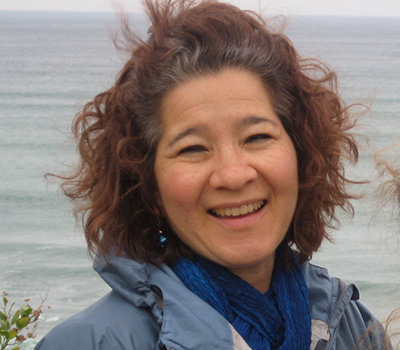
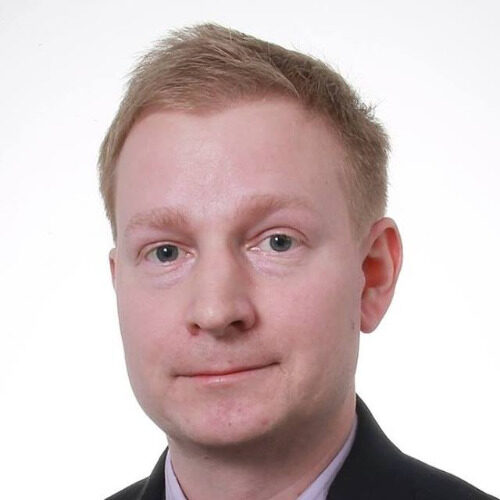
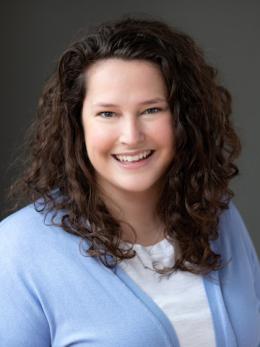
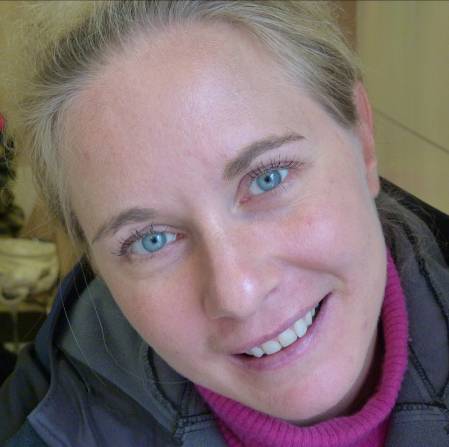
Lorene Yokoyama Becker serves as a Senior Lecturer in the Department of Geosciences within Oregon State University's College of Earth, Ocean, and Atmospheric Sciences, holding this position continuously since 2003 with prior academic experience at the University of Nebraska at Kearney. Her educational foundation includes: B.S. in Biology from Pitzer College (1981) M.S. in Land Resources from the University of Wisconsin-Madison (1999) Becker's research integrates geographic information systems with environmental sustainability, focusing on land use resilience, conservation applications, community-driven spatial analysis, and biomimicry principles. Her instructional approach emphasizes practical GIScience implementation through courses like GEOG 201, 360, and 361, connecting technical geospatial training to real-world ecological challenges and participatory planning frameworks. Professional engagement includes membership in the Society for Conservation GIS, underscoring her commitment to advancing conservation-oriented geospatial methodologies within academic and applied contexts.
Emily Eidam is an Associate Professor at Oregon State University's College of Earth, Ocean, and Atmospheric Sciences. Her research focuses on sediment transport processes across fluvial, coastal, and continental shelf systems, with a strong emphasis on Arctic and sub-Arctic environments undergoing rapid environmental change. She holds a Ph.D. in Oceanography (2017), an M.S. in Oceanography (2013), and dual B.S. degrees in Geological Sciences and Civil Engineering (2010 and 2008). Research interests include sediment dynamics in riverine and coastal systems, short-timescale depositional histories, and the impacts of climate change on Arctic environments. Her work integrates field observations, numerical modeling, and novel sensor technologies to study sediment dispersal patterns and coastal evolution. The Eidam Lab develops low-cost sensors for real-time monitoring of sediment transport and collaborates on projects such as the Beaufort Lagoon Ecosystem Long Term Ecological Research program. Key projects include studying sediment fluxes in boreal rivers, modeling Arctic delta evolution under sea ice conditions, and investigating coastal bluff erosion in Greenland. Her group also engages in STEM outreach, such as K-12 education initiatives focused on Arctic research challenges. Current collaborations include the Collaborative Research: Sediment and Stability project on Greenland tidewater glaciers and the Coastal Ocean Dynamics in the Arctic (CODA) initiative. She leads efforts in open-source software development, such as the icepyx tool for glaciological data analysis.
Olli Lehtonen is an Associate Professor in the Department of Geographical and Historical Studies at the University of Eastern Finland's Faculty of Social Sciences and Business Studies. His research focuses on economic and health geographies, with expertise in geospatial modeling, GIS, and statistical methods for analyzing policy impacts, service accessibility, and multi-local living patterns. Dr. Lehtonen's research interests span economic geography, health geography, and regional development, with particular emphasis on how spatial patterns affect policy outcomes. His work combines quantitative methods with spatial analysis to examine urban-rural disparities, municipal finance flows, and the socioeconomic impacts of various policy measures. He primarily uses R for data analysis in both research and teaching contexts. His recent publications reveal a strong focus on multi-local living, rural development, and spatial analysis of policy impacts. The research demonstrates increasing sophistication in combining traditional statistical methods with geospatial approaches to tackle complex regional development questions. His work frequently addresses practical policy concerns while maintaining academic rigor, with publications appearing in both Finnish and international journals. Dr. Lehtonen actively contributes to several research groups including Digital Geosciences (since 2020), Changing places of social transformation (since 2019), and House of Effectiveness (since 2018). His current projects include TOTAL - Rural economic security and vitality (2024-2026), examining rural economic conditions, alongside recently completed projects on rural services infrastructure, financial flows to rural areas, and health services reform. His methodological expertise in geospatial analysis, statistical modeling, and multi-method research approaches positions him as a key contributor to understanding the complex spatial dynamics of regional development in Finland, particularly regarding the evolving relationships between urban and rural areas in the context of multi-local living patterns and changing service provision models.
Ron Zevenhoven is a Professor in the Department of Process and Systems Engineering at Åbo Akademi University's Faculty of Science and Engineering. He leads research in sustainable energy systems, carbon capture and sequestration, and industrial waste utilization. His work aligns with UN Sustainable Development Goals, particularly in clean energy and responsible consumption. PhD in Chemical Engineering from Delft University of Technology (1992) Master’s in Chemical Engineering from Delft University of Technology (1988) Research interests focus on heat pump technologies, CO2 mineralization using industrial by-products, and low-carbon energy systems. Key projects include the Heat-Pioneer initiative for urban energy infrastructure and PILCCU for carbon capture utilization. Publications emphasize CO2 sequestration via steel slag and magnesium-based materials, heat pump optimization, and life cycle assessments of sustainable technologies. Awards include recognition for contributions to the Nobel Peace Prize-winning IPCC report (2007) and a Best Paper Award at ECOS 2018. Advises on doctoral theses and participates in international research collaborations, including EU-funded projects like Finland Highlift. Active in academic evaluations, hosting researchers, and public speaking on climate-friendly technologies. Led the establishment of the Laboratory of Process and Systems Engineering, focusing on interdisciplinary solutions to environmental challenges.
Rachel Eveleth is an Assistant Professor of Geology at Oberlin College's College of Arts and Sciences , specializing in interdisciplinary oceanography and Earth system science. She teaches courses such as Oceans and Climate and Great Lakes Limnology , integrating computational analysis and remote sensing into her research. Education: PhD, Duke University (2016) BA, Bowdoin College (2011) Her research focuses on physical and biological drivers of biogeochemical cycles in Polar Oceans and the Great Lakes , particularly examining dissolved gas tracers, ice-melt effects, and climate change. She leads projects like the Great Lakes Winter Grab and leverages data from the Ocean Observatories Initiative , including machine learning approaches to carbon cycling. Recent publications highlight her work on microbial interactions in the Antarctic, seasonal carbon budgets in Lake Erie, and sensor data best practices. She collaborates with over a dozen universities and utilizes Argo floats, remote sensing, and computational models to study aquatic-climate connections. Contact: Email: Rachel.Eveleth@oberlin.edu, reveleth@oberlin.edu Phone: 440-775-8938
Mika Siljander is an Associate Professor and Docent in the Department of Geosciences and Geography at the University of Helsinki. His work focuses on geoinformatics, remote sensing, and conservation biology, with significant contributions to understanding human-wildlife conflicts, land use change, and climate resilience in African ecosystems. He leads and collaborates on projects such as TAITAGIS (Geoinformatics capacity-building in Kenya) and VECLIMIT (vector-borne diseases in Finland). Key research areas include species distribution modeling, GIS applications for environmental management, and integrating remote sensing data into conservation strategies. Siljander has authored over 50 peer-reviewed articles and supervised multiple academic projects, including doctoral theses and international development initiatives. His work bridges academic research with practical solutions for ecological and public health challenges. Notable projects include TAITAFOREST (water and carbon sequestration in Kenyan forests) and AFERIA (food security adaptation in Africa). He actively participates in international conferences, peer-review processes, and public outreach events like the 7th World GIS Day in Tsavo, Kenya.
Motagh M. is a Researcher at the Deutsches GeoForschungsZentrum (GFZ) in Potsdam, Germany. With expertise in Remote Sensing and Geodesy , their work focuses on geohazard assessment through satellite-based interferometric techniques. Current research explores land subsidence in Afghanistan and Iran using Sentinel-1 data Developing hybrid machine learning models for landslide susceptibility assessment Pioneering quantum machine learning applications in deformation detection Investigating mining-induced subsidence in Germany's Hambach region Contributing to multi-sensor InSAR integration for complex geological analysis Publications since 2011 demonstrate sustained contributions to: Earthquake source modeling (e.g., Christchurch 2011, Maule Chile 2010) Volcanic deformation studies in Iceland Environmental geoscience applications across three continents Collaborations span institutions in: New Zealand (University of Canterbury, GNS Science) Iran (University of Tehran, K. N. Toosi University) Germany (GFZ Potsdam, Technical University Munich) USA (University of Miami)
Claudia Kuenzer is a Senior Researcher and Head of the 'Land Surface Dynamics' Research Group at the German Earth Observation Center (EOC) of the German Aerospace Center (DLR). She serves as the Overall Scientific Project Coordinator for initiatives such as WISDOM, DELIGHT, and DRAGON-3. Her expertise spans multispectral, thermal, and radar remote sensing, with a focus on environmental monitoring, land surface dynamics, and capacity-building in geosciences and resource management. She has held leadership roles in projects addressing coal fires, forest fires, and integrated watershed management in Asia. Dr. Kuenzer holds a PhD in Earth Sciences and has conducted research at institutions including the University of Trier (Germany), Western Washington University (USA), and Beijing Normal University (China). Her work integrates remote sensing with GIS to address global challenges like climate change impacts, disaster response, and sustainable resource management. She has coordinated large-scale international collaborations, notably in Southeast Asia and Europe. Key areas of focus include satellite-based monitoring of vegetation, surface water dynamics, and coastal changes. She has pioneered methodologies for analyzing long-term environmental trends using multi-decadal satellite datasets. Her contributions extend to policy-oriented applications, such as vulnerability assessments and knowledge systems for adaptive management in regions like the Mekong Delta. Her research outputs include over 150 peer-reviewed articles, focusing on remote sensing applications in forestry, hydrology, and climate science. She leads DLR’s efforts in developing innovative tools for Earth observation data analysis, including deep learning approaches for glacier monitoring and supraglacial lake dynamics. Her team also explores offshore wind energy infrastructure tracking and permafrost erosion monitoring in Arctic regions.
Xiangyang Li is a Professor at the University of Science and Technology of China, School of Computer Science and Technology. His work spans interdisciplinary domains including computer science, machine learning, and geoscience. Research Focus: Machine Learning, Recommender Systems, Blockchain, and Computer Vision. Key Contributions: Development of novel algorithms for UWB positioning, code information retrieval benchmarks, and vision-language models. Recent publications highlight trends in large language model (LLM) integration for recommendation systems, quantum-inspired optimization, and cross-chain consensus models. His 2025 work includes collaborations on semantic-driven inference, prompt tuning, and hybrid BFT consensus for blockchain scalability.
Dr. Hassam Nasarullah Chaudhry is an Associate Professor and Director of Studies (Dubai) for Architectural Engineering at Heriot-Watt University's School of Energy, Geoscience, Infrastructure and Society. He holds a PhD from the University of Leeds (2013) and is a Chartered Engineer (CEng) and Fellow of the Higher Education Academy. His research focuses on sustainable engineering systems, heat transfer, natural ventilation, and passive cooling, with a particular emphasis on wind-driven energy and building aerodynamics. He has led projects such as the 'Urban Heat Island (UHI) effect in Dubai' funded by RCUK, and holds a UK patent for a 'Passive Cooling System for Wind Tower' (2015). His expertise includes computational fluid dynamics (CFD), thermal modeling, and low-speed wind tunnel design. He serves as Associate Editor for the International Journal of Ventilation and reviews for journals like Applied Energy and Energy and Buildings . His work contributes to UN Sustainable Development Goals related to sustainable cities and climate action. Education: PhD in Building Services Engineering (University of Leeds, 2013) Patents: PCT/GB2014/052263 (Passive Cooling System) Awards: Excellence in Engineering (2009/2010), Feedback Award (2017) Research Trends: Recent articles emphasize carbon-energy nexus in construction, photovoltaic cooling solutions, and occupant-centric building systems. His work bridges traditional and modern passive cooling techniques, with applications in hot climates like the UAE. Advising & Grants: Actively supervises PhD students and has secured grants for UHI research. Collaborates on wind tunnel facilities for teaching/research and serves on editorial boards for energy journals. Labs/Teams: Leads research in low-speed closed-loop wind tunnel facilities and sustainable built environment design teams.
Dr. Jennifer Day is an Assistant Professor in the Department of Geological Science and Geological Engineering at Queen's University. She holds professional registrations as a PEng and PGeo in Ontario and New Brunswick. Her research focuses on rock mechanics, geomechanics, and the characterization of heterogeneous rock systems, with applications in mining, tunnelling, and geotourism-related coastal stability. She leads the Queen’s Geomechanics and Geohazards Group and chairs the Canadian Geotechnical Society's Rock Mechanics Division. Dr. Day earned her PhD in Geological Engineering from Queen’s University in 2016, alongside a BA in Music and a BASc in Geological Engineering. Education: PhD in Geological Engineering, Queen’s University (2016) BA in Music, Queen’s University (2012) BASc (Hons) in Geological Engineering, Queen’s University (2011) Research Interests: Rock engineering, shoreline geomechanics, hydrothermal vein systems, numerical modeling of complex rockmasses, and climate change impacts on coastal formations. Her work bridges geology and engineering, emphasizing field and laboratory techniques for rock characterization. Publications & Awards: Over 40 refereed publications and conference papers. Notable awards include the Richard Wolters Prize (2022), Golden Apple Teaching Award (2022), and Dr. N.G.W. Cook Award (2017). Advising & Affiliations: Supervises ~20 students across PhD, MSc, and undergraduate levels. Affiliated with Queen’s Facility for Isotope Research and the GeoEngineering Centre. Active in professional societies like the Canadian Rock Mechanics Association. Labs & Teams: Directs the Queen’s Geomechanics and Geohazards Group, specializing in field and numerical analysis of rock systems, with projects at sites like Hopewell Rocks Provincial Park.
Dr. Jun Wu is an Assistant Professor in the School of Molecular Sciences and School of Earth and Space Exploration at Arizona State University (ASU). His research focuses on mineralogy, crystallography, and high-pressure geoscience using transmission electron microscopy (TEM). He developed the HPTEM (high-pressure TEM) technique, enabling in-situ analysis of Earth's interior under extreme conditions. Dr. Wu collaborates on the Keck Foundation-funded project exploring Earth’s water origins and investigates nano-material synthesis and deep earthquakes. He holds a Ph.D. in Mineralogy from Johns Hopkins University and postdoctoral training under Prof. Peter Buseck at ASU. Education : Ph.D., Mineralogy, Johns Hopkins University. Research Interests : Dr. Wu’s work bridges geoscience and materials science through advanced TEM applications. His HPTEM technique uses carbon nanostructures to simulate Earth’s high-pressure environments, advancing understanding of planetary formation and deep Earth processes. He also explores nanomaterials synthesis and unresolved geological phenomena like deep earthquakes. Grants : Active funding from the Keck Foundation for origins-of-water research. Collaborative projects integrate experimental and computational approaches in Earth sciences. Labs/Teams : Engaged in cross-disciplinary teams at ASU’s School of Molecular Sciences and Earth and Space Exploration, leveraging cutting-edge microscopy facilities for high-pressure experiments.
Gustavo Corte is a Research Associate at Heriot-Watt University's School of Energy, Geoscience, Infrastructure and Society, affiliated with the Institute for GeoEnergy Engineering. His research focuses on 4D seismic inversion, reservoir engineering, and carbon capture applications. He has contributed to projects involving Bayesian inversion techniques, machine learning applications in seismic data analysis, and CO2 dissolution modeling in North Sea reservoirs. Research interests include dynamic reservoir monitoring through seismic data, probabilistic estimation of subsurface parameters, and integration of geophysical data with reservoir simulation tools. His work emphasizes practical applications in hydrocarbon fields and carbon storage validation. Key collaborations include studies on the Catcher Fields and West of Shetlands regions. Corte's publications span peer-reviewed journals like Geophysical Prospecting and conference proceedings, with a focus on advancing seismic data interpretation methods. His work has been cited 36 times and accessed widely in academic platforms.
Kamaljit Singh is an Associate Professor at the Institute for GeoEnergy Engineering (IGE) within the School of Energy, Geoscience, Infrastructure and Society at Heriot-Watt University in Edinburgh, UK. He has held this position since 2021, after serving as an Assistant Professor at the same institution from 2019 to 2021. Prior to joining Heriot-Watt, he held research positions at Imperial College London, the European Synchrotron Radiation Facility in France, and the Max-Planck Institute in Germany. His research employs advanced imaging techniques to study fluid dynamics in porous media with applications to energy storage and environmental challenges. Dr. Singh's educational background includes: PhD in Civil Engineering from the University of New South Wales at Australian Defence Force Academy, Australia (2004-2009) M.E. in Environmental Engineering from Punjab Engineering College/Panjab University, India (2000-2002) B.E. in Civil Engineering from GNE/Punjab Technical University, India (1996-2000) His primary research focuses on 3D imaging of fluid flow in permeable media using both in-house and synchrotron X-ray micro-CT. His current projects investigate H 2 and CO 2 storage in subsurface rocks, pore-to-core scale fluid displacement dynamics, wettability effects on multiphase flow, multi-scale rock characterization, and thermoregulation in termite nests for bio-inspired building design. Dr. Singh's work directly contributes to UN Sustainable Development Goals related to clean energy and climate action, with his research group ( https://digiporflow.site.hw.ac.uk ) advancing digital imaging techniques for porous flow systems. Analysis of Dr. Singh's recent publications (2024-2025) reveals a strong emphasis on hydrogen storage mechanics in geological formations, particularly examining permeability evolution and deformation in sandstones under cyclic loading. His work also maintains significant focus on CO 2 sequestration in carbonate reservoirs and has produced notable interdisciplinary research on termite nest ventilation as a model for sustainable building design. His methodological approach consistently integrates advanced imaging techniques with computational modeling to address energy transition challenges. Dr. Singh serves as Global Course Leader for Reservoir Engineering (MSc) and teaches Introduction to Petroleum Engineering (undergraduate). His research has received considerable media attention, including coverage in The New York Times, The Straits Times, and Süddeutsche Zeitung for his work on bio-inspired ventilation systems. With 41 research publications, 4 datasets, and 7 invited talks, he maintains an active research program focused on solving critical challenges in subsurface energy storage and sustainable engineering.
Susan Krumdieck is a Professor at Heriot-Watt University’s School of Energy, Geoscience, Infrastructure and Society. She holds the Chair in Energy Transition Engineering and leads the UK Islands Centre for Net Zero. Previously, she served at the University of Canterbury for 20 years. Her work focuses on interdisciplinary systems transition engineering, addressing global energy challenges through practical solutions. She co-founded the Global Association for Transition Engineering (GATE) and pioneered initiatives like the no-travel conference, Signs of Change, to reduce environmental impact. Her research integrates engineering, policy, and societal needs, emphasizing sustainable transitions in energy systems, remote communities, and industry. She has authored over 100 papers and the seminal book Transition Engineering: Building a Sustainable Future , and received the Queen’s Honour for services to sustainability. She advises governments and organizations on energy strategy and has secured over £7.5M in funding for research and training programs. Education: Mechanical Engineering background with expertise in energy systems and transition engineering. Affiliations: Honorary Professor at University of Canterbury, Visiting roles at Colorado School of Mines, Munich University of Applied Sciences, and others. Her research interests span energy transitions, circular economy applications, and systemic co-evolution strategies. She emphasizes practical methodologies like the InTIME framework to enable sustainable development. Her work bridges technical innovation with societal adaptation, targeting UN Sustainable Development Goals. Awards: Recognized for contributions to sustainability, including the ENVIS National Engineering Education Award and Rural Transport Award. Grants: Over £52M led in transition engineering programs and £7.5M in research funding. Krumdieck collaborates globally, leading projects on net-zero solutions for islands, freight systems, and healthcare systems. She develops online education platforms like the MSc ReSET programme to disseminate transition engineering practices widely.