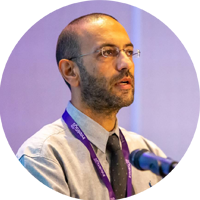
Professor Owen Jones is a Chair in Operational Research at the School of Mathematics, Cardiff University. His work focuses on applying mathematical modeling and optimization techniques to address challenges in environment, energy, and sustainability, including renewable energy systems, water management, and disaster risk quantification. Operational Research Stochastic Modeling Environmental Data Analysis Renewable Energy Optimization His research spans environmental science, hydrology, and computational methods, with recent work leveraging approximate Bayesian computation (ABC) and generative adversarial networks (GANs) to model climate impacts, water systems, and biological dynamics. Articles highlight innovations in wastewater surveillance, bat roost detection, and tidal energy optimization. Professor Jones supervises advanced students in areas like spatio-temporal modeling, emergency response simulation, and multifractal processes. He has secured grants for interdisciplinary projects, including UKRO-funded freshwater solutions, GCRF wastewater monitoring, and EU Horizon2020 climate adaptation initiatives. He is part of the Operational Research group at Cardiff University and has collaborated with institutions such as the Australian Department of Agriculture, Fisheries and Forestry, and the EU Horizon2020 program.
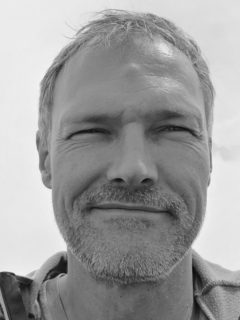
Jerry P. Fairley serves as a Full Professor in the Department of Earth and Spatial Sciences within the College of Science at the University of Idaho. His academic career spans three decades with continuous research contributions in hydrogeological systems and geothermal energy applications. Education: B.S. in Geology (1984) from State University of New York College at Cortland M.S. in Geosciences (1991) from University of Nevada, Las Vegas Ph.D. in Earth Resources Engineering (2000) from University of California, Berkeley Professor Fairley's research centers on fluid dynamics in complex geological media , with emphasis on heterogeneous porous systems, geothermal reservoir characterization, and environmental applications including carbon sequestration and nuclear waste disposal. His work integrates field measurements, geospatial analysis, and numerical modeling to address challenges in hydrothermal systems and arid-region groundwater management. Recent projects demonstrate particular expertise in Yellowstone hydrothermal dynamics and Chilean mining district hydrology. Analysis of his 15 most recent publications (2017-2024) reveals consistent focus on hydrothermal system behavior (particularly Yellowstone), groundwater recharge in arid environments (notably Chilean Andes), and geothermal resource assessment using geostatistical methods. His work bridges fundamental fluid mechanics with practical energy and water resource applications, often employing innovative field measurement techniques like ice box calorimetry and thermal anomaly mapping. Professor Fairley has led significant collaborative research initiatives including the NSF-funded project Constraining Heat Flux from the Shallow Geothermal System, Yellowstone Caldera (2013), demonstrating sustained external funding for his geothermal investigations. His fieldwork spans diverse geological settings from Idaho's Snake River Plain to active volcanic zones in Japan and Chile.
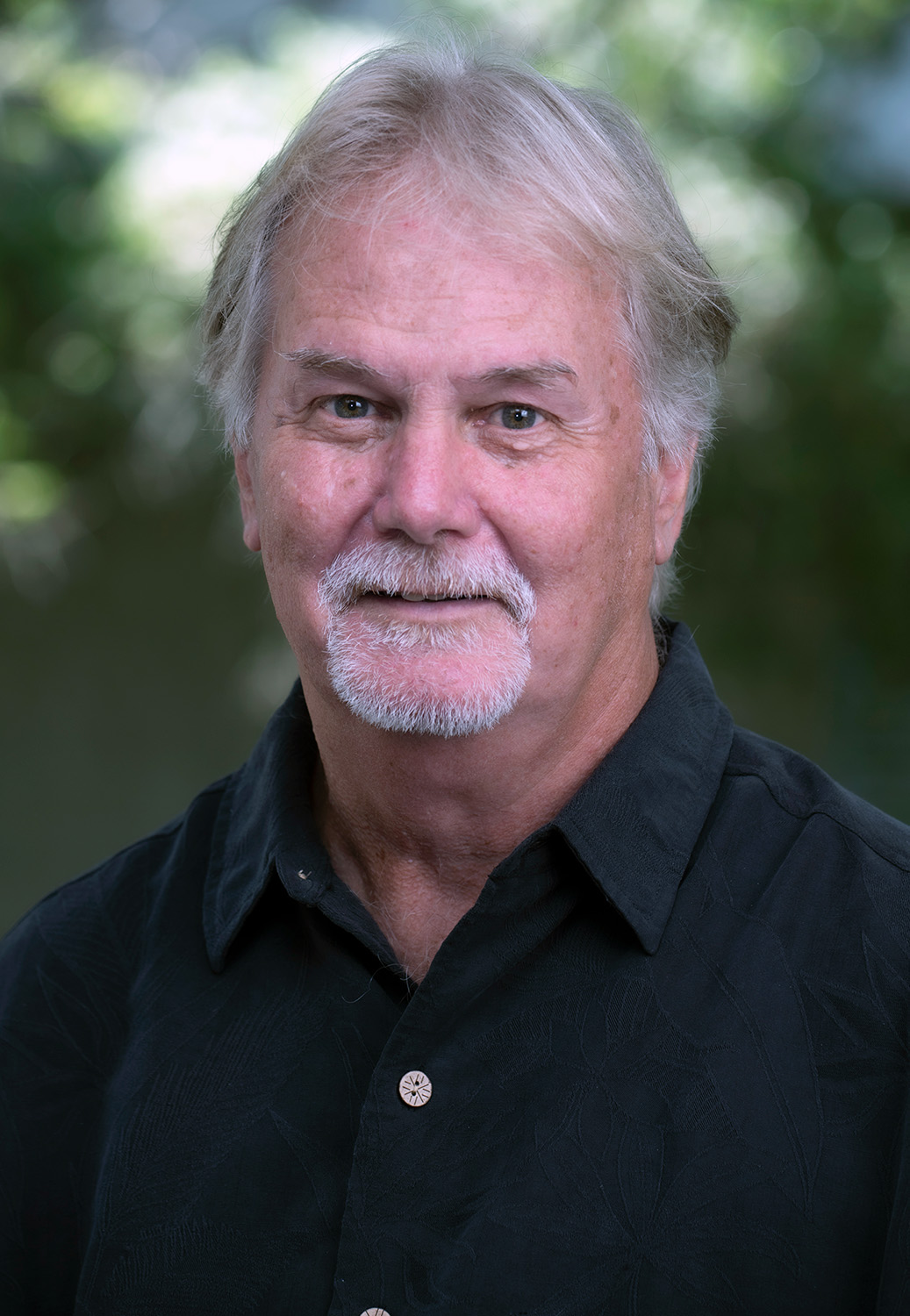
Michael S. Zhdanov is a Distinguished Professor in the Department of Geology and Geophysics at the University of Utah, where he has served since 1993. As Director of the Consortium for Electromagnetic Modeling and Inversion (CEMI) since 1995, he leads industry-sponsored research in non-seismic geophysics. He holds a Ph.D. from Moscow State University and previously held prominent roles at the Moscow Academy of Oil and Gas and the Russian Academy of Sciences. Research Focus Dr. Zhdanov pioneered regularized focusing inversion for geological imaging and developed the Gramian-based joint inversion framework for multiphysics data integration. His work bridges geophysics, machine learning (e.g., diffusion models, ResU-Net++), and computational methods to solve inverse problems in mineral exploration, subsurface imaging, and electromagnetic modeling. Key domains include salt dome reconstruction, basin analysis, and airborne EM/IP inversion. Publication Trends Recent work (2023–2025) demonstrates a strong emphasis on AI-driven geophysical inversion , with neural networks (ResU-Net++, EfficientNetV2) applied to gravity/magnetic data for salt dome detection, basement relief mapping, and mineral targeting. Over 50% of publications integrate machine learning with traditional inversion theory. Awards and Honors IEEE Senior Member (2024) SEG Honorary Membership (2013) Gauss Professorship, Gottingen Academy (1990) University of Utah Distinguished Scholarly Award (2009) Full Member, Russian Academy of Natural Sciences (1991) Leadership and Funding As CEMI Director, Zhdanov collaborates with 30+ industry partners (e.g., Shell, ExxonMobil, BHP). Secured grants from NSF, DOE, and industry for projects on 3D EM inversion, mineral exploration, and airborne survey technologies. Actively advises graduate students in inversion theory and EM methods. Facilities Leads the CEMI Consortium, developing advanced computational tools for multiphysics data fusion used globally in resource exploration.
Professor Michael Papoutsidakis is affiliated with the Department of Industrial Design and Production Engineering at the University of West Attica. His academic career spans research in industrial automation, mechatronics, and intelligent control systems, with a focus on applications in hydraulic/pneumatic systems, robotics, and Industry 4.0 technologies. PhD from Bristol Robotics Laboratory (2004) MSc in Automatic Control Systems from University of the West of England (2004) Graduated from TEI Piraeus Automation Engineering (2000) His research interests include: Modeling of fluid power systems AI-driven control algorithms Smart logistics and ERP systems Embedded systems for motion devices Autonomous robotic platforms Wireless sensor networks in industrial applications Recent publications highlight his work at the intersection of 3D printing, robotics, and Industry 4.0, including advancements in digital twins, biomimetic manufacturing, and drone technology. His research emphasizes practical implementations for industrial and educational contexts. 2005 Patent for robotic training base 2025 Digital Twin Systems research 2024 UAV fuzzy control systems Contact: mipapou@uniwa.gr
Robert Washington-Allen serves as Associate Professor in the Department of Agriculture, Veterinary and Rangeland Sciences at the University of Nevada, Reno. His research integrates remote sensing and GIS technologies to address critical challenges in dryland sustainability, ecological restoration, and pastoral system resilience across global arid ecosystems. His educational background includes: Hamilton Township H.S. (1978) B.S. from The Ohio State University (1983) M.S. from Utah State University (1994) Ph.D. from Utah State University (2003) Washington-Allen's research focuses on dryland ecosystem dynamics using cutting-edge geospatial technologies. His work spans landscape ecology , erosion processes , carbon accounting , and vegetation monitoring , with particular emphasis on rangeland sustainability and pastoral communities. Key methodologies include satellite remote sensing, LiDAR, and ground-based sensor networks for quantifying environmental change. Recent publications (2020-2025) reveal strong thematic continuity in dryland resource monitoring , with increasing focus on groundwater depletion, fire impacts, and precision agriculture applications. His work demonstrates methodological evolution from traditional field sampling toward integrated sensor networks and machine learning approaches for large-scale ecological assessment. No scientific awards were documented in the provided source material. Washington-Allen actively mentors undergraduate researchers through projects like the 2011 NSF REU site in Costa Rica's tropical cloud forests. His grant portfolio includes studies on dryland carbon dynamics, rangeland monitoring, and ecological restoration, though specific funding amounts were not disclosed. His fieldwork spans diverse dryland ecosystems including Mozambique's miombo woodlands, Nevada's sagebrush steppe, and Texas rangelands. Current research emphasizes sensor integration for real-time monitoring of dryland degradation processes and climate adaptation strategies for pastoral communities.
Ali ÇINAR is a Researcher in the Department of Electrical and Electronics Engineering at Kastamonu University's Faculty of Engineering and Architecture. He holds a PhD (2023), MSc (2019), and BSc (2012) in Electrical and Electronics Engineering from Eskişehir Osmangazi University and Atılım University respectively, with expertise spanning ionospheric physics and medical imaging. His educational background includes: PhD in Electrical and Electronics Engineering, Eskişehir Osmangazi University (2023) MSc in Electrical and Electronics Engineering, Eskişehir Osmangazi University (2019) BSc in Electrical and Electronics Engineering, Atılım University (2012) Dr. ÇINAR's research bridges Ionospheric Physics and Medical Image Processing , with significant contributions in detecting ionospheric disturbances from geomagnetic/seismic events using machine learning, and developing lung nodule classification algorithms. His work employs K-Nearest Neighbors and Convolutional Neural Networks for space weather monitoring and COVID-19 detection, demonstrating exceptional interdisciplinary application of computational methods in geophysics and biomedical engineering. Publication analysis reveals dominant focus on ionospheric anomalies (70% of works), with recent expansion into medical AI. His research consistently applies advanced signal processing to complex datasets, showing increasing collaboration with Hacettepe and Bilkent Universities. The shift toward medical applications since 2020 highlights adaptability in addressing global health challenges while maintaining core geophysics expertise. Dr. ÇINAR actively collaborates with Seçil Karatay (23 joint works) and Feza Arıkan (19), contributing to Turkey's space weather research infrastructure. He participated in a TÜBİTAK-funded ionosphere modeling project (2015-2017) and maintains IEEE membership since 2010, though current involvement status is unconfirmed. His research group develops real-time ionospheric monitoring tools at Kastamonu University, with recent focus on earthquake precursor detection systems. Current projects integrate satellite data with ground-based observations to improve space weather forecasting capabilities for Turkish airspace.
Professor Matthias Braun is a distinguished academic in the field of physical geography, specializing in remote sensing and GIS applications for glaciology and polar research. He holds a professorship at the Institute of Geography at Friedrich-Alexander University Erlangen-Nuremberg (FAU), where he leads the Chair of Geography (Remote Sensing and GIS) and serves as Chairman of the Examination Board for B.Sc./M.Sc. Physical Geography and BA/MA Cultural Geography since 2022. His research focuses on monitoring glacier dynamics, ice sheet changes, and climate impacts in polar and mountainous regions using advanced remote sensing techniques. Professor Braun has held several significant leadership positions including Chairman of the International Doctoral Program 'Measuring and Modelling Mountain Glaciers in a Changing Climate' in the Bavarian Elite Network funded by the Bavarian Ministry of Science & Art since 2022, and Coordinator of the DFG SPP Antarctic Research since 2017. His academic journey includes an Associate Professor position at the University of Alaska Fairbanks (2010-2011) and extensive field experience leading multiple Arctic and Antarctic expeditions since 1994/95, with research stays in Alaska, South America, West & East Africa, Himalaya & Karakorum. His research interests span glaciology, remote sensing, geographic information systems, climate change impacts, land use change, polar regions, and high mountain environments. Professor Braun's work integrates microwave and optical remote sensing data from satellite and airborne platforms to derive geobiophysical parameters and their spatiotemporal variations. He employs advanced digital image processing, pattern recognition, SAR interferometry, and polarimetry techniques in his research. His laboratory maintains active participation in major research initiatives including the TanDEM-X and TanDEM-L Science Teams since 2010. Professor Braun's extensive publication record demonstrates a clear progression from foundational work on glacier monitoring to sophisticated applications of machine learning and deep learning for glacier feature extraction. His recent work focuses on calving front detection using SAR imagery, glacier velocity mapping, and integration of multi-sensor data for comprehensive glaciological analysis. Key research themes include glacier mass balance, ice sheet dynamics, supraglacial hydrology, and climate change impacts on cryospheric systems across diverse regions including Antarctica, Patagonia, the Himalayas, and the European Alps. Among his notable recognitions is the 2009 Science Award for Physical Geography from the Prof. Dr. Frithjof Voss Foundation for Geography and his Habilitation at the Mathematical-Natural Science Faculty of the University of Bonn in 2009. He serves as an Associate Editor for Frontiers in Earth Sciences – Cryospheric Sciences and reviews for numerous peer-reviewed journals. Professor Braun has mentored numerous doctoral students to completion, with recent graduates including Dr. Christian Sommer (2022), Dr. David Farias Barahona (2021), Dr. Stefan Lippl-Seifert (2020), and Dr. Peter Friedl (2019). Several students are currently completing their dissertations under his supervision. His research is supported by various funding mechanisms including the Bavarian Elite Network, DFG research programs, and international collaborations. He maintains strong connections with national and international research institutions including membership in the International Glaciological Society (IGS), German Society for Photogrammetry, Remote Sensing and Geoinformation (DGPF), German Society for Polar Research (DGP), and German Society for Geography (DGfG).
Jana de Wiljes is a researcher at the University of Reading, specializing in interdisciplinary applications of Bayesian statistics and data assimilation. Her work spans atmospheric sciences, medical informatics, and nonlinear dynamics. Published key research on atmospheric circulation regime identification and climate forecasting (2020-2023). Developed Bayesian frameworks for clinical decision-making in chemotherapy. Contributed to causal inference methods in observational time series analysis. Her research demonstrates strong methodological innovation across geophysics and computational pharmacology. No explicit academic rank was stated in the source materials, but her publication record indicates active research contributions.
Andreina Belušić Vozila is a Senior Lecturer at the Faculty of Physics, University of Rijeka, Croatia. She holds a PhD in Physics (2018) and MSc/BSc in Geophysics from the Faculty of Science, University of Zagreb. Her work bridges atmospheric physics, regional climate modeling, and applied climatology. PhD in Physics (2014–2018), University of Zagreb MSc in Geophysics (2012–2014), University of Zagreb BSc in Geophysics (2009–2012), University of Zagreb Her research focuses on Adriatic climate systems, particularly wind dynamics and extreme weather. She investigates bora wind microscale properties, hail climatology, and thunderstorm intensity metrics using regional climate models. Applications include viticulture adaptation and air quality analysis. Recent publications analyze convection-permitting wind models (2024), Adriatic storm intensity (2021), and climate-agriculture interactions (2020). Collaborations span the SWALDRIC and VITCLIC projects, emphasizing interdisciplinary climate solutions. 2020: Nagrada za mladu meteorologinju, Hrvatsko meteorološko društvo 2019: L’Oreal-UNESCO stipendija za žene u znanosti 2018: Godišnja nagrada Društva sveučilišnih nastavnika, Zagreb 2015: Godišnja nagrada 'Roberto i Daniela Giannini' 2012: Dekanova nagrada za izvrsnost She has served as a meteorological observer at Crocontrol (2018–2021) and as a physics teacher at primary schools (2021). Her work combines theoretical climate research with practical applications in agriculture and extreme weather monitoring.
Nils Olsen is a Professor and Head of Geomagnetism and Geospace at the Department of Space Research and Technology , DTU Space (Danish National Space Center). His career spans multiple institutions including the Niels Bohr Institute at the University of Copenhagen and the Danish Center for Planetary Science . He holds a MSc (1985) and PhD (1991) in Physics from Göttingen University . Research interests center on Earth’s magnetic field modeling , core fluid dynamics , electromagnetic induction , and planetary magnetism (Mars, Moon). His work integrates Swarm satellite data , Ørsted missions , and CHAMP observations to study geomagnetic variations and external-internal field separation. Recent publications focus on tidal magnetic signals, ionospheric currents, and space weather applications. Supervision includes PhD projects on drone-borne magnetic surveying , machine learning for geophysical inversion , and UAV-based near-surface geophysics . Collaborations extend to ESA’s Swarm mission and CSES satellite initiatives , with over 100 peer-reviewed publications and leadership roles in international geophysical working groups.
Gary Mitchum serves as Professor and Associate Dean for Research at the University of South Florida's College of Marine Science, where he has been a faculty member since 1996 after directing the University of Hawaii Sea Level Center. His research integrates satellite remote sensing and in situ data to advance understanding of sea level rise, climate change, and ocean physics phenomena. Education: Ph.D., Florida State University, 1984 Research Focus: Professor Mitchum specializes in sea level rise dynamics, El Niño impacts, ocean eddies, tidal analysis, and tsunami propagation. His work examines 20th-century sea level trends while applying ocean physics principles to fisheries management and climate adaptation. Current investigations leverage satellite altimetry to quantify ocean circulation changes and coastal vulnerability. Publication Trends: Recent publications (2023-2025) reveal concentrated efforts on global sea level monitoring systems, reprocessed altimetry datasets (TOPEX/Jason/Sentinel-6), and climate assessment contributions. Key thematic areas include sea level rise acceleration detection, tsunami warning network optimization, and integration of multi-mission ocean altimeter data for climate research, prominently featured in State of the Climate reports. Leadership & Collaboration: As Associate Dean, he directs research strategy while participating in international frameworks like the Global Sea Level Observing System (GLOSS). His technical expertise informs tide gauge benchmark monitoring standards and operational sea level networks critical for climate adaptation and disaster response. Infrastructure Contributions: Mitchum has shaped sustained ocean observing systems including the University of Hawaii Sea Level Center legacy and modern networks for tsunami science. His current work enhances real-time sea level data integration for coastal resilience and climate service applications.
Assoc. Prof. Dr. Ali GÜLBAĞ is an academic at the Faculty of Computer and Information Sciences , Sakarya University , specializing in Computer Engineering . His career spans over two decades, focusing on FPGA-based hardware design, machine learning applications, and educational methodologies in computer architecture. Doctorate (2003-2006): Quantitative determination of volatile organic compounds using artificial neural network and fuzzy logic-based algorithms MSc (1998-2000): Building automation using telephone lines BSc (1994-1998): Electrical-Electronics Engineering His research interests include Artificial Neural Networks , FPGA Design , and Water Resource Management , with applications in seismic event differentiation, environmental modeling, and educational technologies. Recent work emphasizes water consumption prediction using machine learning. Key projects: BZK.SAU.FPGA microcomputer architecture , Remote FPGA laboratories Publications demonstrate expertise in combining machine learning techniques (ANNs, gradient boosting, random forests) with hardware implementations for real-world problem-solving.
Rüştü Murat Demirer serves as an Assistant Professor in the Department of Electrical and Electronics Engineering at Işık University's Faculty of Engineering and Natural Sciences. His academic career spans decades with active teaching responsibilities including Biomedical Engineering courses such as Clinical Care Informatics, Biosignal Processing, and Medical Imaging since at least 2012 across multiple institutions including Işık University and Bahçeşehir University. His educational foundation includes: PhD in Biomedical Engineering from Boğaziçi University (1983-2002) MS in Energy from Istanbul Technical University (1980-1982) BS in Electronics and Communications Engineering from Kocaeli University (1976-1980) Dr. Demirer's research integrates Biomedical Engineering with cutting-edge computational neuroscience, focusing on Bioelectronics, Artificial Intelligence applications, and Neuroscience. He pioneers methodologies for analyzing brain dynamics through EEG/ECoG signal processing, entropy-based biomarker development, and machine learning algorithms for neurological and psychiatric conditions. His work bridges theoretical neuroscience with clinical applications in epilepsy, bipolar disorder, and brain-computer interfaces. Analysis of his publication trends reveals strong interdisciplinary convergence between neuroscience, biomedical engineering, and artificial intelligence. Key methodological themes include Hilbert transform applications, nonlinear dynamics in brain signals, entropy quantification for psychiatric diagnostics, and hybrid machine learning approaches for medical signal classification. This research trajectory demonstrates consistent innovation in translating complex brain signal analysis into clinically relevant diagnostic tools. Dr. Demirer has actively mentored 11 graduate students (10 Master's and 1 PhD) between 2013-2025. His advisees' research spans diverse applications including: Machine learning for cybersecurity threat detection Cryptocurrency market analysis using predictive modeling EEG/eye-tracking fusion for cognitive decision studies Medical diagnostics through convolutional neural networks Natural language processing for offensive language detection He maintains professional engagement as a member of the Chamber of Electrical Engineers (Elektrik Mühendisleri Odası) while teaching specialized courses across biomedical engineering, cybersecurity, and data science domains.
Professor Michael Heckenberger is a faculty member at the University of Florida's Department of Anthropology, with office in Turlington Hall. His research focuses on Amazonian archaeology , pre-industrial complex societies , and historical ecology . Ph.D. in Anthropology (University of Pittsburgh, 1996) Graduate Certificate in Latin American Studies (University of Pittsburgh, 1995) B.A. in Anthropology (University of Vermont, 1988) Heckenberger's work examines: Cultural landscapes and environmental sustainability Anthropogenic soil formation (Amazonian Dark Earths) Pre-Columbian urbanism in the Amazon Human-environmental co-evolution Indigenous knowledge systems Interdisciplinary approaches to tropical ecology His recent publications analyze anthropogenic landscapes using remote sensing, soil science, and ethnographic data, with emphasis on the Xingu Indigenous Territory . Key themes include: Carbon sequestration in ancient soils Fire regime impacts on tropical forests Legacy of pre-Columbian land management Indigenous contributions to biodiversity Archaeological methods in ecological research Interdisciplinary conservation strategies
Dr. Ellen A. Cowan is a Professor in the Department of Geological and Environmental Sciences at Appalachian State University, part of the College of Arts and Sciences. She has taught courses such as Introduction to Physical Geology, Oceanography, Geomorphology, and Geoarchaeology since joining the faculty in 1988. Her research focuses on glacial-marine sedimentology, coal ash transport in rivers, and geoarchaeological assessments of historic sites in North Carolina. B.A., Albion College M.S., Northern Illinois University Ph.D., Northern Illinois University Dr. Cowan's research spans glacial-marine sedimentology , examining tidewater glaciers in southeastern Alaska, and coal ash transport in aquatic ecosystems, particularly in the southeastern U.S. She also applies geoarchaeological methods to map historic sites, integrating geophysics and archival data. Her recent publications highlight trends in environmental contamination tracing, ice sheet-climate interactions, and geophysical prospection for cultural heritage preservation. Scientific awards include the Don Sink Outstanding Scholar Award (1999) , the Undergraduate Research Mentorship Excellence Award (2018) , and recognition as a Fellow of the Geological Society of America (2018) . She actively involves students in field research, particularly during summer expeditions in Alaska. Her work has been published in journals covering environmental science, geology, and geophysics, with a focus on climate-ice sheet dynamics and pollution monitoring.