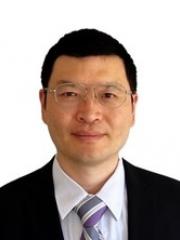
Scientia Professor Nasser Khalili is the Head of the School of Civil and Environmental Engineering at the University of New South Wales (UNSW). He also serves as the Director of the ARC Research Hub for Resilient and Intelligent Infrastructure Systems (RIIS), President of the Australian Association for Computational Mechanics (AACM), and a core member of the International Technical Committee on Unsaturated Soil (TC106). His research focuses on geotechnical engineering, computational mechanics, porous media behavior, and sustainable infrastructure systems. Key areas of expertise include unsaturated soils, hydraulic fracturing modeling, and advanced material characterization for asphalt mixtures. Professor Khalili's work integrates computational methods with experimental analysis to address challenges in infrastructure resilience and environmental sustainability. He has pioneered studies on pore pressure dynamics, fracture mechanics in porous media, and the application of waste materials in construction. His leadership roles in national and international committees reflect his influence in advancing geotechnical and computational engineering practices. His scientific contributions include over 150 peer-reviewed articles, with recent work emphasizing machine learning applications in civil engineering and innovative solutions for sustainable asphalt mixes. Awards include Fellowship of the Academy, recognizing his significant impact on the field.
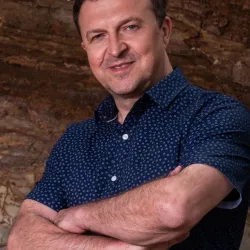
Dr. Mark Hoggard is an ARC DECRA Research Fellow at the Research School of Earth Sciences, The Australian National University (ANU). His research focuses on geodynamics, sea-level modelling, nuclear test monitoring, and critical mineral systems. He holds a PhD from ANU and has studied at institutions including Cambridge University, Harvard, and Columbia. Hoggard’s work integrates geophysical data with numerical modelling to explore Earth’s dynamic processes, including mantle convection, glacial isostatic adjustment, and lithospheric evolution. Affiliations: Research School of Earth Sciences (ANU), Geoscience Australia (collaborative projects). Education: PhD (ANU), MA (Cambridge), BSc (ANU). Research Interests: Dynamic topography and its influence on sea-level records. Mantle structure and its relationship to mineral systems. Glacial cycles and ice sheet dynamics. Seismic monitoring of underground nuclear tests. Recent Article Trends: Recent work emphasizes geodynamic corrections to Pliocene sea-level estimates, mantle rheology influences on ice sheet models, and statistical methods for distinguishing seismic events from explosions. Key themes include linking deep Earth processes to surface observations and advancing methods for critical mineral exploration. Grants & Projects: Leads projects such as CoastRI GIA Modelling (2024–2027) and Next Generation Sea-Level Modelling (2022–2025). Collaborates with institutions like Los Alamos National Laboratory on nuclear test detection algorithms. Labs/Teams: Part of ANU’s Geodynamics group and the Exploring for the Future program at Geoscience Australia, focusing on Australia’s crustal structure and mineral potential.
Ben Mather is a Research Fellow in the School of Geosciences at The University of Sydney, specializing in geodynamic modeling and Earth system processes. He leads the EarthByte Group's efforts to integrate numerical models with geophysical data, focusing on volcanic systems, groundwater dynamics, and critical mineral exploration. His work bridges geoscience and climate change mitigation strategies, influencing national and international policy discussions. Education: PhD in Earth Science, The University of Melbourne (2016) Bachelor of Science (Hons), Monash University (2011) Diploma of Film and Television, Monash University (2010) Research Interests: Enigmatic volcanic activity patterns and their tectonic drivers Groundwater flow pathways under climate extremes Carbon sequestration via tectonic processes Development of open-source geodynamic tools like Stripy and PyCurious Notable Projects: Project Volcanoes Downunder: Investigating volcanic chains in the Tasman Sea Groundwater modeling for southeastern Australia's aquifers Thermal structure studies in Ireland and Australia using Bayesian inversion His computational frameworks, built on PETSc and Python, enable large-scale simulations of Earth's thermal and hydrological systems. Mather actively engages in public science communication through media interviews and educational workshops.
Dr. Thanh-Son Pham is an ARC DECRA Research Fellow in the Geophysics Department at The Australian National University’s Research School of Earth Sciences. His research focuses on using seismic waves to study Earth’s interior structures, from polar ice sheets to the inner core. He has pioneered methods like teleseismic P-wave coda autocorrelation and coda correlation wavefield analysis, leading to breakthroughs such as detecting J-waves in the inner core and identifying an innermost inner core layer. His work has been featured in Science , Nature Communications , and international media. He holds a PhD from ANU (2019) and has supervised research projects on Antarctic seismology and earthquake source physics. Awards include the 2024 Zatman lectureship from SEDI. Current projects include probing Antarctic ice sheets via correlation seismology and advancing machine learning tools for deep Earth studies. Education: PhD in Geophysics (ANU, 2019), Graduate Diploma in Earth System Physics (ICTP, 2015), BSc in Applied Mathematics (Hanoi University, 2013) Research interests span seismic source inversion, Antarctic ice dynamics, and inner core anisotropy. His 2024 articles address Hunga Tonga eruption mechanics and PKIKP wave analysis using deep learning. Media highlights include BBC, NYT, and ANU press releases.
Craig O'Neill is an Associate Professor in Geophysics/Remote Sensing at the School of Earth & Atmospheric Sciences, Faculty of Science, Queensland University of Technology (QUT). His research spans geodynamics, planetary science, geophysics, and engineering geology, with a strong focus on understanding Earth and planetary evolution through computational modeling and geophysical data analysis. His research interests include Geophysics, Geodynamics, Remote Sensing, Planetary Science, Engineering Geology, Geochemistry, and Geology . He applies advanced numerical methods to model planetary interiors, tectonic processes, and geohazards, with recent work exploring early Earth crust formation, Venusian core dynamics, exoplanet thermal evolution, and applied geophysical techniques for engineering and environmental monitoring. The trend in his recent publications shows a strong interdisciplinary focus, combining computational geophysics with planetary science and Earth systems analysis. His work appears in leading journals such as Nature , Science Advances , and Geophysical Research Letters , covering topics from asteroid impacts and craton formation to ambient noise tomography and groundwater response to climate change. Professional Memberships: Australian Society of Exploration Geophysicists American Geophysical Union Australian Geomechanics Society Craig O'Neill supervises research students in areas such as lunar seismology and planetary geodynamics. While no specific grants are listed in the provided text, his extensive publication record and active research programs suggest ongoing funding support. He has developed open-source tools like Planet_LB for lattice-Boltzmann modeling of planetary systems. He is actively involved in the geophysics community, with scholarly profiles on ORCID, Google Scholar, and Scopus, and shares his research via X (formerly Twitter). His work bridges fundamental planetary science with practical geophysical applications.
Professor Brett Harris is a faculty member at Curtin University, affiliated with the School of Earth and Planetary Sciences (EPS) within the Faculty of Science and Engineering. He holds a prominent role in the Office of the Provost. His research focuses on subsurface resource technologies, including mineral exploration, CO2 sequestration, and geothermal energy. He has led major initiatives like the DET CRC and MinEx CRC projects, advancing in-hole electromagnetic sensing and distributed acoustic sensing techniques. His expertise spans hydrogeology, geophysics, and environmental geoscience, with notable contributions to aquifer characterization, fault zone dynamics, and CO2 storage monitoring. He coordinates undergraduate courses in electromagnetism, potential fields, and environmental geophysics, while supervising multiple PhD students. Key collaborations include work with government agencies on fractured aquifer detection and geothermal systems. Recent research emphasizes innovative sensor technologies for subsurface imaging, CO2 leakage monitoring, and groundwater sustainability. His work bridges geophysics with applied engineering solutions for resource exploration and environmental stewardship.
Noel Cressie is a Distinguished Professor of Statistics at the University of Wollongong (UOW), Australia, affiliated with the School of Mathematics and Applied Statistics and the National Institute for Applied Statistics Research Australia (NIASRA). He is also the Director of the Centre for Environmental Informatics (CEI). His academic journey includes a PhD from Princeton University (1975) and a B.Sc. with First Class Honours from the University of Western Australia (1972). His research focuses on spatial and spatio-temporal statistics, Bayesian methods, environmental informatics, and applications in climate science. Notable projects include work on atmospheric CO2 flux inversion (WOMBAT framework), Antarctic environmental research (SAEF initiative), and statistical remote sensing for NASA. He has secured over $20 million in research funding and authored four influential books, including Statistics for Spatial Data . Cressie has received prestigious awards such as the COPSS R.A. Fisher Award (2009), Pitman Medal (2014), and Fellowship of the Australian Academy of Science (2018). He leads interdisciplinary teams addressing global challenges like carbon cycle dynamics and biodiversity modeling. His contributions to statistical methodology and environmental science have been recognized through international collaborations and advisory roles.
Associate Professor Bryce Frederick John Kelly is an academic at the University of New South Wales (UNSW), affiliated with the School of Biological, Earth and Environmental Sciences. His research focuses on greenhouse gas emissions, hydrogeology, and groundwater management, with a specialization in methane and carbon dioxide isotopic analysis. He leads the Greenhouse Gas Measurement Laboratory, which analyzes gas isotopes to trace emissions from coal seam gas (CSG), agriculture, and urban environments. Education: BSc (Hons) in Environmental Geology (UNSW, 1989); PhD in Environmental Geophysics (UNSW, 1995). Research Interests: Measuring methane emissions from CSG, coal mining, and agriculture Soil carbon sequestration and groundwater sustainability Isotope geochemistry for source attribution of greenhouse gases Satellite and airborne greenhouse gas monitoring Impact of CSG development on aquifers and ecosystems Key Projects: Leading the United Nations Environment Programme Methane Science Studies team, quantifying emissions in the Surat Basin. Co-supervising 60+ students. Collaborating with ANSTO on soil carbon and groundwater modeling. Awards: 2016 Cotton Seed Distributor Researcher of the Year finalist, 2011 Eureka Prize finalist for water research, and multiple industry awards for hydrogeological innovation. Labs/Teams: Connected Water Initiative, Centre for Ecosystem Science, Earth and Sustainability Science Research Centre (ESSRC). Active in policy outreach through The Conversation and Australian Geographic.
Professor Georg Gottwald is a distinguished academic in the School of Mathematics and Statistics at the University of Sydney, where he has been a faculty member since 2002, progressing from Lecturer to his current position as Professor since 2013. He also holds a Visiting Professor position at the University of Surrey in the UK since 2013. His extensive research career spans dynamical systems theory, geophysical fluid dynamics, and the intersection of machine learning with complex systems. Professor Gottwald's research focuses on dynamical systems theory as an abstract formalism for studying systems evolving in time and space. His work has significant applications across diverse fields including climate modeling, biological systems, and complex networks. He is particularly known for developing methods for model reduction of complex dynamical systems, stochastic modeling approaches, and the application of machine learning techniques to dynamical systems. His research aligns with the Faculty of Science Research Strengths in Understanding the Universe, Fundamental Laws of Nature, Complex Systems, Climate and Environmental Change, Data and Decisions, and National Security. His most recent publications demonstrate a strong trajectory toward integrating machine learning with dynamical systems theory, particularly in developing stable generative models, learning dynamical systems with random feature maps, and combining data assimilation with machine learning for forecasting. His work spans pure mathematical theory to practical applications in climate science, finance, and biological systems, showing remarkable breadth while maintaining deep mathematical rigor. Future Fellowship, 'Stochastic methods in mathematical geophysical fluid dynamics', Australian Research Council, 2010-2014 Australian Research Fellowship, 'Stochastic methods in mathematical geophysical fluid dynamics', Australian Research Council, 2010-2015 (declined) Australian Research Fellowship, 'Geometric methods in geophysical fluid dynamics', Australian Research Council, 2004-2009 Professor Gottwald has successfully supervised numerous PhD and Master's students who have gone on to academic and industry positions worldwide. His current research group includes postdocs and PhD students working on machine learning for dynamical systems, stochastic model reduction, physics-informed machine intelligence, and tensor methods for scientific machine learning. He has secured multiple ARC Discovery Project grants and has been involved in significant international collaborative research projects. He is actively involved with the Sydney Dynamics Group, which he co-founded in 2007, fostering collaboration between the University of Sydney and UNSW. Professor Gottwald maintains strong editorial commitments as Associate Editor for Geophysical and Astrophysical Fluid Dynamics, SIAM Journal of Applied Dynamical Systems, and Journal of Computational Dynamics, and serves on the Editorial Advisory Board for Chaos and the Editorial Board for Physical Review E. His professional activities demonstrate leadership in the dynamical systems community through organizing workshops, seminars, and special journal issues.
Weronika Gorczyk is an Adjunct Professor at the School of Earth and Oceans at The University of Western Australia. She holds a PhD from ETH Zurich (2008) and has extensive experience in geodynamic modeling, mineral systems research, and tectonic studies. Her research focuses on lithospheric-scale processes, including rifting, basin evolution, and the deep carbon cycle, with applications to mineral exploration. She currently leads MRIWA-funded projects investigating Proterozoic basin dynamics and their links to mineralization in the Paterson Orogen. Education: PhD in Geology, ETH Zurich (2008) Numerical Modeling experience from CSIRO (2008–2010) Research Interests: Geodynamics, tectonic evolution of cratons, carbon cycle dynamics, and the interplay between lithospheric deformation and mineralizing processes. Her work integrates numerical modeling, geophysical data, and field observations to address unresolved questions in Earth's evolution. Key Projects: MRIWA 521: Multi-stage basin evolution and mineralization in the Paterson Orogen ARC Linkage LP190100146: Integrated exploration framework for frontier basins ARC DP190100216: Fluid dynamics in deep Earth processes Grants & Leadership: Principal Investigator on MRIWA and ARC grants totaling over 18 funded projects. Active in collaborative networks with Geological Surveys, Macquarie University, and international experts. Labs/Teams: Core member of the Centre for Exploration Targeting and ARC Centre of Excellence for Core to Crust Fluid Systems. Leads multidisciplinary teams integrating geodynamic modeling, geochemistry, and geophysics.
Malcolm Sambridge is a Professor of Seismology and Mathematical Geophysics at the Research School of Earth Sciences (RSES), Australian National University (ANU). He holds roles including former Head of Seismology and Mathematical Geophysics (2006–2016) and has been a Fellow and Research Fellow at ANU since 1992. His research focuses on inverse problems, computational geophysics, seismic wave propagation, and statistical inference applied to Earth Sciences. He has led projects such as the Australian Passive Seismic Server and the Australian Seismometers in Schools Network (AuSIS). Education includes a B.Sc. in Physics (1983, Loughborough University), a Certificate in Advanced Mathematics (1984, University of Cambridge), and a Ph.D. in Geophysics (1988, ANU). His career includes visiting roles at Caltech and the Carnegie Institution of Washington. Research interests emphasize developing algorithms for geophysical inference, including the Neighbourhood Algorithm for nonlinear inversion. Key contributions include studies on Earth's inner core structure, seismic tomography, and Bayesian methods. He advises students across physics, mathematics, and Earth Sciences, focusing on computational and theoretical geophysics. Publications span over 150 articles, with recent work on optimal transport for inversion, trans-dimensional Bayesian tomography, and seismic imaging techniques. His software tools, like pyprop8 and TerraWulf, support geophysical modeling and high-performance computing.
Dan Steinberg is a senior research scientist and team leader of the Decisions & Statistical Learning team at CSIRO Data61 in Canberra, Australia. His expertise lies in probabilistic machine learning, variational inference, Bayesian deep learning, causal inference, and their application to domains spanning synthetic biology, geospatial analytics, and algorithmic fairness. Education PhD in Computer Vision / Machine Learning (2013) – University of Sydney, Australian Centre for Field Robotics Bachelor of Engineering (Mechatronics, First-Class Honours) – University of Sydney (2008) Bachelor of Commerce (Finance) – University of Sydney (2008) Research Interests Steinberg’s core research agenda revolves around building scalable probabilistic models that can learn efficiently from limited or noisy data and provide principled uncertainty estimates. Key themes include: Variational Inference & Bayesian Deep Learning: developing lightweight yet powerful algorithms for approximate posterior inference in complex models (e.g., Aboleth, Revrand). Active Learning & Experimental Design: creating methods that decide which experiments or measurements will maximise information gain, with recent focus on in-silico protein engineering via Variational Search Distributions (VSD). Causal Inference: leveraging machine-learning tools to perform robust observational causal studies for evidence-based policy, including work on youth well-being and academic outcomes. Algorithmic Fairness: translating normative notions of equity into quantifiable objectives for regression-based decision systems. Large-scale Spatial Analytics: Landshark—an open-source TensorFlow toolkit for supervised learning on massive geospatial raster datasets. Notable Software & Tools Aboleth: A minimal-overhead TensorFlow framework for Bayesian deep learning. Landshark: Command-line tools for large-scale spatial inference. Revrand: Scalable Bayesian generalised linear models with non-conjugate likelihoods. libcluster: Extensible C++ library for hierarchical Bayesian clustering. Scientific Awards Oral Presentation Award – ICML 2025 Workshop on Scaling up Intervention Models (SIMS) Oral Presentation Award – NeurIPS 2024 Workshop on Bayesian Decision-making and Uncertainty (BDU) Oral Presentation Award – NeurIPS 2023 Workshop on Adaptive Experimental Design and Active Learning Spotlight Paper Award – NeurIPS 2014 (Extended and Unscented Gaussian Processes) Research Team & Collaborations As Team Leader – Decisions & Statistical Learning at CSIRO Data61, Steinberg directs a multi-disciplinary group that partners with government agencies (e.g., Jobs and Skills Australia, Australian Institute of Health and Welfare) and industry to deploy machine-learning solutions at scale. He has previously held roles as Principal Researcher at Gradient Institute (2019-2023), Senior Research Engineer at CSIRO Data61 (2016-2019), Researcher at NICTA (2013-2016), and Research Associate at the University of Sydney (2012-2013).
Dr. Jimmy Li is a Postdoctoral Research Fellow at the School of Mechanical and Mining Engineering, The University of Queensland, with expertise in geophysics and geomechanics for resource and geoenergy exploration. His career spans over a decade in industry roles at Halliburton Energy Services and academic research since completing his PhD in 2021. Bachelor of Petroleum Engineering (2007) from China University of Petroleum Doctor of Philosophy in Petroleum Engineering (2021) from Curtin University Dr. Li's research focuses on theoretical and experimental studies in rock mechanics and geotechnical engineering for underground mining and drilling applications. Key areas include: Machine Learning in Geoscience for tasks like CMRR and UCS prediction Rock Physics involving seismic, microseismic, and ultrasonic wave propagation Weathering in Sedimentary Rock through experiments on fluid-rock interactions Petrophysics and Formation Evaluation using core analysis and laboratory measurements Drilling Engineering in hostile environments (HPHT), geosteering, and borehole stability His recent publications highlight trends in coal geomechanics, shale permeability, CO2 sequestration modeling, and AI applications in upstream geoenergy. He has collaborated on multi-frequency sonic logging tools and established the NATA-accredited Quality Management System for rock mechanics at UQ. Dr. Li is available for supervision and has secured funding from industry partners like Origin Energy, Normet Asia Pacific, and Lihir Gold Limited for projects on coal strength, grout durability, and roadway stability. He contributes to developing machine learning methods for reducing subjectivity in mining safety assessments and optimizing drilling technologies.
Professor Hrvoje Tkalčić is a renowned geophysicist at The Australian National University's Research School of Earth Sciences, specializing in global seismology and deep Earth structure. As Head of Geophysics and Director of the Warramunga Seismic & Infrasound Facility, he leads research into Earth's core-mantle dynamics, planetary seismology, and seismic source physics. His work integrates advanced observational techniques and computational models to explore Earth's interior and other planetary bodies. Affiliations: ANU since 2007; Elected Fellow of the Australian Academy of Science (2024); Member of the IUGG/IASPEI Executive Committee (2023–2027). Education: PhD in Geophysics from UC Berkeley (2001); Diploma in Physics from University of Zagreb (1996). Research Interests: Focus on the Earth's inner core anisotropy, planetary core imaging, and lithospheric structure using seismic and correlation wavefields. Recent breakthroughs include discoveries of distinct anisotropy in the innermost inner core and Mars' core structure using InSight mission data. Grants & Awards: Recipient of the 2023 CAS Distinguished Scientist Fellowship, Royal Astronomical Society Price Medal (2022), and multiple ARC grants. His team's work has advanced seismic inversion techniques and global core-mantle boundary imaging. Labs/Teams: Leads the Warramunga Array Facility and collaborates with international teams on Mars seismology (InSight) and Antarctic seismic deployments. Supervises a dynamic group of PhD students and postdocs exploring Earth's deep structure and planetary processes.
Dr. Mahdiyeh Razeghi is a Lecturer in Surveying and Spatial Science at the University of Southern Queensland (UniSQ), affiliated with the School of Surveying and Built Environment. Her research focuses on integrating Earth observation satellites (e.g., GRACE, GNSS, InSAR) with hydro-climate models to study water resources, land deformation, groundwater depletion, and climate change impacts. She holds a PhD from the University of Newcastle (2020) and has held roles including Research Fellow at the Australian National University (ANU) and Postdoctoral Fellow at ANU's Research School of Earth Sciences. Her expertise spans satellite gravimetry, GNSS-IR for soil moisture, drought resilience, and groundwater storage estimation. Key projects include the Great Artesian Basin (GAB) study with Geoscience Australia and innovative methodologies published in AGU’s Eos magazine. She is affiliated with the Centre for Sustainable Agricultural Systems and the Institute for Resilient Regions, emphasizing agricultural drought adaptation. Research outputs include over 20 peer-reviewed articles since 2011, with recent work addressing Australia’s flood events, coal seam gas impacts on groundwater, and GRACE Follow-On mission analyses. Her work bridges geodesy, environmental remote sensing, and climate-driven water sustainability, with industry applications in rural resilience strategies. Professional memberships include the European Geosciences Union (EGU) and American Geophysical Union (AGU). Her teaching interests align with digital twins and GNSS technologies, reflecting her commitment to advancing geospatial education and applied research.