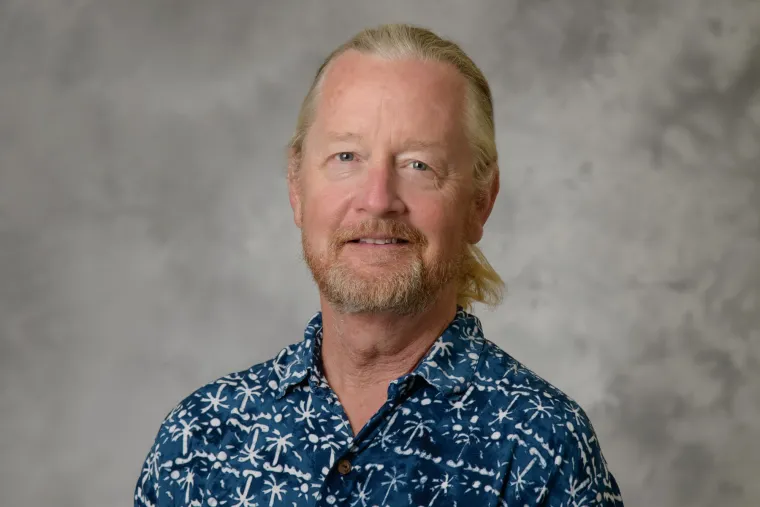
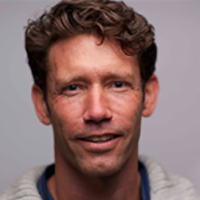
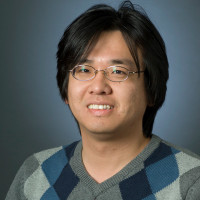
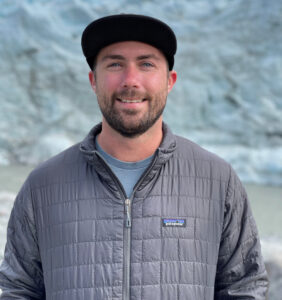
Ty Ferré is a University Distinguished Professor in Hydrology and Atmospheric Sciences at the University of Arizona. His research improves measurement selection for hydrologic decision-making through integrated physical models, instrument response modeling, and inverse methods. Ferré's work focuses on subsurface processes, vadose zone dynamics, and climate interactions. He develops methods to incorporate geophysical data into hydrologic analysis and studies water movement in complex environments.
Sally Gibson is a researcher at the Department of Earth Sciences, University of Cambridge, specializing in mantle geodynamics and volatile cycling processes. Her work integrates field observations, geochemical analysis, and numerical modeling to investigate how deep Earth processes influence surface environments over 3.5 billion years of planetary evolution. Research focuses on volatile cycling (CO₂, H₂O, F, Cl, S) in mantle systems Key projects include mantle plume-ridge interactions with collaborators in the US and Ecuador Operates a LA-ICP-MS laboratory for high-resolution geochemical analyses Supervises PhD students in petrology, geochemistry, and numerical modeling Her research addresses fundamental questions about Earth's habitability through studies of mantle-derived volatiles critical for climate regulation and energy transition metal deposits. Fieldwork in remote regions like Antarctica, Lesotho, and the Galápagos Islands provides empirical data for her interdisciplinary approach. Recent publications highlight her expertise in mantle xenolith analysis, plume dynamics, and volatile quantification in large igneous provinces. Her group's work combines 3He/4He isotopic analysis with seismic tomography to constrain lithospheric evolution and mineral deposit formation. Students under her supervision develop expertise in petrology and geochemical modeling while engaging with environmental and societal impacts of geological research. She actively promotes scientific outreach and community engagement, fostering connections between academia and broader society.
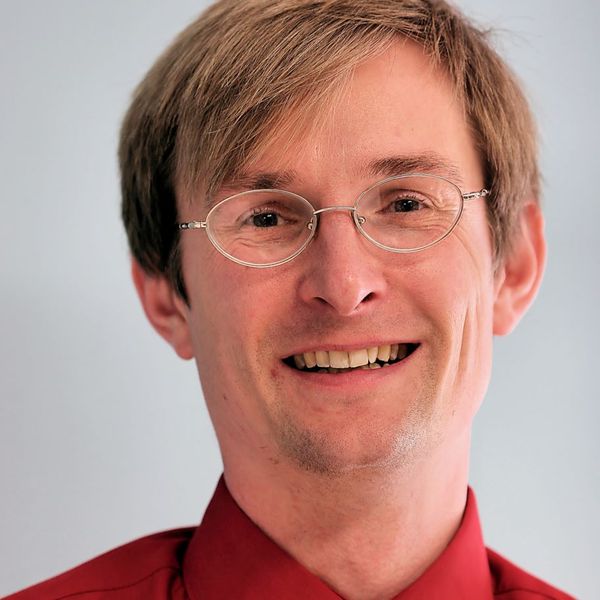
Prof. Dr. Johan Robertsson is a Full Professor of Applied Geophysics and Head of the Exploration and Environmental Geophysics (EEG) Group at ETH Zürich's Department of Earth and Planetary Sciences. He holds a MSc from Uppsala University (1991) and a PhD in Geophysics from Rice University (1994). Before joining ETH in 2012, he spent 15 years at Schlumberger in R&D roles, leading projects that revolutionized marine seismic data acquisition. His research focuses on wave propagation physics, seismic data inversion, and applications in exploration and environmental geophysics. He pioneered the use of Distributed Acoustic Sensing (DAS) for landslide monitoring and contributed to Mars seismology via the InSight mission. Education: MSc in Engineering Physics, Uppsala University (1991) PhD in Geophysics, Rice University (1994) Research Interests: Seismic wavefield modeling and inversion Planetary seismology (Mars, Moon) Acoustic metamaterials and wave control Environmental geohazard monitoring Marine seismic acquisition techniques His work on the Martian soil properties using InSight data and lunar exploration instrumentation (ALGEP) reflects his cross-disciplinary approach. He holds 90+ patents and has secured prestigious grants like the ERC Advanced Grant. Awards: EAGE Guido Bonarelli Award (2020) ERC Advanced Grant MATRIX (2017) EAGE Conrad Schlumberger Award (2018) Grants & Advising: Led the MATRIX ERC project advancing seismic imaging algorithms Advised over 20 PhD/MS students (names not listed) Secured Schlumberger's largest R&D project in marine seismic sampling His EEG Group operates cutting-edge labs for immersive wave experimentation and planetary geophysical instrumentation. Current initiatives include lunar subsurface exploration and acoustic invisibility experiments.
Scott Michael Olson is a Professor in the Department of Civil and Environmental Engineering at the University of Illinois at Urbana-Champaign, with a 0% affiliate appointment in the Department of Geology. He holds roles as Associate Head and Director of Graduate Studies. His academic journey includes a B.S., M.S., and Ph.D. in Civil Engineering from UIUC (1993, 1995, 2001). Prior to academia, he worked in private practice with firms like Woodward-Clyde Consultants and URS Corporation, while also teaching at the University of Missouri-Rolla. Dr. Olson specializes in geotechnical engineering, focusing on geohazard identification, liquefaction engineering, laboratory testing, and paleoseismology. He teaches courses in geotechnical engineering, including CEE 380, CEE 484, and graduate-level topics like rock mechanics. His research emphasizes practical applications in infrastructure resilience, with notable contributions to understanding soil behavior under seismic loads and tailings material dynamics. Dr. Olson has been recognized with prestigious awards, including the Walter L. Huber Prize (2012), NSF CAREER Award (2009), and Arthur Casagrande Award (2004). He actively contributes to professional organizations such as the American Society of Civil Engineers and the Earthquake Engineering Research Institute, and has served on national review panels for NSF and USGS. His consulting work bridges academic research with industry challenges in geotechnical risk mitigation.
Karl Ulrich Schreiber is an Adjunct Professor at the Department of Physics and Astronomy, University of Canterbury, New Zealand, and an apl. Professor at the Institute for Astronomical and Physical Geodesy at the Technical University of Munich (TUM). He is a scientist at the Geodetic Observatory Wettzell, jointly operated by TUM and the Bundesamt für Kartographie und Geodäsie (BKG). His work bridges fundamental physics and geodetic applications, with leadership roles in major international projects including ESA’s MAGIC/Science, QSG4EMT, and Baltic+ Theme 5, as well as DFG Research Units NEROGRAV and UPLIFT. His research focuses on Space Geodesy , Satellite and Lunar Laser Ranging , and Ring Laser Technology . He has pioneered the use of large ring laser gyroscopes for measuring Earth's rotation, polar motion, and seismic rotations. His work enables high-precision monitoring of geophysical phenomena such as Earth tides, Chandler wobble, and rotational ground motions from earthquakes. He is a key contributor to multi-technique co-location studies (VLBI, SLR, GNSS) and time transfer experiments, advancing the Global Geodetic Observing System (GGOS). His recent publications show a strong trend in developing and applying large-scale ring laser arrays (e.g., ROMY) for geophysical sensing, photon-counting laser ranging for space debris and satellite tracking, and optical timing systems for synchronization across geodetic networks. These efforts span disciplines including geodesy, seismology, quantum optics, and fundamental physics. Scientific contributions include: Development of the Wettzell Large Ring Laser (G-ring) for continuous Earth rotation monitoring. First direct measurements of Earth's diurnal polar motion and Chandler wobble using ring lasers. Pioneering work in rotational seismology, validating ring laser data against seismic arrays. Contributions to lunar laser ranging and its role in reference frame realization. Leadership in ESA and DFG projects advancing space geodesy and inertial sensing. He advises doctoral and master’s students within the DFG Research Training Group UPLIFT and collaborates with international institutions on instrumentation and data analysis. His lab at Wettzell hosts advanced laser ranging and ring laser systems, serving as a fundamental geodetic observatory. Future work includes enhancing clock ties for global geodesy, expanding multi-component rotation sensing, and advancing space-based geodetic technologies.
Paul Withers is a Professor and Chair of the Department of Astronomy at Boston University. He leads research on planetary atmospheres and ionospheres, with a focus on Mars and Venus, and serves as Principal Investigator on multiple NASA-funded research projects. Education: B.A. in Physics, 1998, Queens' College, Cambridge University M.S. in Physics, 1998, Queens' College, Cambridge University M.A., 2001, Queens' College, Cambridge University Ph.D. in Planetary Science, 2003, University of Arizona Professor Withers' research focuses on the upper atmospheres and ionospheres of terrestrial planets, particularly Mars and Venus. His work involves analyzing spacecraft data and developing theoretical models to understand how solar flux, neutral atmospheres, magnetic fields, and ionospheres interact under unique planetary conditions. He has made significant contributions to understanding the response of the Martian ionosphere to solar flares, the structure of the Venus ionosphere, and meteoric plasma layers in planetary ionospheres. His research often involves multi-instrument campaigns and coordinated observations across different spacecraft missions including Mars Express, MAVEN, and Venus Express. Analysis of Professor Withers' recent publications reveals a strong emphasis on Martian ionospheric dynamics, particularly its response to solar activity and its variability under different conditions. His work frequently combines data from multiple missions to create comprehensive models of planetary upper atmospheres. He has developed important methods for analyzing radio occultation data and reconstructing atmospheric properties from entry, descent, and landing measurements. Major Funded Projects: "Characterizing the topside bulge in the ionosphere of Mars" (NASA Mars Data Analysis Program, 2014, $144K) "Integration of MAVEN neutral and plasma observations" (NASA MAVEN Participating Scientist Program, 2013, $284K) "Radio occultation studies at Mars" (NASA Early Career Fellowship Program, 2013, $99K) "EDL reconstruction for MSL" (NASA, JPL contract, 2012, $199K) "Meteoric plasma layers on Venus and Mars" (NASA Planetary Atmospheres Program, 2012, $232K) Professor Withers has been actively involved in mentoring students and collaborating with international researchers. He serves as a key member of the Mars Upper Atmosphere Network (MUAN) and has contributed to community white papers for planetary science decadal surveys. His work supports future Mars landers through atmospheric modeling and surface pressure prediction, with direct applications to mission planning and execution. He has presented his research at numerous international conferences including the American Geophysical Union meetings, Division for Planetary Sciences meetings, and European Planetary Science Congress. His work has important implications for understanding planetary climate evolution, space weather effects on technological systems, and the search for habitable environments beyond Earth.
Dr. Robert Pickle is a Postdoctoral Fellow at the Research School of Earth Sciences (RSES), Australian National University (ANU), specializing in Geophysics. His work focuses on seismic network design, machine learning applications in seismology, and tectonic studies in active seismic zones. He contributes to projects like the Southwest Australia Seismic Network (SWAN) and the Australian Passive Seismic Server, advancing understanding of crustal dynamics and seismic hazard assessment. Education: PhD (specific details not provided in texts). Research Interests: Dr. Pickle’s expertise spans seismic instrumentation, regional seismic monitoring, and the integration of machine learning for improving earthquake catalog accuracy. His studies address critical areas such as the Banda Arc–Australian Plate collision zone and the seismicity of southwest Australia. Projects: Principal investigator on the Australian Passive Seismic Server and researcher on the Enhanced 3-D seismic structure of Southwest Australia (SWAN) project. Collaborates with institutions like the ANU’s RSES and international seismological networks. Labs/Teams: Active in ANU’s Geophysics research groups, contributing to collaborative efforts in seismic data acquisition and analysis.
Gabi Laske is a Professor at the Institute of Geophysics and Planetary Physics (IGPP), Scripps Institution of Oceanography (SIO), University of California, San Diego (UCSD). She is a leading researcher in seismology and geophysics, with a focus on Earth's internal structure, crustal and mantle modeling, and ocean-bottom seismology. Her work has significantly advanced global crustal models, including CRUST5.1, CRUST2.0, and CRUST1.0. Her research interests include seismology, geophysics, Earth's internal structure, surface wave tomography, normal mode analysis, crustal and lithospheric modeling, ocean bottom seismology, mantle plumes, inner core rotation, ambient noise seismology, and earthquake signal processing. She has led major projects such as the Hawaiian PLUME and SWELL experiments, utilizing ocean-bottom seismometers to study mantle dynamics and lithospheric rejuvenation. Her work on inner core differential rotation, particularly with Guy Masters, has been published in top journals like Nature and Science . The 15 most recent publications reflect a strong trend in ocean-bottom seismology, ambient noise analysis, instrument calibration, seismic signal quality, and imaging of crustal and mantle structure. Her work combines observational seismology with advanced signal processing and modeling techniques, often in collaboration with students and international teams. She has made significant contributions to understanding seismic anisotropy, normal modes, and the structure of volcanic and tectonic regions. Funded by NSF (OCE, EAR, CSEDI, MG&G) Collaborative projects with USGS, international institutions Advisor to PhD students, including Adrian Doran Lead developer of DLOPy for OBS orientation Contributor to global reference models (CRUST1.0, LITHO1.0) Gabi Laske has made enduring contributions to geophysics through her development of global crustal models, leadership in major seismic experiments, and mentorship of the next generation of seismologists. Her work continues to shape our understanding of Earth's deep interior and surface processes.
Vladimir A. Rakov is a distinguished professor and co-director of the International Center for Lightning Research and Testing (ICLRT) at the University of Florida’s Department of Electrical and Computer Engineering. His primary research focuses on lightning physics, atmospheric electricity, and lightning protection. He holds affiliations with prestigious organizations such as the American Geophysical Union (AGU), IEEE, and the Society of Automotive Engineers (SAE). Education: Rakov earned a PhD (1983) and MS (1977) in Electrical Engineering from Tomsk Polytechnic University. His professional memberships include roles in AGU, IEEE, and the International Commission on Atmospheric Electricity (ICAE). He has chaired committees for international lightning conferences and contributed to standards development for lightning protection systems. Research: Rakov’s work spans lightning initiation, return stroke modeling, and electromagnetic effects. He has authored over 200 peer-reviewed articles, including seminal books like Lightning: Physics and Effects . His team conducts field experiments using rocket-triggered lightning and advanced instrumentation. Notable achievements include studies on lightning-induced voltages, X-ray emissions, and safety standards for aircraft and infrastructure. Awards: Rakov has received numerous accolades, including the IEEE Richard R. Stoddart Award (2019) and Honorary Doctorate from the Russian Academy of Sciences (2015). His research impacts global lightning protection practices and aerospace safety.
Matthew Alford is Professor and Head of Oceans and Atmospheres Section at Scripps Institution of Oceanography, UC San Diego. He holds a PhD in Oceanography from Scripps and researches ocean dynamics including internal waves, turbulence, and their impacts on global circulation. His work emphasizes development of ocean instrumentation for measuring fine-scale processes.
Prof. Dr. Hakkı Polat Gülkan is a Professor at Başkent University's Civil Engineering Department. With a PhD (1971) and Master's (1968) from the University of Illinois in Civil Engineering and a Bachelor's (1966) from METU, his career spans over five decades in earthquake engineering, structural dynamics, and disaster management. PhD: University of Illinois, Civil Engineering (1971) Master's: University of Illinois, Civil Engineering (1968) Bachelor's: Middle East Technical University, Civil Engineering (1966) His research focuses on seismic risk assessment, structural behavior under extreme loads, and disaster mitigation strategies. Key contributions include earthquake simulator development, ground motion analysis, and retrofitting techniques for masonry and reinforced concrete structures. He has published extensively on deformation limits, response spectra, and historical building preservation. Recent work includes 15+ articles from 2024-2012 analyzing Istanbul's seismic hazards, Marmara region dynamics, and post-earthquake structural integrity. Conference papers address Turkey's endemic building vulnerabilities and deformation thresholds for seismic isolation systems. Scientific Achievements: Elected to U.S. National Academy of Engineering (2023) As an active journal reviewer for 13+ publications (2023-2024), he contributes to advancing earthquake engineering discourse. His teaching portfolio includes advanced structural analysis, concrete mechanics, and seismic design courses.
Andrew Thompson is the John S. and Sherry Chen Professor of Environmental Science and Engineering at the California Institute of Technology. He serves as Director of the Ronald and Maxine Linde Center for Global Environmental Science and Executive Officer for Environmental Science at Caltech. With a Ph.D. from Scripps Institute of Oceanography (2006), his career at Caltech spans from Assistant Professor (2011-17) to his current Professor role since 2017. Education: B.S. in Physics from Dartmouth College (2000), C.A.S. (2001) and M.Phil. (2002) at University of Cambridge Leadership: Director of Linde Center (2023-), Academic Officer (2019-22) His research focuses on ocean circulation dynamics and physical processes governing climate systems . Key areas include: Ocean Turbulence and Submesoscale Dynamics Antarctic Circumpolar Current and Drake Passage Dynamics Climate Change Impacts on Ice Shelf Melt Rates Current projects involve ChinStrAP (Changes in Stratification at the Antarctic Peninsula), using autonomous ocean gliders to study eddy formation and air-sea exchange. His group employs idealized numerical models , remote sensing , and climate simulations to explore topics like: Warm water pathways onto Antarctic continental shelves Role of mesoscale/submesoscale eddies in ocean mixing Global overturning circulation responses to climate change Scientific achievements include the Packard Fellowship for Science and Engineering . He mentors graduate students Xiaozhou Ruan , Giuliana Viglione , and Andrew Delman , fostering interdisciplinary collaboration with institutions like Scripps Institution of Oceanography and CSIR . His group emphasizes inclusive training for early-career scientists in climate-relevant STEM careers .
YING-TSONG LIN is an Acting Professor at the Scripps Institution of Oceanography (SIO), UC San Diego. His research focuses on applied ocean sciences, autonomous ocean platforms, internal waves, ocean acoustics, and instrumentation. He leads projects like the New England Shelf Break Acoustics (NESBA) experiment, emphasizing real-time acoustic modeling and environmental interactions. Research interests include 3D acoustic propagation modeling, ocean mixing dynamics, and seabed characterization. His work integrates high-performance computing and distributed sensor networks for oceanographic studies. Recent studies address underwater explosions, renewable energy impacts, and vessel localization using acoustic coherence. Publications emphasize advancements in hydroacoustic modeling, seabed inversion techniques, and environmental asymmetry effects. His contributions span interdisciplinary areas like bioacoustics and seismic-to-acoustic wave conversions. Labs/Teams: Involved with SIO's Acoustics and Oceanography research groups, focusing on autonomous platforms and global observing systems.
Mike Wood is an Assistant Professor at the Moss Landing Marine Laboratories (MLML) with a joint appointment in the Department of Computer Science at San José State University (SJSU). His research focuses on ice-ocean-biology interactions and sea level rise dynamics related to the Greenland Ice Sheet, utilizing satellite observations, numerical ocean models, and in situ measurements. He leads the Computational Oceanography lab at MLML. Research Themes : Ice-ocean interactions, climate change impacts on polar regions, satellite remote sensing, and computational modeling. Academic Affiliation : MLML (Computational Oceanography) and SJSU Computer Science Department. Methodologies : Numerical modeling, satellite data analysis, and field observations in Greenlandic fjords. His recent publications reveal a focus on Greenland glacial meltwater dynamics, fjord-scale oceanography, and bathymetric mapping. Mike enjoys surfing and climbing when not engaged in academic work.
Univ.-Prof. Aiko Voigt is a Professor and Head of the Department of Meteorology and Geophysics at the University of Vienna. Her research focuses on climate dynamics, cloud physics, and atmospheric processes. She leads the Environment and Climate Research Hub and teaches advanced courses like 'Climate Modelling Lab' and 'Cloud Physics.' Her work explores cloud-radiative interactions, climate change impacts, and extreme weather dynamics. Recent studies analyze energy imbalances, high-cloud feedbacks, and tropical precipitation patterns. Voigt's contributions bridge climate modeling with observational data, emphasizing high-resolution simulations and interdisciplinary approaches. Teaching includes courses such as 'Climate System of the Earth,' 'Scientific Communication,' and 'Introduction to Computational Meteorology.' Her research spans from present-day climate to Snowball Earth scenarios, addressing both modern and paleoclimatic challenges. Publications highlight advancements in radiative transfer algorithms, cyclone dynamics under warming, and uncertainties in climate model predictions. Her work underscores the critical role of clouds in amplifying climate sensitivity and reshaping atmospheric circulation patterns.