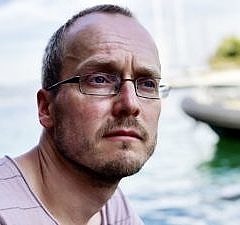
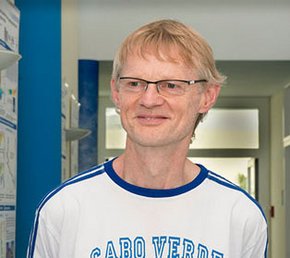
Dr. Claus Prodehl is a Professor at the Geophysical Institute of the Karlsruhe Institute of Technology (KIT), where he has been a pivotal figure since at least the 1980s. He served as editor for the institute's 50-year anniversary publication in 2014 and contributed extensively to seismological research, particularly through leadership in major international projects like KRISP, CD-ROM, and EUROPROBE. His research focuses on lithospheric structure and dynamics , with specialized expertise in rift systems (e.g., Kenya Rift, European Cenozoic Rift), crustal deformation in tectonically active regions (Romania, Rocky Mountains), and controlled-source seismology . Prodehl pioneered seismic refraction studies to image crustal architecture across continents, emphasizing the interplay between mantle processes and surface geology. Analysis of his publications reveals a consistent trajectory in continental rifting mechanisms spanning four decades. His work integrates field experiments (e.g., VRANCEA-99 in Romania, VARNET in Ireland) with theoretical modeling to unravel lithospheric evolution. Key themes include seismic velocity structure mapping, crustal thinning processes, and the role of ancient suture zones in modern tectonics. Prodehl has led collaborative teams across Africa, Europe, and North America, mentoring technicians and students in complex seismic deployments. His editorial role in documenting KIT's institutional history underscores his commitment to preserving geophysical knowledge transfer.
Dr. Linda Adorno is a Research Associate at Freie Universität Berlin's Department of History and Cultural Studies, affiliated with the Institute of Classical Archaeology. Since 2025, she has led the DFG project A new model for the western city district of Selinunte . Previously, she held research positions at the German Archaeological Institute in Rome (2021-2025) and has collaborated continuously with the University of Augsburg (since 2015) and University of Bonn (2011-2016) on Sicilian archaeological projects. She completed her PhD in 2020 at Rheinische Friedrich Wilhelms Universität Bonn with a dissertation on locally produced pottery at Selinunte. Her research focuses on: Greek pottery production and cultural exchange in Sicily Colonial-indigenous interactions in the western Mediterranean Archaeology of craft specialization and urban development Hellenistic and Archaic period material culture Her publications demonstrate consistent focus on Selinunte's urban fabric, with recent works emphasizing 3D modeling of city districts, craft quarter organization, and ritual practices. Archaeological field methodology forms a core theme across her research output. She maintains active collaborations with the German Archaeological Institute and multiple universities, coordinating multidisciplinary fieldwork at key Sicilian sites including Selinunte and Agrigento.
Lai-yung Ruby Leung is a Battelle Fellow at Pacific Northwest National Laboratory (PNNL) working in Earth Systems Analysis & Modeling. She serves as Chief Scientist of the Energy Exascale Earth System Model (E3SM) supported by the U.S. Department of Energy, leading major efforts to develop state-of-the-art capabilities for modeling human-Earth system processes on high-performance computers. Dr. Leung's research broadly spans climate and hydrological cycle modeling with expertise in land-atmosphere interactions, orographic processes, monsoon climate, and climate extremes. Dr. Leung earned her educational credentials from prestigious institutions: Ph.D., Atmospheric Science, Texas A&M University M.S., Atmospheric Science, Texas A&M University B.S. (Honors), Physics & Statistics, Chinese University of Hong Kong Her research interests focus on regional and global climate modeling , land-atmosphere interactions , and the regional hydrologic cycle . She investigates orographic precipitation mechanisms, climate extremes, climate variability and change, and aerosol-cloud interactions. Her work integrates advanced modeling techniques with observational data to understand complex Earth system processes, with research featured in Science , Popular Science , Wall Street Journal , and National Public Radio . Dr. Leung has published over 500 peer-reviewed papers and serves as an editor for the American Meteorological Society's Journal of Hydrometeorology . Analysis of Dr. Leung's recent publications reveals her leadership in developing and applying the Energy Exascale Earth System Model (E3SM), with significant contributions to understanding mesoscale convective systems, soil moisture dynamics, urban hydrology, and climate extremes. Her work demonstrates increasing integration of machine learning techniques with traditional climate modeling approaches, particularly in model evaluation frameworks and high-resolution simulations. She maintains strong focus on practical applications of climate science for understanding water resources, extreme weather events, and climate change impacts. Dr. Leung's scientific recognition includes: Election to the National Academy of Engineering (NAE) Election to the Washington State Academy of Sciences (WSAS) Fellow of the American Geophysical Union (AGU) Fellow of the American Meteorological Society (AMS) Fellow of the American Association for the Advancement of Science (AAAS) AMS Hydrologic Sciences Medal (2022) U.S. Department of Energy Office of Science Distinguished Scientist Fellow (2021) Reuter's Hot List of top 1,000 most influential climate scientists (2021) AGU Jacob Bjerknes Lecture (2020) AGU Bert Bolin Global Environmental Change Award (2019) As Chief Scientist of E3SM, Dr. Leung leads major research initiatives funded by the Department of Energy and has organized key workshops sponsored by DOE, NSF, NOAA, and NASA. She has served on numerous advisory panels and National Academies committees that define future priorities in Digital Twin, AI/ML, climate modeling, hydroclimate, and water cycle research. Her professional service includes membership on the Board on Atmospheric Sciences and Climate of the National Academies, council membership with the American Meteorological Society, and editorial roles for prominent journals. Dr. Leung directs research within PNNL's Earth Systems Analysis & Modeling group, collaborating with national and international climate research teams. She leads efforts to advance the Energy Exascale Earth System Model (E3SM), which represents cutting-edge capabilities in modeling human-Earth system processes. Her work connects with multiple PNNL research areas including atmospheric science, global change, and coastal science, contributing to the laboratory's mission of addressing complex environmental challenges through scientific innovation.
Prof. Dr. Markus Reichstein serves as Director of the Department of Biogeochemical Integration at the Max Planck Institute for Biogeochemistry and Professor of Global Geoecology at Friedrich Schiller University Jena. He is Founding Director of both the Michael Stifel Center Jena for Data-Driven and Simulation Sciences and the ELLIS Unit Jena, positioning him at the forefront of integrating artificial intelligence with Earth system science. His research focuses on understanding ecosystem responses to climate variability from an Earth system perspective, with particular emphasis on climate extremes and ecosystem resilience. Prof. Reichstein combines artificial intelligence with systems modeling approaches to analyze experimental data, ground-based observations, and satellite Earth observations across multiple spatial scales. His recent publication record shows a strong emphasis on applying machine learning to biogeochemical processes, with numerous 2025 publications addressing carbon cycle modeling, soil moisture prediction, drought impacts, and AI applications for climate risk assessment. These works demonstrate his interdisciplinary approach that bridges ecology, climate science, and computational methods. Piers J. Sellers Mid-Career Award from the American Geophysical Union (2018) ERC Synergy Grant (2019) Gottfried Wilhelm Leibniz Prize (2020) AGU Fellow (2025) As department director and through his various leadership roles, Prof. Reichstein oversees substantial research funding and mentorship opportunities. His department regularly welcomes new researchers and students, fostering an environment of international collaboration. The integration of the Michael Stifel Center and ELLIS Unit with his department creates unique opportunities for students interested in the intersection of AI and environmental science. The Department of Biogeochemical Integration, under Prof. Reichstein's leadership, serves as a hub for innovative research on Earth system processes, combining traditional ecological approaches with cutting-edge computational methods to address pressing climate challenges.
Dr. Johannes Fürst is a Professor in the Department of Geography and Geosciences at Friedrich-Alexander University Erlangen-Nuremberg (FAU), where he conducts research in glaciology and ice sheet modeling. He is based at the Institute of Geography in Erlangen, Germany, with office in Room 02.121 at Wetterkreuz 15. His research focuses on four main areas: reconstruction of glacier thickness on Svalbard, data assimilation using ice flow models on ice sheet scales, effects of the ice shelf support effect on Antarctic outlet glaciers, and ice-dynamic influences on the volume development of the Greenland ice sheet. His work bridges theoretical glaciology with practical applications for understanding climate change impacts on the cryosphere. Prof. Fürst's recent publications (2023-2025) demonstrate expertise across multiple glacial environments including Antarctica, Greenland, Patagonia, Svalbard, and the European Alps. His research combines numerical modeling with remote sensing data to study glacier dynamics, ice thickness reconstruction, and climate-glacier interactions. Notable recent work includes development of a Kalman filter-based framework for assimilating remote sensing observations, studies on Patagonian icefields, and reconstruction of Antarctic Peninsula ice thickness. His scientific approach integrates multiple methodologies including advanced ice flow modeling, data assimilation techniques, deep learning applications for glacier monitoring, and mechanical modeling of permafrost-glacier systems. This interdisciplinary approach allows him to address complex questions about glacier response to climate change across different spatial and temporal scales.
Dr. Stefan Hendricks is a Senior Researcher at the Alfred-Wegener-Institut Helmholtz-Zentrum für Polar- und Meeresforschung (AWI) in Bremerhaven, Germany, working within the Department of Sea Ice Physics. Previously, he served in the Division of Climate Sciences at the same institution from February 2005 to June 2020. With a Doctor of Science degree in Geophysics from the University of Cologne (1997-2005), his career has focused on polar research, particularly sea ice physics and remote sensing applications. Dr. Hendricks' research interests center on sea ice thickness measurement and monitoring using satellite remote sensing techniques. His expertise spans near-surface geophysics, electromagnetics, applied geophysics, and Python programming , which he applies to Arctic and Antarctic sea ice studies. He has made significant contributions to understanding climate change impacts on polar regions through his work on sea ice dynamics, thermodynamics, and remote sensing methodologies. His recent publications reveal a strong emphasis on satellite altimetry applications for sea ice thickness retrieval, with particular focus on addressing limitations in traditional mapping approaches that neglect ice advection and deformation processes. The MOSAiC expedition has been central to his recent work, where he contributed to various aspects including airborne laser scanning of sea ice surfaces, radar altimetry studies, and analysis of sea ice deformation and snow-ice interactions. 331 publications with over 64,971 reads and 7,767 citations Extensive work with CryoSat-2 satellite data for sea ice monitoring Development of AWI CryoSat-2 Sea Ice Thickness data product Significant contributions to the MOSAiC expedition research As a Senior Researcher at AWI, Dr. Hendricks leads and contributes to numerous research projects focused on polar climate change. His work bridges observational science with practical applications for climate modeling and environmental monitoring. He collaborates extensively with international partners across multiple disciplines, contributing to our understanding of how sea ice changes impact global climate systems. His research group continues to develop innovative methods for sea ice observation using both satellite and in-situ techniques, with implications for climate prediction and polar environmental assessment.
Jean-René Cudell is a Professor at the University of Liège's Department of Astrophysics, Geophysics and Oceanography. His academic affiliations include: Current: University of Liège (Professor) Past: University of Wisconsin–Madison (Research Assistant, 1983-1987) McGill University (PostDoc, 1993-1995) Brown University (Visiting Researcher, 1995) His research spans fundamental physics domains with particular emphasis on: Gravitational wave astrophysics : Developing detection algorithms for LIGO-Virgo collaborations Particle cosmology : Investigating dark matter and cosmic anisotropies Quantum field theory : Studying strong-interaction physics and scattering models Recent publications demonstrate three primary research arcs: (1) gravitational lensing and detector characterization for Advanced LIGO/Virgo; (2) machine learning approaches for early inspiral detection; and (3) unitarisation models for high-energy particle collisions. His 265 publications show consistent focus on theoretical and observational aspects of extreme astrophysical phenomena. Professor Cudell maintains active involvement in large-scale physics collaborations, contributing to gravitational wave searches and theoretical particle physics without recorded awards or formal research lab infrastructure.
Dr. Jian Zhang is an Associate Professor in the Department of Solid Geophysics at China University of Geosciences in Wuhan, China. With a strong background in atmospheric science and electronic information, he conducts research focused on atmospheric dynamics using high-resolution observational techniques. Current faculty at China University of Geosciences Department of Solid Geophysics Former researcher at Massachusetts Institute of Technology (2016-2018) PhD from Wuhan University with focus on Atmospheric turbulence Active researcher with publications extending through 2025 Dr. Zhang's research centers on atmospheric dynamics, particularly gravity waves, tropopause physics, and planetary boundary layer processes. His work utilizes high-resolution radiosonde measurements to investigate phenomena such as wind shear variations, double tropopauses, and stratosphere-troposphere exchange. He has developed innovative approaches for analyzing atmospheric data across multiple vertical scales. Analysis of Dr. Zhang's recent publications reveals a strong focus on how vertical resolution affects the interpretation of atmospheric phenomena. His work spans from tropospheric processes to the mesosphere-lower thermosphere region, demonstrating a comprehensive approach to atmospheric dynamics. The research shows particular strength in comparative analysis between observational data and reanalysis products. 528 citations across 31 publications Active research collaborations with multiple Chinese institutions International research experience at MIT Dr. Zhang's research group focuses on atmospheric dynamics using observational data analysis. The group works with high-resolution radiosonde measurements, meteor radar data, and satellite observations to advance understanding of atmospheric processes that impact weather prediction, climate modeling, and atmospheric transport phenomena.
Mira Pöhlker serves as a University Professor at Leipzig University with a joint appointment in Experimental Aerosol and Cloud Microphysics at TROPOS (Leibniz Institute for Tropospheric Research), currently on leave. Her office is located at Permoserstr. 15, Room 202, 04318 Leipzig, with direct contact via phone (+49 341 2717-743). Her research spans Atmospheric Science and Climate Physics , focusing on aerosol-cloud interactions, cloud microphysical processes, and anthropogenic impacts on atmospheric composition. Key investigations include pandemic-related air quality changes, convective cloud dynamics using satellite data, and marine cloud responses to updraft variations. This work combines aircraft measurements, satellite remote sensing, and field observations to quantify climate-relevant processes. Professor Pöhlker's recent publications demonstrate strong interdisciplinary collaboration across European and transatlantic research networks. Her work frequently appears in high-impact journals like Atmospheric Chemistry and Physics and the Bulletin of the American Meteorological Society , addressing urgent climate and air quality questions through empirical measurement campaigns. She maintains an active research partnership with TROPOS, leveraging their expertise in tropospheric processes. Current projects emphasize real-world atmospheric observations during exceptional events (e.g., pandemic lockdowns) and fundamental cloud physics mechanisms affecting climate models.
Dr. Albert Ansmann is a distinguished Associate Professor at the University of Leipzig and Head of the Ground-Based Remote Sensing Working Group at the Leibniz Institute for Tropospheric Research (TROPOS) in Leipzig, Germany. His career spans over three decades dedicated to advancing atmospheric remote sensing technologies and understanding aerosol-cloud interactions. At TROPOS, he leads the Ground-based Remote Sensing Group within the Department of Remote Sensing of Atmospheric Processes. Leibniz Institute for Tropospheric Research (TROPOS): Head of Ground-Based Remote Sensing Working Group since 1992 University of Leipzig: Associate Professor since 2005, Private Lecturer since 1999 Max Planck Institute for Meteorology: PhD research (1984-1988) Research Center Geesthacht: Postdoctoral researcher (1989-1992) Dr. Ansmann completed his Meteorology studies at the University of Hamburg (1977-1984) and earned his PhD from the Max Planck Institute for Meteorology in Hamburg (1984-1988). He achieved his Habilitation at the University of Leipzig in 1999, which qualified him as a university professor. His research focuses on developing lidar instruments and methodologies for investigating aerosols, clouds, and aerosol-cloud interactions, with particular emphasis on heterogeneous ice formation processes. His work has significantly advanced our understanding of mineral dust transport, Saharan aerosol long-range transport, and their impacts on cloud microphysics and climate. Dr. Ansmann's research integrates field campaigns across diverse geographical regions including Portugal, Morocco, Cape Verde, and the Arctic. The 15 most recent publications reveal a strong focus on Arctic atmospheric processes, wildfire smoke impacts on cirrus formation, mineral dust properties, and advanced lidar methodologies. His research increasingly addresses climate-relevant questions through international collaborations such as the MOSAiC expedition, SALTRACE, and BACCHUS projects, demonstrating a shift toward understanding the climate implications of aerosol-cloud interactions in polar regions. Inaba Prize (1994) for outstanding research on Raman lidar observation of the stratospheric Pinatubo aerosol layer American Geophysical Union Editor's Citation for Excellence in Refereeing (2005, 2010) Dr. Ansmann has been actively involved in mentoring doctoral students through seminars at TROPOS and lectures on active remote sensing at the University of Leipzig. His research has been supported through numerous international projects including SALTRACE, BACCHUS, and participation in major field campaigns across Europe, Africa, and polar regions. He has served on scientific steering committees, including the EU BACCHUS Project (2013-2017), and as guest editor for Atmospheric Measurement Techniques (2013-2015). The Ground-based Remote Sensing Group at TROPOS, which Dr. Ansmann leads, operates advanced lidar systems for atmospheric observations and participates in international networks like EARLINET. His team's work integrates ground-based, airborne, and satellite observations to address fundamental questions about aerosol-cloud interactions and their climate implications, with particular focus on polar regions through the MOSAiC expedition and related research.