Christopher Sheehan is a full-time Assistant Professor in the Department of Earth and Environmental Geosciences at the University of Dayton's College of Arts and Sciences. He specializes in geomorphology, surface processes, and landscape evolution. Education: Ph.D. in Geology, University of Cincinnati (2021) M.S. in Geology, University of Cincinnati B.S. in Geology, Northern Arizona University His research focuses on understanding Earth's surface changes over millions of years due to tectonics and climate, and predicting future impacts from human activities. He employs fieldwork (surface mapping, erosion monitoring), laboratory techniques (cosmogenic nuclide dating), and numerical modeling (landscape evolution). Recent publications highlight his work on autogenic fluvial transience in layered rock systems, escarpment dynamics in strike valleys, and Pleistocene talus formation processes. These studies intersect geomorphology, sedimentology, and climate science. At Dayton, he teaches courses in Dynamic Earth (SCI-210) and Geomorphology (GEO-307), integrating field and modeling methodologies into his pedagogy.
Gregory Hancock is an Associate Professor - Research in the School of Engineering (Earth Sciences) at the University of Newcastle, Australia. With over two decades of academic experience, he specializes in geomorphology, environmental modeling, and mine site rehabilitation. His research has significant implications for sustainable land management and post-mining landscape restoration, with extensive publication record and substantial research funding from both government and industry sources. PhD, University of Newcastle Bachelor of Science (Honours), University of Newcastle Dr. Hancock's research spans three primary areas: mine and disturbed landscape rehabilitation, applied and theoretical geomorphology, and environmental modeling. His work focuses on understanding erosion processes, landscape evolution, and developing computer-based models to predict long-term geomorphic stability of rehabilitated landscapes. He has made significant contributions to the field of landscape evolution modeling, particularly through the application of the SIBERIA model to assess post-mining landforms. His research integrates field measurements with computer simulations to address practical environmental management challenges, with applications spanning from mine rehabilitation to soil carbon dynamics and erosion control. Dr. Hancock's publication record demonstrates consistent productivity and increasing international collaboration. His recent work shows an expanding scope from pure geomorphology to broader environmental systems, particularly in soil organic carbon dynamics and erosion processes. The research shows strong practical applications, especially in mine rehabilitation projects, with notable collaborations on European projects like LIFE RIBERMINE. His work increasingly integrates multiple disciplines including hydrology, soil science, and carbon cycling, reflecting a holistic approach to environmental systems. ARC Discovery grants for carbon, nutrient and sediment dynamics ARC Linkage grants AINSE Grants for cosmogenic nuclide measurement Research consultancies with mining companies (XStrata Copper, Rio Tinto, Western Mining Corporation) Appointed Associate Editor for Journal of Geophysical Research-Earth Surface Appointed as an International Expert by the IAEA Dr. Hancock supervises honours, Masters, and PhD students in geomorphology and environmental modeling topics. His grant history is extensive, including leadership of the National Airborne Field Experiment (NAFE) and multiple projects related to mine site rehabilitation and erosion prediction. He has coordinated undergraduate courses and served on various university committees. His research demonstrates strong industry engagement, with numerous consultancies for mining companies to address practical environmental challenges at mine sites across Australia. Dr. Hancock has been involved with the Centre of Environmental Dynamics (COED) at the University of Newcastle. His research often involves interdisciplinary teams combining geomorphologists, soil scientists, hydrologists, and environmental engineers. He has collaborated extensively with international researchers, particularly through his work as Associate Editor for the Journal of Geophysical Research-Earth Surface. His recent work on the LIFE RIBERMINE project demonstrates his leadership in applying geomorphological principles to mine closure challenges across international contexts.
Haosheng Huang is an Associate Professor in the Department of Oceanography & Coastal Sciences at Louisiana State University's College of the Coast & Environment. His research focuses on coastal ocean dynamics and numerical modeling, with significant contributions to understanding Gulf of Mexico ecosystems and Mississippi River Delta processes. His academic credentials include: B.S. from Fudan University, Shanghai (1990) M.S. from First Institute of Oceanography (1993) Ph.D. from Florida State University (2003) Huang's research spans physical oceanography, specializing in coastal and estuarine circulation dynamics, unstructured grid numerical modeling, data assimilation, storm surge simulation, and bio-physical ecosystem modeling. He develops advanced computational approaches for studying continental shelf processes and employs the Finite Volume Coastal Ocean Model (FVCOM) extensively for simulating complex coastal phenomena including sediment transport, hypoxia, and wetland degradation. Analysis of his 15 most recent publications reveals a dominant focus on Gulf of Mexico and Mississippi Delta systems, with recurring themes of sea-level rise impacts, hypoxia dynamics, sediment transport, and storm surge modeling. His work increasingly integrates multi-scale processes across river-estuary-shelf-ocean continua and emphasizes climate change impacts on coastal resilience. His scientific recognition includes: LSU Tiger Athletic Foundation Undergraduate Teaching Award (2012) Huang teaches foundational courses including Introduction to Oceanography and advanced numerical methods, while his research program addresses critical coastal management challenges through sophisticated modeling of circulation dynamics, ecosystem responses, and climate vulnerability. His work demonstrates strong interdisciplinary connections between physical oceanography, biogeochemistry, and coastal engineering.
Chunyan Li is a Professor and Mobil Distinguished Professor of Marine Geology in the Department of Oceanography & Coastal Sciences at Louisiana State University. He holds a B.S. from the University of Science and Technology of China (1982), M.S. from the Institute of Oceanography, Academy of Science, China (1985), and Ph.D. from the University of Connecticut (1996). Research interests focus on physical oceanography, coastal and estuarine circulations, transport mechanisms, innovative observational techniques, numerical modeling, and extreme weather impacts including hurricanes and storm surges. Specific expertise includes: Hydrodynamic modeling of coastal systems Storm surge prediction and analysis Sediment transport dynamics Arctic lagoon hydrodynamics Satellite oceanography applications Recent publications demonstrate strong emphasis on numerical modeling of coastal processes, hurricane impacts, and Arctic lagoon dynamics. Article themes cluster around: Cold front impacts on coastal stratification Sediment transport in dredge pits Volcanic atmospheric wave propagation Mixed layer variability in polar seas Advancements in coastal modeling techniques
Kehui (Kevin) Xu is a Professor in the Department of Oceanography & Coastal Sciences at Louisiana State University (LSU) and serves as the Director of the Coastal Studies Institute . His research focuses on sediment dynamics in coastal and deltaic systems, particularly in the Mississippi River Delta and Yangtze River Delta, with an emphasis on sediment diversion, dredging, and morphodynamic modeling. He has led major projects funded by the National Science Foundation (NSF), NOAA, and BOEM, and his work addresses anthropogenic and climatic impacts on sediment transport and coastal resilience. Education : B.S. and M.S. in Geology from Ocean University of China (1999, 2002), Ph.D. in Marine Science from College of William & Mary (2006). Research Interests: Coastal restoration, sediment diversion, sediment dredging, geological oceanography, coastal morphodynamics, numerical modeling of sediment transport, and deltaic processes. His lab investigates how climatic and anthropogenic forces alter sediment fluxes from rivers to oceans, influencing delta sustainability and wetland preservation. Recent Article Trends: His publications highlight interdisciplinary approaches, integrating numerical modeling , field observations , and machine learning to study dredge pit evolution , mass wasting , and storm-induced sediment transport in the Mississippi and Yangtze deltas. Key subfields include deltaic engineering , radioisotope dating , paleoenvironmental analysis , and coastal hazard mitigation . Scientific Awards: LSU Distinguished Faculty Award (2023) LSU College of the Coast & Environment Outstanding Faculty Research Award (2021) Phi Kappa Phi Non-Tenured Professor Award (2015) Advising and Grants: He has advised numerous Ph.D. and M.S. students on sediment dynamics and coastal restoration. Over the past decade, he has secured NSF, NOAA, BOEM, and Water Institute of the Gulf grants exceeding $10M, focusing on sediment management, hurricane impacts, and deltaic sustainability. Labs and Teams: Xu leads the Sediment Dynamics Lab (SDL) at LSU, a hub for interdisciplinary research on sediment fluxes using laser particle analyzers , acoustic profilers , and sub-bottom profilers . His collaborations with institutions like Coastal Carolina University, Tulane University, and the Water Institute of the Gulf highlight his role in large-scale coastal research initiatives.
Ryan Mulligan is an Associate Professor in the Department of Civil Engineering at Queen's University, affiliated with the Smith School of Engineering. He serves as Research Director at the GeoEngineering Centre and holds a cross-appointment with the Beaty Water Research Centre. His research focuses on coastal engineering and nearshore oceanography, particularly the physical forces shaping coastal regions under extreme events like hurricanes. He contributes editorially to Journal of Geophysical Research - Oceans and explores marine renewable energy impacts. Dr. Mulligan earned his PhD from Dalhousie University (2008), M.A.Sc from the University of British Columbia (1999), and B.A.Sc from Queen's University (1997). His work integrates field observations and numerical models to study coastal processes across spatiotemporal scales, including wave dynamics, sediment transport, and coastal resilience. Recently, he has investigated storm surge modeling in Lake Erie, hurricane-induced coastal erosion, and tidal energy systems in the Bay of Fundy. His research highlights the interaction between nearshore hydrodynamics and geomorphology, with particular attention to macrotidal environments and climate change adaptation strategies. Key applications include managed dyke realignment for flood mitigation and experimental analysis of landslide-generated tsunamis.
Stephen Andrew Miller is a Full Professor (Professeur ordinaire) at the University of Neuchâtel's Centre for Hydrogeology and Geothermics (CHYN), part of the Faculty of Science. His primary research focuses on geodynamics, hydrogeology, and geothermal systems with emphasis on fluid-rock interactions, seismicity mechanics, and volcano-tectonic processes. He holds dual roles as Chair of Geothermie et géodynamique at UniNE and maintains an adjunct professorship at the University of Bonn. Education: PhD in Natural Science, ETH Zurich (Switzerland) MSc in Geophysics, Stanford University (USA) BSc in Civil Engineering, University of Maryland (USA) Research Interests span: Fluid-driven earthquake cycles and aftershock mechanics Thermal-hydrological-chemical (THC) modeling of geothermal systems Subduction zone dynamics and volcanic arc evolution Hydrothermal mineralization processes 3D numerical modeling of crustal deformation Recent work (2021-2025) emphasizes: Fluid pressure's role in seismicity triggering (Apennines/Greece) Decarbonization/dehydration mechanisms in fault zones Mars volcanic morphological comparisons Geothermal reservoir sustainability challenges Laboratory affiliations include the CHYN's Geothermal and Geodynamics lab, and he leads initiatives in multi-GPU computational geophysics. His research integrates field data with advanced numerical simulations to address pressing questions in energy geoscience and natural hazard mitigation.
Dr. Silke Tas is an Assistant Professor in Hydrology and Environmental Hydraulics at Wageningen University & Research. Her research focuses on coastal sediment transport, climate change impacts, and mangrove restoration. She collaborates on projects addressing sea level rise, storm dynamics, and coastal management strategies. Her recent work includes monitoring permeable structures for mangrove restoration and studying sediment bypassing around headlands. She advises two PhD candidates on coastal resilience topics, including saltmarsh survival and plastic monitoring in estuaries. Tas has contributed datasets for numerical modeling of coastal processes and published extensively on cheniers, tidal influences, and dike stability in deltas. Her research integrates field observations, numerical models, and experimental methods to address coastal challenges. Key themes include sediment dynamics, human intervention impacts, and ecosystem-based solutions for vulnerable coasts.
Juul Limpens is an Associate Professor at the Plant Ecology and Nature Conservation Department within WIMEK PE&RC at Wageningen University & Research. His research focuses on coastal dune dynamics, peatland ecology, and vegetation patterns, with a particular emphasis on climate change impacts and ecosystem restoration. He has supervised seven PhD projects, including studies on dune-sediment interactions, peatland vegetation, and wildfire effects on hydrology. Key research interests include the ecological processes shaping coastal and peatland ecosystems, with recent work examining dune establishment drivers, moss species in urban environments, and the resilience of peatlands to wildfires. His work integrates field studies, remote sensing (e.g., UAV imaging), and collaborative projects across multiple countries. Recent publications highlight trends in dune vegetation responses to environmental stressors, peatland hydrology post-wildfire, and the role of vegetation-sediment interactions in habitat development. Limpens collaborates internationally, with projects in the Arctic, Siberia, and the Netherlands, addressing topics like permafrost thaw and shrub expansion. Key Projects: Vegetation-sediment interactions in coastal dunes (2020–present) Peatland vegetation patterns as ecosystem indicators (2020–2024) Wildfire impacts on hydrology in contaminated peatlands (2023–present) Labs/Teams: Leads research groups on coastal dynamics and peatland ecology, utilizing interdisciplinary approaches to address environmental challenges.
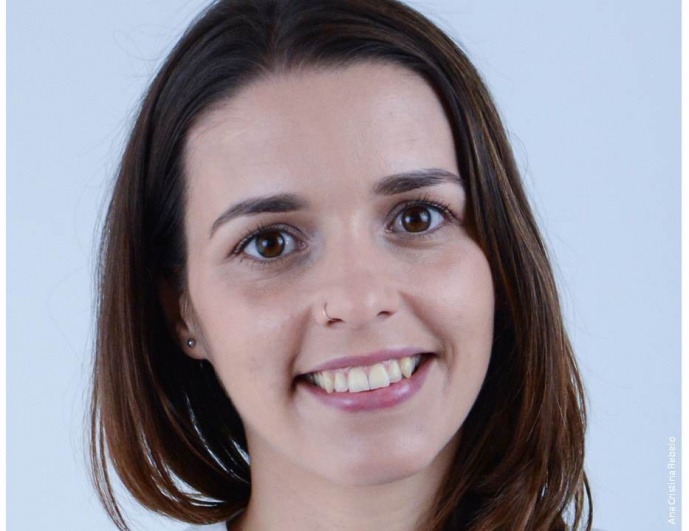
Ana Cristina Rebelo is a Research Fellow at the University of the Azores, affiliated with the Instituto Hidrográfico and Naturkunde Museum Stuttgart. She holds a PhD in Marine Sciences from the University of the Azores (2016). Her research focuses on rhodolith ecosystems, combining modern and fossil records to study their formation, ecological roles, and response to environmental changes. Education: PhD in Marine Sciences (University of the Azores, 2016). Research interests include the biogeography of rhodolith beds, their role in carbon sequestration, and their sensitivity to climate change. She explores the interplay between geological processes and biological communities on volcanic island shelves, particularly in the Azores and Madeira Archipelagos. Her work highlights rhodolith beds' importance as CO2 sinks and juvenile fish habitats, as well as their protection under EU Habitats Directive. She collaborates on geopark initiatives, such as the GeoPark Azores and Paleopark Santa Maria, linking scientific research with geotourism. Labs/Teams: CIBIO-InBIO, BIOISLE research group.
Anna Adell is a doctoral student at Lund University's Faculty of Engineering, affiliated with the Division of Water Resources Engineering. She conducts research on coastal morphology and climate adaptation of near-coastal transportation infrastructure. Her primary research interests include coastal morphology, climate adaptation and protection in coastal zones, with specific focus on coastal roads and railroads threatened by flooding and erosion risks. Her work examines coastal processes for both long-term changes and extreme storm scenarios to enable sustainable planning and maintenance of transport infrastructure systems under climate change. Anna's research portfolio reveals strong focus on coastal engineering and climate adaptation methodologies. Her publications demonstrate expertise in flood risk assessment, wave modeling, and coastal protection measures for transportation infrastructure. Recent work includes development of frameworks for assessing inundation probability and erosion impacts on coastal roads. Anna has been active in academic outreach through media participation and organization of coastal research seminars, including the Swedish/Danish Coastal Research Seminars in 2022 and 2024. She has participated in conferences including the 2nd PhD Conference on Sustainable Development at Lund University. Her doctoral project "Climate adaptation of near-coastal roads and railroads" (2020-2024) is conducted as a double degree collaboration between Lund University and University of Copenhagen. The project aims to develop and test methods for risk assessments regarding flooding and erosion in changing climate conditions.
Atul Rai is an Associate Professor at Wichita State University, specializing in interdisciplinary research spanning machine learning, remote sensing, and optimization algorithms. His work integrates computational methods with real-world applications in healthcare, environmental science, and distributed computing systems. Key areas of focus include medical imaging analysis, satellite data-driven hydrological modeling, and task scheduling in fog-cloud environments. Research emphasizes innovations such as fuzzy logic-based medical image segmentation, deep learning for emotion classification in music, and genetic algorithm optimizations. Rai's contributions extend to ecological assessments using satellite technology, particularly in monitoring endangered species like the Ganga River dolphin. His publications reflect a blend of technical advancements and methodological innovations, addressing challenges in transdisciplinary collaboration frameworks and corporate financial disclosure practices. While no specific awards are documented, his extensive academic output highlights sustained contributions to multiple fields.
Alessandra Crosato is a Lecturer at IHE Delft and TU Delft, specializing in river morphodynamics and fluvial processes. She leads courses on river training and rehabilitation, and mentors PhD students in EU Erasmus Mundus programs. Her research focuses on river planform changes, vegetation-riparian interactions, and sediment transport modeling. Notably, she developed the MIANDRAS model, a foundational tool for river morphology studies, widely used in academic and EU projects like IRWM-NET IMPACT. Her work integrates laboratory experiments with numerical models, addressing challenges like bridge-induced morphological changes, urbanization impacts on flooding, and climate-driven river adaptations. She contributes to international conferences (IAHR, RCEM) and serves on committees for the Netherlands Centre for River Studies and IAHR Europe Division. As a guest editor for Advances in Water Resources, she curates special issues on river morphodynamic modeling. Research trends in her articles emphasize vegetation effects on sediment dynamics, infrastructure impacts on river systems, and climate adaptation strategies. She bridges engineering and ecology, advancing sustainable river management through interdisciplinary approaches.
Trang Duong is a researcher specializing in coastal systems and climate change impacts. Her work focuses on coastal dynamics, including tidal inlet processes, salt intrusion modeling, and the effects of human interventions on coastal morphology. She employs numerical models to study climate change-induced coastal hazards such as flooding and erosion. Key research areas include assessing climate vulnerability at global and regional scales, evaluating nature-based solutions for coastal adaptation, and understanding the interplay between sea-level rise and sediment dynamics. Her expertise spans hydrodynamics, morphodynamics, and probabilistic modeling, with applications in both data-rich and data-poor environments. Recent studies have explored the impacts of coastal hardening, vegetation effects on water levels, and the stability of small tidal inlets under climate change. Dr. Duong contributes to international initiatives like SurgeMIP, advancing global storm surge projections using high-resolution climate models. Publications highlight her focus on estuaries, engineered coastal systems, and the development of adaptive management frameworks. Her research emphasizes interdisciplinary approaches to address coastal challenges, combining physical modeling with ecological considerations to enhance climate resilience strategies.
Oliver Kevin Hasler is a Research Fellow at the Department of Engineering Cybernetics, Norwegian University of Science and Technology (NTNU). His research focuses on developing advanced remote sensing systems with particular emphasis on hyperspectral imaging and unmanned aerial vehicle (UAV) navigation technologies. He designs lightweight sensor payloads and novel georeferencing methods for environmental monitoring applications. Hasler's research spans remote sensing, signal processing, and UAV navigation systems. His interests include hyperspectral data acquisition, robust positioning in challenging environments, coastal ocean mapping, and algal bloom detection using multi-sensor approaches. His work often involves developing cost-effective solutions for environmental monitoring applications. His publications demonstrate a consistent focus on UAV-based remote sensing innovations. Recent work shows strong trends in: hyperspectral imaging system development, signal processing for navigation resilience, coastal/ocean monitoring applications, and multi-sensor data integration. The research consistently addresses practical implementation challenges in field deployments.