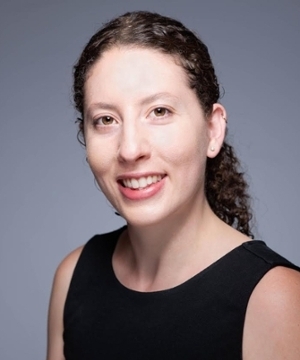
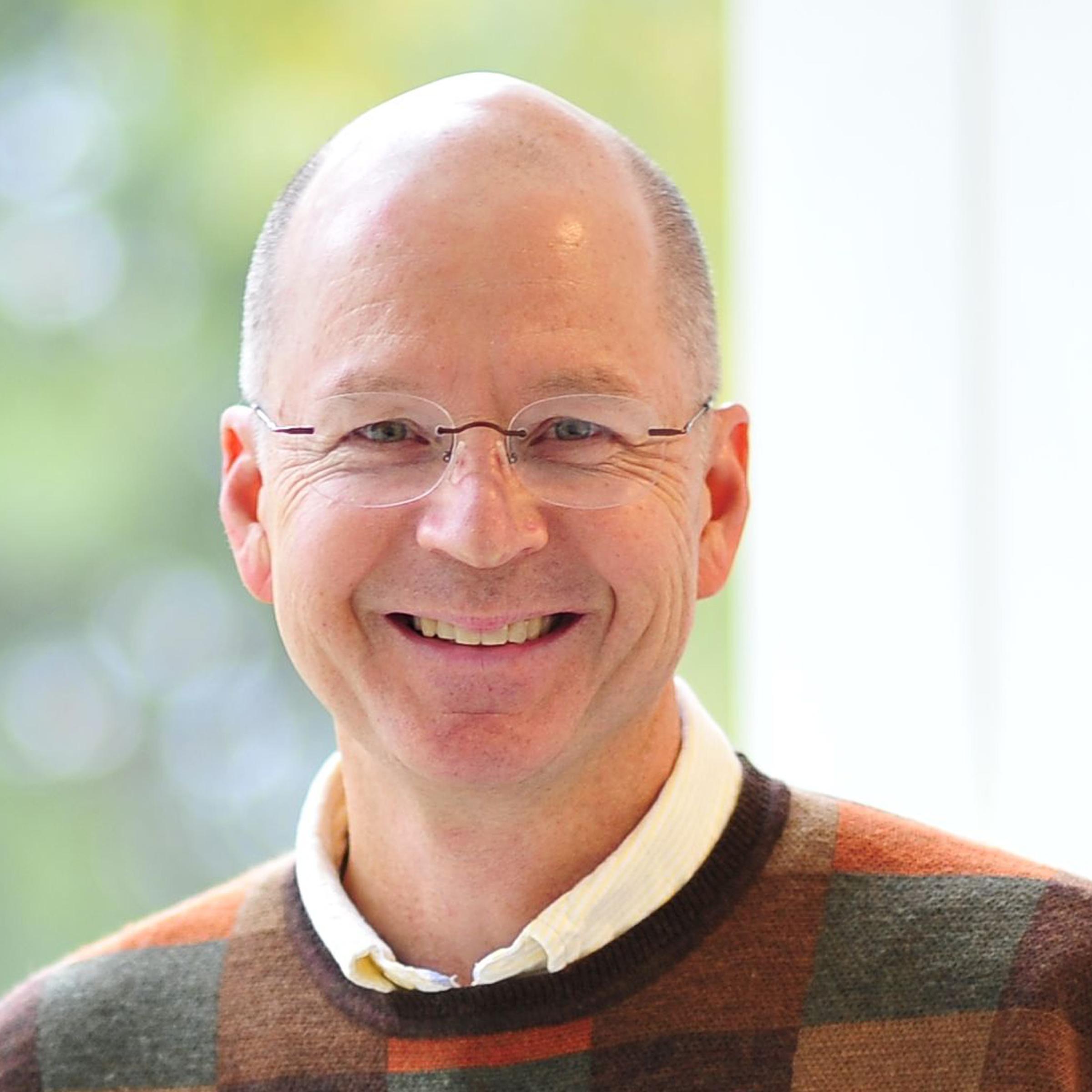
Andrea Pickel is an Assistant Professor at the University of Rochester, holding joint appointments in the Department of Mechanical Engineering, Materials Science, and the Institute of Optics, while also serving as a Scientist at the Laboratory for Laser Energetics (LLE). She received her PhD in Mechanical Engineering from UC Berkeley (2019) and a BS from Carnegie Mellon University (2014). Her research focuses on nanoscale heat transfer, leveraging luminescent materials and super-resolution imaging to address challenges in thermal management, catalysis, and energy systems. Education: PhD, Mechanical Engineering, UC Berkeley, 2019 BS, Mechanical Engineering, Carnegie Mellon University, 2014 Research interests include luminescence nanothermometry, single-nanoparticle imaging, and high-temperature thermal metrology. Her work integrates experimental methods like stimulated emission depletion (STED) imaging and operando spectroscopy to advance understanding of energy transport at the nanoscale. Notable awards include the NSF CAREER Award (2022), ACS PRF Doctoral New Investigator Award (2020), and Furth Fund Award (2021). She was also named a Scialog Fellow in 2024. Advancing thermal measurement techniques, her group collaborates across disciplines to tackle applications in carbon capture, battery technology, and plasmonic photocatalysis. Current projects emphasize developing dual-mode sensing tools for real-time thermal and chemical monitoring. Labs/Teams: Active at the Laboratory for Laser Energetics (LLE) and leads the Pickel Research Group in the Department of Mechanical Engineering.
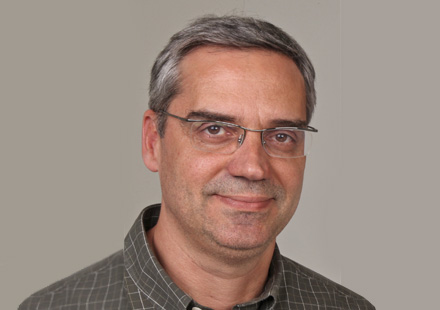
Rynson W.H. Lau is a Professor of Computer Science at City University of Hong Kong (CityU), leading research in Computer Graphics, Computer Vision, and Deep Learning. He holds an Honorary Professorship at Swansea University. Previously, he served on faculties at Durham University and The Hong Kong Polytechnic University. His work focuses on advancing graphics and vision techniques, including deep learning applications for graphics/vision problems, with publications in top venues like SIGGRAPH, CVPR, and NeurIPS. He has received the Adobe Research Gift (2023) and the Springer Nature Editorial Contribution Award (2025) for his editorial contributions to the International Journal of Computer Vision . Education: B.Sc. (First-class Honors) in Computer Systems Engineering from University of Kent Ph.D. in Computer Science from University of Cambridge Research Interests: Computer Graphics: Focused on 3D reconstruction, rendering, and real-time performance capture. Computer Vision: Specializing in saliency detection, object recognition, and low-light scene enhancement. Deep Learning: Developing generative models and diffusion-based frameworks for graphics and vision tasks. Editorial Roles: Editorial Board Member, International Journal of Computer Vision and IET Computer Vision . Guest Editor for special issues in journals like ACM Transactions on Internet Technology and IEEE Transactions on Multimedia. Teaching: 2024/25 Academic Year: CS4185: Multimedia Technologies and Applications CS4188/CS5188: Virtual Reality Technologies and Applications Research Team: Advises over 20+ students and collaborates internationally. Recent projects include AI-driven VR systems for healthcare and advanced 3D content generation using diffusion models.
Dr. Md Noor-A-Rahim is an Assistant Professor (Lecturer-Above the Bar) at the School of Computer Science and Information Technology, University College Cork (Ireland). He previously served as a Senior Researcher and Marie Curie Fellow at the same institution. His academic journey includes a PhD from the University of South Australia (2015) and the prestigious Michael Miller Medal for his outstanding thesis on wireless communication systems. His research focuses on Intelligent Transportation Systems, Machine Learning, IoT, Wireless Networks, and DNA-based data storage. He has published extensively on topics like 6G-V2X systems, time-sensitive networking, and error characterization in DNA storage. His work integrates cutting-edge technologies such as intelligent reflecting surfaces (IRS), federated learning, and ultra-reliable low-latency communication (URLLC). Research Interests : Dr. Rahim's research bridges theoretical advancements and real-world applications in vehicular networks, smart manufacturing, and next-generation communication systems. He explores challenges in autonomous driving, edge computing, and bio-constrained data storage. His contributions include novel coding schemes for anytime transmission and frameworks for mitigating big vehicle shadowing in V2X communications. Key Publications : His recent work includes a comprehensive survey on wireless TSN (2025), analysis of 6G-V2X systems (2022), and breakthrough studies on DNA data storage error modeling (2023). These publications highlight his expertise in both foundational research and industry-relevant solutions. Awards : Recipient of the Michael Miller Medal (2015) for doctoral research excellence. Grants & Labs : While specific grants are not listed in the text, his research portfolio suggests involvement in collaborative projects with industry partners and funding bodies. He leads interdisciplinary efforts in smart manufacturing and vehicular communication systems.
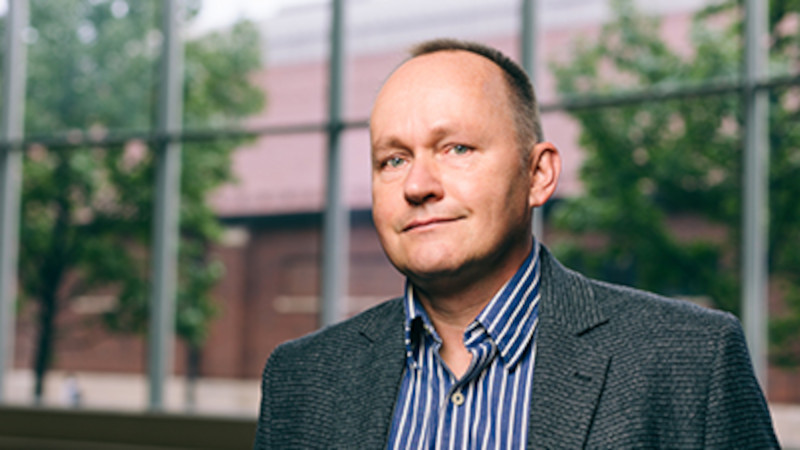
Dr. Ian Abel is an Associate Research Scientist at the Institute for Research in Electronics & Applied Physics (IREAP) at the University of Maryland, where he has been since 2018. His expertise spans fusion energy, plasma physics, and computational modeling. Abel holds a B.A. in Mathematics (2006) and M.S. in Applied Mathematics (2007) from the University of Cambridge, followed by a Ph.D. in Theoretical Physics from the University of Oxford (2012). His research focuses on magnetically confined fusion systems, particularly edge dynamics in tokamaks and innovative centrifugal mirror concepts. He has contributed to the development of gyrokinetic simulation tools like the GX code and the MaNTA transport model. Abel’s work also explores machine learning applications in plasma turbulence analysis and centrifugal mirror fusion reactor design for space propulsion. His research leverages advanced numerical methods, including GPU-native algorithms and adjoint-based optimization techniques for plasma equilibria. Key projects include the Centrifugal Mirror Fusion Experiment (CMFX), where he investigates plasma confinement and transport phenomena. His publications emphasize interdisciplinary approaches, integrating computational fluid dynamics, statistical physics, and high-performance computing to address challenges in fusion energy and plasma dynamics. While no specific awards are listed, his contributions to gyrokinetic turbulence modeling and centrifugal confinement systems are central to current fusion research.
Riddhipratim Basu is an Associate Professor at the International Centre for Theoretical Sciences (ICTS-TIFR) in Bengaluru, India, since September 2017. Previously, he was a Szegö Assistant Professor of Mathematics at Stanford University (2015–2017) and a Ph.D. graduate in Statistics from UC Berkeley (2015), supervised by Allan Sly. Research focuses on Probability Theory, with emphasis on First/Last Passage Percolation, Interacting Particle Systems, Large Deviations, and Random Matrix Theory. Key collaborators include Allan Sly, Shirshendu Ganguly, Mahan Mj, and Manan Bhatia. Publications span journals like Communications on Pure and Applied Mathematics , Annals of Probability , and Comm. Math. Phys. His work explores geodesic structures in percolation models, scaling exponents in KPZ universality, and geometric properties of stochastic processes. Recent studies include Liouville Quantum Gravity and Airy process fluctuations.
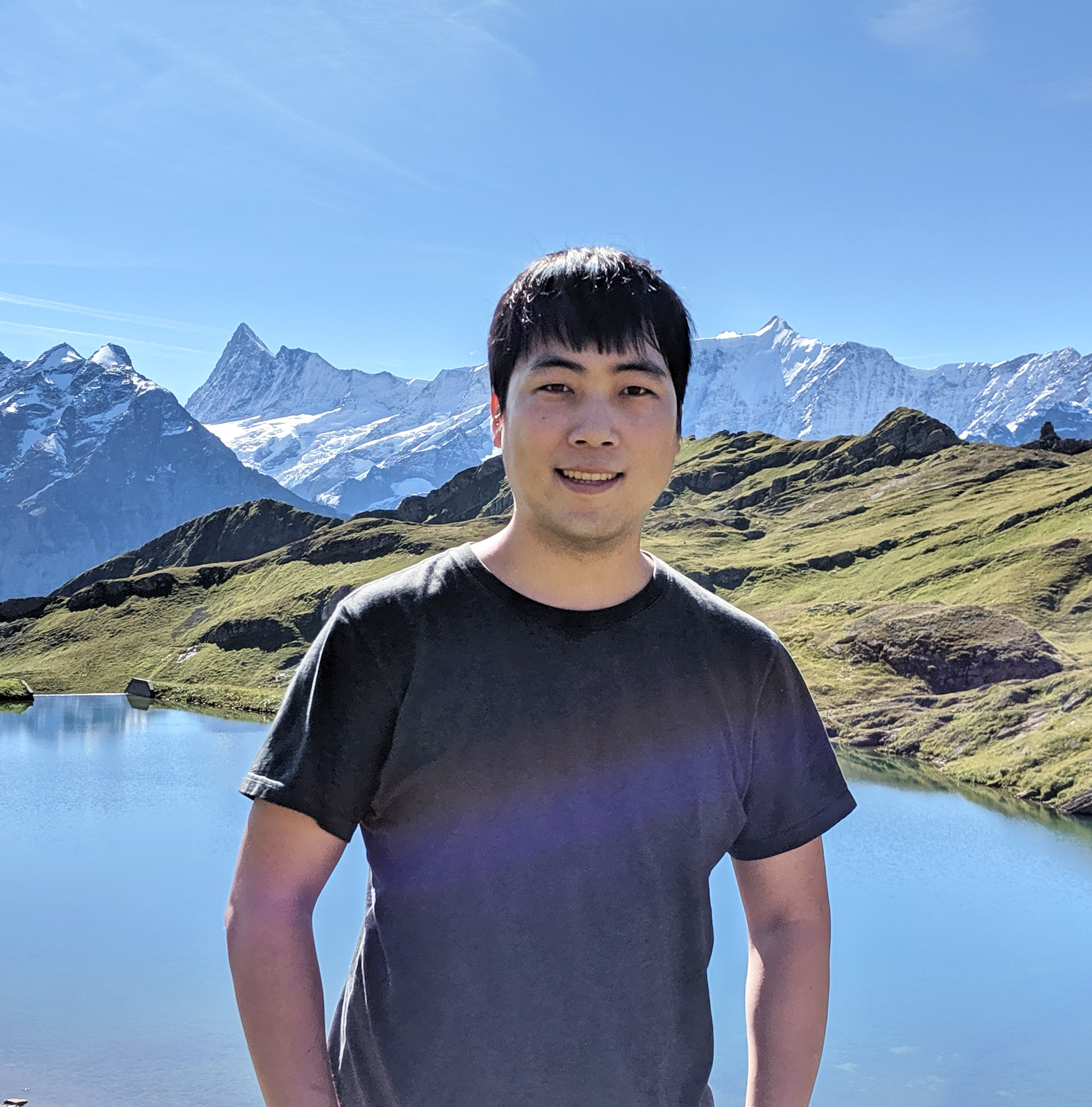
Taein Kwon is a postdoctoral research fellow at the Visual Geometry Group (VGG) within the Department of Engineering Science at the University of Oxford, working under Prof. Andrew Zisserman. Previously, he completed his PhD at ETH Zurich under Prof. Marc Pollefeys and earned master's and bachelor's degrees from UCLA and Yonsei University, respectively. His educational background includes: Bachelor's in Electrical Engineering from Yonsei University, Seoul, Korea Master's degree from UCLA PhD from ETH Zurich (defended July 2024) His research spans Egocentric Vision, Action Recognition, Hand-object Interaction, Video Understanding, AR/VR, and Multi-modal Learning, with emphasis on first-person perspective analysis for AI assistants and human-computer interaction. His work integrates 3D reconstruction, pose estimation, and multimodal signals to model complex human activities and physical interactions. Analysis of his 2021-2025 publications reveals a consistent focus on egocentric vision datasets (H2O, HoloAssist, EgoPressure) and novel frameworks for hand-object interaction, action recognition, and gesture understanding. His research demonstrates strong interdisciplinary connections between computer vision, robotics, and human-centered AI, with increasing emphasis on pressure sensing, co-speech gestures, and cross-modal alignment. His scientific recognition includes: CVPR Egovis 2022/2023 Distinguished Paper Award for HoloAssist (July 2024) SNSF Postdoc.Mobility fellowship (May 2024) He actively mentors students on egocentric vision projects, supervising master's theses, semester projects, and collaboration initiatives leading to publications at top conferences. His research is supported by the SNSF fellowship and industry collaborations with Meta Reality Labs and Microsoft Research. As part of Oxford's Visual Geometry Group, he contributes to cutting-edge computer vision research while maintaining strong ties with ETH Zurich's computer vision community through ongoing collaborations and dataset development efforts.
Professor Joseph Wood is a Professor of Visual Analytics at City St George's, University of London, where he serves as a founding member of the giCentre. His academic career spans over three decades, with continuous contributions to Geographic Information Science and visualization since 1990. He previously served as Head of Department for Computer Science at City University between 2014 and 2017. Professor Wood's educational background includes a PhD in Geographical Information Science from the University of Leicester (1996), an MSc in the same field from the University of Leicester (1990), and a BSc in Physical Geography & Geology from the University of Sheffield (1989). His academic progression shows steady advancement from Research Scholar at the University of Leicester (1990-1992) through various lecturer and senior positions to his current professorship. His research interests center on visual analytics and data visualization, with particular expertise in geographic information science and terrain analysis. Professor Wood has developed innovative methods bridging GI Science, Data Visualization, and education domains. His specific interests include narrative of visual analytic design, computational thinking in pedagogy, and novel visualization design for geographic data. His work demonstrates a consistent focus on making complex spatial data understandable through innovative visualization techniques. Analysis of Professor Wood's recent publications reveals a strong emphasis on practical applications of visualization techniques across diverse domains including transportation, epidemiology, sports analytics, and historical migration patterns. His work shows an evolution from foundational geographic information science toward broader applications in visual analytics, with increasing focus on narrative structures, responsive design, and accessibility considerations in visualization. The interdisciplinary nature of his research is evident in collaborations spanning computer science, geography, urban planning, and public health domains. Professor Wood has been actively involved in the academic community, serving on organizing and program committees for major international conferences including IEEE Infovis and VAST, Eurovis, GIScience, Spatial Accuracy, and Geomorphometry. His contributions to the field have been recognized through invitations to deliver keynote talks at prestigious venues ranging from GeoComputation to TEDx, where he presented on topics such as visualizing movement behavior of cyclists. As an advisor, Professor Wood has supervised numerous PhD and Master's students, with current supervision of Julia Crossley (Student conceptualisation of abstraction in computer science) and Jude Nzemeke (Understanding student misconception in recursive algorithmic thinking). His extensive supervision history includes completed PhDs on topics ranging from cycling behavior to spatio-social relations in photographic archives. His academic leadership extends to software development, with contributions to tools like litvis, elm-vega/el-vegalite, giCentre Utils, handy, and LandSerf GIS. Professor Wood is an active member of professional organizations including IEEE (2007-present), Association of Computing Machinery (ACM) (2007-present), and Association of Geographic Information (AGI) (1997-present), demonstrating his commitment to interdisciplinary collaboration across computer science and geographic information domains.
Christian Pascal Hirsch is an Associate Professor for Data Science and Statistics at the Department of Mathematics, Aarhus University. His research focuses on random networks inspired by biology and health sciences, utilizing techniques from topological data analysis and stochastic geometry. He is affiliated with the Stochastics group, AU DIGIT Centre, and AU Quantum Campus. Research Interests: Topological data analysis, large deviations theory, spatial random networks, and stochastic geometry. His work includes studies on percolation theory, Gibbs measures, and applications to neural networks and geometric functionals. Publications span journals such as the Journal of Applied and Computational Topology, Journal of Statistical Physics, and Stochastic Processes and Their Applications, covering topics from network topology to Poisson approximation.
Professor Oliver Johnson is a faculty member at the School of Mathematics, University of Bristol, UK, where he serves as Head of School and holds the Professor of Information Theory position. His research bridges information theory, probability, and statistics, focusing on entropy convergence, group testing, and fundamental limits in data analysis. Current PhD students: Kieran Morris, Conor Crilly Ex-PhD students: Matt Aldridge, Leonardo Baldassini, Dan Cowley, Vaia Kalokidou, Tom Kealy, Jennifer Chakravarty, Zichen Gui, Chrys Paschou Ex-postdoc: Erwan Hillion His work includes ORCiD profile and collaborations across information theory, cybersecurity, and ecological modeling.
David Mount is a Professor in the Department of Computer Science at the University of Maryland, with an additional appointment at the University of Maryland Institute for Advanced Computer Studies (UMIACS). His primary research focus is Computational Geometry, particularly in designing, analyzing, and implementing data structures and algorithms for geometric problems. Applications of his work span image processing , pattern recognition , information retrieval , and computer graphics . He is a Fellow of the ACM and has received the ACM Recognition of Service Award twice. A member of the Algorithms and Theory Group, Mount has authored over 200 publications, many of which are available on Google Scholar, DBLP, and ArXiV. Research Focus Computational Geometry Algorithm Design and Analysis Geometric Data Structures Nearest Neighbor and Range Searching Clustering Algorithms Recent Publications Mount's recent publications (2023-2025) emphasize non-Euclidean geometry (e.g., Hilbert metric), dynamic geometric structures , and approximation algorithms for polytopes, Voronoi diagrams, and Delaunay triangulations. Collaborative works with students and researchers address challenges in kinetic data compression , label tracking , and geometric software development (e.g., Ipelets for polygonal geometry). Professional Activities Editorial Board Member, TheoretiCS (2021-present) Senior Associate Editor, ACM Trans. on Spatial Algorithms and Systems (2013-2020) Program Committee Member, FOCS , ESA , SODA , and other major conferences Awards ACM Fellow ACM Recognition of Service Award (twice)
Craig Shultz is an Assistant Professor in the Department of Electrical and Computer Engineering at the University of Illinois Urbana-Champaign (UIUC), where he joined in January 2024. He is affiliated with the College of Engineering and conducts research through the Interactive Display Lab, which he founded upon joining UIUC. Prior to his academic position, Shultz co-founded Fluid Reality and served as VP of Research and Development at Tanvas, where he developed electroadhesive touchscreens based on his research at Northwestern University. Dr. Shultz's educational background includes: Ph.D. in Mechanical Engineering from Northwestern University (2017) M.S. in Mechanical Engineering from Northwestern University (2015) B.S. in Electrical Engineering from the University of Tulsa (2011) Shultz's research focuses on advancing human-computer interaction through innovative haptic technologies. His work centers on developing tactile interfaces that leverage electrostatic actuation and novel input/output devices to create immersive user experiences. His primary research areas include: Human-Computer Interaction - Exploring contemporary use cases and building novel input and output devices Electrostatic Actuation - Modeling and characterization of moderate to high voltage electrostatic actuators Haptic Technology - Designing and evaluating tactile interaction devices Interactive Embedded Systems - Creating systems that respond to human touch in sophisticated ways Shultz's research has demonstrated how haptic technologies can enhance user experiences across various domains including virtual reality, mobile devices, and interactive displays. His work aims to elevate haptic rendering to the sophistication level of graphics and audio systems through practical hardware and software solutions. Dr. Shultz has received numerous prestigious awards for his research contributions: IEEE Robotics and Automation Society Technical Committee on Haptics Early Career Award (2025) TCH Early Career Award at World Haptics 2025 Sony Faculty Innovation Award for Finger Mounted Haptic Displays (2025) Multiple Best Paper awards at premier ACM and IEEE conferences (2014-2022) As an educator and mentor, Shultz has advised multiple graduate students in the Interactive Display Lab, including Jung-Hwan (the lab's inaugural member), Seung Heon, and Yanjun (his first PhD student). His research has attracted significant attention, being featured in major media outlets including NBC Nightly News, TechCrunch, and Engadget. Shultz teaches courses such as ECE 210 (Analog Signal Processing), ECE 211 (Analog Circuits & Systems), ECE 445 (Senior Design Project Lab), ECE 598 CS (Interactive Haptic Systems), and ME 470 ZJ3 (Senior Design Project). The Interactive Display Lab, housed in room 3038 of the Electrical and Computer Engineering building at UIUC, is equipped with electronics assembly and debugging equipment, a prototyping lab, optical bench, student offices, and a photo and VR studio. The lab benefits from access to departmental mechanical, electrical, and clean room fabrication facilities. Current research directions include developing fast interactive soft buttons (DynaButtons), high-resolution haptic gloves (Fluid Reality), and flat panel haptics with embedded electroosmotic pumps.
Waldemar Celes Filho is an Associate Professor in the Department of Computer Science at Pontifical Catholic University of Rio de Janeiro (PUC-Rio) and serves as Director of the Tecgraf Institute/PUC-Rio. With a career spanning over three decades, he has established himself as a leading researcher in computer graphics and scientific visualization. His educational background includes a Civil Engineering degree from UFRJ (1986), a Master's in Civil Engineering from PUC-Rio (1990), a Doctorate in Computer Science from PUC-Rio (1995), and postdoctoral studies in Computer Graphics at Cornell University (1995-1997). Dr. Celes Filho's research focuses primarily on Computer Graphics with special emphasis on Scientific Visualization, Numerical Simulation, Distributed Visualization, and Real-Time Rendering. He is particularly known for his work on visualization techniques for black oil reservoir models and as a co-creator of the Lua programming language. His research has resulted in over 50 publications spanning nearly three decades, with consistent output continuing through 2025. His recent publications demonstrate a strong trend toward applying advanced visualization techniques to complex industrial problems, particularly in petroleum engineering and construction informatics. His work bridges theoretical computer graphics with practical applications in engineering domains, showing particular strength in volume rendering, CAD model visualization, and distributed rendering systems. As Director of the Tecgraf Institute, he leads research initiatives that connect academic work with industry applications, fostering collaborations that translate visualization research into practical tools. Dr. Celes Filho has mentored numerous students who have become co-authors on his publications, including Paulo Ivson, Fábio Markus Miranda, and Lucas Caracas de Figueiredo, among others. His work continues to be influential in both academic and industrial settings.
Jason R. Green is a Professor in the Department of Chemistry at the University of Massachusetts Boston. With a PhD from Purdue University (2007) and postdoctoral experience at the Universities of Chicago, Cambridge, and Northwestern University, his research bridges theoretical chemistry, physics, and data science to explore nonequilibrium systems. His work focuses on transforming chemical energy into dynamically functional materials through interdisciplinary approaches. Education: B.S., Case Western Reserve University (cum laude, 2002) Ph.D., Purdue University (2007) with NASA Graduate Fellowship NSF Postdoctoral Fellow at University of Chicago and University of Cambridge Research Interests: Theoretical chemical physics Nonequilibrium statistical mechanics Data science applications in chemical systems His recent publications analyze electrochemical material dynamics (ACS Nano 2024), chemically driven self-assembly (Chemical Science 2024), and thermodynamic speed limits across disciplines (Nature Physics 2020, Physical Review X 2022). He has received prestigious fellowships including NASA's Graduate Student Researchers Program and NSF Postdoctoral Fellowship. The Green Research Group at UMB applies theory, computation, and data science to understand energy transformation in synthetic and biological materials.
Laxman Dhulipala serves as an Assistant Professor in the Department of Computer Science at the University of Maryland, College Park, while also working as a research scientist at Google Research with the Graph Mining team. Dr. Dhulipala earned his Ph.D. from Carnegie Mellon University under Guy Blelloch's supervision and completed a postdoctoral fellowship at MIT with Julian Shun. His research centers on efficient parallel algorithms, particularly for parallel clustering and graph processing, along with developing computational models for emerging hardware technologies. His scholarly output demonstrates significant expertise across parallel computing domains, with particular emphasis on scalable graph algorithms, dynamic data structures, and computational geometry. Dr. Dhulipala's work bridges theoretical computer science with practical systems implementation, producing algorithms that achieve both theoretical optimality and real-world performance. His research group has made substantial contributions to benchmarking frameworks including the Graph Based Benchmark Suite (GBBS) and ParClusterers Benchmark Suite, establishing standardized evaluation methods for graph processing systems. The collective work shows progression from theoretical foundations to practical implementations that handle massive-scale datasets. Best Paper Award at SPAA 2022 Best Paper Runner Up at VLDB 2022 Distinguished Paper Award at PLDI 2019 Memorable Paper Award Finalist at NVMW'20 CMU's SCS Dissertation Award Honorable Mention As an educator, Dr. Dhulipala mentors numerous graduate students while teaching advanced courses in algorithm design and parallel computing. His research collaborations span multiple institutions including Carnegie Mellon University, MIT, and Google Research, reflecting his position at the intersection of academia and industry research.
Bedrich Benes is a Professor and Associate Department Head in the Department of Computer Science at Purdue University. He holds a Ph.D. and M.S. in Computer Science from Czech Technical University in Prague (1998 and 1991, respectively). His research focuses on generative methods for geometry synthesis, procedural modeling, simulation of natural phenomena, and additive manufacturing. He has published over 200 research papers and secured grants from organizations like the NSF, NASA, and DOE. Editor-in-Chief of Elsevier's Graphical Models Senior Member of ACM and IEEE Fellow of Eurographics Association Research interests include graphics, visualization, geometric modeling, and computational biology. He leads projects on tree digital twins, urban forestry modeling, and immersive VR/XR education. Advised students include Bosheng Li and Xiaochen Zhou, who recently defended their Ph.D. theses. Notable contributions include neural ranking algorithms for forest reconstruction and tools like Tree-D Fusion for tree dataset generation. His work bridges computer graphics with environmental science and agriculture.