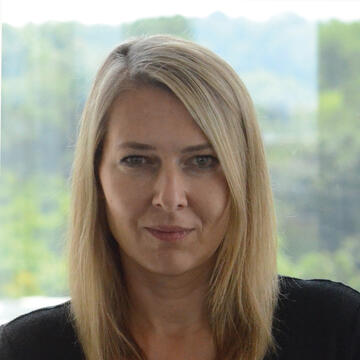
Dana Cupkova is Professor and Track Chair for the Master of Science in Sustainable Design (MSSD) at Carnegie Mellon's School of Architecture. She directs EPIPHYTE Lab, focusing on ecological relationships between architecture and landscape through thermodynamics, bio-based processes, and advanced manufacturing. Her design approach emphasizes ecological attunement and material circularity using construction waste streams. Her research investigates decarbonization strategies through bio-based material remediation and waste stream reutilization. Cupkova's work has been supported by DOE, Manufacturing Futures Institute, and recognized with ACADIA Teaching Award and ACSA Creative Achievement Award.
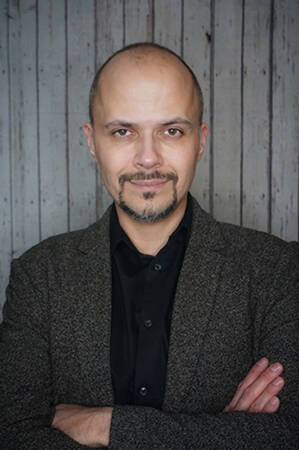
Laszlo A. Jeni is an Assistant Research Professor at Carnegie Mellon University's Robotics Institute, leading the Computational Behavior (CUBE) Lab. His research focuses on computer vision, digital humans, and computational behavior science, with applications in healthcare, affective computing, and assistive technologies. He develops methods to model human behavior using multi-modal sensors, including facial, body, and physiological data. Current research emphasizes human motion synthesis, clinical movement analysis, and 3D scene reconstruction. Key research topics include action recognition for clinical applications, generative models for 4D scene synthesis, and video-based physiological estimation. Jeni supervises a team of PhD and master's students in the CUBE Lab, advancing interdisciplinary projects at the intersection of AI and behavioral science. His work has led to innovations in non-contact health monitoring and virtual avatar control systems. Notable contributions include frameworks for sim-to-real transfer in human mesh recovery, diffusion-based camera alignment, and video transformers optimized for efficiency. Jeni's lab actively participates in challenges like the V4V (Vision for Vitals) initiative and benchmarks for 3D facial alignment, maintaining a strong presence in both academic and applied computer vision communities.
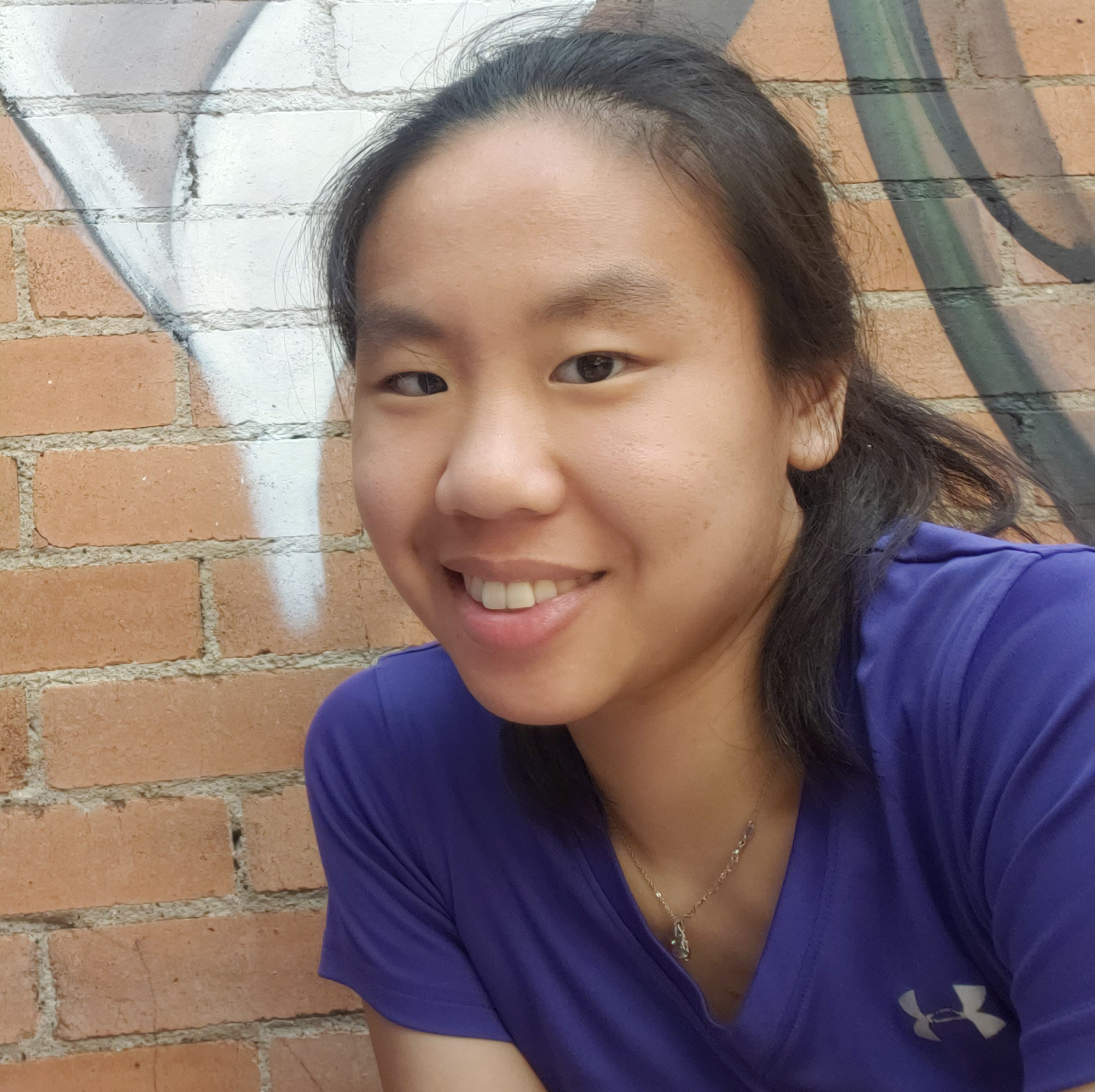
Nicole Feng is a fifth-year PhD candidate and Research Fellow in Computer Science at Carnegie Mellon University, where she works in the Geometry Collective under Professor Keenan Crane. Her research focuses on geometric algorithms for computer graphics and geometry processing. Feng develops fundamental methods for geometric computing including novel approaches to signed distance calculation and winding number computation on complex surfaces. Her work enables practical applications in surface modeling, scientific visualization, and digital geometry processing. Recognized as a WiGRAPH Rising Star in 2024, she creates educational resources including Blender tutorials for scientific visualization. Beyond research, Feng designs crossword puzzles and organizes community running events.
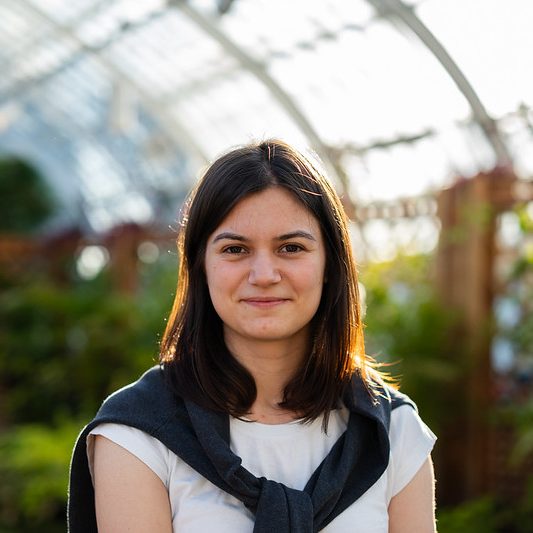
Olga Gutan is a doctoral student at Carnegie Mellon University 's Computer Science Department , affiliated with the Geometry Collective and advised by Keenan Crane . Her work focuses on computer graphics and geometry processing , with a primary research interest in vectorization and surface algorithm development. Current role: Doctoral Research Assistant Past work: Nonmanifold Minimal Surfaces with mentors Etienne Vouga, Nicholas Sharp, Josh Vekhter Her research bridges theoretical geometry and practical implementation, with publications on singularity-free frame fields for vectorization and exploratory work on gravitational surface rendering in Houdini. She received an Honorable Mention for Best Paper at Symposium on Geometry Processing 2023. Olga contributes to algorithm development and visualization techniques, including triply-periodic nonmanifold surfaces. Scientific Awards : Best Paper (Honorable Mention), Symposium on Geometry Processing 2023 Key Collaborations : Mentored by Etienne Vouga, Nicholas Sharp, and Josh Vekhter during summer 2021. Affiliated with the Geometry Collective at Carnegie Mellon.
James H. Garrett Jr. is the Provost and Thomas Lord Professor of Civil and Environmental Engineering at Carnegie Mellon University. He previously served as Dean of the College of Engineering (2013-2018) and Head of the Department of Civil and Environmental Engineering (2006-2012). Garrett joined CMU in 1990 and has held leadership roles including Associate Dean for Academic and Graduate Affairs (2000-2006). Ph.D., Civil Engineering, Carnegie Mellon University (1986) M.S., Civil Engineering, Carnegie Mellon University (1983) B.S., Civil Engineering, Carnegie Mellon University (1982) Garrett’s research focuses on sensor systems, data mining, and machine learning for civil infrastructure condition assessment. His work spans smart cities, transportation engineering, and structural health monitoring, with applications in HVAC systems, water infrastructure, and bridge diagnostics. He has pioneered methods for integrating BIM with maintenance data and developing intelligent decision support systems. Garrett’s publications emphasize sensor networks, data-driven infrastructure management, and machine learning for anomaly detection in transportation and building systems. His work bridges civil engineering with computational methods, including variational autoencoders for rail monitoring and adaptive graph filtering for bridge diagnostics. Alexander von Humboldt Research Prize (2012) Steven J. Fenves Award for Systems Research (2007) ASCE Computing in Civil Engineering Award (2006) As founding co-director of the Pennsylvania Smarter Infrastructure Incubator and a leader in the Wilton E. Scott Institute for Energy Innovation, Garrett has advanced smart infrastructure through sensor networks and data analytics. He also served as co-chief editor of the ASCE Journal of Computing in Civil Engineering (2008-2013).
Eni Halilaj is an Associate Professor in the Department of Mechanical Engineering at Carnegie Mellon University’s College of Engineering, with courtesy appointments in Biomedical Engineering and the Robotics Institute. She also holds an adjunct faculty position in Orthopaedic Surgery at the University of Pittsburgh School of Medicine. She directs the CMU Musculoskeletal Biomechanics Lab, an interdisciplinary research group focused on understanding and optimizing human movement, particularly for individuals with mobility impairments. Ph.D., Biomedical Engineering, Brown University (2015) B.A., Engineering, Brown University (2008) Postdoctoral Fellow, Bioengineering, Stanford University (2018) Her research interests include biomechanics, computational modeling, wearable robotics, artificial intelligence, medical imaging, and rehabilitation engineering. She leverages motion capture, wearable sensors, computer vision, and machine learning to study musculoskeletal mechanics and develop technology-assisted rehabilitation strategies for preventing osteoarthritis and improving post-surgical outcomes. Her work emphasizes portable, scalable biomechanics tools that can be used outside traditional labs. Her recent publications demonstrate a strong trend in integrating AI and sensor fusion (IMU + video) to enable accurate, markerless human motion tracking in natural environments. These advances support clinical translation by enabling remote monitoring, personalized interventions, and large-scale biomechanical studies. She actively collaborates with UPMC and the Chan Zuckerberg Initiative on projects like DeepGaitLab, which aims to make markerless motion analysis accessible through open-source tools. NSF CAREER Award American Society of Biomechanics Early Career Achievement Award NIH K12 Career Development Scholarship George Tallman Ladd Research Award College of Engineering Dean’s Early Career Faculty Fellowship American Society of Biomechanics Young Scientist Award She advises multiple Ph.D., master’s, and undergraduate students and has received significant research funding, including a $2.7M NIH grant to predict post-traumatic osteoarthritis after ACL surgery. She teaches courses such as Dynamics and special topics in biomechanics and wearable health technologies. She is actively involved in outreach, including hosting workshops for high school girls and participating in National Biomechanics Day. Her lab, the CMU Musculoskeletal Biomechanics Lab, is a hub for interdisciplinary innovation, combining engineering, medicine, and computer science to improve human mobility and prevent joint disease.
Yisong Guo is a Professor in the Department of Chemistry at Carnegie Mellon University, specializing in bioinorganic spectroscopy and iron-containing metalloproteins . His work bridges biochemistry , spectroscopy , and Density Functional Theory to uncover mechanisms of metalloenzyme catalysis in processes like N₂ , H₂ , and O₂ activation. Guo earned a Ph.D. in Applied Science from the University of California, Davis (2003–2009). He has held academic positions at Carnegie Mellon since 2014, advancing from Assistant to Professor. Research Interests focus on iron enzymes such as nitrogenases , hydrogenases , and oxygenases , using Mössbauer , EPR , and Nuclear Resonance Vibrational Spectroscopy (NRVS) . His group integrates synchrotron radiation and DFT calculations to resolve geometric and electronic structures of iron cofactors during catalytic cycles, with applications in alternative energy and human health . Key Publications highlight C-H bond activation , iron hydride identification , nonheme iron catalysis , and ligand design for enhanced reactivity. His work also explores imaging techniques for iron cofactors in whole cells using synchrotron Mössbauer. Awards NSF CAREER Award (2017) Scientific Leadership includes developing synchrotron-based spectroscopic methods and interdisciplinary collaborations with groups at synchrotron facilities . He teaches graduate and undergraduate courses in physical chemistry and bioinorganic spectroscopy .
Yandi Shen is an Assistant Professor in the Department of Statistics and Data Science at Carnegie Mellon University (CMU), part of the Dietrich College of Humanities and Social Sciences. He holds a Ph.D. in Statistics from the University of Washington (2021), advised by Fang Han and Daniela Witten. Prior to joining CMU, he was a Kruskal Instructor in Statistics at the University of Chicago (2021–2023) and a postdoctoral researcher at Yale University under Zhou Fan. His research focuses on nonparametric and semiparametric statistics, high-dimensional inference, applied probability, and optimization algorithms. Education: Ph.D. in Statistics (University of Washington, 2021); Postdoctoral work at University of Chicago and Yale University. Research Interests: Nonparametric and semiparametric methods High-dimensional statistical inference Applied probability and stochastic processes Empirical Bayes methods Optimization and algorithm design Statistical machine learning Teaching Experience: University of Washington: Teaching Assistant for advanced inference courses (STAT 581-583), probability (STAT 394-395), and applied statistics (STAT 528). University of Chicago: Instructor for courses like STAT 22400 (Applied Regression Analysis) and STAT 33611 (Gaussian Processes). Recent Research Trends: His publications emphasize theoretical advancements in high-dimensional statistics, including empirical Bayes estimation, gradient flows, and optimization in overparameterized models. Key areas include analyzing phase transitions in spline regression, universality in regularized estimators, and nonparametric mixture models under optimal transport distances. Labs/Teams: While no specific lab is named, his collaborative work spans statistical theory and applications, often involving interdisciplinary teams in data science and machine learning.
Dr. Satbir Singh is a Teaching Professor in the Department of Mechanical Engineering at Carnegie Mellon University , where he has taught since 2012. Previously, he worked as a Research Staff Member at CMU (2010-2012) and a Senior Researcher at General Motors (2006-2010). Education Ph.D., Mechanical Engineering, University of Wisconsin (2006) M.S., Mechanical Engineering, University of Alabama (2002) B.S., Mechanical Engineering, Punjab Technical University (2000) His research focuses on computational modeling of turbulent reacting flows in complex geometries, with applications to energy conversion technologies and environmental impact analysis. Key areas include Large Eddy Simulation (LES) , multi-phase flow dynamics , and pollutant dispersion modeling . Recent research trends involve predictive simulations for natural gas engine efficiency, aerosol dynamics in dilution samplers, and advanced CFD techniques for additive manufacturing processes. His work bridges numerical methods with real-world applications in combustion, environmental engineering, and thermal systems. Awards and honors include: Carnegie Bosch Institute Funding (2018) Dean’s Early Career Fellow (2018) He actively advises PhD students and leads the CMU Racing Team in educational outreach initiatives. His publications span topics from engine design to atmospheric particle studies, with over 20 peer-reviewed articles since 2003.
Jonathan Cagan is the George Tallman and Florence Barrett Ladd Professor in Engineering at Carnegie Mellon University's College of Engineering. His work bridges AI, machine learning, and cognitive science to enhance engineering design and decision-making. He co-founded CMU's Integrated Innovation Institute and held leadership roles including Associate Dean and Interim Dean. Research focuses on computational modeling of designer processes, biomechanical systems, and human-AI collaboration. Collaborations span psychology, neuroscience, computer science, and architecture. Recent publications highlight AI integration in design automation, additive manufacturing, and mixed reality systems. His work explores trust dynamics, confidence modeling, and optimization algorithms in human-AI teams. Scientific awards include the Robert A. Doherty Award for Excellence in Education and the ASME Design Theory and Methodology Award. He is a Fellow of ASME.
Michael Erdmann is a Professor in the Computer Science and Robotics departments at Carnegie Mellon University (CMU), where he has been since 2002. He also served as Associate Faculty at the University of Pittsburgh's Department of Computational Biology from 2002-2007. His research focuses on leveraging topology, geometry, and probability to address robotics challenges under uncertainty, with applications in in-hand manipulation, protein structure analysis, and privacy-preserving systems. Ph.D., Computer Science, MIT (1989) M.S., Electrical Engineering and Computer Science, MIT (1984) B.S., Mathematics, University of Washington (1982) His work on topological methods has produced groundbreaking results, such as a graph controllability theorem connecting homotopy to system uncertainty. Recent publications explore stateless distributed computation, extrinsic dexterity for robotic manipulation, and topological approaches to process modeling. Erdmann's research bridges theoretical mathematics with practical robotics, often yielding insights applicable to both fields. Key publication trends include: (1) Topology-driven Robotics (2010-2017) - developing strategy complexes and homotopy-based controllability; (2) Dynamic Contact Manipulation (2005) - analyzing frictional contact constraints; (3) Protein Structure Analysis (2004-2005) - applying knot theory to molecular biology. Herbert A. Simon Award for Teaching Excellence in Computer Science (2014) Erdmann has been actively involved in academic governance, serving on CMU's SCS Promotions Committee (2014-2016), Doctoral Dissertation Award Committee (2015), and multiple conference editorial boards including the International Journal of Robotics Research (2000-2017). He teaches foundational courses like 15150 (Principles of Functional Programming) and 16811 (Mathematical Fundamentals for Robotics), reflecting his commitment to education and curriculum development.
Alan Frieze is a University Professor at Carnegie Mellon University , affiliated with the Department of Mathematical Sciences. His research spans combinatorics, random graphs, algorithms, and probabilistic methods. Academic Rank: Professor Department: Mathematical Sciences Emails: frieze@cmu.edu, af1p@andrew.cmu.edu, alan@random.math.cmu.edu Research Interests: Frieze's work focuses on combinatorics, random graph theory, algorithm design, and probabilistic models. His recent publications address Hamiltonian cycles, rainbow subgraphs, and stochastic processes in graph theory. Scientific Awards: He has received prestigious honors including the Fulkerson Prize (1991), Guggenheim Fellowship (1997), and fellowships from the AMS and SIAM. Teaching Activities: Frieze has taught courses such as Random Graphs, Combinatorics, and Doctoral Thesis Research at Carnegie Mellon University.
Dr. Jessica Zhang is the George Tallman Ladd and Florence Barrett Ladd Professor of Mechanical Engineering at Carnegie Mellon University, with a courtesy appointment in Biomedical Engineering. She holds prestigious fellowships from ASME, SIAM, and other institutions. Her research focuses on computational geometry, isogeometric analysis, and applications in biomedicine and materials science. She has published over 200 technical articles and received numerous awards, including the PECASE and ASME Van C. Mow Medal. Education: PhD in Computational Engineering and Sciences from the University of Texas at Austin (2005), M.Eng. in Aerospace Engineering (UT Austin), and degrees from Tsinghua University in China. Research Interests: Computational geometry, mesh generation, finite element methods, and their applications in biomedical engineering, materials science, and mechanical engineering. Her lab develops algorithms for biomodeling at molecular to organ scales. Recent Achievements: In 2025, she was selected for the AWM-SIAM Kovalevsky Lecture and the ASME Van C. Mow Medal. Her work on neuron growth modeling and machine learning frameworks has advanced computational biomedical applications. Awards: Includes Simons Visiting Professorship, NSF CAREER Award, and multiple best paper awards. She chairs committees for conferences like Solid and Physical Modeling Symposium. Grants and Mentorship: Advised over 50 students and postdocs. Her lab collaborates across disciplines, including NextManufacturing Center and Materials Research Science and Engineering Center. Labs/Teams: Computational Bio-Modeling Lab, focusing on interdisciplinary projects in mechanical, biomedical, and materials engineering. Active in initiatives like Bioengineered Organs and NextManufacturing.
Fatma Kilinc-Karzan is a Professor of Operations Research at the Tepper School of Business, Carnegie Mellon University, and holds the Frank A. and Helen E. Risch Faculty Development Chair. She is also an Associate Professor of Computer Science (by courtesy) and affiliated with the Algorithms, Combinatorics, and Optimization (ACO) PhD Program. Her career includes visiting roles at institutions like the Simons Institute at UC Berkeley and extensive professional service on editorial boards and conference committees. PhD in Industrial and Systems Engineering (minor in Mathematics) from Georgia Institute of Technology B.S. and M.S. in Industrial Engineering (minor in Information Systems) from Middle East Technical University Research Interests : Her work focuses on convex optimization , structured nonconvex optimization , and their applications in optimization under uncertainty (robust optimization, chance constraints), machine learning (preference learning from limited data), and business analytics . She explores theoretical aspects like semidefinite programming (SDP) relaxations, convex hull characterizations, and algorithmic efficiency for large-scale problems. Article Trends : Her recent publications emphasize semidefinite programs , rank-one function optimization , and chance-constrained programming with applications in portfolio optimization , healthcare , and recommender systems . Key methodologies include perspective reformulation , submodularity , and first-order algorithms . Scientific Awards : 2015 INFORMS Optimization Society Prize for Young Researchers 2014 INFORMS JFIG Best Paper Award Advising and Grants : She has advised over a dozen PhD students, many of whom won awards like the INFORMS Optimization Society Best Student Paper Prize. Her research is supported by grants including an NSF CAREER Award , ONR grant , and AFOSR grant . She collaborates with institutions like IBM and the Simons Institute.
Christina Bjorndahl serves as an Assistant Teaching Professor in the Department of Philosophy within Carnegie Mellon University's Dietrich College of Humanities and Social Sciences. Her academic work integrates laboratory phonology with linguistic pedagogy, focusing on phonological categories, the phonetics-phonology interface, and typological approaches to segmental representation. Her primary research interests include the nature of phonological features, segments, and inventories, with a specialization in fricatives (particularly voiced spirants). She investigates these topics through cross-linguistic studies of languages such as Greek, Russian, and Serbian. Complementing this, she is dedicated to advancing linguistic pedagogy, developing frameworks like CARE for inclusive teaching, and addressing discrimination through linguistic justice in education. Analysis of her recent publications reveals two dominant trajectories: (1) empirical and theoretical contributions to phonetics and phonology, especially regarding the phonetics-phonology interface and typology of fricatives; and (2) innovative educational scholarship promoting diversity, equity, and inclusion in linguistics through undergraduate research and pedagogical frameworks. Dr. Bjorndahl actively mentors undergraduate researchers through her Phonetics-Phonology Interface and Typology (PhIT) lab and supervises teaching assistants and graders in the department. She co-leads an NSF-funded Faculty Learning Community project that began in 2019 to enhance scholarly teaching practices across linguistics programs.