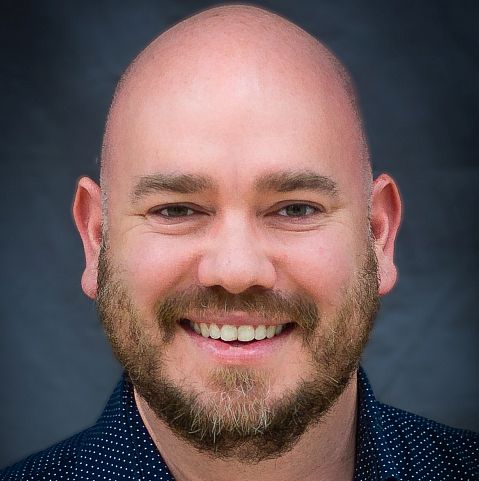
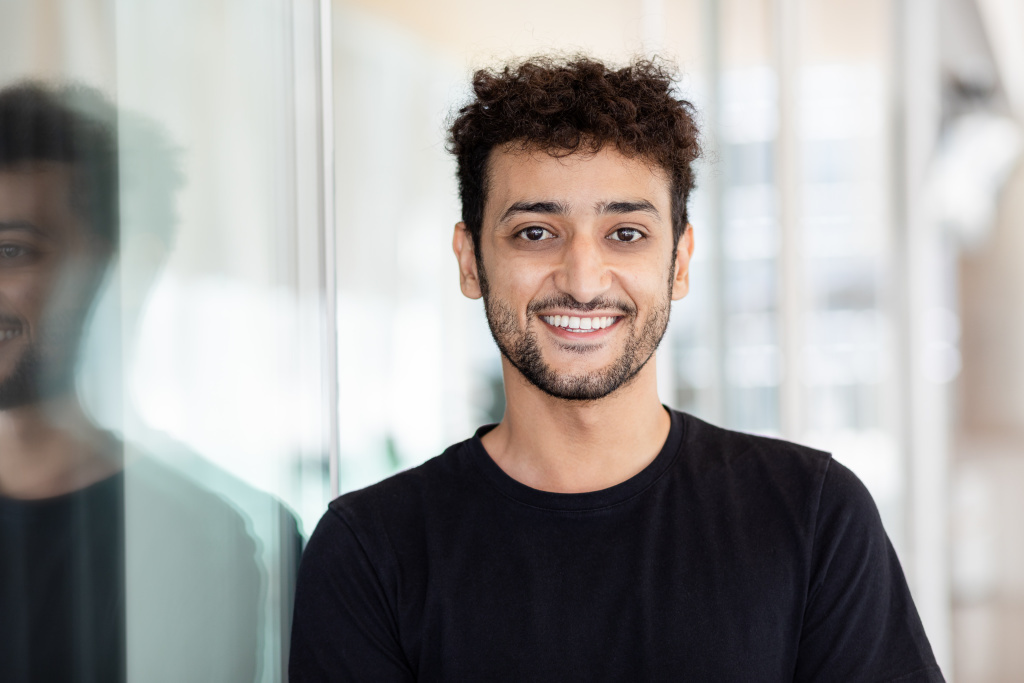
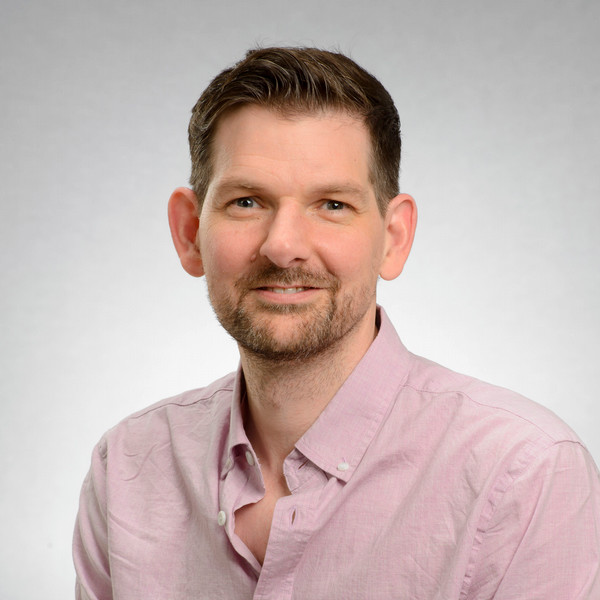
Michael Rainbow is an Associate Professor in the Department of Mechanical and Materials Engineering at Queen's University, Faculty of Engineering and Applied Science. His research focuses on biomechanics, imaging, and computational modeling of musculoskeletal systems. Research Interests : Biomechanics, Imaging, Computational Modeling Email : michael.rainbow@queensu.ca His recent work (2025) examines scapular kinematics , foot-ankle adaptation , and joint power dynamics using advanced imaging techniques like biplanar videoradiography and 4D CT . Key themes include load direction effects , muscle-tendon interactions , and standardization of imaging protocols . He contributes to the Centre for Health Innovation and develops tools for model-based pose estimation and kinematic validation . His studies span shoulder pathology , foot mechanics , and human locomotion , with applications in arthritis research and wearable technology.
Marcelo Reggio is a Full Professor in the Department of Mechanical Engineering at Polytechnique Montréal, where he has established a significant research career spanning fluid dynamics and computational methods. He is an active member of the Fluid Dynamics Laboratory (LADYF), focusing on cutting-edge simulations of complex fluid phenomena. His educational background includes: Baccalaureate from Chile Master of Applied Science (M.Sc.A.) from Polytechnique Montréal Ph.D. from Polytechnique Montréal Research Focus: Professor Reggio's work centers on Computational Fluid Dynamics (CFD) with specialization in the Lattice Boltzmann Method (LBM). His research addresses fundamental and applied challenges in: Turbomachinery design optimization Wind turbine aerodynamics and icing effects Rarefied gas flows through porous media Multicomponent and multiphase flow modeling River current dynamics This work bridges theoretical fluid mechanics with industrial applications in energy and manufacturing. Publication Trends: Analysis of his 15 most recent articles (2016-2024) reveals dominant themes: advanced LBM techniques for non-equilibrium gas flows, validation of open-source CFD codes, multiphase interactions, and stochastic modeling of porous materials. His methodological innovations consistently target improved accuracy in complex physical scenarios. Academic Supervision: Professor Reggio maintains an active research group, having supervised: 12 doctoral students 20 master's students Student theses frequently explore LBM applications, turbomachinery, and numerical method development. Laboratory Leadership: At the Fluid Dynamics Laboratory (LADYF), he contributes to developing computational frameworks for fluid simulation, emphasizing GPU acceleration and industrial problem-solving.
Ilyass Tabiai is a Professor in the Department of Mechanical Engineering at École de technologie supérieure (ÉTS) in Montreal, Canada. He holds affiliations with the INIT Robots Laboratory where he conducts research on intuitive human-robot interaction and autonomous systems. His academic responsibilities include teaching graduate courses in composite materials, polymer forming, and aeronautics. Professor Tabiai's research spans two primary domains: Innovative materials and advanced manufacturing focusing on composite materials, 3D printing technologies, and sustainable manufacturing processes; and Intelligent and Autonomous Systems with applications in aerospace and robotics. His work frequently explores the intersection of materials science and space technology, including lunar regolith composites and in-situ resource utilization. Analysis of his 15 most recent publications (2022-2025) reveals strong emphasis on: Advanced composite materials characterization and degradation mechanisms Additive manufacturing innovations for aerospace applications Sustainable material processing and recycling techniques Lightweight structural design and testing methodologies These publications consistently demonstrate interdisciplinary approaches combining materials science, mechanical engineering, and space technology. Professor Tabiai maintains an active research group supervising 38 students across doctoral, master's, and applied projects. Current student research includes: Multiscale measurements for aerospace composites 3D printing of polymer/regolith composites for space applications Polymer microlattice structures for aerostat systems Non-local modeling of heterogeneous materials Through the INIT Robots Laboratory, he leads projects developing robotic systems for construction automation, space structure fabrication, and human-robot interaction paradigms.
Jonathan D. Aubertin is a Professor in the Department of Construction Engineering at École de technologie supérieure (ÉTS). He holds a B.Eng. from McGill University and a Ph.D. from Queen's University. His office is located at A-1599 on campus, and he can be contacted via jonathan.aubertin@etsmtl.ca. His research spans three primary domains: Sensors, Networks and Connectivity Infrastructure and Built Environment Intelligent and Autonomous Systems with specialized expertise in rock mechanics, geohazards, blasting optimization, and remote sensing applications for geosciences. Recent publications (2013-2025) demonstrate strong focus on: LiDAR-based geotechnical characterization Blast crater mechanics in mining Rock slope stability analysis Time-dependent behavior of salt mines showing consistent innovation in field measurement techniques. Awards and Honors: 2022 Doug Stead PhD Thesis Award (Canadian Rock Mechanics Association) 2023 50 Grads, 50 Years (Champlain College – St-Lambert) He leads substantial research advising with 26+ graduate students working on geotechnical projects. As a core member of the LG4 Laboratory, he contributes to geomechanical testing services and equipment management for rock/soil analysis.
Dr. Chris Oriet is a Professor in the Department of Psychology within the Faculty of Arts at the University of Regina. He concurrently serves as Associate Dean, Planning and Programs, for the Faculty of Graduate Studies and Research. His academic appointment is firmly rooted in cognitive psychology with a focus on experimental methodologies. Dr. Oriet earned his Ph.D. from the University of Waterloo. His educational background established the foundation for his research in human information processing and visual cognition. His research program investigates face learning and recognition mechanisms, attentional limitations in perception, and the effects of experience on visual processing. Key contributions include demonstrating how within-person variability contributes to durable face learning, establishing that statistical summary representations facilitate visual short-term memory retention, and developing the single lineup paradigm for eyewitness identification research. His work bridges theoretical cognitive models with real-world applications in forensic psychology. Analysis of Dr. Oriet's recent publications reveals a cohesive trajectory focusing on face processing systems (2021-2024), attention capture mechanisms (2017-2020), and statistical representation in visual cognition (2016-2023). His research consistently examines how humans process complex visual information under attentional constraints, with particular emphasis on facial identity representation and its implications for eyewitness testimony. Dr. Oriet has secured competitive research funding from NSERC, including a current Discovery Development Grant (2023-2025) supporting his work on within-person variability in face memory. His research program demonstrates sustained productivity with consistent publication in top cognitive psychology journals. He directs the Regina Integrative Cognitive Experimentation Lab, which employs rigorous experimental approaches to investigate visual perception and memory. The lab's current work focuses on face-space modeling, attentional capture phenomena, and applications of cognitive principles to eyewitness identification procedures, maintaining strong connections between basic research and practical forensic applications.
Dr. Eduard Guerra serves as Associate Professor in the Bharti School of Engineering and Computational Science at Laurentian University, where he leverages his dual industry-academic background to advance sustainable extractive metallurgy. A Laurentian alumnus (B.Eng. and B.Sc. in Extractive Metallurgical Engineering, 1993), he holds advanced degrees from the University of British Columbia (M.A.Sc. 1997, Ph.D. 2003) and brings industrial research experience to his academic role. His educational foundation includes: Ph.D. in Metals and Materials Engineering, University of British Columbia (2003) M.A.Sc. in Metals and Materials Engineering, University of British Columbia (1997) B.Eng. in Extractive Metallurgical Engineering, Laurentian University (1993) B.Sc., Laurentian University (1993) Dr. Guerra's research concentrates on reducing energy consumption and environmental footprints across mineral processing operations. His current flagship project develops an electrolytic cyanide destruction method to replace chemical-intensive treatment in gold mills, while his recently patented energy-efficient ore comminution technology simultaneously minimizes waste generation. Past breakthroughs include activated carbon alternatives for gold adsorption and catalyst-enhanced sulfide mineral processing. Analysis of his 15 most recent publications reveals dominant themes in gold processing sustainability (60% of works), particularly cyanide management and alternative leaching methods, alongside significant contributions to electrochemical engineering (25%) and process optimization (15%). His work consistently bridges fundamental electrochemistry with industrial applicability, targeting measurable environmental improvements in mining operations. Key achievements include: Patented activated carbon coated polystyrene bead technology for gold cyanidation Invention of energy-efficient ore comminution process with waste reduction Development of electrolytic cyanide destruction alternative to chemical treatment Innovative research on thiosulfate leaching with non-toxic additives Dr. Guerra maintains active research funding through government and industry partnerships, supervising graduate students on environmentally critical projects. His COM conference publications demonstrate strong industry engagement, while his undergraduate laboratory development work highlights commitment to metallurgical education. The research group provides students with hands-on experience in sustainable process design, preparing them for careers addressing mining's environmental challenges.