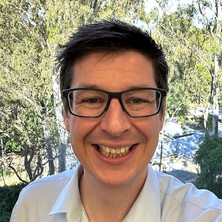
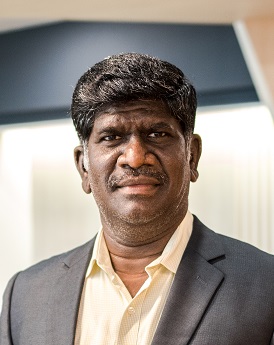
Associate Professor Jeremy Sumner is affiliated with the School of Natural Sciences and the Department of Mathematics at the University of Tasmania. His research focuses on applying algebraic methods, particularly group representation theory, to phylogenetic models to improve evolutionary inference from molecular data. He holds a PhD and BSc (First Class Honors) in Mathematics from the University of Tasmania. Education: PhD in Entanglement, Invariants, and Phylogenetics (University of Tasmania, 2007) BSc (1st Class Hons) in Polar Decomposition of a Dirac Spinor (University of Tasmania, 2001) Research Interests: Jeremy’s work centers on developing algebraic frameworks for phylogenetics, including Lie-Markov models and group theory applications. He explores how symmetries in DNA substitution processes can enhance evolutionary analysis. His research bridges theoretical physics and biology, addressing challenges in molecular evolution and phylogenetic tree reconstruction. Grants & Projects: ARC Discovery Projects (e.g., 'Algebraically Informed Models of Biological Sequence Evolution' and 'Group Theory and Phylogenetics') DECRA Fellowship for research on Lie-Markov models Advising & Teaching: Supervised PhD students in areas like graded rings of Markov invariants and evolutionary sequence analysis Teaches courses in linear algebra, differential equations, and group theory Collaborations: Member of the UTAS Theoretical Phylogenetics Research Group and organizer of the annual Phylomania conference, fostering international collaboration in theoretical phylogenetics.
Dr. Mohsen Feyzi is a Research Fellow at Flinders University, affiliated with the College of Science and Engineering and the Medical Device Research Institute. He holds a PhD in Mechanical Engineering from Flinders University (2023) and has been awarded the Vice-Chancellor's Medal for Doctoral Thesis Excellence (2024). His research focuses on tribocorrosion, advanced manufacturing, and finite element analysis, with a particular emphasis on optimizing material and energy use for sustainable production. Education : PhD in Mechanical Engineering, Flinders University (2023) Research Interests : Dr. Feyzi investigates tribocorrosion mechanisms at metal interfaces, additive manufacturing processes (e.g., laser powder bed fusion), and the mechanical behavior of biomedical implants like hip replacements. He employs analytical and experimental methods to enhance material durability and reduce waste in manufacturing. Awards : 2024: Vice-Chancellor's Medal for Doctoral Thesis Excellence 2023: Chris Marlin Postgraduate Student Publication Prize 2021: Best Conference Presentation Award Grants & Teaching : He has secured grants including the Australian Postgraduate Full Scholarship (2018) and taught courses such as Solid Mechanics (ENGR3751/9811) and Engineering Design (ENGR1711). His work bridges materials science and biomedical engineering, with applications in sustainable manufacturing and implant longevity. Labs/Teams : Affiliated with the Medical Device Research Institute, focusing on interdisciplinary research in advanced materials and medical technologies.
Associate Professor Aris Alexopoulos holds a dual affiliation with Flinders University and the Defence Science and Technology Group (DSTG) within Australia's Department of Defence. His academic role at Flinders is based in the College of Science and Engineering, focusing on interdisciplinary research bridging mathematics, theoretical physics, and defence science. Education: Bachelor of Science with First Class Honours (BSc (Hons)-H1) from La Trobe University's School of Physics, with thesis topics exploring The Path Integral Method in Quantum Mechanics and Quantum Mechanical Tunnelling Processes . Doctor of Philosophy (PhD) from Monash University's Department of Physics, thesis titled An investigation of the Effects of 2-Body Interactions in an Effective Medium Theory . Research interests span foundational physics and applied mathematics, including quantum mechanics, information geometry, relativity theories, metamaterials, and fractional calculus. His work emphasizes collaborative research between academia and defence sectors, particularly fostering R&D partnerships between Flinders University and DSTG. Awards and Grants: Recipient of prestigious awards including the Australian Postgraduate Research Award and NATO-ASI Award. Secured multiple grants for international research collaborations, including Queen's Trust-funded research at Michigan State University, USA. Professional contributions include advancing applied theoretical frameworks for defence science and maintaining active participation in international conferences across Europe, USA, and Australia.
Dr. Helia Farhood is an Honorary Senior Research Fellow at the School of Computing, Macquarie University, specializing in Artificial Intelligence, Machine Learning, and Image Processing with applications in educational technology and object recognition. Her academic qualifications include a PhD in Computer Systems and Artificial Intelligence from the University of Technology Sydney (awarded November 2021) and a Master's degree in Computer-AI from Amirkabir University of Technology (Tehran Polytechnic, awarded September 2013). Dr. Farhood's research spans interdisciplinary AI applications, with significant contributions in student outcome prediction using generative adversarial networks, explainable AI through LIME heatmaps, and image-based storytelling systems. Her work integrates machine learning with educational data mining to enhance creativity assessment and learning analytics, while maintaining strong technical focus on 3D reconstruction and object recognition. Analysis of her 16 publications (2020-2025) reveals three dominant research trajectories: (1) AI-driven educational analytics for student performance prediction, (2) advanced image processing techniques for object recognition and 3D reconstruction, and (3) systematic reviews establishing methodological foundations in presentation attack detection and image-based storytelling. Her recent work increasingly emphasizes explainability and ethical considerations in AI deployment. Dr. Farhood has participated in externally funded research projects, including the 2022 project "Estimating the Number of Tyres in Stockpiles" (October-December 2022). No information is available regarding students she has advised. No information is available about specific research laboratories or teams led by Dr. Farhood.
Kais Hamza is a Professor and Deputy Head of School at the School of Mathematics, Monash University , with a focus on stochastic processes and their applications. His research bridges theoretical probability (martingales, Markov jump processes) and practical domains like financial market modeling, population dynamics, and biomedical systems. Stochastic Processes : General theory, martingale representation, and random walk analysis Mathematical Finance : Financial derivatives, volatility models, and scenario generators Biomedical Applications : Vocal cord dysfunction diagnostics, COPD exacerbation biomarkers, and respiratory imaging Recent work includes books and articles on stochastic calculus, CT imaging for laryngeal disorders, and metabolic biomarkers in COPD. No specific student advisement details are provided. Key collaborations span institutions like the Australian Research Council and Data61 , with projects on topics like Self-Interacting Random Walks (2023–2026).
Dr Will Anderson is a Research Fellow at The University of Queensland , affiliated with the Australian Institute for Bioengineering and Nanotechnology . With over 15 years of R&D experience spanning academia and industry, his work focuses on molecular diagnostics , nanoparticle characterization , and translational device development that bridges fundamental research with real-world applications. His research interests include: Development of low-cost diagnostic technologies like the DIYNAFLUOR open-source DNA fluorometer Advancing nanopore sensing and optical characterization methods Optimizing nucleic acid extraction and quantification workflows Designing point-of-care platforms with fluorescence detection capabilities Exploring research translation , IP strategy , and regulatory frameworks Dr Anderson has contributed to benchtop scientific instrumentation through projects like his patented low-cost nucleic acid extraction methodology and industry-partnered qPCR platform prototype . His nanopore sensing research has >2100 citations and established a UQ facility adopted by dozens of researchers. He actively supports open science initiatives through GitHub repositories and educational programs. He supervises research projects and contributes to collaborative lab environments at UQ's interdisciplinary research institutes, while maintaining an active presence in scientific outreach through social media and STEM education programs.
Dr. Jun Li is a Senior Lecturer at the School of Computer Science, Faculty of Engineering and Information Technology, University of Technology Sydney (UTS), Australia. He received his Ph.D. in Computer Science from Queen Mary University of London in 2009 and is affiliated with the Australian Artificial Intelligence Institute (AAII) at UTS. His research spans multiple domains within artificial intelligence, with primary focus on Machine Learning applications in computer vision and 3D geometry. Dr. Li has published extensively in high-impact journals including IEEE Transactions (TPAMI, TIP, TNNSLS) and Pattern Recognition, with recent work expanding into interdisciplinary research in earth science and marine applications. His research output demonstrates consistent productivity with numerous publications each year across diverse AI application areas. Dr. Li's work shows strong thematic progression from foundational computer vision techniques to applied interdisciplinary research. Early work focused on face hallucination and video super-resolution, while more recent publications address environmental applications using Graph Neural Networks for wave prediction and damage classification for disaster response. His research consistently bridges theoretical AI advances with practical real-world applications across healthcare, autonomous systems, and environmental science. AI to assist disaster emergency response (2023-2026) Applying Generative Adversarial Network in Medical Image Analysis (2020-2021) Big Massive Open Online Course (MOOC) Data Retrieval (2017-2020) As an educator, Dr. Li teaches core courses including '31005 Machine Learning' and '32513 Advanced Data Analytics Algorithms' at UTS, and is available for Masters Research and PhD student supervision, contributing to the development of next-generation AI researchers.
Professor Robert Fitch is a distinguished academic leader and one of Australia's foremost authorities in robotics at the University of Technology Sydney (UTS), where he serves as Professor in the School of Mechanical and Mechatronic Engineering. He holds significant leadership roles as Director of the NSW Defence Innovation Network and was previously Director of UTS Tech Lab and Head of School of Mechanical and Mechatronic Engineering from 2019-2023. His career bridges academia, research, and industry collaboration to develop engineering solutions for tomorrow's societal challenges. PhD from Dartmouth College (1998-2004) Former Senior Research Fellow at Australian Centre for Field Robotics, University of Sydney Current Director of NSW Defence Innovation Network (since 2023) Founding Co-Director of NSW Space Research Network (2021-2023) Professor Fitch specializes in autonomous field robotics, developing outdoor robotic systems for diverse industry applications from agriculture to aeronautics, environmental science to space exploration. His research spans multiple domains including multi-robot coordination, hydrogen storage systems, maritime robotics, and AI-driven automation. He operates at the critical nexus of academia, research, and industry, collaborating with businesses and government organizations to deliver innovative solutions to complex real-world challenges. His work demonstrates exceptional translational impact, turning academic research into commercial ventures and practical applications. His recent publications reveal a strong focus on advancing robotics through novel planning algorithms for multi-robot systems operating in complex environments. There's a clear trend toward practical applications in maritime operations, hydrogen energy storage, and warehouse automation, reflecting his commitment to solving real-world engineering challenges. His research integrates theoretical advances with industry needs, particularly in marine robotics, autonomous systems for agriculture, and energy storage technologies. Professor Fitch's work has received significant recognition with numerous accolades and extensive media coverage including appearances on ABC's flagship 7.30 program, Weekend Australian, BBC, and The Hindu. His research has been featured in over 15 news outlets and blogged about extensively, demonstrating its broad societal impact. He has graduated 20 PhD students who are now leading work in field robotics, mechanical and mechatronic engineering, and autonomous systems. Since 2011, he has secured nearly $30 million in grants funding over 50 projects, including major collaborations with industry partners like Space Machines Company, Advanced Navigation, and Australian Wool Innovation. His leadership has been instrumental in growing startups from small beginnings to significant operations, such as Space Machines Company which launched the largest Australian-made satellite into orbit aboard a SpaceX transporter in March 2024. Professor Fitch leads the UTS Robotics Institute and has been instrumental in establishing collaborative spaces like UTS Tech Lab, which has fostered successful partnerships with multiple companies. His work with Wildlife Drones demonstrates how academic research can translate into successful commercial ventures, having grown from research projects into an established business. His leadership extends to numerous industry and academic organizations, boards, and committees, where he serves as director, chair, and co-chair.
Associate Professor Elammaran Jayamani serves as Associate Dean of External Engagement and Impact within the Faculty of Engineering, Computing and Science at Swinburne University of Technology Sarawak Campus, Malaysia. With 24+ years of academic experience, he drives sustainability-focused research and industry partnerships while maintaining active teaching responsibilities in mechanical engineering disciplines. His educational background includes: Ph.D. in Materials and Process (University Malaysia Sarawak) M.Tech in Energy Technology (Puducherry Technological University, India) B.Eng in Mechanical Engineering (University of Madras, India) Graduate Certificate in Learning and Teaching (Higher Education) (Swinburne University of Technology, Melbourne) Research focuses on sustainable materials innovation, particularly polymer composites derived from agricultural waste (sago, banana fibers, rose petals), with applications in marine coatings, electromagnetic shielding, and renewable energy systems. His thermo-fluids expertise supports energy sustainability projects including hydrogen-based hybrid systems for rural electrification. Recent work shows increasing sophistication in nanofiller integration and dielectric property manipulation for advanced applications. Publications from 2023-2025 demonstrate strong output in high-impact Q1 journals, with thematic evolution toward circular economy solutions and Southeast Asia-specific sustainability challenges. Key trends include microwave-assisted composite processing, bio-based plasticizer development, and acoustic/mechanical property optimization for net-zero applications. Scientific recognition includes: 5 Best Paper Awards (2016-2025) at international conferences 4 Best Presentation Awards (2017-2021) Consistent Q1 journal publications with impact factors up to 16.3 Actively mentors postgraduate researchers through two internal grants focused on sago waste valorization and fuel cell catalysts. His industry-engaged approach emphasizes practical sustainability solutions for Malaysian contexts, with student training prioritizing hands-on materials characterization and industry collaboration. Professional memberships include Chartered Engineer (MIMechE UK), IntPE UK, and Board of Engineers Malaysia registration. While no dedicated laboratory is specified, his research group operates within Swinburne Sarawak's engineering facilities, leveraging partnerships for advanced materials testing. Current work expands into hydrogen energy systems and biobased electromagnetic shielding solutions, aligning with Malaysia's National Energy Transition Roadmap.
John Wright is an Associate Professor at the Institute for Public Policy and Governance at the University of Technology Sydney (UTS), where he conducts research on political theory, public policy, regulation, and governance. His academic career spans multiple prestigious institutions including the London School of Economics and Political Science, London School of Hygiene and Tropical Medicine, and Australian National University. Wright's research focuses on political theory , public policy change , regulation and governance , and public health policy . His work examines critical issues such as the Australian Housing Crisis and British relations with the European Union, analyzing how policy regimes establish, consolidate, erode, and terminate meaning within policy objectives. He employs post-structuralist approaches to understand policy change as the transformation of meaning within discursive configurations. His recent publications reveal a strong focus on policy change analysis , particularly regarding European Union membership and Australian housing policy. The publications demonstrate interdisciplinary work spanning political science, health policy, regulatory studies, and economic evaluation. His research shows particular strength in analyzing how policy regimes function, how meaning is invested in policy objectives, and how these processes lead to policy continuity or change. Wright has secured research funding including the 2023 grant for Life Cycle Assessment of Hydrogen Storage Technologies for Circular and Sustainable Energy Systems . His scholarly impact is evident through numerous citations across his publications in political science, health policy, and regulatory studies. He actively engages with policy communities through external research impact activities related to the Australian Housing Crisis and British-EU relations.
Mourad Bezzeghoud holds the position of Full Professor in the Department of Physics within the School of Sciences and Technology at the University of Évora, Portugal. Additionally, he is an active researcher at the ICT/IIIFA (Institute of Earth Sciences / Institute of the Environment and Sustainability of the Alentejo), contributing to geophysical and environmental studies in the region. His primary research domain is Solid Earth Geophysics, with a focus on seismology and tectonics. Key areas include the analysis of crustal and lithospheric structures, seismic hazard assessment, and the study of stress fields along plate boundaries, particularly in the circum-Mediterranean and North Africa. His methodologies encompass seismic tomography, source mechanism inversion, and probabilistic modeling to understand earthquake dynamics and regional geological processes. Recent scholarly output (2024-2025) reveals a concentrated effort on significant seismic events in Portugal, Algeria, and Morocco, as well as the broader geophysical characterization of the Africa-Eurasia plate boundary. This work provides critical insights into earthquake source mechanisms and the evolution of tectonic stress in these seismically active zones. As a member of the ICT/IIIFA research group, Professor Bezzeghoud collaborates on interdisciplinary projects aimed at advancing Earth Sciences and environmental sustainability in the Alentejo region and internationally.
Tareq Alodat is a Lecturer in Statistics and Data Science at the Mathematics & Statistics school of La Trobe University in Melbourne, Australia. He simultaneously holds a Postdoctoral Research Fellow position at UNSW Australia's School of Mathematics and Statistics in Sydney. His academic background includes: PhD from La Trobe University, Melbourne, Australia (2016-2019) Dr. Alodat's research expertise spans theoretical and applied statistics with significant contributions to long-range dependent processes, stochastic modeling, and nonparametric methods. His work bridges probability theory with practical applications in ecology, medical research, and spatial statistics. He has developed novel statistical approaches for complex data structures and contributed to distribution theory, particularly with generalized skew-normal distributions. Analysis of his publication trajectory reveals increasing specialization in fractional stochastic differential equations applied to spherical geometry, alongside continued work in ecological statistics. His research demonstrates consistent theoretical development paired with practical applications across diverse domains, with recent publications showing sophisticated mathematical techniques applied to real-world problems. Dr. Alodat serves as a reviewer for several prominent journals including Communications in Statistics-Simulation and Computation, Symmetry-Basel, and Entropy, reflecting his standing in the statistical community.
Dr. Maxence Lavaill is a Postdoctoral Research Fellow at the ARC Training Centre for Joint Biomechanics at Queensland University of Technology (QUT), affiliated with the School of Mechanical, Medical & Process Engineering and the Centre for Biomedical Technologies. His research focuses on computational musculoskeletal modeling of the shoulder joint using experimental methods such as medical imaging, motion capture, and electromyography. Dr. Lavaill specializes in shoulder biomechanics, with particular expertise in modeling complex surgical scenarios like the Latarjet procedure to inform and improve clinical practice. His publication record demonstrates consistent research output in biomechanics, with recent work examining muscle recruitment strategies, shoulder range of motion measurement techniques using smartphone technology, and the biomechanical implications of surgical interventions. His research bridges engineering principles with clinical applications in orthopedics. Dr. Lavaill actively contributes to academic training as a guest lecturer and tutor in biomechanics courses (EGH418, EGH413, and EGH414) and serves as an Associate Supervisor for PhD research on shoulder anatomical variations and joint stability. International Society of Biomechanics member European Society of Biomechanics member Australian and New Zealand Society of Biomechanics member
Dr. Negin Amini is a Lecturer in Environmental Engineering at Deakin University's School of Engineering, which is part of the Faculty of Science Engineering and Built Environment. She is based at the Melbourne Burwood Campus and serves as an Associate Investigator in the ARC Centre of Excellence for Enabling Eco-Efficient Beneficiation of Minerals. Her educational background includes a PhD from Monash University (2019), with a thesis on energy efficient pre-treatment of lignocellulose biomass, and a Master of Engineering from the University of Melbourne. Dr. Amini's research focuses on creating circularity in industrial processes to reduce emissions and resource consumption. Her work spans multiple interconnected fields including circular economy principles, sustainability in engineering, minerals processing, biomass conversion technologies, particle technology, and additive manufacturing applications. She investigates how engineering solutions can transform waste streams into valuable resources while minimizing environmental impact across various industrial sectors. Her publication record demonstrates a strong trajectory in environmental and chemical engineering with increasing emphasis on sustainable materials processing. Recent work shows particular focus on dewatering technologies for mineral processing, bioinspired reagents for clay separation, and circular economy applications in 3D printing. Her research integrates experimental work with modeling approaches to address practical challenges in resource recovery and industrial sustainability. Dr. Amini has secured multiple research grants including: Development of a real-time immunosensor for airborne allergen detection (ARC Analog Program) Revealing the risks: Exploring the social implications of technology for recognizing viral threats Zero Waste 3D Printing project She currently supervises two doctoral students working on microbial-induced calcite precipitation for environmental remediation and novel polymer-based reagents for mineral separation. Her teaching portfolio includes courses in environmental systems, environmental health engineering, and engineering project management. Dr. Amini's research integrates laboratory experimentation with practical applications in industrial settings, focusing on creating sustainable solutions for resource-intensive industries.