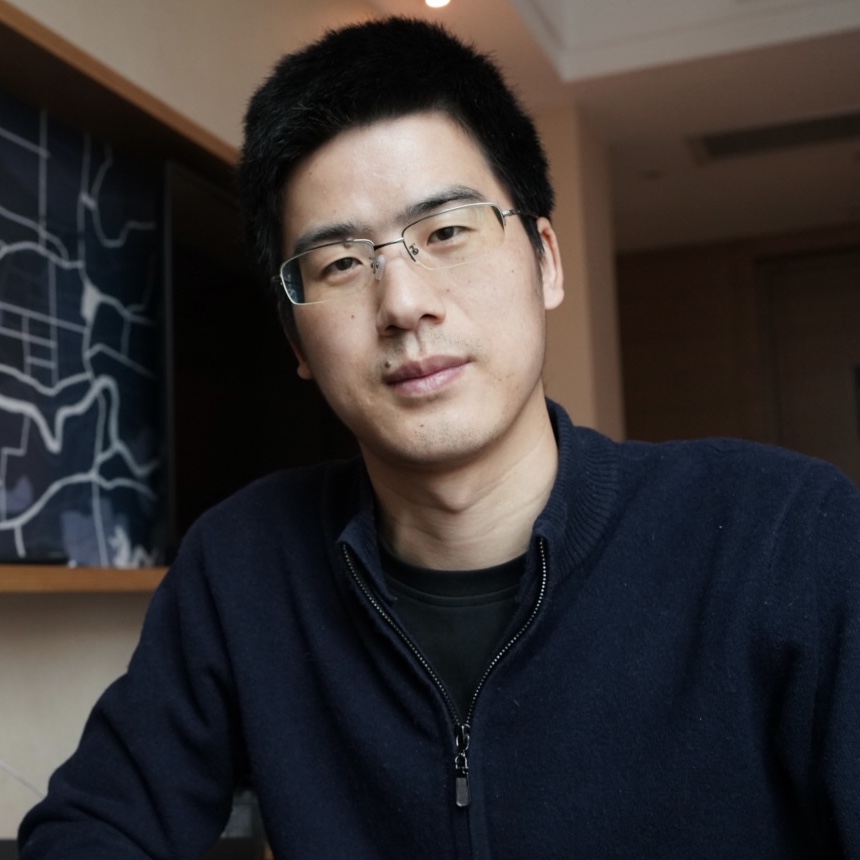
Dima Arinkin is a Professor in the Department of Mathematics at the University of Wisconsin–Madison, specializing in algebraic geometry with significant contributions to geometric representation theory and mathematical physics. His research focuses on: Geometric Langlands Program: Developing frameworks connecting automorphic forms and Galois representations through geometric methods Moduli Spaces: Analyzing spaces of algebraic connections, Higgs bundles, and their compactifications D-modules: Studying systems of linear differential equations via algebraic geometry Integrable Systems: Investigating geometric structures in soliton theory and Painlevé equations Irregular Singularities: Exploring connections with irregular behavior on algebraic curves Analysis of his publications (2008-2016) reveals consistent advancement in geometric Langlands through derived algebraic geometry techniques, particularly in relating singular support of sheaves to automorphic forms and establishing oper structures for connections. No scientific awards are documented in the provided materials. No information regarding student advisement or research grants appears in the source texts.
Georgios Dimitroglou Rizell is a Senior Lecturer in the Department of Mathematics at Uppsala University, Sweden, where he also serves as Head of the Department since 2020. His academic work is centered at the Ångström Laboratory, where he conducts research in symplectic and contact topology. He maintains dual affiliations with both the Department of Mathematics and the Center for Geometry and Physics at Uppsala University. Dr. Dimitroglou Rizell earned his PhD from Uppsala University in 2012 under the supervision of Tobias Ekholm. Following his doctoral studies, he held postdoctoral positions at the Université Libre de Bruxelles (2012-2013), Université Paris-Sud (2013-2014), and the University of Cambridge (2014-2015), all supported by prestigious fellowships from the Knut & Alice Wallenberg Foundation. He returned to Uppsala University as a researcher (2015-2017) and Assistant Lecturer (2017-2021) before being promoted to Senior Lecturer in 2021. His research primarily focuses on symplectic and contact topology, with special emphasis on understanding and classifying Lagrangian and Legendrian submanifolds. His work employs advanced mathematical techniques including pseudoholomorphic curves, pseudoholomorphic foliations, Symplectic Field Theory, and Floer homology. His investigations span a broad range of topics within geometric topology, from the classification of Lagrangians near the Whitney immersion to the study of Legendrian submanifolds and their invariants. His research has significant implications for understanding the geometric structures underlying classical mechanics and quantum physics. His recent publications (2020-2025) demonstrate a consistent focus on Lagrangian and Legendrian submanifolds, with particular attention to their classification, invariants, and interactions with symplectic structures. A notable trend is the development of new techniques for studying C^0-limits of Legendrians, exact Lagrangians in various settings, and the geometric generation of Fukaya categories. His collaborative work with researchers like Michael Sullivan, Roman Golovko, and others has produced significant advances in Floer theory and symplectic field theory. Scientific Awards Wallenberg Scholar (2023-2028, KAW 2023.0294) Wallenberg Academy Fellow (extension 2022-2027, KAW 2021.0191) Wallenberg Scholar (2022-2023, KAW 2021.0300) Wallenberg Academy Fellow (2017-2021, KAW 2016.0198) As Head of the Department of Mathematics, Dr. Dimitroglou Rizell oversees academic programs and research initiatives. His leadership is supported by significant funding from the Knut & Alice Wallenberg Foundation, which has awarded him multiple prestigious fellowships throughout his career. These grants have enabled his research in symplectic geometry and supported collaborative projects with international mathematicians. Dr. Dimitroglou Rizell is actively involved in the Center for Geometry and Physics at Uppsala University, where he collaborates with researchers across mathematical disciplines. His work intersects with theoretical physics, particularly in areas related to geometric quantization and the mathematical foundations of quantum mechanics. He participates in seminar series and reading groups focused on symplectic topology and its applications.
Pavel Etingof is Professor of Mathematics at the Massachusetts Institute of Technology (MIT), Department of Mathematics, where he has been a distinguished faculty member for many years. He serves as the Chief Research Adviser of MIT-PRIMES, an all-year high school math research program that provides exceptional research opportunities for talented high school students. Additionally, he holds the prestigious position of Editor-in-Chief of Selecta Mathematica. Professor Etingof's research spans multiple advanced areas of pure mathematics with a particular focus on representation theory, tensor categories, Lie algebras, Hecke algebras, and algebraic structures. His work consistently bridges algebra, geometry, and mathematical physics, revealing deep connections between abstract algebraic structures and physical phenomena. His research has evolved to increasingly explore tensor categories in positive characteristic, connections between representation theory and fractal structures, and applications to quantum field theory. His recent publications (2021-2025) demonstrate continued productivity and innovation, with numerous papers on tensor categories in various characteristics, representation theory of Lie groups, and connections to mathematical physics. These works show sophisticated exploration of representation theory in prime characteristic, novel applications to quantum field theory, and deep investigations into the structure of tensor categories. Editor-in-Chief of Selecta Mathematica Chief Research Adviser of MIT-PRIMES Professor Etingof has mentored numerous Ph.D. students at MIT and other institutions, establishing a significant mathematical genealogy in representation theory. His teaching includes advanced courses on algebraic groups, Lie theory, representation theory, and specialized topics. He has also co-organized many student seminars on cutting-edge mathematical topics including Deligne categories, symplectic reflection algebras, quantum cohomology, and double affine Hecke algebras, fostering collaborative research environments for students and colleagues.
Maxim Kontsevich is a permanent professor at the Institut des Hautes Études Scientifiques (IHÉS), holding the AXA Chair for Mathematics since 1995 and a visiting chair at Rutgers University (one month annually since 1997). Born in 1964 in Khimki, USSR, he earned his PhD from Bonn University in 1992. His career includes visiting positions at Harvard, the Institute for Advanced Study, and Berkeley, where he was a professor from 1993 to 1995. His research spans mathematical physics, algebraic geometry, and non-commutative geometry. Notable contributions include deformation quantization, mirror symmetry, and motivic integration. His work bridges algebraic structures with geometric and physical concepts, influencing areas like topological field theories, string theory, and integrable systems. Awardees of Fields Medal (1998), Crafoord Prize (2008), and Breakthrough Prize (2014), he also holds editorial roles at Compositio Mathematica and Publications Mathématiques IHÉS. His over 50 publications explore advanced topics such as quantum cohomology, Hodge theory, and categorical structures in geometry.
Yvain Bruned is a Professor of Mathematics at Université de Lorraine, Nancy, France, where he leads research in singular stochastic partial differential equations and related fields. He serves as Principal Investigator for the ERC Starting Grant LoRDeT (2023-2028), which focuses on advancing the theory of decorated trees and Hopf algebraic structures for solving singular SPDEs and dispersive PDEs at low regularity. Previously, he was a Lecturer at the University of Edinburgh (2019-2022) and completed postdoctoral work at Imperial College London and University of Warwick under Martin Hairer. His educational background includes: PhD in Mathematics (2012-2015), UPMC (Paris 6), on "Singular KPZ type equations" under Lorenzo Zambotti Master 2 in Probability and Statistics, ENS Cachan / Rennes 1, with honors Master 1 in Mathematics, ENS Cachan, with honors Bachelor in Mathematics and Computer Science, University of Rennes 1, with honors Student at ENS Cachan Brittany extension (2009-2013) Classes Préparatoires in Mathematics and Physics (2007-2009) Bruned's research centers on singular stochastic partial differential equations, with particular focus on Regularity Structures, renormalization theory, and their connections to Hopf algebras. His work bridges theoretical mathematics with applications in quantum field theory, wave turbulence, and numerical analysis. He has developed novel approaches using decorated trees to handle renormalization procedures for singular SPDEs and has extended these methods to dispersive PDEs with random initial data. His research program aims to establish existence and uniqueness results for quasilinear and dispersive SPDEs while developing algebraic tools through deformations of Hopf algebras. His extensive publication record demonstrates consistent contributions to the field of singular SPDEs, with a clear trajectory from foundational work on Regularity Structures to more recent applications in dispersive PDEs and numerical methods. The publications reveal a strong collaborative network with leading researchers in stochastic analysis, mathematical physics, and algebra. His work shows increasing sophistication in handling renormalization procedures through algebraic structures, with recent papers exploring connections between different mathematical frameworks. His major scientific recognition includes: ERC Starting Grant LoRDeT (2023-2028) Bruned actively supervises a large group of researchers, currently advising 4 PhD students and 2 postdoctoral researchers at Université de Lorraine, with several former PhD students having completed their degrees at the University of Edinburgh. His ERC grant has enabled him to organize multiple international workshops in Nancy, fostering collaboration between researchers in singular SPDEs, algebraic structures, and numerical analysis. The grant also supports the development of software platforms for decorated trees and their Hopf algebraic structures. As Principal Investigator of the ERC LoRDeT project, Bruned leads a vibrant research team based at the Elie Cartan Institute of Lorraine, which includes postdocs, PhD students, and visiting researchers. The team regularly organizes specialized workshops on topics including operads, symmetries for quantum field theory, and normal forms for singular dynamics, creating a dynamic research environment that bridges multiple mathematical disciplines.
Esa Ollila serves as Associate Professor in the Department of Signal Processing and Acoustics at Aalto University, Finland, and holds an adjunct professorship in Statistics at the University of Oulu. His academic appointments include Academy of Finland Research Fellow (2010-2015) and prior senior research/lecturing roles at both institutions. His educational background features: M.Sc. in Mathematics, University of Oulu (1998) Ph.D. in Statistics (with honors), University of Jyväskylä (2002) D.Sc.(Tech) in Signal Processing (with honors), Aalto University (2010) Professor Ollila's research centers on statistical signal processing and robust statistical methodologies , with significant contributions to array processing, high-dimensional data analysis, and covariance matrix estimation. His work bridges theoretical statistics with practical applications in radar systems, wireless communications, and big data analytics, emphasizing robustness against outliers and computational efficiency in modern data-intensive environments. Current focus areas include compressed sensing, sparse approximation, and blind source separation techniques. Analysis of his 15 most recent publications (2024-2025) reveals three dominant trends: (1) robust covariance learning for massive random access systems, (2) integrated sensing and communications (ISAC) for 6G networks using advanced beamforming, and (3) geometric approaches to elliptical distributions in statistical inference. His work increasingly incorporates deep learning (GANs, graph neural networks) while maintaining strong foundations in classical signal processing theory. Key recognitions include: Academy of Finland Postdoctoral Fellowship (2004-2007) Academy of Finland Research Fellowship (2010-2015) His research has been supported through prestigious Academy of Finland grants totaling over a decade of continuous funding. Professor Ollila currently leads an active research group at Aalto University, supervising doctoral candidates and collaborating internationally with institutions including Princeton University (where he served as Visiting Post-doctoral Research Associate during 2010-2011). He maintains strong ties with the University of Oulu through his adjunct professorship and has contributed to EURASIP's Special Area Team on Theoretical and Methodological Trends in Signal Processing. The Esa Ollila Research Group focuses on cutting-edge challenges in statistical signal processing, with current projects spanning robust DOA estimation under non-Gaussian noise, covariance matrix learning for massive MIMO systems, and machine learning-enhanced radar-communication integration. The group actively develops open-source tools like the fitHeavyTail R package for heavy-tailed distribution modeling and maintains collaborations with industry partners in wireless communications.
Tom Coates is a Professor of Pure Mathematics in the Department of Mathematics at Imperial College London's Faculty of Natural Sciences. He holds affiliations with the Artificial Intelligence Network, the CNRS-Imperial Abraham de Moivre UMI, and the Pure Mathematics research group. His office is located in the Huxley Building (662) on the South Kensington Campus, London SW7 2AZ, and he can be contacted via email at t.coates@imperial.ac.uk or phone at +44 (0)207 594 3607. Professor Coates' research spans pure mathematics with emphasis on algebraic geometry, mirror symmetry, and Gromov-Witten theory. He investigates quantum cohomology and Fano variety classification to construct a 'Periodic Table for shapes' through computational algebra, data mining, and machine learning. His work integrates geometric methods with cluster-scale computing to identify structural patterns in algebraic varieties, focusing on quantum periods, toric degenerations, and Laurent polynomial applications. His recent publications (2021-2024) demonstrate a strong trend toward computational classification of Fano varieties and polytopes, leveraging machine learning for dimension prediction and database construction. Key themes include mirror symmetry via Laurent inversion, toric geometry applications, and connections between Gromov-Witten invariants and modular forms. These works often utilize custom tools like PCAS and Fanosearch for large-scale algebraic computations. While specific student names are not listed, Professor Coates mentors PhD and Master's students in algebraic geometry and computational mathematics. His research is supported by the Simons Foundation, member institutions, and contributors, enabling international collaborations through networks like the CNRS-Imperial Abraham de Moivre UMI. He leads a research team developing the Periodic Table for shapes framework, utilizing high-performance computing resources. The team maintains open-source tools including PCAS (Periodic Table for Algebraic Shapes) and Fanosearch for Fano variety exploration, with code repositories hosted on Bitbucket and quantum period databases published in Scientific Data.
Neil Lambert is a Professor of Theoretical Physics at King's College London's Department of Mathematics within the Faculty of Natural, Mathematical & Engineering Sciences. He previously held a PPARC Advanced Fellowship at King's and worked at CERN from 2010-2013. His research focuses on supersymmetry, string theory, and M-theory, particularly studying M2 and M5 branes, non-relativistic field theories, and non-Lorentzian spacetime symmetries. Education: BSc in Mathematics and Physics from the University of Toronto (1992), PhD in String Theory and Branes from the University of Cambridge (1996). Postdoctoral roles included positions at King's, ENS Paris, and Rutgers University. Recent work explores non-relativistic brane dynamics, AdS/CFT correspondence, and M-theory's microscopic degrees of freedom. He chairs the STFC-funded Fundamental Physics UK virtual centre and edits Physics Letters B . Key contributions include the BLG model for M2-branes and advances in understanding non-supersymmetric branes. Publications emphasize topics like null reductions of M5-branes, conformal field theories in 5D/6D, and non-Lorentzian symmetries. His research bridges string theory, quantum field theory, and geometry, with applications in holography and gauge-gravity duality.
Professor Maciej Dunajski is a University Professor of Mathematical Physics at the Faculty of Mathematics, University of Cambridge, and a Senior Lecturer at Clare College Cambridge. His career spans institutions including Oxford and Cambridge, with roles ranging from Tutorial Fellow to Senior Research Associate. He holds a DPhil from the Mathematical Institute, Oxford, and was awarded the title of Professor by the President of Poland in 2011. University Professor of Mathematical Physics, Faculty of Mathematics, University of Cambridge (2021–present) University Reader in Mathematical Physics, University of Cambridge (2020–2021) Fellow at Clare College Cambridge (2003–present) Author of Solitons, Instantons & Twistors (Oxford University Press, 2009) His research focuses on Twistor Theory , Integrable Systems , and Differential Geometry , with significant contributions to self-dual gravity, Einstein-Weyl structures, and geometric solutions to nonlinear equations. His work bridges mathematics and theoretical physics, including applications to quantum gravity and black hole thermodynamics. Dunajski's recent publications highlight advancements in conformal geometry, null Kähler structures, and higher-dimensional relativity. His collaborations span researchers like K. P. Tod, R. Penrose, and L. Mason. He is based in Room B2.14 at DAMTP, Cambridge, and maintains an active research group in high-energy physics.
Ilaria Perugia is a University Professor (Univ.-Prof.) and Chair of Numerics of PDEs at the Department of Mathematics, Faculty of Mathematics, University of Vienna. She also serves as Deputy Head of the Research Platform Erwin Schrödinger International Institute for Mathematics and Physics. Her research focuses on numerical methods for partial differential equations with applications in computational physics and engineering. Professor Perugia's primary research interests include: Numerical methods for PDEs Finite element methods Discontinuous Galerkin methods Trefftz methods Virtual element methods Space-time methods Computational electromagnetics Wave propagation problems Nonlinear reaction-diffusion problems Her work spans theoretical analysis, algorithm development, and practical implementation of numerical methods for solving complex physical phenomena. Her recent publications demonstrate a strong focus on space-time methods, virtual element methods, and structure-preserving discretizations for wave equations, heat equations, and other PDEs. She has made significant contributions to the development of stable and efficient numerical schemes that preserve important physical properties of the underlying continuous problems, particularly in the context of wave propagation and computational electromagnetics. Professor Perugia leads a research group comprising several researchers and students including Mattia Corti, Matteo Ferrari, Monica Nonino, Andrea Scaglioni, Paul Stocker, Enrico Zampa, and Marco Zank. Her group actively collaborates on projects related to numerical analysis and scientific computing, with particular emphasis on developing novel discretization techniques for challenging PDE problems.
Mehrtash Tafazzoli Harandi is an Associate Professor in the Department of Electrical and Computer Systems Engineering at Monash University, part of the Faculty of Engineering. His research focuses on machine learning and computer vision, particularly visual data analysis, with contributions to geometric deep learning, continual learning, and medical imaging. He holds editorial roles at IET Computer Vision , Frontiers in Imaging , and Journal of Imaging . Education & Previous Affiliations: Prior to Monash, he worked at NICTA (Canberra & Queensland Research Labs) and CSIRO-Data61. His Erdős number is 4 via a collaboration path through Richard Hartley. Research Interests: His work spans geometric learning, diffusion models, medical image analysis, and sustainable AI applications. Key areas include unlearning mechanisms in AI, 3D reconstruction compression, and robust MRI reconstruction using contrastive learning. Grants & Projects: He leads projects funded by ARC, US Air Force, and industry collaborations, including 'Can Machines Unlearn?' (ARC, A$790k) and 'Exploiting Geometries of Learning' (ARC, A$420k). His work addresses challenges in lifelong learning, model adaptation, and trustworthy AI from limited data. Awards: Recipient of Best Recognition Paper (IEEE DICTA 2013), NICTA Impact Award (2015), and multiple outstanding reviewer recognitions at top conferences. Teaching: Teaches courses on neural networks, computer vision, and advanced data analysis at Monash University. Supervises PhD students with a focus on mathematical and computational proficiency. Labs/Teams: Collaborates with the Australian Center for Robotic Vision (ACRV) and contributes to interdisciplinary projects at CSIRO-Data61. His research group explores cutting-edge AI applications in healthcare, manufacturing, and environmental sustainability.
Prof. Dr. Jörg Teschner is a Professor of Mathematics at the University of Hamburg and a permanent staff member at DESY (Deutsches Elektronen-Synchrotron). He has held these positions since 2016 and 2005, respectively. Since 2024, he serves as the Spokesperson of DFG CRC 1624 'Higher Structures, Moduli Spaces and Integrability'. His academic career includes a Heisenberg Fellowship (2003–2005) and research fellowships at institutions in Berlin, Dublin, Montpellier, and Paris. He earned his doctorate in Physics from Universität Hamburg in 1995 under Hermann Nicolai. His research bridges mathematical physics and string theory, focusing on: Conformal field theory and the geometric Langlands program Quantization of moduli spaces (Hitchin's moduli spaces, Teichmüller theory) Topological string theory and its connections to supersymmetric gauge theories Integrable models and isomonodromic deformations His recent publications (2017–2025) demonstrate a strong focus on topological string theory, geometric Langlands correspondence, and quantization techniques. Key trends include non-perturbative methods in string theory, connections between quantum groups and conformal field theory, and mathematical structures underlying supersymmetric gauge theories. He is an editor of 'Letters in Mathematical Physics' and maintains collaborations with leading institutions in mathematical physics.
Tilmann Wurzbacher is a Professor at the University of Lorraine, affiliated with the Department of Mathematics, Computer Science, and Mechanics. His research focuses on geometric methods in mathematical physics, including multisymplectic geometry, supermanifolds, complex Kähler manifolds, and infinite-dimensional analysis. He has contributed to the development of multisymplectic structures for classical field theories and collaborates on foundational questions in supergeometry. His recent publications emphasize multisymplectic geometry, supermanifolds, and infinite-dimensional structures, with applications to geometric quantization, conservation laws, and Hamiltonian systems. He has co-authored works on co-moments, Lagrangian submanifolds, and singular superspaces. Wurzbacher actively organizes seminars and workshops, including the weekly LieGA seminar and international workshops on multisymplectic geometry. He participates in CNRS-funded networks such as the 80Prime Project "GraNum" and the GDGR "GDM".
Sandra Keiper is a Lecturer at the Institute of Mathematics within Faculty II - Mathematics and Natural Sciences at Technical University of Berlin. She has held academic positions since at least 2011, including roles as Tutor, Assistant, and Lecturer, with teaching responsibilities in Analysis, Linear Algebra, and Partial Differential Equations for both mathematicians and engineers. Research interests include: Compressed Sensing and Sparse Signal Recovery Numerical Linear Algebra with applications to high-dimensional data Wavelet and curvelet transforms for geometric multiscale analysis Approximation theory for finite-valued and cartoon-like functions Deep learning and graph approximation techniques Professional activities : Active in teaching since 2011 (Analysis I-III, Functional Analysis, Integral Transforms) Supervising theses since 2015 on topics like Compressed Sensing and Deep Learning Invited lectures at Caltech, ETH Zurich, and Alan Turing Institute Research stays at Hausdorff Institute, ETH Zurich, and Duke University
Dr. Chuanxia Zheng is a Marie Skłodowska-Curie Actions (MSCA) Fellow and Research Fellow at the Visual Geometry Group (VGG) within the Department of Engineering Science at the University of Oxford, working with Professors Andrea Vedaldi and Andrew Zisserman. He holds a PhD from Nanyang Technological University (NTU), where his thesis on 'Synthesizing Photorealistic Images' earned the NTU Outstanding PhD Thesis Award in 2022. Starting Fall 2025, he will assume the position of Nanyang Assistant Professor at NTU's College of Computing and Data Science, leading the Physical Visual Group. His research focuses on Creative AI , emphasizing systems that perceive, reconstruct, and interact with the physical world. Key areas include 3D/4D reconstruction, generative models, and digital twins integrating geometric, dynamic, and physical properties. He has pioneered methods like feed-forward 3D reconstruction (Flash3D), amodal completion (Amodal3R), and physics-aware generative models (DSO). Notable awards include the Singapore NRF Fellowship (2025), DAAD Ainet Fellowship (2024), and MSCA Fellowship (2024). His work spans over 30 peer-reviewed publications in top venues like CVPR, ECCV, NeurIPS, and ICCV, with contributions to open-source projects like CVQ-VAE on GitHub. Current openings include PhD, postdoc, and research assistant positions focused on advancing physical-aware AI systems and generative modeling.


.jpg)