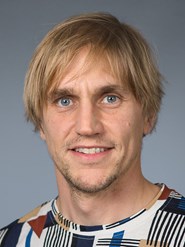
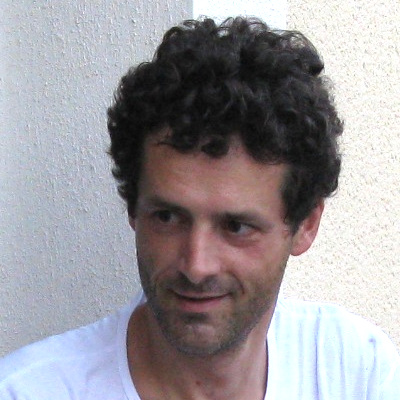
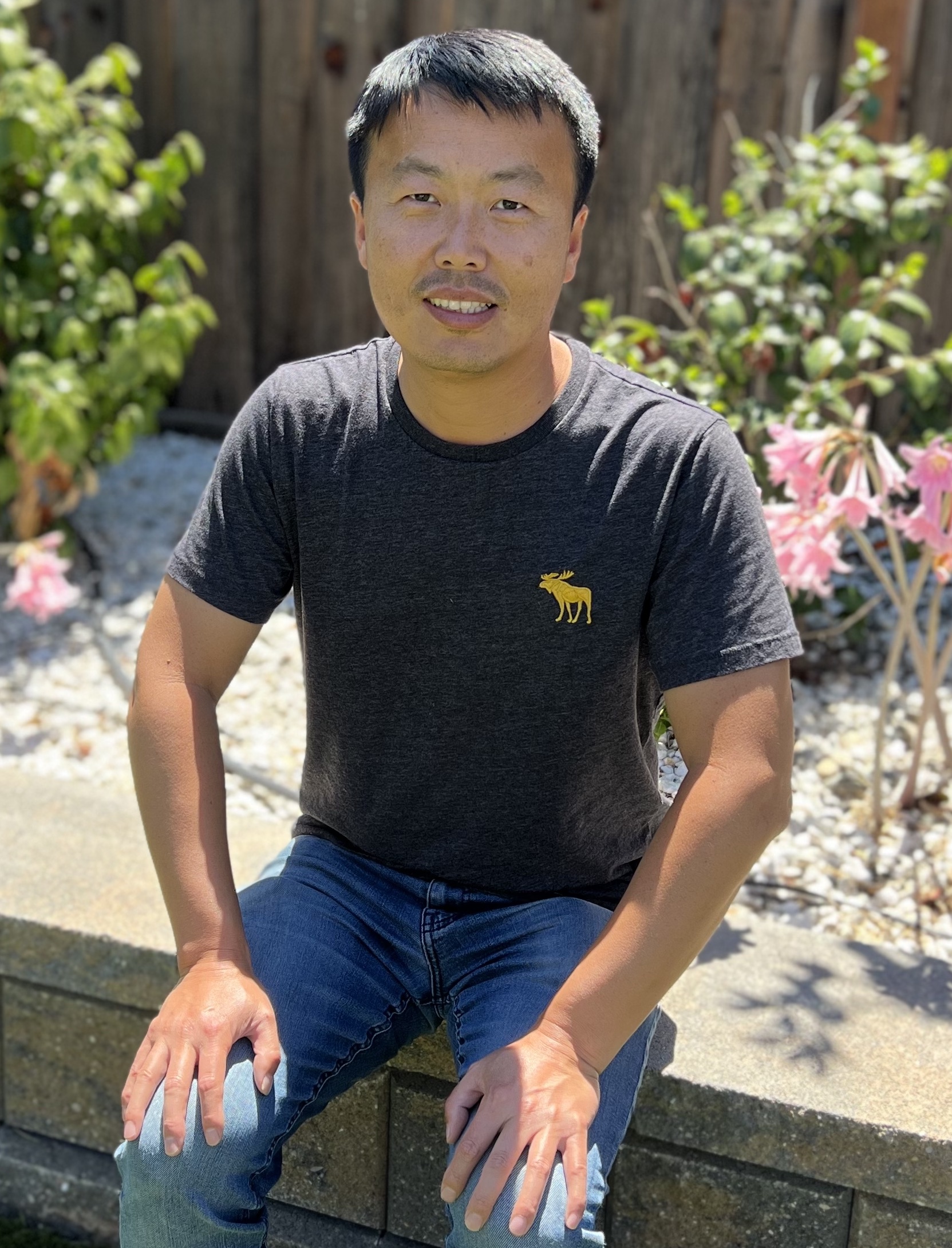
Michele Ciavotta is an Associate Professor at the University of Milano-Bicocca's Department of Computer Science, Systems, and Communication, specializing in AI-driven optimization for complex systems. His research integrates reinforcement learning, graph neural networks, and metaheuristics applied to distributed computing and physical systems like smart mobility and production lines. Research spans cloud/edge computing optimization, industrial production systems, smart city applications, and graph-based learning methods. Recent publications demonstrate focus on decentralized AI systems, geospatial data processing, and hypergraph neural networks for chemical and urban applications. Extensive involvement in European R&D projects addresses challenges in cloud computing infrastructure, Industry 4.0 implementations, and distributed AI solutions.
Dr. Sheela Ramanna is a Professor and Chair of the ACS Graduate Program in the Department of Applied Computer Science at the University of Winnipeg, and an Adjunct Professor at the University of Manitoba. She holds a Ph.D. in Computer Science from Kansas State University, and completed her earlier education at Osmania University, India. Her research focuses on AI, machine learning, and soft computing with applications in natural language processing, multimodal information processing, and topological data analysis. She has been recognized with numerous awards, including multiple UW Merit Awards and Senior Member status in the International Rough Set Society. Dr. Ramanna leads projects funded by NSERC and MITACS, including work on precipitation forecasting, microplastics analysis, and cannabinoid medicine studies. She supervises over 20 graduate students and has authored/co-authored over 150 publications in top journals/conferences. Key roles include editorial positions for EAAI and KES journals, and program chairs for major conferences like IJCRS and RSCTC. Education: B.S. Electrical Engineering (Osmania University), M.S. Computer Science (Osmania University), Ph.D. Computer Science (Kansas State University) Research Interests: Machine Learning, Natural Language Processing, Multimodal Deep Learning, Computational Topology, Rough Set Theory, Social Network Analysis Grants & Projects: NSERC Alliance/Engage Grants, MITACS Accelerate Projects, WeatherLogics collaborations on precipitation forecasting and road condition mapping
Zhixin Pan is an Assistant Professor in the Department of Electrical & Computer Engineering at Florida A&M University/Florida State University. Their research focuses on explainable machine learning, cybersecurity, quantum computation, and hardware security. They hold a Ph.D. in Computer Science from the University of Florida (2022), an M.S. in Computer Science from the University of Florida (2017), and a B.E. in Software Engineering from Huazhong University of Science and Technology (2015). Research interests include developing trustworthy AI systems through explainable machine learning techniques, securing hardware components against trojan attacks, and advancing quantum state preparation algorithms. Their work bridges theoretical foundations with practical applications in integrated circuit design and medical imaging. Publications emphasize cutting-edge topics like zero-shot learning for hardware security (TCAD 2024), adversarial attacks on Bayesian neural networks (TNNLS 2021), and quantum computing feedback mechanisms (QCE 2023).
Robert Kee holds the George R. Brown Distinguished Professor chair in Mechanical Engineering at Colorado School of Mines. His research focuses on chemically reacting flow modeling and simulation for clean energy applications, including fuel cells, photovoltaics, combustion, and electrochemistry. He is renowned as the principal architect of the CHEMKIN software, a leading global tool for chemically reacting flow simulation. Developed computational methods for stiff differential equations and chemical kinetics Work spans solid-oxide fuel cells, advanced combustion, and catalytic processes Current efforts address electro-chemo-mechanical coupling in batteries and hydrogen production Scientific Contributions: Recent publications emphasize Li-ion battery optimization, protonic ceramic electrochemical cells, and hydrogen production technologies. His work integrates thermodynamics, transport phenomena, and chemical kinetics across multiple energy domains. Research Trends: Focus areas include multi-physics battery modeling, solid-state electrolysis, ammonia synthesis, and catalytic hydrocarbon processing. Methodologies combine computational modeling, experimental validation, and materials optimization. Awards: George R. Brown Distinguished Professor Software Development: Creator of CHEMKIN, a foundational tool for reacting flow simulations. His NSF-funded work demonstrates ongoing contributions to computational thermochemistry and energy systems.
Rezaul Chowdhury is an Associate Professor in the Department of Computer Science at Stony Brook University (SBU), with a joint appointment at the Institute for Advanced Computational Sciences (IACS). His research focuses on algorithms and data structures for efficient serial and parallel computing, computational biology, and experimental algorithmics. He leads the Theoretical and Experimental Algorithmics (TEA) Group, emphasizing both algorithm design and engineering. Notable contributions include the Pochoir stencil compiler and the AutoGen system for dynamic programming algorithms. Chowdhury earned his Ph.D. from UT Austin, working on cache-efficient algorithms, and held postdoctoral positions at MIT and UT Austin. He has received prestigious awards, including the NSF CAREER Award and a Best Paper Award at IPDPS 2010. His work spans parallel programming, cache-oblivious algorithms, and bioinformatics applications like protein-protein docking (F2Dock). Teaching includes advanced courses on algorithms, parallel computing, and supercomputing. He advises multiple Ph.D. and master’s students and actively contributes to competitive programming through the SBU teams. His research projects are NSF-funded, focusing on stencil computations and resource-oblivious algorithms. Key software contributions include Pochoir (for stencil computations), F2Dock (protein docking), and AutoGen (automated algorithm discovery). His work bridges theory and practice, addressing challenges in multicore and distributed systems.
Silvère Bonnabel is a Professor at École des Mines ParisTech (Mines ParisTech), a prestigious engineering school in France. He holds a Research Habilitation HDR (2014) and a PhD (2007) from Mines ParisTech, along with advanced degrees in financial mathematics and engineering. His professional experience includes roles as Professor at the University of New Caledonia (2019-2022), Visiting Fellow at the University of Cambridge (2017), and Assistant Professor at Mines ParisTech (2009-2016). Bonnabel’s research focuses on systems and control, robotics, machine learning, and navigation, with notable contributions to invariant Kalman filtering and optimization on manifolds. He has authored/co-authored over 100 articles, 9 patents, and achieved an h-index of 39. Notable awards include the 2024 George N. Saridis Award and 2021 European Control Award. His work bridges theoretical advancements with industrial applications, including collaborations with companies like Safran, Thales, and Manitowoc. Bonnabel has supervised numerous PhD students, contributing to breakthroughs in inertial navigation, radar tracking, and autonomous systems. Education: 2014: HDR in Mathematics (Paris VI Sorbonne) 2004-2007: PhD, Mines ParisTech 2003-2004: Master in Financial Mathematics (Paris XII) 2001-2004: Engineering Degree, Mines ParisTech Industrial Collaborations: Partnerships with Safran, Thales, Manitowoc, and startups like OFFROAD, focusing on crane control, inertial navigation, and autonomous systems. Editorial Roles: Associate Editor for IEEE Control Systems Magazine, European Control Conference, and Systems & Control Letters. His research emphasizes geometric control theory, stochastic algorithms, and sensor fusion, with applications to robotics, aerospace, and industrial automation. Bonnabel’s work on invariant extended Kalman filters has been commercialized in products like Safran’s inertial navigation systems.
Neil T. Dantam is an Associate Professor of Computer Science at the Colorado School of Mines, focusing on robot planning and control at the intersection of symbolic and continuous domains. His work emphasizes mathematical verification, physical applicability, and user-friendly robot programming. Education: Ph.D. in Robotics from Georgia Institute of Technology (2014) Double B.S. in Computer Science and Mechanical Engineering from Purdue University (2008) Research Interests: Neil's research combines discrete and geometric planning, improves Cartesian control, and analyzes robot policies. He prioritizes methods connecting theoretical development with practical validation through robot manipulation and software design. Recent Trends: His publications address motion planning infeasibility proofs, robot team coordination under communication constraints, and hybrid task-motion planning frameworks. Keywords include Robotics, Algorithm Design, Computational Geometry, and Human-Robot Interaction. Scientific Awards: Georgia Tech President's Fellowship Georgia Tech/SAIC Paper Award American Control Conference '12 Presentation Award HUMANOIDS '14 Best Paper Finalist HUMANOIDS '14 Mike Stilman Award Finalist Students & Grants: Neil is actively recruiting students for research. He has secured grants for projects on robot team data collection, communication jamming resilience, and infeasibility proof scaling. Labs: He contributes to robotics research at Colorado School of Mines and previously at Georgia Tech, Rice University, and institutions like MIT Lincoln Laboratory and Raytheon.
Jakob Hultgren is an Associate Professor in Mathematics at Umeå University's Department of Mathematics and Mathematical Statistics, specializing in complex geometry and partial differential equations. His research examines connections between geometry and PDEs, particularly focusing on Monge-Ampère equations and their applications to mirror symmetry and optimal transport. Research interests center on canonical metrics on complex manifolds, degenerating families of Calabi-Yau manifolds, and special Lagrangian torus fibrations. Hultgren's work frequently bridges pure mathematics with applications in signal processing and machine learning through geometric approaches. He currently supervises doctoral candidates researching SYZ mirror symmetry and canonical heights in Arakelov geometry. Teaching responsibilities include courses in calculus, discrete mathematics, and specialized graduate topics in optimal transport and geometry.
Niklas Lundström serves as an Associate Professor in the Department of Mathematics and Mathematical Statistics at Umeå University, Sweden. His academic profile centers on interdisciplinary mathematical research with applications spanning ecology, energy systems, and image processing, supported by continuous publication activity through 2025. His primary research domains include Mathematical Biology (focusing on predator-prey dynamics, population modeling, and pest control), Partial Differential Equations (specializing in p-harmonic functions, variational inequalities, and nonlocal obstacle problems), and Optimal Switching (applied to hydropower management and stochastic control). Lundström investigates nonlinear phenomena in ecological systems, develops mathematical frameworks for image despeckling, and analyzes dynamical behaviors in engineering contexts like generator rotor dynamics. Analysis of his 15 most recent publications (2025-2016) reveals consistent emphasis on nonlinear PDE theory with practical applications. Key trends include analytical solutions for Lotka-Volterra systems, well-posedness studies for variable-exponent equations in image processing, and optimal control strategies for hydropower operations. His work demonstrates strong connections between abstract mathematical theory and real-world problems in sustainability and public health. Lundström actively participates in three university research groups: Mathematical Biology, Mathematical Modeling and Analysis, and Partial Differential Equations. He currently leads the research project "Viscosity solutions to systems of variational inequalities related to multi-modes switching problems" (2019-2025), indicating sustained grant funding. No scientific awards or student advisement details are documented in the provided materials.
Stamatis Koumandos is a Professor in the Department of Mathematics and Statistics at the School of Natural and Applied Sciences, University of Cyprus, holding this position since July 1, 2008. Previously, he served as Associate Professor from September 1999 to June 2008 and Assistant Professor from December 1995 to August 1999. He earned his Bachelor's degree in Mathematics from Aristotle University of Thessaloniki in 1985 and completed his Doctoral thesis there in 1991. His academic development included an Erasmus postgraduate scholarship at "La Sapienza" University of Rome (1989-1990), followed by postdoctoral research at the University of New South Wales (1991-1992) and University of Adelaide (1992-1995) in Australia, along with a concurrent research position at the Research Center for Sensor Signal and Information Processing (1993-1995). His research spans: Harmonic Analysis Orthogonal Polynomials Special Functions Approximation Theory Fourier Analysis Geometric Theory of Functions Analytic Number Theory with particular emphasis on Bernstein functions, Stieltjes functions, Lommel functions, and associated inequalities and asymptotic expansions. Analysis of his 15 publications (2012-2024) reveals a sustained focus on properties of special functions, including Turán-type inequalities, logarithmic concavity, and asymptotic behavior. Key contributions involve higher-order Thorin-Bernstein functions, generalized Stieltjes functions, and connections to number theory through Ramanujan approximations. Scientific awards: No awards mentioned in source material Advising and grants: No student advisees listed No grant funding details provided
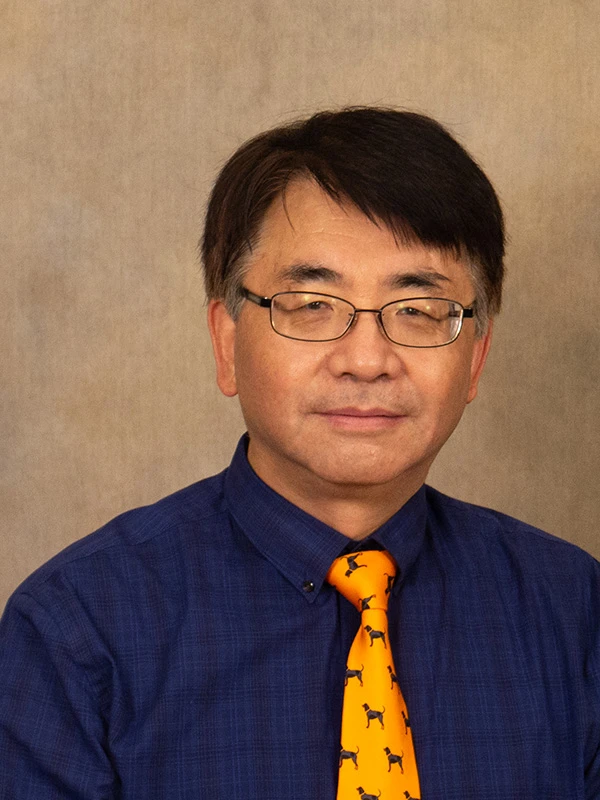
Xiaobing Feng is a Professor and Department Head in the Department of Mathematics at the University of Tennessee at Knoxville (UTK), where he has been since 1993. He holds a Ph.D. in Computational and Applied Mathematics from Purdue University (1992). His research focuses on numerical analysis, scientific computing, and partial differential equations (PDEs), with applications in biology, engineering, and physics. Key areas include stochastic PDEs, numerical methods for nonlinear PDEs, systems biology, and geometric flows. His work spans computational methods for stochastic systems, such as the elastic wave equations and Navier-Stokes equations, alongside contributions to fractional calculus and Sobolev spaces. He has developed innovative numerical techniques, including discontinuous Galerkin methods and efficient Monte Carlo algorithms for high-dimensional problems. His interdisciplinary research also addresses challenges in manufacturing metrology, such as geometric error identification in precision tools and biomedical imaging. Feng’s recent publications (2022–2025) emphasize stochastic modeling, numerical stability, and high-dimensional integration. He has contributed to data assimilation methods like i4DVar and advanced thermal modeling for machine tools. His research bridges mathematical theory with real-world applications, from medical devices to aerospace engineering. Notably, he has been recognized for his contributions to computational mathematics, though specific awards are not detailed. His academic leadership includes mentoring students and guiding departmental initiatives at UTK.
Michael Frazier is a Professor of Mathematics at the University of Tennessee, Knoxville, where he has been since 2006. He previously served as the Department Head of Mathematics from 2006 to 2012 and held faculty positions at Michigan State University from 1990 to 2006. Dr. Frazier received his Ph.D. in analysis from UCLA in 1983 under John Garnett. His research focuses on harmonic analysis, wavelets, partial differential equations, and Schrödinger operators, with notable collaborations on Green’s function estimates and solvability of Schrödinger equations. He has mentored five doctoral students and currently co-advises Monty Taylor with Grozdena Todorova. His educational background includes postdoctoral work at Washington University in St. Louis, where he pioneered wavelet techniques in function space analysis with Björn Jawerth. His research contributions span foundational work in Littlewood-Paley theory, matrix-weighted function spaces, and applications of wavelets to signal processing and differential equations. Dr. Frazier’s publications emphasize the interplay between harmonic analysis and PDEs, with recent work addressing fractional Laplacian operators and Schrödinger equation solvability. His teaching and research materials, such as the Introduction to Wavelets Through Linear Algebra textbook, bridge advanced mathematical theory with pedagogical clarity.
Dr. Haris Alexakis is a Lecturer in Civil Engineering at Aston University and a Visiting Academic Fellow at the University of Cambridge. He leads the NOESIS research group at the Aston Institute of Photonic Technologies (AiPT) and represents Aston on the Executive Board of UKCRIC. His work focuses on smart infrastructure systems, combining civil engineering with data science and advanced sensing technologies. Education : PhD (2013): Limit Analysis and Earthquake Resistance of Masonry Structures, University of Patras, Greece. MSc (2007): Seismic Design of Structures, University of Patras. BSc/MEng (2005): Civil Engineering, University of Patras. Research Interests : Aging infrastructure, smart bridges, structural health monitoring (acoustic emission, fiber optics), masonry/historic structures, signal processing, structural dynamics. Recent Research Trends : His articles emphasize sensor-based monitoring of aging infrastructure, fiber optic technologies, and AI-driven analysis of structural behavior. Key areas include railway bridge assessment, masonry arch dynamics, and predictive maintenance strategies. Awards : New Civil Engineer TechFest 'Rail Visionary Award' (2019). Grants & Collaborations : Co-Investigator: ECSTATIC (Horizon Europe, €5.5M). PI: Condition assessment of aging bridges (Royal Society). Grant leader: Concrete bridge damage localization (Highways England). Labs & Teams : NOESIS group (AiPT), collaborations with UC Berkeley, Politecnico di Milano, and UKCRIC.
Florent de Dinechin is a Professor at INSA Lyon, specializing in computer arithmetic and hardware design. His research focuses on application-specific arithmetic optimization for FPGA and embedded systems, including floating-point computation, low-precision neural networks, and hardware-efficient algorithms. Key research areas include: Optimal hardware implementations of mathematical functions Mixed-precision computing for AI workloads FPGA-centric arithmetic operators and generators Energy-efficient digital signal processing Recent publications explore reconfigurable constant multipliers, 3D norm computation, and low-precision activation functions. He authored 'Application-Specific Arithmetic' and co-edits handbooks on floating-point computation.
Guangliang Chen is an Associate Professor in the Department of Mathematics and Statistics at San José State University (SJSU), part of the College of Science. His research focuses on subspace/manifold clustering, dictionary learning, and classification with applications in image and document analysis. He earned a Ph.D. in Applied Mathematics from the University of Minnesota (2009) and a B.S. in Mathematics from the University of Science and Technology of China (2003). Key research contributions include scalable spectral clustering algorithms, geometric multi-resolution analysis, and advancements in compressive sensing. His work has been recognized with a Best Paper Award at the 2009 ICCV workshop for Kernel Spectral Curvature Clustering (KSCC). He teaches courses in applied statistics, machine learning, and data visualization at both undergraduate and graduate levels. Dr. Chen's recent projects involve developing efficient SVM classification techniques, large-scale spectral clustering frameworks, and MATLAB implementations for scalable algorithms. His research also extends to anomaly detection in hyperspectral imaging and functional genomics analysis through multiscale methods.