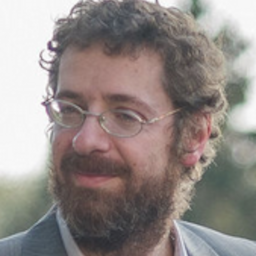
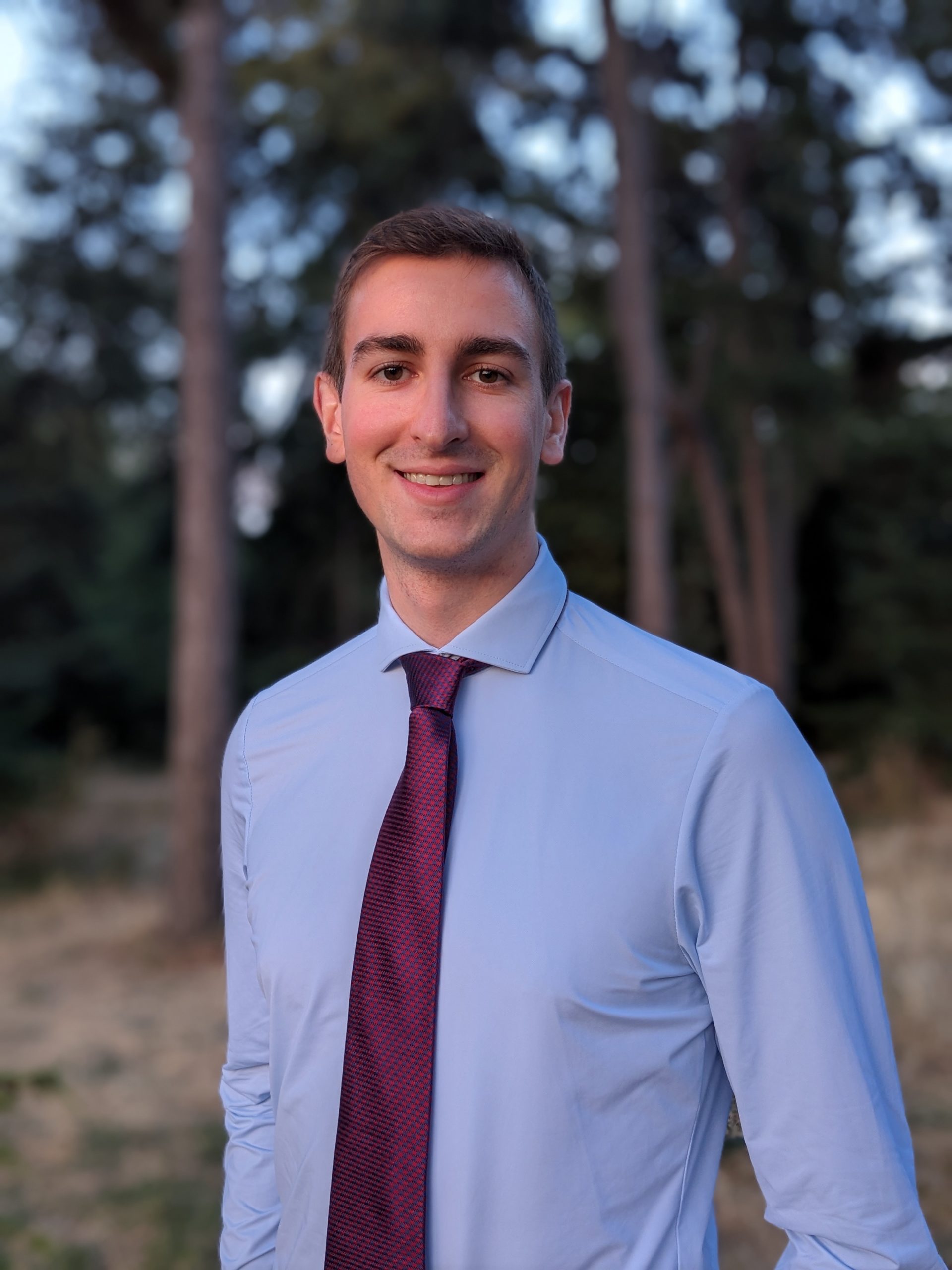
Dr. Filip Broćić serves as a Postdoctoral Research Fellow at the Institute of Mathematics, University of Augsburg, within the Faculty of Mathematics, Natural Sciences, and Materials Engineering. He collaborates under Prof. Kai Cieliebak and Prof. Urs Frauenfelder in the Analysis and Geometry research group. His educational background includes: Ph.D. in Mathematics, Université de Montréal, supervised by Octav Cornea and co-supervised by Egor Shelukhin. Broćić specializes in symplectic and contact topology, utilizing algebraic invariants from pseudo-holomorphic curve theory to investigate rigidity phenomena in geometric structures. His work targets fundamental constraints in symplectic/contact manifolds through advanced differential geometry techniques. Key research domains: Symplectic Topology Contact Topology Pseudo-holomorphic Curve Theory Rigidity Phenomena Symplectic Manifolds Contact Manifolds He actively participates in the Analysis and Geometry team’s academic initiatives, including the Oberseminar Differential Geometry and Topics in Symplectic Geometry seminars, and contributes to workshops like AI Transforms Math Research and Augsburg Dynamics Days.
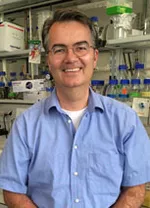
Bruno Vallet is a Senior Researcher at IGN (French National Institute of Geographic and Forest Information) within the LASTIG lab and leads the ACTE research team since 2019. His work focuses on geospatial data processing, including LiDAR and image registration, 3D urban modeling, and computer vision applications. He contributes to projects like AI4GEO and Time Machine , specializing in large-scale point cloud analysis and structured city reconstruction. Education : Habilitation (HDR) in Geographic Information Science (Univ Paris-Est, 2016), PhD in Computer Science (Institut National Polytechnique de Lorraine, 2008), and Master's in Computer Vision (Telecom ParisTech, 2005). His research integrates surface reconstruction , semantic labelings , and uncertainty propagation , with methodologies applied to autonomous navigation and urban change detection. Recent publications emphasize data fusion, visibility computation, and deep learning for 3D scene analysis. He co-supervises PhD students and leads teaching activities at ENSG (National School of Geographic Sciences), covering image processing and 3D data structures. Bruno Vallet also chairs the ISPRS Working Group II/4 on 3D Scene Reconstruction, demonstrating leadership in photogrammetry and remote sensing communities.
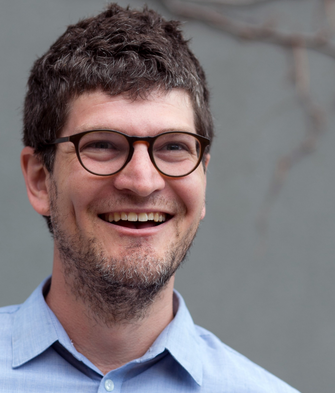
Ahmed Abbes is a CNRS Research Director at the Institute of Advanced Scientific Studies (IHES), specializing in arithmetic and algebraic geometry. His work focuses on geometric and cohomological properties of sheaves in p-adic and characteristic p>0 settings. Dr. Abbes' research centers on p-adic geometry , rigid geometry , sheaf cohomology , and ramification theory . Collaborations with Takeshi Saito, Michel Gros, and Takeshi Tsuji led to breakthroughs in p-adic Simpson correspondence and relative Hodge-Tate spectral sequences. His treatises systematize foundational theories in these areas. CNRS Bronze Medal (2005) Distinguished Ordway visitor (2016) - School of Mathematics, University of Minnesota Ahmed Abbes' publications include The p-adic Simpson Correspondence (with Gros & Tsuji) and Elements of Rigid Geometry . His Astérisque volume with Gros generalizes Hodge-Tate decomposition to relative settings. Current research extends the functoriality of p-adic Simpson correspondence via proper direct image techniques. He is based at the Alexander Grothendieck Laboratory (UMR 9009 CNRS, IHES) and has taught courses at Tsinghua University. Contact: abbes@ihes.fr
Klaus Kröncke is an assistant professor in the Department of Mathematics at the University of Hamburg , affiliated with the Faculty of Mathematics, Informatics and Natural Sciences and the Analysis and Differential Geometry (AD) group . His research focuses on differential geometry, geometric analysis, and applications to general relativity. PhD from University of Potsdam (supervised by Christian Bär) Postdoc at University of Regensburg Visiting professor at University of Tübingen (2020) Research Interests: Differential geometry with emphasis on Einstein metrics, Ricci solitons, and geometric flows. He studies stability problems in general relativity and moduli spaces of geometric structures. His work combines PDE analysis with geometric techniques on non-compact manifolds. Recent Article Trends: His publications analyze geometric flows (Ricci flow, mean curvature flow) on singular and asymptotically flat manifolds, investigate stability of Einstein metrics, and explore Perelman's entropies with conical singularities. Key collaborations include Oliver Petersen, Boris Vertman, and Alix Deruelle. Organizational Roles: Active organizer of conferences and workshops including: Geometric Flows and the Geometry of Space-time (2016) Ricci flow, mean curvature flow workshop (2018) Geometric Evolution Equations winter school (2018) Contact: klaus.kroencke@uni-hamburg.de
Dr. Miranda Holmes-Cerfon is a Professor in the Department of Mathematics at the University of British Columbia's Faculty of Science. Her research program focuses on the intersection of soft matter physics and statistical physics, with significant applications in designing nanoscale systems including vaccine delivery mechanisms, nanorobots for bloodstream surgery, battery components, and super resolving microscope elements. Research Interests: Dr. Holmes-Cerfon specializes in nanoscale systems design , DNA-coated colloids , and self-assembly processes . Her work bridges theoretical mathematics with practical applications through stochastic analysis and computational methods to understand diffusion processes and molecular interactions at the nanoscale. She has developed innovative models like the "nanocaterpillar" to describe particle motion with random "sticky feet" interactions. Analysis of her recent publications reveals a clear trajectory toward understanding complex motion and assembly at the nanoscale. Her work spans from theoretical frameworks in rigidity theory to practical applications in DNA-coated colloids, with increasing emphasis on hierarchical self-assembly and high-dimensional computational methods. The interdisciplinary nature of her research connects mathematics, physics, and nanotechnology through sophisticated modeling of stochastic processes. While specific awards weren't documented in the available information, Dr. Holmes-Cerfon's extensive publication record in high-impact journals demonstrates significant recognition in mathematical physics and nanoscale systems research. Her research program likely involves mentoring graduate students and postdoctoral researchers in computational mathematics and statistical physics. The sophisticated mathematical techniques in her work, particularly Monte Carlo methods on manifolds and stochastic analysis, suggest involvement in computational mathematics grants and interdisciplinary collaborations with physicists and nanotechnologists. Dr. Holmes-Cerfon's laboratory focuses on theoretical and computational approaches to nanoscale systems, developing mathematical frameworks to predict and control molecular self-assembly. Her work on DNA-coated colloids represents a significant contribution to programmable matter research, with potential applications in targeted drug delivery and nanoscale manufacturing.
Prof. Dr. Kay Schneitz is an Associate Professor of Plant Developmental Biology at the Technical University of Munich, where he has held his position since March 2002. His laboratory, known as the Schneitz Lab or "Shaping Beauty," investigates fundamental questions about how plant organs determine their size, number, and shape. Dr. Schneitz's educational background includes: Studied molecular and cellular biology at the Biocenter of the University of Basel in Switzerland Completed diploma thesis with Prof. Werner Arber on site-specific recombination in E. coli Obtained PhD with Prof. Markus Noll studying limb development in Drosophila, focusing on aristaless and dachsous genes Postdoctoral work at Harvard University with Bob Pruitt on Arabidopsis thaliana fertilization and ovule development Continued research at University of Zurich Institute of Plant Biology as postdoc and independent group leader Dr. Schneitz's research focuses on plant tissue morphogenesis, particularly investigating how cells coordinate their behavior despite being encased in a rigid cell wall. His laboratory has made significant contributions to understanding the STRUBBELIG (SUB) receptor kinase pathway, revealing connections between receptor kinase signaling, plasmodesmata-mediated communication, and cell wall biology. A major breakthrough was discovering that SUB and QKY physically interact at plasmodesmata, providing evidence for functional crosstalk between different signaling processes. More recently, his lab pioneered advanced 3D imaging techniques to quantitatively analyze cellular growth patterns during ovule development. Analysis of Dr. Schneitz's recent publications (2020-2025) reveals a strong interdisciplinary approach combining molecular genetics with computational analysis. His work increasingly integrates deep learning, 3D modeling, and advanced imaging to quantitatively address fundamental questions about plant organ development. The research shows a clear progression from molecular characterization of signaling components toward systems-level understanding of morphogenesis. Dr. Schneitz has received the following scientific recognition: EMBO Young Investigatorship (EMBO-YIP) in 2001 While specific details about his advising are not provided, Dr. Schneitz's extensive publication record spanning multiple decades suggests significant supervision of graduate students and postdoctoral researchers. His work involves substantial collaborative efforts across disciplines, as evidenced by multi-institutional authorship on many publications. Dr. Schneitz leads the Schneitz Lab which has developed innovative methods for 3D imaging of plant organs. Current research explores the connection between receptor kinase signaling, plasmodesmata function, and cell wall biology in controlling tissue morphogenesis. The lab maintains active collaborations with computer scientists and biophysicists to develop advanced analytical tools for plant developmental biology.
Dr Georg Maierhofer is a Henslow Research Fellow at Clare Hall, University of Cambridge, affiliated with the Department of Applied Mathematics and Theoretical Physics (DAMTP) in the Applied and Computational Mathematics research group. His work focuses on numerical analysis for partial differential equations and scientific computing. Education: BA & MMath, Trinity College, University of Cambridge (2013-2017) PhD, Cambridge Centre for Analysis, University of Cambridge (2017-2021) Georg's research centers on structure-preserving numerical methods , particularly for nonlinear dispersive PDEs and high-frequency wave scattering . He integrates machine learning into classical numerical algorithms for mesh optimization and solver acceleration. Key applications include simulating extreme ocean waves and noise processes in turbomachinery . His work bridges geometric numerical integration with low-regularity data in infinite-dimensional settings. Recent publications highlight low-regularity integrators , symplectic algorithms , and graph-based machine learning for mesh refinement. He also explores resonance-based schemes and high-frequency wave scattering in computational physics. Scientific Awards: Marie Skłodowska-Curie Fellow (2021-2023) Henslow Research Fellow, Clare Hall (2023-present) Dr Maierhofer's affiliations include DAMTP and the Mathematics of Information research group. He collaborates with experts like Professor William Lionheart and Professor Athanassios Fokas.
Uday Kusupati is a researcher at the Swiss Federal Institute of Technology Lausanne (EPFL), affiliated with the Geometric Computing Group (GCM) . His work focuses on computational frameworks for designing deployable, bending-active, and reconfigurable structures with applications in architecture, robotics, and fabrication. Doctoral thesis (2025) introduces Umbrella Meshes , a novel class of deployable structures using elastic beams and rigid plates. Co-authored publications in ACM Transactions on Graphics and Advances in Architectural Geometry explore inverse design algorithms, physics-based simulation, and sustainable fabrication techniques. Research Interests Uday specializes in computational design of deformable structures, integrating physics-based modeling , geometric optimization , and implicit surface representations to enable programmable material behavior. His work bridges theoretical mechanics with practical applications in 3D fabrication and soft robotics . Publications Overview Recent articles emphasize optimizing deployable systems for shape versatility, material efficiency, and reconfigurability. Key contributions include inverse design pipelines for bending-active structures, semantic editing of meshes via implicit templates, and homogenization techniques for inflatable systems. Collaborations and Grants Collaborated with Mark Pauly, Mathieu Gaillard, and other experts. Funded by the Swiss National Science Foundation (FNS) for computational design research.
Christine Allen-Blanchette is an Assistant Professor in the Department of Mechanical and Aerospace Engineering and affiliated with the Center for Statistics and Machine Learning at Princeton University. She also collaborates with Robotics at Princeton and previously held a Princeton Presidential Postdoctoral Fellowship. Education: PhD in Computer Science (2020), MSE in Robotics (2013) from the University of Pennsylvania; dual BS degrees in Mechanical Engineering and Computer Engineering (2011) from San Jose State University. Her research focuses on the intersection of deep learning, geometry, and dynamical systems. Key areas include control theory, robotics, and geometric deep learning, with applications to dexterous manipulation, 3D rotational dynamics, and equivariant neural architectures. Recent publications emphasize geometric algebra-based models for robotics, equivariant autoencoders for fluid dynamics, and physics-informed generative modeling. Her work integrates domain-specific constraints into neural architectures to enhance interpretability and performance. Scientific Awards: Princeton Presidential Postdoctoral Fellow Christine investigates connections between opinion dynamics and graph neural networks while advancing surrogate modeling and reward guidance methods in reinforcement learning. She contributes to robotics and machine learning communities through interdisciplinary research.
Fredrik Kahl is a Professor at Chalmers University of Technology, leading the Computer Vision Group under the Department of Signal Processing and Medical Technology. His research spans Computer Vision , Machine Learning , and Medical Image Analysis , with a focus on geometric deep learning and 3D reconstruction. University: Chalmers University of Technology Department: Signal Processing and Medical Technology Email: fredrik.kahl@chalmers.se His work addresses rotation equivariance , out-of-distribution detection , and privacy-preserving representations . Recent publications explore Gaussian splatting for 3D edge mapping, semi-supervised learning frameworks, and symmetry encoding in ReLU networks. Projects include collaborations with institutions like Wallenberg AI, Autonomous Systems and Software Program and grants from VINNOVA and Vetenskapsrådet (VR) .
Rikard Söderberg is a Professor of Product and Production Development at Chalmers University of Technology , where he earned his PhD in 1995. As director of the Wingquist Laboratory , he leads research initiatives in Geometry Assurance & Robust Design . His work bridges academia and industry through collaborations with automotive and aerospace sectors, focusing on minimizing geometric variations in manufacturing. Research Focus: Robust design, variation simulation, assembly optimization Key Collaborations: Automotive (Volvo, CEVT) and aerospace industries Scientific Leadership: Director of Wingquist Laboratory (since reorganization) Research Trends in his recent publications reveal interdisciplinary efforts combining digital twin technology , physics-based modeling , and evolutionary optimization . Articles address challenges in additive manufacturing , welding precision , and perceived product quality through computational frameworks. Scientific Recognition: Fellow, American Society of Mechanical Engineers (ASME) Fellow, International Academy for Production Engineering (CIRP) Member, Royal Swedish Academy of Engineering Sciences (IVA)
Alec Jacobson is an Associate Professor in the Department of Computer Science at the University of Toronto, with a courtesy appointment in Mathematics. He holds the Canada Research Chair in Geometry Processing and serves as a Senior Research Scientist at Adobe Research Toronto. Located at the Bahen Centre, he leads research in computer graphics and geometry processing as part of the Dynamic Graphics Project lab. His research focuses on Geometry Processing , Discrete Differential Geometry , and Computer Graphics , with applications in 3D reconstruction, computational fabrication, and neural representations. Key areas include mesh processing algorithms, physics-based simulation, and differentiable rendering techniques that bridge theoretical foundations with practical implementations. Recent publications demonstrate strong trends in neural field optimizations, robust 3D reconstruction, and physics simulation. His team frequently combines machine learning with geometric methods to solve challenging inverse problems in computer vision and graphics, with consistent innovation in computational efficiency and mathematical foundations. Scientific Awards: Canada Research Chair in Geometry Processing AXL Faculty Fellow Best Paper Honourable Mention (SGP 2024) Best Paper Award (SIGGRAPH 2022) Test of Time Award (SIGGRAPH 2024) He leads the Third Space research group advising numerous graduate students and postdocs. Current research infrastructure includes collaborations with the Vector Institute and Adobe Research, supported by grants focused on geometric algorithms and neural representations.
Regina Rotman is a Professor in the Department of Mathematics at the University of Toronto. Her research specializes in Riemannian Geometry , focusing on the properties and bounds of geodesics and minimal surfaces. Contact: rina@math.utoronto.ca Affiliation: University of Toronto, Bahen Centre, Room 6262 Research Interests Rotman's work explores advanced geometric problems, including: Quantitative analysis of geodesic loops and segments Topological and metric constraints on Riemannian manifolds Linear bounds for minimal structures on spheres Applications of Morse theory to geometric optimization Publication Trends Her recent articles (2013-2007) emphasize geometric bounds, periodic geodesics, and topological configurations. Collaborative projects with Alexander Nabutovsky and others dominate her work, spanning topics like metric volume relations, geodesic nets, and curvature-free bounds for minimal surfaces.
Michael Eichmair is a University Professor (Univ.-Prof.) at the Faculty of Mathematics, Department of Mathematics . His research spans both pure mathematical theory and mathematics education. Education : PhD in Mathematics, Stanford University (2008) Research Interests Differential Geometry : Focus on scalar curvature, 3-manifolds, and geometric flows Mathematical Relativity : Contributions to the positive mass theorem and geometric constraints Mathematics Education : Development of student personas for technology-enhanced learning environments Publications Analysis His recent work combines geometric analysis (mean curvature, isoperimetric surfaces, Willmore surfaces) with educational design (STEM transitions, digital systems, learning motivation). Key themes include: Geometric invariants in asymptotically flat manifolds Applications of optimal transport theory in Sobolev inequalities User-centered design in mathematics education Expectancy-value models for student success Scientific Awards Förderungspreis der Österreichischen Mathematischen Gesellschaft (2017) Förderungspreis der Stadt Wien (2018) Keynote Speaker, European Academy of Sciences and Arts (2017) Advising and Collaborations Collaborates with researchers like Otis Chodosh, Thomas Koerber, and mathematics educators such as Markus Mayerhofer. Supervises projects on geometry and educational technology.
Edward Crane is a Senior Heilbronn Research Fellow at the University of Bristol, affiliated with the Department of Mathematics. His research spans probability theory, circle packings, geometric function theory, and dynamical systems. University of Bristol Heilbronn Institute for Mathematical Research Research interests include: Probability and Stochastic Processes Circle Packings and Geometric Function Theory Complex Dynamics and Conformal Geometry Applications of Hyperbolic Metrics Recent articles focus on forest fire models, branching processes, colliding particle dynamics, and conformal geometry. Key contributions include work on Smale's mean value conjecture, rigidity in sphere configurations, and hyperbolic convexity criteria. Scientific achievements include the Heilbronn Research Fellowship. He has organized major conferences like PAD21@Bristol (2021) and contributed to educational resources through graduate lecture courses such as Dynamics of Rational Functions (2007).