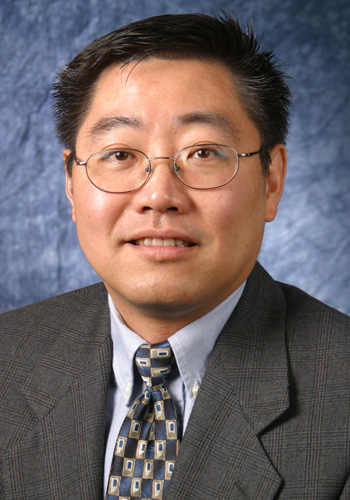
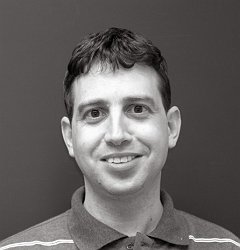
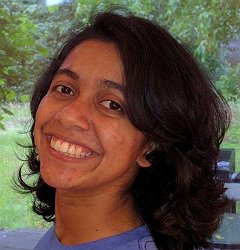
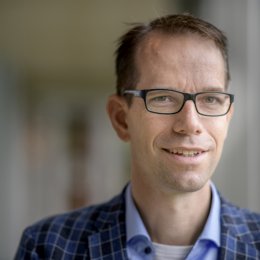
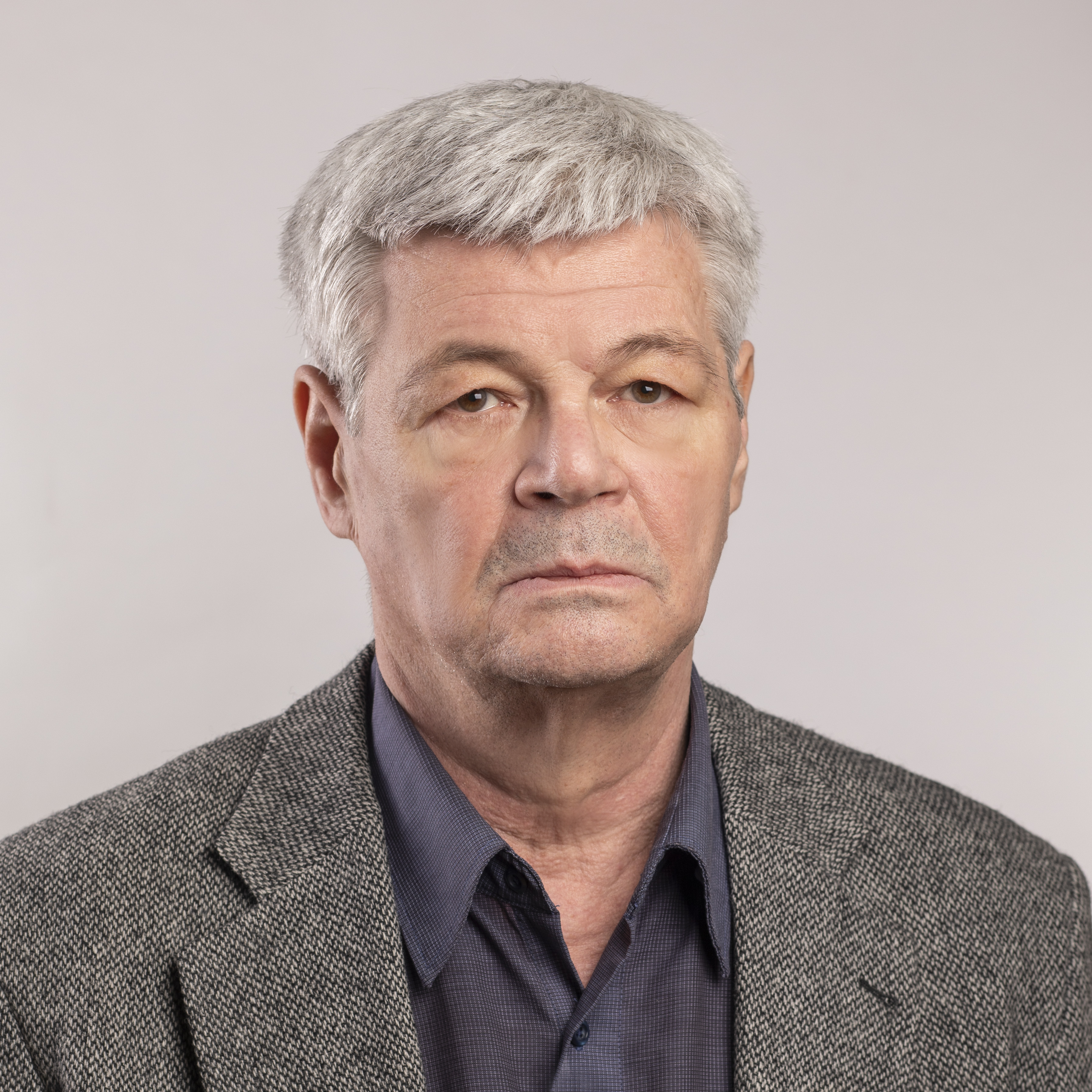
Professor Joseph Grotowski is the Head of the School of Mathematics and Physics at The University of Queensland (UQ), with a career spanning institutions in Germany, the United States, and Australia. He holds a PhD in Mathematics from New York University (1990) and a Habilitation from Friedrich-Alexander Universitaet Erlangen-Nuernberg (2001). His research focuses on Geometric Analysis and Nonlinear Partial Differential Equations , with significant contributions to topology optimization, computational mechanics, and mathematical physics. His recent work explores applications in materials science, cybersecurity strategy, and educational initiatives. Key trends in his publications include interdisciplinary collaborations in Topology optimization for bone implants and additive manufacturing Analysis of granular materials and shear banding Stochastic modeling in magnetism Cybersecurity policy frameworks He has served on advisory boards for the MATRIX Research Institute and the Australian Mathematical Sciences Institute, and led UQ's School of Mathematics and Physics since 2014. His grants include ARC Discovery Projects and UQ Major Equipment Funding, supporting research in high-strength materials and educational technology.
Prof. habil. dr. Gintautas Dzemyda is a leading Lithuanian computer scientist, Professor and Senior Researcher at Vilnius University Institute of Data Science and Digital Technologies (VU DMSTI), and Head of the Cognitive Computing Group . He is simultaneously affiliated with the Institute of Mathematics and Informatics (MII) in Vilnius, where he has built an internationally recognized scientific school in visual data analysis. Education & Qualifications 1984 – Candidate of Technical Sciences (PhD equivalent), thesis on “Problem Structure Analysis – a Tool for More Effective Optimization”. 1997 – Habilitation Doctor of Technical Sciences, dissertation on “Isolation of Necessary Knowledge to Improve Optimization Efficiency”. 1992 – Associate Professor, Institute of Mathematics and Informatics, Vilnius. 1998 – Professor, Kaunas University of Technology. Research Interests Prof. Dzemyda’s research integrates data science, artificial intelligence, optimization, and cognitive computing . Core topics include dimensionality reduction, multidimensional data visualization, neural-network–based analytics, parallel and distributed computing, multi-criteria decision support, and advanced AI applications in medicine (ophthalmology, cardiology, oncology). His work has pioneered Lithuanian capabilities in visual analytics and large-scale data exploration. Publication Trends Across 270+ refereed works and 2 Springer monographs (2013, 2023), recent outputs (2021–2025) emphasize geometric multidimensional scaling for big-data visualization, deep learning for pancreatic-cancer detection on CT images, reinforcement learning for autonomous navigation, and fraud-detection techniques for highly imbalanced financial datasets. These contributions appear in Springer LNCS/LNNS, Informatica, Journal of Global Optimization, Engineering Applications of Artificial Intelligence , and other top venues. Awards & Recognition Lithuanian State Science Prize (2001 & 2021) Honorary Doctor of the University of Latvia (2019) Knight's Cross of the Order “For Merit to Lithuania” (2007) Doctoral Supervision & Committees He has mentored 28 doctoral graduates (15 direct, 13 through academic descendants) and currently supervises: Dalia Breskuvienė – Classifier training-set optimization Modestas Motiejauskas – Emotion recognition in photographs Victor Bulava – Machine-learning methods for cyber-incident early detection He also chairs or serves on doctoral and habilitation committees at VU, KTU, VGTU, VMU and MII. Laboratory & Projects As Head of the Cognitive Computing Group , Prof. Dzemyda coordinates several national and EU projects, including the current Lithuanian Research Council grant “Geometric Method for Multidimensional Scaling” (S-MIP-20-19, 2020-2022) and the SMART programme project “CognitiveSTATS” (2021-2023) focused on combating misinformation during pandemics. His team develops open-access tools for large-scale data visualization and contributes to the MIDAS national research-data archive.
Martynas Sabaliauskas is an Associate Professor and Researcher at the Cognitive Computing Group , Institute of Data Science and Digital Technologies , Vilnius University , Lithuania. His research focuses on multidimensional scaling, geometric optimization, data visualization, and prime number theory. His research interests include: Multidimensional Scaling (MDS): Developing geometric approaches for efficient data dimensionality reduction and visualization. Prime Number Theory: Investigating properties of the Riemann zeta function, prime sequences, and fractal structures. Computational Mathematics: Designing algorithms for complex mathematical problems with applications in data science. Recent publications reflect a strong focus on geometric MDS techniques, visualization of complex mathematical structures, and computational approaches to number theory. Notable works include studies on the Riemann zeta function's zeros, fractal visualizations, and efficient algorithms for large-scale data analysis. Contact Information: Address: Akademijos St. 4, room 617, Vilnius, Lithuania Phone: +370 5 210 9305
Dr. Ji Chen is a Professor and Chair at the Department of Electrical & Computer Engineering, University of Houston, where he also serves as Director of the NSF I/UCRC Center for EMC Research. His career bridges academic research with industry experience, including prior roles as a staff engineer at Motorola Personal Communication Research Labs (1998-2001). He holds a PhD in Electrical Engineering from the University of Illinois, Urbana-Champaign, with prior degrees from McMaster University and Huazhong University of Science and Technology. IEEE Fellow Fellow AIMBE NSF Career Award Winner Dr. Chen's research focuses on computational electromagnetics , particularly in biomedical applications. Key areas include electromagnetic safety of medical implants in MRI systems , multi-channel transcranial magnetic stimulation (TMS) devices , coupled EM-neuro modulation simulations , and RF field interactions with the human body . He has developed novel solutions for MRI-induced heating mitigation in implants and pioneered wireless power transfer applications for industrial systems. His publication record demonstrates expertise in FDTD modeling for periodic structures, electromagnetic dosimetry, and medical device safety evaluation. Collaborations with Wolfgang Kainz and others have produced significant contributions to MRI safety standards and virtual human modeling for dosimetric simulations. Scientific Awards IEEE EMC Society Technical Achievement Award (2011) IEEE EMC Society Distinguished Lecturer (2009-2010) IEEE APMC Best Paper Award (2008) IEEE Senior Member (2008) ORISE Fellowship (2006) Motorola Engineering Award (2000) Dr. Chen's research group has explored electromagnetic tracking systems for radiotherapy, developed advanced simulation techniques for periodic structures, and investigated safety protocols for pregnant women in metal detector exposure scenarios. His work combines theoretical advancements with practical applications in both medical and industrial electromagnetics.
Ayalvadi Ganesh is a Lecturer in the Department of Mathematics at the University of Bristol's School of Mathematics, where he teaches advanced courses including Complex Networks, Stochastic Optimisation, and Queueing Networks. His academic work bridges theoretical mathematics with practical network applications. His research spans communication networks , decentralized algorithms , and stochastic modeling , with core expertise in large deviations theory , random graphs , queueing systems , and information theory . Recent work demonstrates strong focus on multi-agent bandit problems, epidemic modeling on networks, and latency optimization in distributed systems, reflecting interdisciplinary applications from cybersecurity to biological networks. Analysis of his 15 most recent publications reveals dominant trends in decentralized decision-making (38% of works), network epidemics/rumor spreading (27%), and stochastic optimization (20%), with increasing crossover into machine learning and biological applications since 2020. Best Paper award at ACM SIGMETRICS 2010 for 'Load balancing via random local search in closed and open systems' His teaching portfolio includes graduate-level courses on Complex Networks, Stochastic Optimisation, and Queueing Theory, with documented emphasis on connecting theoretical foundations to real-world network challenges. While specific grant details aren't provided in source materials, his publication pattern suggests sustained research funding in network science and stochastic systems.
Ignatov Andrey Dmitrievich is a lecturer at the Faculty of Computer Science , Department of Software Engineering at National Research University Higher School of Economics (HSE), since 2019. He holds a postgraduate degree in Informatics and Computer Engineering (2023) and Master's in Applied Mathematics and Computer Science from Lomonosov Moscow State University (2019). Lecturer in Software Engineering and Applied Mathematics programs Conducts research in combinatorial optimization and protein structure modeling Recipient of multiple teaching awards including Best Teacher (2023, 2025) His research focuses on global optimization , parallel computing , and computational biology with applications to cloud scheduling and protein modeling. Publications demonstrate expertise in heuristic algorithms , branch-and-bound optimization , and BOINC-based distributed computing . Recent teaching includes courses on Algorithms and Data Structures, Protein Structure Modeling, and Optimization Methods. 2023-2024, 2024-2025: Allowance for young teachers 2023: Gratitude from Faculty of Computer Science 2024: Category 'New Lecturers' 2025: Co-inventor of legal assistance software patent
Erhan Budak is a Professor at Sabanci University's Faculty of Engineering and Natural Sciences, specializing in manufacturing engineering. With a Ph.D. in Mechanical Engineering from the University of British Columbia, he has held academic positions since 1994 and founded Maxima Manufacturing R&D in 2008. His work focuses on machining dynamics, tool design, and manufacturing process optimization. Sabanci University (2011-Present: Professor; 2004-2011: Associate Professor; 2000-2004: Assistant Professor) Pratt & Whitney Canada (1994-2000: Manufacturing R&D Engineer) Founder of Maxima Manufacturing R&D (2008) Research Interests: Manufacturing processes, machining dynamics, tool design optimization, chatter stability analysis, virtual manufacturing systems, and thermo-mechanical modeling. His publications demonstrate expertise in 5-axis milling, process damping, and industrial applications. Scientific Contributions: Developed analytical methods for chatter stability prediction Innovative tool design approaches for increased productivity Advancements in 5-axis machining simulations Thermo-mechanical force modeling Process damping identification techniques Awards: CIRP Taylor Medal (2003) Outstanding Achievement Award from Pratt & Whitney Canada (1998) Multiple scholarships from UBC and TUBITAK Industrial Applications: Collaborates with Maxima Ltd. for implementing research outcomes in manufacturing environments. Maintains editorial roles with CIRP Journal, International Journal of Advanced Manufacturing Technology, and Journal of Machining Science and Technology.
Dengpeng Huang is an Assistant Professor specializing in Artificial Intelligence and Robotics within the field of Elastomer Technology and Engineering . His work bridges computational modeling with advanced materials, focusing on applications in smart materials and mechanical systems. Research Interests: Development of AI-driven models for predicting elastomer properties Multiscale analysis of rubber composites Electromechanical coupling in dielectric elastomer actuators Meshfree methods for metal cutting and chip formation Ultra-precision polishing of optical surfaces Recent Trends: His 2024–2025 publications emphasize data-driven modeling of rubber's viscoelastic behavior, multiscale analysis of composites, and CNN-based approaches for material characterization. Earlier work (2014–2022) explores tool path optimization, beam modeling, and computational machining. Scientific Recognition: Holds an h-index of 5 according to Scopus citations, with recognition as an AI and robotics expert in the service industry. Advising & Collaboration: Collaborates with researchers like Anna Blume, Evgeny Karaseva, and Tim Bor on elastomer composites. Supervised at least one academic work, though specific students are not named in the provided data. Labs & Teams: Affiliated with simulation and robotics teams in the smart materials sector, likely within an advanced materials or mechanical engineering research group.
Shachar Itzhaky is an Associate Professor in the Department of Computer Science at Technion - Israel Institute of Technology, Haifa. His research spans multiple areas of programming languages, formal methods, and software engineering, with a focus on making program development and verification more accessible and efficient. He has served on program committees for numerous prestigious conferences including PLDI, POPL, SPLASH, and ICFP. Dr. Itzhaky's research interests center around program synthesis, automated reasoning, and formal verification. His work in program synthesis explores techniques for automatically generating programs from high-level specifications, with applications in end-user programming and software development. In automated reasoning, he has made significant contributions to e-graph based reasoning, invariant inference, and property-directed verification. His research in formal methods focuses on practical applications for program verification, particularly for data structures and security properties. An analysis of his recent publications reveals a strong focus on leveraging advanced formal techniques for practical program understanding and generation. His work consistently bridges theoretical foundations with practical applications, particularly in program synthesis, verification, and end-user programming tools. The trend shows increasing integration of machine learning techniques with traditional formal methods, as well as expanding applications to security and privacy domains. ACM SIGPLAN John C. Reynolds Doctoral Dissertation Award Dr. Itzhaky has been actively involved in the programming languages research community, serving on numerous program committees and contributing to the advancement of formal methods and program synthesis. His work has practical implications for software development tools, security analysis, and end-user programming environments. While specific grant information isn't detailed in the provided text, his extensive publication record in top-tier venues suggests successful funding for his research endeavors. His work on projects like Object Spreadsheets and Lifty demonstrates a commitment to creating practical tools that address real-world programming challenges. Dr. Itzhaky's research is conducted within the vibrant programming languages and formal methods group at Technion's Computer Science department. His work intersects with multiple research threads including program synthesis, verification, and security, suggesting collaboration across these areas within the department. His tools like EPR-based Verification, PDR∀, and VeriCon represent significant technical contributions that likely form the basis of ongoing research projects with students and collaborators.
Chandrakana Nandi is the Director of US R&D at Certora and an affiliate assistant professor in the Department of Computer Science & Engineering at the University of Washington's College of Engineering. She completed her PhD at the University of Washington working with Zachary Tatlock and Dan Grossman in the PLSE research group. Her research focuses on building tools for scaling automated formal verification to real-world programs, particularly for DeFi applications. She works extensively with equality saturation techniques (egg project) and has made significant contributions to computational fabrication through projects like Carpentry Compiler, Szalinski, and LambdaCAD. Her work bridges programming languages, compilers, and digital fabrication, creating novel tools that transform how we design and manufacture physical objects. Nandi's publication record shows a strong trajectory in programming language techniques applied to verification and fabrication. Her work on equality saturation has become foundational in the field, with the egg library enabling state-of-the-art results in compiler optimization and program synthesis. Recent work has expanded into formal verification of smart contracts, demonstrating the versatility of her research approach across different domains. Distinguished Paper Award at OOPSLA 2021 Sigplan Research Highlight for POPL 2021 As Director of US R&D at Certora, she leads research efforts on verification tools for languages like WASM and techniques to help users write formal specifications more easily using mutation testing. She has served in numerous organizational roles for major programming languages conferences including as Workshops Co-Chair for ICFP 2025 and Committee Member for PLDI Review Committee. Nandi has established herself as a leader in the intersection of programming languages and computational fabrication, with her work on equality saturation becoming particularly influential across multiple subfields of programming languages research.
Gregory J. Herschlag serves as an Associate Research Professor in the Department of Mathematics at Duke University, where he conducts interdisciplinary research at the intersection of computational mathematics, political science, and fluid dynamics. His work focuses on developing rigorous mathematical frameworks to analyze political redistricting and gerrymandering while simultaneously advancing computational techniques in fluid dynamics. Dr. Herschlag's primary research interests include: Mathematical quantification of gerrymandering and electoral fairness Markov chain Monte Carlo methods for graph partitioning Computational fluid dynamics and lattice Boltzmann methods High-performance computing optimization for complex geometries Statistical sampling techniques for political district analysis His recent publications reveal a sophisticated methodological approach to redistricting analysis, particularly through innovations like Metropolized Forest Recombination, which enables more efficient sampling of graph partitions. His 2022 Georgia congressional districting analysis demonstrated that the enacted plan exhibited extreme non-responsiveness to public opinion shifts, with only 0.12% of sampled plans showing similar characteristics. In computational physics, his work on GPU data access patterns has yielded significant performance improvements of 10-40% for lattice Boltzmann simulations. Dr. Herschlag's interdisciplinary approach has established him as a key contributor to the growing field of mathematical analysis of electoral systems, with his methods being applied in legal contexts to evaluate partisan gerrymandering claims. His research bridges theoretical mathematics with practical applications that impact democratic processes and computational science.
Prof. Dr. Ir. Dannis Brouwer is a professor at the Faculty of Engineering Technology, University of Twente, leading the Precision Engineering group. His work focuses on flexure mechanisms with applications in ultra-precision machinery, robotics, orthoses, and flexible implants. He lectures Design Principles for Precision Mechanisms in Mechanical Engineering programs and has pioneered advancements in large-motion flexure joints. Education: MSc in Mechanical Engineering and Mechatronic Design (Eindhoven University of Technology, 1998-2001); PhD (University of Twente, 2007) Past Roles: Mechatronics System Designer at Philips (2001-2004); Senior Applied Research Engineer at Demcon (2007-2009) Brouwer’s research addresses the limitations of traditional bearings by optimizing flexure joints for high load capacity, large motion, and stiffness. His group developed topology synthesis methods and leverages additive manufacturing to enable geometric complexity at low cost. Applications span space mechanisms, cryogenic systems, and medical devices. His 15 most recent publications focus on flexure modeling, optimization, and applications in robotics and precision engineering. Key subfields include torsion reinforcement, underactuated grippers, and superelement formulations. Scientific Leadership: Associate Editor of Precision Engineering; Director-at-Large, American Society for Precision Engineering (2015-2017) Grants: 14 projects (total 5.5M€), supervising 11 PhD students, 7 PostDocs, and 2 EngD candidates Brouwer integrates education with industry through intensive Master’s courses and lectures at industrial academies. His work bridges theoretical advancements with practical implementations in mechatronic systems.
Zoltán Karmo is an Associate Professor of Sculpture at the Hungarian University of Fine Arts, where he has taught since 1993. A graduate of the Hungarian Academy of Fine Arts (1986), he previously taught at the Vocational School of Fine and Applied Arts (1986-2001), specializing in drawing and sculpture instruction. His educational background includes: 1986: Hungarian Academy of Fine Arts, Sculptor Karmo's research centers on the tripartite evolution of sculptural language—figurality, abstraction, and conceptualism—arguing these paradigms form an interconnected continuum essential for contemporary practice. He demonstrates this through historical analysis (e.g., Polykleitos's Doryphoros as simultaneously figurative, abstract, and conceptual) and emphasizes how modern sculpture expanded from stone carving to sound installations. His pedagogical framework systematically develops these concepts across four years: second-year students master figurative representation through life modeling; third-year explores organic/geometric abstraction and material experimentation; fourth-year engages conceptual frameworks and institutional critique. His major recognitions include: Mihály Munkácsy Award (2002) Derkovits Scholarship (1990-1992) As an educator, Karmo implements a progressive autonomy model where teacher-led instruction gradually shifts to student-initiated projects, culminating in fifth-year diploma work focused on independent creative development. His exhibitions demonstrate parallel artistic practice, with iron-based sculptures like the "Tare" series (1995-2011) and "New Moon" (1987) exploring materiality and form across Budapest, Berlin, Vienna, and international venues since 1985.
Dr. Angelynn R. Álvarez is a tenure-track Assistant Professor of Mathematics in the Department of Mathematics, College of Arts & Sciences at Embry-Riddle Aeronautical University (ERAU) in Prescott, Arizona. She holds significant service roles as Archivist of ERAU's Faculty Senate, Faculty Fellow for the Center for Teaching & Learning Excellence, and Secretary of the Mathematical Association of America (MAA) Southwestern Section. Her academic foundation includes: Ph.D. in Mathematics, University of Houston M.S. in Mathematics, University of Houston B.A. in Mathematics (Spanish concentration), University of Houston Dr. Alvarez's research bridges theoretical and applied mathematics with dual emphases: (1) Coding Theory advancements in locally recoverable codes and algebraic constructions for data storage systems, and (2) Differential Geometry investigations of holomorphic sectional curvature. Her parallel work in Mathematics Education develops inclusive pedagogical frameworks, particularly through Students-as-Partners initiatives and diversity-focused mentorship training. This interdisciplinary approach connects pure mathematics with engineering applications and educational innovation. Her recognition includes: ERAU 2025 Teacher of the Year Award AMS-Simons Research Enhancement Grant (PI, 2023-2026) Consecutive MAA Tensor Grants for Women in Mathematics (2022-2025) ERAU FIRST Grant for research innovation (2023-2024) Innovative Teaching Grant from ERAU's Center for Teaching Excellence (2023) As an educator, Dr. Alvarez teaches the full undergraduate mathematics curriculum while mentoring through independent studies and PCMI workshops. Her research is supported by active AMS-Simons and ERAU grants, while her educational initiatives leverage MAA funding. She co-directed the Arizona Women's Symposium (2022-2024) and maintains leadership in AMS, MAA, and AWM to advance inclusive practices in mathematical communities. Dr. Alvarez's 2025-2026 research agenda features collaborations at AIM, ICERM, and Pomona College, alongside invited presentations at major conferences including the Mathematical Congress of the Americas, demonstrating sustained contributions to both research frontiers and educational transformation.
Aymeric Fromherz is a researcher at Inria Paris, focusing on formal methods for secure systems. He leads projects in Rust verification, high-assurance cryptography, and formalization of computational legal texts. Education includes a PhD from Carnegie Mellon University (co-advised by Bryan Parno and Corina Păsăreanu) and degrees from École Normale Supérieure. His research spans Rust verification (via Aeneas toolchain), verified cryptographic primitives , and computational law (through the Catala language). Recent publications address memory allocators, borrow-checking, and legal ambiguity detection. Major Scientific Awards : Distinguished Artifact Award (CAV 2025) Best Tool Paper Award (ESOP 2024) ACM SIGSAC Dissertation Award (2021) A.G. Milnes Dissertation Award (2021) He contributes to conferences like POPL, ICFP, and CPP, and participates in the Everest Project. The Prosecco Team at Inria Paris supports his research on formal methods and security.