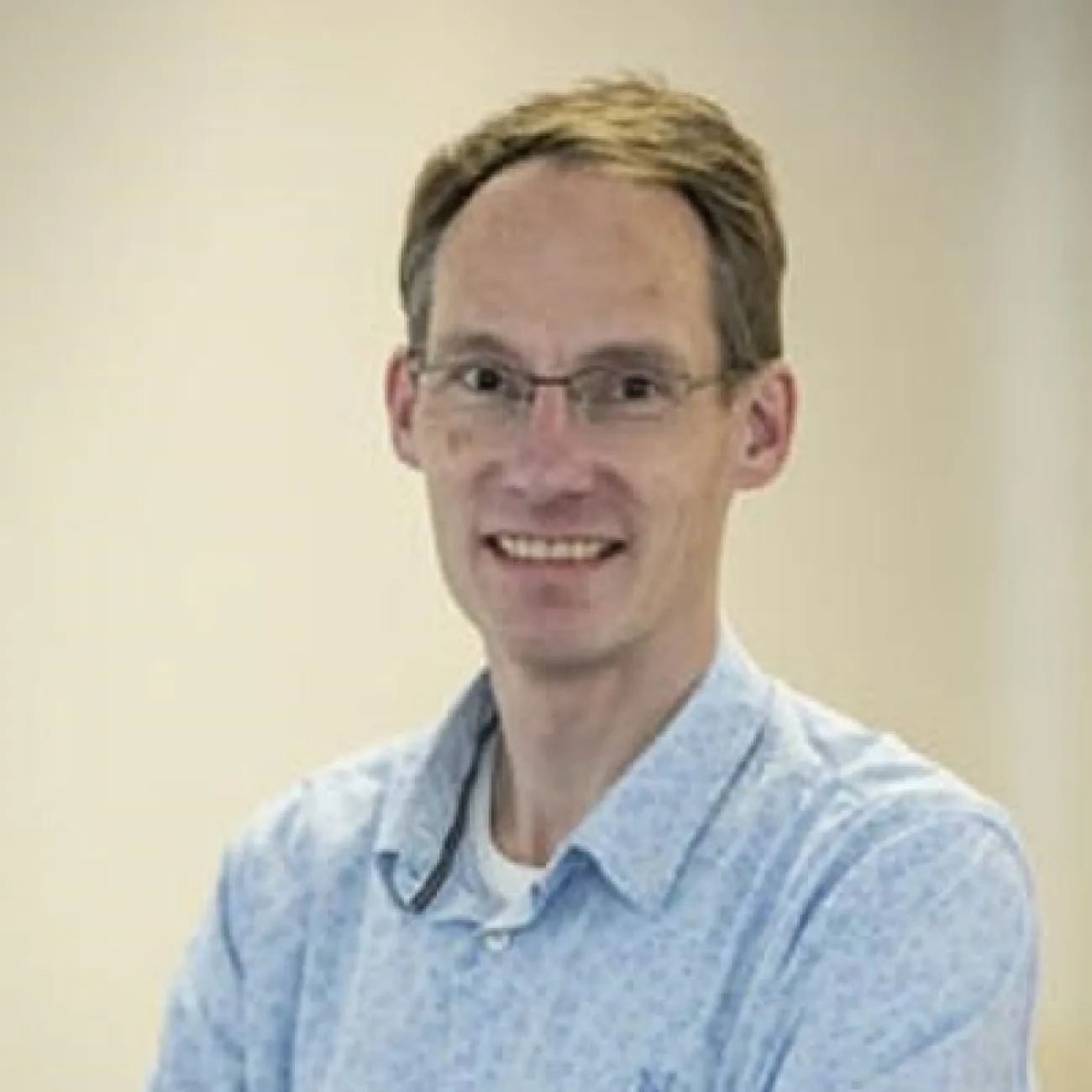
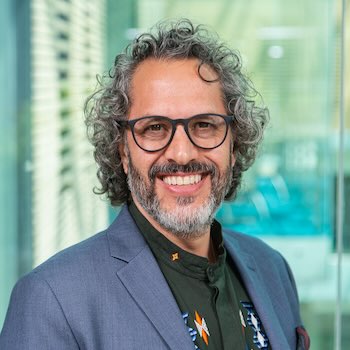
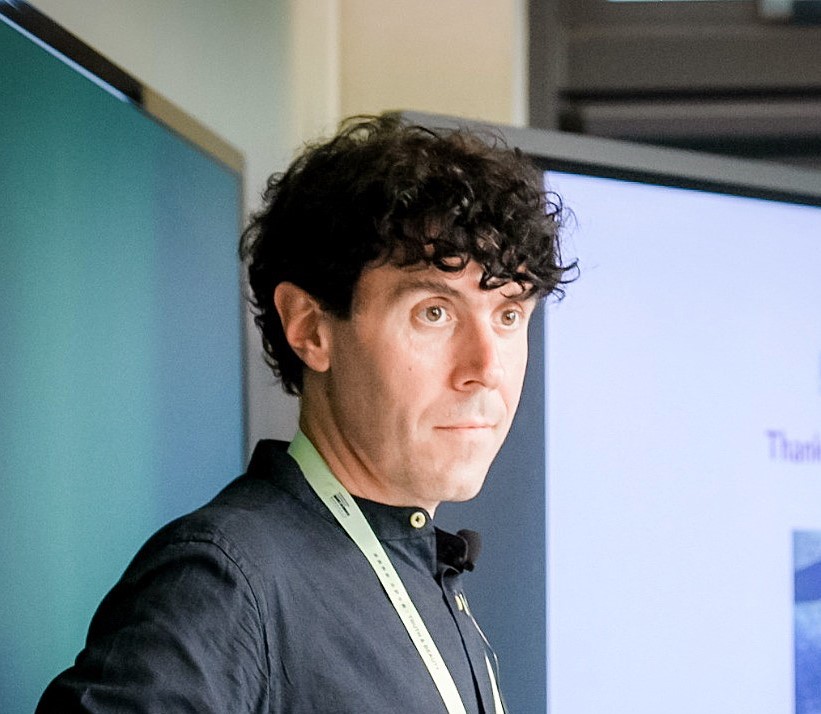
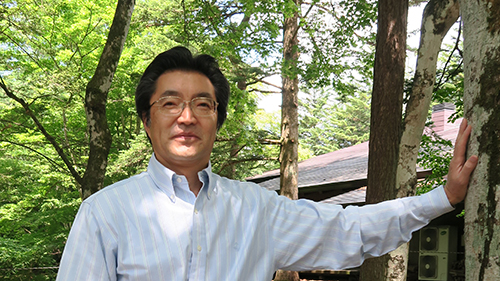
Yoichi Mieda is an Associate Professor at the Graduate School of Mathematical Sciences, University of Tokyo . His research focuses on Number Theory , particularly the Langlands correspondence , Shimura varieties , and Rapoport-Zink spaces . Mathematical Society of Japan His work connects automorphic representations and p-adic reductive groups through the geometry of Shimura varieties . Recent publications emphasize l-adic cohomology of Rapoport-Zink spaces, formal degree conjectures , and p-adic uniformization of algebraic varieties. Key collaborations include research with Naoki Imai on potentially good reduction loci of Shimura varieties and Tetsushi Ito on Lubin-Tate spaces. His contributions have advanced understanding of non-cuspidal cohomology and local Langlands correspondences .
Michalis Vazirgiannis is a Professor at LIX, École Polytechnique in France, where he leads the Data Science and Mining group (DaSciM). He holds a degree in Physics and a PhD in Informatics from Athens University (Greece), and a Master's degree in AI from Heriot Watt University, Edinburgh (UK). His academic career spans multiple prestigious institutions including Fraunhofer and Max Planck MPI in Germany, INRIA/FUTURS in Paris, AUEB in Greece, Telecom-Paristech, ENS in France, Tsinghua and Jiaotong Shanghai in China, and Deusto University in Spain. Professor Vazirgiannis's research focuses on machine and deep learning methods for graph analysis, including community detection, graph clustering, node embeddings, and influence maximization. His work in text mining encompasses Graph of Words, word embeddings with applications to web advertising and marketing, event detection, and summarization. He has active collaborations with industrial partners in analytics and machine learning for large-scale data repositories across various application domains such as recommendations, meeting summarization, influence metrics for scientific and social networks, and predictive maintenance. His recent publications demonstrate a strong emphasis on Graph Neural Networks, multilingual NLP (particularly for French and Arabic), and applications of deep learning to diverse domains including social networks, legal text, and biomedical data. There's a clear trajectory toward developing more efficient, explainable, and specialized models that address real-world challenges in data analysis. ERCIM fellowship Marie Curie EU fellowship Tencent "Rhino-Bird International Academic Expert Award" (2017) Best Paper Award at IJCAI 2018 Best Paper Award at CIKM 2013 Professor Vazirgiannis has supervised 29 completed PhD theses and has attracted significant R&D funding from national and international sources, including research agencies and industrial partners such as Google, Airbus, Huawei, Deezer, BNP, and LVMH. He leads or has led several academic research chairs including DIGITEO (2013-15), ANR/HELAS (2020-25), and AXA (2015-2018). The DaSciM research group, which he leads at École Polytechnique, has extensive experience in real-world R&D projects involving large-scale data mining. The team maintains active collaborations with major industrial partners including AIRBUS, Google, BNP, Tencent, and Tradelab, working on cutting-edge machine learning projects. The group has co-organized major conferences such as ECML PKDD 2011 and ECML/PKDD 2017 and participates in the senior organization of AI and data mining events like AAAI and IJCAI.
Professor Stephen Theriault is a homotopy theorist at the University of Southampton since 2015. His research spans homotopy theory, Lie groups, gauge groups, and manifolds, with a focus on polyhedral products and toric topology. PhD and MSc from University of Toronto (1991-97) Postdoctoral Fellowships at MIT, University of Illinois at Chicago, and University of Virginia Previous roles at University of Aberdeen (2002-12) Research Interests include: Homotopy theory of spheres and Moore spaces Applications to Lie groups, gauge groups, and manifolds Polyhedral products and toric topology Current projects on loop space decompositions and homotopy types Publications emphasize homotopy classifications, geometric topology, and algebraic structures in distributed computing. Recent work explores Steenrod's problem , quasitoric manifolds , and open book decompositions . Teaching includes MATH1059 Calculus and supervision of BSc/MMath projects. PhD Supervision involves students like Briony Helen Eldridge and Lewis Richard Stanton.
Dr. Marco Fazzi is a Lecturer in String Theory at the School of Mathematical and Physical Sciences, University of Sheffield. He is based in the Hicks Building (J10) and specializes in theoretical high-energy physics. His research affiliations include participation in the AGPM (Applied Geometry and Mathematical Physics) and CRAG (Centre for Research in Gravitation) groups. Dr. Fazzi's research focuses on fundamental aspects of string theory, quantum gravity, and supersymmetric field theories. Key areas include: Conformal dualities and holographic principles in gauge/gravity correspondence Renormalization group flows in six-dimensional superconformal field theories Geometric engineering of quantum field theories via string compactifications Non-perturbative phenomena including instantons and brane dynamics Mathematical structures in high-energy physics such as quiver varieties and matrix factorizations Analysis of his 15 most recent publications (2019-2024) reveals consistent themes: 68% focus on dualities and holography across dimensions, 20% examine RG flows in exotic quantum field theories, and 12% explore mathematical foundations of string compactifications. Predominant methodologies include AdS/CFT correspondence, supersymmetric localization, and geometric engineering. Dr. Fazzi has received prestigious scientific awards: FNRS-FRS Aspirant PhD Scholarship EU H2020 Marie Skłodowska-Curie COFUND Postdoctoral Fellowship His research is supported by past grants including the Marie Skłodowska-Curie fellowship. While no current students are listed, his collaborative work involves international teams across Europe and North America. Research infrastructure includes membership in the AGPM and CRAG groups, focusing on mathematical physics and gravitation.
Anthony Bloch is the Alexander Ziwet Collegiate Professor of Mathematics and Professor of Mathematics at the University of Michigan, serving as Chair of the Department of Mathematics. He is affiliated with the Center for the Study of Complex Systems (CSCS) in Weiser Hall. His research focuses on: Geometric Mechanics : Hamiltonian/Lagrangian mechanics, symplectic geometry, and integrable systems including Toda lattices and rigid body dynamics Nonlinear Dynamics : Nonholonomic systems with nonintegrable constraints, stability analysis, and continuous-discrete flow relationships Control Theory : Nonlinear and optimal control applications extending to quantum dynamics and astrophysical systems Recent publications demonstrate geometric methods applied to nonholonomic control, virtual constraints, and stabilization, with growing interdisciplinary work in network dynamics, quantum control, and cosmological models like cosmic reheating. Through the Center for the Study of Complex Systems, Professor Bloch collaborates across disciplines to investigate complex phenomena in natural and engineered systems, leveraging geometric frameworks to address fundamental questions in mechanics and dynamics.
Christian Hirsch is an Associate Professor for Data Science and Statistics at Aarhus University, where he studies random networks motivated from biology and health sciences through techniques from topological data analysis and stochastic geometry. He is a member of the Stochastics group at the Department of Mathematics and holds additional affiliations as an Associate Fellow of the Aarhus Institute for Advanced Studies, and with the AU DIGIT Centre and the AU Quantum Campus. Current Position: Associate Professor for Data Science and Statistics, Aarhus University Previous Positions: Assistant Professor at University of Groningen and University of Mannheim Postdoctoral Experience: Aalborg University, LMU Munich, WIAS Berlin Education: PhD from Ulm University Christian Hirsch's research focuses on the statistical foundations of topological data analysis, large deviations theory in stochastic geometry, and percolation theory of spatial random networks. His work bridges theoretical mathematics with practical applications in data science, particularly in analyzing complex structures through topological methods. He investigates how topological features form and disappear in growing data structures, developing statistical tests to determine whether observed patterns are significant or merely random occurrences. His recent publications reveal a strong trend toward applying topological data analysis to increasingly complex structures, with significant focus on statistical validation of topological features. Hirsch has made substantial contributions to understanding the probabilistic behavior of persistent homology, developing functional central limit theorems and large deviation principles for topological functionals. His work spans theoretical foundations in stochastic geometry while finding applications in materials science, neural networks, and wireless communication systems. As an educator, Hirsch teaches graduate courses including Topological Data Analysis, Stochastic Geometry, Monte Carlo Simulation, Markov Decision Processes, Probability Theory, and Stochastic Processes. He has supervised numerous PhD, MSc, and BSc students, with several of his former students securing academic positions at institutions like University of Leiden, Tokyo Institute of Technology, and Budapest University of Technology. Hirsch leads a research group within the Stochastics group at Aarhus University, collaborating extensively with researchers across Europe and North America. His work demonstrates how topological methods can provide rigorous statistical insights into complex data structures, making significant contributions to both theoretical mathematics and practical data analysis techniques.
Sirui Li is a Postdoctoral Researcher in the Department of Chemical Engineering and Chemistry at Eindhoven University of Technology, specializing in plasma-based technologies for sustainable chemical processes. Their research focuses on carbon capture and utilization, plasma catalysis, and reactor design for CO 2 conversion and nitrogen fixation. Research interests center on plasma-assisted CO 2 conversion , with key areas including: Plasma-sorbent systems for simultaneous CO 2 capture and conversion Gliding arc and DBD reactor design for NO x synthesis and methane conversion Techno-economic analysis of plasma-based sustainable processes Dielectric materials and nanoparticle synthesis for catalytic applications Recent publications demonstrate a clear trend toward integrated plasma-reactor systems for carbon management, with emphasis on process intensification, thermal effects analysis, and scalability. The work bridges fundamental plasma chemistry with industrial application feasibility, particularly in renewable energy integration and fertilizer production. Award highlights include: Baldur Eliasson Award (2022) Best oral presentation award for 'Plasma-sorbent system for CO 2 capture and conversion' (2022) IEEE NPSS Young Professional Travel Grant (2024) Li actively contributes to major research projects including PLACHEM (plasma-assisted CO 2 conversion), GICO (gasification with CO 2 capture), and LEAP-Agri (on-site fertilizer production), while serving as guest editor for Frontiers of Chemical Science and Engineering and participating in international symposia on plasma technology.
Ignacio Castillo is a Professor and Associate Dean of Business (Graduate Academic Programs) at the Lazaridis School of Business and Economics, Wilfrid Laurier University. His expertise spans facility location optimization, supply chain management, and sustainable operations. He holds a leadership role in graduate academic programming and teaches courses in operations and statistics. Research focuses on optimizing facility layouts, material handling systems, and closed-loop supply chains. He has developed frameworks for multi-objective facility design and advanced packing optimization algorithms. His work bridges theoretical models with real-world applications in manufacturing and retail sectors. Publications emphasize nonlinear optimization techniques, packing problems, and supply chain coordination strategies. Recent work explores irregular object configurations and retail category space optimization. His textbooks include Business Statistics for Contemporary Decision Making and Operations Management , emphasizing practical decision-making tools. Office: LH4001M | Languages: English, Spanish
Michael Pawlovich is Assistant Professor of Civil and Environmental Engineering at South Dakota State University's Jerome J. Lohr College of Engineering. His research focuses on traffic safety analytics, statistical modeling of crash data, and transportation infrastructure evaluation. Research expertise includes: Statistical methods for safety evaluation (Empirical Bayes, Bayesian modeling) Geometric design safety impacts Rural intersection safety Infrastructure treatment effectiveness Honors include multiple National Roadway Safety Awards and AASHTO recognitions. Publications demonstrate consistent application of advanced statistics to traffic safety challenges.
Alfonso Sorrentino is a full professor of mathematical analysis at the Department of Mathematics, University of Rome Tor Vergata. He specializes in Hamiltonian dynamical systems, with expertise in nonlinear analysis, differential geometry, and mathematical physics. He earned his Ph.D. in mathematics from Princeton University (2008) and held academic positions at the Fondation des Sciences Mathématiques de Paris (2008–2009) and the University of Cambridge (2009–2012). His research focuses on invariant structures in Hamiltonian systems, billiard dynamics, and spectral rigidity. Key recognitions include the Fubini Prize (2018), Barcelona Dynamical Systems Prize (2019), Best Paper Award (Gold medal, 2020), and Frontiers of Science Award (2023). His work bridges pure mathematics and applications, emphasizing geometric and analytic approaches to dynamical systems. Recent studies explore topics like invariant Lagrangian graphs, spectral properties of billiards, and homogenization of Hamilton-Jacobi equations on networks. His contributions reflect a commitment to advancing theoretical frameworks in dynamical systems and their interdisciplinary implications.
Professor Masatoshi Okutomi is affiliated with the Department of Systems and Control Engineering at the School of Engineering, Institute of Science Tokyo. His research focuses on advanced medical imaging techniques, particularly in endoscopy and 3D reconstruction, leveraging deep learning and neural networks. Key interests include virtual chromoendoscopy for cancer detection, image restoration, and stereo matching under challenging conditions. His work bridges computer vision and healthcare, addressing real-world applications such as MRI reconstruction and foggy stereo matching. Notable contributions include developing lightweight medical segmentation networks for edge devices and advancing neural radiance fields (NeRF) for novel view synthesis. His research spans diverse domains: from improving video quality assessment to enhancing object detection in high-dynamic-range images. Collaborative projects emphasize practical solutions for medical diagnostics and robust image processing in adverse environments. Recent articles highlight advancements in temporally-consistent video restoration, few-shot view synthesis, and degraded image classification using knowledge distillation. These innovations underscore his commitment to pushing boundaries in both theoretical computer vision and applied medical technology.
Prof. Dr. Andreas Gastel is a Professor in the Faculty of Mathematics at the University of Duisburg-Essen. His research specializes in geometric analysis, partial differential equations, and differential geometry. He leads a research group working on mathematical modeling and optimization problems, particularly in gas network applications. His recent publications focus on nonlinear material models, conservation laws in polyharmonic systems, and gauge theory applications. He maintains active collaborations with researchers across mathematical physics and applied mathematics disciplines.
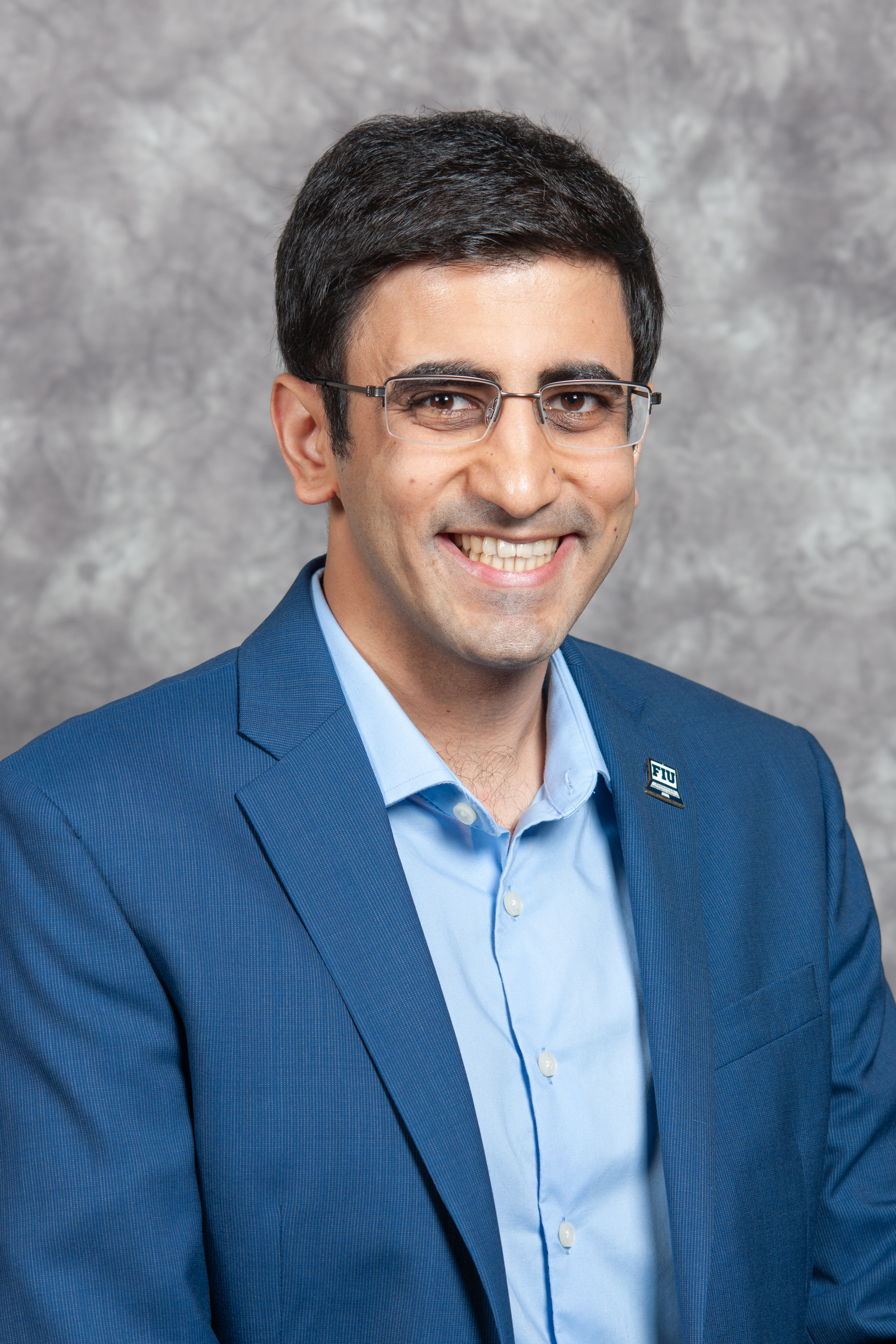
M. Hadi Amini is an Assistant Professor at Florida International University's Knight Foundation School of Computing and Information Sciences. He founded and directs the Sustainability, Optimization, and Learning for InterDependent networks (SOLID) laboratory, focusing on cyber-physical-social systems and distributed AI applications. Ph.D., Electrical and Computer Engineering (2019), Carnegie Mellon University M.Sc., Electrical and Computer Engineering (2015), Carnegie Mellon University M.Sc. (2013), Tarbiat Modares University B.Sc. (2011), Sharif University of Technology His research spans federated learning, interdependent network optimization, and AI applications in smart cities , energy systems , and healthcare . Recent work emphasizes privacy-preserving techniques, quantum encryption, and blockchain integration for secure distributed learning. The 15 most recent publications highlight trends in large language models , edge computing , medical imaging security , and infrastructure resilience , with interdisciplinary emphasis across computer science, systems engineering, and urban planning. Best Paper Award, IEEE Conference on Computational Science & Computational Intelligence (2019) Best Journal Paper Award, Springer Nature Operations Research Forum (2021) Excellence in Teaching Award, FIU (2020) Multiple Best Reviewer Awards, IEEE Transactions NSF Travel Awards (2019) As Associate Editor for Frontiers in Communications and Networks and book series editor for Sustainable Interdependent Networks , he actively shapes research discourse. His lab has secured $3.6M in federal/state funding for AI-driven infrastructure projects.
Dr. Daniel Grady is an Assistant Professor at Wichita State University. His research focuses on algebraic topology, mathematical physics, and differential geometry, with a particular emphasis on advanced topics such as K-theory, cobordism, and topological field theories. He explores the interplay between differential cohomology and geometric structures in theoretical physics, including applications to M-theory and string compactifications. His work often involves sophisticated tools like spectral sequences, stacks, and equivariant constructions, reflecting a deep engagement with both pure and applied aspects of topology. Notable contributions include studies on the Freed–Hopkins conjecture, geometric cobordism hypotheses, and twisted differential cohomology theories. Grady’s research bridges abstract algebraic frameworks with concrete geometric and physical models, advancing foundational understanding in modern theoretical mathematics.
Dori Bejleri is an Assistant Professor in the Department of Mathematics at the University of Maryland, College Park. Prior to this, he was a Benjamin Peirce and NSF postdoctoral fellow at Harvard University (2019–2023) and an NSF postdoctoral fellow at MIT (2018–2019). He earned his PhD in 2018 from Brown University under Dan Abramovich's supervision. His research focuses on algebraic geometry, particularly moduli spaces and birational geometry, with connections to number theory, enumerative geometry, combinatorics, and geometric representation theory. His work is supported by NSF grant DMS-2401483. He has organized several academic events, including the JHU-UMD Algebra and Number Theory Day (2024) and the Perspectives on Moduli in Algebraic Geometry conference (2025). Bejleri has taught graduate courses such as Rationality Questions in Algebraic Geometry (Spring 2022), Birational Geometry of Algebraic Varieties (Fall 2020), and Moduli Spaces in Algebraic Geometry (Fall 2019). His research spans topics like wall-crossing phenomena in moduli spaces, compactifications of elliptic surfaces, and motivic Hilbert zeta functions. He has also contributed to the study of stable log pairs and geometric representation theory. His teaching and research reflect a commitment to advancing foundational questions in algebraic geometry while engaging with interdisciplinary connections. His academic contributions include organizing seminars and mentoring students through advanced topics in geometry and topology.