
Victor Ginzburg is a Professor in the Department of Mathematics at the University of Chicago. His research focuses on geometric representation theory and noncommutative geometry, with contributions to areas such as Hecke algebras, quantum groups, and mirror symmetry. He currently advises seven graduate students, though their specific projects vary widely. His work intersects with algebraic geometry, string theory, and mathematical physics. Key research themes include the application of algebraic geometry to representation theory, including studies on D-modules, quiver varieties, and symplectic reflection algebras. He has authored influential papers such as Non-commutative Symplectic Geometry (2001) and Symplectic reflection algebras (2002). His interests also extend to Calabi-Yau categories and operads, reflecting a deep engagement with modern geometric and algebraic structures.
جستوجوی استاد و پژوهشگر
استاد راهنما، استاد دانشگاه یا پژوهشگر مناسب برای مسیر پژوهشیتان را پیدا کنید و با او ارتباط بگیرید.
نمایش ۳۱-۴۵ از ۳٬۵۱۲ استاد راهنما
اطلاعات این پروفایلها از صفحات عمومی دانشگاهها جمعآوری شده و ممکن است بهروز نباشد.
- Mathematical Physics
- Theoretical Physics
- Geometry
- +۷ مورد دیگر
James Sparks is a Professor of Mathematical Physics at the Mathematical Institute of the University of Oxford and a Fellow of Oriel College. He works at the intersection of mathematical physics, theoretical physics, and geometry, with a focus on supersymmetric field theories, supergravity, and the AdS/CFT correspondence. His research explores geometric structures in string theory, including special holonomy manifolds, Sasaki-Einstein manifolds, and generalized geometry. Education: MA and PhD from the University of Cambridge Current Role: Head of the Department of Mathematical Physics Contact: Mathematical Institute, University of Oxford, Andrew Wiles Building, Radcliffe Observatory Quarter, Woodstock Road, Oxford, OX2 6GG Sparks' research interests center on the interplay between quantum field theory, supergravity, and differential geometry. He investigates localization techniques in supersymmetric theories, holographic dualities, and geometric constructions relevant to string theory. His work often bridges mathematical rigor with physical insights from the AdS/CFT correspondence. His recent publications highlight advancements in supergravity localization, black hole thermodynamics, and equivariant cohomology in AdS/CFT. Articles span topics like toric gravitational instantons, matrix models from black hole geometries, and geometric duals of extremization principles in holography. These contributions reflect his focus on connecting geometric methods to physical phenomena in high-energy theory. In teaching, Sparks has lectured on quantum theory, electromagnetism, classical mechanics, and dynamics. He maintains an active research profile with collaborations on topics such as spinning spindles, squashed spheres, and brane tilings. His work continues to shape understanding of geometric structures in theoretical physics and their dual gravitational descriptions.
Arpit Duaمشاهده پروفایل
استادیار
Dr. Arpit Dua is an Assistant Professor in the Department of Physics at Virginia Tech. Previously, he held positions including a joint Simons-IQIM postdoc at Caltech under Xie Chen and a PhD at Yale University under Meng Cheng and Liang Jiang. His research focuses on theoretical quantum information systems, with emphasis on quantum error correction, topological order, and integrating machine learning principles into physics frameworks. Education: PhD in Physics from Yale University, Postdoctoral research at Caltech. Research Interests: Quantum error correction (developing novel codes using conventional and machine learning methods), thermalization in topological systems, self-correcting models, and applying physics-based insights to AI architecture design. His current projects explore fault-tolerant protocols, fracton orders, and Floquet codes. Publications reflect contributions to topological codes, subsystem symmetries, and fracton physics. His work bridges quantum information theory with condensed matter physics.
- Applied Topology
- Geometry
- Algebra
- +۵ مورد دیگر
Dr. Primoz Skraba is a Professor in Applied and Computational Topology at the School of Mathematical Sciences, Queen Mary University of London. As Deputy Head of the Centre for Probability, Statistics and Data Science, he bridges theoretical topology with practical applications in data analysis, machine learning, and optimization. Education : PhD in Electrical Engineering from Stanford University (2009) Prior Roles : Positions at INRIA, France; Jozef Stefan Institute, Slovenia; University of Primorska; University of Nova Gorica His research focuses on applying topological methods to analyze complex data. Key areas include: Stability of persistence diagrams for quantitative control in finite sampling Variants of persistence (zig-zag, robustness, multiparameter) Algorithmic Complexity in computational topology Stochastic Topology for random geometric models (Poisson, Boolean) Recent publications emphasize persistent homology in random geometric complexes, universality theorems, and integrating topological methods into machine learning. He received grants from the Leverhulme Trust, EPSRC, and Alan Turing Institute for projects on topological universality and AI foundations. His advisee Gabryel Mason-Williams explores wireless sensor network applications of homology.
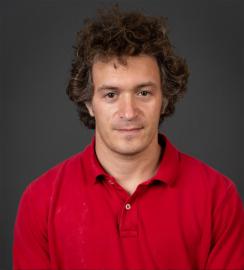
Matthew Emerton is a Professor in the Department of Mathematics at the University of Chicago, part of the Physical Sciences Division. He specializes in number theory, arithmetic geometry, and the Langlands program. His research focuses on automorphic forms, Galois representations, and p-adic methods in arithmetic geometry. Education: BSc (Hons) from the University of Melbourne (1993), PhD in Mathematics from Harvard University (1998), advised by Barry Mazur. Research Highlights: Pioneered work on the p-adic Langlands program, moduli stacks of Galois representations, and prismatic cohomology. Authored over 50 publications, including foundational works on p-adic Hodge theory and local-global compatibility. Awards: Alfred P. Sloan Doctoral Dissertation Fellowship (1997-98), Rackham Summer Faculty Fellowship (1999). Grants: Multiple NSF awards (e.g., DMS-2201242 for 'Arithmetic Aspects of the Langlands Program', DMS-1952705 for geometric aspects of the p-adic Langlands program). Students: Mentored 25+ PhD students and postdocs, many contributing to number theory and representation theory.
- Number Theory
- Combinatorics
- Complexity Theory
- +۳ مورد دیگر
Daniel M. Kane is a Professor at the University of California, San Diego (UCSD), holding a joint appointment in the Department of Mathematics and the Department of Computer Science and Engineering (CSE). His research spans mathematics and theoretical computer science, with a focus on number theory, combinatorics, complexity theory, and computational statistics. He earned a Ph.D. in Mathematics from Harvard University (2011) and dual BS degrees in Mathematics with Computer Science and Physics from MIT (2007). Prior to UCSD, he was a postdoctoral researcher at Stanford University (2011–2014) on an NSF fellowship. His research interests include robust statistics, machine learning, polynomial threshold functions, and algorithmic methods for high-dimensional data. Notable achievements include co-authoring the book Algorithmic High-Dimensional Robust Statistics (Cambridge University Press, 2023) and receiving the Best Paper Award at the Conference on Computational Complexity (2013), as well as gold medals at the International Mathematical Olympiad (2002 and 2003). Current teaching includes courses such as Math 96 (Putnam Seminar), Math 154 (Graph Theory), CSE 101 (Algorithms), and CSE 203A (Randomized Algorithms). He has consulted for companies like CASPER Labs and AIble, and his work extends to cryptographic protocols, including quantum money schemes based on quaternion algebras. Key contributions include breakthroughs in robust mean estimation, list-decodable learning, and the development of efficient algorithms for statistical problems. His research often bridges foundational theory with practical applications in machine learning and data analysis.
Dr. Jean-Christophe Nave is an Associate Professor in the Department of Mathematics and Statistics at McGill University, specializing in applied mathematics, numerical analysis, and computational methods. His research focuses on numerical methods for partial differential equations, fluid mechanics, interface problems, and computer graphics. He holds a PhD from UCSB (2004) and has held academic positions at MIT and McGill since 2005. Currently, he serves on committees such as the Steering Committee of the Institut des Sciences Mathematiques and the CRM Applied Mathematics Lab. His educational background includes a PhD under Professors Xu-Dong Liu and Sanjoy Banerjee. Key research areas include level set methods, fluid-structure interaction, and invariant numerical methods. Notable works include the Correction Function Method for interface problems and the Characteristic Mapping Method for advection problems. Nave’s publications span topics like Poisson equations with discontinuous coefficients, fluid dynamics simulations, and high-order numerical schemes. He has advised numerous graduate and undergraduate students, contributing to their research in applied mathematics and computational science. His work bridges theoretical rigor and practical applications in engineering and physics. He teaches advanced courses such as Numerical Analysis I/II and Computational Methods in Applied Mathematics. His research group collaborates on projects involving fluid dynamics, elasticity, and geometric algorithms, with a focus on developing robust numerical tools for complex systems.

Md Manjurul Ahsanمشاهده پروفایل
استادیار
Dr. Md Manjurul Ahsan serves as a Research Assistant Professor in the Department of Industrial & Systems Engineering at the University of Oklahoma, where he develops AI-driven solutions for healthcare diagnostics and advanced manufacturing optimization. His work bridges theoretical AI advancements with practical industrial and medical applications. Education: Ph.D. in Industrial and Systems Engineering, University of Oklahoma M.S. in Industrial Engineering, Lamar University B.S. in Industrial and Production Engineering, Shahjalal University of Science and Technology Research Focus: Dr. Ahsan specializes in Artificial Intelligence with technical depth in Machine Learning , Deep Learning , and Computer Vision to solve critical challenges in healthcare diagnostics and additive manufacturing . His research emphasizes Explainable AI to enhance model trustworthiness and deployment efficiency across Cyber-Physical-Social Systems, with significant contributions to Aerospace and Defense applications. Publication Trends: Recent work (2023-2025) reveals a strategic expansion from core manufacturing applications into medical AI (diffusion models for diagnostics), cultural preservation (NLP for Dravidian languages), and geopolitical AI analysis. His publications consistently address data imbalance challenges while advancing digital twin integration in quality control systems. Scientific Recognition: GCOE Dissertation Excellence Award (2023) International Student Scholarship (2022) Outstanding Academic Achievement in Engineering (2022) IEEE IEMCON Best Paper Award (2020) Netti Vincent Boggs Engineering Excellence Award (2020) Research Leadership: As director of the Sooner Additive Manufacturing Laboratory , Dr. Ahsan leads cross-disciplinary teams developing real-time monitoring systems using FARO arms and CMM metrology. His postdoctoral work at Northwestern University (2023-2024) advanced AI deployment frameworks, resulting in 60+ peer-reviewed publications with multiple papers ranking in engineering's top 1% for citations.
Kay Jin Limمشاهده پروفایل
مدرس ارشد
Kay Jin Lim serves as Senior Lecturer and Director of the MSc (Analytics) program at Nanyang Technological University's School of Physical & Mathematical Sciences, where he contributes significantly to both academic leadership and mathematical research within the Division of Mathematical Sciences. His educational foundation includes a B.Sc. (2005), M.Sc. (2007), and Ph.D. (2009) from the National University of Singapore, followed by doctoral research at the University of Aberdeen under David John Benson's supervision. Lim's research centers on representation theory of finite dimensional algebras, with deep connections to algebraic combinatorics and algebraic geometry. His work explores modular representation theory of symmetric groups, Specht modules, and Lie modules, emphasizing combinatorial structures and geometric interpretations in positive characteristic settings. This specialized focus has established him as a contributor to advanced algebraic frameworks. Analysis of his publication trajectory (2013-2025) reveals consistent advancement in understanding module complexities, rank varieties, and symmetric group representations, with increasing emphasis on interdisciplinary connections between algebraic combinatorics and geometric methods. His collaborative approach with international researchers like Karin Erdmann and David Benson demonstrates engagement with cutting-edge developments in the field. Scientific awards: No awards, fellowships, or major prizes are documented in the available information. Lim maintains an active supervisory role with four doctoral students: Yu Jiang (graduated May 5, 2021), Jialin Wang (graduated March 31, 2024), and current candidates Kua Hao Yan Manzu and Chen Siyuan. His teaching portfolio spans foundational to advanced algebra courses including MH2220 Algebra I, MH3220 Algebra II, and specialized topics in Homological Algebra, reflecting his commitment to mathematical education at multiple levels. He operates within NTU's vibrant mathematical research ecosystem, maintaining significant collaborations with leading algebraists globally while directing the MSc (Analytics) program to integrate theoretical mathematics with practical analytical applications.

- Seismology
- Computational Geophysics
- Earth Imaging
- +۵ مورد دیگر
Jeroen Tromp serves as the Blair Professor of Geology and Professor of Geosciences and Applied and Computational Mathematics at Princeton University, where he also directs the Princeton Institute for Computational Science and Engineering (PICSciE). His work centers on theoretical and computational seismology with applications across Earth and planetary sciences. His research interests focus on imaging Earth's interior through advanced computational techniques. Key areas include surface waves, free oscillations, body waves, seismic tomography, numerical simulations of 3-D wave propagation, and seismic hazard assessment. His group develops open-source software for acoustic, elastic and poroelastic wave propagation, addressing problems in exploration geophysics, regional and global seismology, and helioseismology. Current research trends show strong emphasis on Mars seismology (InSight mission), iron spin crossover in the lower mantle, tilted transverse isotropy in Earth's inner core, and crosstalk-free waveform inversion techniques across multiple scales. Tromp actively mentors graduate students and leads collaborative projects involving seismic wavefield imaging across planetary bodies. His group maintains strong connections with NASA's InSight mission and develops computational frameworks for global centroid moment tensor inversions. The research team operates within the Department of Geosciences, leveraging high-performance computing resources through PICSciE to tackle large-scale inverse problems in seismology.
Prof. Dr. Frank Pollmann is a Full Professor (W3) at the Department of Physics PH-I, Technical University of Munich (TUM), leading the Chair of Theoretical Solid-State Physics since 2022. His research focuses on condensed matter theory and quantum information concepts , particularly in systems of correlated electrons and quantum many-body dynamics . PhD: Max Planck Institute for the Physics of Complex Systems / TU Ilmenau (2006) Postdoc: UC Berkeley (2008-2010) Group Leader: MPIPKS Dresden (2011-2016) Associate Professor: TUM (2017-2022) His work spans topological phases , frustrated spin systems , and non-equilibrium quantum dynamics , utilizing tensor network methods and quantum information theory to study phenomena like many-body localization and Hilbert space fragmentation . His publications demonstrate trends in quantum scar states , Kardar-Parisi-Zhang hydrodynamics , and quantum transport anomalies . Scientific Awards : ERC Consolidator Grant (2017) Walter Schottky Prize (2015) Otto-Hahn Medal (2007) He teaches courses including Advanced Methods in Quantum Many-Body Theory , Solid State Theory , and Topology in Condensed Matter , while leading the Pollmann Group under the TUM School of Natural Sciences.
Manuel Del Pino is Professor at the University of Bath's Department of Mathematical Sciences and Royal Society Professor specializing in nonlinear partial differential equations. His research focuses on singularity formation, geometric evolution equations, and asymptotic analysis in fluid dynamics and mathematical physics. His investigations encompass blow-up phenomena in heat equations, vortex dynamics in Euler flows, and minimal surface theory. Current projects examine infinite-time singularity formation in parabolic equations and asymptotic properties of vortex configurations. Del Pino has received the Royal Society Professorship and leads multiple grants including 'Asymptotic patterns in nonlinear evolution problems' (EPSRC). He maintains collaborations with researchers globally through projects on singularity formation in PDEs.
- Poisson Geometry
- Contact Geometry
- Jacobi Geometry
- +۴ مورد دیگر
Alfonso Giuseppe Tortorella is a Tenure Track Assistant Professor in the Department of Mathematics at the University of Salerno since October 31, 2022. Previously, he held research positions at CMUC (Center of Mathematics of the University of Coimbra), CMUP (Center of Mathematics of the University of Porto), and KU Leuven. He received his PhD in Mathematics from the University of Florence in 2017 under the supervision of Luca Vitagliano and Paolo de Bartolomeis. His educational background includes an MSc in Mathematics from the University of Salerno (2013) with honors, where he completed his thesis titled "Geometric methods of Hamiltonian mechanics" under Luca Vitagliano's guidance. Tortorella's research focuses on Poisson geometry in the broadest sense, with particular emphasis on deformation theory of coisotropic submanifolds in Jacobi manifolds, multiplicative structures on Lie groupoids, and VB-groupoids. His work explores the intersection of differential geometry, mathematical physics, and algebraic structures, developing sophisticated theoretical frameworks to understand geometric structures and their deformations. He has made significant contributions to understanding symplectic foliations, contact dual pairs, and the algebraic structures underlying Jacobi geometry. His most recent publications (2023-2025) demonstrate a consistent focus on deformation problems in Poisson and related geometries, with particular attention to coisotropic submanifolds in contact geometry, symplectic foliations, and the application of L∞ algebras to geometric deformation problems. His work shows increasing sophistication in handling higher structures and their applications to geometric problems. Abilitazione Scientifica Nazionale for Professore Associato in Geometria e Algebra (01/A2 - II Fascia) (May 24, 2021 - May 24, 2030) Qualification aux fonctions de Maître de conférences, section 25 - Mathématiques (December 31, 2018 - December 31, 2022) PhD internship at IM PAN awarded by WCMCS (December 2014) PhD scholarship from INdAM (October 2013) Scholarship from SMI (June 2013) Tortorella has advised multiple PhD, MSc, and BSc students, including Vanessa Oliveira (PhD, University of Porto), Antonio Maglio (PhD, University of Salerno), and Rodrigo de Oliveira Baptista (MSc, University of Porto). He has served on examination committees and as a reviewer for numerous prestigious mathematics journals. His collaborative work extends across international boundaries, with research stays at institutions in Italy, Portugal, Belgium, Poland, France, Germany, and Brazil. He is an active organizer of conferences and workshops, particularly in the field of Poisson geometry, serving on the organizing committees for events like Poisson 2024 and the INdAM Intensive Period on Poisson Geometry & Mathematical Physics.
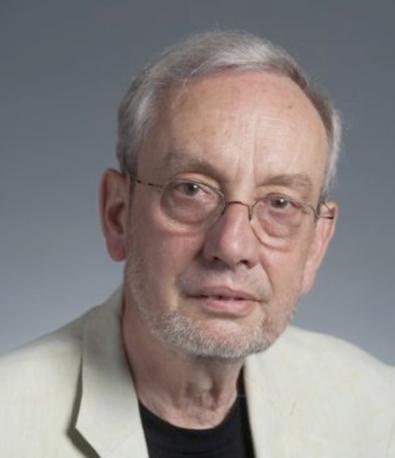
John Baillieul is Distinguished Professor at Boston University with joint appointments in Mechanical Engineering, Systems Engineering and Electrical & Computer Engineering. He directs experimental laboratories for real-time control of lightweight robotic systems and applies nonlinear control theory to complex multi-body, networked, and bio-inspired systems. Education: Ph.D., Harvard University Research Interests: Baillieul’s work spans robotics, nonlinear control, and networked systems. Early contributions resolved motion-planning for kinematically redundant manipulators; current themes include neuromimetic learning, vision-based navigation, and resilience of infrastructure networks such as power grids. His group couples rigorous geometric control with real-time hardware to create lightweight, high-performance robots and to uncover fundamental information limits in feedback systems. Recent Publication Trends (2021-2025): Over the past five years his output has concentrated on three synergistic directions: (i) neuromimetic and Koopman-based data-driven methods for estimating and controlling nonlinear systems, (ii) vision-based guidance and sparse optical-flow primitives for agile autonomous flight, and (iii) network-theoretic decomposition and information-rate studies for resilient operation of power grids and collective dynamics. Honors & Awards: IEEE Fellow 2025 Roger W. Brockett Control Systems Award Former Editor-in-Chief, IEEE Transactions on Automatic Control Affiliations & Service: He is a member of Boston University’s Center for Information and Systems Engineering (CISE), has served as Editor-in-Chief of IEEE Transactions on Automatic Control, and remains active in editorial and organizational roles across the IEEE control systems community.
Konstantin (Kostia) M. Zuevمشاهده پروفایل
استاد آموزشی
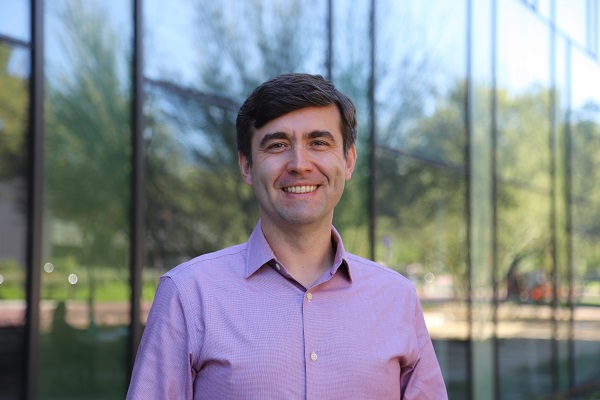
Dr. Konstantin (Kostia) M. Zuev serves as Teaching Professor in the Computing + Mathematical Sciences Department at California Institute of Technology , where he has made significant contributions to network science and computational statistics since 2016. His dual PhDs in Mathematics (Moscow State University, 2008) and Civil Engineering (HKUST, 2009) underpin his interdisciplinary research spanning differential geometry, stochastic simulation, and network dynamics. Education PhD in Mathematics, Lomonosov Moscow State University (2008) PhD in Civil Engineering, Hong Kong University of Science & Technology (2009) His research focuses on network science , particularly course-prerequisite networks and complex financial systems , with recent work extending to network navigability in cosmological models and rare event simulation. Over his career, he has developed innovative Bayesian inference methods and geometric preferential attachment theories while maintaining active collaborations across mathematics, physics, and biomedical domains. Recent publications highlight network analysis in education ( 2023 ), hyperbolic graph theory ( 2024 ), and pandemic-informed cancer mortality studies ( 2023 ). His 15 most recent articles demonstrate methodological innovations across disciplines including statistics, physics, finance, and cosmology. Scientific recognition includes Humboldt Research Fellowship (2021) Carver Mead Seed Fund Grant (2023) ASCIT Teaching Award (2018, 2023) Northrop Grumman Teaching Excellence Prize (2019) As Graduate Option Representative for Information and Data Sciences at Caltech and faculty advisor for multiple student organizations including the Caltech Karate Club and Caltech Chess Club , he actively bridges academic rigor with community engagement through outreach initiatives like the virtual math education channel and university math circles for K-12 students.
فقط ۷۵۰ نتیجه اول نمایش داده میشود. برای رسیدن به نتایج دقیقتر، جستوجو را با فیلترها محدودتر کنید.