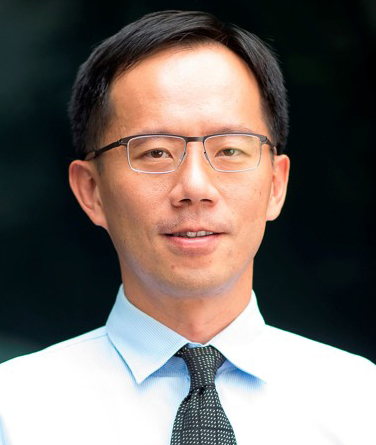
CHENG Shih-Fen is an Associate Professor of Computer Science at Singapore Management University (SMU) and a Principal Research Scientist at Amazon. He holds a PhD in Industrial and Operations Engineering from the University of Michigan and a BSE in Mechanical Engineering from National Taiwan University. His research focuses on modeling and optimization of complex systems in urban computing, decision-making, and transportation, with notable contributions to taxi fleet management, ride-hailing systems, and sustainable logistics. Research interests include Artificial Intelligence , Decision Optimization , Machine Learning , and Urban Sustainability . Notable achievements include prestigious awards from CIKM, AAMAS, and INFORMS. He has advised students such as Qian Shao and Pang Jin Tan, who received SMU Presidential Doctoral Fellowships. Key contributions include the Driver Guidance System (DGS) for taxis and patented taxi demand prediction models. Publications span top venues like IJCAI, AAAI, and Transportation Science. He is a Senior Editor of Electronic Commerce Research and Applications and actively contributes to professional communities like INFORMS and AAAI.
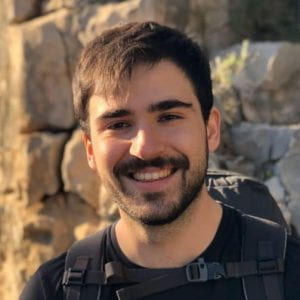
George Dasoulas is a Postdoctoral Researcher at Harvard University's Department of Biomedical Informatics, affiliated with the Zitnik Lab. He holds a PhD in Computer Science from École polytechnique in Paris, France, and previously worked at Huawei Technologies France. His research focuses on graph machine learning, particularly in biomedical applications and telecommunications, with contributions to graph neural networks (GNNs), attention mechanisms, and topological deep learning. Education: Ph.D., Computer Science (DaSciM group, LIX, École polytechnique); Diploma in Electrical & Computer Engineering (National Technical University of Athens). His work includes developing Lipschitz-normalized attention layers, parametrized graph shift operators, and modularity-aware graph autoencoders. He has been recognized with the 2022 Wojcicki and Troper Fellowship from Harvard's Data Science Initiative. Key Research Themes: Graph Representation Learning, Topological Neural Networks, Equivariant Learning, Multimodal Learning Applications: Biomedical Informatics, Telecommunications, Sustainable AI His articles emphasize scalable GNN architectures, graph-based unlearning strategies, and multimodal protein phenotyping. He has contributed to open-source projects like LipschitzNorm and PGSO, and actively publishes in top conferences (ICML, ICLR, NeurIPS).
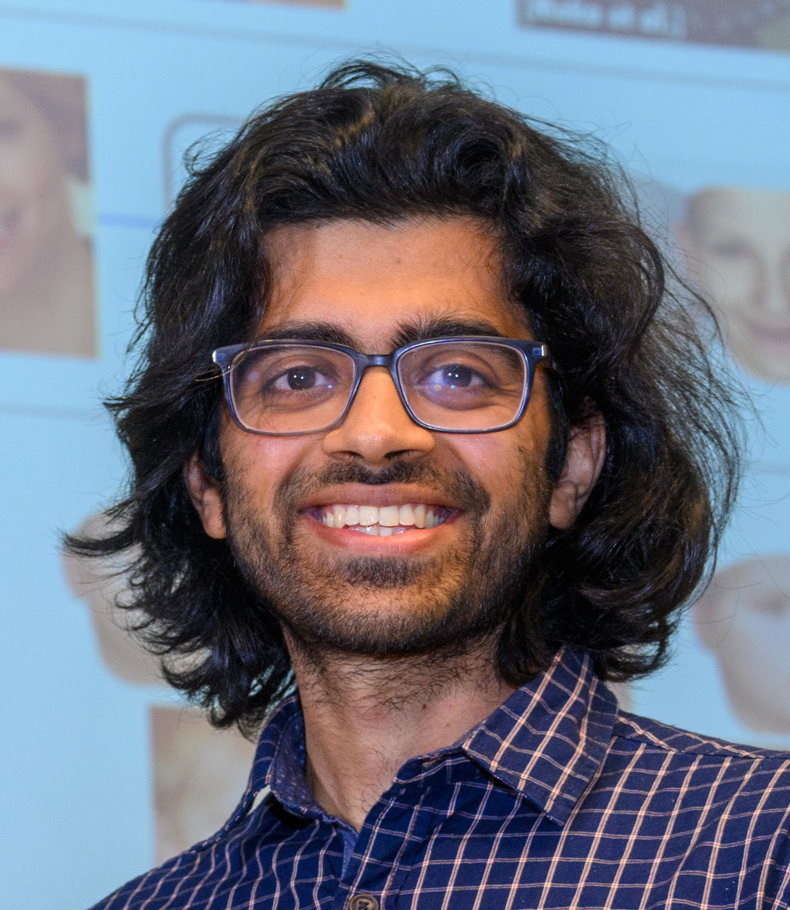
Ayush Tewari is an Assistant Professor at the University of Cambridge. Previously, he was a postdoctoral researcher at MIT CSAIL under Bill Freeman, Josh Tenenbaum, and Vincent Sitzmann, and completed his Ph.D. at the Max Planck Institute for Informatics under Christian Theobalt. His research focuses on visual perception, developing methods to infer 3D structured representations from images and videos, aiming to bridge the gap between human perceptual capabilities and machine learning systems. Key research interests include neural rendering, inverse rendering, 3D reconstruction, and generative models. Notable contributions include advancements in Neural Radiance Fields (NeRF), diffusion models for inverse problems, and human-centric perception studies. His work has been published in top venues such as SIGGRAPH, CVPR, ICCV, and NeurIPS. Recent research trends emphasize ambiguity-aware inverse rendering, stochastic inverse problem solving using diffusion models, and integrating forward models for 3D scene inference. His work on Diffusion with Forward Models (NeurIPS 2023) proposes a novel framework for solving inverse problems without direct supervision. Awards: Best Paper Honorable Mention at BMVC 2022 (VoRF: Volumetric Relightable Faces). Labs/Projects: Core contributor to the DFM (Diffusion with Forward Models) project, advancing 3D scene understanding via probabilistic methods.
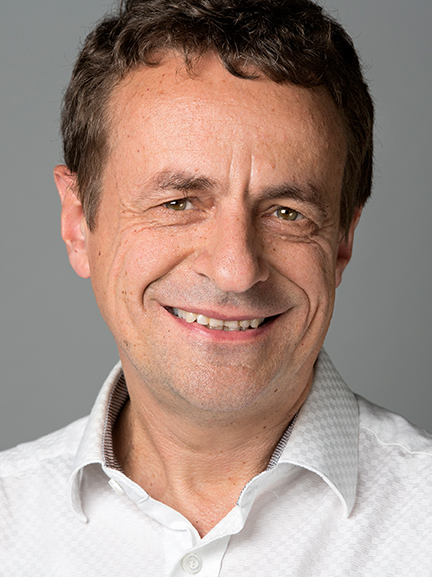
Bernd Sturmfels is a leading mathematician serving as Director of the Max Planck Institute for Mathematics in the Sciences in Leipzig since 2017. He is also Professor Emeritus of Mathematics, Statistics, and Computer Science at the University of California, Berkeley, and holds honorary professorships at the Technical University of Berlin and the University of Leipzig. His research bridges pure and applied mathematics, with foundational contributions to algebraic geometry, combinatorics, and computational biology. Education: Sturmfels earned dual Ph.D. degrees in 1987 from the University of Washington and Technische Universität Darmstadt, followed by an honorary doctorate from Goethe University Frankfurt in 2015 and additional honorary doctorates from the University of Bern (2023) and the University of Chicago (2024). Research Interests: His work spans algebraic geometry , combinatorics , commutative algebra , algebraic statistics , convex optimization , and computational biology . He explores deep connections between abstract algebraic structures and practical applications in statistics, optimization, and the life sciences. Publications and Trends: With over 300 research articles and 11 books, his recent work (2022–2025) focuses on advanced topics like Grassmannian geometry, tropical implicitization, quantum chemistry applications, and algebraic statistics. His research increasingly integrates computational methods with theoretical insights, addressing problems in machine learning, phylogenetics, and optimization. Awards and Honors: Sturmfels has received numerous prestigious awards, including: George David Birkhoff Prize in Applied Mathematics (2018) SIAM von Neumann Lecturership (2010) Humboldt Senior Research Prize (2007–2008) David and Lucile Packard Fellowship (1992–1997) Fellowships of the AMS and SIAM Membership in the Berlin-Brandenburg Academy of Sciences and Humanities Mentoring and Grants: He has supervised 60 doctoral students and numerous postdocs, with many securing positions at leading institutions. His mentoring philosophy emphasizes diversity and excellence, as highlighted in his Notices of the AMS article. Funding sources include the NSF, DARPA, and the German National Science Foundation (DFG). Labs and Teams: At the Max Planck Institute, he leads the Nonlinear Algebra group, fostering interdisciplinary collaboration between mathematics and the sciences. His team focuses on developing algebraic methods for data analysis, optimization, and theoretical physics.
Hanan Samet is a Distinguished University Professor in the Computer Science Department at the University of Maryland, College Park. He holds affiliations with the Center for Automation Research and the Institute for Advanced Computer Studies (UMIACS). His academic journey includes a PhD from Stanford University (1975) in Computer Science, following degrees in Engineering (UCLA) and Operations Research/Computer Science (Stanford). Affiliations: University of Maryland, College Park (since 1975) Roles: Professor, Founding Editor-in-Chief of ACM Transactions on Spatial Algorithms and Systems, Founder of ACM SIGSPATIAL Samet's research focuses on spatial data structures, spatial databases, GIS, computer vision, and information retrieval. His seminal work includes the Foundations of Multidimensional and Metric Data Structures , an award-winning book addressing spatial indexing and query optimization. He pioneered frameworks like NewsStand for map-based news exploration and Coronaviz for pandemic visualization. Key contributions span spatial synonyms for approximate search, SAND spatial browser for digital government, and trajectory analysis systems for aviation safety and urban mobility. His work bridges theory and practice, influencing databases, graphics, and geographic systems. Education: B.S. Engineering, UCLA M.S. Operations Research, Stanford M.S./Ph.D. Computer Science, Stanford Samet has advised numerous students and led NSF-funded projects on spatio-textual data, similarity search, and spreadsheet analysis. His honors include the ACM Paris Kanellakis Award (2011), IEEE Wallace McDowell Award (2014), and UCGIS Research Award (2009). His labs and teams focus on spatial algorithms, visualization, and GIS applications. Notable projects include VASCO (spatial index demo), MARCO (image databases), and CHOLERA (disease tracking).
Roberto Ghiselli Ricci is a Full Professor at Ca' Foscari University of Venice, affiliated with the Department of Environmental Sciences, Informatics and Statistics. His academic career includes extensive teaching and research in mathematical statistics and probability, with a focus on copula theory, aggregation functions, and econometric applications. He currently teaches courses such as Calculus, Linear Algebra, and Mathematics for Environmental Sciences. His research explores advanced topics in probability theory, including copula properties, fixed-point theorems, and axiomatic characterizations of mobility measures. Recent publications highlight contributions to fuzzy set theory, optimization penalties, and financial securities modeling. His work bridges mathematical rigor with practical applications in economics and environmental policy analysis. Publications trends emphasize interdisciplinary approaches, with notable contributions to Fuzzy Sets and Systems , International Journal of Game Theory , and Social Choice and Welfare . He actively participates in academic activities through courses, research collaborations, and advisory roles within his department.
Philip Dames is an Associate Professor in the Department of Mechanical Engineering at the College of Engineering, Temple University, where he leads the Temple Robotics and Artificial Intelligence Lab (TRAIL). His research focuses on enabling robots to operate effectively in complex, real-world environments to meet societal needs. Research Interests: His work spans robotics, probabilistic reasoning, multi-robot systems, active sensing, mapping, and target tracking. He develops algorithms for distributed coordination, uncertainty-aware navigation, and semantic perception, with applications in autonomous systems and human-robot interaction. Publication Trends: His recent publications (2020–2025) appear in top robotics journals like IEEE Transactions on Robotics and Autonomous Robots . The research emphasizes probabilistic methods, deep reinforcement learning, large language models for planning, and real-time navigation in dynamic and uncertain environments, reflecting a strong trend toward intelligent, adaptive robotic systems. Scientific Awards: NSF CAREER Award Advising and Grants: While specific advisees are not listed, he leads a research lab and has secured competitive funding such as the NSF CAREER award. He mentors students through research in robotics and advises on projects related to autonomous navigation and multi-robot systems. Labs and Teams: He directs the Temple Robotics and Artificial Intelligence Lab (TRAIL), which focuses on developing advanced robotic capabilities through collaborative, interdisciplinary research in perception, planning, and control.
Jacob Fish holds the Rosalind and John J. Redfern Jr. Chair in Engineering at Columbia University's Department of Civil Engineering and Engineering Mechanics within the Fu Foundation School of Engineering and Applied Science. His research program focuses on computational mechanics and multiscale modeling with applications across material science and structural engineering. His research interests center on developing advanced computational frameworks for multiscale analysis of heterogeneous materials. Key areas include computational continua, atomistic-to-continuum coupling, fracture mechanics of composites, and thermomechanical modeling of advanced materials. His work bridges theoretical developments with practical engineering applications through reduced-order modeling and data-physics integration. His recent publications demonstrate strong trends in multiscale computational engineering, particularly in homogenization techniques, phase-field fracture modeling, and data-driven approaches for material behavior prediction. The research spans from atomistic simulations to structural-scale analysis with emphasis on computational efficiency and physical fidelity. Fellow, U.S. Association for Computational Mechanics (USACM) Computational Structural Mechanics Award, 2005 Fellow, International Association for Computational Mechanics (IACM), 2002 National Science Foundation Presidential Young Investigator Award, 1992 Walter P. Murphy Fellowship, Northwestern University, 1986 Fish serves as Editor-in-Chief of the International Journal for Multiscale Computational Engineering and has secured numerous research grants focused on multiscale modeling of advanced materials. His collaborative network spans multiple institutions and disciplines, particularly in computational mechanics and material science. His laboratory develops computational frameworks for multiscale analysis with applications in structural engineering, material science, and biomechanics, focusing on efficient algorithms for complex material behavior prediction.
Reza Zadeh is a Computational Mathematics professor at Stanford University's School of Engineering and Founder & CEO of Matroid . He previously served as a Technical Advisory Board member for Databricks and leads the Spark Tutorial at Stanford. Research Interests: Specializing in Machine Learning and Distributed Computing , his work bridges theoretical mathematics with practical implementations in big data systems. Key focus areas include Optimization of Apache Spark 3D Convolutional Neural Networks Discrete Mathematics and Graph Theory Medical Imaging Applications Academic Contributions: His publications reveal trends across multiple disciplines: Adapting machine learning for medical diagnostics (2019-2022) Advancing distributed computing frameworks (2014-2016) Developing mathematical foundations for social networks (2009-2013) Creating scalable optimization algorithms (2014-2016) Scientific Awards: Best Paper Award runner-up at KDD 2016 Academic Leadership: He has taught SMACC Consulting and designed courses including CME 323: Distributed Algorithms and Optimization (2015-2024) and CME 305: Discrete Mathematics and Algorithms (2010-2017). His lectures cover graph theory, approximation algorithms, and spectral sparsification. Labs & Teams: Organized Spark Summit workshops and leads Scaled Machine Learning Conference . Collaborates with Stanford's ICME computational consulting services.
Dominic Edelmann is a researcher at Heidelberg University, Germany, specializing in mathematical statistics and its applications in biostatistics and high-dimensional molecular data. His work bridges theoretical statistics and biomedical research, particularly in developing and applying distance-based dependence measures. Research Interests: His research centers on distance correlation , survival analysis for high-dimensional data , epigenetic data analysis , and machine learning . He investigates nonlinear relationships in complex datasets, with applications in oncology and molecular biology. The recent publications show a strong trend in extending distance correlation methods to survival and competing risks data, as well as time series and high-dimensional settings. His work combines rigorous mathematical foundations with practical applications in biomedicine. Scientific Funding: DFG Grant "dCortools: Distanzkorrelationsverfahren zur Erkennung Nichtlinearer Zusammenhänge in Hochdimensionalen Molekularen Daten" (2019–present) Academic Supervision: He has co-supervised Master’s theses on bias correction in distance correlation and regression models for bounded responses in DNA methylation studies, indicating active involvement in training the next generation of statisticians. He holds a Dr. rer. nat. in Mathematics from Heidelberg University (2015) and was a research assistant there during his doctoral studies. His work continues to be centered at Heidelberg University, contributing to both theoretical and applied statistical science.
Marius Huber is a Postdoctoral Researcher at the Digital Linguistics Lab, University of Zurich, working with Prof. Lena Jäger on the SNSF-funded ProPoSaL project. His research develops topological data analysis methods for linguistic data and natural language processing applications. Education: PhD in Mathematics, Boston College (supervised by Joshua Greene) His research bridges low-dimensional topology and computational linguistics, specializing in topological data analysis, knot theory, and their applications to NLP. Current work focuses on translating abstract mathematical frameworks into practical tools for analyzing linguistic structures through persistent homology and clustering algorithms. While his foundational publications explore ribbon cobordisms in 3-manifolds, his recent trajectory demonstrates a strategic pivot toward interdisciplinary applications where topological methods solve complex problems in computational linguistics and machine learning. Dr. Huber secures research funding through the SNSF Sinergia grant for ProPoSaL and teaches graduate courses including Mathematical Foundations of Computational Linguistics (Fall 2024), Bayesian Statistics (Spring 2024), and Linear Algebra for Machine Learning (Spring 2023). He leads software development for the Digital Linguistics Lab, creating open-source topology tools including DowkerRipsComplex, DowkerComplex, AuToMATo, and SoaPy – the latter enabling computation of Heegaard Floer invariants for Seifert fibered spaces.
Chigo Okonkwo is Full Professor and Chair of Secured Ultra High Capacity Transmission at the Department of Electrical Engineering , Eindhoven University of Technology. He leads the high-capacity optical transmission laboratory at the Institute for Photonics Integration and contributes to the Center for Quantum Materials and Technology Eindhoven (QT/e) . Academic Qualifications: MSc in Telecommunications and Information Systems, University of Essex (2002) PhD in Optical Signal Processing, University of Essex (2010) Research Interests: Professor Okonkwo focuses on: Maximizing capacity of single-mode fiber systems through advanced-coded modulation and Probabilistic/Geometrically shaped signals Developing Space Division Multiplexing (SDM) systems for Petabit/s transmission using multi-mode/multi-core fibers Quantum secure communications and cryptographic protocol development Optical vector network analyzer (OVNA) technology for SDM fiber characterization Free-space optical link deployment in urban environments Low-complexity digital signal processing algorithms Recent Publications Trends: His 15 most recent articles (2023-2025) demonstrate active research in: Quantum-classical network integration Extreme capacity fiber transmission (Petabit/s systems) Machine learning for optical diagnostics SDM fiber measurement technologies Hybrid QKD-PQC security frameworks Free-space optical urban communication Scientific Awards: Asia Communications and Photonics Conference (ACP) 2018 Best Paper Award European Conference on Optical Communications (ECOC) 2018 Student Paper Award Optica Student Paper Awards (2022) Corning Outstanding Student Paper Competition Finalist (2025) Advisory & Collaborations: Advisor to 8+ researchers including Menno van den Hout, Vincent van Vliet, and Thomas Bradley Technical Program Committee Member, European Conference on Optical Communications (ECOC) since 2014 Sub Committee Chair for Digital Signal Processing track at ECOC 2018 General Chair for OSA Advanced Photonics Congress on Signal Processing for Photonics Collaborates with EU projects (HOMTech, PhotonDelta) and industrial partners Co-founder and Chief Technology Officer of CUbIQ Technologies Laboratory & Infrastructure: Maintains the world-class High Capacity Optical Transmission Lab at TU/e, featuring: Advanced SDM fiber testing equipment Quantum communication research infrastructure Free-space optical link experimental setups Multi-core fiber amplification systems Coherent transmission testbeds Machine learning-enabled diagnostic tools
Leonhard Summerer is an Associate Professor at the Faculty of Mathematics, Department of Mathematics . His research primarily focuses on Diophantine Approximation , Geometry of Numbers , and Parametric Approximation . His work explores the Approximation Property in parametric settings, Lattice Theory , and Linear Dependence in number theory. Recent publications include studies on Jarník’s identity, simultaneous approximation to multiple reals, and geometric interpretations of number-theoretic problems. He has authored numerous peer-reviewed articles and contributed chapters to educational books such as 77-mal Mathematik für Zwischendurch , emphasizing mathematical outreach and pedagogical innovation . Active in academic discourse, he has delivered talks on topics like Packings and Tilings in Z and Simultane Approximation m reeller Zahlen since 2006.
Giovanni Camanni is an Associate Professor at the Department of Chemical and Geological Sciences, University of Modena and Reggio Emilia. His work focuses on structural geology, fault mechanics, and seismic hazard assessment, with extensive research in fault segmentation, reactivation processes, and 3D geological modeling. Research Interests: Structural geology, tectonic inheritance, fault kinematics, petrophysical reservoir characterization, and volcano-tectonic processes. Teaching: Courses on Seismic Sources and Microzonation , Structural Geology and Tectonics , and Geological Survey , covering advanced fault mapping, displacement analysis, and field methodologies. Techniques: Utilizes 3D seismic reflection data, photogrammetry, unsupervised learning algorithms (DBSCAN/OPTICS), and U-Pb dating for fault and reservoir studies. Applications: Findings contribute to seismic risk mitigation, fluid flow prediction in fractured reservoirs, and urban subsidence management, particularly in southern Italy and Taiwan. Recent Publications (2020-2025): Advanced understanding of fault zone architecture in dolostones, displacement transfer mechanisms in relay zones, Wilson cycle fault reactivation, and multidisciplinary approaches to ground deformation studies.
Ali Bozkurt is a Professor in Mathematics Education at the Gaziantep Education Faculty , Gaziantep University. His academic career spans over two decades, with previous roles including Associate Professor (2013-2019) and Assistant Professor (2008-2013) at the same institution. He holds a PhD (2007), MS (2001), and BS (1999) in Mathematics Education from Selçuk University. Research Focus: Mathematics education, teacher training, algebraic/geometric reasoning, technology integration, STEM education, and educational activity design. Key Projects: Led TÜBİTAK and higher education institution-funded projects on innovative mathematics pedagogy, technology-enhanced classrooms, and quality of mathematics instruction. Publications include 31 books/chapters and 59 articles, emphasizing cognitive demand in textbooks, ethical decision-making in teaching, and activity evaluation frameworks. His work has been presented at international conferences like ICME-15 and ERME. He collaborates with scholars such as Mehmet Fatih Özmantar and Begüm Özmuşul on algebraic habits and geometric reasoning. Scientific Contributions: Developed the Activity Evaluation and Feedback Tool (AEFT) and analyzed mathematics instruction quality in Turkey and Syria. Advising: Mentors graduate students and pre-service teachers, particularly in algebraic/geometric reasoning and classroom practices.