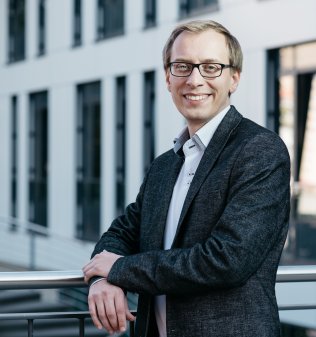
Professor Christoph Thäle is a faculty member in the Faculty of Mathematics at Ruhr-Universität Bochum . His research focuses on stochastic geometry, geometric probability, limit theorems for random structures, and applications of Malliavin calculus and Stein's method. He has supervised numerous PhD and master's students, including Tristan Schiller, Nils Heerten, and Kathrin Meier. His work bridges theoretical probability with geometric analysis, particularly in high-dimensional spaces. Research Interests: Stochastic Geometry, Convex Geometry, Limit Theorems, Random Structures in High Dimensions Team Members: Postdocs (Panagiotis Spanos, Ercan Sönmez), PhD students (Philipp Tuchel, Bahareh Yousefi), and collaborators like Anna Gusakova and Zakhar Kabluchko. Key contributions include studies on random polytopes, Poisson hyperplane tessellations, and geometric analysis in hyperbolic spaces. His recent publications (2023–2025) explore intersection probabilities, radial spanning trees, and large deviations in high-dimensional settings. Thäle's research has been supported by collaborations with institutions like the University of Duisburg-Essen and the University of Osnabrück.
Sam Corson is a Ramon y Cajal Fellow (Research Fellow) at the Technical University of Madrid, specializing in the construction of unconventional mathematical structures at the intersection of group theory, topology, and set theory. His work resolves longstanding conjectures, such as the Cannon-Conner problem on fundamental groups of the harmonic archipelago and Griffiths double cone, and introduces novel objects like Artinian groups of arbitrary cardinality and Jonsson groups satisfying Babai’s infinitary edge orbit conjecture. His research interests emphasize automatic continuity (proving open kernels for homomorphisms from topological groups to hyperbolic/braid groups), wild topology (analyzing fundamental groups of non-locally simply connected spaces), and set-theoretic group theory (constructing groups under ZF axioms without choice). Key contributions include models of ZF where metric spaces fail paracompactness or torsion-free abelian groups lack bi-orderings, demonstrating deep interactions between logic and algebra. Recent publications (2021–2025) reveal a trend toward profinite rigidity in Coxeter groups, cardinality constraints in infinite groups, and geometric realizations of permutation actions. His work spans journals like Bulletin of the London Mathematical Society and Proceedings of the American Mathematical Society , often coauthored with Saharon Shelah and Olga Varghese. Scientific recognition includes: Ramon y Cajal Fellowship (prestigious Spanish postdoctoral award) With an Erdős number of 2, Corson collaborates extensively but has no documented advisees, teaching roles, or grants. His research operates within pure mathematics frameworks without applied lab structures or institutional teams beyond coauthor networks.
Guillaume Ducoffe is an Associate Professor at the Faculty of Mathematics and Informatics, University of Bucharest, Romania, and a Senior Research Scientist at the National Institute of Research and Development in Informatics (I.C.I.), Romania. He is also affiliated with a joint research team between ICI and the Research Institute of the University of Bucharest (I.C.U.B.). Previously, he was a PhD student at Université Côte d'Azur, France, under the supervision of David Coudert, within the COATI project-team at Inria Sophia Antipolis. PhD, Université Côte d'Azur, France (2016) Master's Thesis, MPRI-ENS Cachan (2013) His research centers on algorithmic graph theory , with emphasis on computation in large graphs , including parameterized algorithms for problems like Diameter and Maximum Matching. He investigates metric tree-likeness in real-life networks through Gromov hyperbolicity, which has implications for routing efficiency and congestion. His work extends to information propagation using game-theoretic models such as coloring and hedonic games, and to online targeting detection , where he develops theoretically sound algorithms to uncover sensitive attribute targeting on the web via reductions to PAC learning of k-juntas. He also explores combinatorial topics like proper connectivity and Randic indices with applications in cryptography and chemistry. The analysis of his recent publications reveals a strong trend in theoretical computer science , particularly in the design and complexity of graph algorithms, structural graph properties, and their applications in network science and privacy. His work bridges pure graph theory with practical concerns in data centers, web transparency, and social networks. Guillaume Ducoffe has made significant contributions to both journal and conference literature, publishing in venues such as Discrete Applied Mathematics , SIAM Journal on Discrete Mathematics , ACM SIGMETRICS , and USENIX Security . His research is highly interdisciplinary, combining insights from algorithms, game theory, and network analysis. He actively supervises and mentors students, though specific names are not listed in the provided materials. He has been involved in research grants, including a postdoc grant from I.C.U.B., and has collaborated with prominent researchers such as David Coudert, Nicolas Nisse, Augustin Chaintreau, and Roxana Geambasu. His teaching includes core courses such as Data Structures and Algorithms , Advanced Graph Algorithms , and Advanced Programming Techniques at the University of Bucharest. Guillaume Ducoffe is a key member of collaborative research initiatives, including the joint ICI-I.C.U.B. team and the former COATI project at Inria. His work continues to advance the theoretical foundations of graph algorithms while addressing pressing issues in web transparency and network design.
Alessio Borzì is a postdoctoral researcher in the Nonlinear Algebra Group at the Max Planck Institute for Mathematics in the Sciences (MPI MiS), led by Bernd Sturmfels. He completed his PhD at the University of Warwick under Diane Maclagan, following a Bachelor's and Master's at the University of Catania under Marco D'Anna, with additional studies at the Scuola Superiore di Catania. His research focuses on Combinatorics, Algebraic Geometry, Commutative Algebra, and Tropical Geometry, with particular interests in matroids and their interactions with toric geometry. Borzì’s work spans theoretical and computational aspects, including contributions to software development such as the TropicalToric Macaulay2 package for toric intersection theory. His recent publications address topics like matroid quotients, Lascoux polynomials, and finite graph structures, reflecting a blend of algebraic and combinatorial methodologies. Publications highlight interdisciplinary approaches, from tropical flag varieties to cyclotomic polynomials in numerical semigroups. Despite no awards listed, his active research profile includes collaborations on preprints and peer-reviewed articles in journals like Journal of Software for Algebra and Geometry and Electronic Journal of Combinatorics . As a postdoctoral researcher, Borzì contributes to the vibrant scientific community at MPI MiS, where he engages with nonlinear algebra and its applications, supported by his diverse academic background and computational expertise.
Alberto Espuny Díaz is a postdoctoral researcher at the Institute of Computer Science, Faculty of Mathematics and Computer Science, Universität Heidelberg, where he is part of the Theoretical Computer Science and Discrete Mathematics group led by Prof. Felix Joos, supported by a DFG-funded project. He previously held a postdoctoral position at TU Ilmenau in the Large Networks and Random Graphs group under Univ.-Prof. Dr. Yury Person. He completed his PhD at the University of Birmingham under the supervision of Daniela Kühn and Deryk Osthus. Starting in September, he will take up a position as professor agregat at Universitat de Barcelona. Research Interests: Alberto's research lies at the intersection of combinatorics and theoretical computer science. His primary focus is on extremal and probabilistic combinatorics , with significant work in random graphs , random geometric graphs , graph resilience , Hamiltonicity , spanning structures , and additive combinatorics . He investigates threshold phenomena, embedding problems, and structural properties of graphs under random perturbations. The most recent publications reveal a strong trend in analyzing the resilience and structural richness of random and perturbed graphs, particularly focusing on Hamilton cycles, spanning trees, and graph factors. His work frequently combines probabilistic methods with deep structural insights from extremal graph theory, often targeting sharp thresholds and robustness in discrete systems. Scientific Awards: Ramon Llull Prize (2024) for PhD thesis Best Pure Maths Poster Award, University of Birmingham (2019) Second Best Poster Award, LSE (2019) Third Best Poster Award, LSE (2018) Advising and Grants: While no formal students are listed, Alberto has supervised dissemination and editorial work through student journals. He is currently supported by a DFG-funded project at Heidelberg. He has been actively involved in organizing academic events and committees, including serving on the grants committee for BYMAT and organizing the Combinatorics Research Seminar in Heidelberg. Labs and Teams: He is a member of the Theoretical Computer Science and Discrete Mathematics group at Universität Heidelberg and previously worked in the Large Networks and Random Graphs group at TU Ilmenau. He is also affiliated with the Young Mathematicians community through the Real Sociedad Matemática Española and has coordinated national student events.
Irene Parada is an Assistant Professor and Serra Húnter Fellow at the Universitat Politècnica de Catalunya (UPC BarcelonaTech), Spain, where she is affiliated with the Department of Computer Science in the College of Mathematics and Computer Science. She is a member of the Research Group on Discrete, Combinatorial and Computational Geometry, contributing to both theoretical and applied aspects of geometric algorithms. Her academic background includes a PhD in Computer Science from Graz University of Technology (2019), a Master’s in Advanced Mathematics and Mathematical Engineering from UPC (2015), and a Bachelor’s in Mathematical Engineering from Universidad Complutense de Madrid (2014). She has held postdoctoral positions at the Technical University of Denmark, TU Eindhoven, and Utrecht University. Her research lies at the intersection of computational geometry, graph drawing, and algorithmic robotics. She investigates geometric graph representations, reconfiguration of modular robots, crossing numbers, and motion planning algorithms. Her work combines theoretical depth with practical applications in robotics and visualization. Her recent publications, appearing in top venues like SoCG, GD, ESA, and Algorithmica, reveal a strong trend toward geometric graph theory, reconfiguration problems, and algorithmic complexity. Topics include optimal compaction of sliding cubes, upward planar embeddings, and Fréchet-based trajectory analysis. Best paper award at EuroCG 2022 Best paper award at ICALP 2021 Excellent Course Evaluation at TU Eindhoven (2020/2021) She has advised and collaborated with numerous researchers in the field, though no formal students are listed. She has taught courses in Numerical Computing, Algorithms, Data Structures, and Motion in Robotics at UPC, Utrecht University, and TU Eindhoven. She has not received public mention of grants, but her Serra Húnter Fellowship and Margarita Salas postdoctoral position indicate competitive funding support. She is actively involved in the Research Group on Discrete, Combinatorial and Computational Geometry at UPC and collaborates extensively with researchers across Europe, particularly in Austria, the Netherlands, and Germany.
Dr.-Ing. Alexander Braun serves as Senior Vice President Digitalization and IT Systems and Chief Information Officer (CIO) at the Technical University of Munich (TUM), while also leading the Digital Twinning in the Built Environment research group. He is affiliated with the Chair of Computing in Civil and Building Engineering within the Department of Civil, Geo and Environmental Engineering at TUM's School of Engineering. Dr. Braun's research focuses on the intersection of construction engineering, digital technologies, and artificial intelligence. His primary areas of expertise include Digital Twinning, Building Information Modeling (BIM), construction progress monitoring, point cloud processing, and computer vision applications in construction. His work bridges the gap between theoretical research and practical implementation in the construction industry, with a strong emphasis on automation and data-driven approaches. His extensive publication record demonstrates a consistent focus on advancing digital construction technologies. Recent research has centered on AI-enhanced digital twinning, semantic modeling from point clouds, construction process analysis through computer vision, and knowledge representation for construction sites. These efforts have resulted in numerous high-impact publications in top journals including Automation in Construction and Advanced Engineering Informatics . As an educator, Dr. Braun has taught courses such as "Bau- und Umweltinformatik 1" and "Bau- und Umweltinformatik Ergänzungsmodul" at TUM, contributing to the development of future construction informatics professionals. His supervisory role extends to numerous Bachelor's and Master's theses, reflecting his commitment to academic mentorship. Senior Vice President Digitalization and IT Systems at TUM Chief Information Officer (CIO) at TUM Group Lead for Digital Twinning in the Built Environment Researcher in Construction Informatics since 2013 Dr. Braun actively contributes to the academic community as a reviewer for prestigious journals including Automation in Construction , Advanced Engineering Informatics , and Visualization in Engineering . His international research collaborations include a visiting researcher position at CyberBuild (University of Edinburgh) with Dr. Frédéric Bosché in May 2019.
Christian Mönch is a Researcher in the Stochastics Group at the Johannes Gutenberg-Universität Mainz , where he leads the DFG-funded project Inhomogeneous long-range percolation beyond the weak decay regime within Priority Programme 22655 Random Geometric Systems . He has held academic positions including acting Professor at the University of Augsburg (2022/23), postdoctoral roles with Lisa Hartung and Frank Aurzada, and lecturing at the University of Mannheim. Education: PhD in Mathematics (2013, University of Bath, supervised by Peter Mörters) Research Interests: Probability theory at the intersection of statistical physics, analysis, and combinatorics, focusing on Directed scale-free networks Inhomogeneous percolation models Persistence probabilities Stochastic processes on random graphs Key Projects include: Analyzing infinite clusters in long-range percolation with dependencies Directed network dynamics and their irreversible behavior Soft constraint DAG models for distributed ledgers Resolute voter models with heavy-tailed clock distributions Collaborations span institutions such as TU Darmstadt, University of Augsburg, and WIAS Berlin. His work has been published in journals like Probability Theory and Related Fields , Stochastic Processes and their Applications , and Electronic Journal of Probability .
Marta Panizzut is currently an Associate Professor in the Algebra Group at the Department of Mathematics and Statistics, UiT - The Arctic University of Norway. She has previously held positions as a research group leader at the Max Planck Institute for Mathematics in the Sciences, a substitute professor at Universität Osnabrück, and a postdoc at TU Berlin in Discrete Mathematics/Geometry and Nonlinear Algebra research groups. Her research focuses on algebraic geometry , tropical geometry , and computational aspects of these fields. She investigates tropical curves/surfaces, matroids, realization spaces of polytopes, lattice polytopes, and their triangulations. Her work bridges geometric, combinatorial, and computational approaches. Recent publications (2025-2016) span topics like del Pezzo geometry, Khovanskii bases, tropical bitangents, cubic surfaces, Brill-Noether theory, graph gonality, and matroid theory. Key collaborations include Bernd Sturmfels, Michael Joswig, and other researchers in computational algebraic/tropical geometry.
Prof. Dr. Volker Kaibel is a full-time Professor for Mathematical Optimization at Otto-von-Guericke Universität Magdeburg since 2007. His research focuses on Discrete Optimization , Polyhedral Combinatorics , and Extended Formulations , with applications in combinatorial optimization , quantum computing , and genomic epidemiology . His recent work includes studies on Polytope Extensions with Linear Diameters , Steiner Cut Dominants , and Scale-Free Spanning Trees . Publications span journals like SIAM Journal on Discrete Mathematics , Mathematics of Operations Research , and Journal of Computational Biology , emphasizing theoretical advancements in mathematical programming and polyhedral theory . Key projects include the long-running Mathematical Complexity Reduction (2017–2026) and earlier DFG-funded initiatives on Extended Formulations and Orbitopes . His collaborations extend to institutions like the Zuse-Institute Berlin and DFG Research Center MATHEON .
Anna Gusakova is a Junior Professor at the Institute for Mathematical Stochastics, University of Münster, Germany. Her research lies at the intersection of stochastic geometry , probability theory , and high-dimensional analysis , with a focus on random polytopes, tessellations, and concentration phenomena. Education: She completed her Ph.D. under the supervision of Prof. Dr. Friedrich Götze, with a thesis titled Application of Probability Methods in Number Theory and Integral Geometry . Research Interests: Her work spans a broad range of topics including: Stochastic geometry of random polytopes and tessellations High-dimensional probability and concentration inequalities Poisson processes and their geometric applications Convex and integral geometry Number-theoretic aspects of random structures Publications Overview: Her recent publications demonstrate a deep engagement with theoretical foundations and asymptotic analysis in stochastic geometry. Notable contributions include studies on the β-Delaunay tessellation , spherical convex hulls , and concentration inequalities for Poisson functionals . These works often involve advanced tools from integral geometry, functional analysis, and probabilistic limit theory. Teaching and Mentorship: She teaches a variety of courses including master's seminars on stochastic geometry, probability theory, and high-dimensional probability. Her teaching emphasizes both theoretical depth and practical applications in modern probability and geometry. Collaborations and Grants: While specific grant details are not provided, her extensive collaboration network includes researchers like Christoph Thäle, Zakhar Kabluchko, and Florian Besau, indicating active participation in international research projects. Laboratory and Team: She is associated with the working group in Mathematical Stochastics at the University of Münster, contributing to a vibrant research environment in probability and geometry.
Ariel Kulik is a Senior Lecturer in the Department of Industrial Engineering and Management at Ben-Gurion University. He previously held postdoctoral positions at the Technion (hosted by Roy Schwartz) and CISPA (hosted by Dániel Marx). His research focuses on parameterized approximation algorithms, polynomial-time approximation algorithms for resource allocation problems (e.g., knapsack, bin packing, submodular maximization), and algorithmic optimization under constraints. Education: Ph.D. (2021) in Computer Science from Technion IIT, supervised by Hadas Shachnai; M.Sc. (2011) in Computer Science from Technion, Summa Cum Laude; B.A. (2005) in Mathematics and Computer Science from The Open University, Summa Cum Laude. Key research areas include parameterized complexity, approximation algorithms for combinatorial optimization problems, and submodular function maximization. His work often addresses knapsack variants, matroid optimization, and the development of efficient approximation methods under budget or structural constraints. Notable contributions include advancements in FPTAS/FPTAS for budgeted matroid independent sets, parameterized approximation techniques for vector knapsack, and exponential-time approximation algorithms leveraging novel algorithmic frameworks. His research bridges theoretical foundations with practical algorithm design for resource allocation challenges. He has advised Ph.D. student Ilan Doron-Arad (joint with Hadas Shachnai). His publications span top venues in theoretical computer science and optimization, including FOCS, SODA, ICALP, and Algorithmica.
Dr. Henry Förster is a researcher at the Algorithmics Department, Wilhelm-Schickard Institute of Computer Science, University of Tübingen, specializing in theoretical computer science with a focus on graph algorithms, computational complexity, and information visualization. He moved to TUM Campus Heilbronn in 2022 while continuing his role in Tübingen. Current affiliation: University of Tübingen School: Faculty of Mathematics and Natural Sciences Department: Department of Computer Science Academic rank: Researcher Research Interests His work centers on graph drawing, algorithm design, and visualization techniques for relational data, with applications in engineering, economics, and everyday scenarios like metro-map design. He explores geometric representations of graphs, crossing resolution, and dynamic visualization parameters. Education Dr. rer. nat. (summa cum laude), University of Tübingen (2016–2020) M.Sc. in Computer Science (1.4), University of Tübingen (2014–2016) B.Sc. in Engineering & Computing (1.8), TU Bergakademie Freiberg (2010–2014) High School Diploma, High School "Am Markt" Hettstedt (2010) Scientific Awards First Place, GD Contest 2020 Live Challenge (Automatic Category) First Place (Automatic and Manual Categories), GD Contest 2019 Winner, Algorithms Travel Awards 2019 First Place, GD Contest 2018 (Automatic Category) Teaching and Service He has taught lectures, seminars, and exercises on topics such as algorithmics, graph theory, graph databases, and computational complexity since 2016. He served as a PC member for GD2022 and advocated for SafeToC initiatives.
Alheydis Geiger is a Researcher at the Max Planck Institute for Mathematics in the Sciences (MPI MiS) in Leipzig, Germany. Since June 2025, she has led an independent DFG-funded project within the priority program "Combinatorial Synergies." Previously, she held post-doctoral positions in the Non-Linear Algebra Group (2022-2023) and math software group (2023-2025) at MPI MiS under Bernd Sturmfels and Michael Joswig, respectively. Her academic background includes: PhD in Mathematics from Universität Tübingen (2022), supervised by Prof. Hannah Markwig Master of Science from Universität Tübingen (2020), supervised by Prof. Hannah Markwig Master of Science from University of Warwick (2018), supervised by Prof. Diane Maclagan Bachelor of Science from Universität Tübingen (2016) Geiger specializes in tropical geometry, investigating its intersections with algebraic geometry, enumerative geometry, combinatorics, polyhedral geometry, and matroid theory. Her work emphasizes computational approaches to geometric counting problems, particularly in real algebraic contexts. Key contributions include tropical enumerations of bitangents to quartic curves and lines on cubic surfaces. Analysis of her 2020-2025 publications reveals consistent focus on tropical enumerative geometry, with increasing emphasis on real tropical methods and computational implementations using tools like polymake. Collaborations frequently involve MPI MiS researchers including Marta Panizzut and Bernd Sturmfels, spanning theoretical advances in del Pezzo surfaces, matroid theory, and binodal surface geometry. She currently directs a DFG-funded independent research project on combinatorial synergies in tropical geometry. No student advising roles or additional grants are documented in available sources. Geiger actively contributes to MPI MiS research groups, notably the Non-Linear Algebra Group and math software development initiatives, participating in conferences, workshops, and summer schools related to nonlinear algebra and tropical methods.
Prof. Dr. Matthias Erbar is a faculty member in the Faculty of Mathematics at Bielefeld University, where he leads the research group AG Erbar. His work is centered on mathematical analysis, with a focus on optimal transport, gradient flows, and discrete geometric analysis. He is affiliated with the Department of Mathematics and maintains an active research profile with numerous publications in top-tier journals. His research interests lie at the intersection of analysis, probability, and geometry. He investigates optimal transport on discrete and continuous spaces, gradient flow structures in PDEs and stochastic processes, Ricci curvature on metric measure spaces and graphs, and functional inequalities such as Poincaré and logarithmic Sobolev inequalities. His work often employs entropy-based methods and explores the geometric implications of curvature conditions in non-smooth settings. The recent publications show a consistent trend toward understanding geometric and analytic properties of discrete systems, including graphs, Markov chains, and configuration spaces. There is a strong emphasis on formulating continuous concepts like Ricci curvature and gradient flows in discrete settings, enabling applications in probability, statistical mechanics, and numerical analysis. The work frequently involves collaboration with leading researchers in the field. Scientific Awards: No awards explicitly mentioned in the provided text. Prof. Erbar advises doctoral students and leads an active research group (AG Erbar), suggesting engagement in graduate supervision and collaborative research. While specific grants are not listed, his publication output and collaborations imply sustained research funding. He has co-authored papers with researchers across Europe, indicating international collaboration and academic leadership. He is the principal investigator of AG Erbar , a research group within the Faculty of Mathematics at Bielefeld University. The group focuses on analysis and probability, particularly in the context of optimal transport and discrete geometry. The group likely includes PhD students and postdoctoral researchers, contributing to the broader research environment in mathematical analysis at Bielefeld.