Günther Hörmann is an Associate Professor at the Faculty of Mathematics, Department of Mathematics, University of Vienna. With an academic career spanning from 1995 to present, he has established himself as a prominent researcher in mathematical analysis with particular expertise in generalized functions, microlocal analysis, and partial differential equations. His research interests span several interconnected areas of mathematical analysis and its applications: Generalized functions and Colombeau algebras Microlocal analysis and wavefront sets Partial differential equations, particularly wave equations Mathematical physics applications in quantum field theory Geophysical modeling and earth deformation Non-smooth geometry and regularization techniques Hörmann's scholarly output demonstrates a consistent focus on developing rigorous mathematical frameworks for analyzing differential equations with singular coefficients or data. His work often bridges pure mathematical theory with applications in physics, particularly in quantum mechanics, relativity, and geophysics. A distinctive feature of his research is the application of generalized function theory to problems that involve singularities or low regularity conditions. His publication record shows remarkable productivity across nearly three decades, with significant contributions in both theoretical mathematics and its applications. The interdisciplinary nature of his work is evident in collaborations across mathematics, physics, and even biomedical research as seen in his 2023 prostate cancer study.
Razvan Anisca is a Professor in the Department of Mathematical Sciences at Lakehead University, specializing in Geometric Functional Analysis . He has held this position since 2015 and previously served as Department Chair (2013-2017, 2021-2023) and Associate/Assistant Professor since 2003. His research focuses on Banach spaces, Hilbert spaces, and their geometric properties. PhD, University of Alberta (2002) BSc, University of Bucharest (1997) Recent publications highlight his work on: Ergodicity in Hilbert spaces (2020, 2023) Arithmetic sums of Cantor sets (2009, 2023) Complex structures in Banach spaces (2003, 2017) Approximation properties in functional spaces (2012) He co-organized a Banff International Research Station (BIRS) workshop on Banach space theory in 2012.
Riccardo Marin is a Postdoctoral Researcher at the Technical University of Munich (TUM), affiliated with the School of Computation, Information and Technology and the Computer Vision Group . His research focuses on Spectral Shape Analysis , 3D Shape Matching , Geometric Deep Learning , and Virtual Humans . PhD from University of Verona Postdoctoral experience at GLADIA (Sapienza University of Rome) and Tuebingen University's AI Center His work bridges geometric modeling and deep learning, with notable contributions to neural surface fields, diffusion-based avatar creation, and scalable 3D human registration. He has authored publications in top venues like CVPR, ECCV, and NeurIPS, with a focus on geometric consistency and implicit representations in 3D vision. Scientific awards : Humboldt Research Fellowship Marie-Curie Postdoctoral Fellowship ELLIS Membership His research often involves collaboration with institutions such as MPI-INF and Tuebingen AI Center, with GitHub repositories like NICP, Diff-FMAPs-PyTorch, and FARM demonstrating his technical contributions in spectral analysis and 3D reconstruction.
Dr. Yuan He serves as Lecturer (Teaching) at UCL Institute for Global Prosperity within The Bartlett Faculty of the Built Environment, University College London. She leads the MSc Global Prosperity program and co-directs the Asian Prosperity Hub, focusing on feminist democracy and development trajectories in China, India, and South Korea. Her educational foundation includes: PhD in Development Studies, University of Cambridge MPhil in Development Studies, University of Cambridge MA in Industrial Economics, Nanjing University BA in International Applied Social Sciences, Nanjing University Her research critically examines how women's political participation drives structural change in Asian authoritarian contexts, challenging purely economic development models. She documents everyday politics through fieldwork in rural India and China, emphasizing prosperity beyond GDP metrics. Recent publications unexpectedly bridge social sciences and computational methods, featuring machine learning applications in control theory and safe reinforcement learning—suggesting emergent interdisciplinary collaborations. Recognition includes: UKIERI funding award (2024) for 'Building Transformative Research Capabilities of Master's Students in Sustainability' with IIT Delhi She mentors MSc dissertation students while securing international grants, and has delivered gender training to 1,000+ corporate employees across Asia. Her media presence includes 40,000-view YouTube talks and commentary for Hong Kong Phoenix TV. As co-editor of UCL Press's 'Global Prosperity Thought and Practice' series and co-convener of 2024's 'Alternative Imaginaries: Feminist Politics in the Global South' conference, she actively shapes decolonial academic discourse.
Dr. Vasileios Balntas is a leading researcher in machine perception, currently serving as a Research Science Manager at Reality Labs Research. He holds an Honorary Research Associate position at the Department of Electrical and Electronic Engineering , Imperial College London, and previously led research at Scape Technologies and conducted post-doctoral work at the University of Oxford. His research spans computer vision , machine learning , and artificial intelligence , focusing on camera pose estimation 3D scene reconstruction image retrieval local feature descriptors egocentric vision systems privacy-preserving AI The 15 most recent publications highlight his work in neural rendering, adversarial learning, and structured language models for visual perception. Key trends include egocentric multi-modal AI 3D localization descriptor security autoregressive scene modeling infilling techniques second-order loss functions At Imperial College London, he contributes to the Faculty of Engineering 's research in electrical engineering and collaborates across Reality Labs Research and Scape Technologies on cutting-edge machine perception projects.
Nages Shanmugalingam is a Professor in the Department of Mathematical Sciences at the University of Cincinnati. He teaches both undergraduate and graduate level courses, including Multivariable Calculus and Geometric Analysis as scheduled for Fall Semester 2025. Dr. Shanmugalingam received his Bachelors degree from the University of Rochester and his doctoral degree from the University of Michigan under the supervision of Professor Juha Heinonen. His academic career has focused on geometric analysis and related fields. His primary research interests center around geometric function theory, potential theory, and analysis on metric measure spaces. He has made significant contributions to understanding Sobolev spaces, BV functions, and quasiconformal mappings in metric settings. His work bridges geometric analysis with potential theory, exploring how geometric properties of spaces influence analytical behavior of functions and solutions to partial differential equations. Dr. Shanmugalingam's recent publications (2024-2025) demonstrate a consistent focus on geometric analysis in metric measure spaces, with research exploring warped products, homogeneous Newton-Sobolev spaces, regularity theory for PDEs in non-Euclidean settings, and connections between combinatorial modulus and conformal dimension. His scholarly output shows particular emphasis on understanding how geometric structures influence analytical properties in non-smooth settings. He actively participates in the mathematical community, regularly attending and contributing to international conferences including workshops at ICMAT, Oberwolfach, and various meetings across Europe, Asia, and North America. His scholarly network includes prominent researchers in geometric analysis worldwide.
Mallar Chakravarty is an Associate Professor in the Department of Psychiatry at McGill University's Faculty of Medicine and an Associate Member of the Department of Biomedical Engineering. He serves as Director of the Brain Imaging Centre at the Douglas Research Centre and leads the Computational Brain Anatomy (CoBrA) Laboratory. His work bridges computational neuroscience, psychiatry, and biomedical engineering to advance understanding of brain structure and function. Dr. Chakravarty received his Bachelor's Degree in Electrical Engineering from the University of Waterloo and his PhD in Biomedical Engineering from McGill University. He completed postdoctoral fellowships in Aarhus, Denmark and jointly at the Rotman Research Institute, Mouse Imaging Centre (MICe), and Hospital Sick Children in Toronto, Canada. Between fellowships, he worked at the Allen Institute for Brain Science in Seattle, WA, USA. His research focuses on computational neuroanatomy, specifically examining how brain anatomy changes through development, aging, and in illness. The CoBrA Lab investigates brain maturation through adolescence, the normal aging process, and alterations in brain anatomy related to neurodegenerative disorders such as Alzheimer's and Parkinson's disease, as well as neurodevelopmental disorders like schizophrenia. The lab develops sophisticated computational techniques to automatically analyze the geometric complexity of brain anatomy using MRI and other imaging modalities. Analysis of Dr. Chakravarty's recent publications reveals a strong emphasis on hippocampal and striatal morphology, brain development across the lifespan, and computational methods for neuroanatomical analysis. His work consistently bridges basic neuroscience with clinical applications, particularly in psychiatric and neurodegenerative disorders. The publications demonstrate expertise in multi-atlas segmentation, high-resolution MRI atlas development, and longitudinal neuroimaging analysis. Fonds de recherche du Québec – Santé (FRQS) Research Scholar, Junior 2 Fonds de Recherche Santé Québec – Young Investigator Award Junior 1 Sertuener Award for best scientific work in pain research in Germany 2016 CCNP Young Investigator Award 2023 Member to the College of New Scholars, Artists, and Scientists Dr. Chakravarty actively mentors a diverse team of researchers including neuroscientists, computer scientists, engineers, and physicists. His lab has secured significant funding from multiple sources including FRQS, CIHR, and private foundations such as the TD Ready Commitment for Digital Mental Health research. The lab is known for its commitment to open science, publicly disseminating algorithms and atlases to promote reproducible research. The Computational Brain Anatomy (CoBrA) Laboratory operates within the Cerebral Imaging Centre at the Douglas Mental Health University Institute. The lab's multi-disciplinary approach combines expertise from neuroscience, computer science, engineering, and physics to understand brain structure-function relationships through health and illness. Their work has contributed significantly to the field of computational neuroanatomy and its applications in mental health research.
Frank Staals serves as Assistant Professor in the Department of Information and Computing Sciences at Utrecht University's Faculty of Science, specializing in algorithmic solutions for geometric data problems with practical applications in geographic information systems. His academic foundation includes: PhD in Computer Science from Utrecht University Postdoctoral research at MADALGO, Aarhus University Bachelor's and Master's degrees in Computer Science from Eindhoven University of Technology Staals' research centers on Computational Geometry within Theoretical Computer Science, with emphasis on kinetic data structures for moving objects, trajectory analysis, polygonal obstacle navigation, and distance computations. His work maintains theoretical rigor while actively seeking real-world implementations, particularly in geographic information science domains where geometric algorithms solve spatial analysis challenges. He contributes to academic instruction through courses including Functional Programming and Geometric Algorithms, integrating cutting-edge research into curriculum development. Staals operates within the Geometric Computing research group under the Algorithms section, advancing computational methods for dynamic spatial data processing.
Maria Brbic is an Assistant Professor of Computer Science at EPFL, previously a postdoctoral researcher at Stanford University under Jure Leskovec. Her research focuses on developing machine learning methods for biological and biomedical applications, particularly representation learning of high-dimensional datasets, open-world semi-supervised learning, and single-cell genomics. Her work includes the STELLAR method for spatial cell type discovery (Nature Methods 2022), the ORCA framework for open-world learning (ICLR 2022), and contributions to the Fly Cell Atlas (Science 2022). She is involved in the Chan Zuckerberg Biohub and Neuro-omics projects. She received the University of Zagreb's best thesis award, was recognized as a MIT Rising Star in EECS, and won the Basel Computational Biology Conference best poster award. Her research bridges computer science with cutting-edge biomedical discovery.
Leon Bungert is a Professor of Mathematics of Machine Learning at the University of Würzburg, working in applied analysis and numerics with a particular focus on data science and machine learning. His research investigates PDEs and variational models on graphs, adversarial robustness of machine learning, variational regularization, and nonlinear optimization. Dr. Bungert serves as a guest editor for the European Journal of Applied Mathematics, an associate editor for Advances in Continuous and Discrete Models: Theory and Applications, and is a member of the program committee at SSVM 2025. He is also an ELLIS member and actively organizes conferences and workshops, including "MIA'25" at IHP in Paris (January 13-15, 2025), "Synergies of Machine Learning and Numerics" in Osaka (March 11-13, 2025), and "Mathematical Analysis of Adversarial Machine Learning" in Oaxaca (August 17-22, 2025). Research Interests Dr. Bungert's primary research areas include: PDEs on graphs Adversarial robustness in machine learning Inverse problems Optimization Variational problems in L-infinity Nonlinear eigenvalue problems Image reconstruction with structural priors His work bridges theoretical mathematics with practical applications in machine learning, particularly focusing on the mathematical foundations of deep learning and developing robust algorithms that can withstand adversarial attacks. He has made significant contributions to understanding the connections between partial differential equations and machine learning algorithms. Research Trends Analysis of Dr. Bungert's recent publications reveals a strong focus on the intersection of machine learning and mathematical analysis. A key theme is the application of variational methods and partial differential equations to machine learning problems, particularly in understanding and improving the robustness of neural networks against adversarial examples. His work on Lipschitz learning on graphs has established important theoretical foundations for graph-based semi-supervised learning. Additionally, his research on the infinity Laplacian and p-Laplacian equations provides deep insights into the mathematical structure of machine learning algorithms. The development of Bregman learning frameworks for sparse neural networks represents a significant contribution to efficient deep learning model training. Professional Activities Dr. Bungert is actively involved in the academic community through editorial roles and conference organization. His current professional activities include: Guest editor for the European Journal of Applied Mathematics Associate editor for Advances in Continuous and Discrete Models: Theory and Applications Member of the program committee at SSVM 2025 ELLIS member Co-organizer of multiple international conferences and workshops Technical Contributions Dr. Bungert has developed several open-source software packages that implement his theoretical contributions, including: Code for convergence rates of Lipschitz learning on graphs A Bregman training framework for sparse neural networks CLIP: Cheap Lipschitz Training of Neural Networks Nonlinear Power Method for Proximal Operators and Neural Networks Robust Image Reconstruction with Misaligned Structural Information These implementations are primarily in Python and MATLAB, demonstrating his commitment to making theoretical advances accessible for practical applications.
Dr. Dennis Gallenmüller is a researcher affiliated with the Department of Applied Analysis at Ulm University , specializing in partial differential equations and geometric analysis. He earned his PhD in 2022 from Ulm University after completing a Master's in Theoretical and Mathematical Physics (2018) at Ludwig Maximilian University (LMU) Munich and a Bachelor's in Physics (2016) at Ulm University. PhD: Ulm University (2022) MSc: LMU Munich (2018) BSc: Ulm University (2016) His research focuses on measure-valued solutions to fluid dynamics equations like the Euler and Navier-Stokes systems, with emphasis on weak-strong uniqueness , Young measures , and geometric analysis . Recent work explores low Mach number limits and selection criteria for solutions. Publications highlight applications of compensated compactness , harmonic analysis , and entropy solutions in fluid mechanics and mathematical physics. No scientific awards or student advising information are documented in the provided materials.
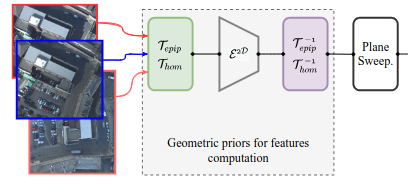
Ewelina Rupnik is a prominent researcher in photogrammetry and remote sensing, currently holding a researcher position at the Laboratory on Geographic Information Science (LaSTIG) at the French National Institute of Geographic and Forest Information (IGN) since 2017. She also serves as an associate researcher at the Paris Institute of Earth Physics (IPGP). Rupnik has established herself as a leading expert in historical imagery processing, neural radiance fields, and bundle adjustment techniques. Her educational background includes a PhD in photogrammetry from the Vienna University of Technology (2015), an MSc in Engineering in Photogrammetry from AGH University of Science and Technology, Poland (2005-2010), and an Erasmus exchange at the Technische Universitaet Muenchen, Germany (2009/2010). She recently completed her Habilitation from Université Gustave Eiffel in June 2025. Rupnik's research focuses on advancing photogrammetric techniques for processing historical imagery, developing novel neural radiance field approaches for satellite imagery, and improving bundle adjustment methodologies. Her work bridges traditional photogrammetry with modern deep learning techniques, particularly in the context of sparse satellite views and historical multi-epoch imagery. She has made significant contributions to the open-source MicMac photogrammetry software project. Her recent publications demonstrate a strong trend toward integrating deep learning with traditional photogrammetric methods, with a particular emphasis on satellite and historical imagery analysis. The research spans from fundamental algorithm development (like SparseSat-NeRF and Pointless Global Bundle Adjustment) to practical applications in earth sciences (landslide, earthquake, and glacier volume mapping). 2022 EuroSDR PhD Award for Corona satellite imagery processing Best Paper Award for BRDF-NeRF research Outstanding Reviewer at CVPR 2025 Rupnik actively contributes to the academic community through editorial and leadership roles, including serving as Editor-in-Chief of the French Journal for Photogrammetry and Remote Sensing (2021-2025), Advisory Board Member of the International Journal of Photogrammetry and Remote Sensing (2024-present), and Co-chair of the ISPRS Working Group on Image Orientation and Sensor Fusion (2022-2026). She regularly teaches at Université Paris Cité & ENSG (~30 hours/year since 2015) and has conducted numerous workshops worldwide on photogrammetry with historical images and MicMac software.
Daniel Cameron Campbell is a Researcher at the Department of Mathematical Analysis , Faculty of Mathematics and Physics , Charles University , Prague. He teaches advanced courses on Sobolev spaces and calculus, focusing on nonlinear elasticity and geometric function theory. Research Interests: Ball-Evan's approximation, mappings of finite distortion, nonlinear elasticity, Sobolev embeddings Teaching: Derivatives and Integrals for Advanced Levels (NMMA437), Mathematical Analysis I (NOFY151) Research Trends: His recent work addresses approximation of Sobolev and BV homeomorphisms, focusing on diffeomorphic and piecewise affine methods. He explores topological constraints, Jacobian sign preservation, and applications to nonlinear elasticity and metric measure spaces. Scientific Contributions: Principal Investigator for GAČR grant 20-19018Y (2020–2022) on analytical tools for variational problems. Organized workshops: GeoCa 20 (2020), Per Partes (2021), GeoCa 22 (2022). Contact: Email daniel.campbell@mff.cuni.cz or campbell@karlin.mff.cuni.cz .
Elvise Berchio is a Full Professor in the Department of Mathematical Sciences (DISMA) at Politecnico di Torino, where she also serves as Deputy Coordinator of the Doctoral College of Mathematical Sciences. Her academic career spans theoretical and applied mathematics with a focus on partial differential equations and their applications in engineering contexts. Her research interests include: Functional inequalities (Sobolev, Hardy, Rellich) Partial differential equations (elliptic, parabolic, higher-order) Variational methods Mathematical models for bridges and plates Professor Berchio's work demonstrates a consistent focus on geometric-analytic methods for PDEs, with particular attention to inequalities on Riemannian manifolds and mathematical models for engineering structures. Her recent publications show a progression from theoretical analysis of PDEs to increasingly sophisticated applications in fluid-structure interaction and geometric contexts. She has established herself as a leading researcher in the analysis of higher-order partial differential equations with applications to engineering problems. She is actively involved in the mathematical community through: European Women in Mathematics (2015-present) Italian Mathematical Union (UMI) (2005-present) National Group for Mathematical Analysis (GNAMPA) (2004-present) Editorial board of RENDICONTI DEL SEMINARIO MATEMATICO (2019-present) Professor Berchio has directed multiple significant research projects including GAMPA (2023-2026), Direct and inverse problems for partial differential equations (2019-2022), and ASPETTI GEOMETRICI E QUALITATIVI DI EDP (2014-2017). She teaches Mathematical Analysis I and Mathematical Methods for Engineering across various engineering programs at Politecnico di Torino and supervises doctoral students in the Mathematical Sciences program.
Yuanchang Xie serves as Professor in Civil and Environmental Engineering at UMass Lowell's Francis College of Engineering, where he leads research in the Center for Smart Cyber-Physical Systems. His work integrates computational methods with transportation infrastructure analysis, focusing on safety-critical applications through federal partnerships. Dr. Xie earned his Ph.D. in Civil Engineering from Texas A&M University (2007), preceded by M.S. and B.S. degrees in Transportation Engineering from Southeast University, China (2003, 2000). His academic foundation supports interdisciplinary research bridging civil engineering and cyber-physical systems. Research centers on traffic safety, intelligent transportation systems, and logistics optimization. He pioneers AI-driven approaches for crash prediction, connected vehicle operations, and infrastructure monitoring, emphasizing real-world implementation through partnerships with USDOT and state agencies. Current work explores multimodal data fusion for safety analytics in mixed-autonomy environments. Recent publications (2024-2025) reveal accelerating focus on deep learning applications: crosswalk detection via drone imagery, trajectory prediction in mixed traffic, and real-time work zone safety monitoring. This evolution demonstrates strategic alignment with emerging transportation technologies while maintaining core safety objectives. No scientific awards were explicitly documented in source materials. Dr. Xie has secured continuous funding as Principal Investigator through NSF, USDOT, DOE, and USDA programs. Key projects include Connected Vehicles: Toward the Understanding of "Firm Science" (NSF), Center of Multi-Scale Sensing Technologies (USDOT), and nuclear evacuation modeling for rural communities (USDA). His grants consistently address infrastructure resilience through cyber-physical integration. He directs research activities within UMass Lowell's Center for Smart Cyber-Physical Systems, which develops sensor networks and computational models for transportation infrastructure monitoring. The center's work on drone-based inspection systems and emergency response logistics demonstrates practical applications of his theoretical frameworks.