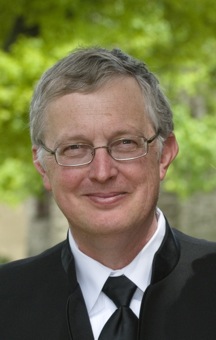
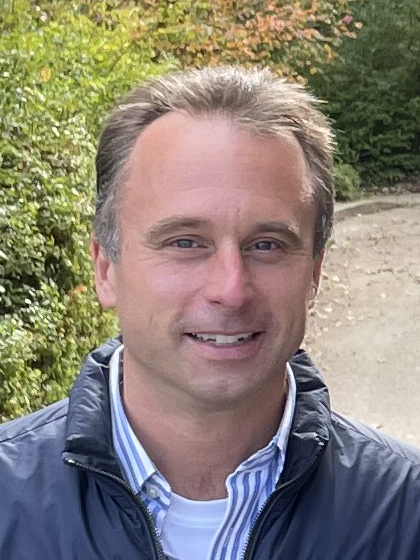
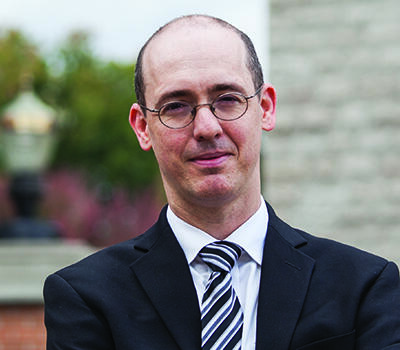
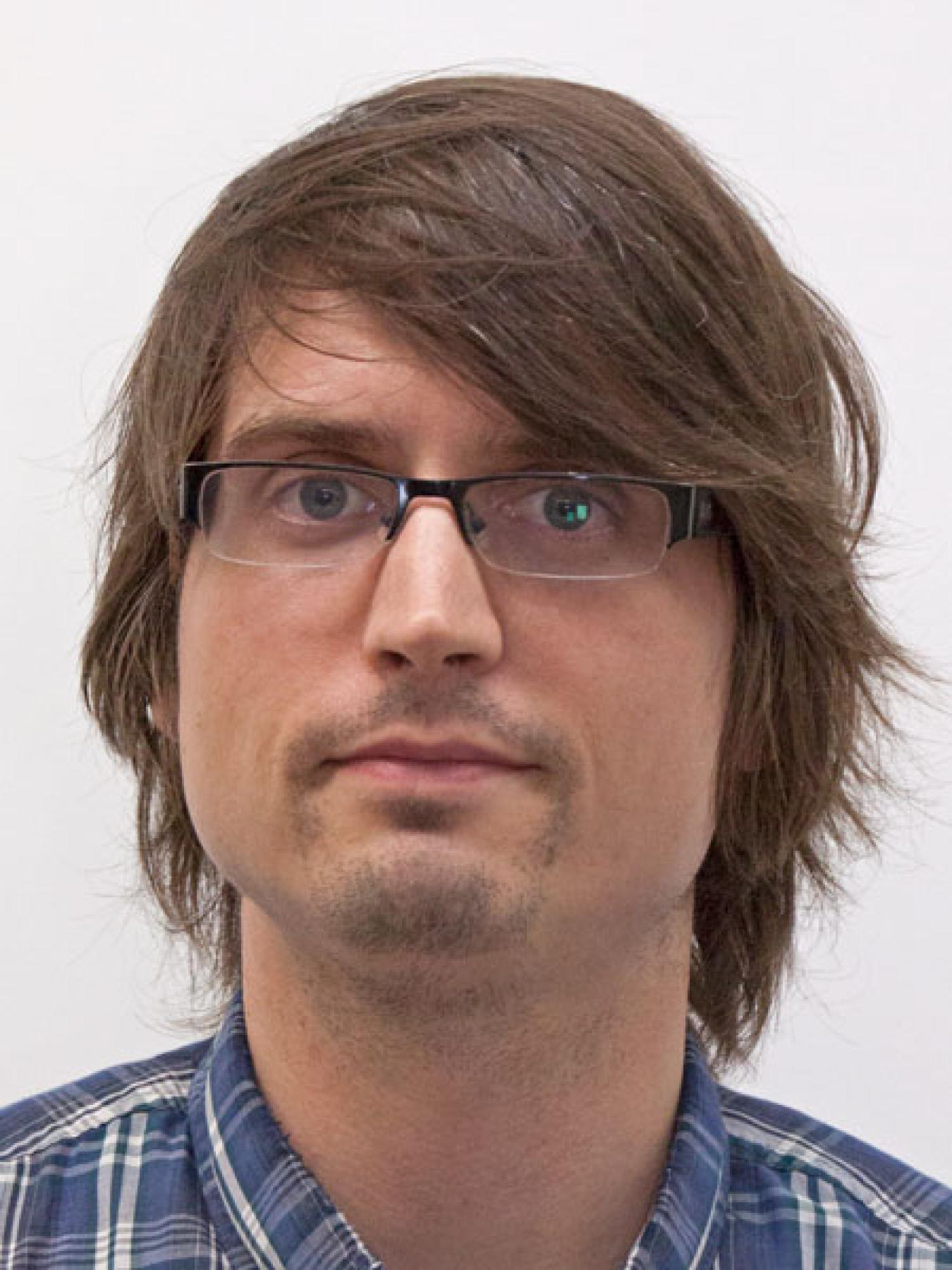
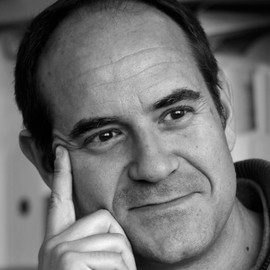
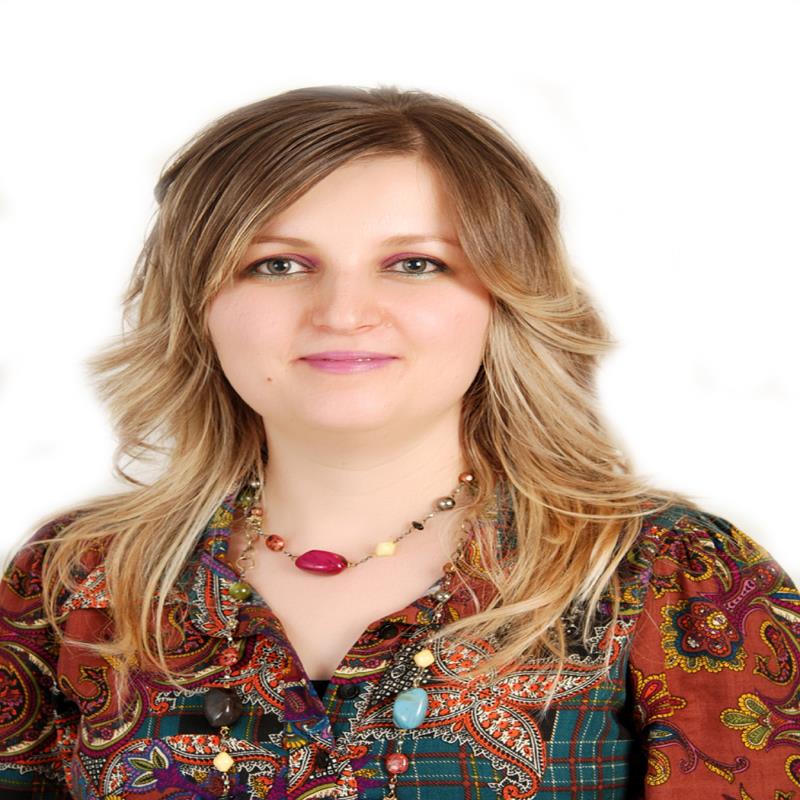
Massimo Gobbino is an Associate Professor at the Department of Civil and Industrial Engineering, University of Pisa. His research focuses on Partial Differential Equations (PDEs), Functional Analysis, and Calculus of Variations, with notable contributions to the Perona-Malik equation, non-local approximations of Sobolev norms, and wave equations with damping. He collaborates extensively with researchers like Nicola Picenni and Marina Ghisi. Key research areas include the analysis of PDEs related to image processing, variational methods, and nonlinear phenomena. His work bridges theoretical analysis with applications in mathematical physics and optimization. Recent studies explore monotonicity properties, symmetry-breaking, and multi-scale analysis of minimizers. Prof. Gobbino’s articles frequently appear in journals such as Journal of Functional Analysis , Calculus of Variations and PDEs , and SIAM Journal on Mathematical Analysis . He maintains an active presence in academic forums and student supervision through structured directories like Studenti and Eureka projects.
Virginie Ehrlacher Galland is a Professor at CERMICS (Centre d'Enseignement et de Recherche en Mathématiques et Calcul Scientifique) within École des Ponts ParisTech. Her expertise lies in applied mathematics, numerical analysis, and computational physics, with a focus on multiscale problems, quantum chemistry, and uncertainty quantification. She holds a PhD from CERMICS (2012) and a Habilitation (2020) from Université Paris-Dauphine. Her research interests include cross-diffusion systems, reduced basis methods, and optimal transport applications. Key contributions involve numerical methods for electronic structure calculations, homogenization techniques, and adaptive algorithms. She leads the ERC Starting Grant HighLEAP (2023-2028) and contributes to major projects like the ERC Synergy project EMC². Awards: Irène Joliot-Curie Prize (2023), Chevalier de l’Ordre National du Mérite (2025). Grants/Projects: ERC Starting Grant HighLEAP (PI), ERC Synergy EMC² (Member), ANR JCJC COMODO (PI). Her work bridges theoretical analysis and computational methods, addressing challenges in materials science, fluid dynamics, and machine learning applications.
Thomas J. Santner is a Professor in the Department of Statistics at Ohio State University. His research focuses on experimental design, particularly in integrating computer simulations with physical experiments. He co-authored influential books including *The Design and Analysis of Computer Experiments* (Springer, 2019) and *The Design and Analysis of Experiments for Statistical Selection, Screening, and Multiple Comparisons* (Wiley, 1995). His work bridges statistics and engineering, addressing challenges in prosthesis design, biomedical systems, and industrial processes. Notably, he collaborates with the Hospital for Special Surgery on bone-implant systems and biomaterials research. Education: Ph.D., Purdue University, 1973. Research interests include: Computer experiments and hybrid simulation-physical experimentation Statistical selection and screening methodologies Applications in biomedical engineering and manufacturing optimization Uncertainty quantification in finite element models Recent work emphasizes optimizing complex systems through calibrated simulators, with applications in injection molding processes and joint replacement design. His articles demonstrate methodological contributions to design efficiency, sensitivity analysis, and multiobjective optimization. Prior roles include former Director of the Department of Statistics' Consulting Service and former Department Chair at Ohio State University.
Prof. Dirk Lebiedz is a full professor at the Institute of Numerical Mathematics, University of Ulm, specializing in optimal control, mathematical modeling, and dynamical systems. He holds a PhD in Physical Chemistry and dual Diplom degrees in Chemistry and Mathematics from the University of Münster. His career includes habilitations in Physical Chemistry (Heidelberg), Bioinformatics (Freiburg), and Mathematics (Freiburg). He has led research groups focusing on model reduction in multi-scale systems, with applications in combustion chemistry, biological signaling, and medical treatment optimization. Education: 1998: Diplom in Chemistry (Münster) 2002: Diplom in Mathematics (Münster) 2001: PhD in Physical Chemistry (Münster) 2007: Habilitation in Physical Chemistry (Heidelberg) 2010: Habilitation in Mathematics (Freiburg) Research Interests: Prof. Lebiedz’s work spans optimal control theory, nonlinear dynamics, and computational methods for complex systems. He develops geometric and differential geometric approaches to model reduction, focusing on slow invariant manifolds in chemical and biological systems. His research also explores interdisciplinary applications in medicine, ecology, and music theory, such as mathematically modeling circadian rhythms and linking mathematical principles to philosophical and artistic concepts. Recent Work Trends: His recent publications emphasize holomorphic dynamical systems, invariant manifold analysis, and applications of differential geometry. He investigates complex-time systems and their connections to fundamental mathematical problems like the Riemann Hypothesis. His articles often bridge pure mathematics with applied fields like combustion engineering and biomedical modeling. Awards & Recognition: He has held visiting professorships at Heidelberg University and secured multiple habilitations across disciplines, reflecting his interdisciplinary impact. Labs/Teams: Leads the Institute of Numerical Mathematics at Ulm, focusing on computational methods for multi-scale systems. Collaborates with the Center for Integrative Biological Signaling Studies (Freiburg) and the SFB 1391 (Tübingen).
Prof. Dr. Anna Dall'Acqua holds a position as University Professor (Univ.-Prof.) at the Institute for Applied Analysis, Universität Ulm. Her research focuses on partial differential equations, calculus of variations, geometric analysis, and mathematical physics, with specific interests in higher-order elliptic problems, elastic curves, Willmore surfaces, and Hartree-Fock theory. She leads a research group and has supervised doctoral students including Gabriel Knöbl and Manuel Schlierf. Her work is supported by grants from the German Research Foundation (DFG) and Taiwan’s MoST. Recent research includes studies on elastic networks, Willmore flow of tori, and obstacle problems in elasticity. She teaches advanced courses such as Functional Analysis, Calculus of Variations, and Analysis series at the university. Prof. Dall'Acqua’s publications span over two decades, with contributions to journals like Calc. Var. PDEs , Journal of Differential Equations , and Analysis & PDE . Her habilitation thesis (2011) and earlier work on boundary value problems and pseudorelativistic Hartree-Fock systems highlight her interdisciplinary expertise.
Stephen Ramsey, an Associate Professor at Oregon State University, holds dual appointments in the School of Electrical Engineering and Computer Science (College of Engineering) and the Department of Biomedical Sciences (Carlson College of Veterinary Medicine). With a PhD in Physics from the University of Maryland, his postdoctoral training in computational genomics at the University of Washington, and professional experience at the Institute for Systems Biology and Center for Infectious Disease Research, Ramsey bridges computational methods with biomedical applications. Education : Ph.D., Physics, University of Maryland; M.S., Physics, University of Maryland; Sc.B., Mathematical Physics, Brown University Ramsey specializes in computational systems biology , focusing on bioinformatics , biomedical knowledge graphs , and precision medicine . His research integrates machine learning , gene regulatory network modeling , and multi-omics data analysis to address challenges in rare disease diagnostics , drug monitoring , and inflammatory disease mechanisms . Current work includes AI-driven biomedical translation and electrochemical biosensor development for non-invasive diagnostics . Recent publications highlight knowledge graph applications in translational biomedicine , causal network inference in clinical-environmental data integration , and cross-species cancer transcriptomics . His team develops tools like RTX-KG2 and PloverDB to standardize biomedical data sharing and semantic reasoning . Scientific Awards : 2019 Zoetis Award (Carlson College of Veterinary Medicine) 2016 NSF CAREER Award 2016 PhRMA New Investigator Award 2010 NIH K25 Mentored Quantitative Research Award Ramsey advises in computational biology courses (CS 446/546) and contributes to biomedical AI through projects like mediKanren for rare disease diagnostics . His NSF-funded research explores gene expression noise and regulatory network dynamics , while NIH and PhRMA grants support his translational medicine initiatives. He leads the Ramsey Laboratory , which develops graph-based reasoning tools for biomedical data translation and multi-omics integration . The lab's work spans comparative oncology models, electrochemical biosensors , and knowledge graph infrastructure for clinical decision support .
Robin Deeley is an Associate Professor in the Department of Mathematics at the University of Colorado Boulder. His research focuses on dynamical systems (especially Smale spaces), index theory, and noncommutative geometry, with applications to C*-algebras. Funded by the NSF, his work bridges topology, algebra, and dynamics. Recent publications explore synchronizing dynamical systems, classifiable C*-algebras, and geometric models for K-homology. His results contribute to the classification of operator algebras arising from minimal group actions.
José E. Chacón is a Professor of Statistics at the Department of Mathematics, University of Extremadura, Spain. He is also a member of the Institute of Mathematics at the same university. His research focuses on nonparametric kernel smoothing, cluster analysis, and mathematical statistics. He earned his PhD in Statistics from the University of Extremadura in 2004. Chacón’s work emphasizes methodological advancements in density estimation, clustering algorithms, and statistical theory. His recent publications address topics like geodesic distributions, Bayesian taut splines for mode estimation, and bump detection via density curvature. He has contributed to applied areas such as animal home range estimation and data science for pandemic analysis. His articles often explore cross-validation techniques, bandwidth selection, and mixture model clustering. He co-authored the textbook Multivariate Kernel Smoothing and Its Applications (2018), consolidating his expertise in kernel-based methods. Chacón’s research bridges theoretical statistics with practical applications, influencing both academic and applied domains.
Brendan Mumey is a Professor of Computer Science at Montana State University, affiliated with the Gianforte School of Computing under the College of Engineering. He holds a Ph.D. in Computer Science from the University of Washington (1997), an MS from the University of British Columbia, and a BS in Mathematics from the University of Alberta. His research focuses on applied algorithms, computational biology, and optimization, particularly in pangenomics, flow decomposition, and genomics. Key research areas include DNA/RNA sequence multiassembly, pangenomics, and algorithms for flow decomposition in networks. He is part of the Applied Algorithms Group and develops software through the MSU Algorithms Lab. Notable projects involve NSF-funded initiatives to scale flow decomposition and explore plant genetic diversity using pangenomic tools. Selected awards include multiple Excellence in Research Awards (2007, 2011, 2012, 2013) and an Excellence in Service Award (2011). His teaching spans algorithms, discrete structures, and computational biology at both undergraduate and graduate levels. Grants include NSF support for pangenomic tools, functional genomics, and interdisciplinary mentoring programs. Collaborative work emphasizes bridging theoretical algorithms with practical applications in biology and sustainability.
Sridip Pal is a Sherman Fairchild Postdoctoral Scholar Research Associate in Theoretical Physics, focusing on foundational questions in quantum field theory, conformal field theory, and holography. His research explores the interplay between mathematical structures and physical phenomena, with particular emphasis on entanglement entropy, spectral properties of quantum systems, and the application of modular bootstrap techniques. Key research areas include universality in entropy calculations, spectral bounds in hyperbolic manifolds, symmetry defects in boundary CFTs, and the interplay between holography and Weyl anomalies in string theory. Recent work addresses the fine-grained asymptotics of quantum field theories, automorphic spectra in bootstrap frameworks, and the behavior of wormholes under quantum deformations. Published articles span topics from thermal QFT fractals to nonrelativistic CFTs at large charge, reflecting a broad engagement with high-energy physics and mathematical physics. His studies often utilize advanced analytic methods such as Tauberian theory, Beurling-Selberg extremization, and geometric analysis to derive universal results in quantum systems.
Yury Makarychev is an Associate Professor at the Toyota Technological Institute at Chicago (TTIC) and holds a part-time appointment as an Associate Professor in the Department of Computer Science at the University of Chicago. His research focuses on the theoretical foundations of computer science, particularly in algorithm design, approximation algorithms, and computational geometry. He is a core member of the Theoretical Computer Science Group, bridging connections between computer science and mathematical disciplines like physics and statistics. Yury's academic journey includes teaching courses such as Geometric Methods in Computer Science and Computational and Metric Geometry . His recent work emphasizes fair clustering algorithms, metric embeddings, and certified algorithms beyond worst-case analysis. Notable contributions include approximation algorithms for correlation clustering, k-means, and graph partitioning problems. He has advised PhD students including Naren Manoj, Max Ovsiankin, and Omshi Samal. Yury organizes workshops on topics like algorithms for massive datasets and high-dimensional analysis. His research has been recognized through grants such as the NSF Collaborative Medium Research Project. Professional contributions include editorial roles, program committee memberships, and impactful publications in venues like STOC, FOCS, and ICML.
Prof. SEHER ASLANCI is a Professor of Mathematics Education at ALANYA ALAADDİN KEYKUBAT UNIVERSITY, Faculty of Education. Her academic journey includes roles such as Vice Dean (2022–2023) and Department Head (2017–2018). She holds a Doctorate in Geometry from Atatürk University (2011). Research focuses on differential geometry (tensors, Riemannian structures) and mathematics education (bibliometric analyses of pedagogical methods like inquiry-based learning and realistic mathematics education). Publications span 20+ years, emphasizing geometric structures and educational methodologies. Awards include TUBITAK's UBYT grants (2009, 2011, 2014). Administrative roles include Scientific Research Commission membership (2020–2021) and Mevlana Exchange Program coordination (2016–2017). Education: Integrated PhD (Geometry), Atatürk University, 2011 Mathematics Teaching Programme, Atatürk University, 1999–2004 Awards: Encouragement of International Scientific Publications (TUBITAK UBYT-2014) Encouragement of International Scientific Publications (TUBITAK UBYT-2011) Encouragement of International Scientific Publications (TUBITAK UBYT-2009) Research themes blend pure geometry (tensor bundles, complex structures) with applied educational studies (bibliometric trends in tech-enhanced learning). Recent work explores heat flux control systems and deformations in geometric structures.
Dr. Christopher Green is an Assistant Professor of Applied Mathematics at Wichita State University's Fairmount College of Liberal Arts and Sciences, Department of Mathematics, Statistics & Physics. He holds a PhD from Imperial College London (supervised by Prof. Darren Crowdy) and has held postdoctoral positions at the University of California San Diego and Queensland University of Technology. Previously, he served as a Lecturer in Applied Mathematics and ARC DECRA Fellow at Macquarie University in Sydney, Australia. His research focuses on computational and applied complex analysis, particularly in multiply connected domains. Key interests include the Schottky-Klein prime function, ideal fluid mechanics, and free boundary problems. His work bridges classical function theory with modern computational methods. Recent publications emphasize fluid dynamics applications such as Hele-Shaw bubble dynamics, harmonic measure computations, and airfoil potential flow. His research has been published in high-impact journals across applied mathematics and fluid mechanics. Christopher Green has received the ARC DECRA Fellowship, a prestigious early-career award. His advising and grants include contributions to computational methods in complex analysis and fluid dynamics. He maintains active collaborations internationally, leveraging both theoretical and numerical approaches to geometrically complex problems.
Christina Sormani is a Professor of Mathematics at Lehman College and the CUNY Graduate Center, part of the City University of New York system. She earned her doctorate from the Courant Institute in 1996 and worked as a postdoc at Johns Hopkins and Harvard before joining Lehman College in Spring 2000. She is also a frequent visitor at Stony Brook, working with doctoral students and postdocs conducting mathematics research. Professor Sormani is an American Mathematical Society Fellow (2015) and a Fellow of the Association for Women in Mathematics (2024). Her research is in Geometric Analysis, specializing in Riemannian Geometry, Metric Spaces, and Geometric Measure Theory. She is particularly known for her work on the Intrinsic Flat Distance, which she developed with Stefan Wenger, providing a powerful framework for studying convergence of Riemannian manifolds with applications to General Relativity. Her research program has been consistently funded by the National Science Foundation (NSF DMS) and PSC CUNY. She has held prestigious visiting positions including at the Mathematical Sciences Research Institute (MSRI) in 2013, the Institute for Advanced Study (IAS), and Simons Center for Geometry and Physics (SCGP) during her 2018-2019 fellowship leave. Her work has focused on stability problems for the Positive Mass Theorem, scalar curvature, and convergence theory. American Mathematical Society Fellow (2015) for 'contributions to geometry, including the study of Ricci curvature, and for mentoring activities, especially for young mathematicians from underrepresented groups' Association for Women in Mathematics Fellow (2024) for 'utilizing every opportunity to open pathways to mathematics for more women and students by creating and maintaining online access to advice, mathematical resources, and information about women mathematicians; for organizing the 'Inspiring Talks by Mathematicians' lecture series featuring under-represented speakers, and for dedicated and active contributions to the Association for Women in Mathematics' Professor Sormani has been deeply committed to mentoring and outreach throughout her career, particularly for women and underrepresented groups in mathematics. She organizes the 'Inspiring Talks by Mathematicians' lecture series and has created extensive online resources to support young mathematicians. Her research group includes numerous doctoral students and postdocs, and she has been instrumental in developing workshops and programs that bridge geometric analysis with general relativity.
Fabian Haiden is an Associate Professor in the Department of Mathematics and Computer Science at the University of Southern Denmark, affiliated with the Quantum Mathematics research group. His academic work focuses on advanced topics in algebraic geometry, category theory, and mathematical physics. He holds a prestigious Sapere Aude Research Leader Grant (2023), enabling him to lead a research group exploring categorical structures in geometry. Research interests include derived categories, Calabi-Yau categories, stability conditions, and their applications to Teichmüller theory, spectral networks, and geometric topology. His recent work bridges algebraic structures with dynamical systems, such as pseudo-Anosov autoequivalences and iterated logarithms in gradient flows. Key Projects: Leading the Emergent Geometry of Categories project (2024–2028), funded by the Danish Ministry of Higher Education and Research. Grants & Awards: Sapere Aude Research Leader Grant (DKK 6.192.000). Publications span journals like Advances in Mathematics , Duke Mathematical Journal , and Communications in Mathematical Physics , reflecting his expertise in algebraic structures, geometric categorification, and stability phenomena. His research often intersects with topological and physical systems, such as knot polynomials and quantum topology.